Modern Greek Myth Storyboards
A free history worksheet ready for your classroom. Open in Kuraplan to grab the print-ready PDF, customize it for your students, or generate a fresh version in seconds.
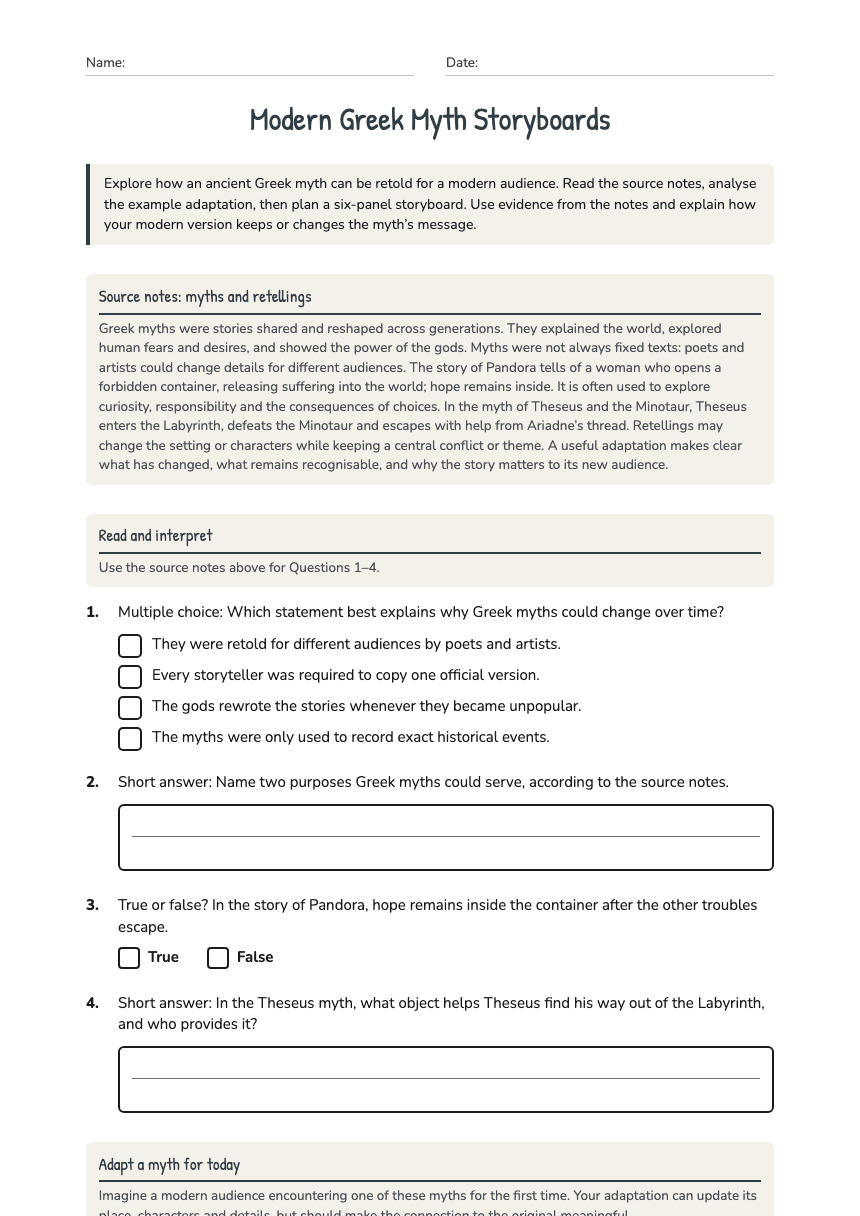
Modern Greek Myth Storyboards
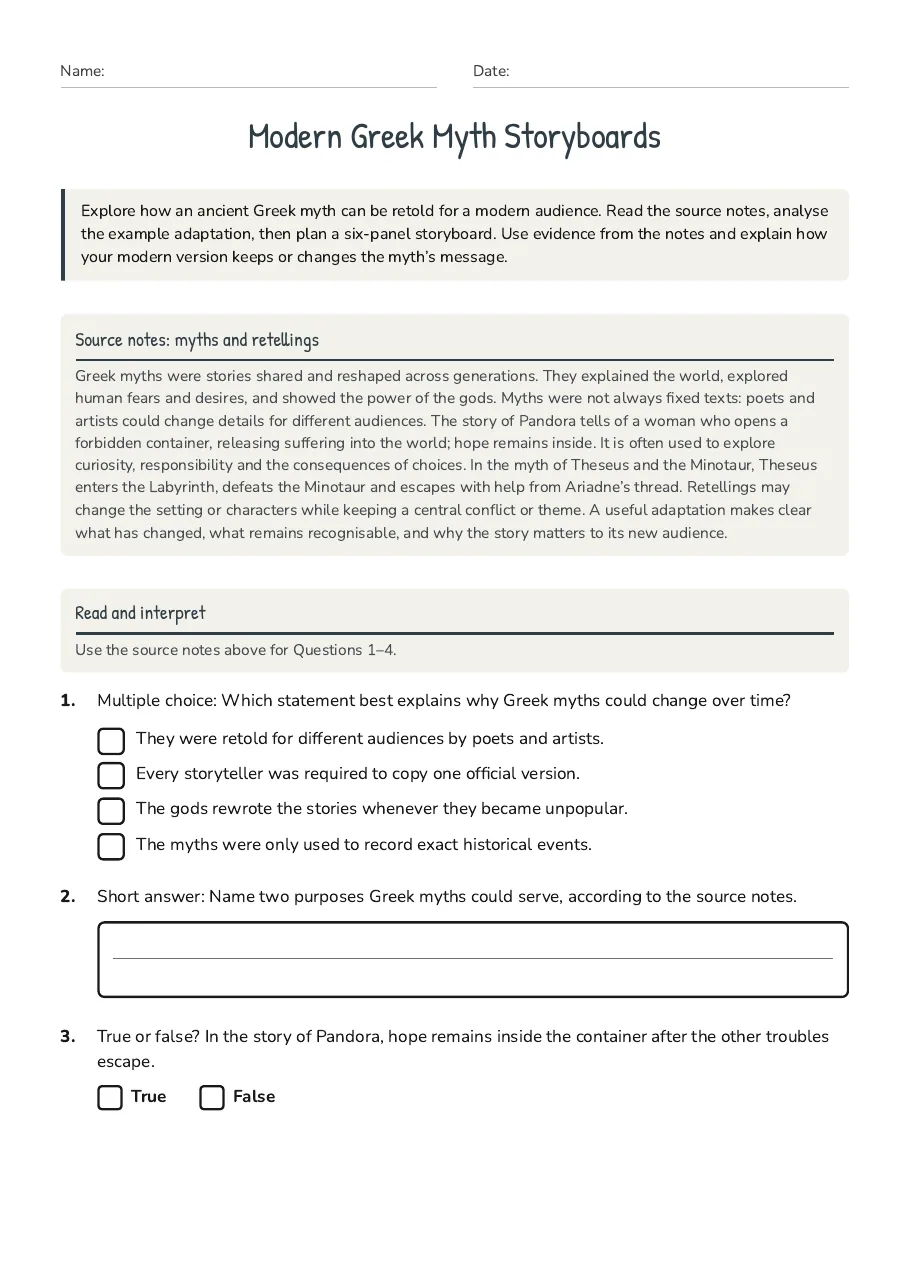
Source notes: myths and retellings
Greek myths were stories shared and reshaped across generations. They explained the world, explored human fears and desires, and showed the power of the gods. Myths were not always fixed texts: poets and artists could change details for different audiences. The story of Pandora tells of a woman who opens a forbidden container, releasing suffering into the world; hope remains inside. It is often used to explore curiosity, responsibility and the consequences of choices. In the myth of Theseus and the Minotaur, Theseus enters the Labyrinth, defeats the Minotaur and escapes with help from Ariadne’s thread. Retellings may change the setting or characters while keeping a central conflict or theme. A useful adaptation makes clear what has changed, what remains recognisable, and why the story matters to its new audience.
Read and interpret
Use the source notes above for Questions 1–4.
- They were retold for different audiences by poets and artists.
- Every storyteller was required to copy one official version.
- The gods rewrote the stories whenever they became unpopular.
- The myths were only used to record exact historical events.
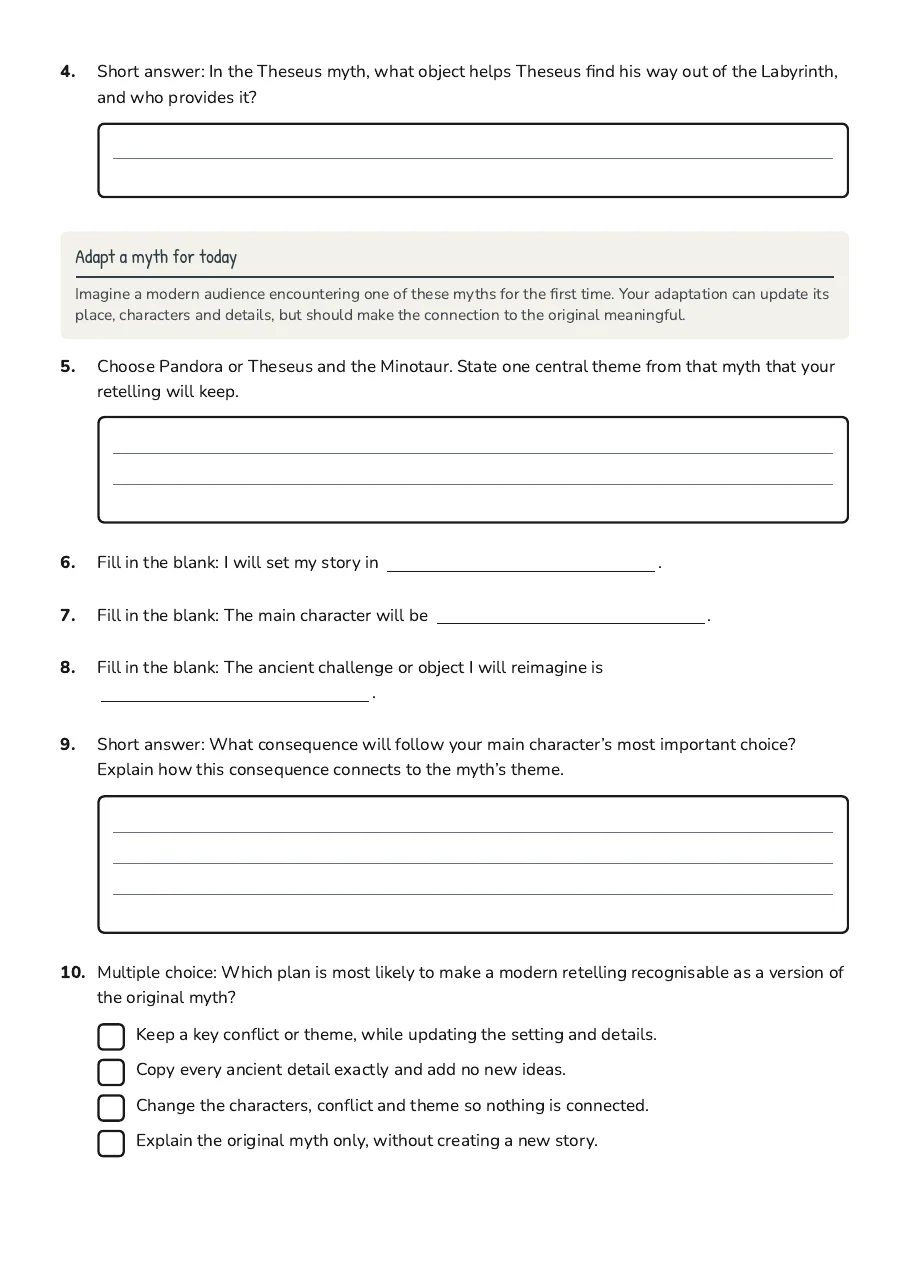
Adapt a myth for today
Imagine a modern audience encountering one of these myths for the first time. Your adaptation can update its place, characters and details, but should make the connection to the original meaningful.
- Keep a key conflict or theme, while updating the setting and details.
- Copy every ancient detail exactly and add no new ideas.
- Change the characters, conflict and theme so nothing is connected.
- Explain the original myth only, without creating a new story.
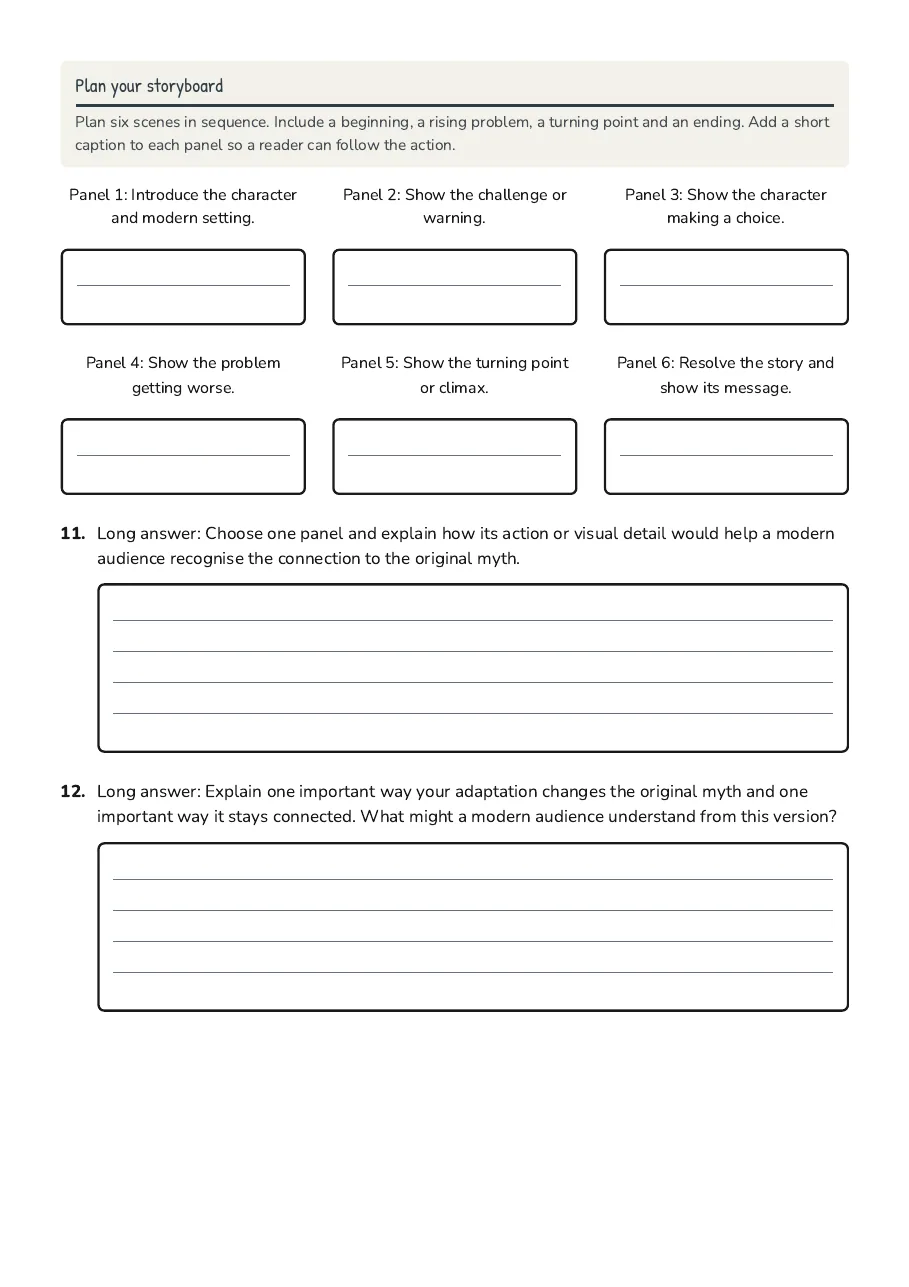
Plan your storyboard
Plan six scenes in sequence. Include a beginning, a rising problem, a turning point and an ending. Add a short caption to each panel so a reader can follow the action.
Panel 1: Introduce the character and modern setting.
Panel 2: Show the challenge or warning.
Panel 3: Show the character making a choice.
Panel 4: Show the problem getting worse.
Panel 5: Show the turning point or climax.
Panel 6: Resolve the story and show its message.
3 printable pages
Page 1
Page 2
Page 3
About This Worksheet
Free in Kuraplan
Sign up free, grab the PDF, and customize it for your class.
Print-Ready
Formatted for standard paper. Clean layout, easy to read.
AI-Generated
Created with Kuraplan's AI, designed for real classroom use.
For Teachers & Parents
Use in classrooms, for homework, tutoring, or homeschool.
Need a custom version of this worksheet?
Kuraplan's AI generates custom worksheets in seconds — differentiated for every learner, aligned to your curriculum.
Generate Custom Worksheets — FreeMore History Worksheets
League of Nations Weaknesses
Free
Ancient vs Modern Benin
Free
Year 7 History Exploration: Britain Through Time
Free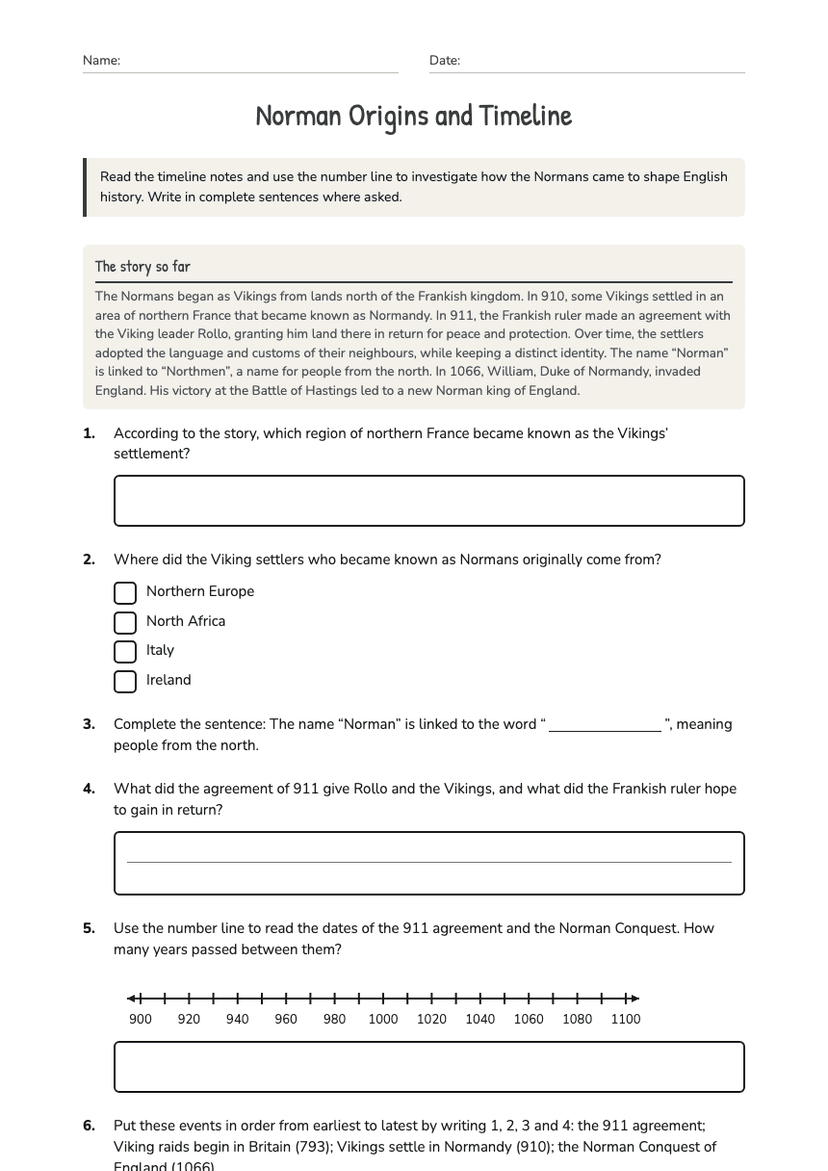
Norman Origins and Timeline
Free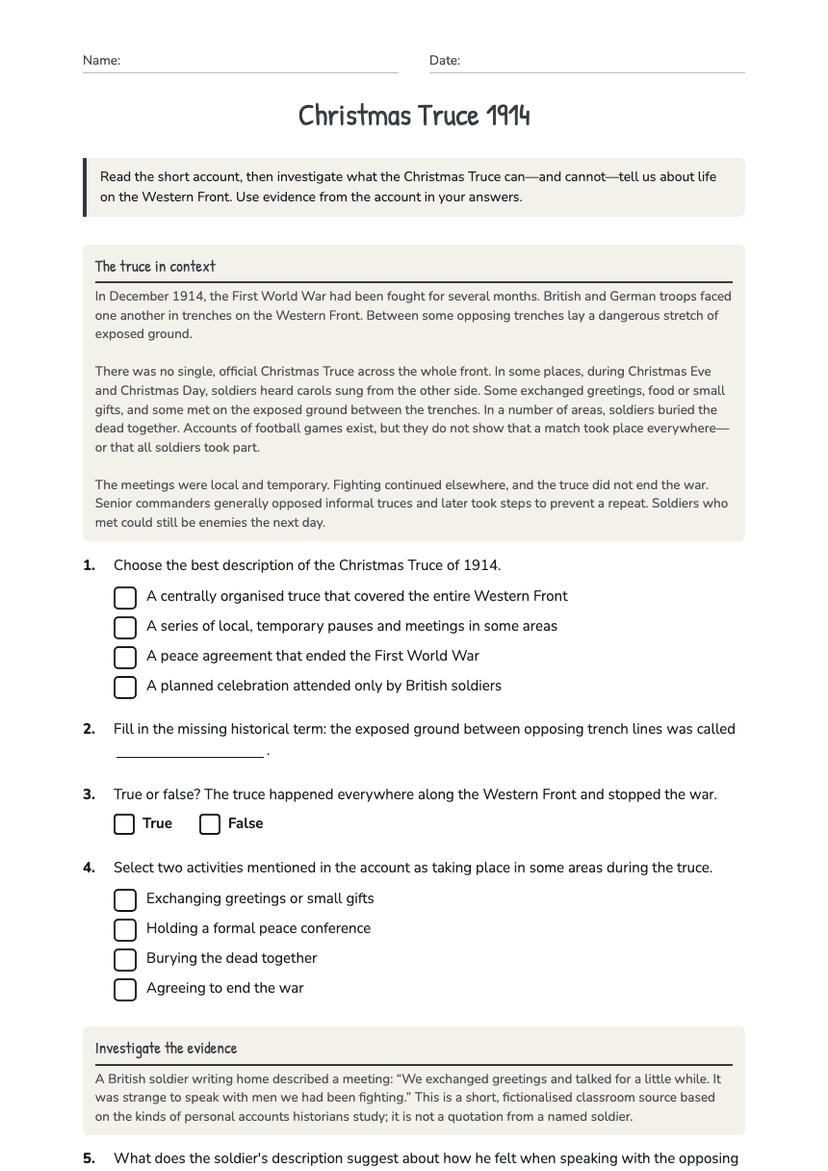
Christmas Truce 1914
Free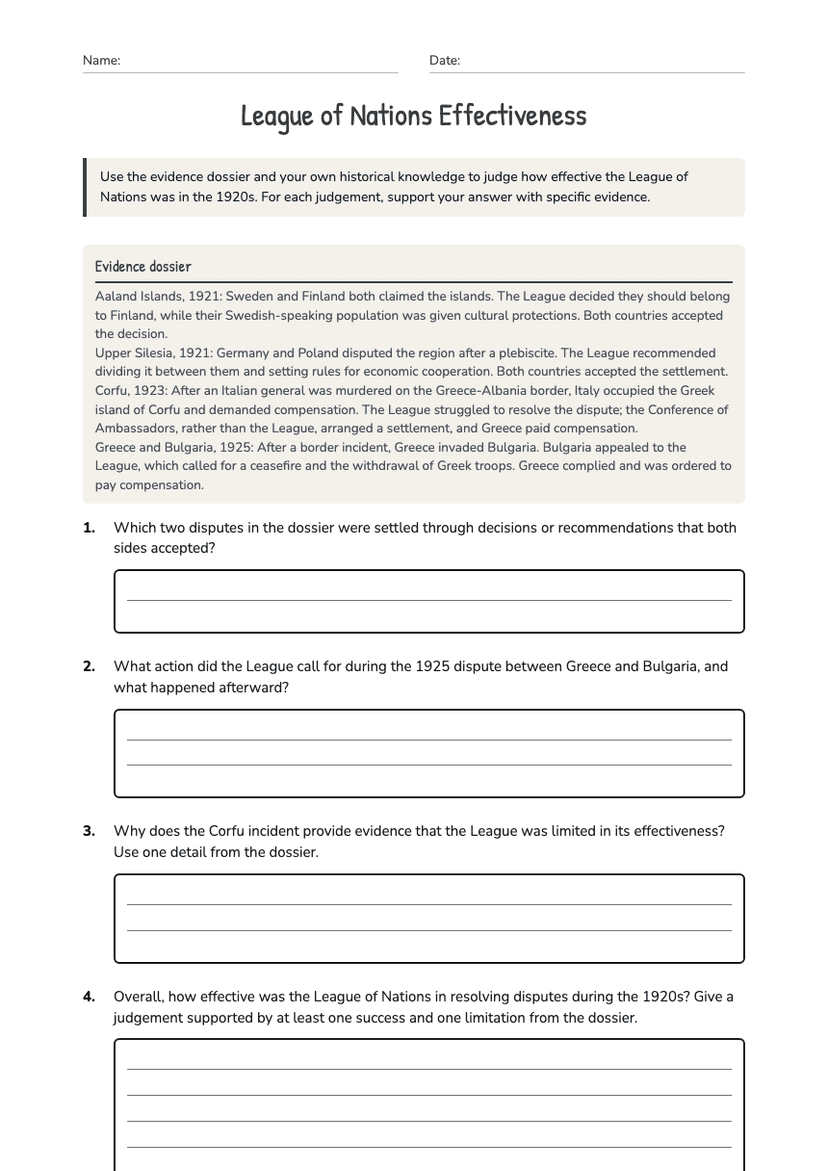
League of Nations Effectiveness
Free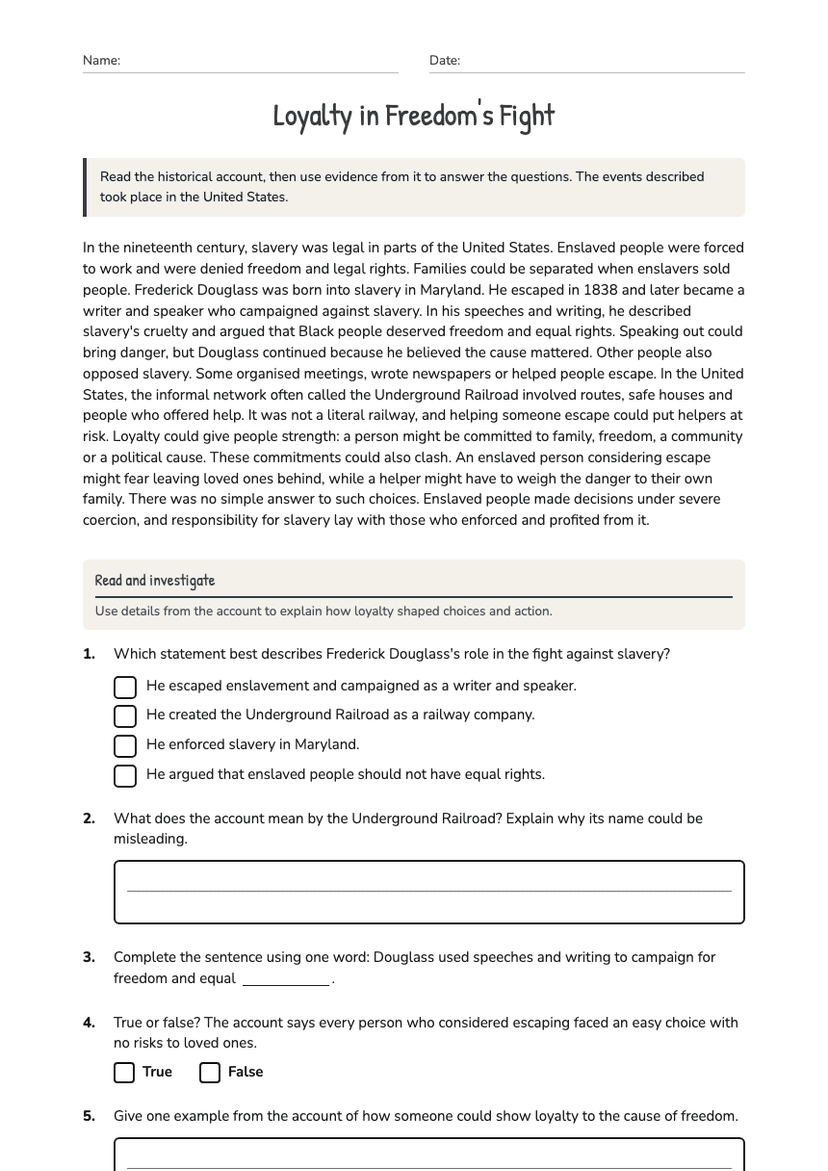
Loyalty in Freedom's Fight
Free