Pepeha and Mihimihi Practice
A free te reo māori worksheet ready for your classroom. Open in Kuraplan to grab the print-ready PDF, customize it for your students, or generate a fresh version in seconds.
Pepeha and Mihimihi Practice
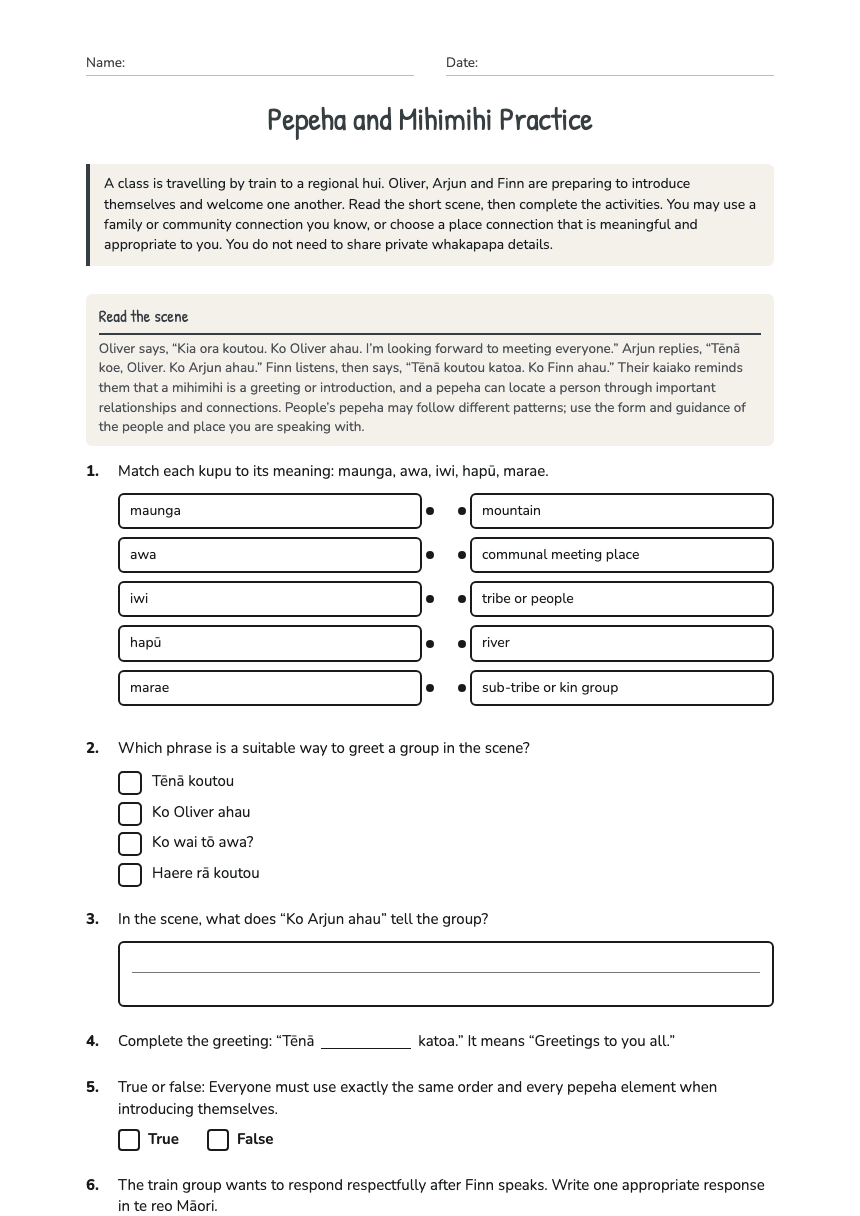
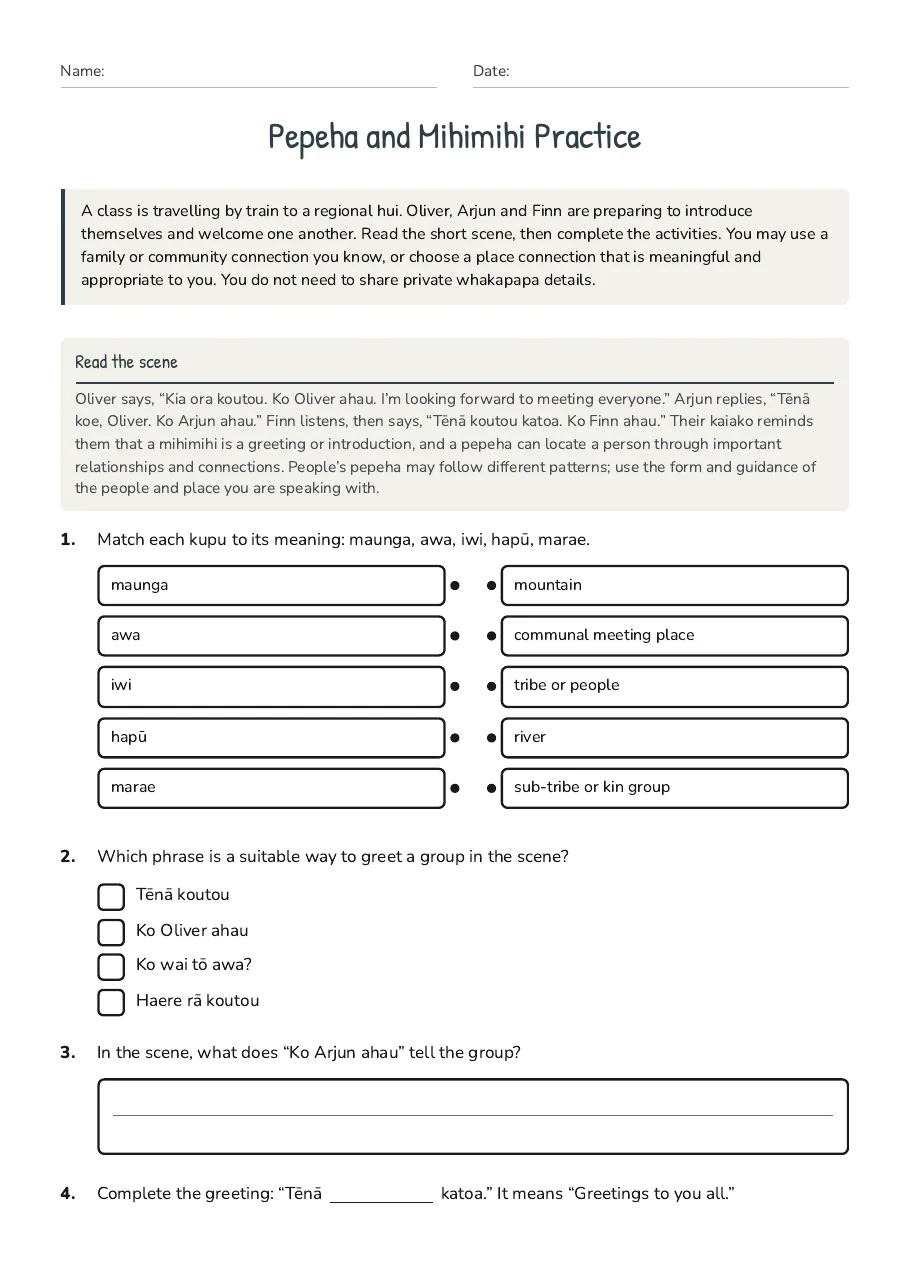
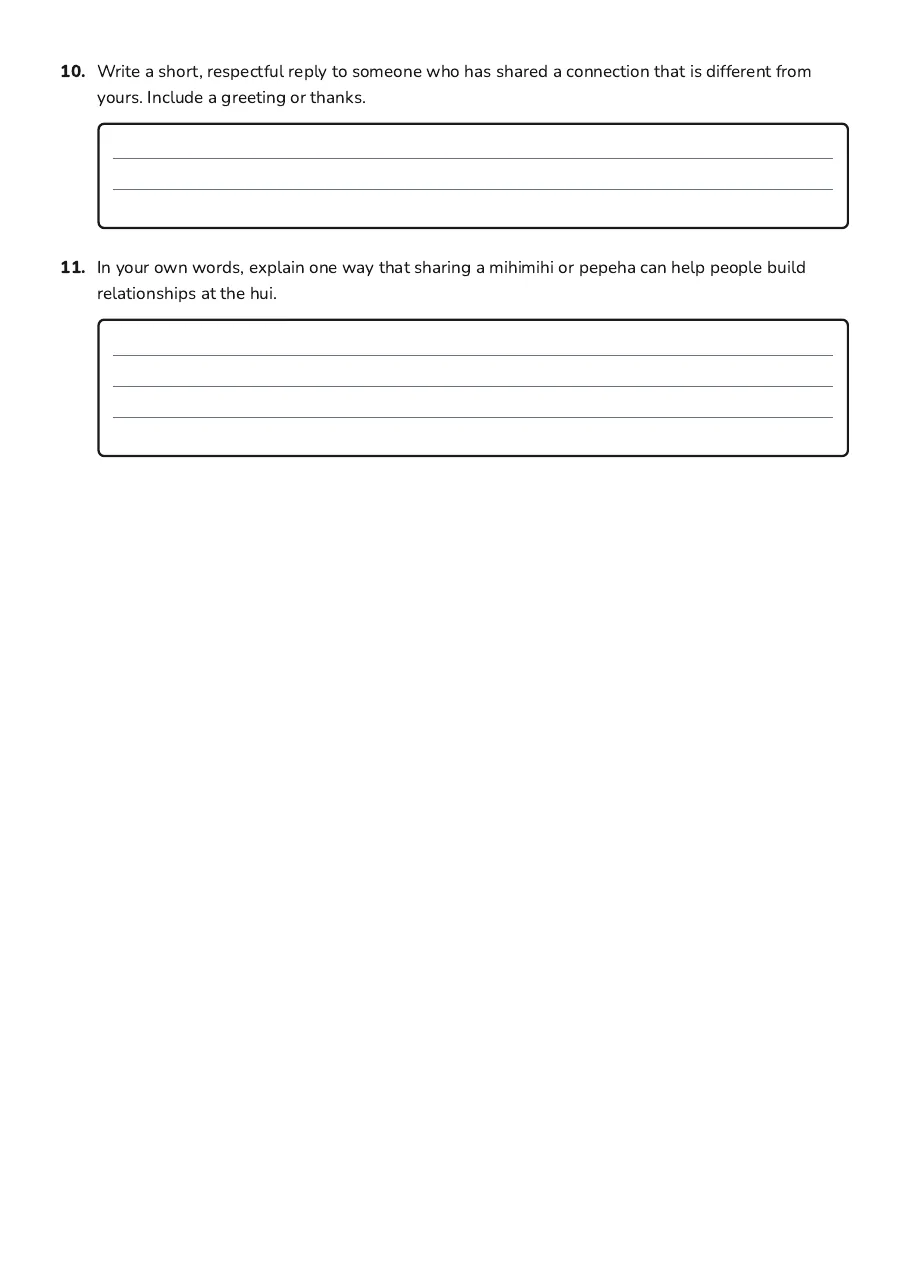
Read the scene
Oliver says, “Kia ora koutou. Ko Oliver ahau. I’m looking forward to meeting everyone.” Arjun replies, “Tēnā koe, Oliver. Ko Arjun ahau.” Finn listens, then says, “Tēnā koutou katoa. Ko Finn ahau.” Their kaiako reminds them that a mihimihi is a greeting or introduction, and a pepeha can locate a person through important relationships and connections. People’s pepeha may follow different patterns; use the form and guidance of the people and place you are speaking with.
- maunga
- awa
- iwi
- hapū
- marae
- mountain
- communal meeting place
- tribe or people
- river
- sub-tribe or kin group
- Tēnā koutou
- Ko Oliver ahau
- Ko wai tō awa?
- Haere rā koutou
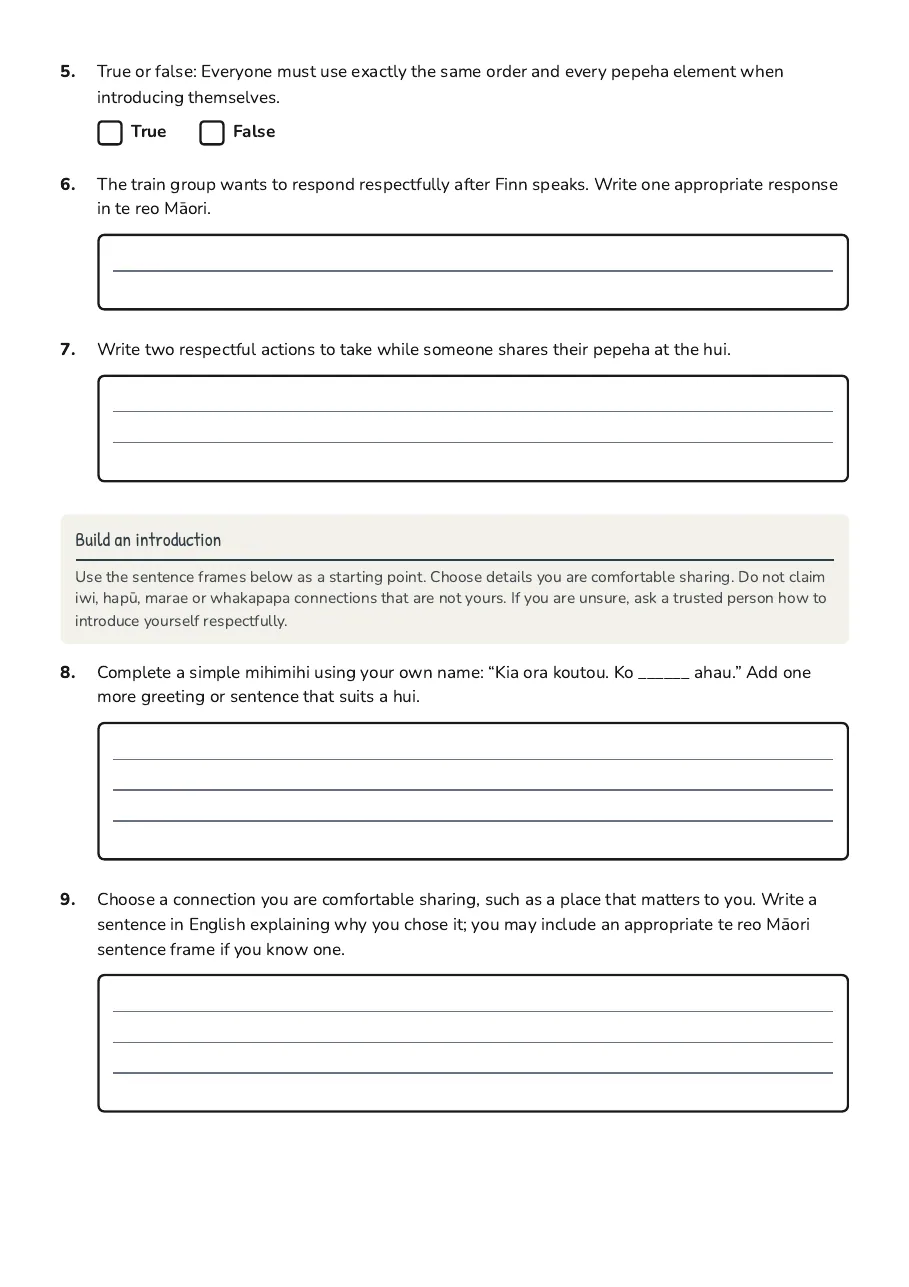
Build an introduction
Use the sentence frames below as a starting point. Choose details you are comfortable sharing. Do not claim iwi, hapū, marae or whakapapa connections that are not yours. If you are unsure, ask a trusted person how to introduce yourself respectfully.
3 printable pages
Page 1
Page 2
Page 3
About This Worksheet
Free in Kuraplan
Sign up free, grab the PDF, and customize it for your class.
Print-Ready
Formatted for standard paper. Clean layout, easy to read.
AI-Generated
Created with Kuraplan's AI, designed for real classroom use.
For Teachers & Parents
Use in classrooms, for homework, tutoring, or homeschool.
Need a custom version of this worksheet?
Kuraplan's AI generates custom worksheets in seconds — differentiated for every learner, aligned to your curriculum.
Generate Custom Worksheets — FreeMore Te Reo Māori Worksheets
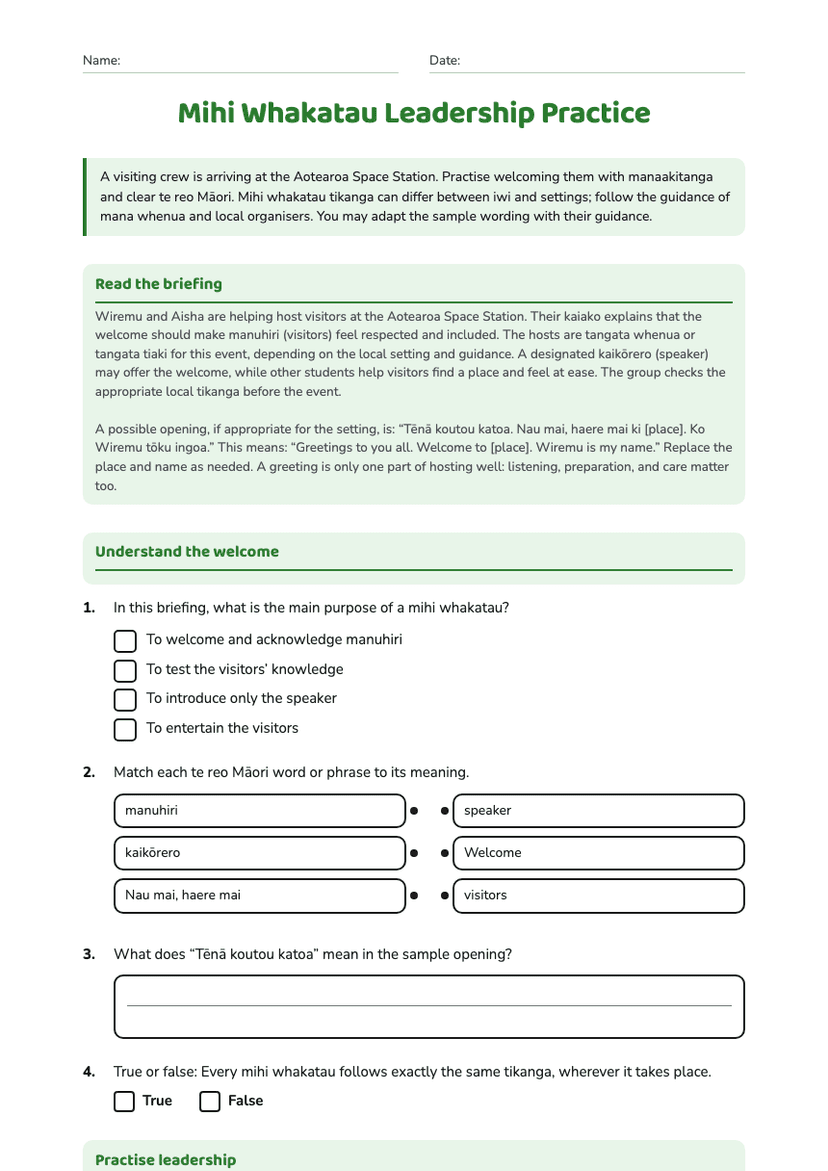
Mihi Whakatau Leadership Practice
Free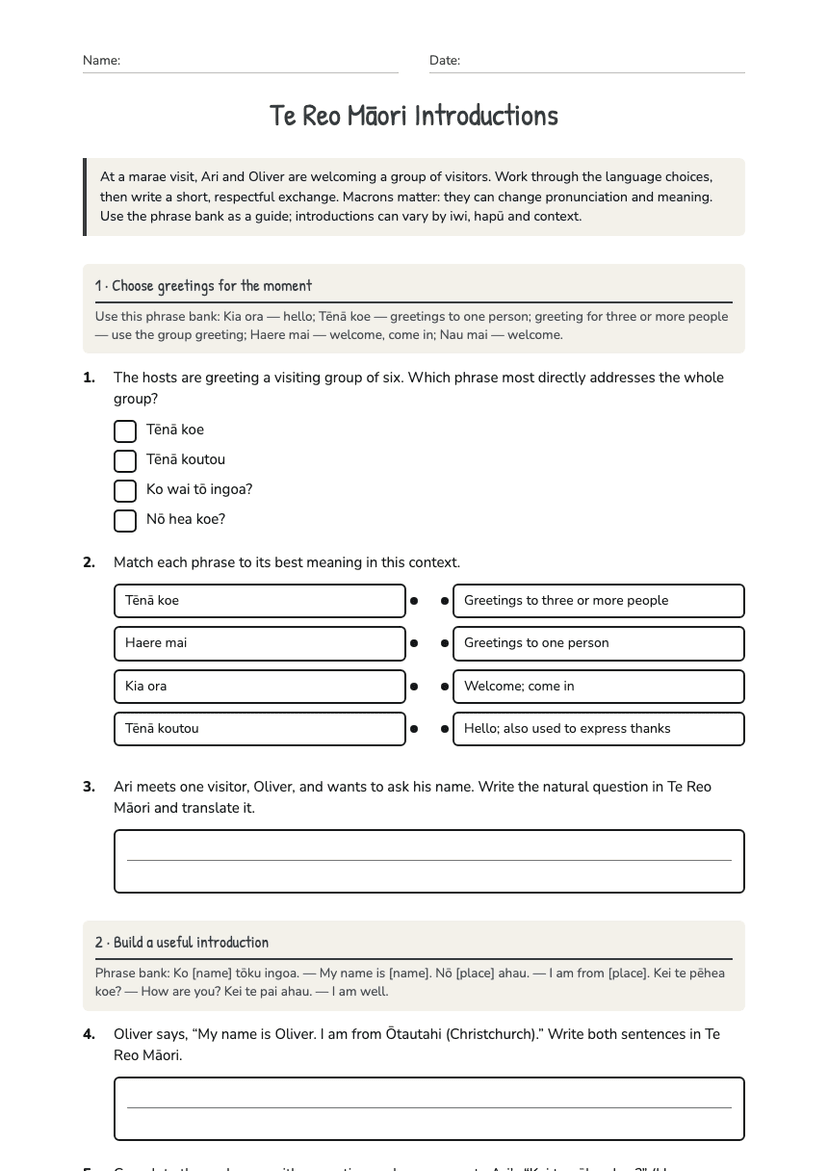
Te Reo Māori Introductions
Free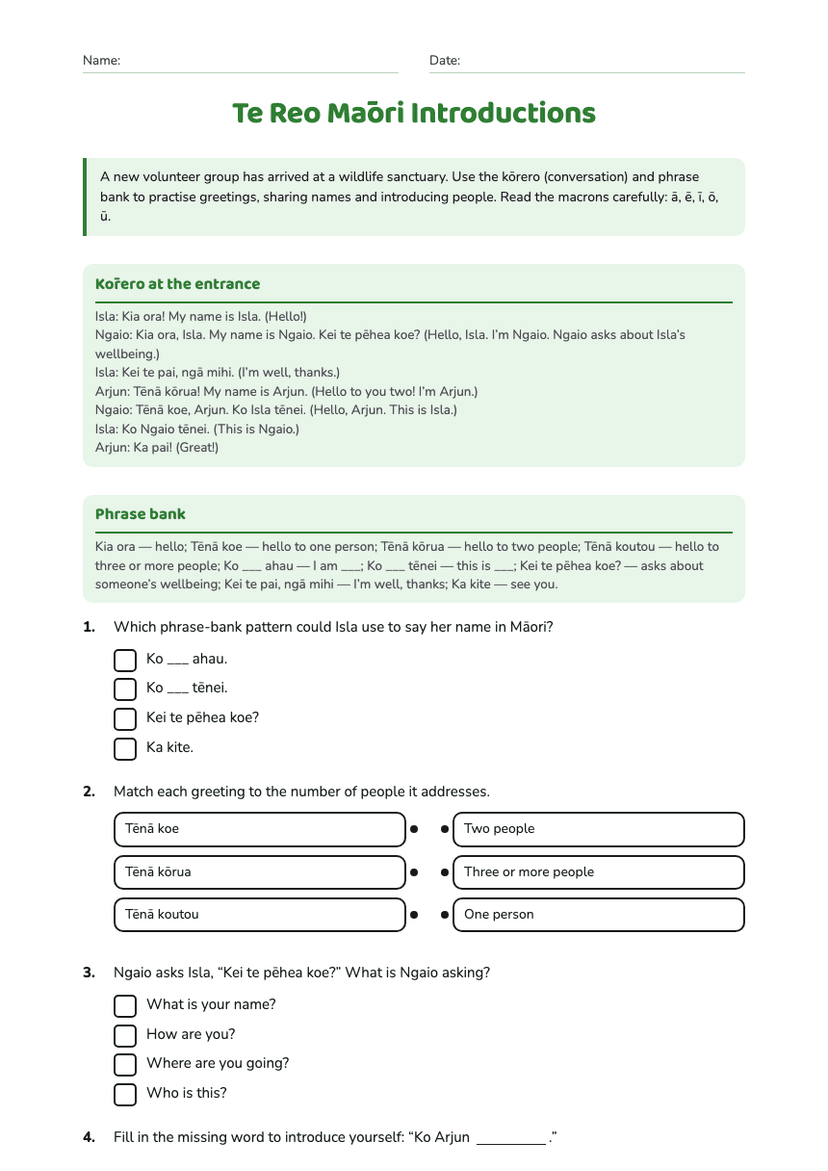
Te Reo Māori Introductions
Free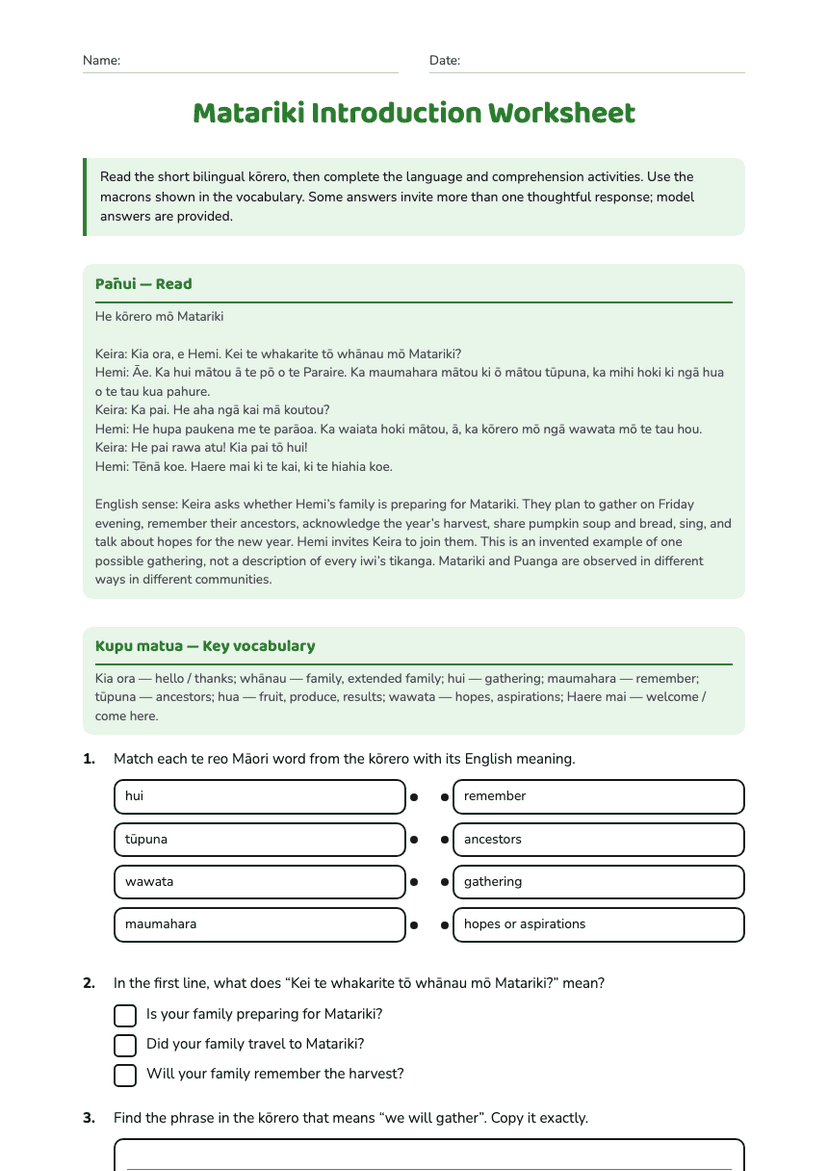
Matariki Introduction Worksheet
Free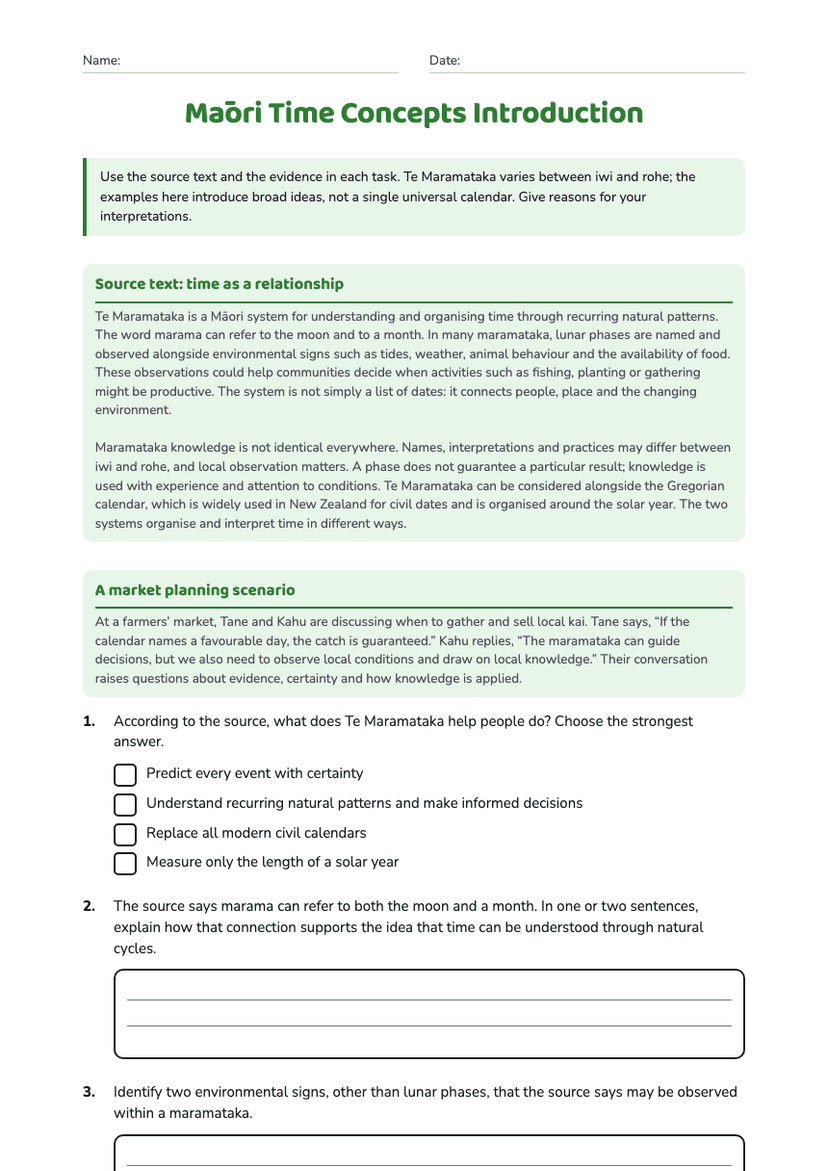
Māori Time Concepts Introduction
Free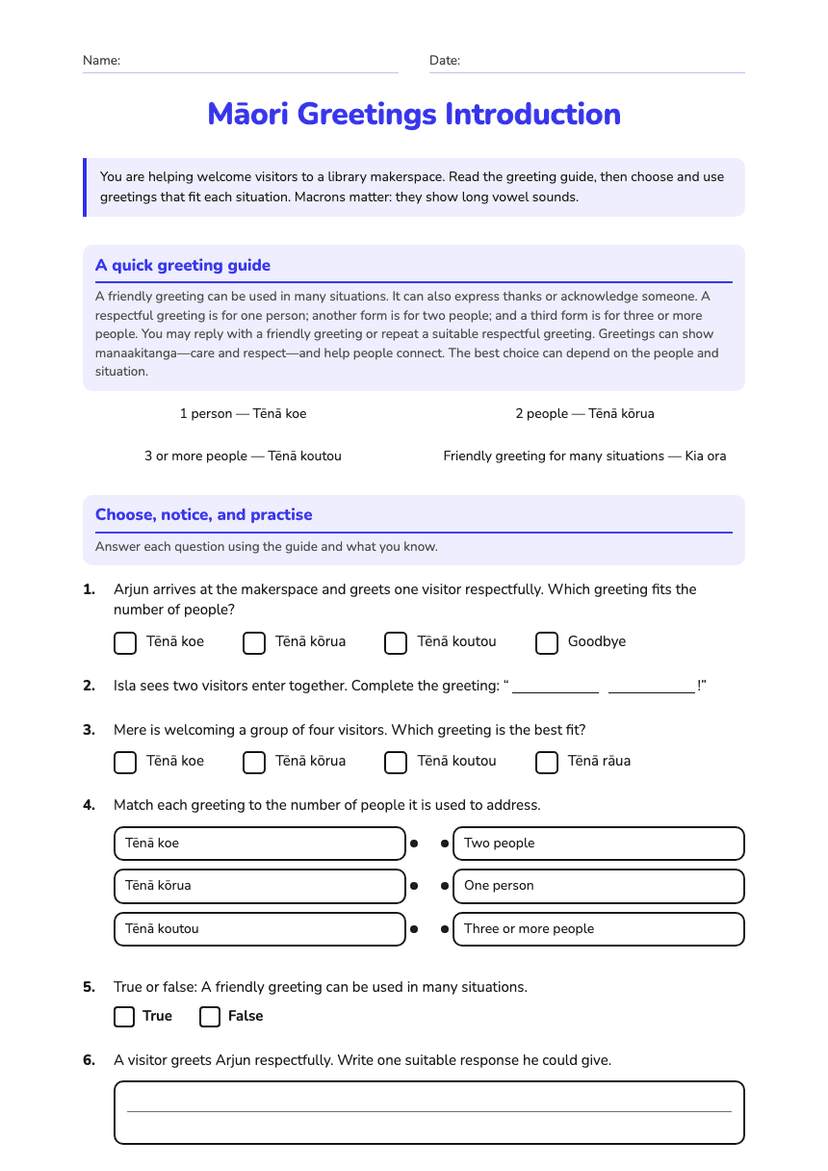
Māori Greetings Introduction
Free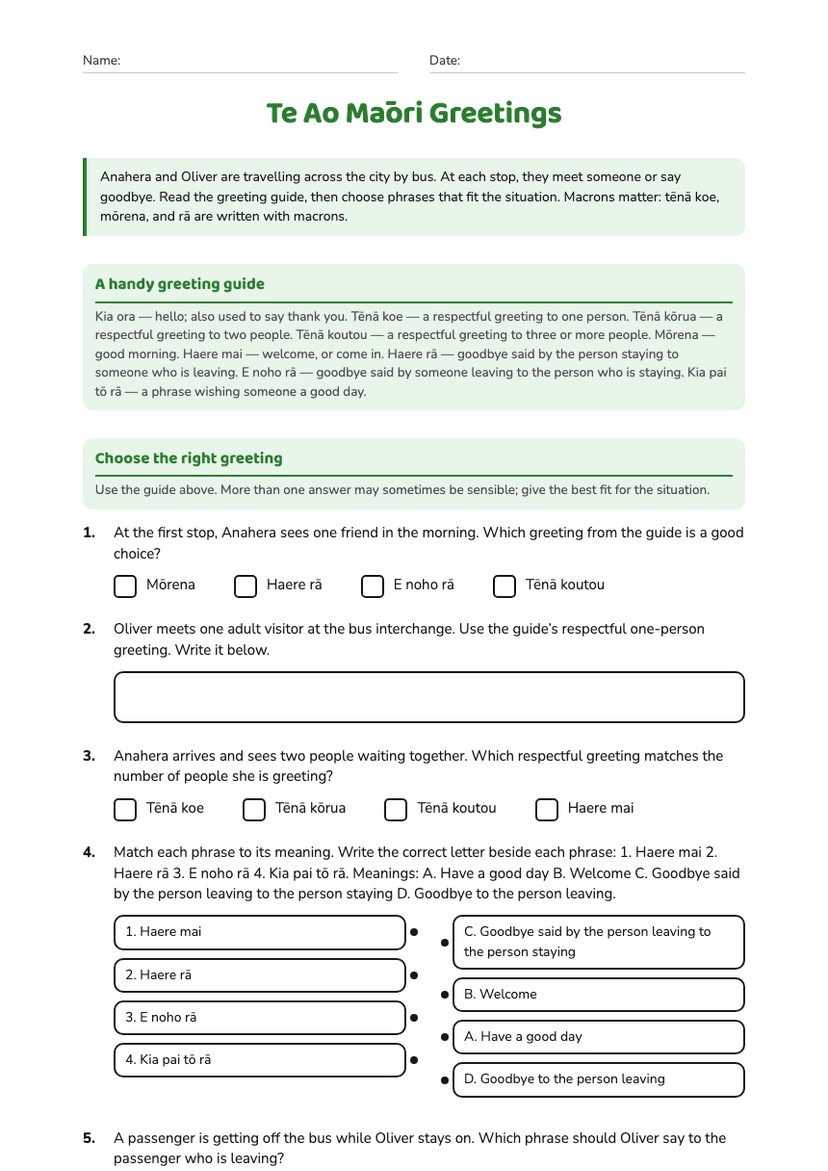
Te Ao Māori Greetings
Free