Rainforest Sounds Exploration
A free geography worksheet ready for your classroom. Open in Kuraplan to grab the print-ready PDF, customize it for your students, or generate a fresh version in seconds.
Rainforest Sounds Exploration
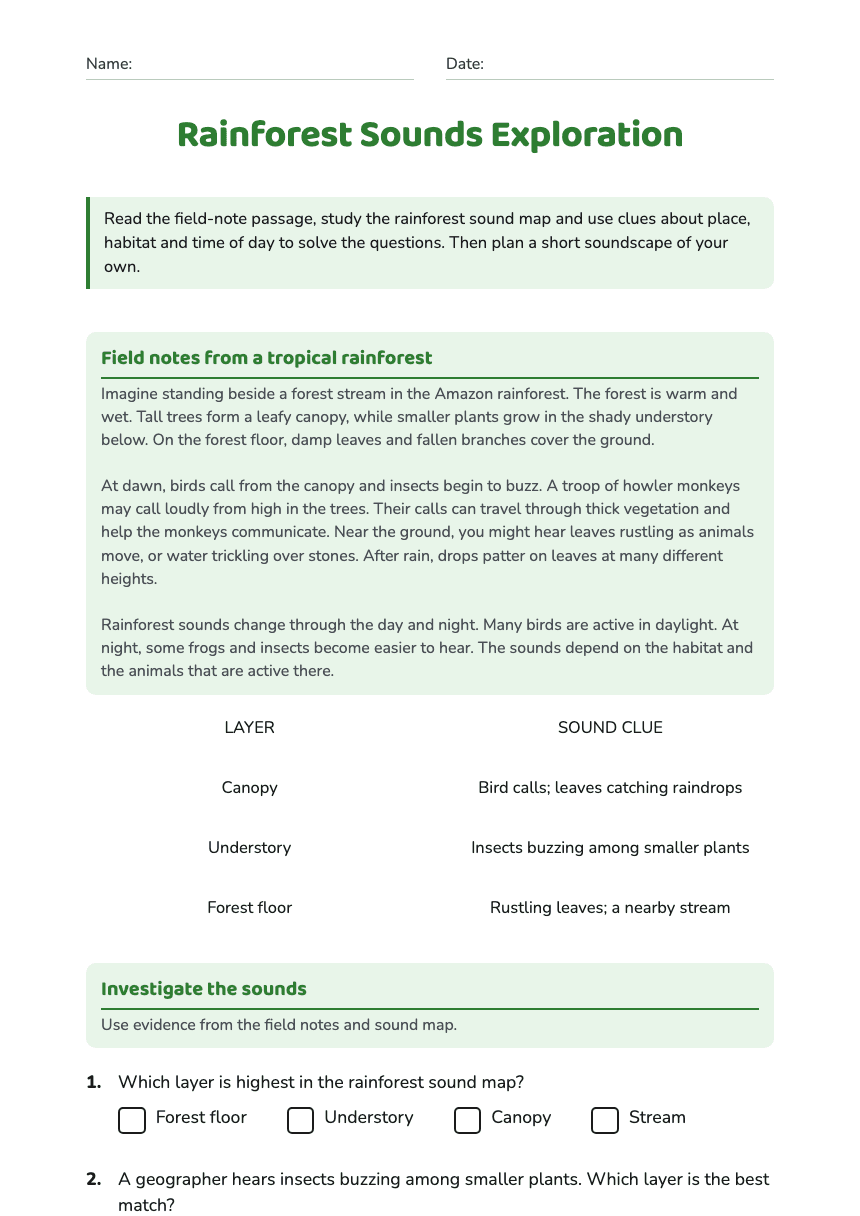
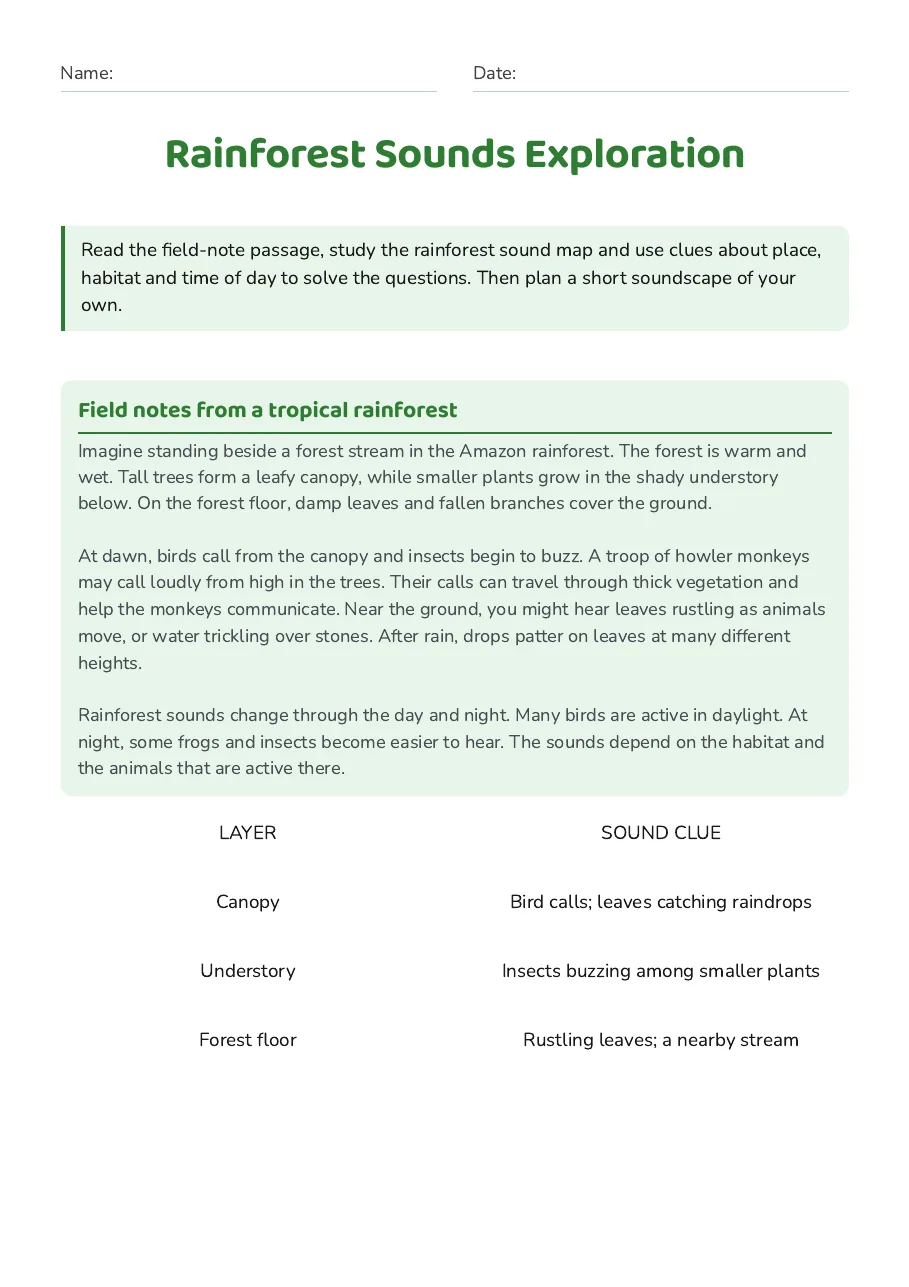
Field notes from a tropical rainforest
Imagine standing beside a forest stream in the Amazon rainforest. The forest is warm and wet. Tall trees form a leafy canopy, while smaller plants grow in the shady understory below. On the forest floor, damp leaves and fallen branches cover the ground. At dawn, birds call from the canopy and insects begin to buzz. A troop of howler monkeys may call loudly from high in the trees. Their calls can travel through thick vegetation and help the monkeys communicate. Near the ground, you might hear leaves rustling as animals move, or water trickling over stones. After rain, drops patter on leaves at many different heights. Rainforest sounds change through the day and night. Many birds are active in daylight. At night, some frogs and insects become easier to hear. The sounds depend on the habitat and the animals that are active there.
LAYER
SOUND CLUE
Canopy
Bird calls; leaves catching raindrops
Understory
Insects buzzing among smaller plants
Forest floor
Rustling leaves; a nearby stream
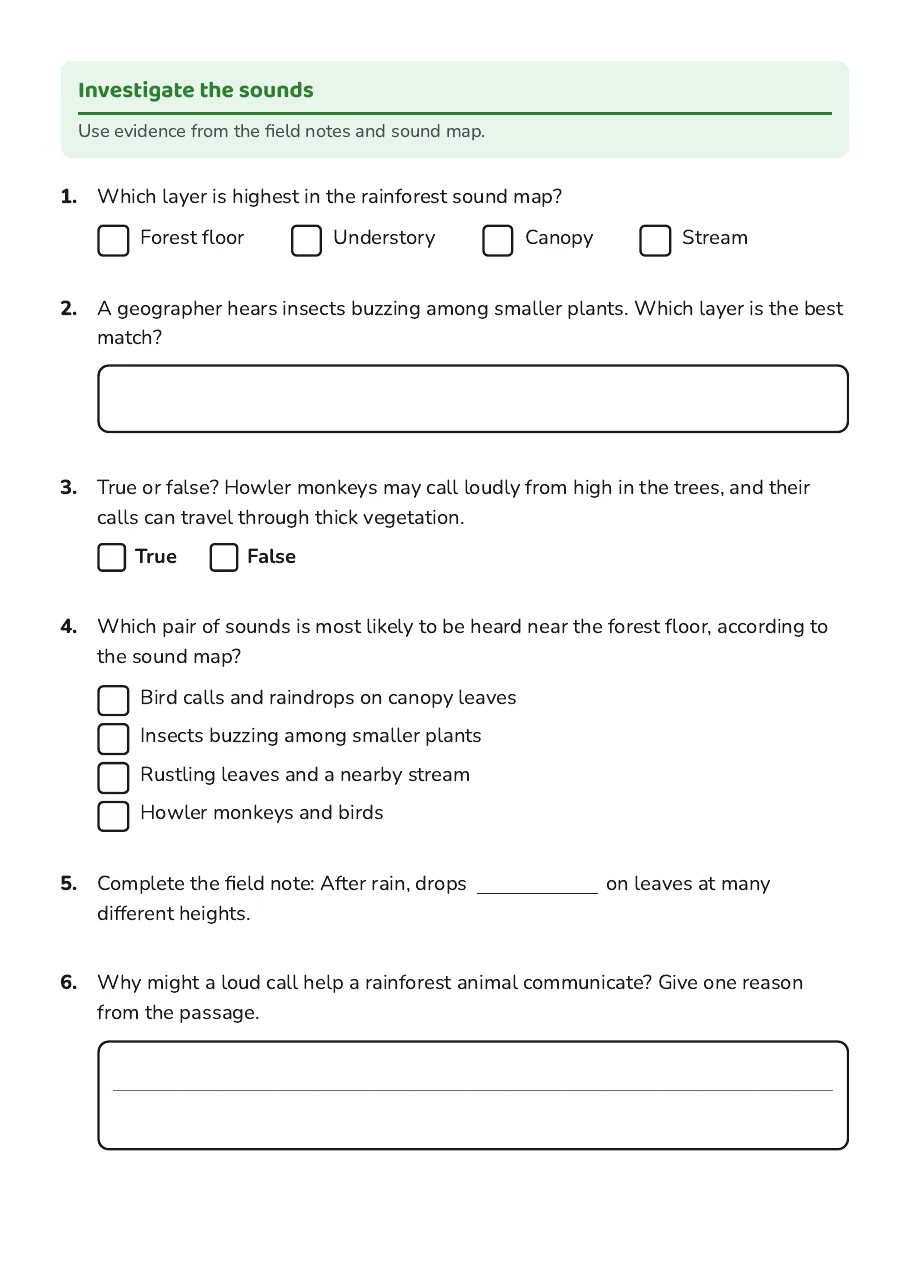
Investigate the sounds
Use evidence from the field notes and sound map.
- Forest floor
- Understory
- Canopy
- Stream
- Bird calls and raindrops on canopy leaves
- Insects buzzing among smaller plants
- Rustling leaves and a nearby stream
- Howler monkeys and birds
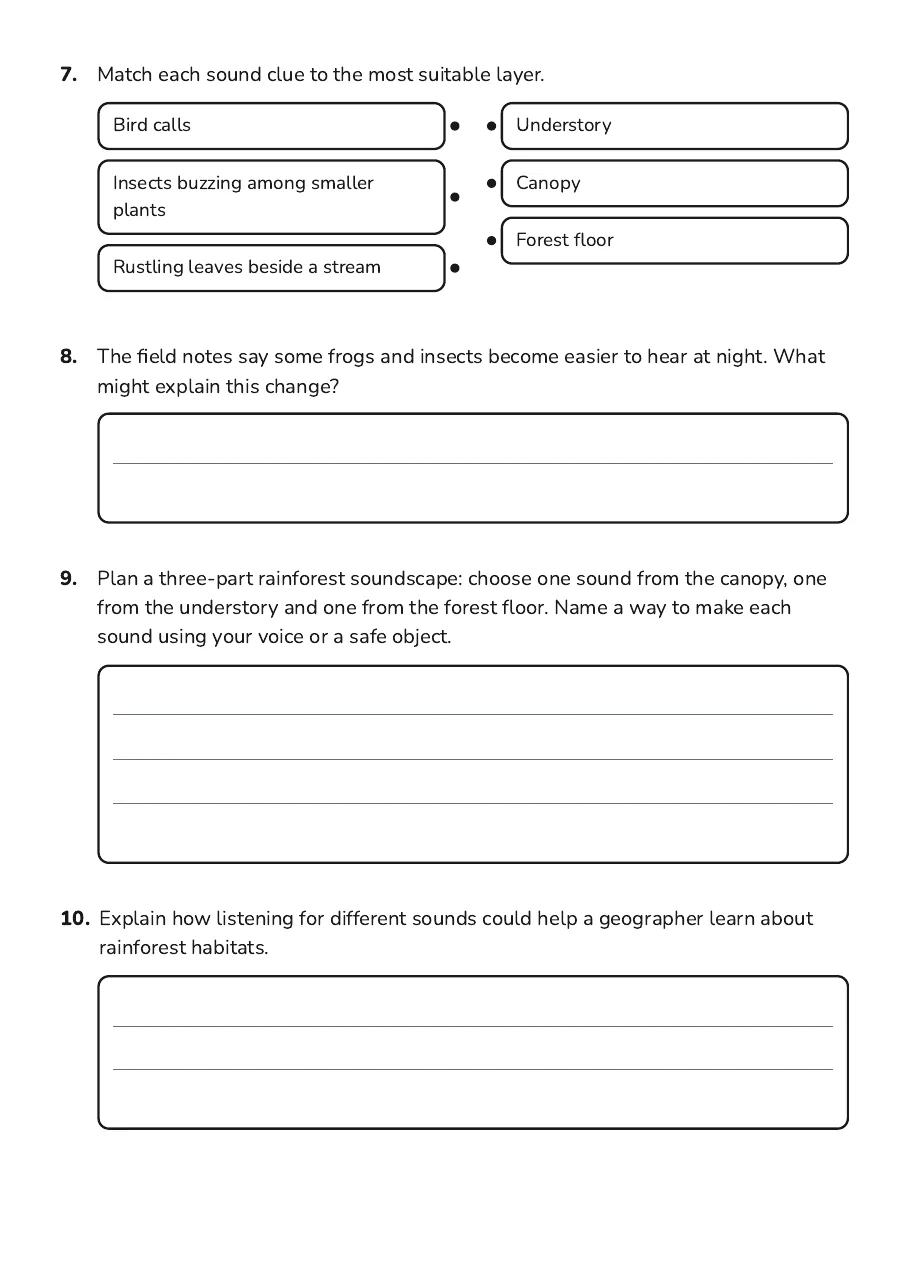
- Bird calls
- Insects buzzing among smaller plants
- Rustling leaves beside a stream
- Understory
- Canopy
- Forest floor
3 printable pages
Page 1
Page 2
Page 3
About This Worksheet
Free in Kuraplan
Sign up free, grab the PDF, and customize it for your class.
Print-Ready
Formatted for standard paper. Clean layout, easy to read.
AI-Generated
Created with Kuraplan's AI, designed for real classroom use.
For Teachers & Parents
Use in classrooms, for homework, tutoring, or homeschool.
Need a custom version of this worksheet?
Kuraplan's AI generates custom worksheets in seconds — differentiated for every learner, aligned to your curriculum.
Generate Custom Worksheets — Free