Slavery's Personal Stories
A free history worksheet ready for your classroom. Open in Kuraplan to grab the print-ready PDF, customize it for your students, or generate a fresh version in seconds.
Slavery's Personal Stories
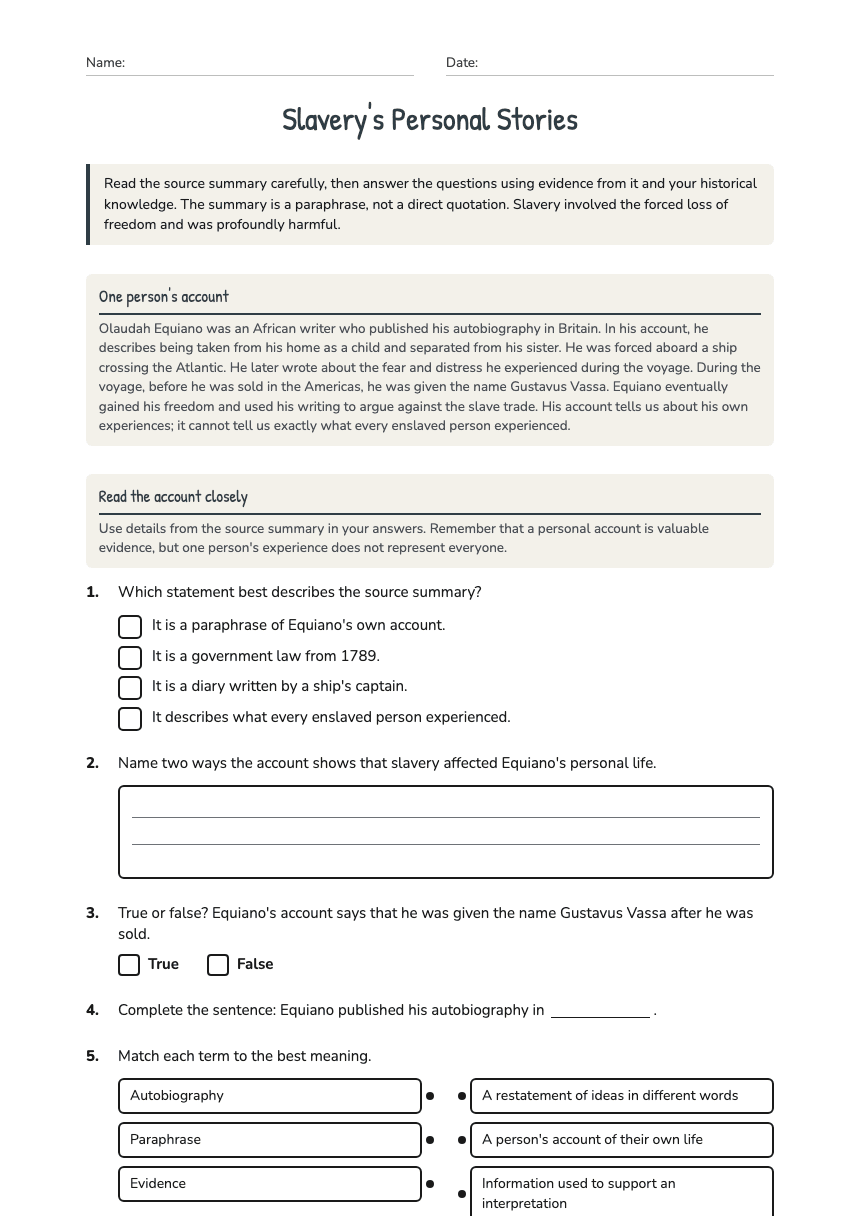
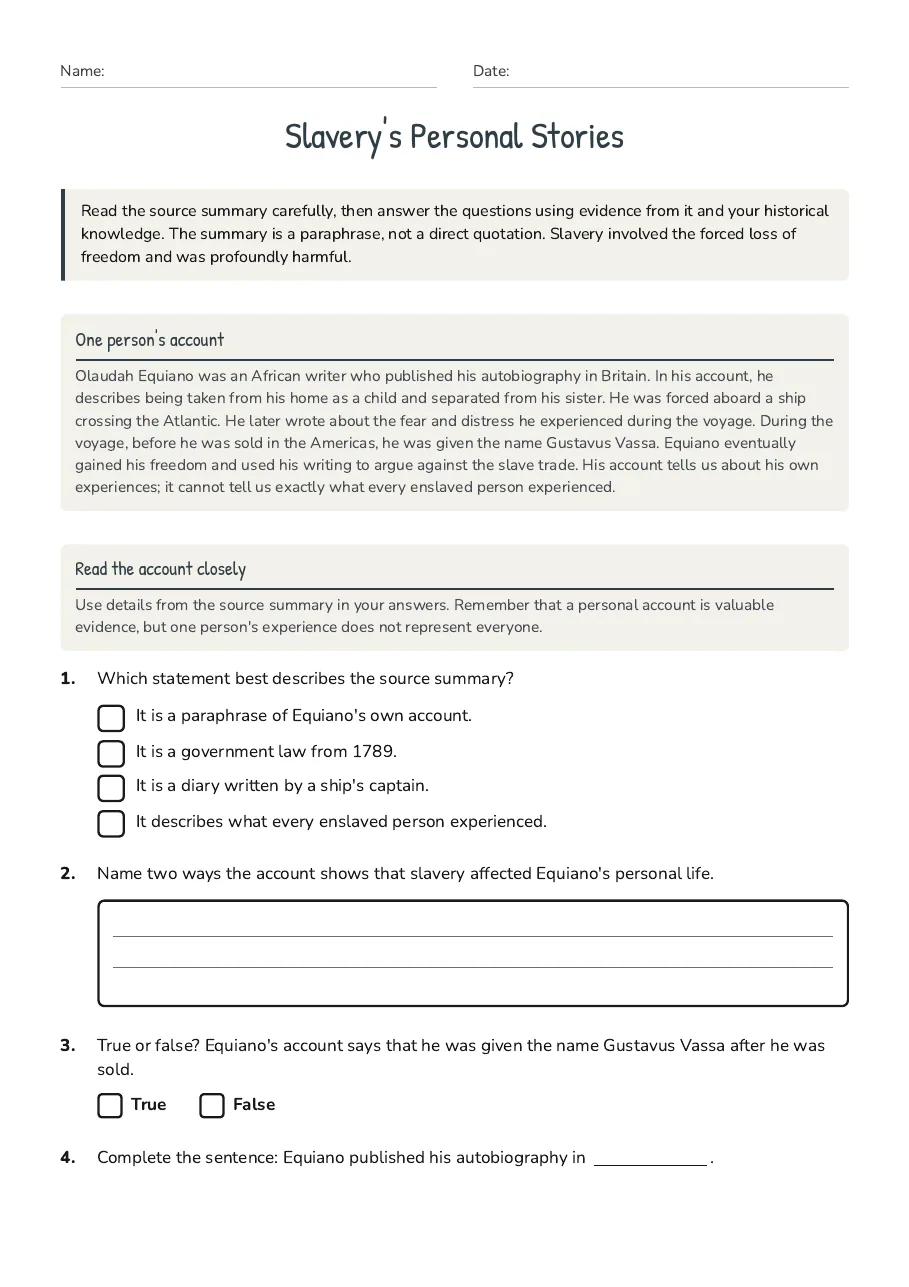
One person's account
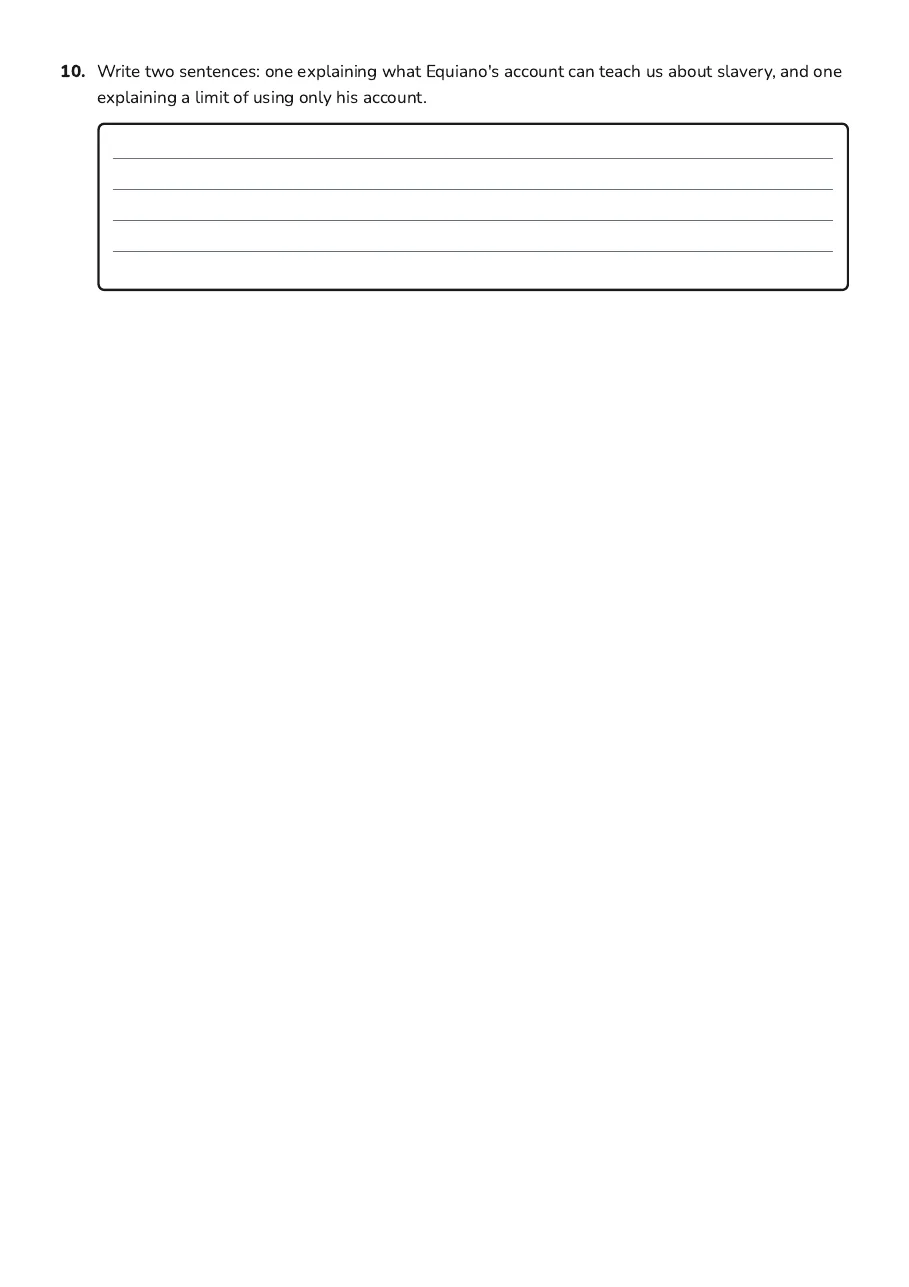
Olaudah Equiano was an African writer who published his autobiography in Britain. In his account, he describes being taken from his home as a child and separated from his sister. He was forced aboard a ship crossing the Atlantic. He later wrote about the fear and distress he experienced during the voyage. During the voyage, before he was sold in the Americas, he was given the name Gustavus Vassa. Equiano eventually gained his freedom and used his writing to argue against the slave trade. His account tells us about his own experiences; it cannot tell us exactly what every enslaved person experienced.
Read the account closely
Use details from the source summary in your answers. Remember that a personal account is valuable evidence, but one person's experience does not represent everyone.
- It is a paraphrase of Equiano's own account.
- It is a government law from 1789.
- It is a diary written by a ship's captain.
- It describes what every enslaved person experienced.
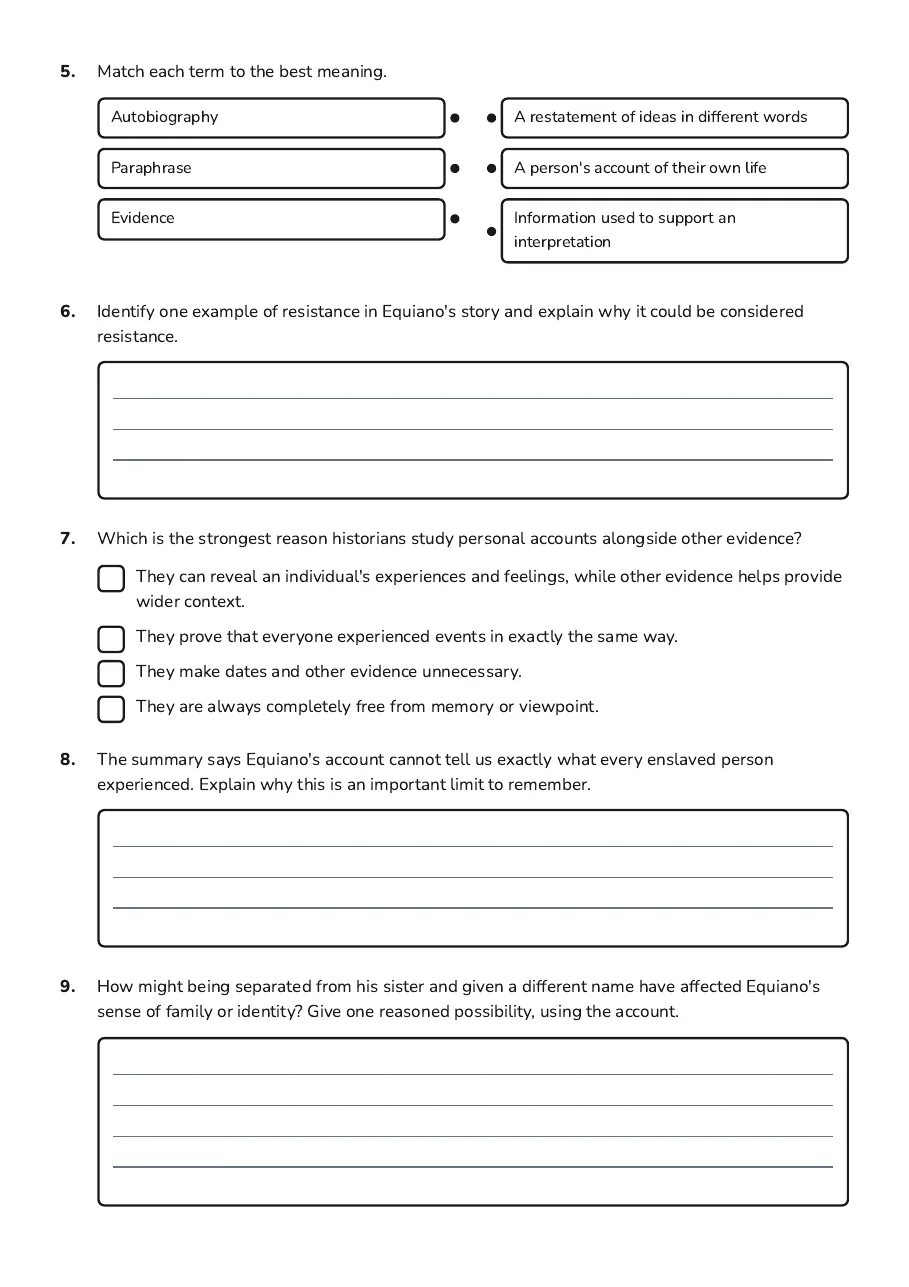
- Autobiography
- Paraphrase
- Evidence
- A restatement of ideas in different words
- A person's account of their own life
- Information used to support an interpretation
- They can reveal an individual's experiences and feelings, while other evidence helps provide wider context.
- They prove that everyone experienced events in exactly the same way.
- They make dates and other evidence unnecessary.
- They are always completely free from memory or viewpoint.
3 printable pages
Page 1
Page 2
Page 3
About This Worksheet
Free in Kuraplan
Sign up free, grab the PDF, and customize it for your class.
Print-Ready
Formatted for standard paper. Clean layout, easy to read.
AI-Generated
Created with Kuraplan's AI, designed for real classroom use.
For Teachers & Parents
Use in classrooms, for homework, tutoring, or homeschool.
Need a custom version of this worksheet?
Kuraplan's AI generates custom worksheets in seconds — differentiated for every learner, aligned to your curriculum.
Generate Custom Worksheets — FreeMore History Worksheets
League of Nations Weaknesses
Free
Ancient vs Modern Benin
Free
Year 7 History Exploration: Britain Through Time
Free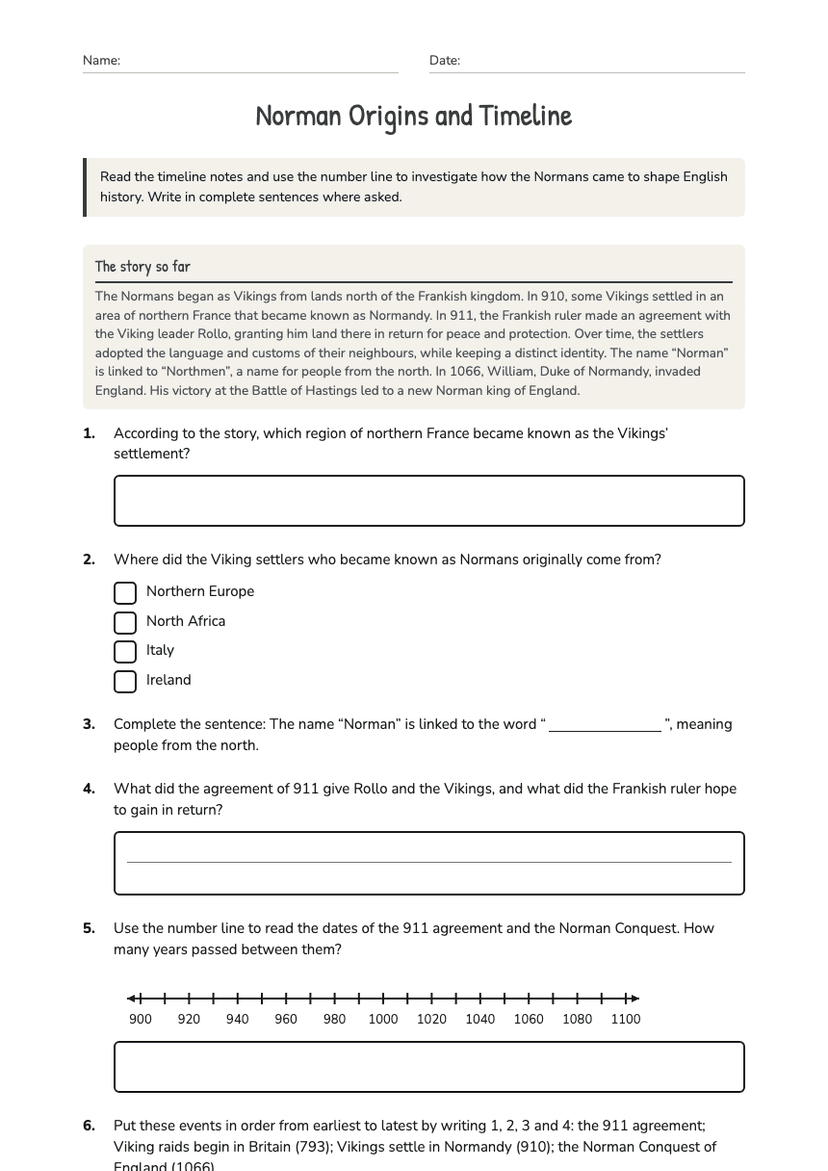
Norman Origins and Timeline
Free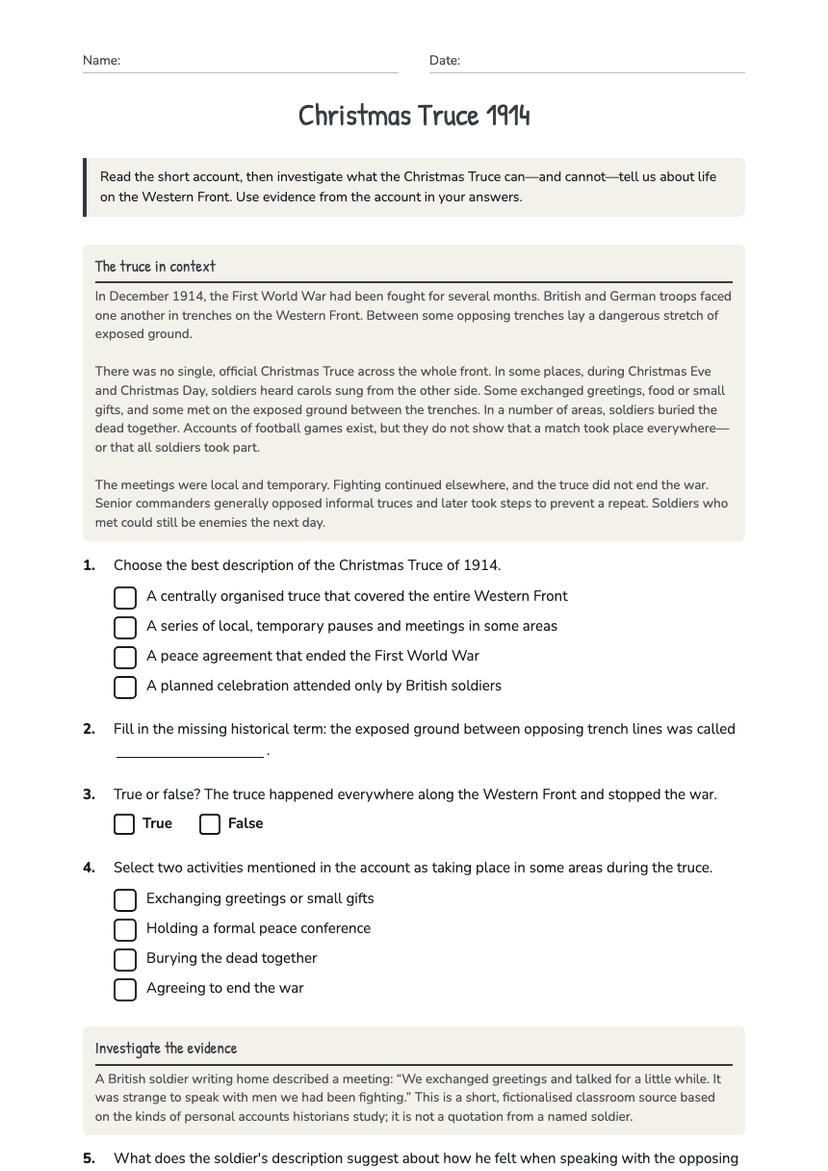
Christmas Truce 1914
Free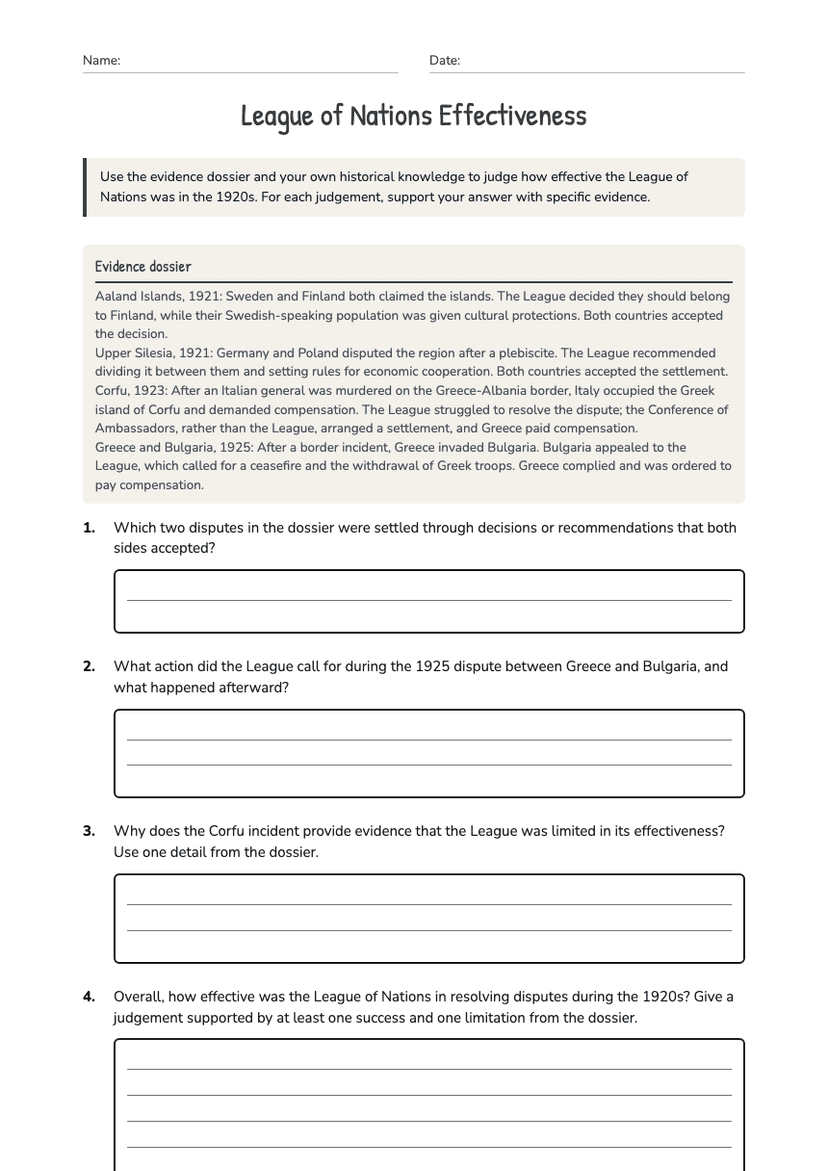
League of Nations Effectiveness
Free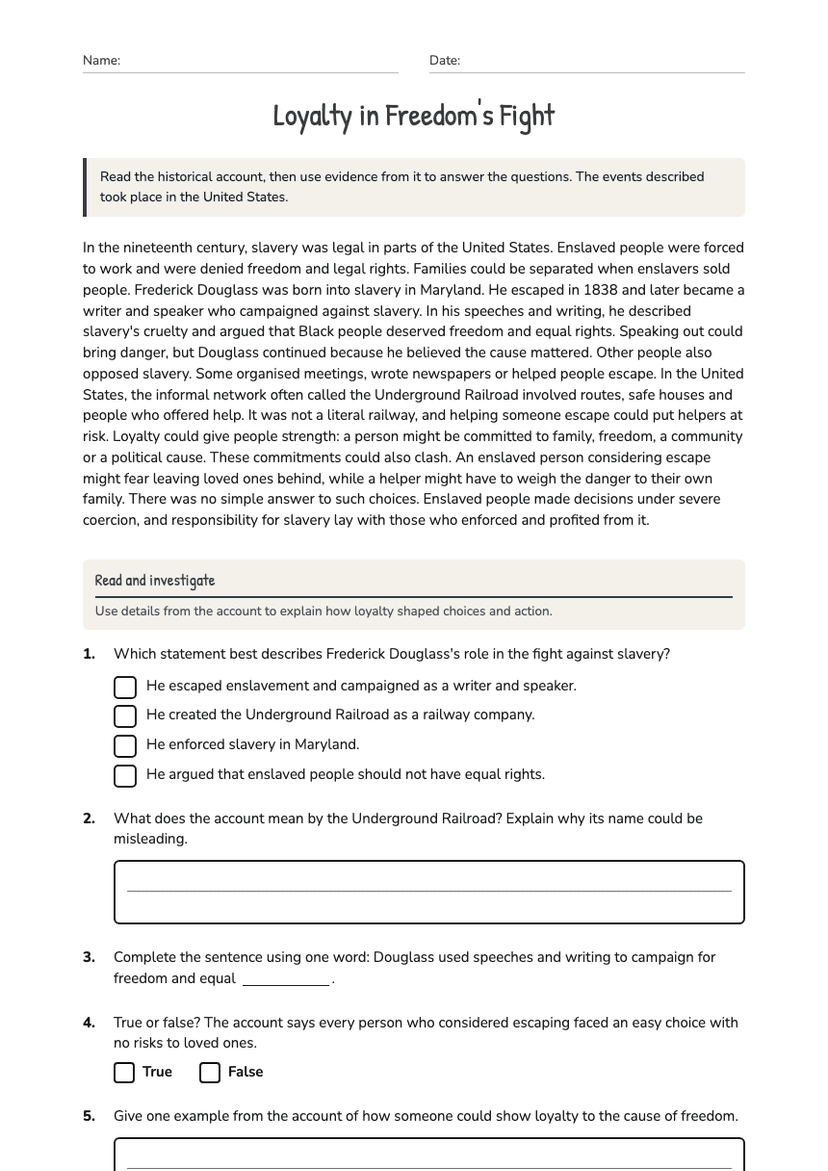
Loyalty in Freedom's Fight
Free