Suffragette Protest Methods Worksheet
A free history worksheet ready for your classroom. Open in Kuraplan to grab the print-ready PDF, customize it for your students, or generate a fresh version in seconds.
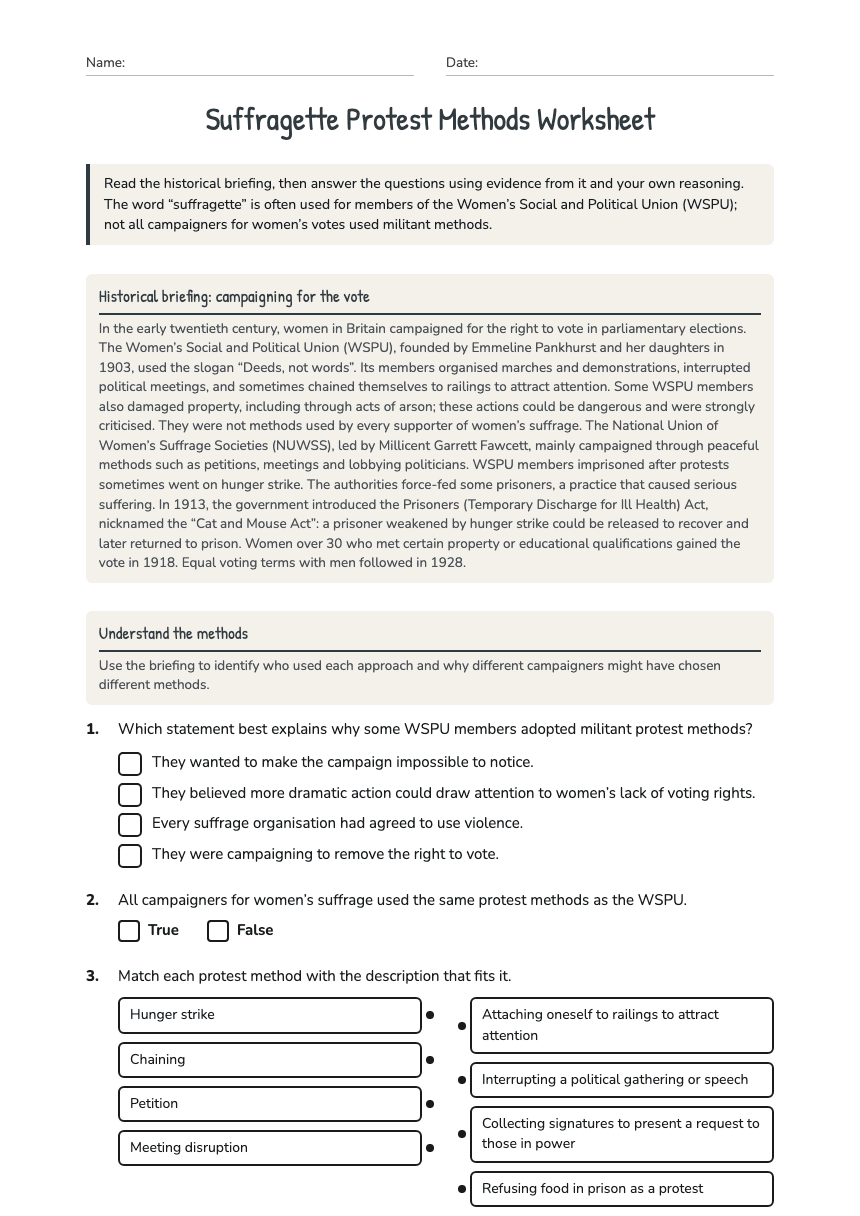
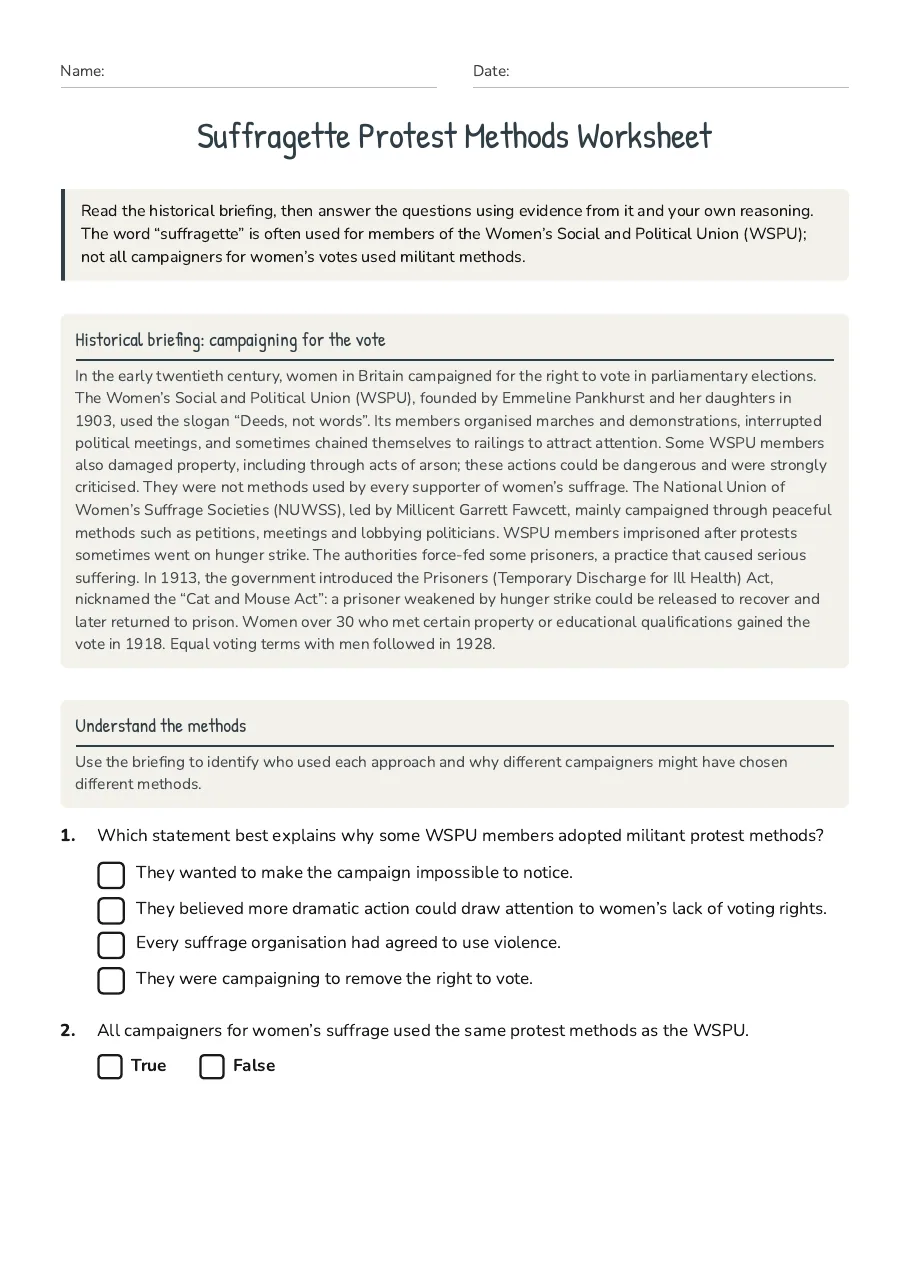
Suffragette Protest Methods Worksheet
Historical briefing: campaigning for the vote
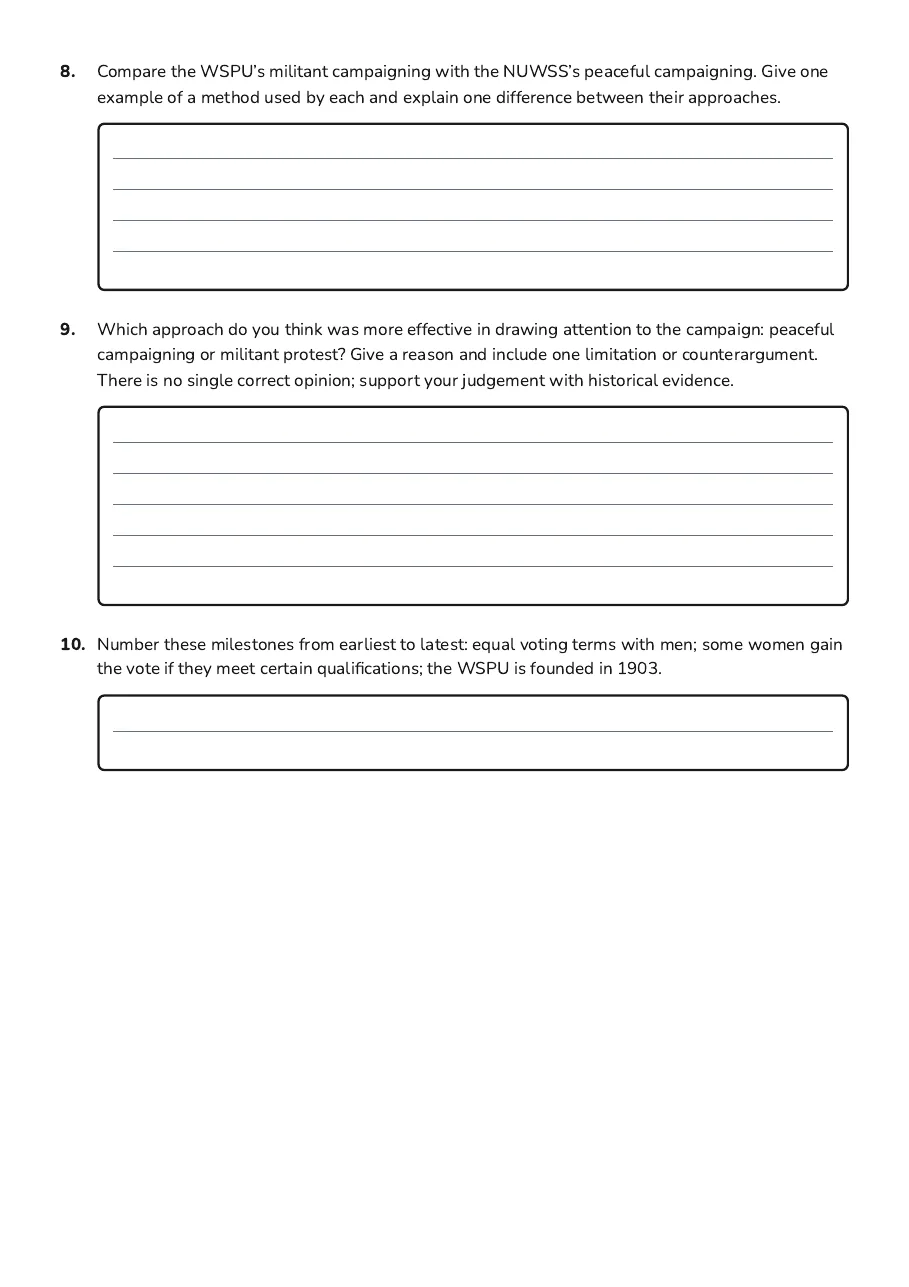
In the early twentieth century, women in Britain campaigned for the right to vote in parliamentary elections. The Women’s Social and Political Union (WSPU), founded by Emmeline Pankhurst and her daughters in 1903, used the slogan “Deeds, not words”. Its members organised marches and demonstrations, interrupted political meetings, and sometimes chained themselves to railings to attract attention. Some WSPU members also damaged property, including through acts of arson; these actions could be dangerous and were strongly criticised. They were not methods used by every supporter of women’s suffrage. The National Union of Women’s Suffrage Societies (NUWSS), led by Millicent Garrett Fawcett, mainly campaigned through peaceful methods such as petitions, meetings and lobbying politicians. WSPU members imprisoned after protests sometimes went on hunger strike. The authorities force-fed some prisoners, a practice that caused serious suffering. In 1913, the government introduced the Prisoners (Temporary Discharge for Ill Health) Act, nicknamed the “Cat and Mouse Act”: a prisoner weakened by hunger strike could be released to recover and later returned to prison. Women over 30 who met certain property or educational qualifications gained the vote in 1918. Equal voting terms with men followed in 1928.
Understand the methods
Use the briefing to identify who used each approach and why different campaigners might have chosen different methods.
- They wanted to make the campaign impossible to notice.
- They believed more dramatic action could draw attention to women’s lack of voting rights.
- Every suffrage organisation had agreed to use violence.
- They were campaigning to remove the right to vote.
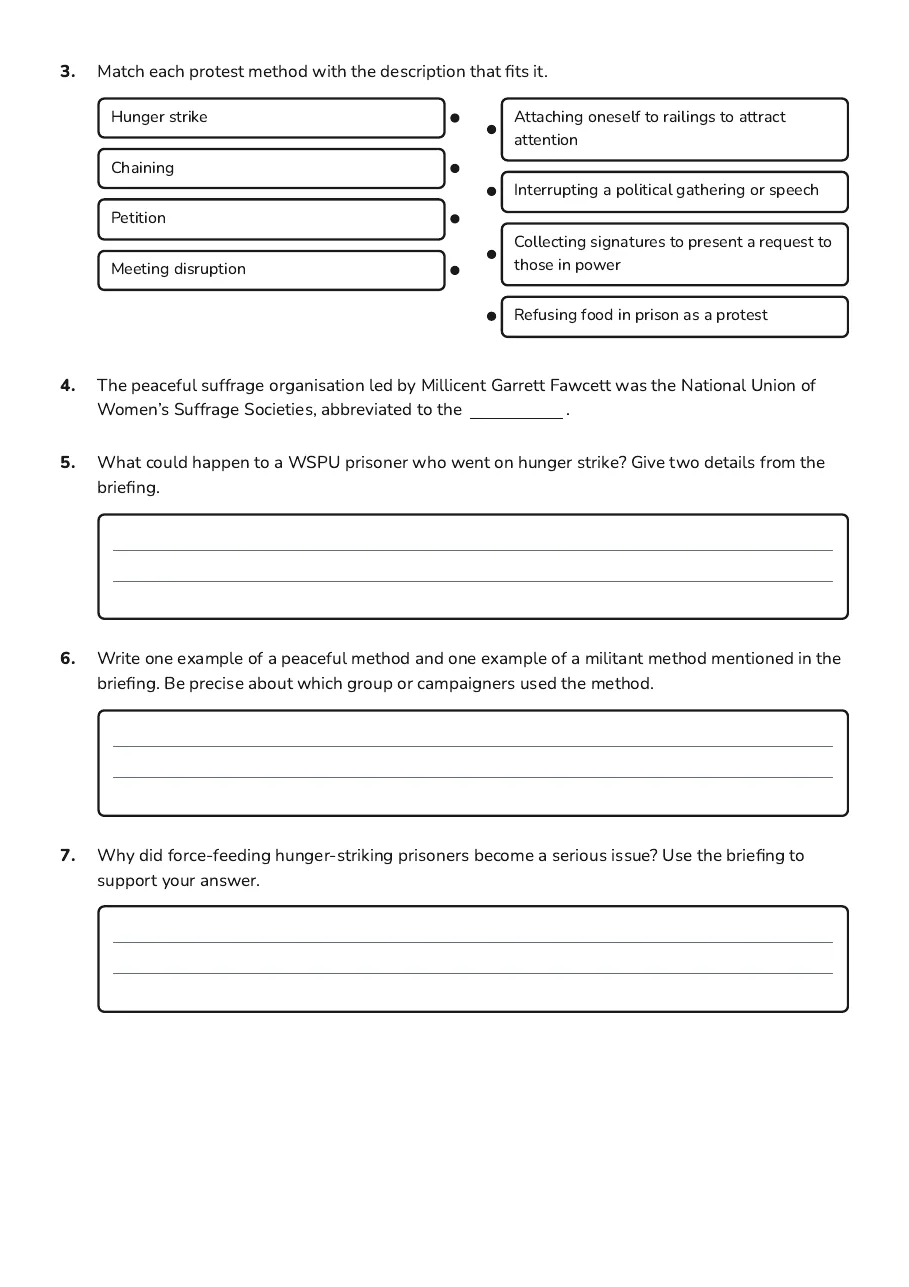
- Hunger strike
- Chaining
- Petition
- Meeting disruption
- Attaching oneself to railings to attract attention
- Interrupting a political gathering or speech
- Collecting signatures to present a request to those in power
- Refusing food in prison as a protest
3 printable pages
Page 1
Page 2
Page 3
About This Worksheet
Free in Kuraplan
Sign up free, grab the PDF, and customize it for your class.
Print-Ready
Formatted for standard paper. Clean layout, easy to read.
AI-Generated
Created with Kuraplan's AI, designed for real classroom use.
For Teachers & Parents
Use in classrooms, for homework, tutoring, or homeschool.
Need a custom version of this worksheet?
Kuraplan's AI generates custom worksheets in seconds — differentiated for every learner, aligned to your curriculum.
Generate Custom Worksheets — FreeMore History Worksheets
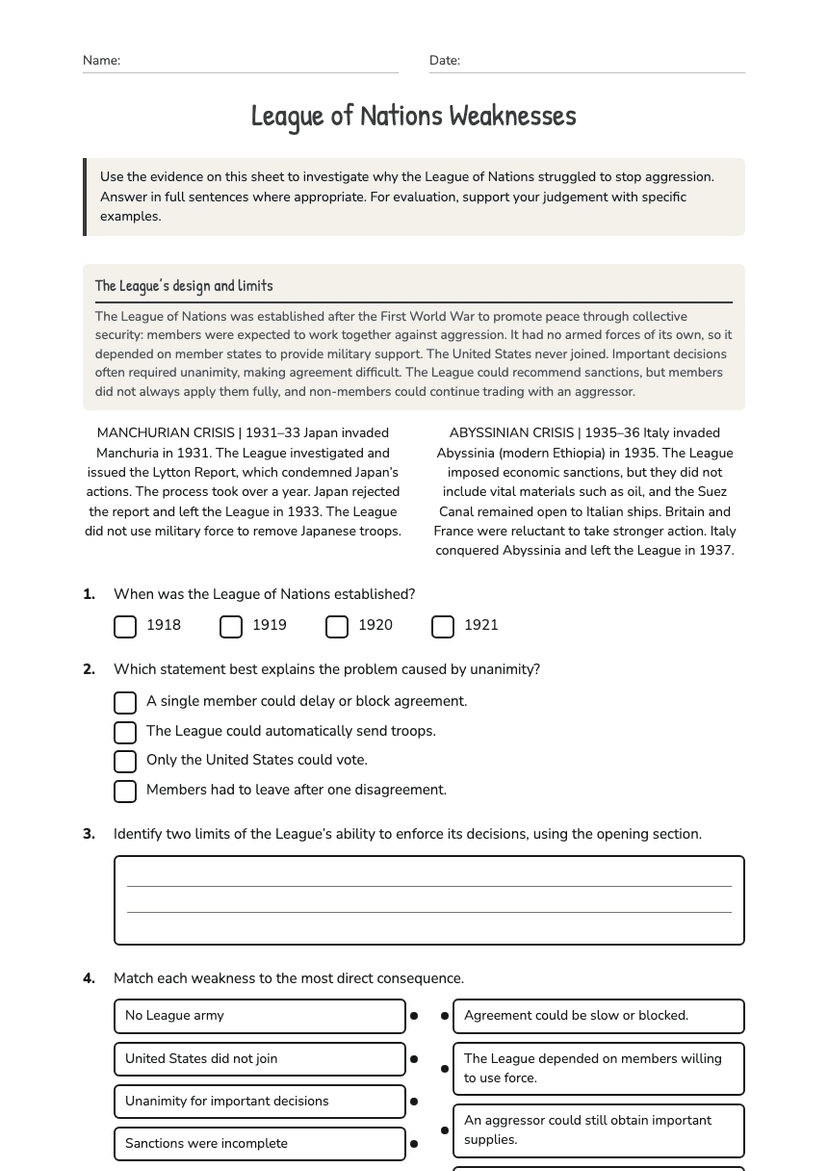
League of Nations Weaknesses
Free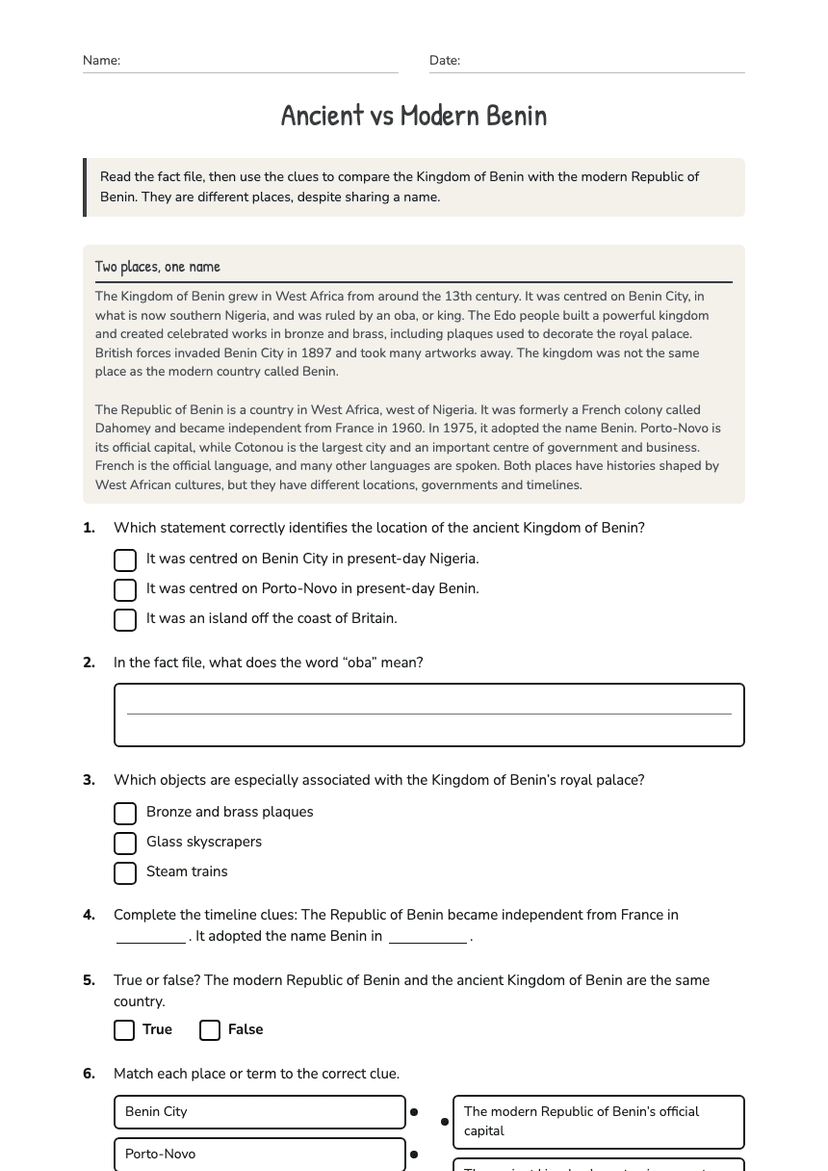
Ancient vs Modern Benin
Free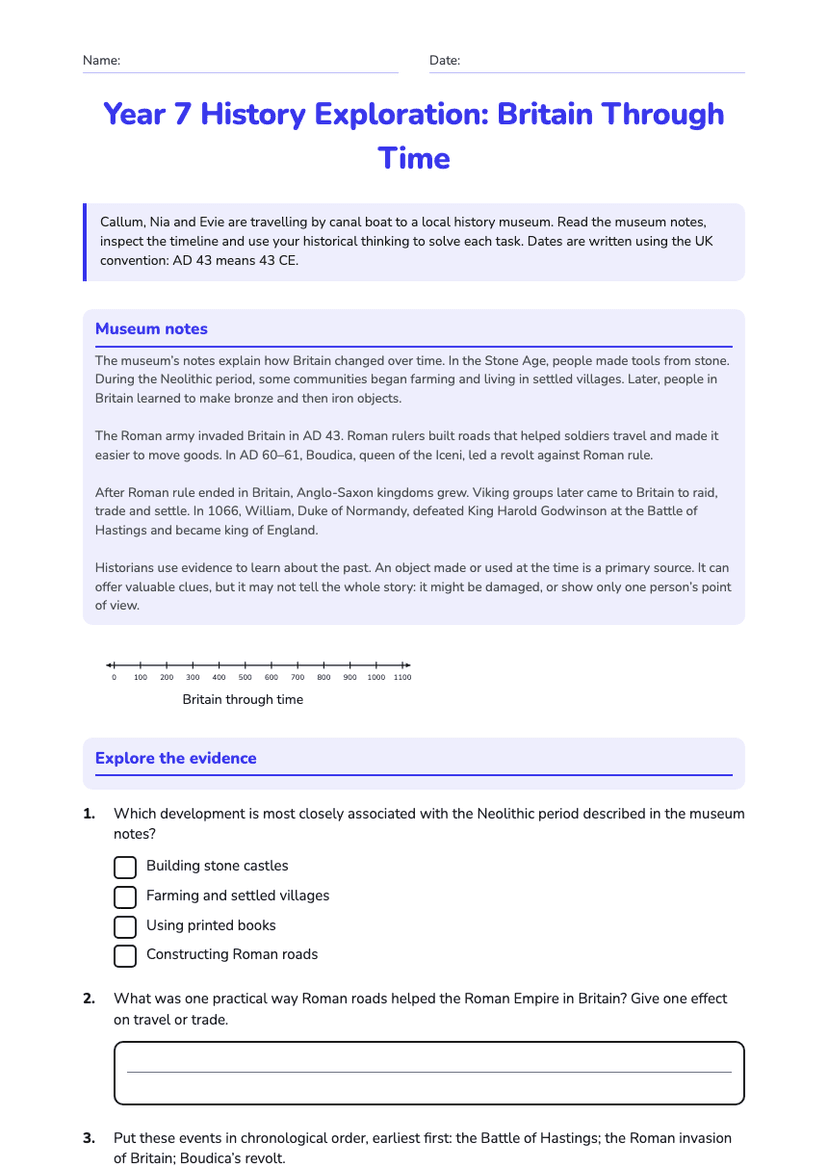
Year 7 History Exploration: Britain Through Time
Free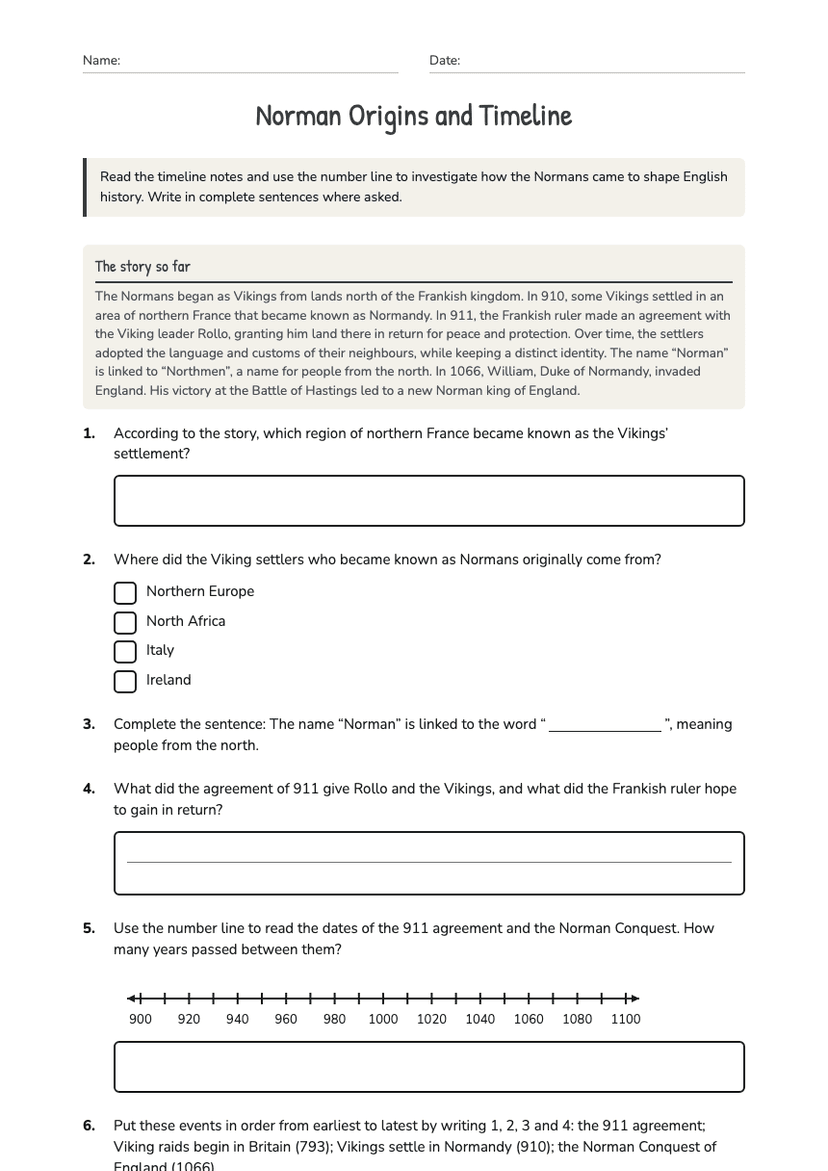
Norman Origins and Timeline
Free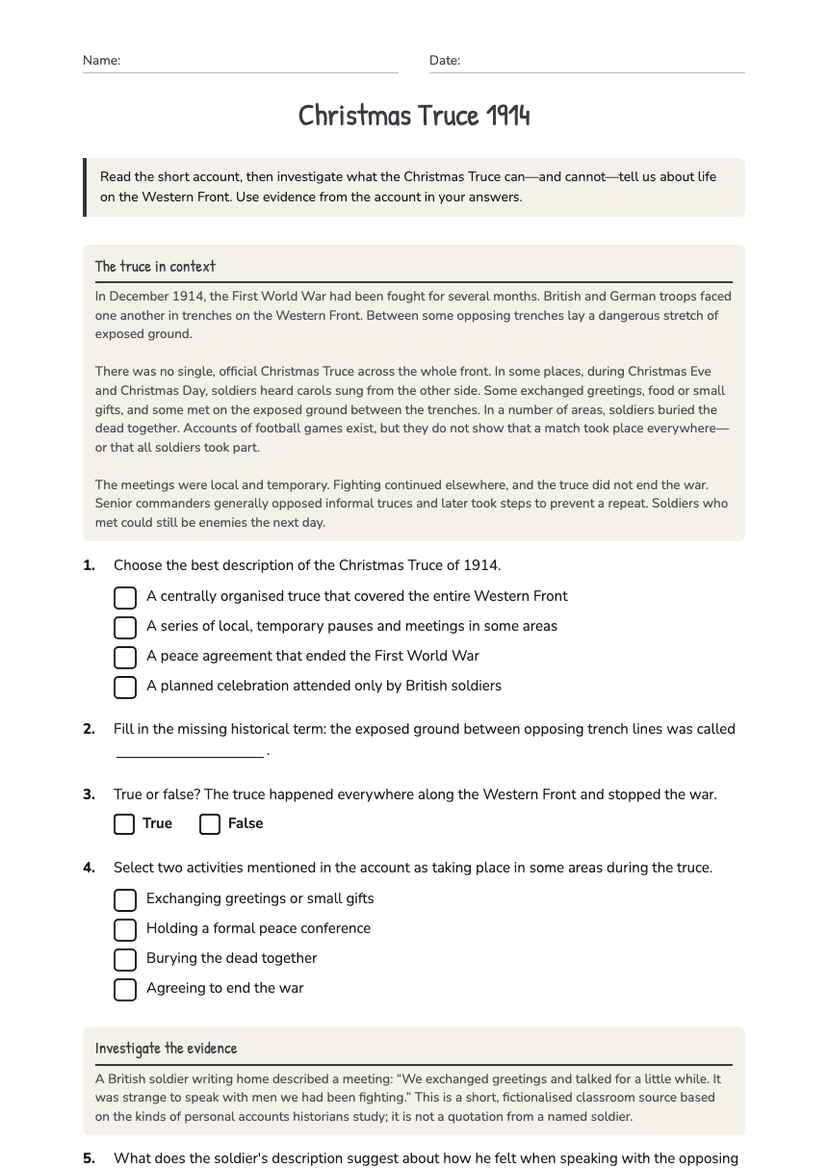
Christmas Truce 1914
Free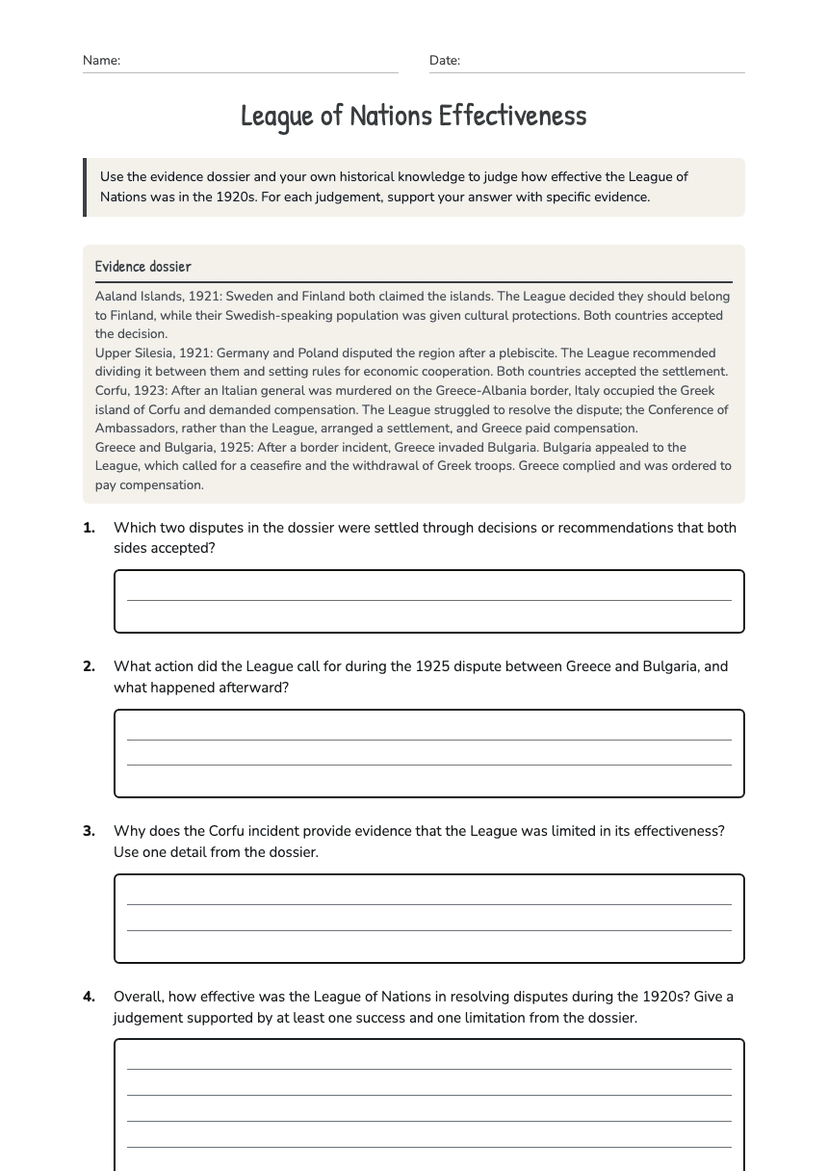
League of Nations Effectiveness
Free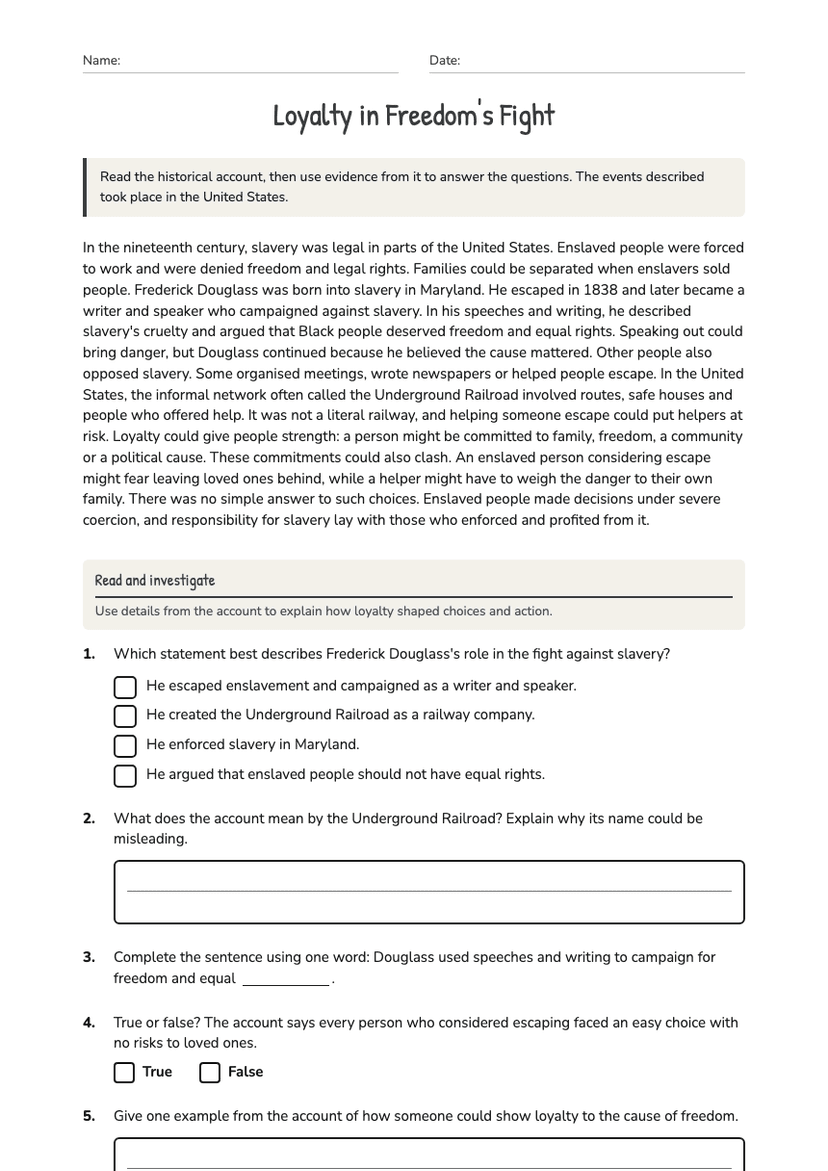
Loyalty in Freedom's Fight
Free