Te Reo Māori Greetings
A free te reo māori worksheet ready for your classroom. Open in Kuraplan to grab the print-ready PDF, customize it for your students, or generate a fresh version in seconds.
Te Reo Māori Greetings
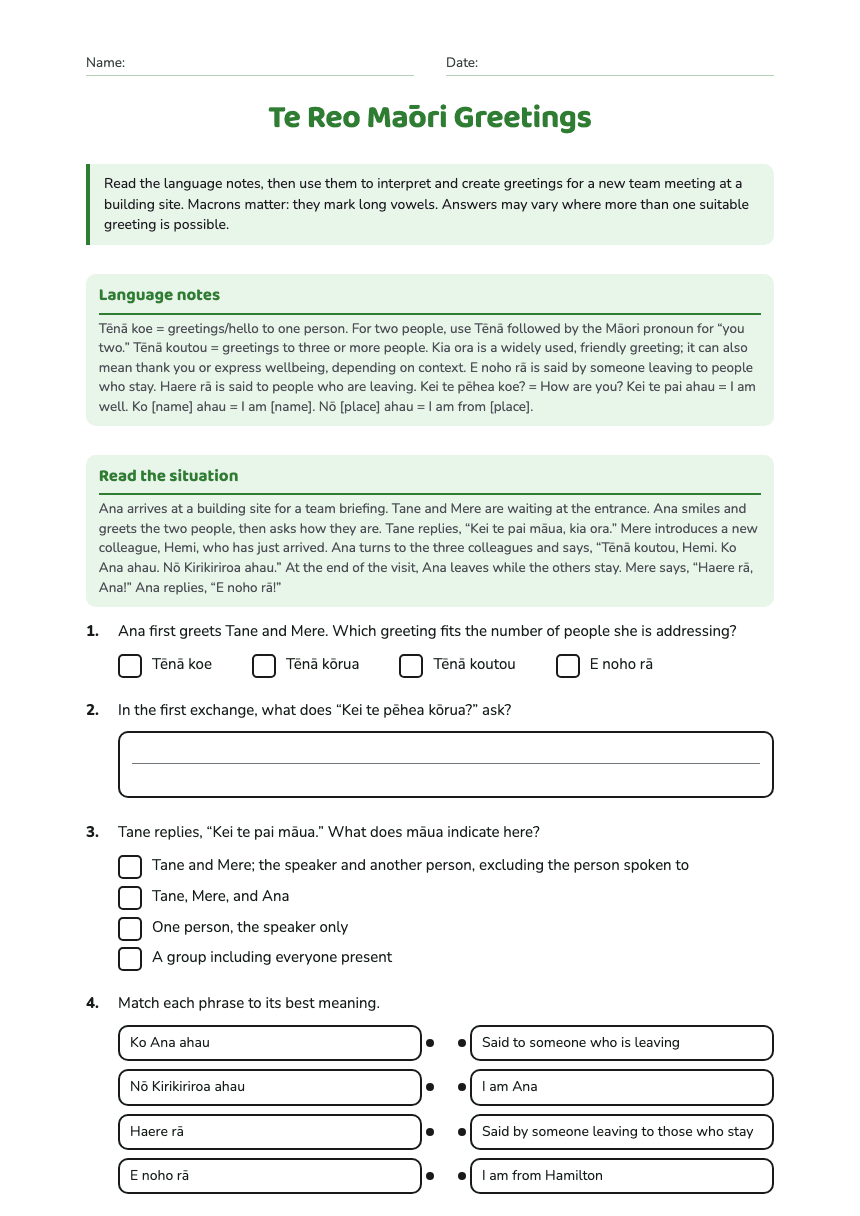
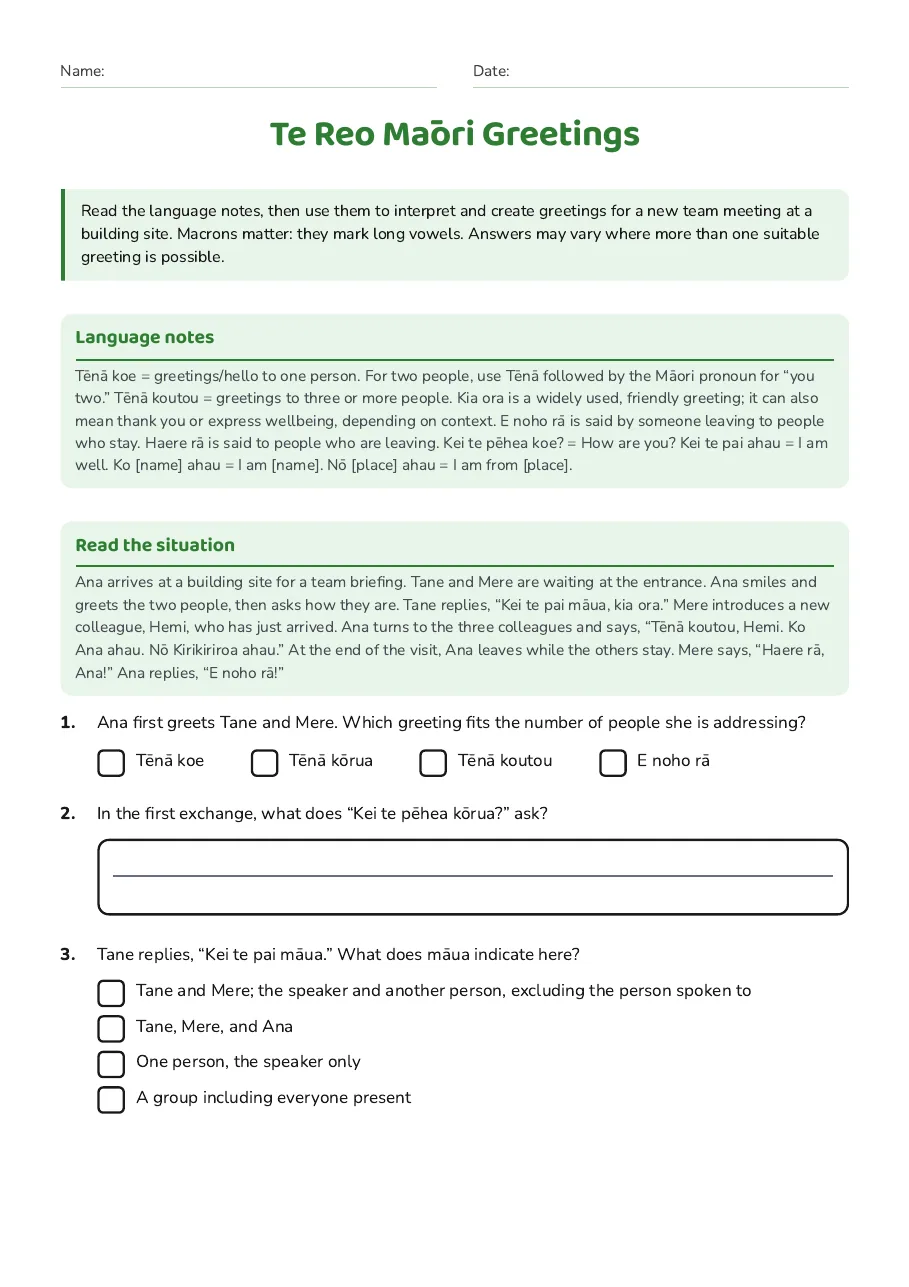
Language notes
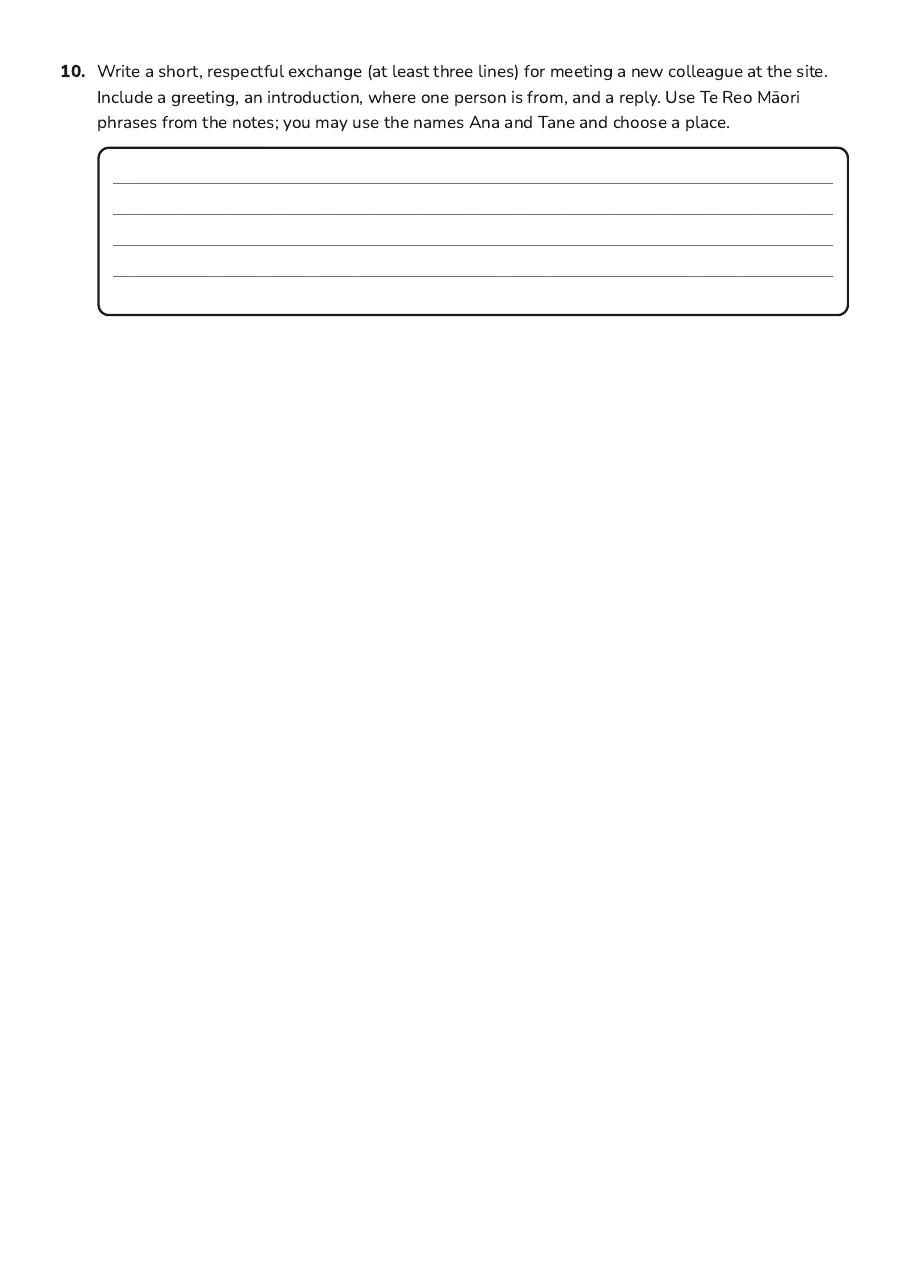
Tēnā koe = greetings/hello to one person. For two people, use Tēnā followed by the Māori pronoun for “you two.” Tēnā koutou = greetings to three or more people. Kia ora is a widely used, friendly greeting; it can also mean thank you or express wellbeing, depending on context. E noho rā is said by someone leaving to people who stay. Haere rā is said to people who are leaving. Kei te pēhea koe? = How are you? Kei te pai ahau = I am well. Ko [name] ahau = I am [name]. Nō [place] ahau = I am from [place].
Read the situation
Ana arrives at a building site for a team briefing. Tane and Mere are waiting at the entrance. Ana smiles and greets the two people, then asks how they are. Tane replies, “Kei te pai māua, kia ora.” Mere introduces a new colleague, Hemi, who has just arrived. Ana turns to the three colleagues and says, “Tēnā koutou, Hemi. Ko Ana ahau. Nō Kirikiriroa ahau.” At the end of the visit, Ana leaves while the others stay. Mere says, “Haere rā, Ana!” Ana replies, “E noho rā!”
- Tēnā koe
- Tēnā kōrua
- Tēnā koutou
- E noho rā
- Tane and Mere; the speaker and another person, excluding the person spoken to
- Tane, Mere, and Ana
- One person, the speaker only
- A group including everyone present
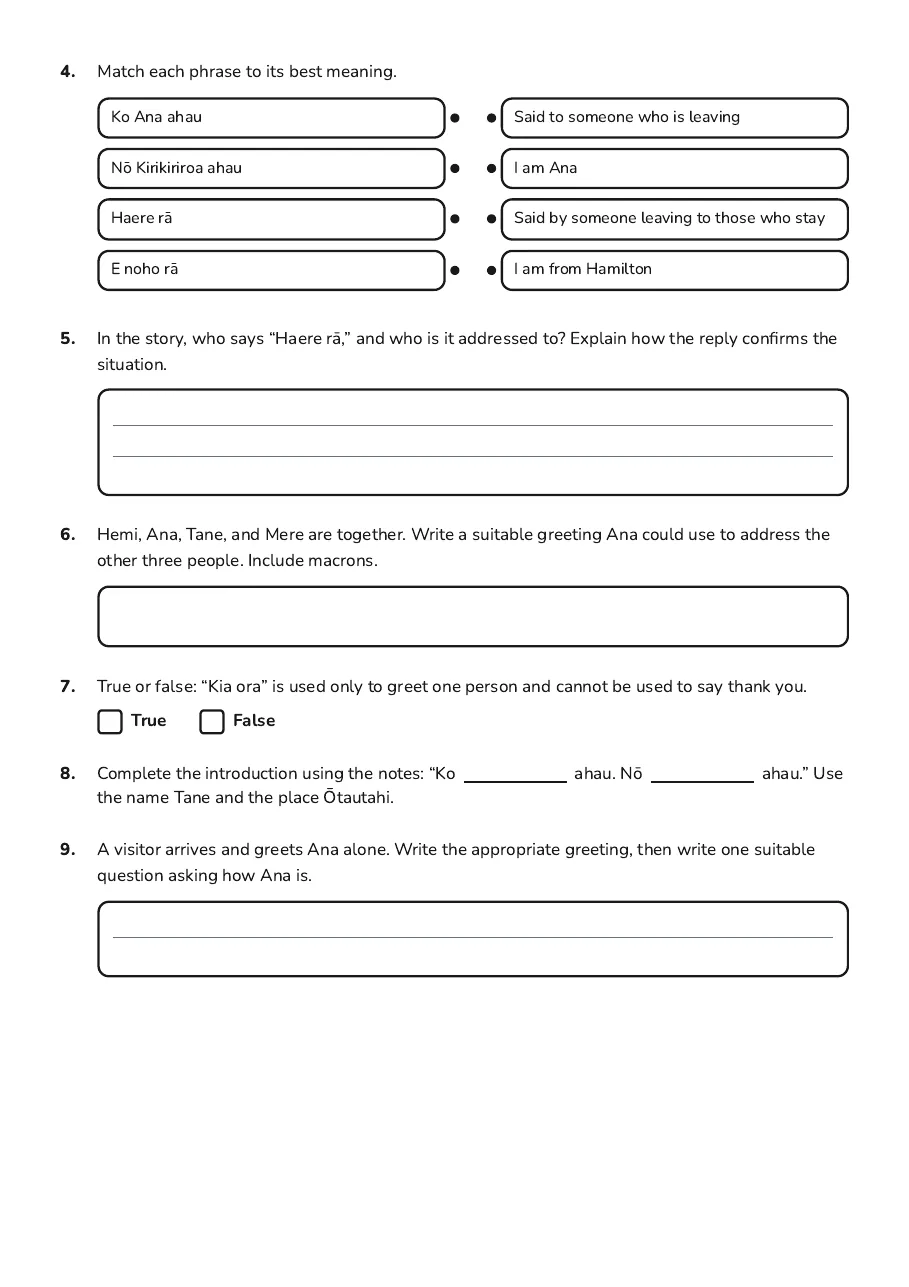
- Ko Ana ahau
- Nō Kirikiriroa ahau
- Haere rā
- E noho rā
- Said to someone who is leaving
- I am Ana
- Said by someone leaving to those who stay
- I am from Hamilton
3 printable pages
Page 1
Page 2
Page 3
About This Worksheet
Free in Kuraplan
Sign up free, grab the PDF, and customize it for your class.
Print-Ready
Formatted for standard paper. Clean layout, easy to read.
AI-Generated
Created with Kuraplan's AI, designed for real classroom use.
For Teachers & Parents
Use in classrooms, for homework, tutoring, or homeschool.
Need a custom version of this worksheet?
Kuraplan's AI generates custom worksheets in seconds — differentiated for every learner, aligned to your curriculum.
Generate Custom Worksheets — FreeMore Te Reo Māori Worksheets
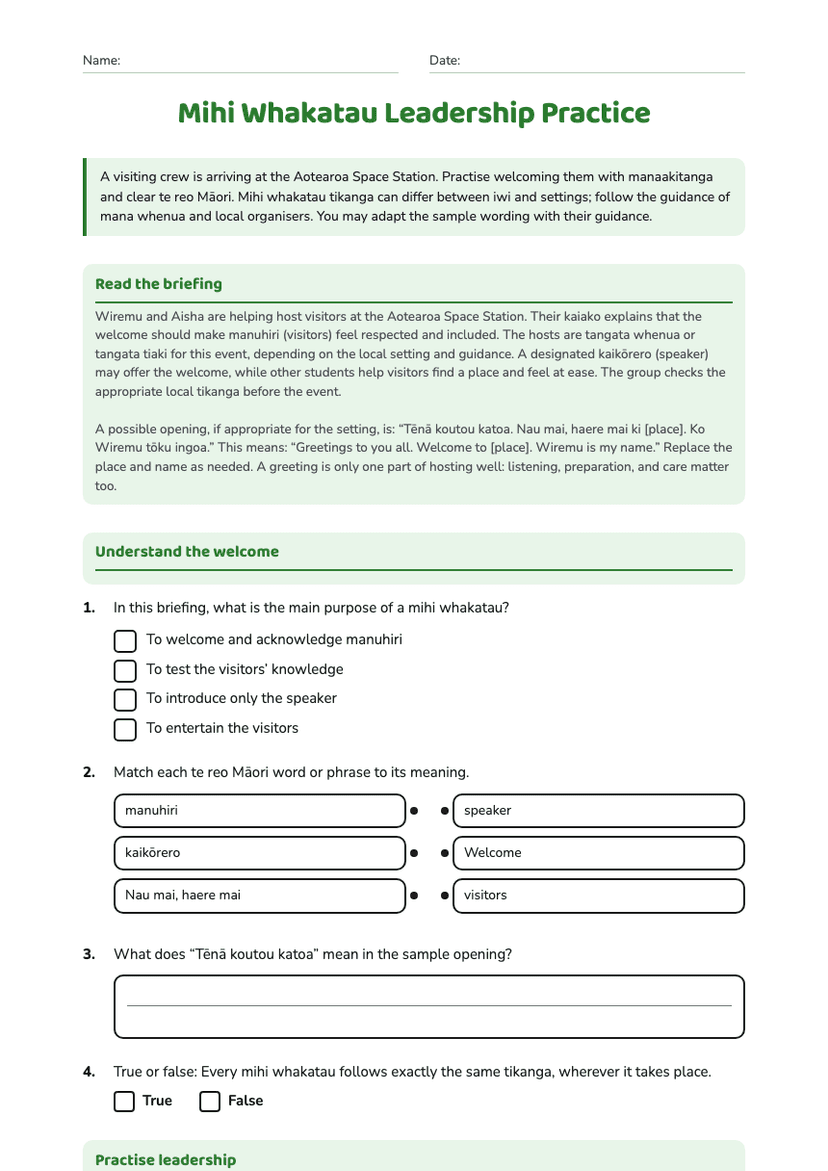
Mihi Whakatau Leadership Practice
Free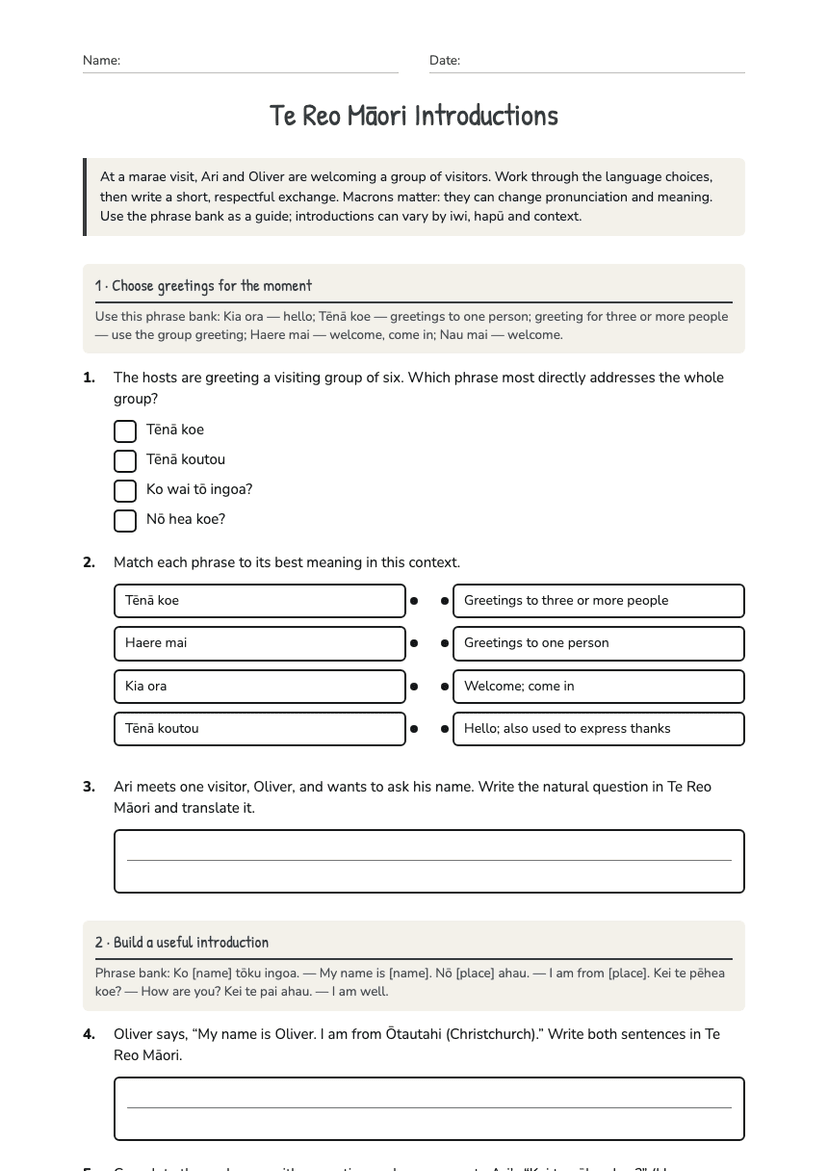
Te Reo Māori Introductions
Free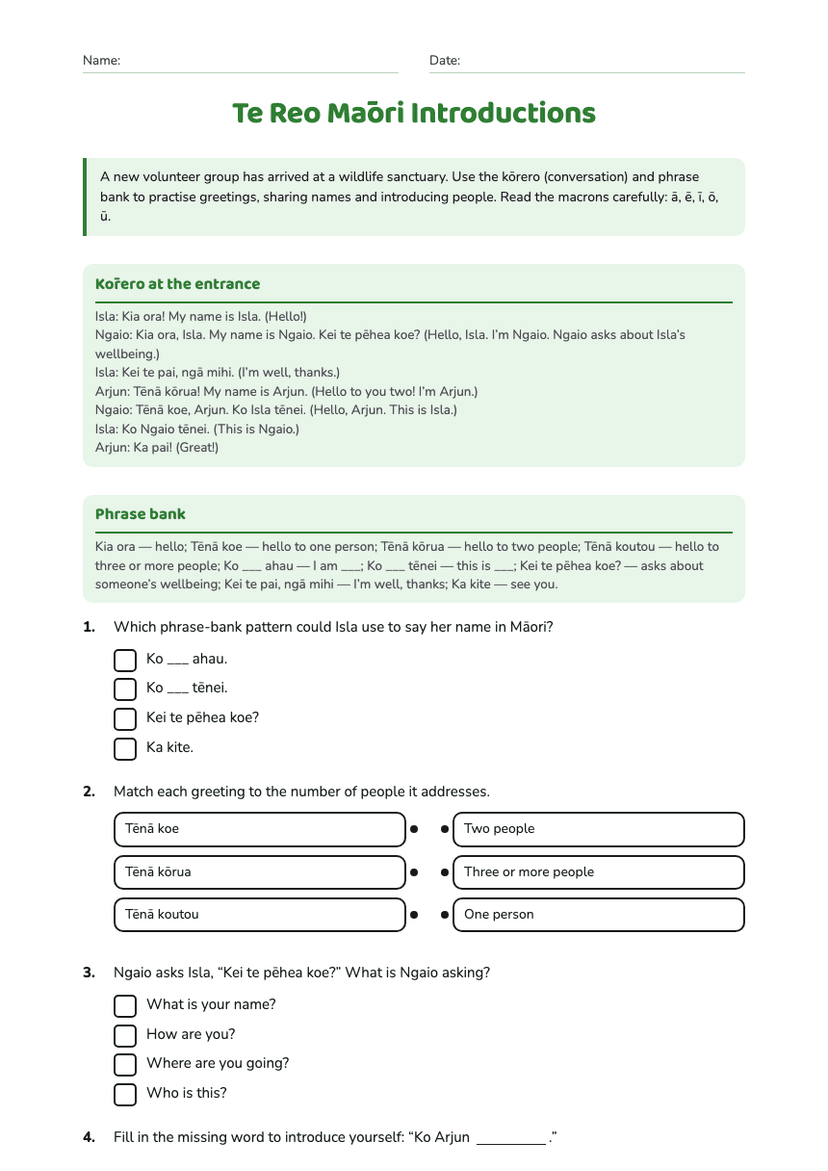
Te Reo Māori Introductions
Free
Matariki Introduction Worksheet
Free
Māori Time Concepts Introduction
Free
Māori Greetings Introduction
Free
Te Ao Māori Greetings
Free