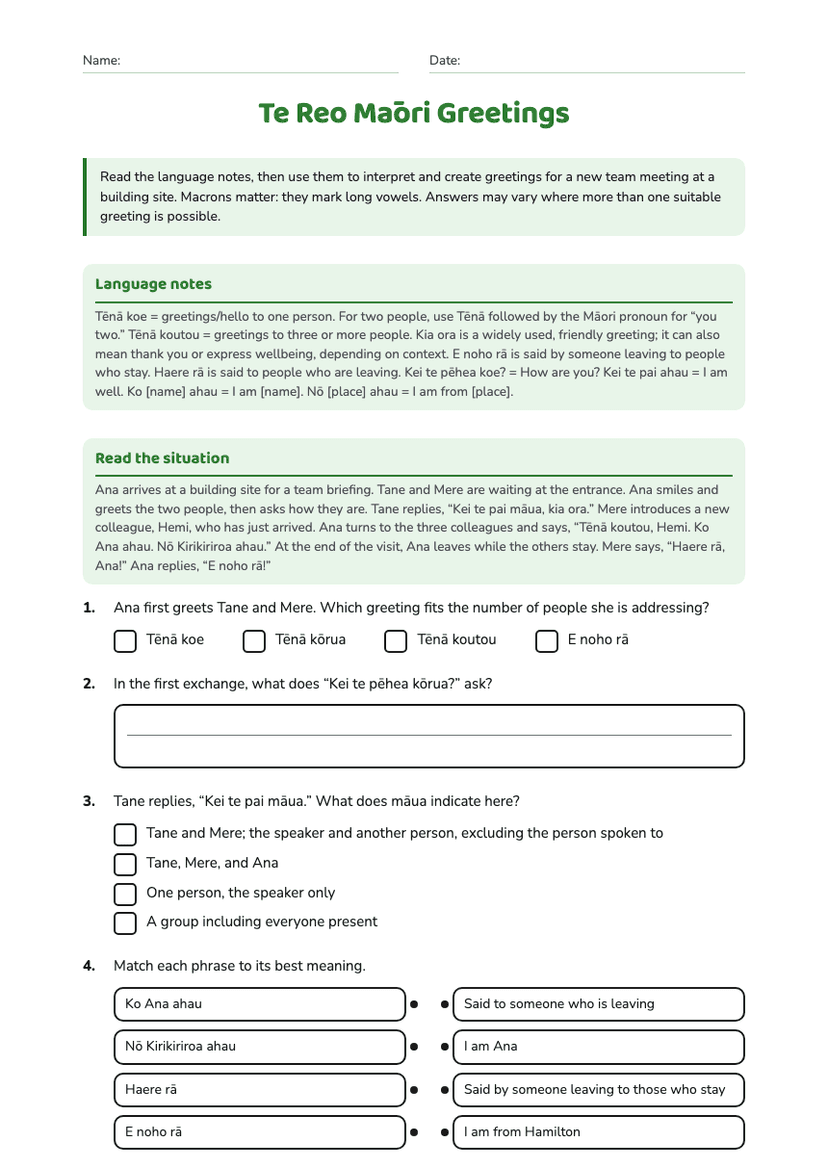
Treaty of Waitangi Introduction
A free te reo māori worksheet ready for your classroom. Open in Kuraplan to grab the print-ready PDF, customize it for your students, or generate a fresh version in seconds.

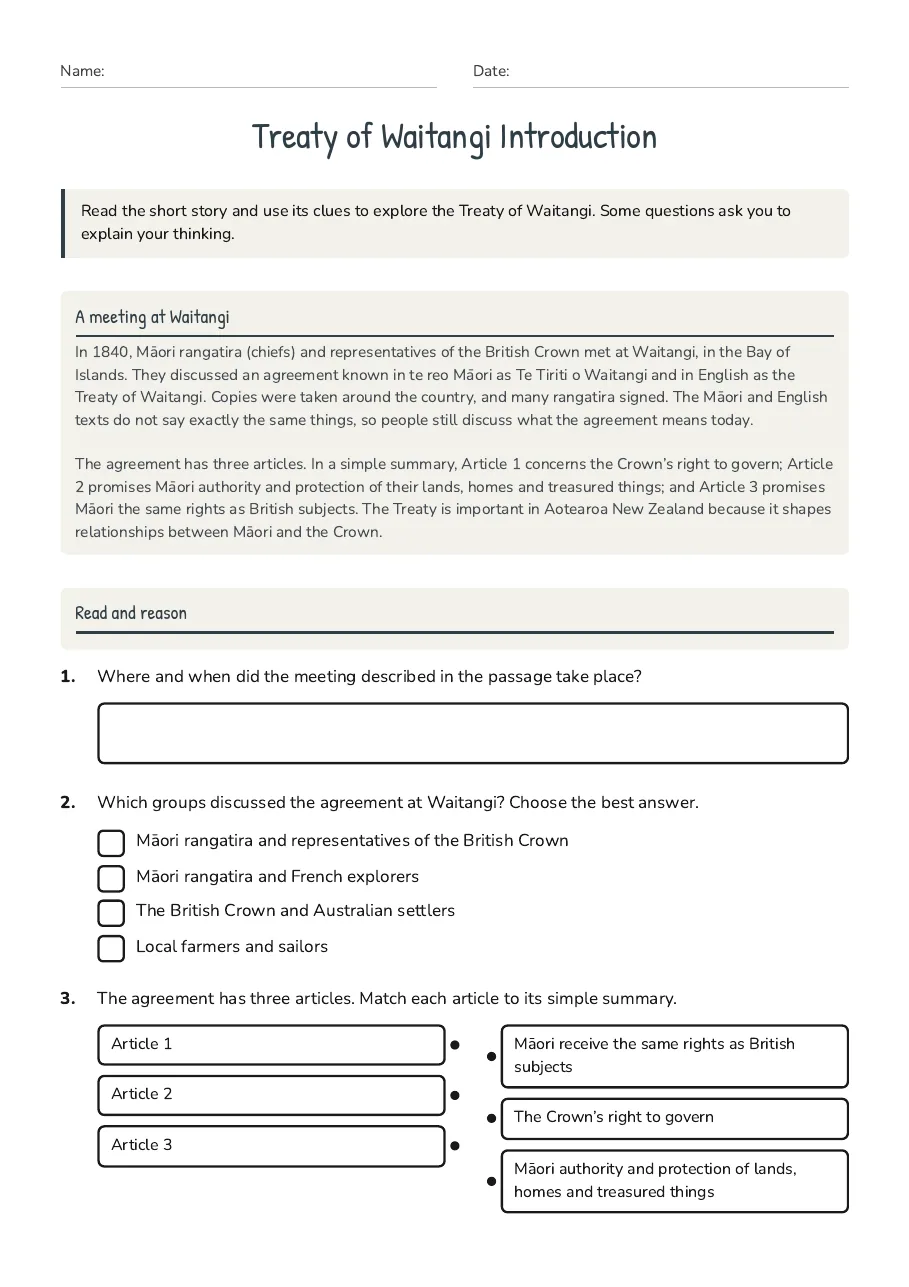
Treaty of Waitangi Introduction
A meeting at Waitangi
In 1840, Māori rangatira (chiefs) and representatives of the British Crown met at Waitangi, in the Bay of Islands. They discussed an agreement known in te reo Māori as Te Tiriti o Waitangi and in English as the Treaty of Waitangi. Copies were taken around the country, and many rangatira signed. The Māori and English texts do not say exactly the same things, so people still discuss what the agreement means today. The agreement has three articles. In a simple summary, Article 1 concerns the Crown’s right to govern; Article 2 promises Māori authority and protection of their lands, homes and treasured things; and Article 3 promises Māori the same rights as British subjects. The Treaty is important in Aotearoa New Zealand because it shapes relationships between Māori and the Crown.
Read and reason
- Māori rangatira and representatives of the British Crown
- Māori rangatira and French explorers
- The British Crown and Australian settlers
- Local farmers and sailors
- Article 1
- Article 2
- Article 3
- Māori receive the same rights as British subjects
- The Crown’s right to govern
- Māori authority and protection of lands, homes and treasured things
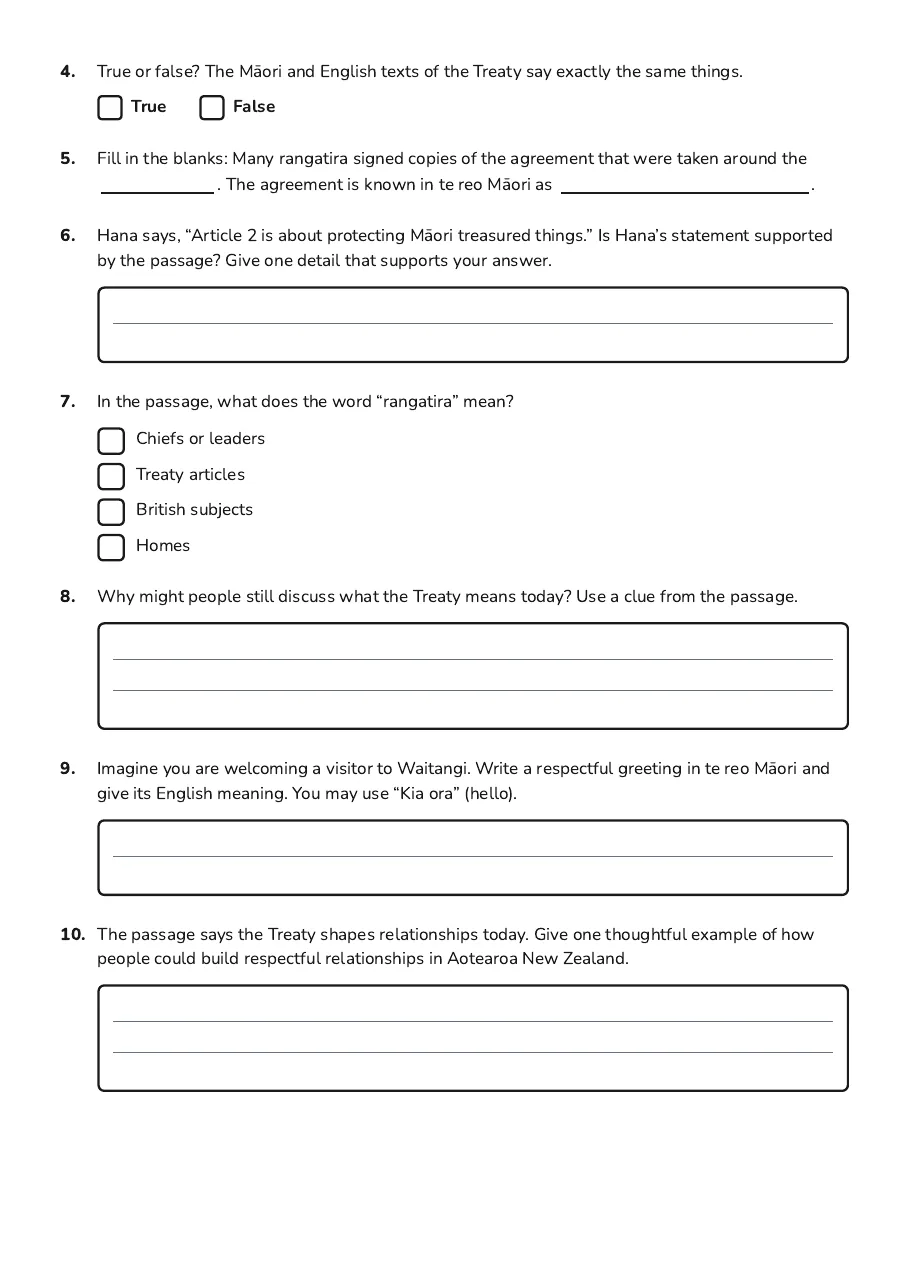
- Chiefs or leaders
- Treaty articles
- British subjects
- Homes
2 printable pages
Page 1
Page 2
About This Worksheet
Free in Kuraplan
Sign up free, grab the PDF, and customize it for your class.
Print-Ready
Formatted for standard paper. Clean layout, easy to read.
AI-Generated
Created with Kuraplan's AI, designed for real classroom use.
For Teachers & Parents
Use in classrooms, for homework, tutoring, or homeschool.
Need a custom version of this worksheet?
Kuraplan's AI generates custom worksheets in seconds — differentiated for every learner, aligned to your curriculum.
Generate Custom Worksheets — FreeMore Te Reo Māori Worksheets
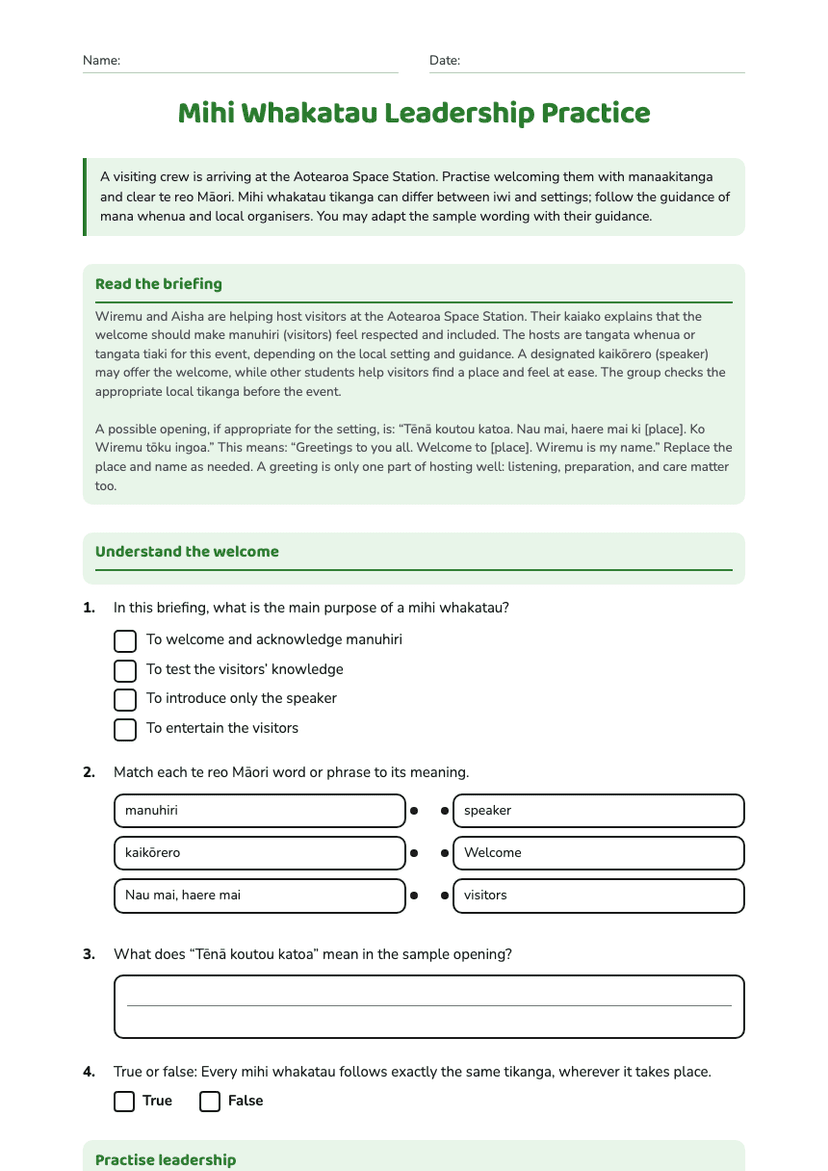
Mihi Whakatau Leadership Practice
Free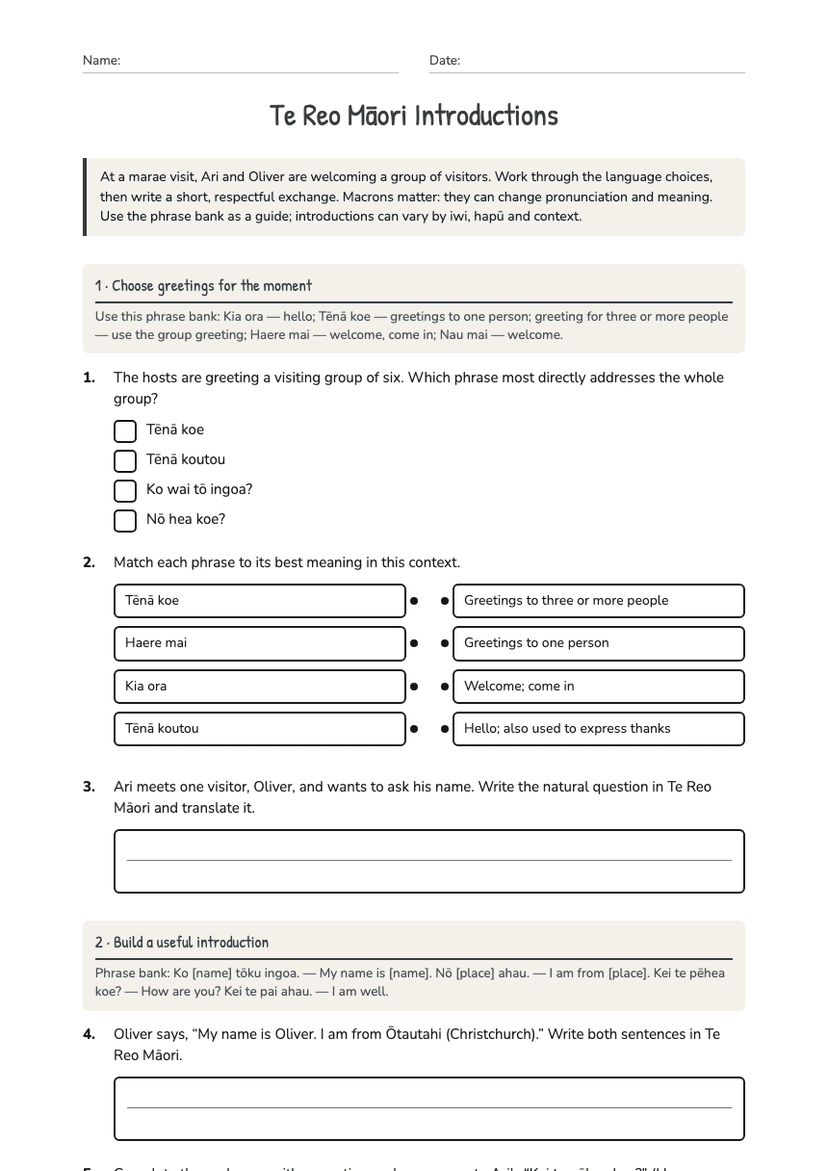
Te Reo Māori Introductions
Free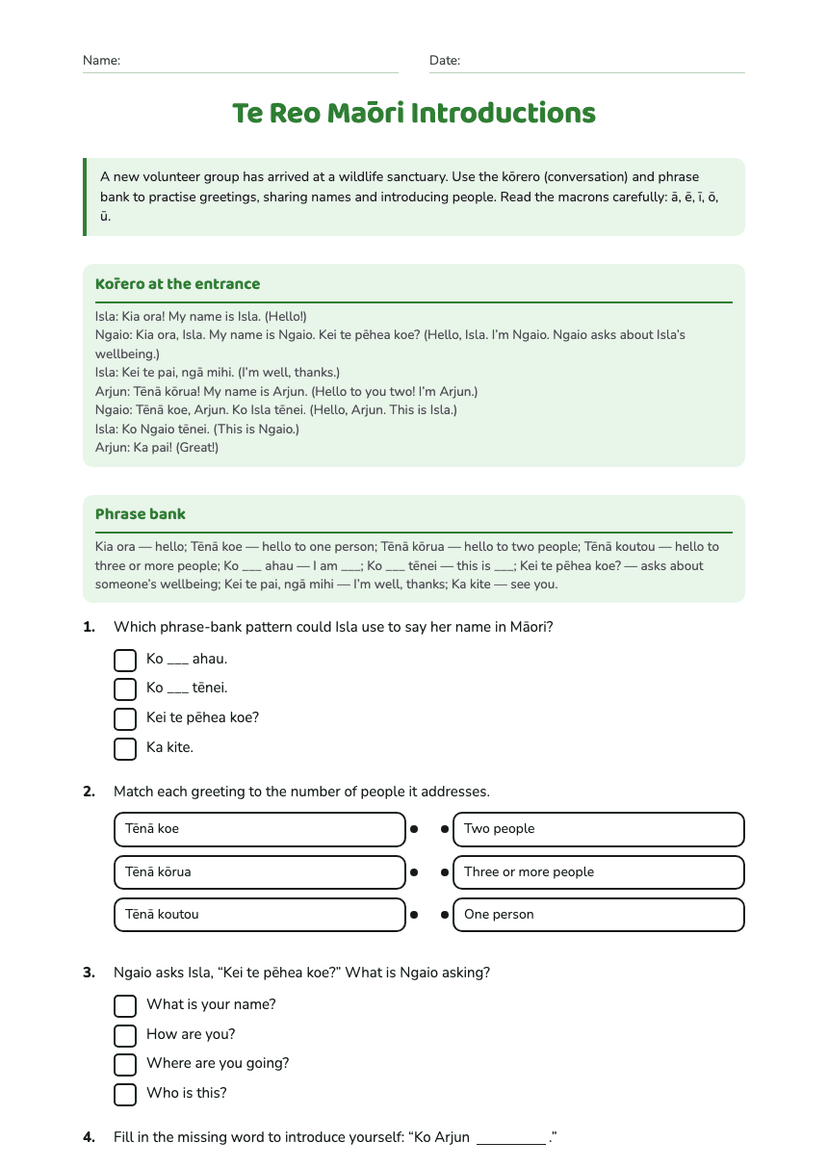
Te Reo Māori Introductions
Free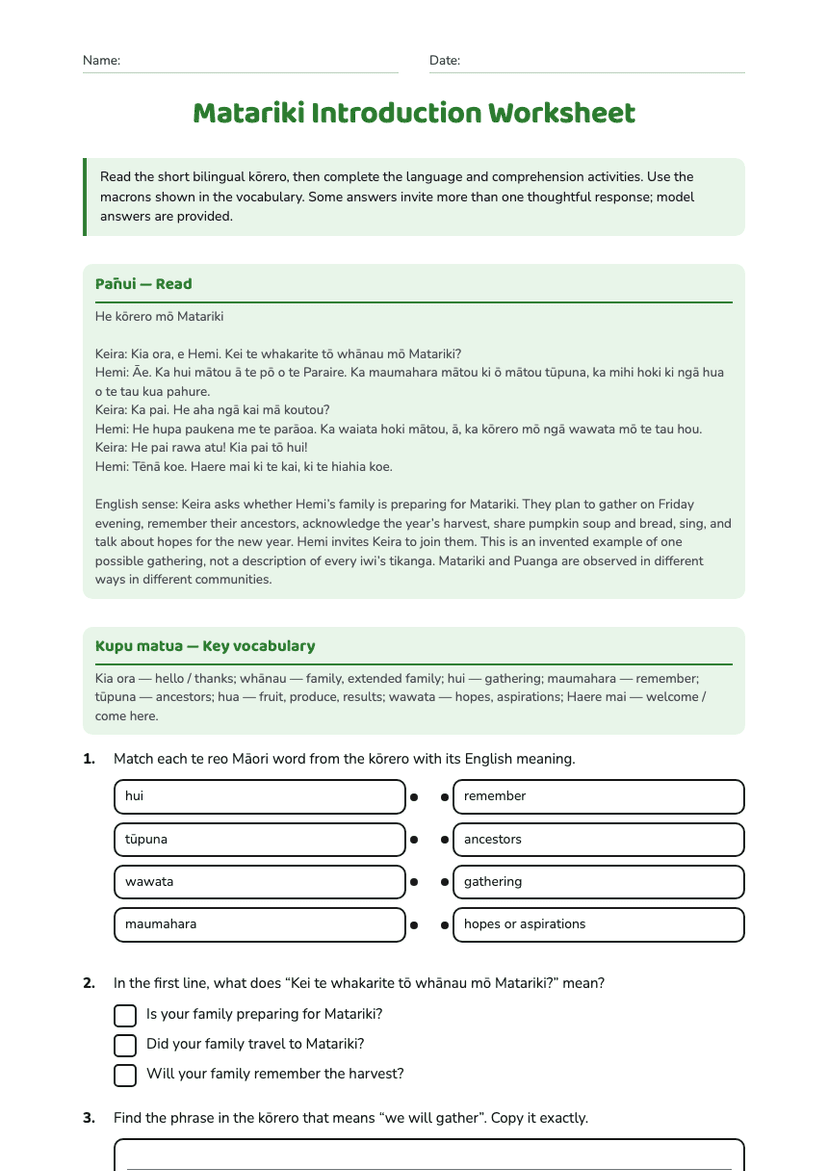
Matariki Introduction Worksheet
Free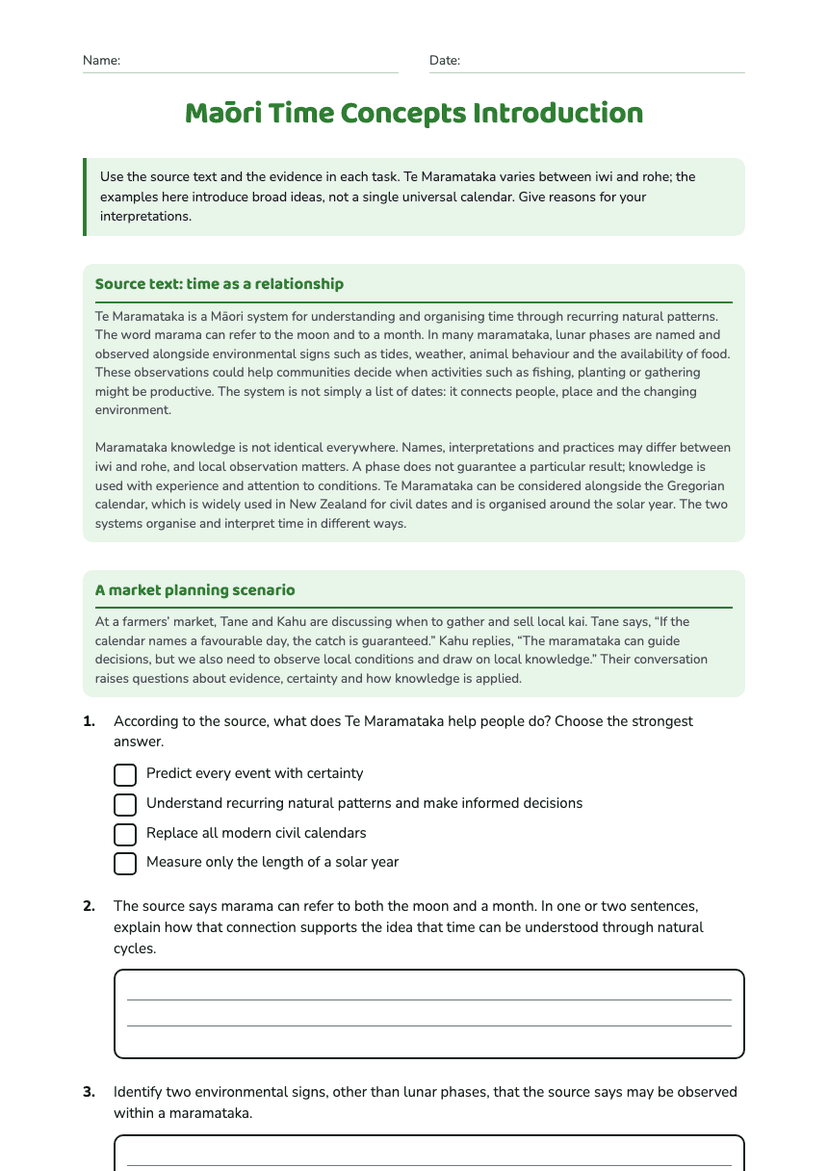
Māori Time Concepts Introduction
Free
Māori Greetings Introduction
Free
Te Ao Māori Greetings
Free