Volume and Capacity Exploration
A free maths worksheet ready for your classroom. Open in Kuraplan to grab the print-ready PDF, customize it for your students, or generate a fresh version in seconds.

Volume and Capacity Exploration
Year 4 Maths – Litres and Millilitres
💡 Key Ideas
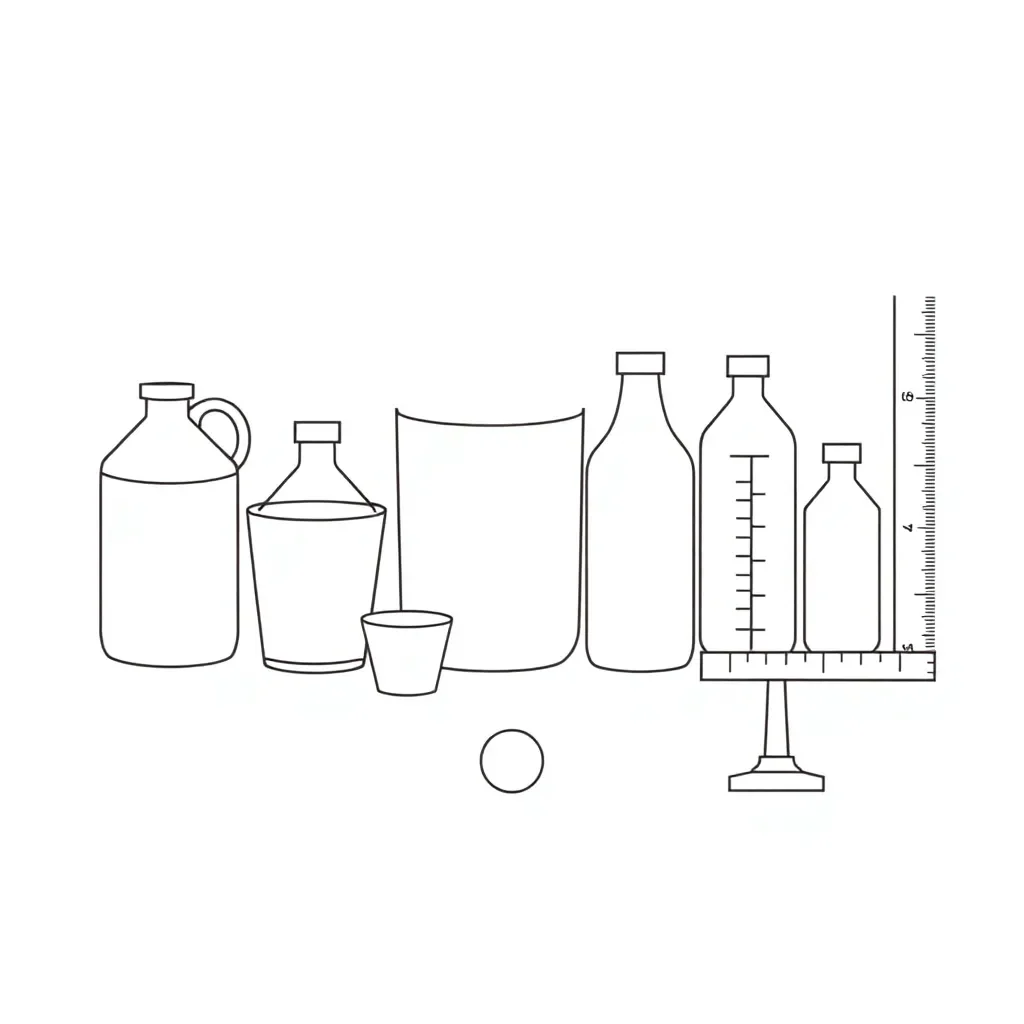
Volume is the amount of space inside a container. Capacity is how much liquid a container can hold.
📏 Remember: 1 litre (L) = 1000 millilitres (mL) | Half a litre = 500 mL
🔍 Part 1: Estimate and Measure
Look at each container your group has been given. First estimate, then measure the actual capacity using the measuring jug. Record your results below.
My estimate: __________ L / mL Actual measurement: __________ L / mL
My estimate: __________ L / mL Actual measurement: __________ L / mL
My estimate: __________ L / mL Actual measurement: __________ L / mL
My estimate: __________ L / mL Actual measurement: __________ L / mL
📊 Part 2: Compare and Order
Smallest ______ ______ ______ ______ Largest
⭐ Part 3: Conversion Challenge
Convert these millilitre amounts into litres using decimals. The first one is done for you!
750 mL = __________ L
250 mL = __________ L
1500 mL = __________ L
✏️ Part 4: Reflection
🌟 Bonus: At home tonight, find one container (e.g., a bottle, a jug, or a pot). Estimate its capacity, then check the label. How close were you? Tell your class tomorrow!
About This Worksheet
Free in Kuraplan
Sign up free, grab the PDF, and customize it for your class.
Print-Ready
Formatted for standard paper. Clean layout, easy to read.
AI-Generated
Created with Kuraplan's AI, designed for real classroom use.
For Teachers & Parents
Use in classrooms, for homework, tutoring, or homeschool.
Need a custom version of this worksheet?
Kuraplan's AI generates custom worksheets in seconds — differentiated for every learner, aligned to your curriculum.
Generate Custom Worksheets — Free