Women Before Voting Rights
A free history worksheet ready for your classroom. Open in Kuraplan to grab the print-ready PDF, customize it for your students, or generate a fresh version in seconds.
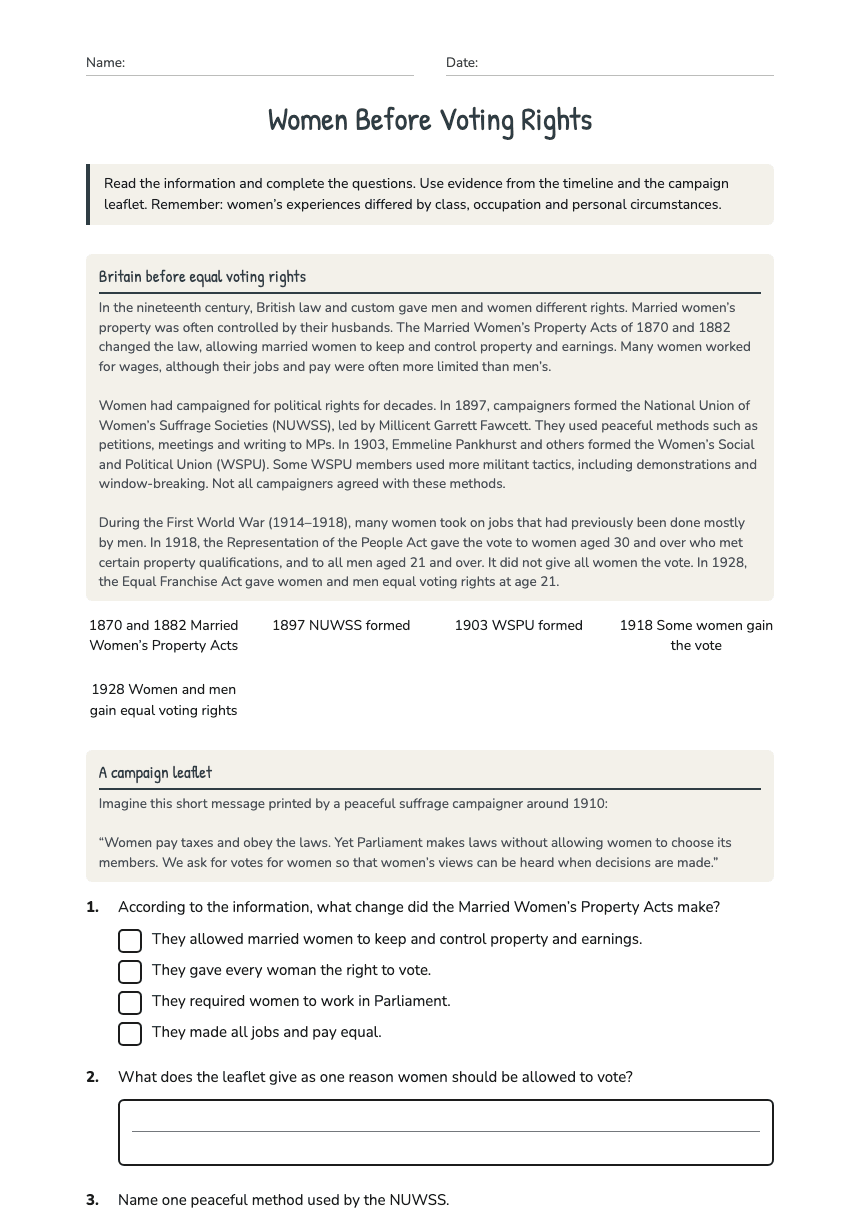
Women Before Voting Rights
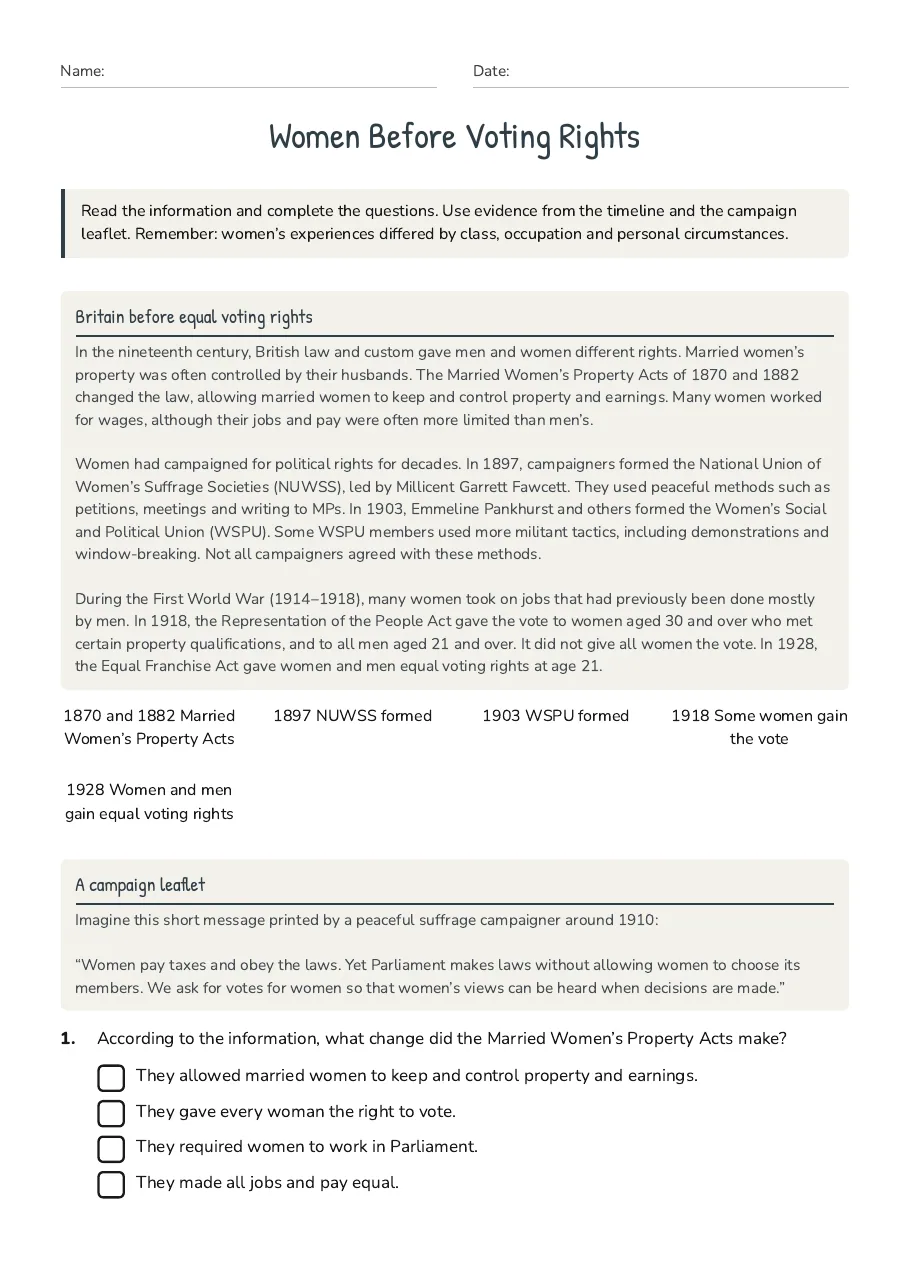
Britain before equal voting rights
In the nineteenth century, British law and custom gave men and women different rights. Married women’s property was often controlled by their husbands. The Married Women’s Property Acts of 1870 and 1882 changed the law, allowing married women to keep and control property and earnings. Many women worked for wages, although their jobs and pay were often more limited than men’s. Women had campaigned for political rights for decades. In 1897, campaigners formed the National Union of Women’s Suffrage Societies (NUWSS), led by Millicent Garrett Fawcett. They used peaceful methods such as petitions, meetings and writing to MPs. In 1903, Emmeline Pankhurst and others formed the Women’s Social and Political Union (WSPU). Some WSPU members used more militant tactics, including demonstrations and window-breaking. Not all campaigners agreed with these methods. During the First World War (1914–1918), many women took on jobs that had previously been done mostly by men. In 1918, the Representation of the People Act gave the vote to women aged 30 and over who met certain property qualifications, and to all men aged 21 and over. It did not give all women the vote. In 1928, the Equal Franchise Act gave women and men equal voting rights at age 21.
1870 and 1882 Married Women’s Property Acts
1897 NUWSS formed
1903 WSPU formed
1918 Some women gain the vote
1928 Women and men gain equal voting rights
A campaign leaflet
Imagine this short message printed by a peaceful suffrage campaigner around 1910: “Women pay taxes and obey the laws. Yet Parliament makes laws without allowing women to choose its members. We ask for votes for women so that women’s views can be heard when decisions are made.”
- They allowed married women to keep and control property and earnings.
- They gave every woman the right to vote.
- They required women to work in Parliament.
- They made all jobs and pay equal.
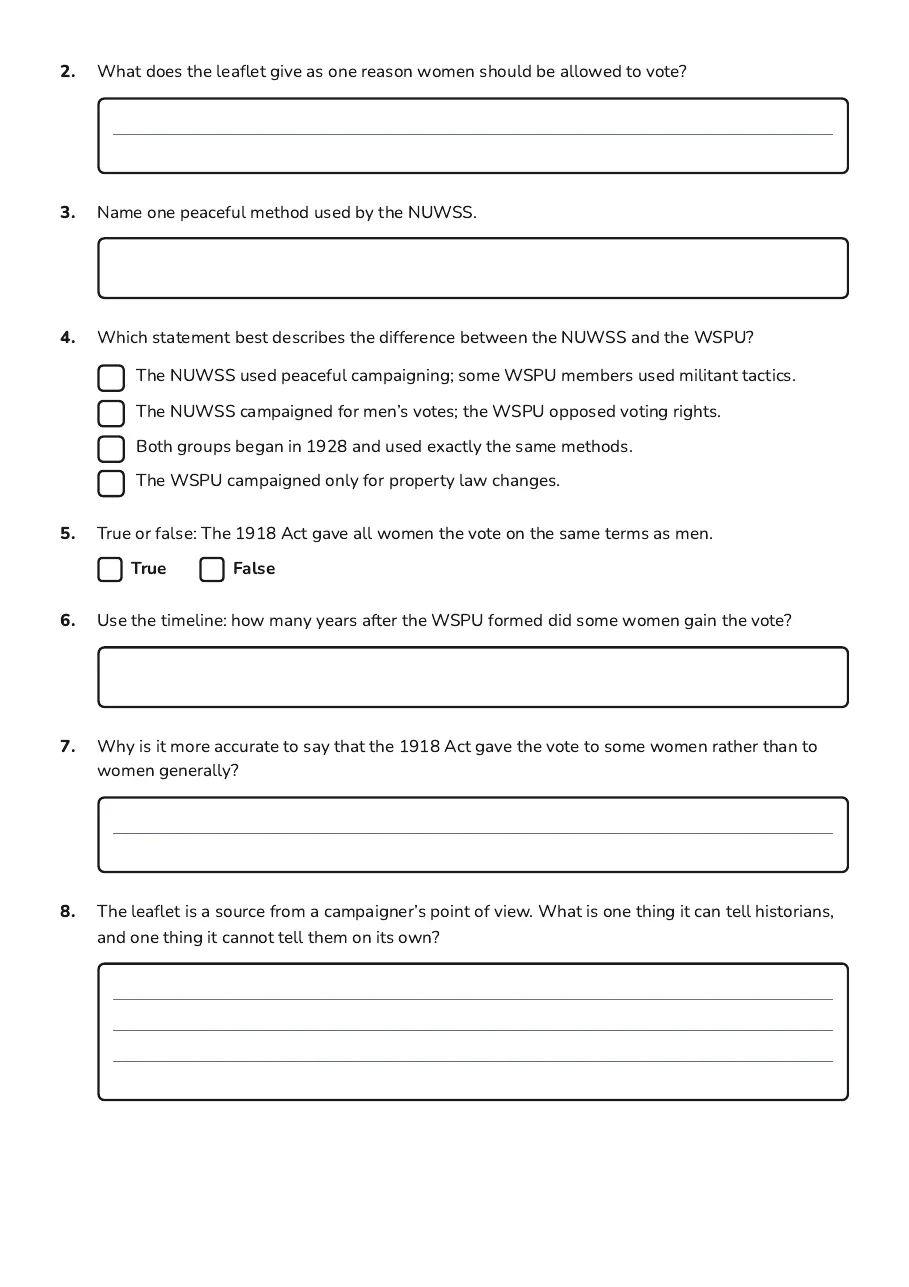
- The NUWSS used peaceful campaigning; some WSPU members used militant tactics.
- The NUWSS campaigned for men’s votes; the WSPU opposed voting rights.
- Both groups began in 1928 and used exactly the same methods.
- The WSPU campaigned only for property law changes.
3 printable pages
Page 1
Page 2

Page 3
About This Worksheet
Free in Kuraplan
Sign up free, grab the PDF, and customize it for your class.
Print-Ready
Formatted for standard paper. Clean layout, easy to read.
AI-Generated
Created with Kuraplan's AI, designed for real classroom use.
For Teachers & Parents
Use in classrooms, for homework, tutoring, or homeschool.
Need a custom version of this worksheet?
Kuraplan's AI generates custom worksheets in seconds — differentiated for every learner, aligned to your curriculum.
Generate Custom Worksheets — FreeMore History Worksheets
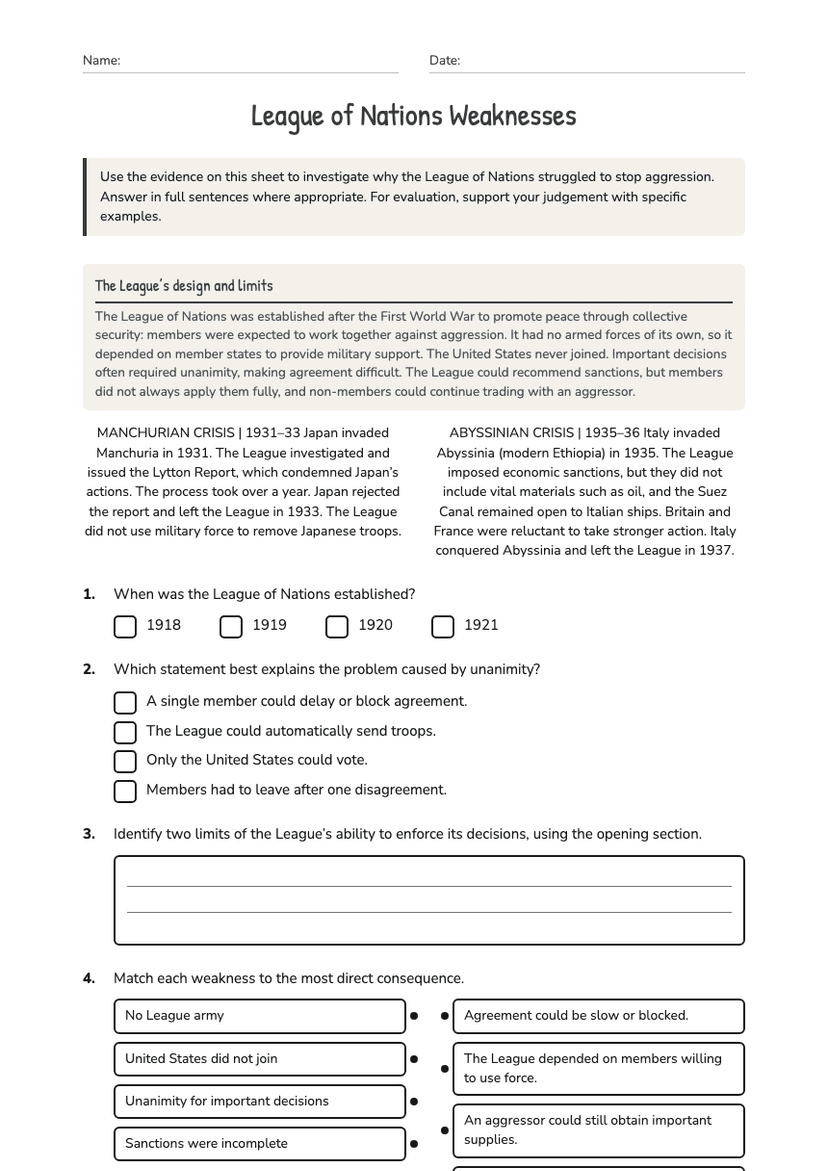
League of Nations Weaknesses
Free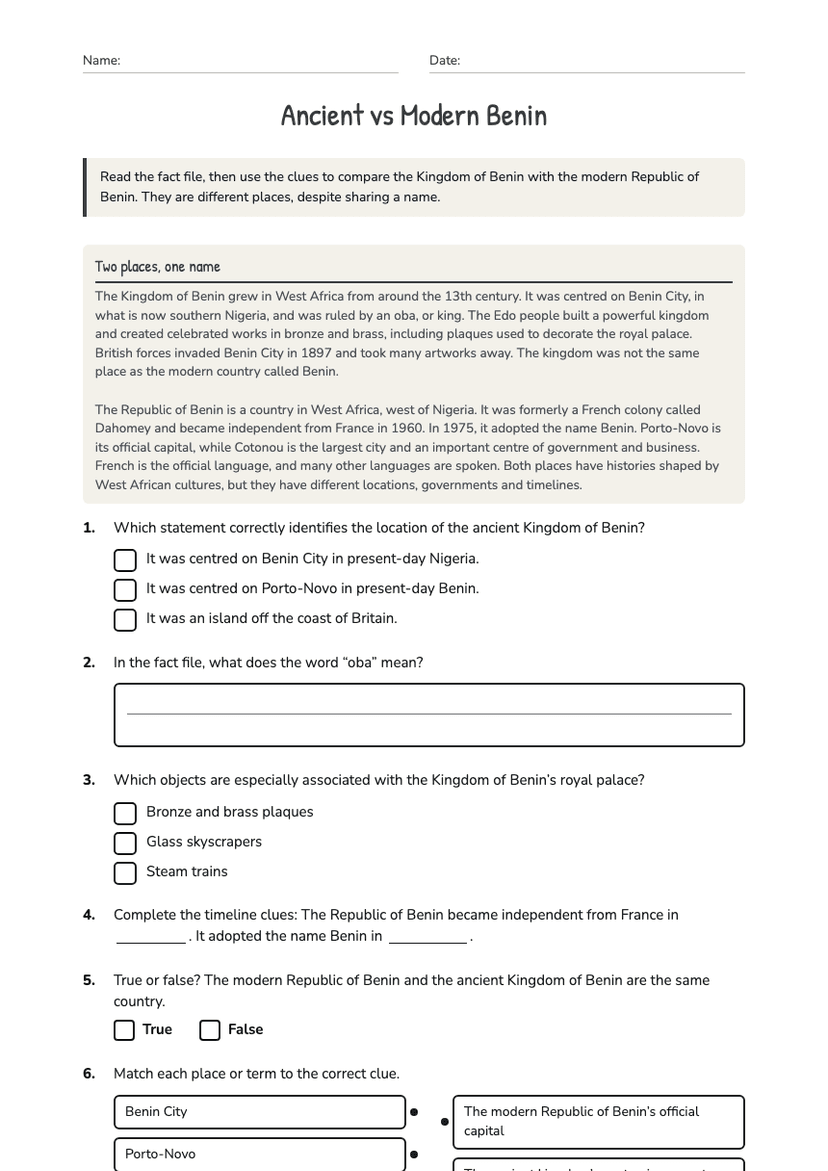
Ancient vs Modern Benin
Free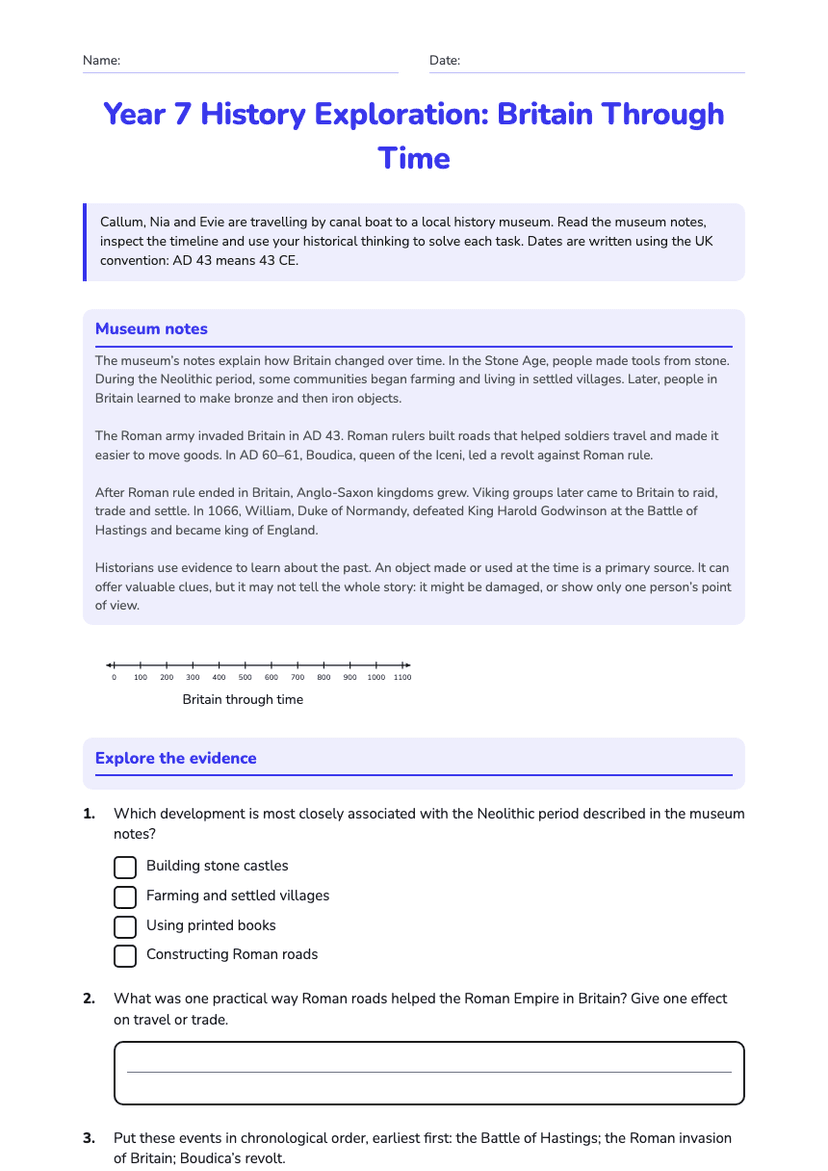
Year 7 History Exploration: Britain Through Time
Free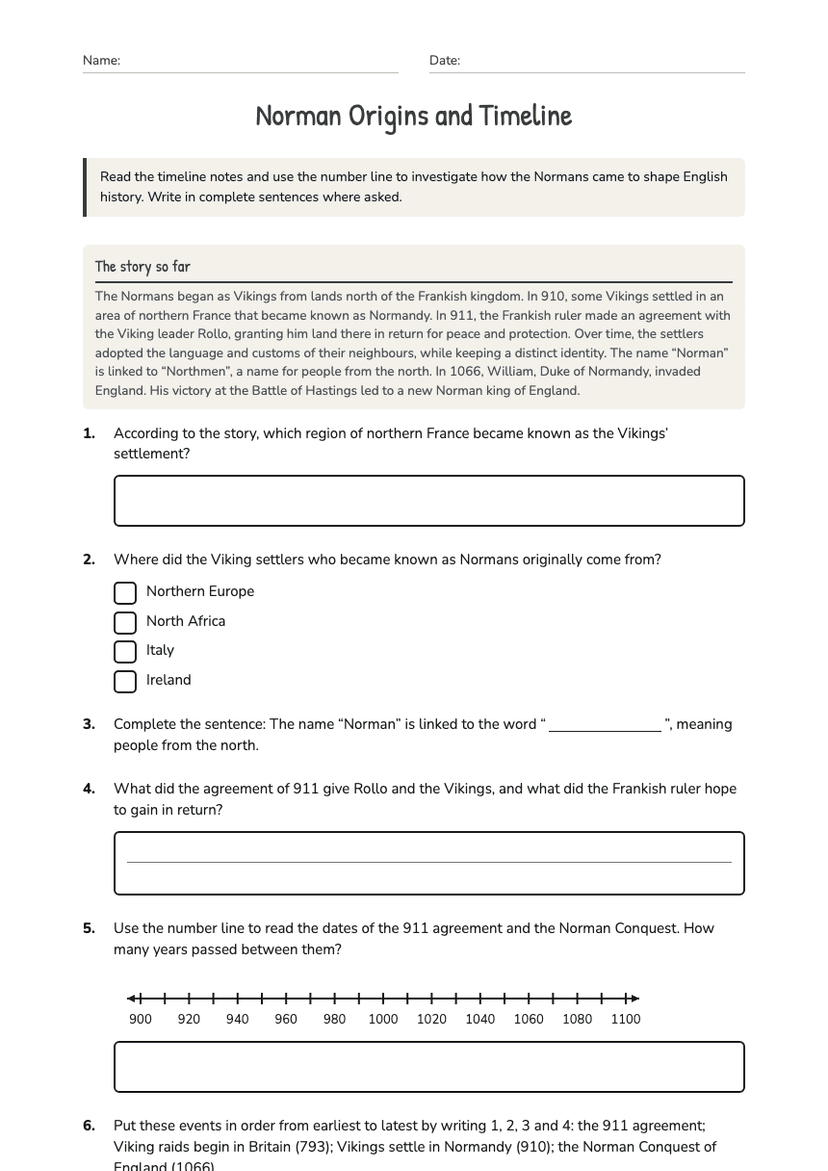
Norman Origins and Timeline
Free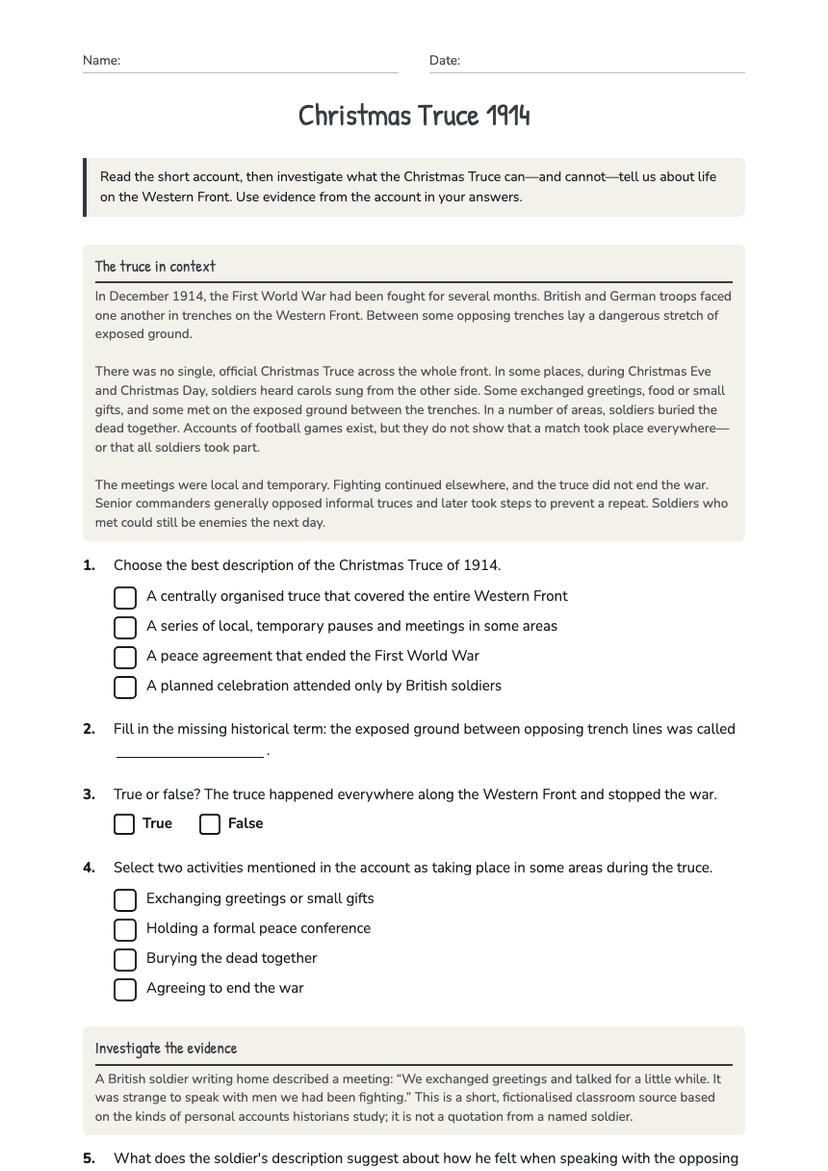
Christmas Truce 1914
Free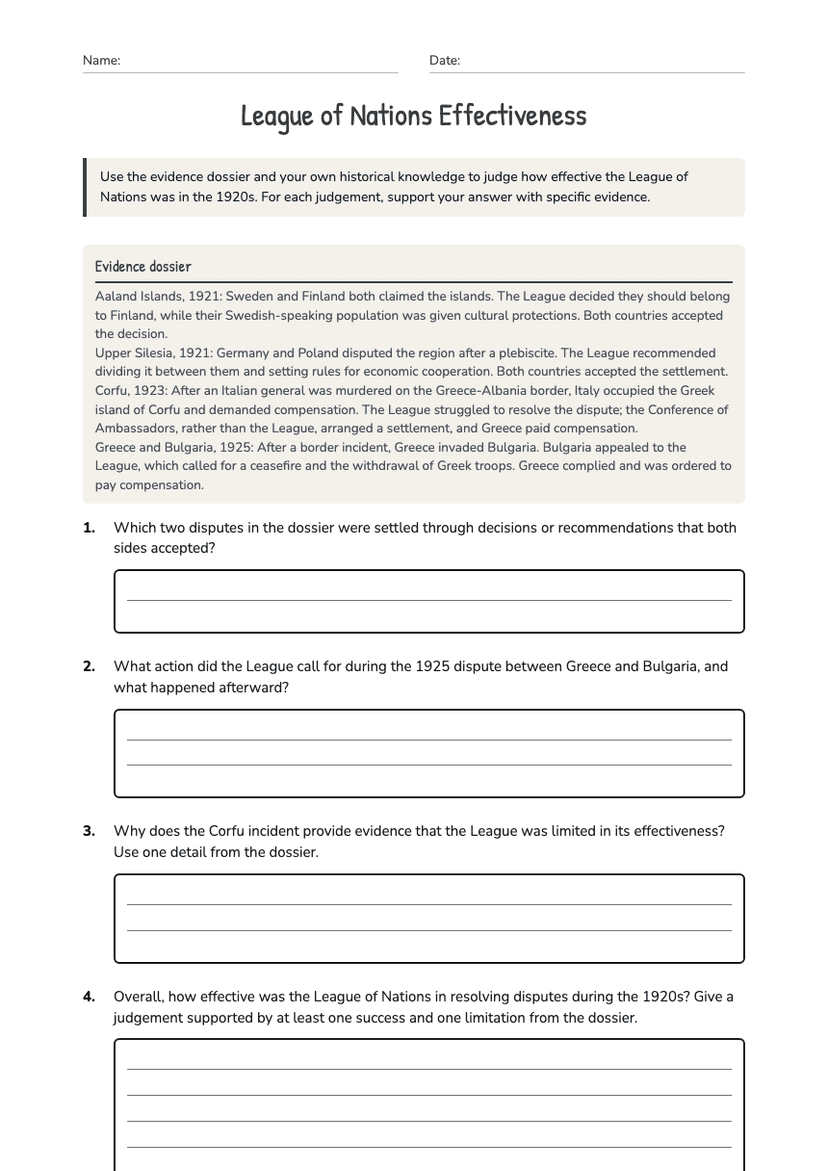
League of Nations Effectiveness
Free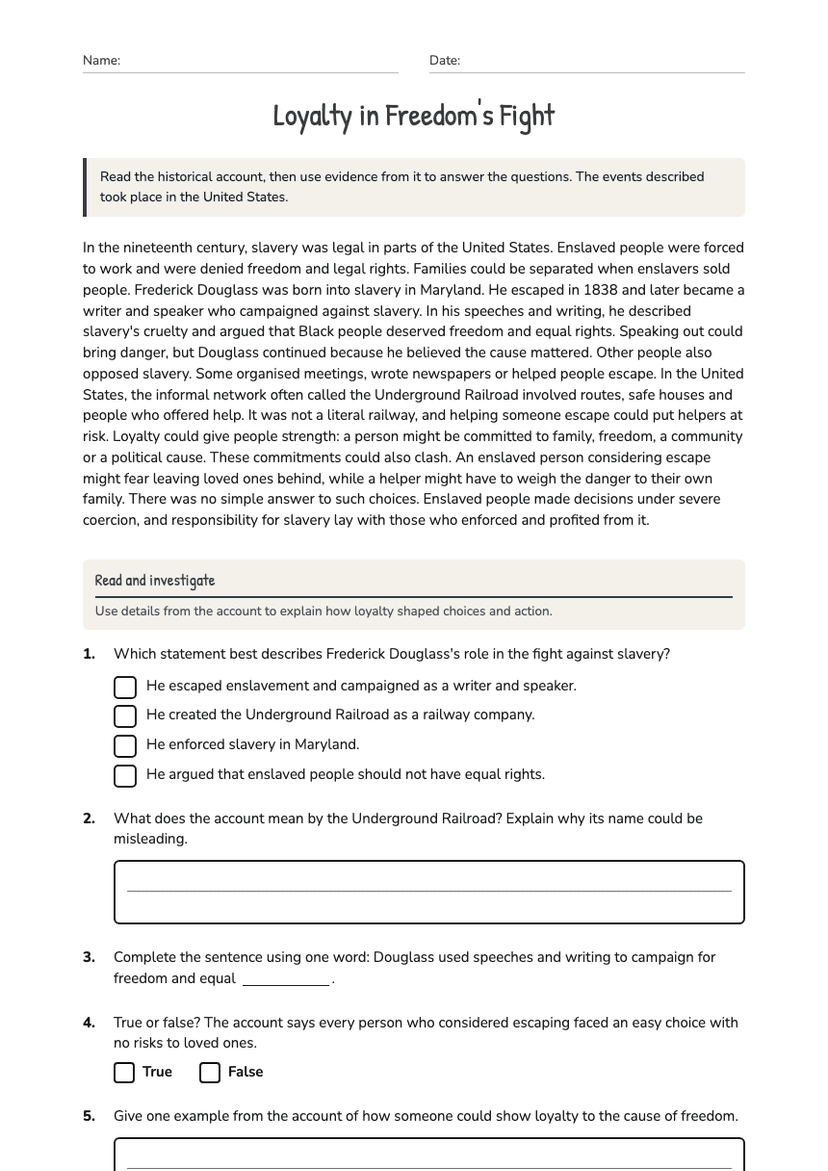
Loyalty in Freedom's Fight
Free