Aboriginal Words and Gestures
A free english worksheet ready for your classroom. Open in Kuraplan to grab the print-ready PDF, customize it for your students, or generate a fresh version in seconds.
Aboriginal Words and Gestures
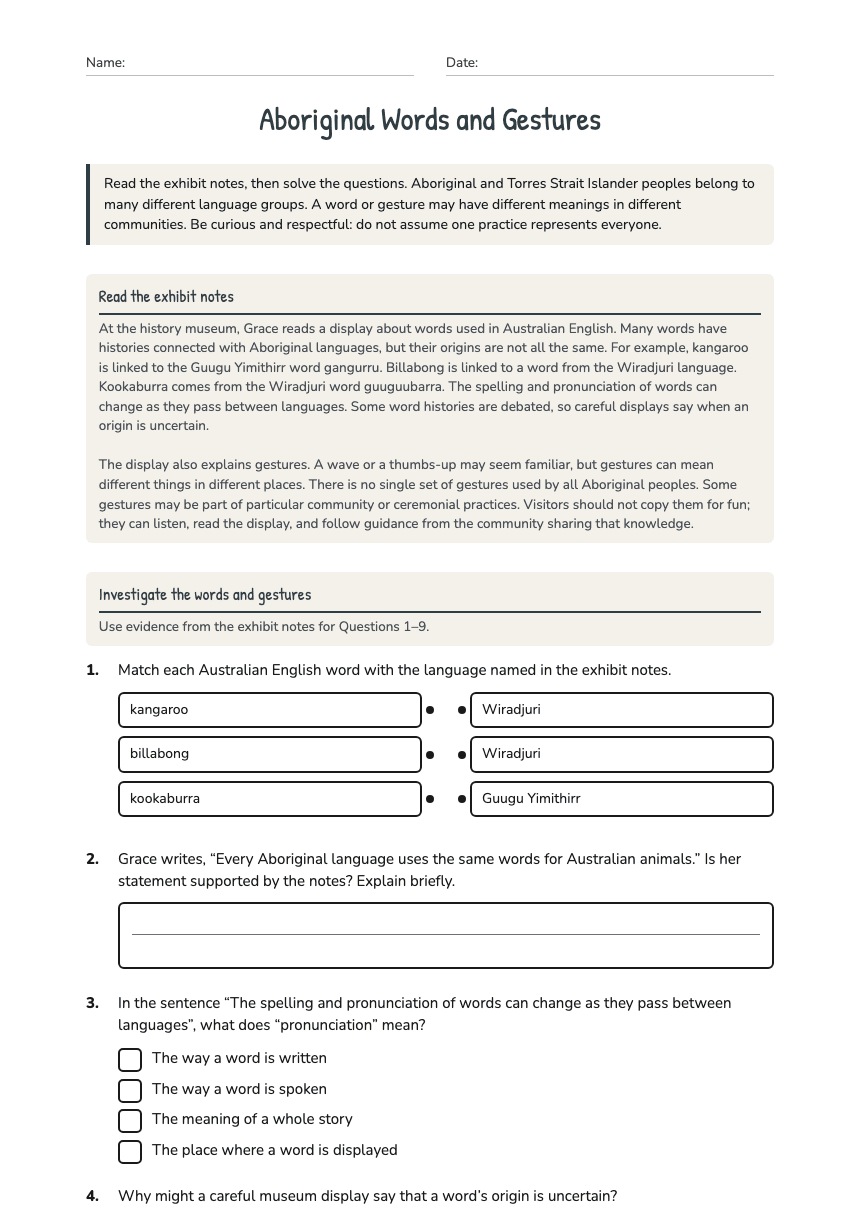
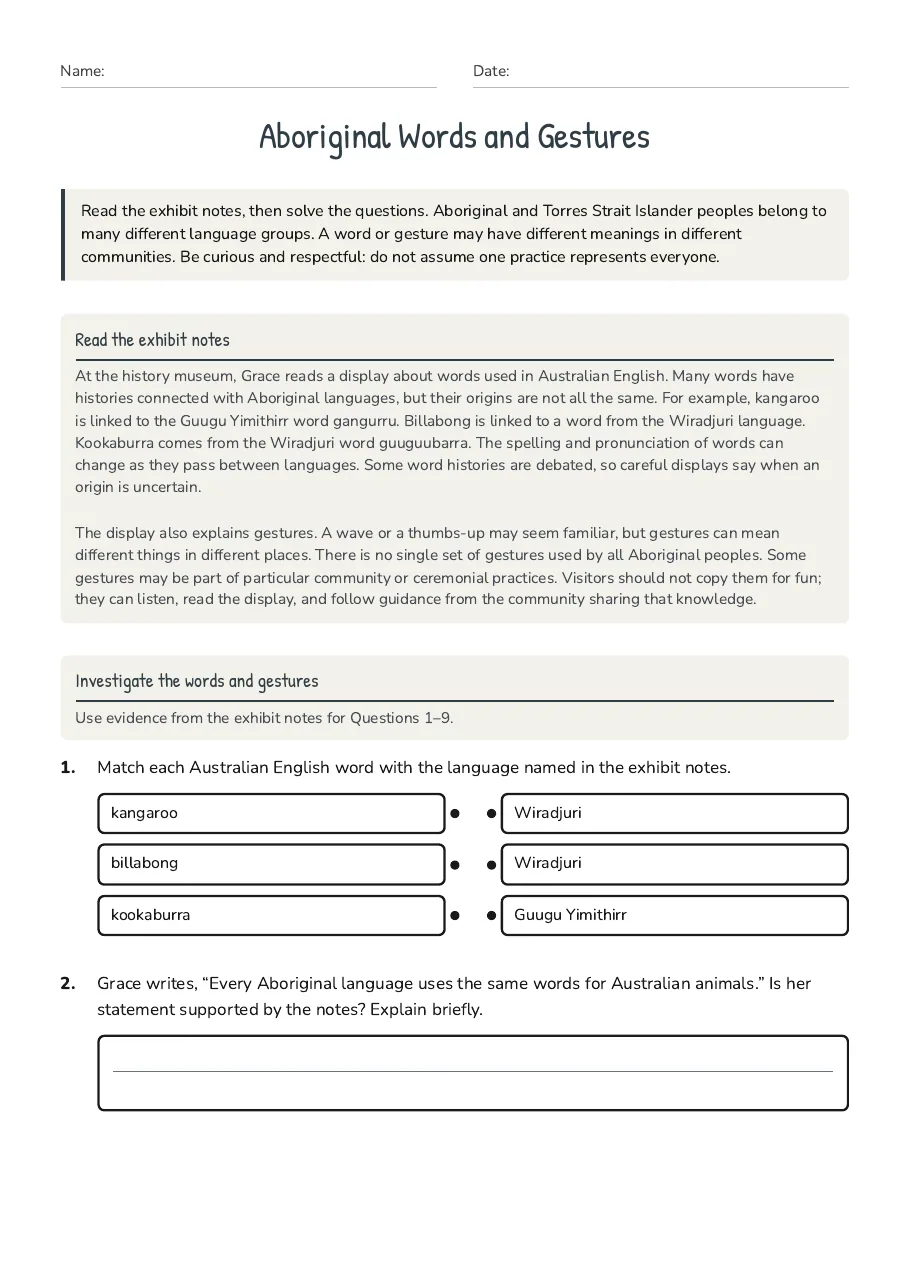
Read the exhibit notes
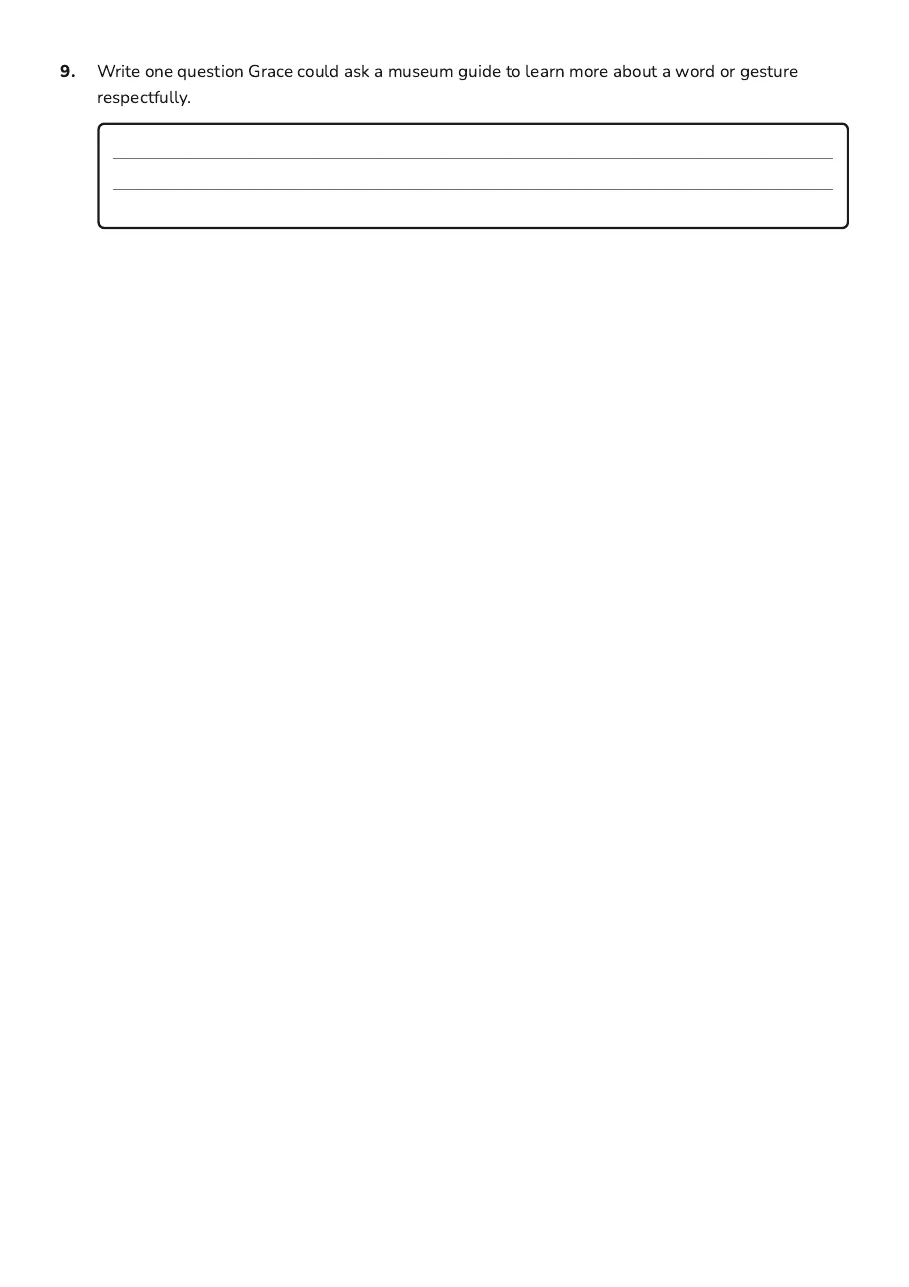
At the history museum, Grace reads a display about words used in Australian English. Many words have histories connected with Aboriginal languages, but their origins are not all the same. For example, kangaroo is linked to the Guugu Yimithirr word gangurru. Billabong is linked to a word from the Wiradjuri language. Kookaburra comes from the Wiradjuri word guuguubarra. The spelling and pronunciation of words can change as they pass between languages. Some word histories are debated, so careful displays say when an origin is uncertain. The display also explains gestures. A wave or a thumbs-up may seem familiar, but gestures can mean different things in different places. There is no single set of gestures used by all Aboriginal peoples. Some gestures may be part of particular community or ceremonial practices. Visitors should not copy them for fun; they can listen, read the display, and follow guidance from the community sharing that knowledge.
Investigate the words and gestures
Use evidence from the exhibit notes for Questions 1–9.
- kangaroo
- billabong
- kookaburra
- Wiradjuri
- Wiradjuri
- Guugu Yimithirr
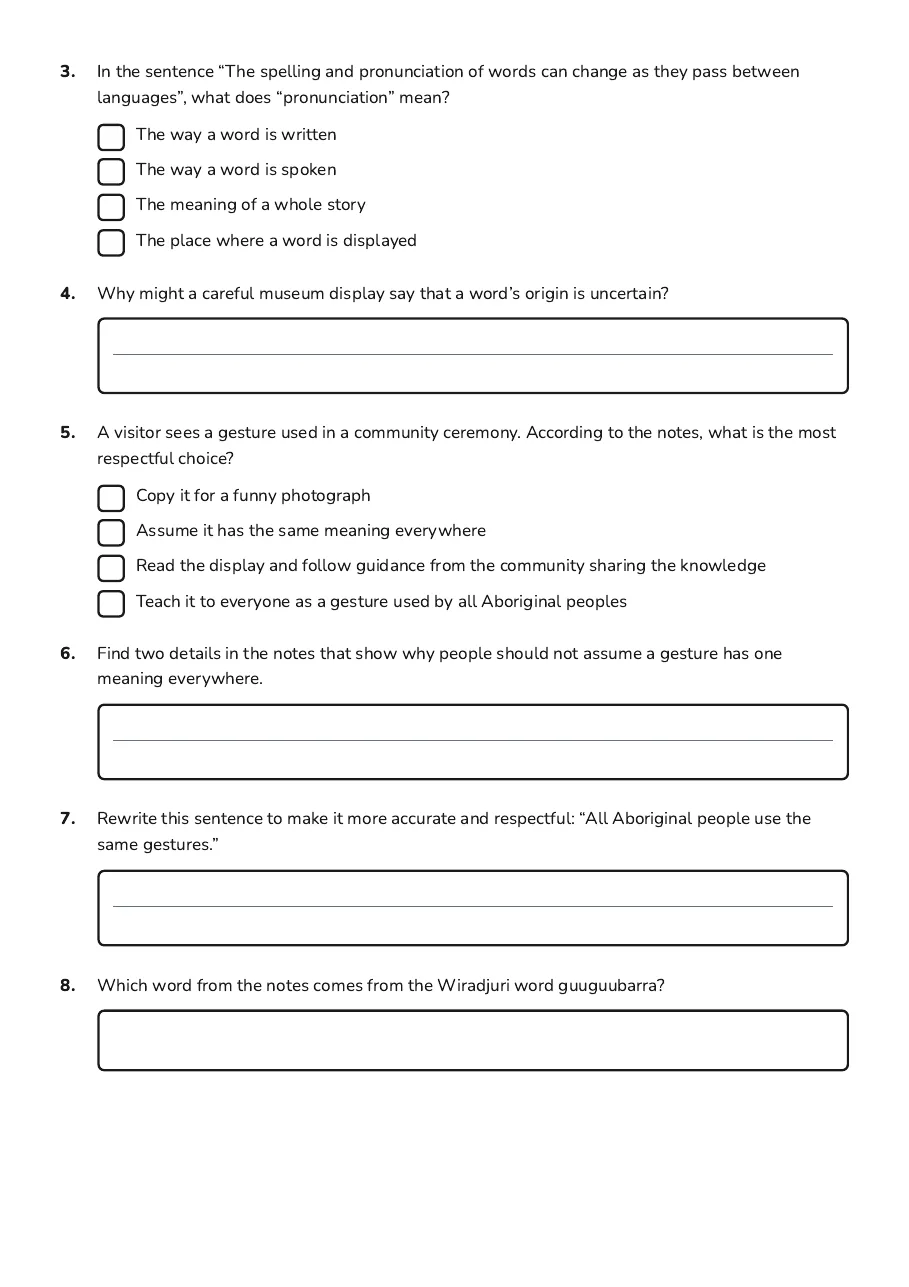
- The way a word is written
- The way a word is spoken
- The meaning of a whole story
- The place where a word is displayed
- Copy it for a funny photograph
- Assume it has the same meaning everywhere
- Read the display and follow guidance from the community sharing the knowledge
- Teach it to everyone as a gesture used by all Aboriginal peoples
3 printable pages
Page 1
Page 2
Page 3
About This Worksheet
Free in Kuraplan
Sign up free, grab the PDF, and customize it for your class.
Print-Ready
Formatted for standard paper. Clean layout, easy to read.
AI-Generated
Created with Kuraplan's AI, designed for real classroom use.
For Teachers & Parents
Use in classrooms, for homework, tutoring, or homeschool.
Need a custom version of this worksheet?
Kuraplan's AI generates custom worksheets in seconds — differentiated for every learner, aligned to your curriculum.
Generate Custom Worksheets — FreeMore English Worksheets
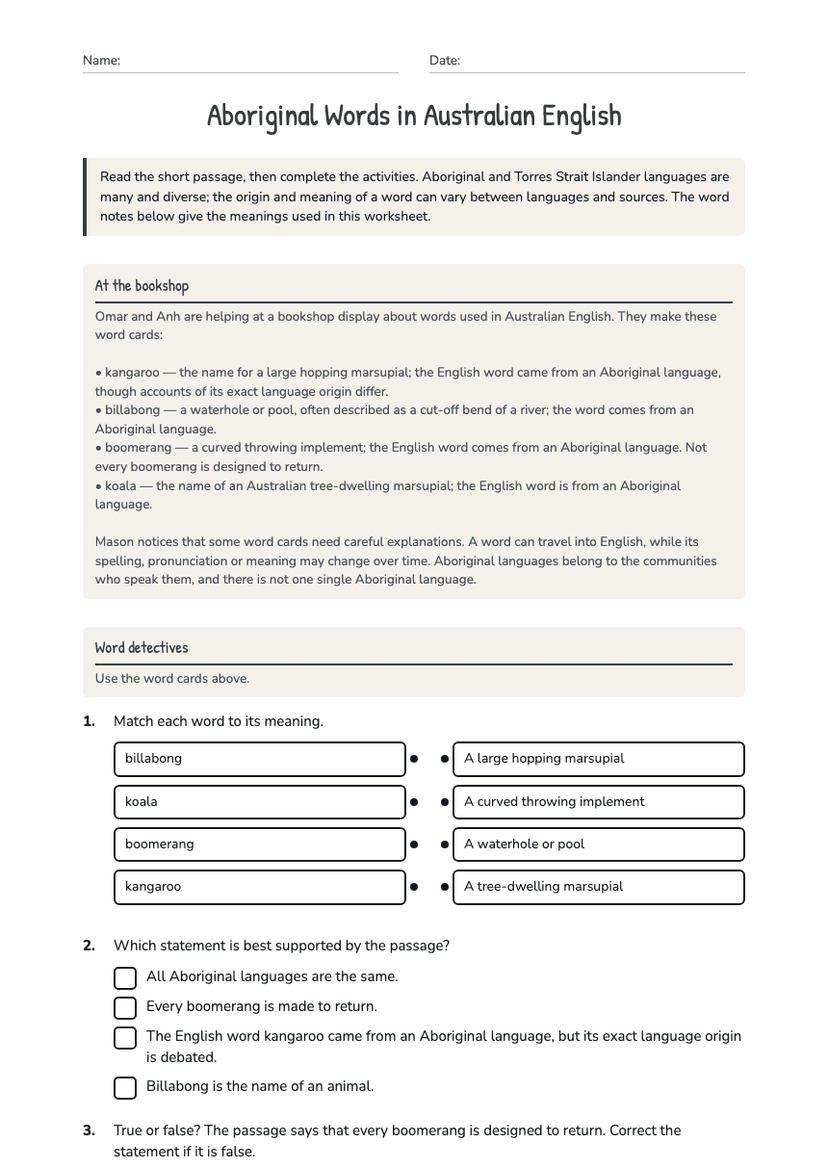
Aboriginal Words in Australian English
Free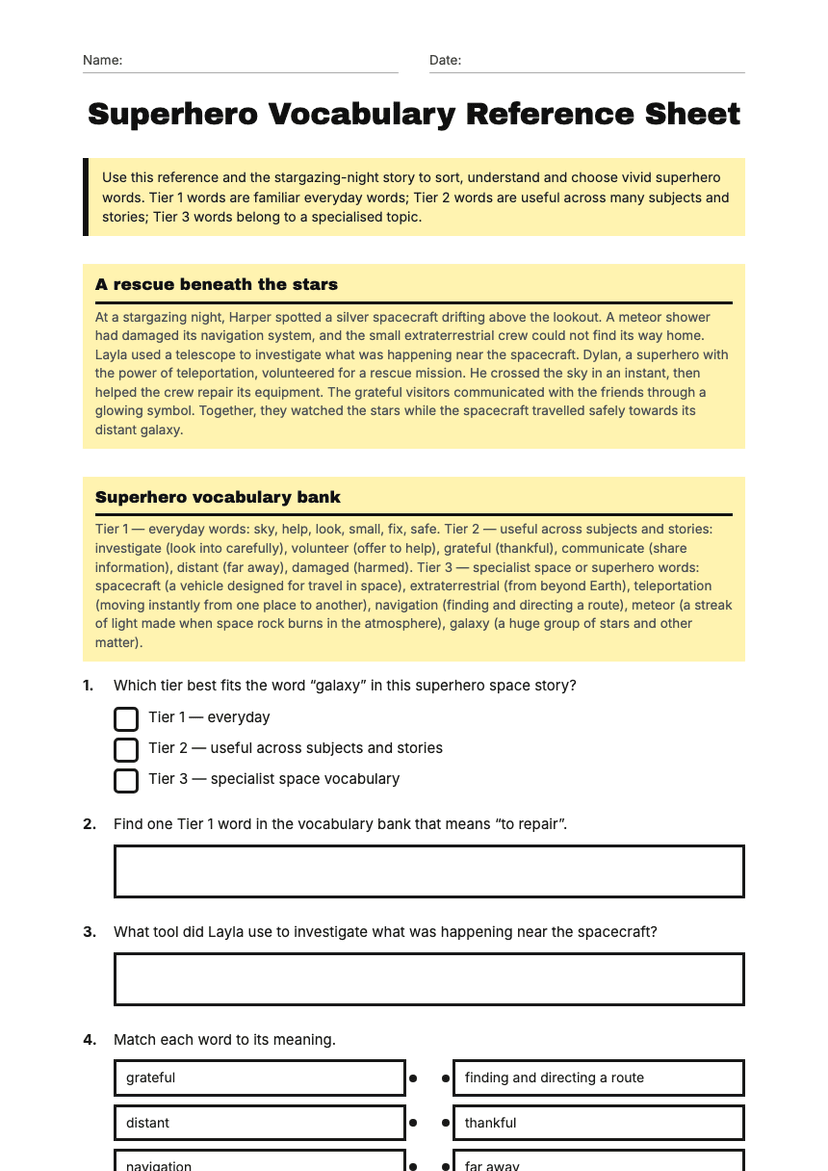
Superhero Vocabulary Reference Sheet
Free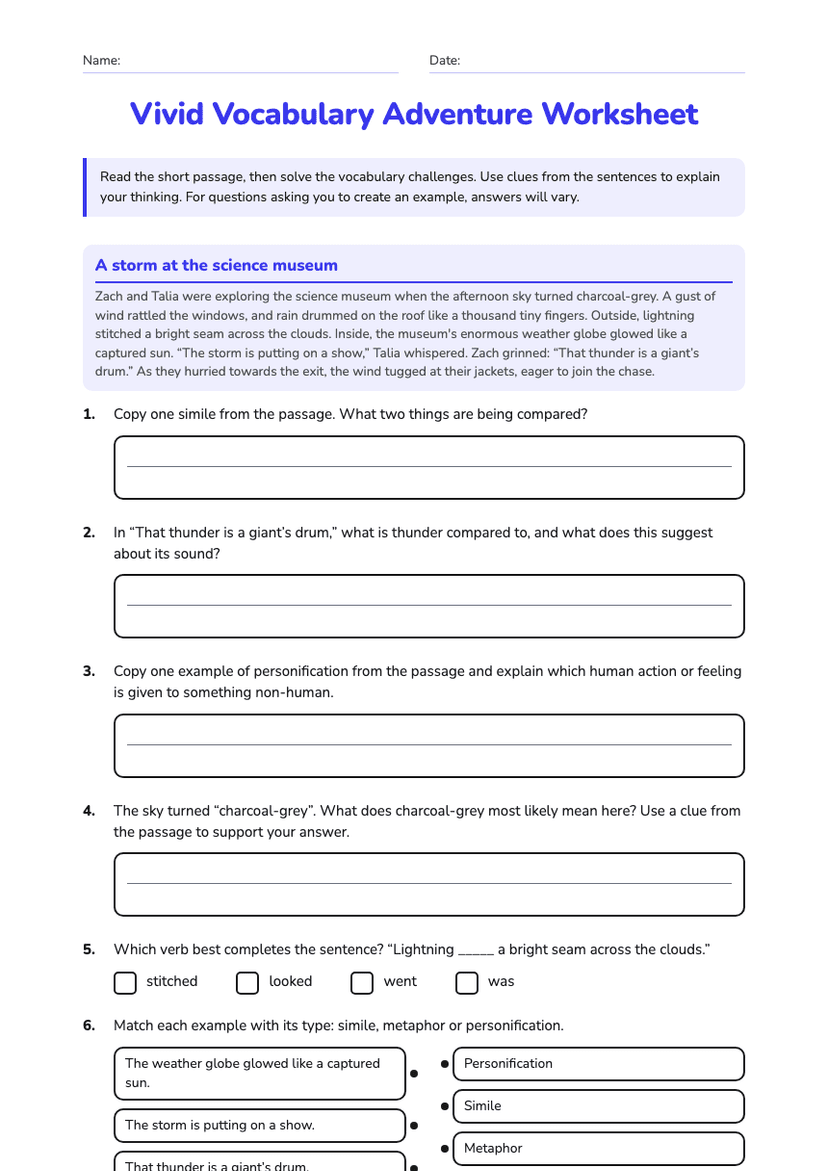
Vivid Vocabulary Adventure Worksheet
Free
Farm Animal Matching Worksheet
Free
Time Vocabulary Drawing Worksheet
Free
Winter Vocabulary Cloze
Free
47 Degrees Symbol List
Free