EnglishFreePrintable

Analyzing Arguments Effectively

A free english worksheet ready for your classroom. Open in Kuraplan to grab the print-ready PDF, customize it for your students, or generate a fresh version in seconds.
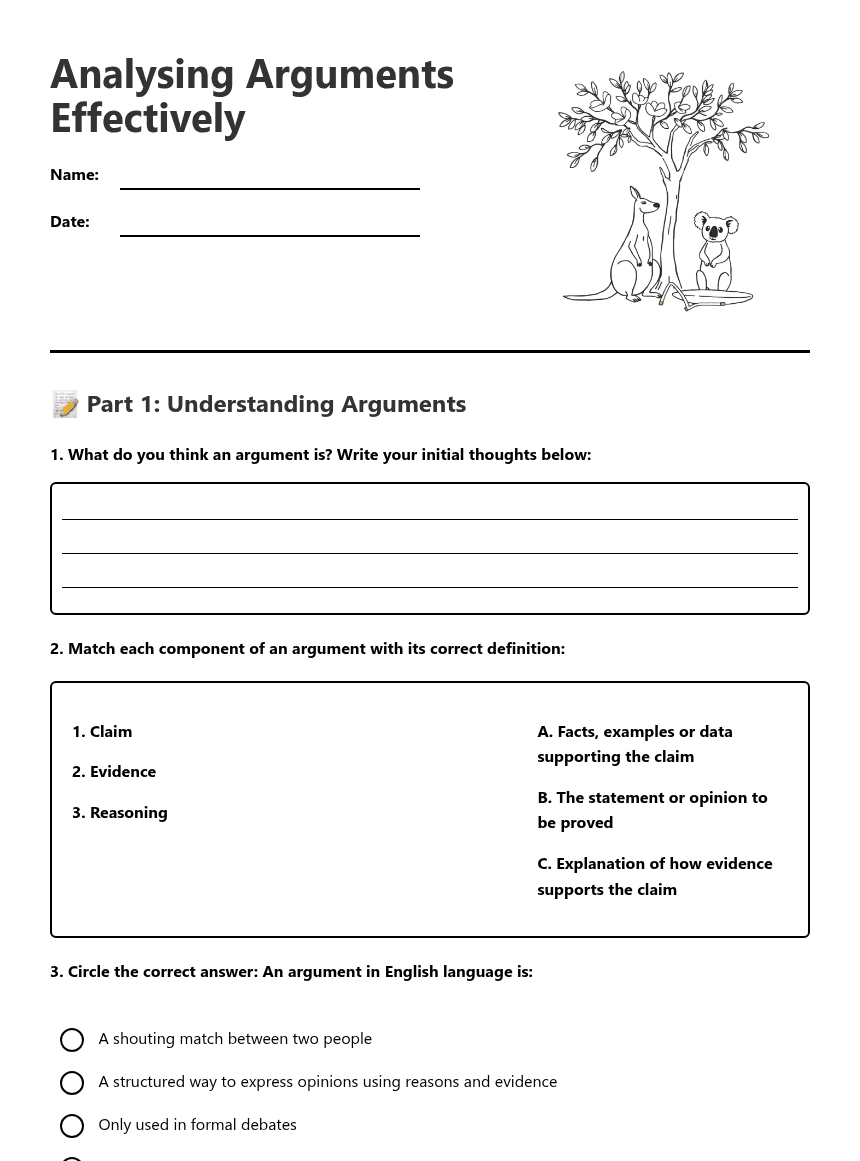
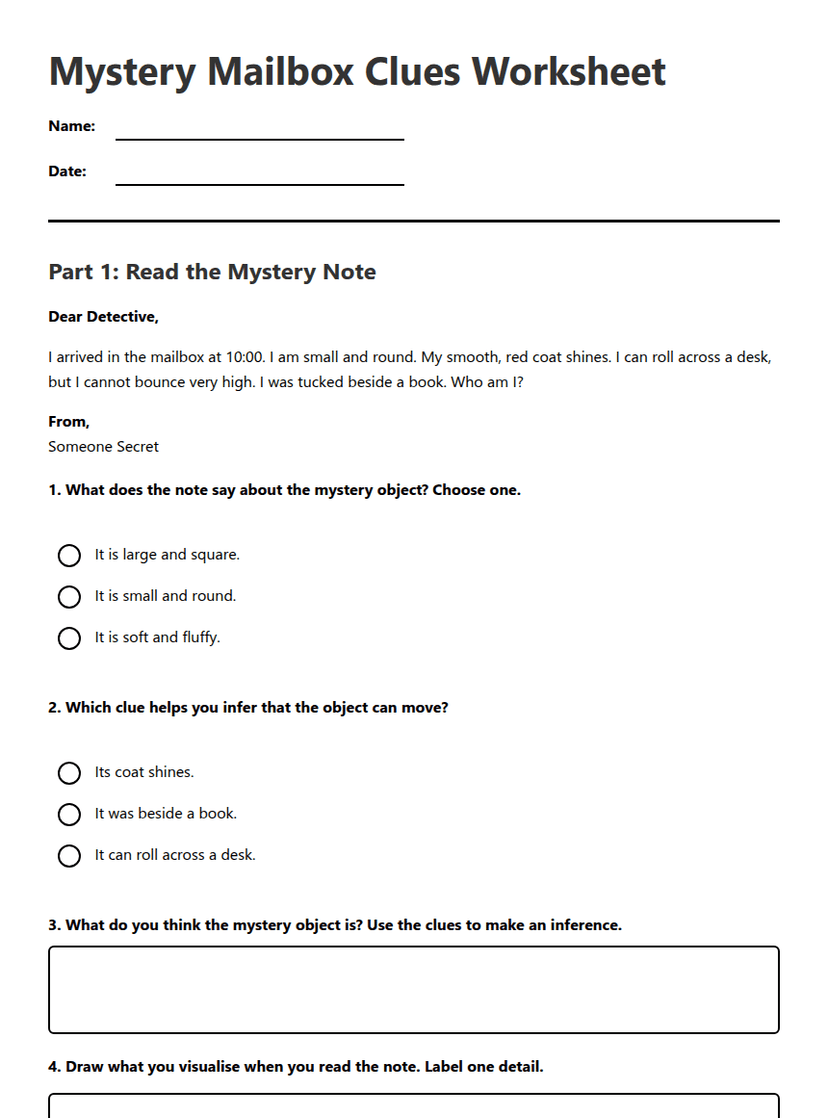
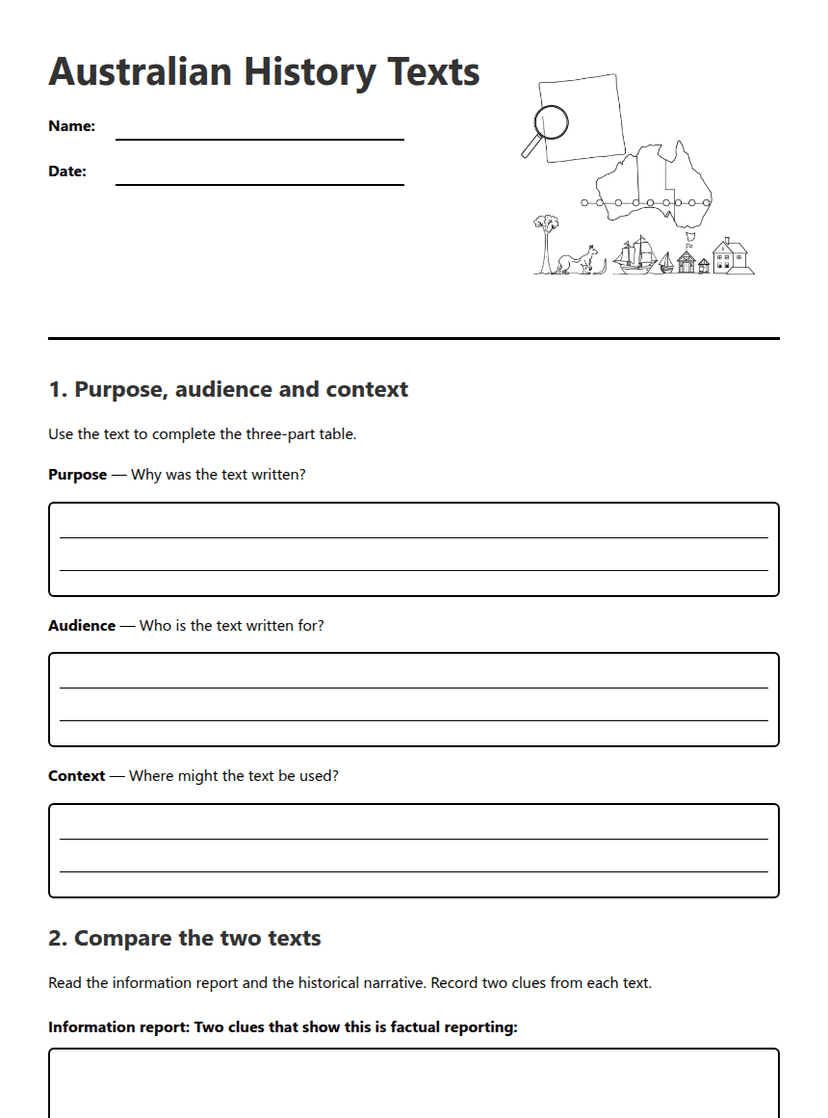
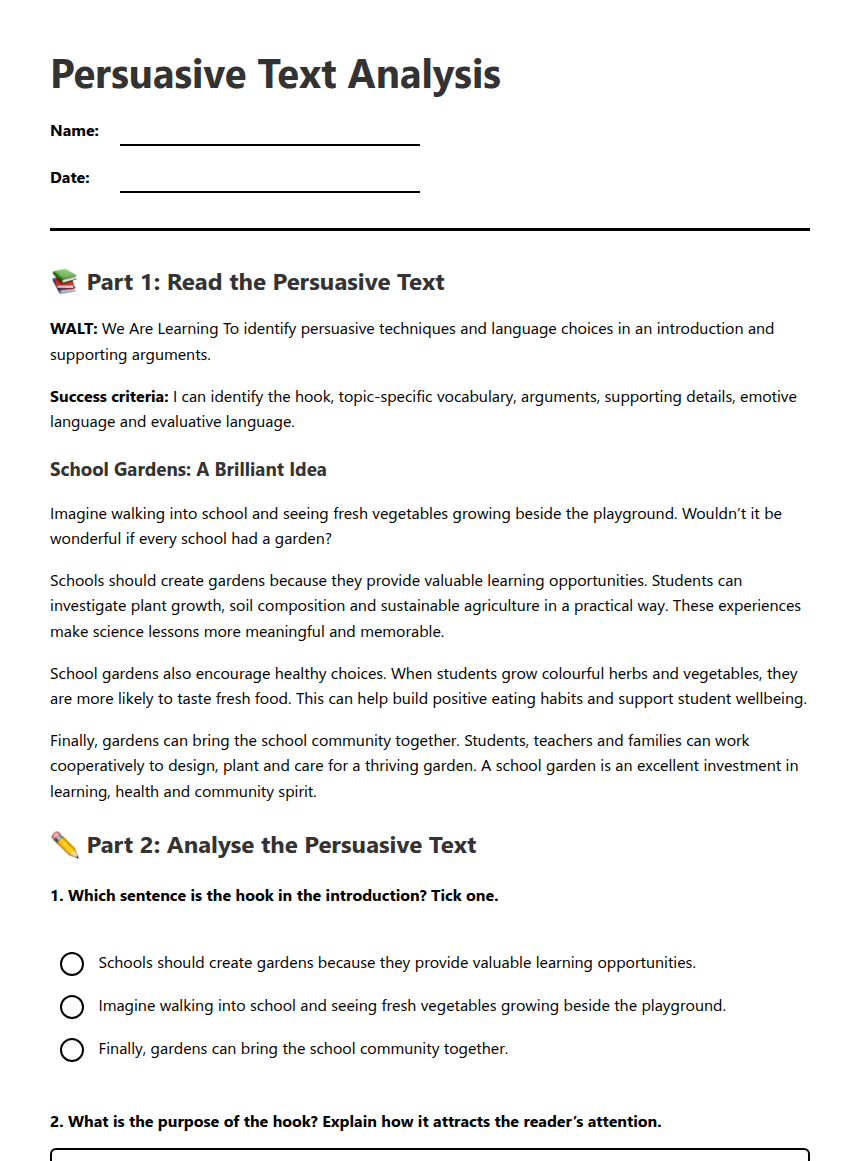
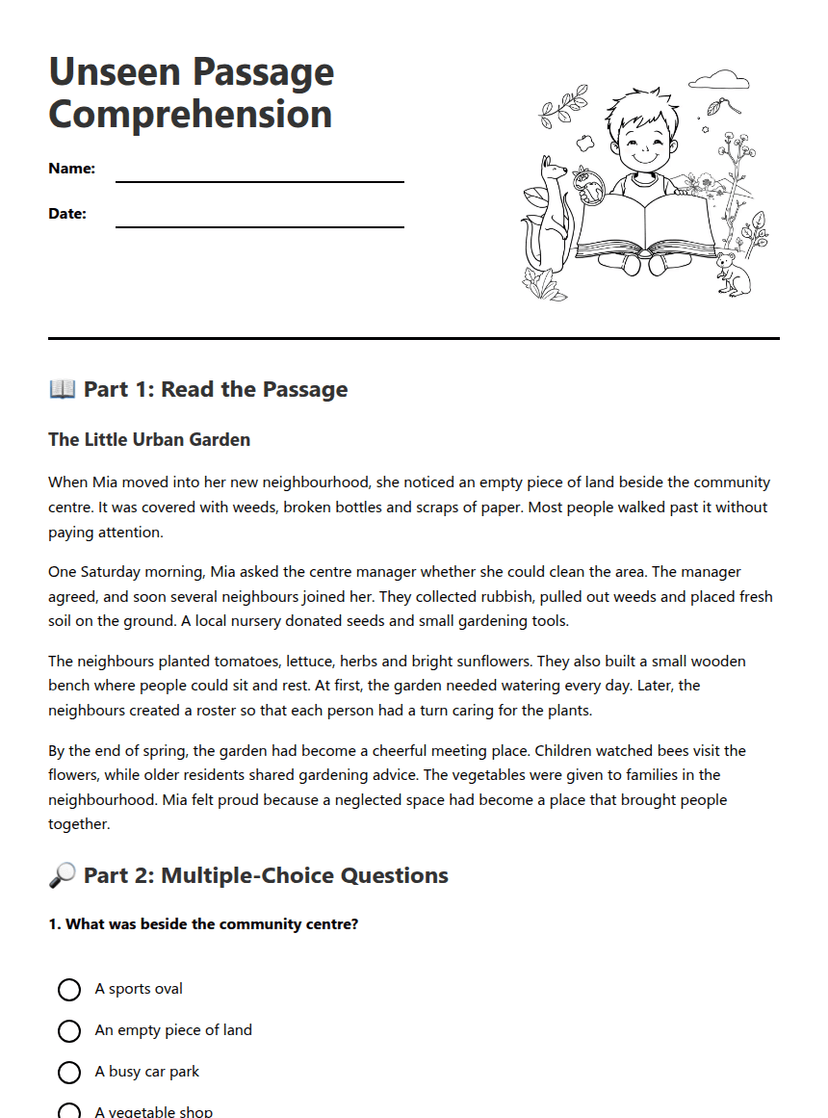
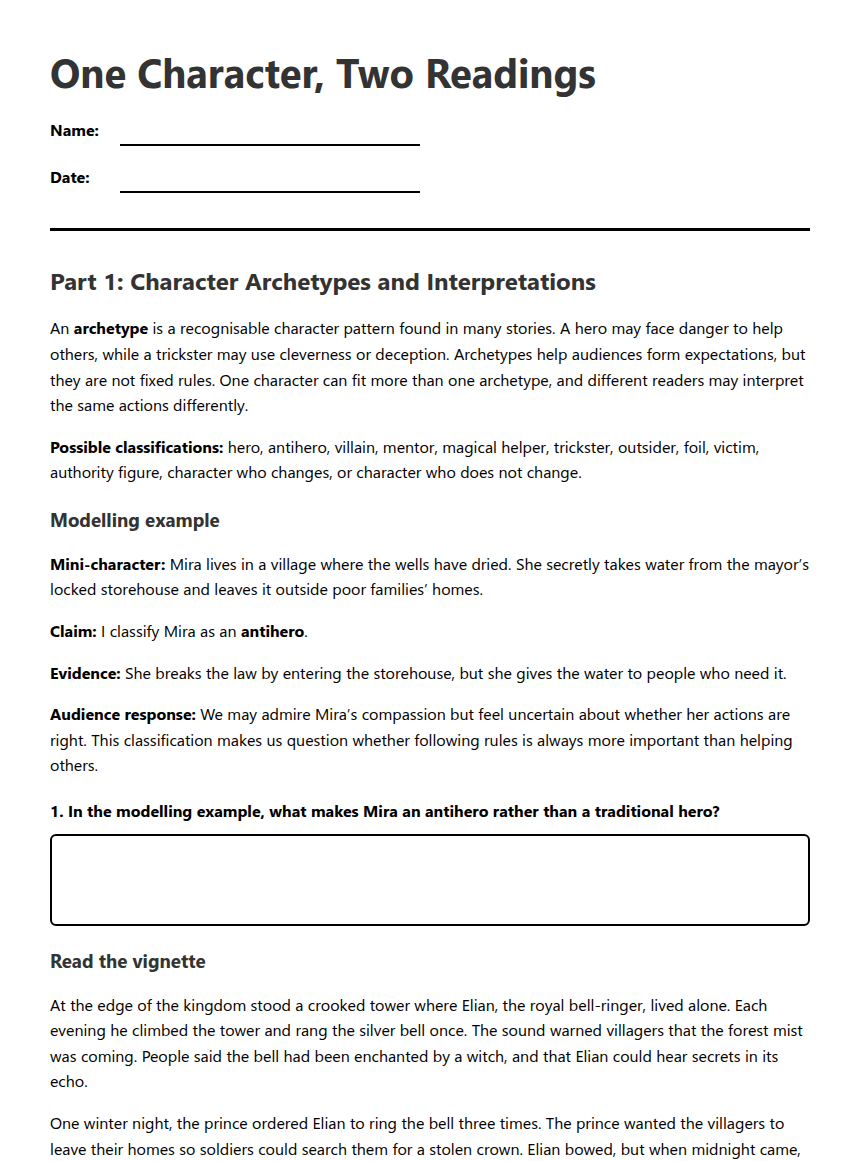
Analyzing Arguments Effectively worksheet preview
Analyzing Arguments Effectively

Analysing Arguments Effectively

Students discussing and analysing arguments

📝 Part 1: Understanding Arguments

1. What do you think an argument is? Write your initial thoughts below:
2. Match each component of an argument with its correct definition:
1. Claim
2. Evidence
3. Reasoning
A. Facts, examples or data supporting the claim
B. The statement or opinion to be proved
C. Explanation of how evidence supports the claim
3. Circle the correct answer: An argument in English language is:

A shouting match between two people

A structured way to express opinions using reasons and evidence

Only used in formal debates

Something that always causes conflict

🎯 Part 2: Identifying Argument Components

4. Read this example argument: "Homework should be limited to one hour per night because students need time for other activities, and research shows that excessive homework can lead to stress and burnout."

Claim: ________________________________

Evidence: ________________________________

Reasoning: ________________________________

5. Create your own simple argument about school uniforms. Include all three components:

🌍 Part 3: Context and Its Influence

6. Check all factors that make up the context of an argument:

The audience

The purpose

The time and place

The medium (written, spoken, visual)

The weather

The speaker's background

7. How might the same argument about "teenagers should have limited screen time" be presented differently to these audiences? Fill in the blanks:

To parents: The argument might focus on _________________ and _________________

To teenagers: The argument might emphasise _________________ and _________________

To teachers: The argument might highlight _________________ and _________________

📱 Part 4: Social Media Arguments

8. Think about arguments surrounding social media use for people under 16. List three different perspectives that might exist:
9. Circle which group would be MOST likely to argue for stricter social media restrictions for under 16s:

Teenagers aged 13-15

Social media companies

Parents and child psychologists

Technology reviewers

10. Why is it important to consider context when analysing arguments? Explain in your own words:

🤔 Part 5: Reflection and Application

11. Practice using interaction skills. Complete these sentence starters for responding to arguments:

To agree: "I agree because ________________________________"

To challenge: "I'm not sure about that because ________________________________"

To ask for clarification: "Could you explain ________________________________"

12. Homework Task: Over the next few days, listen for one argument about social media in your daily life (news, conversations, online). Write it down and try to identify its parts:

Where you heard/saw it: ________________________________

The argument:

Claim: ________________________________

Evidence: ________________________________

Reasoning: ________________________________

Context (who was the audience?): ________________________________

About This Worksheet

Free in Kuraplan

Sign up free, grab the PDF, and customize it for your class.

Print-Ready

Formatted for standard paper. Clean layout, easy to read.

AI-Generated

Created with Kuraplan's AI, designed for real classroom use.

For Teachers & Parents

Use in classrooms, for homework, tutoring, or homeschool.

Need a custom version of this worksheet?

Kuraplan's AI generates custom worksheets in seconds — differentiated for every learner, aligned to your curriculum.

Generate Custom Worksheets — Free
No credit card Curriculum-aligned Under 60 seconds