ScienceFreePrintable

Atomic Theory Research Worksheet

A free science worksheet ready for your classroom. Open in Kuraplan to grab the print-ready PDF, customize it for your students, or generate a fresh version in seconds.
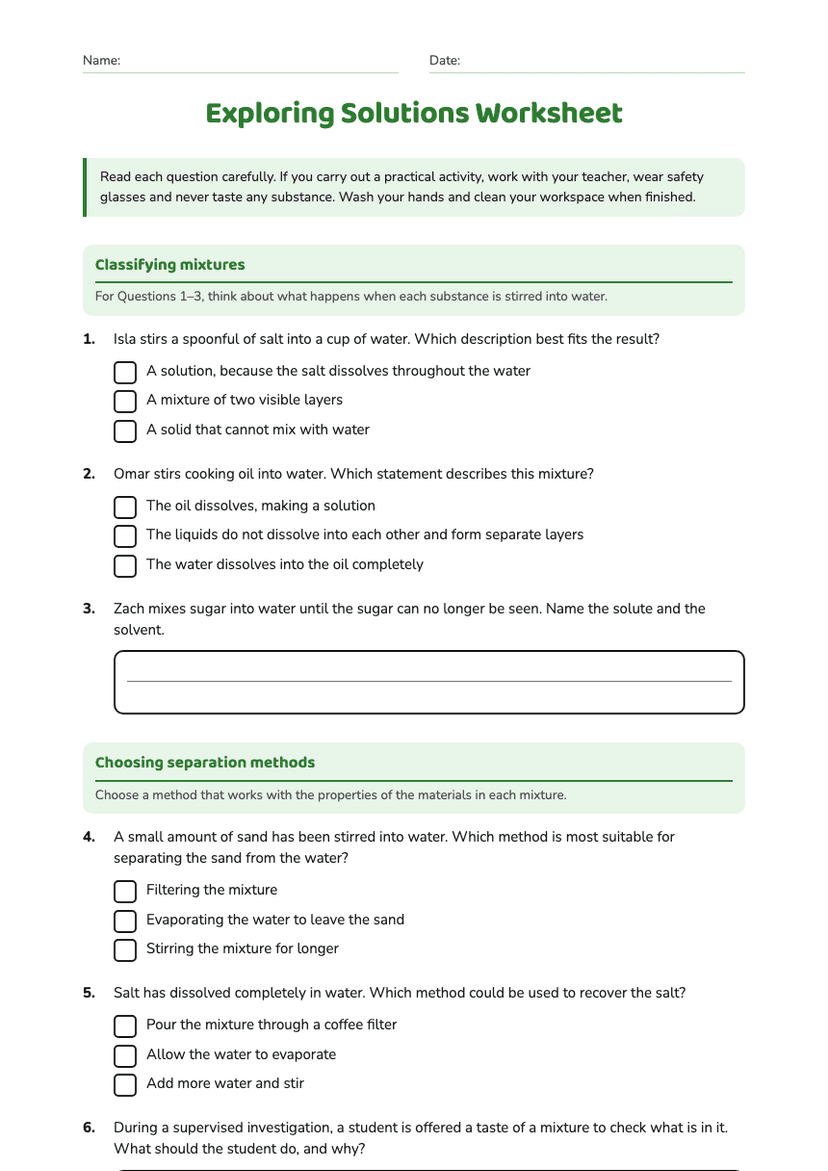
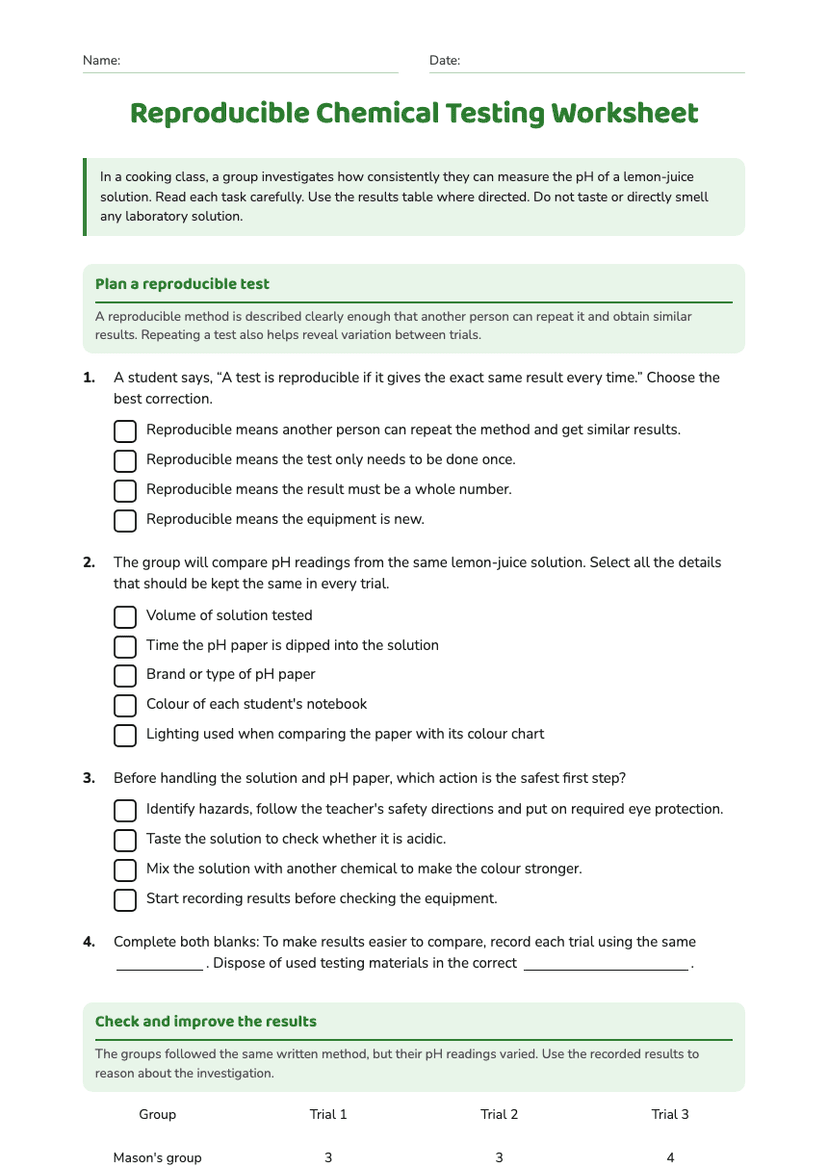
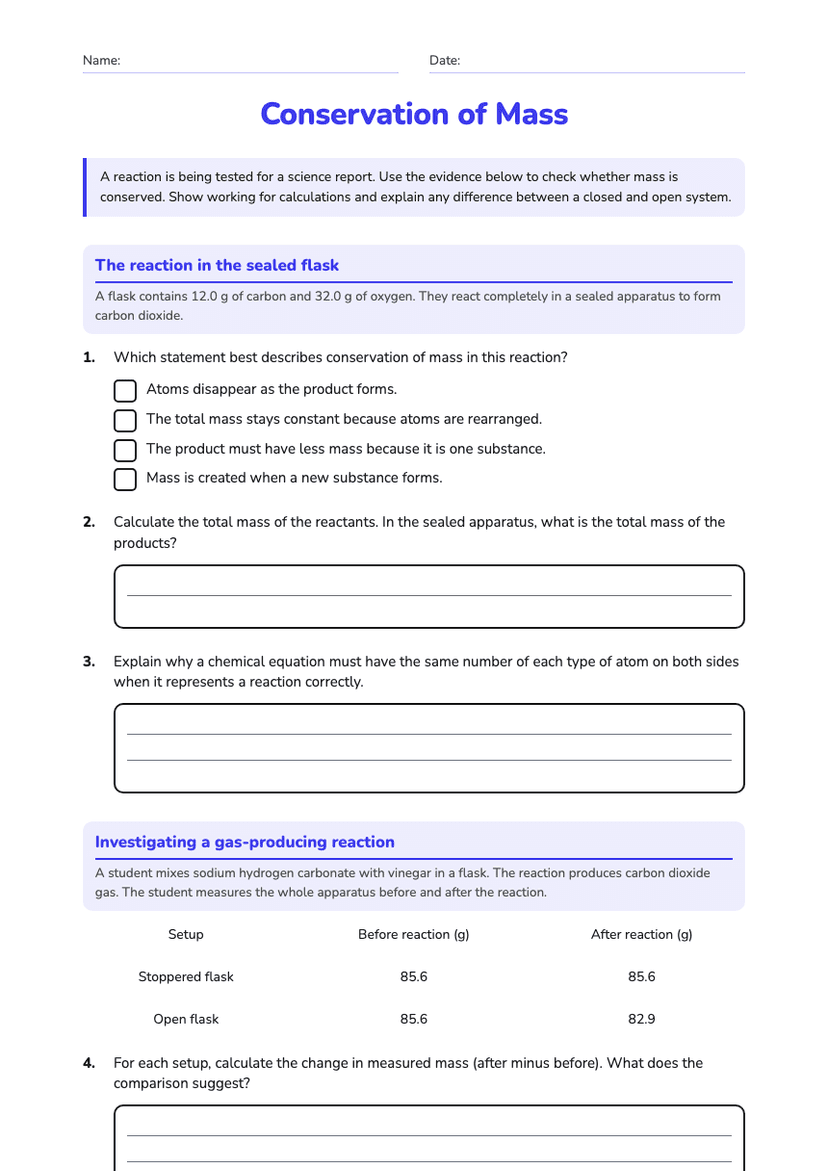
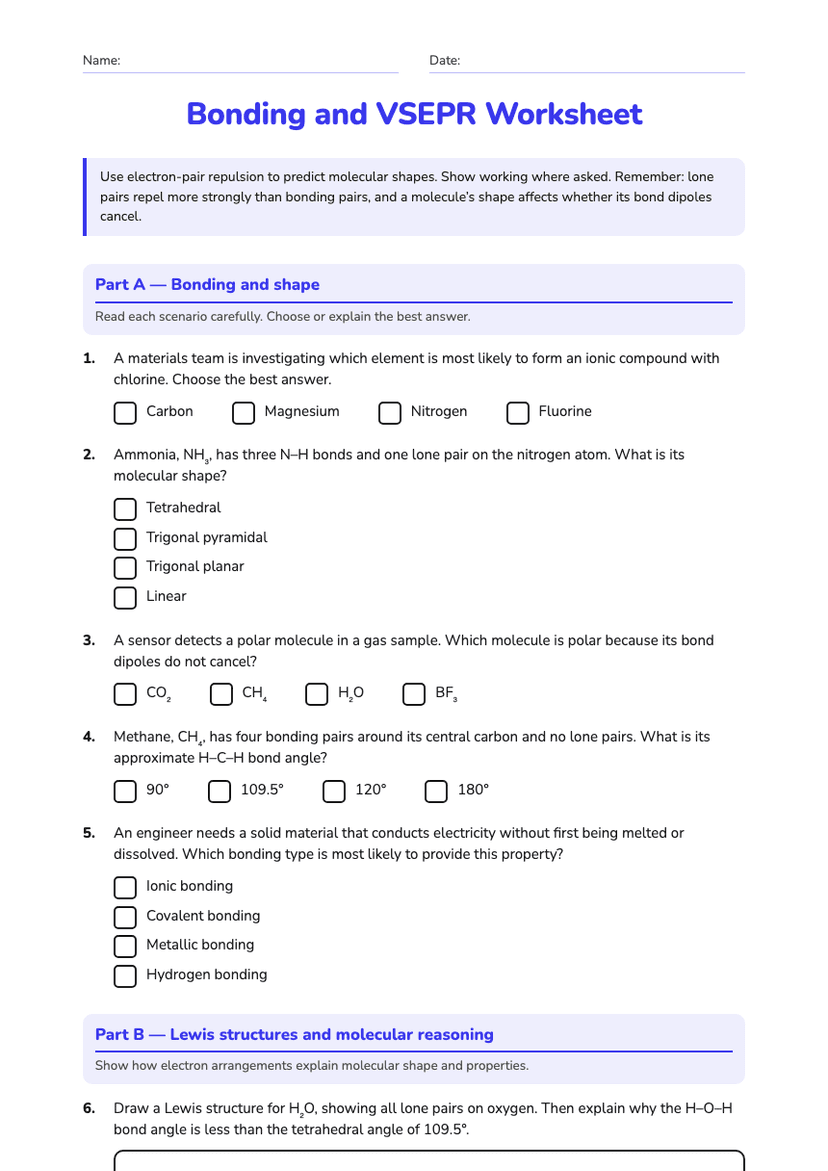
Atomic Theory Research Worksheet worksheet preview
Atomic Theory Research Worksheet

Worksheet illustration

Part 1 — Democritus

Research focus: Early idea that matter is made of tiny particles.

Reminder: Read, understand, close the source and write brief notes in your own words. Do not copy-paste. Record the name of every source.

Printed image of Democritus

Image of the atomic model

Scientific idea: What did Democritus suggest about matter?
Evidence: What evidence or reasoning supported this idea?
Technology: What technology was available to investigate atoms?
Model: How would you represent this idea as an atomic model?
Problem/limitation: What was a limitation of this idea?
What changed: How did later ideas improve or challenge it?

Part 1 — John Dalton

Research focus: The first modern scientific atomic theory.

Printed image of John Dalton

Image of Dalton’s atomic model

Scientific idea: What did Dalton propose about atoms and elements?
Evidence: What observations or measurements supported his theory?
Technology: What equipment or methods helped scientists study matter?
Model: How did Dalton represent atoms?
Problem/limitation: What part of Dalton’s model was later found to be incomplete?
What changed: What new discovery led to a different model?

Part 1 — J. J. Thomson

Research focus: The discovery of the electron.

Printed image of J. J. Thomson

Image of Thomson’s atomic model

Scientific idea: What did Thomson discover or propose about atoms?
Evidence: What did cathode-ray experiments show?
Technology: What equipment made this evidence possible?
Model: Describe or draw the “plum pudding” model.
Problem/limitation: What could Thomson’s model not explain?
What changed: What later evidence challenged this model?

Part 1 — Ernest Rutherford

Research focus: The discovery of the atomic nucleus.

Printed image of Ernest Rutherford

Image of Rutherford’s atomic model

Scientific idea: What did Rutherford suggest about the atom’s structure?
Evidence: What did the gold-foil experiment reveal?
Technology: What experimental equipment or method was used?
Model: How were the nucleus and electrons represented?
Problem/limitation: What could this model not explain about electrons?
What changed: How did Rutherford’s model differ from Thomson’s?

Part 1 — Niels Bohr

Research focus: Electrons in specific energy levels.

Printed image of Niels Bohr

Image of Bohr’s atomic model

Scientific idea: What did Bohr propose about electron energy levels?
Evidence: What did the line spectra of atoms show?
Technology: What instrument or method helped scientists study spectra?
Model: How did Bohr represent electron movement?
Problem/limitation: Which atoms or situations could the model not fully explain?
What changed: What new understanding replaced or extended Bohr’s model?

Part 1 — James Chadwick

Research focus: The discovery of the neutron.

Printed image of James Chadwick

Image of Chadwick’s atomic model

Scientific idea: What particle did Chadwick identify, and where is it found?
Evidence: What experimental results supported the existence of the neutron?
Technology: What equipment or radiation source supported the investigation?
Model: How did the neutron change the picture of the nucleus?
Problem/limitation: What question or limitation remained after the neutron’s discovery?
What changed: How did this discovery improve atomic models?

Part 1 — The Modern Atomic Model

Research focus: The quantum model, probability and electron clouds.

Printed image of a modern atomic scientist or model developer

Image of the modern atomic model

Scientific idea: How does the modern model describe electrons?
Evidence: What evidence supports the modern model?
Technology: What modern technology helps scientists investigate atoms?
Model: How are the nucleus, electrons and electron clouds represented?
Problem/limitation: Why is a scientific model not a perfect copy of reality?
What changed: Why is this model more useful than earlier models?

Part 2 — Science as a Human Endeavour Reflection

Use examples from your timeline. Answer in full sentences and explain your thinking.

Research reminder: Paraphrase information in your own words, avoid copy-pasting and record the names of your sources.

1. Why does scientific knowledge not stay exactly the same?
2. What role does technology play in scientific discovery?
3. Why is evidence more important than simply having a convincing idea?
4. Can scientists ever be completely certain that their model is correct? Explain.
5. What responsibilities do scientists have when discoveries affect society?

About This Worksheet

Free in Kuraplan

Sign up free, grab the PDF, and customize it for your class.

Print-Ready

Formatted for standard paper. Clean layout, easy to read.

AI-Generated

Created with Kuraplan's AI, designed for real classroom use.

For Teachers & Parents

Use in classrooms, for homework, tutoring, or homeschool.

Need a custom version of this worksheet?

Kuraplan's AI generates custom worksheets in seconds — differentiated for every learner, aligned to your curriculum.

Generate Custom Worksheets — Free
No credit card Curriculum-aligned Under 60 seconds