Australian Constitution Basics
A free social sciences worksheet ready for your classroom. Open in Kuraplan to grab the print-ready PDF, customize it for your students, or generate a fresh version in seconds.
Australian Constitution Basics
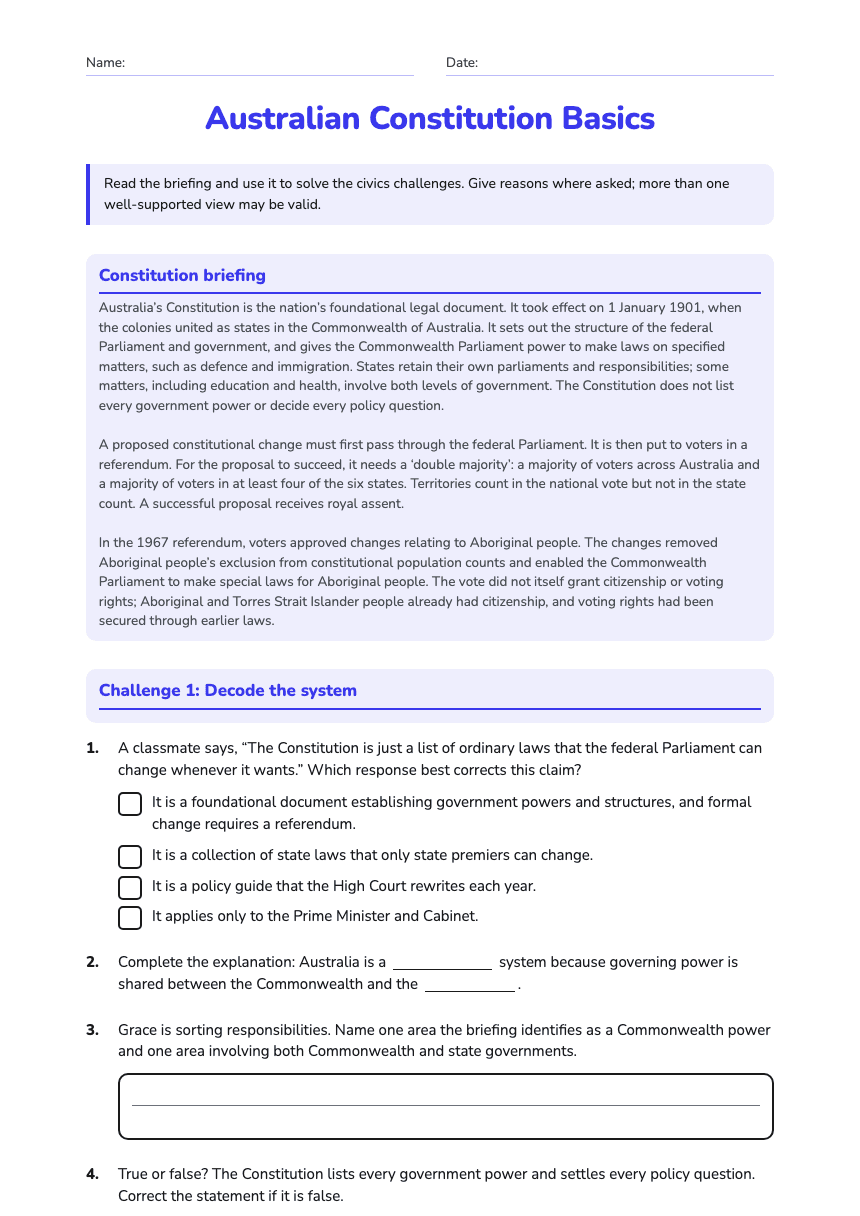
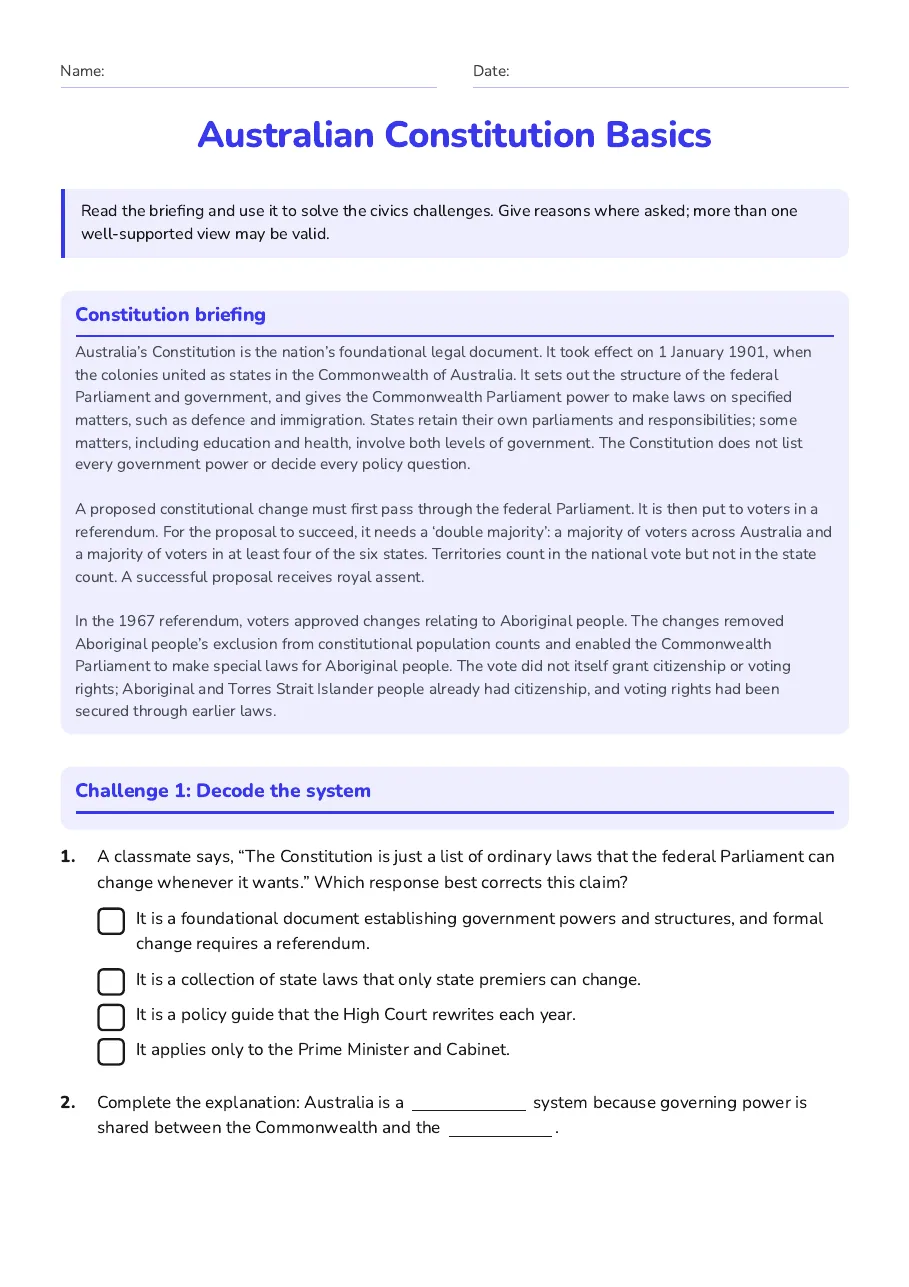
Constitution briefing
Australia’s Constitution is the nation’s foundational legal document. It took effect on 1 January 1901, when the colonies united as states in the Commonwealth of Australia. It sets out the structure of the federal Parliament and government, and gives the Commonwealth Parliament power to make laws on specified matters, such as defence and immigration. States retain their own parliaments and responsibilities; some matters, including education and health, involve both levels of government. The Constitution does not list every government power or decide every policy question. A proposed constitutional change must first pass through the federal Parliament. It is then put to voters in a referendum. For the proposal to succeed, it needs a ‘double majority’: a majority of voters across Australia and a majority of voters in at least four of the six states. Territories count in the national vote but not in the state count. A successful proposal receives royal assent. In the 1967 referendum, voters approved changes relating to Aboriginal people. The changes removed Aboriginal people’s exclusion from constitutional population counts and enabled the Commonwealth Parliament to make special laws for Aboriginal people. The vote did not itself grant citizenship or voting rights; Aboriginal and Torres Strait Islander people already had citizenship, and voting rights had been secured through earlier laws.
Challenge 1: Decode the system
- It is a foundational document establishing government powers and structures, and formal change requires a referendum.
- It is a collection of state laws that only state premiers can change.
- It is a policy guide that the High Court rewrites each year.
- It applies only to the Prime Minister and Cabinet.
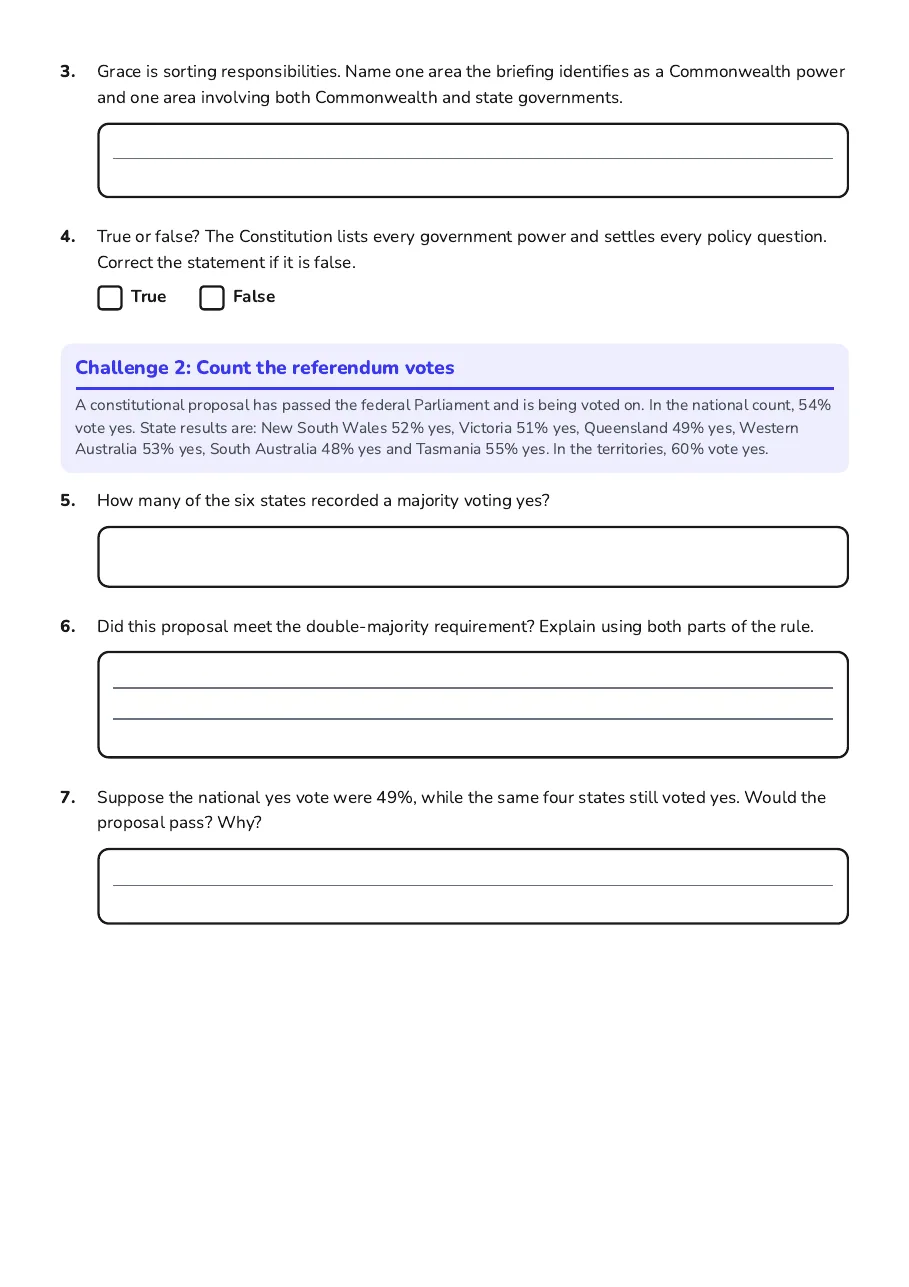
Challenge 2: Count the referendum votes
A constitutional proposal has passed the federal Parliament and is being voted on. In the national count, 54% vote yes. State results are: New South Wales 52% yes, Victoria 51% yes, Queensland 49% yes, Western Australia 53% yes, South Australia 48% yes and Tasmania 55% yes. In the territories, 60% vote yes.
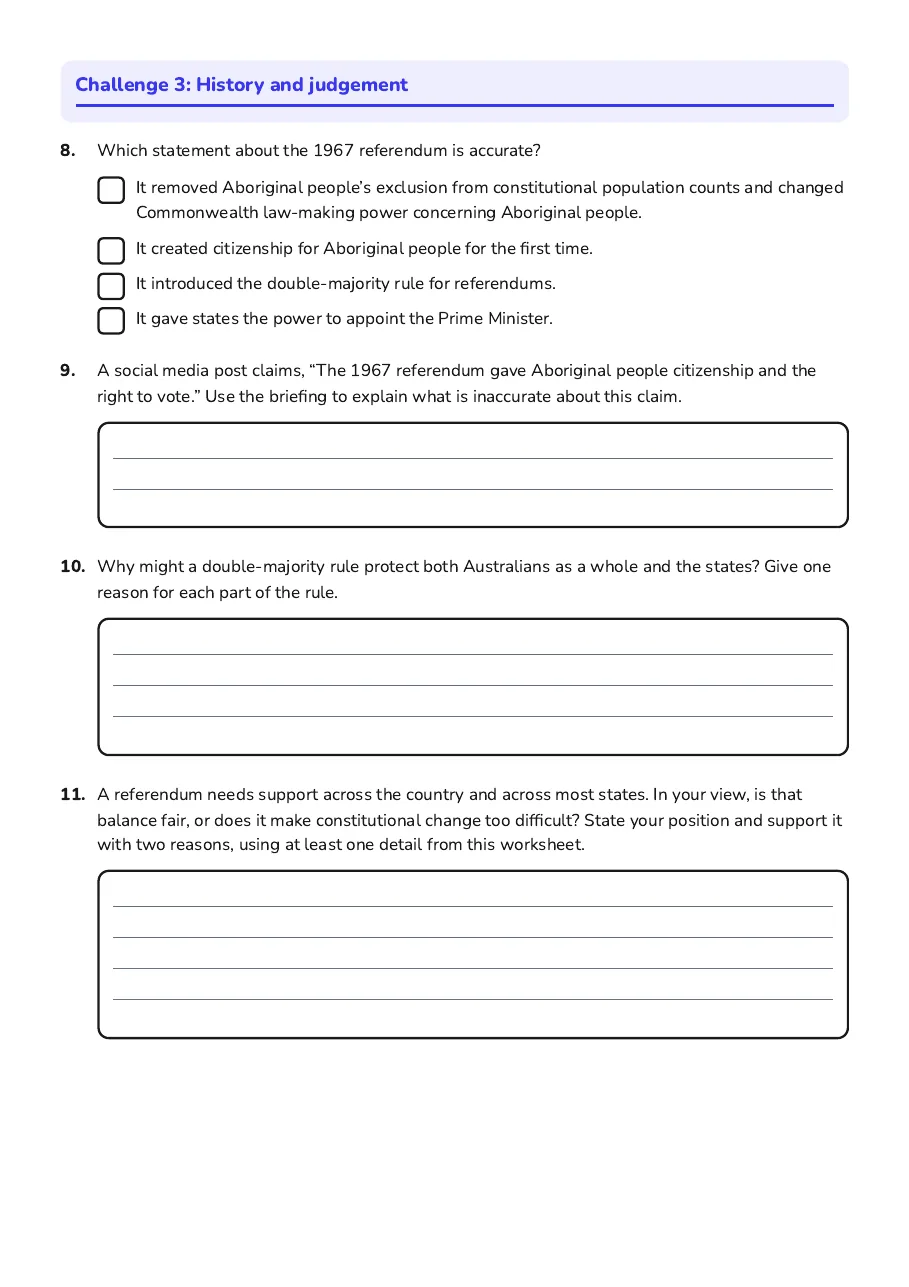
Challenge 3: History and judgement
- It removed Aboriginal people’s exclusion from constitutional population counts and changed Commonwealth law-making power concerning Aboriginal people.
- It created citizenship for Aboriginal people for the first time.
- It introduced the double-majority rule for referendums.
- It gave states the power to appoint the Prime Minister.
3 printable pages
Page 1
Page 2
Page 3
About This Worksheet
Free in Kuraplan
Sign up free, grab the PDF, and customize it for your class.
Print-Ready
Formatted for standard paper. Clean layout, easy to read.
AI-Generated
Created with Kuraplan's AI, designed for real classroom use.
For Teachers & Parents
Use in classrooms, for homework, tutoring, or homeschool.
Need a custom version of this worksheet?
Kuraplan's AI generates custom worksheets in seconds — differentiated for every learner, aligned to your curriculum.
Generate Custom Worksheets — FreeMore Social Sciences Worksheets
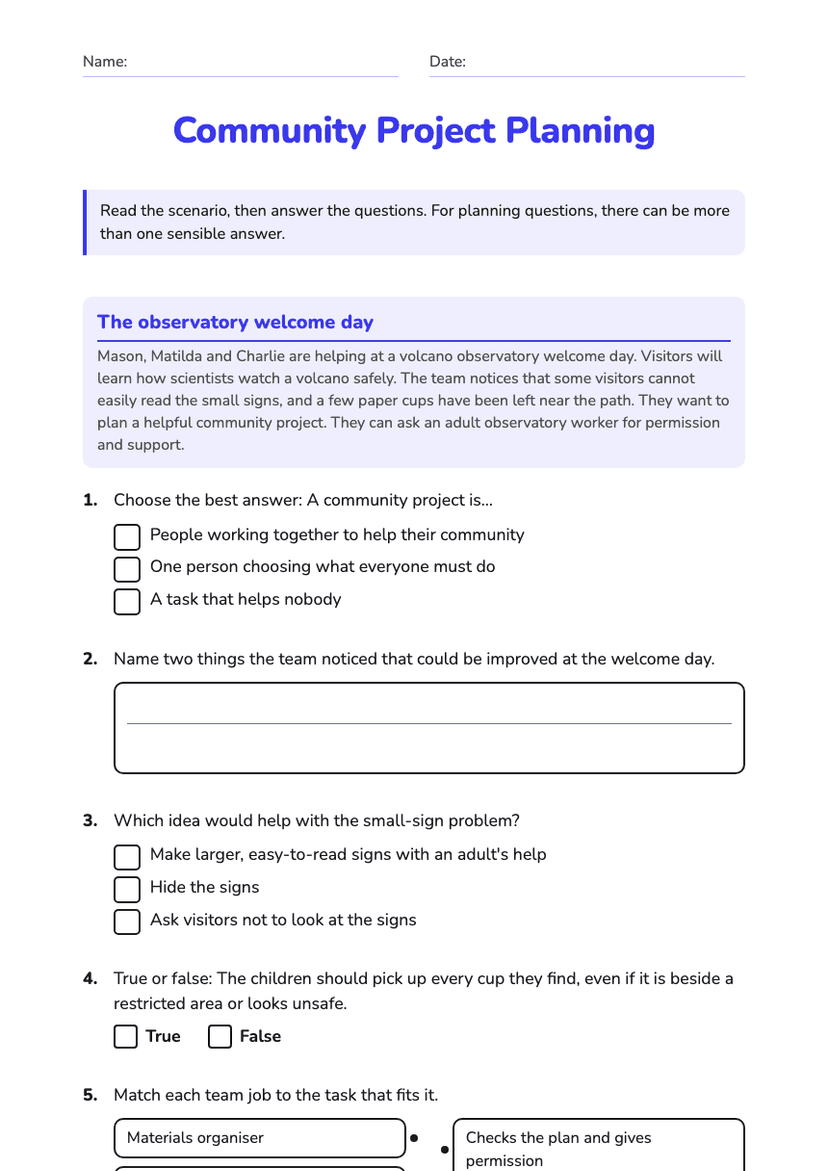
Community Project Planning
Free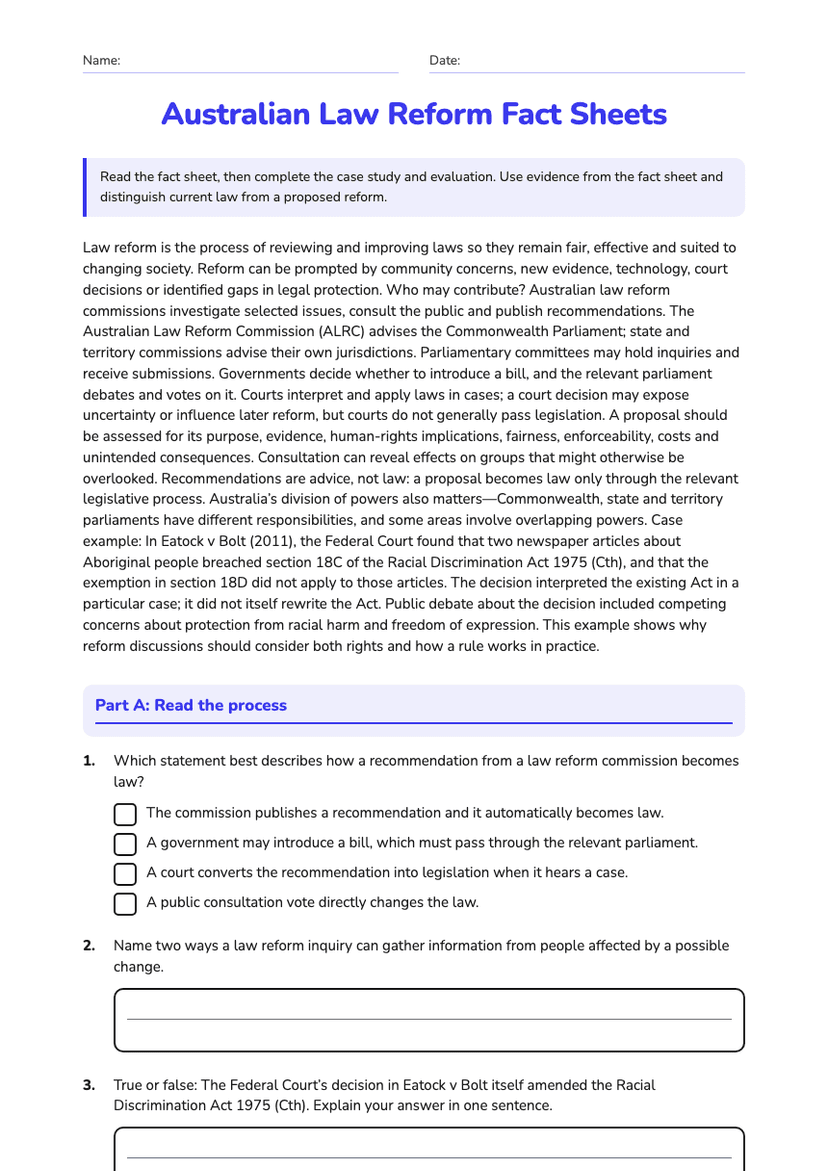
Australian Law Reform Fact Sheets
Free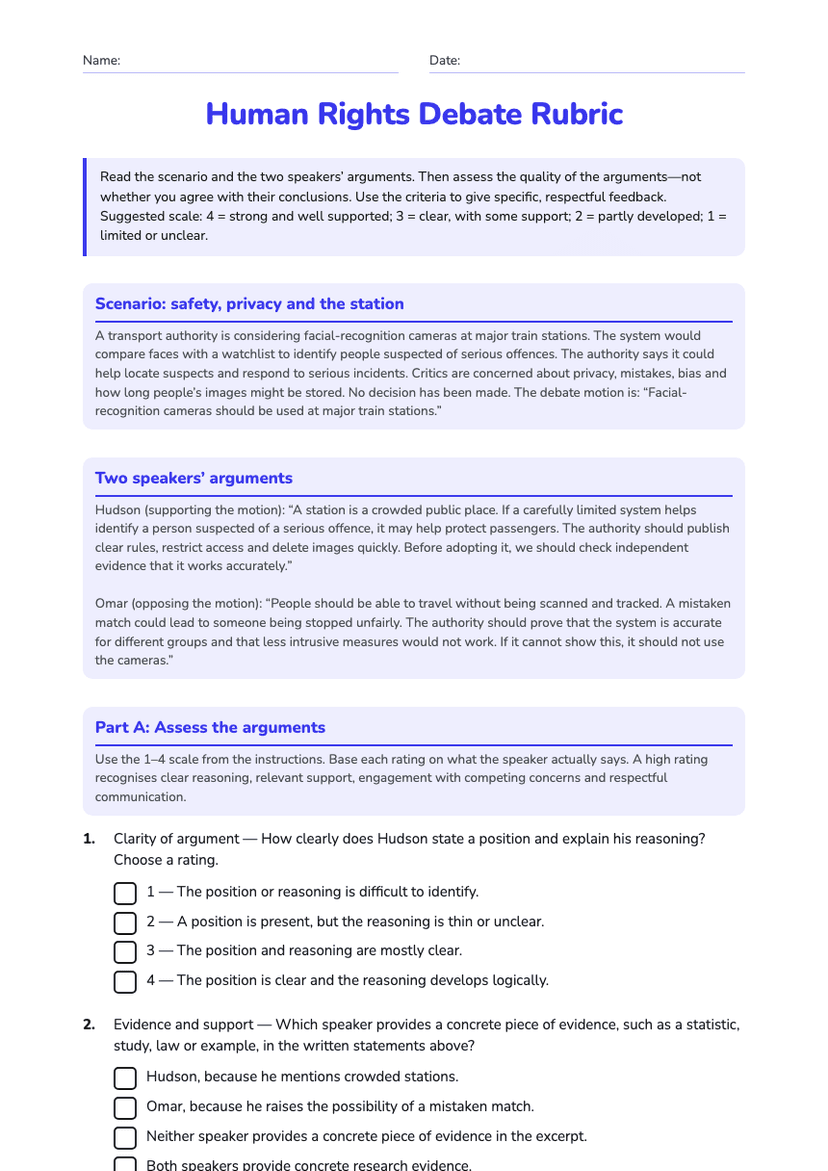
Human Rights Debate Rubric
Free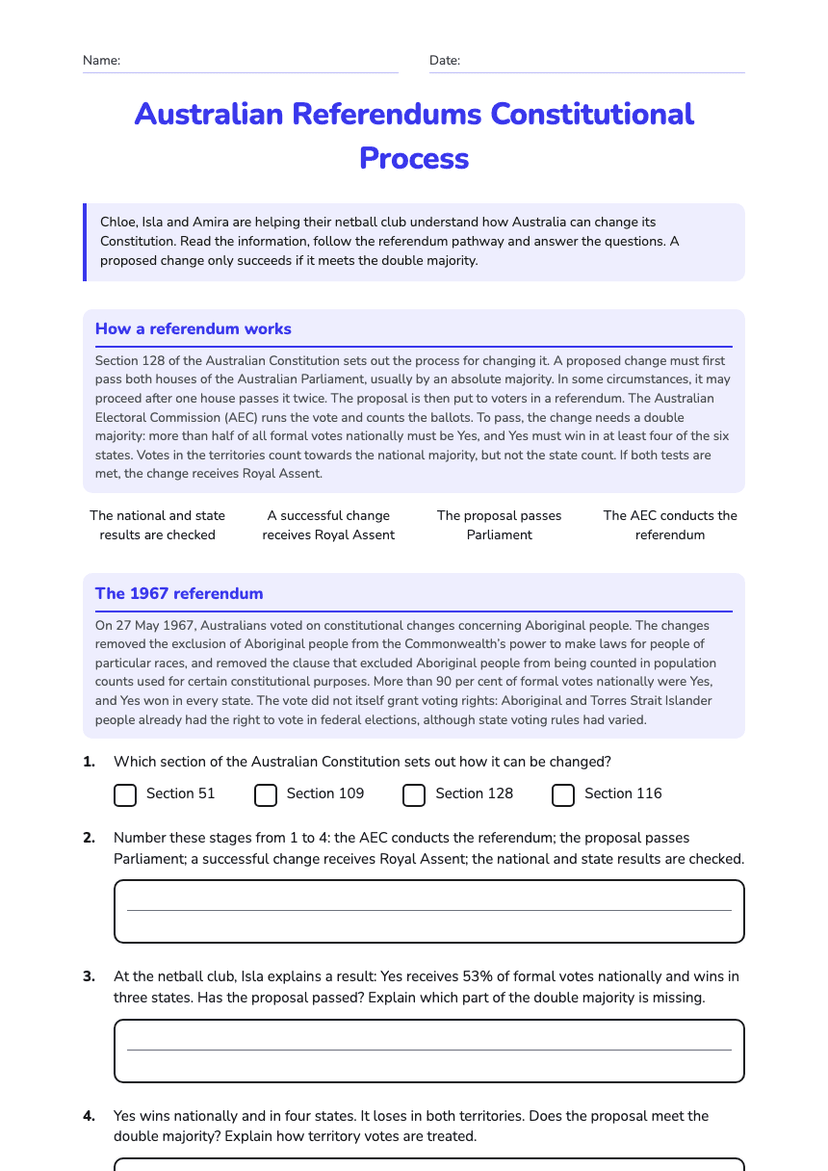
Australian Referendums Constitutional Process
Free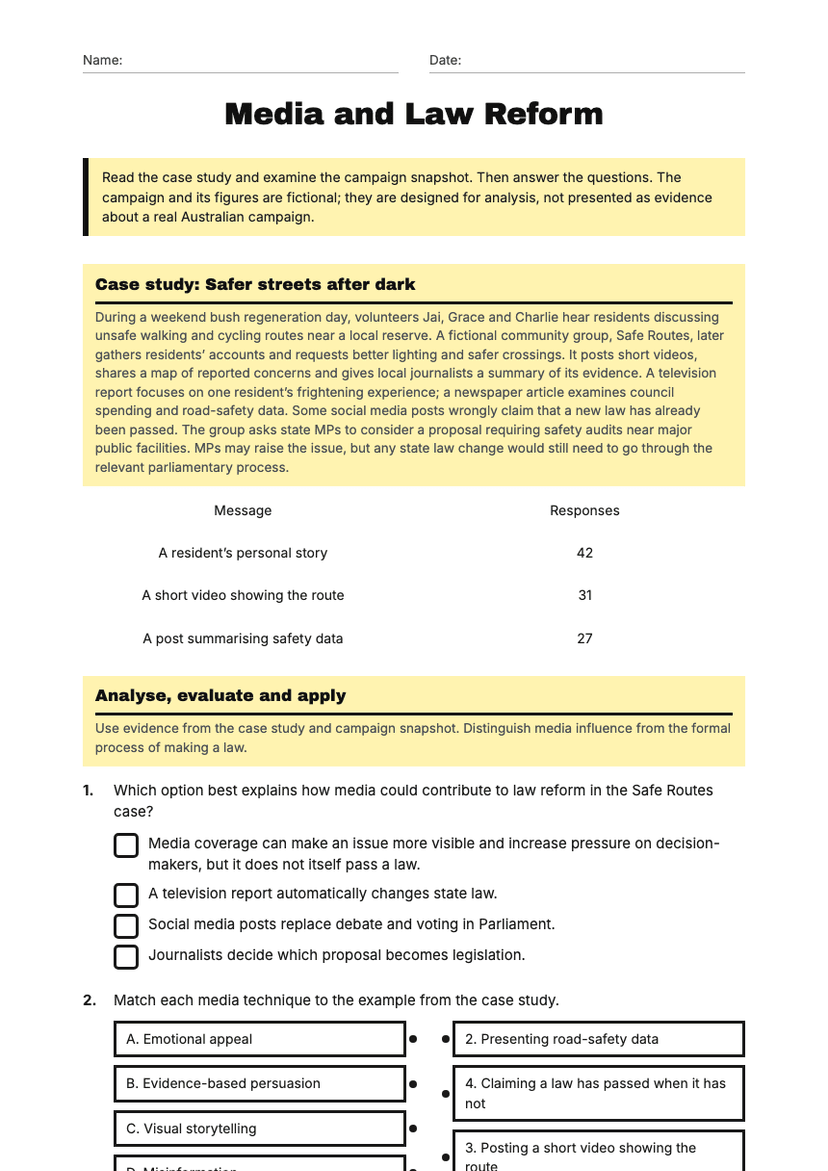
Media and Law Reform
Free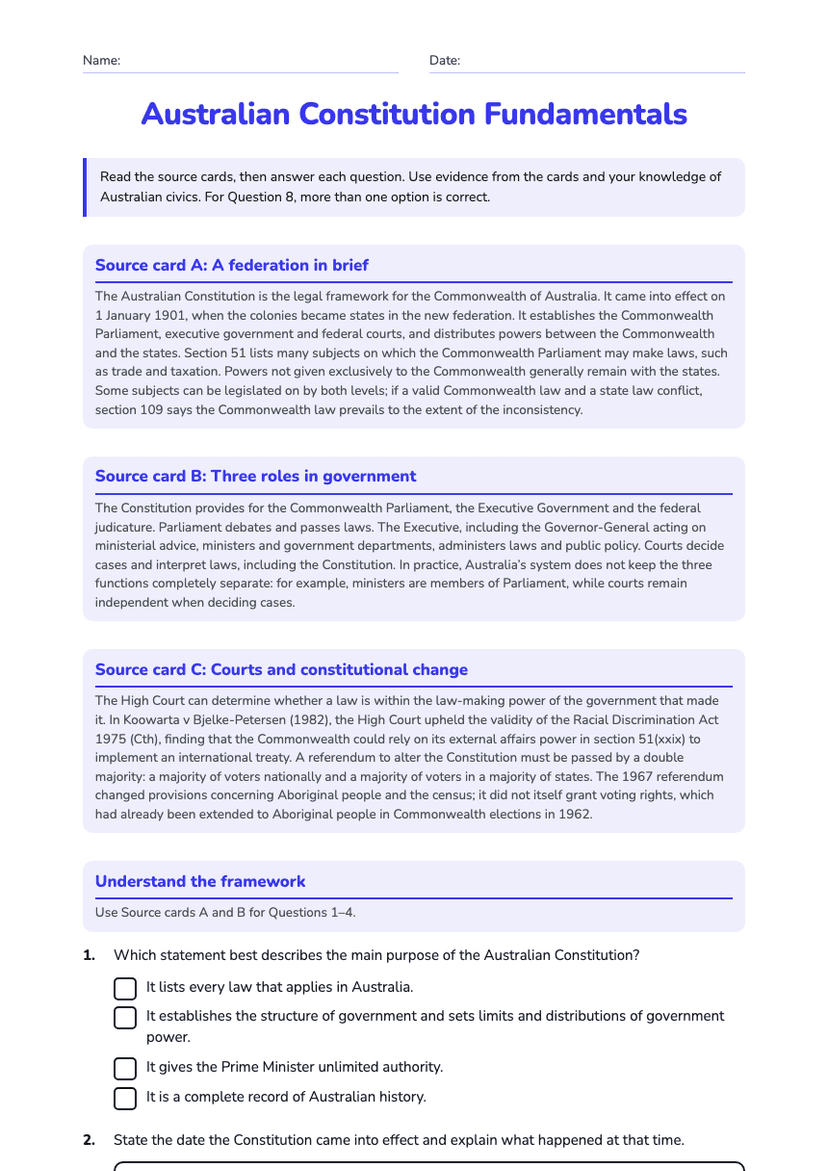
Australian Constitution Fundamentals
Free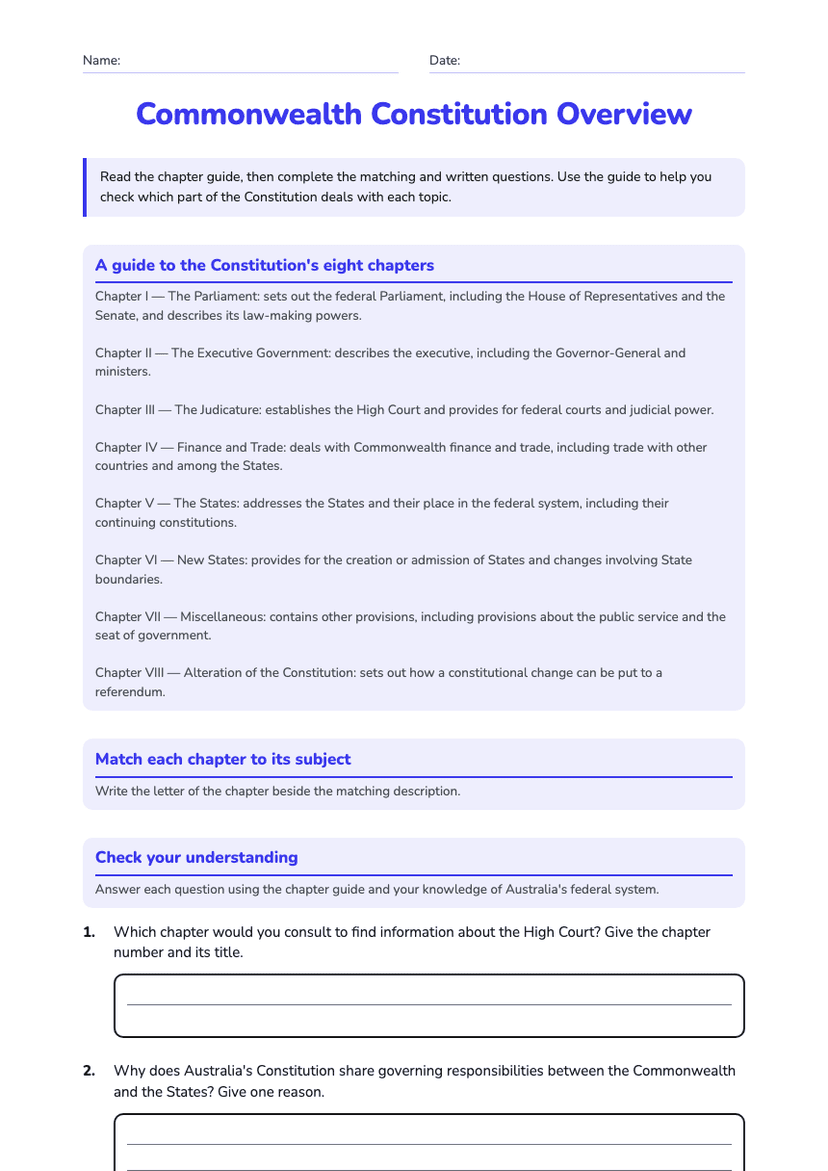
Commonwealth Constitution Overview
Free