Australian Court System Structure
A free social sciences worksheet ready for your classroom. Open in Kuraplan to grab the print-ready PDF, customize it for your students, or generate a fresh version in seconds.
Australian Court System Structure
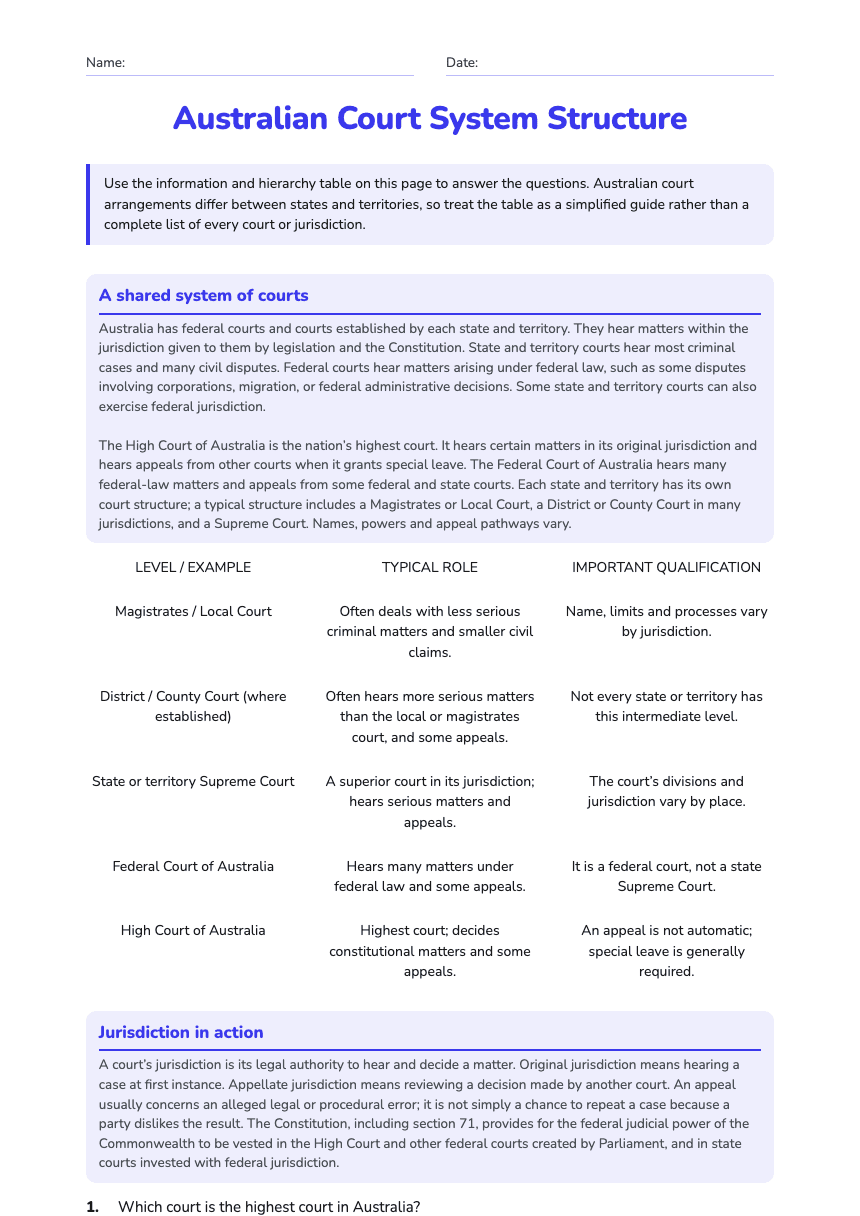
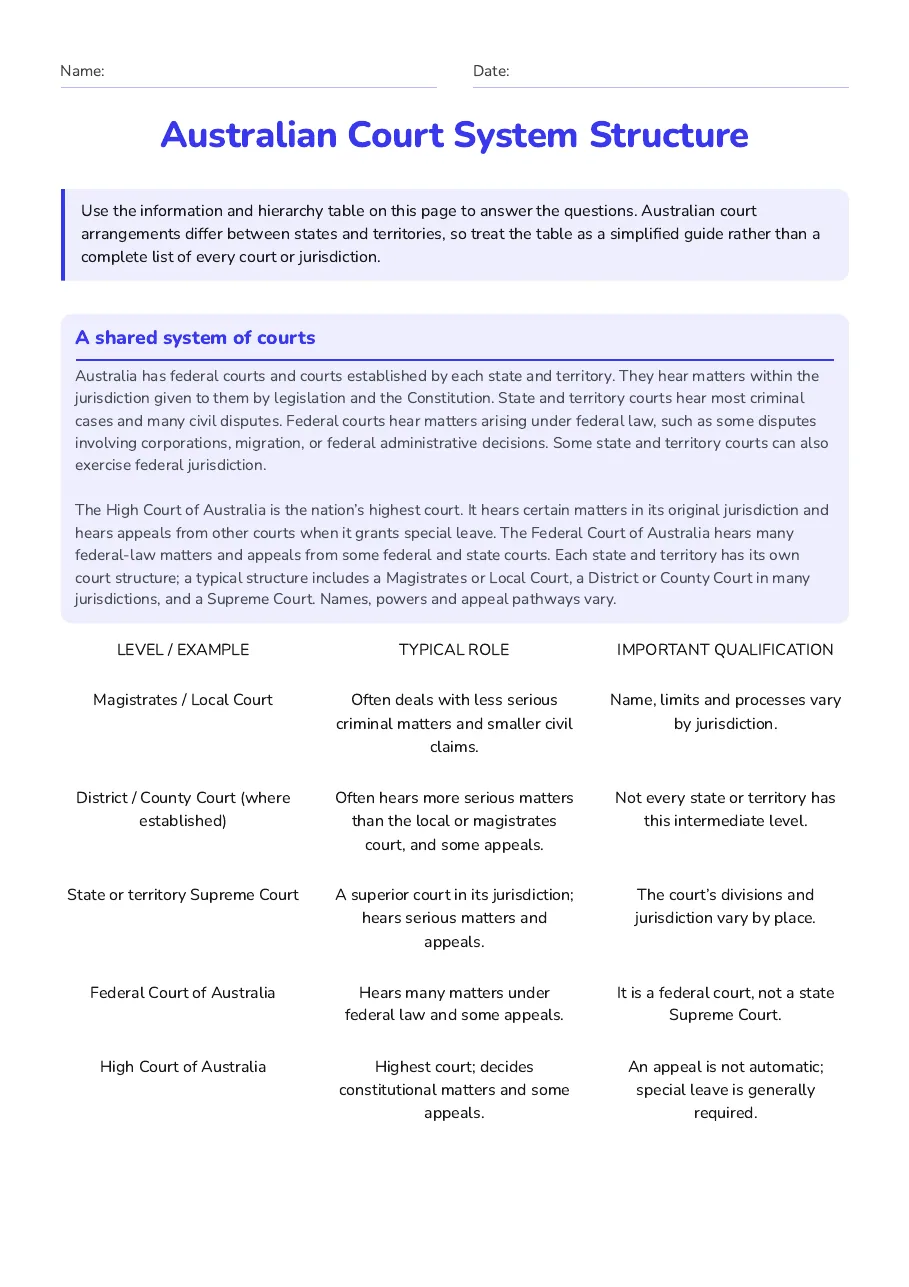
A shared system of courts
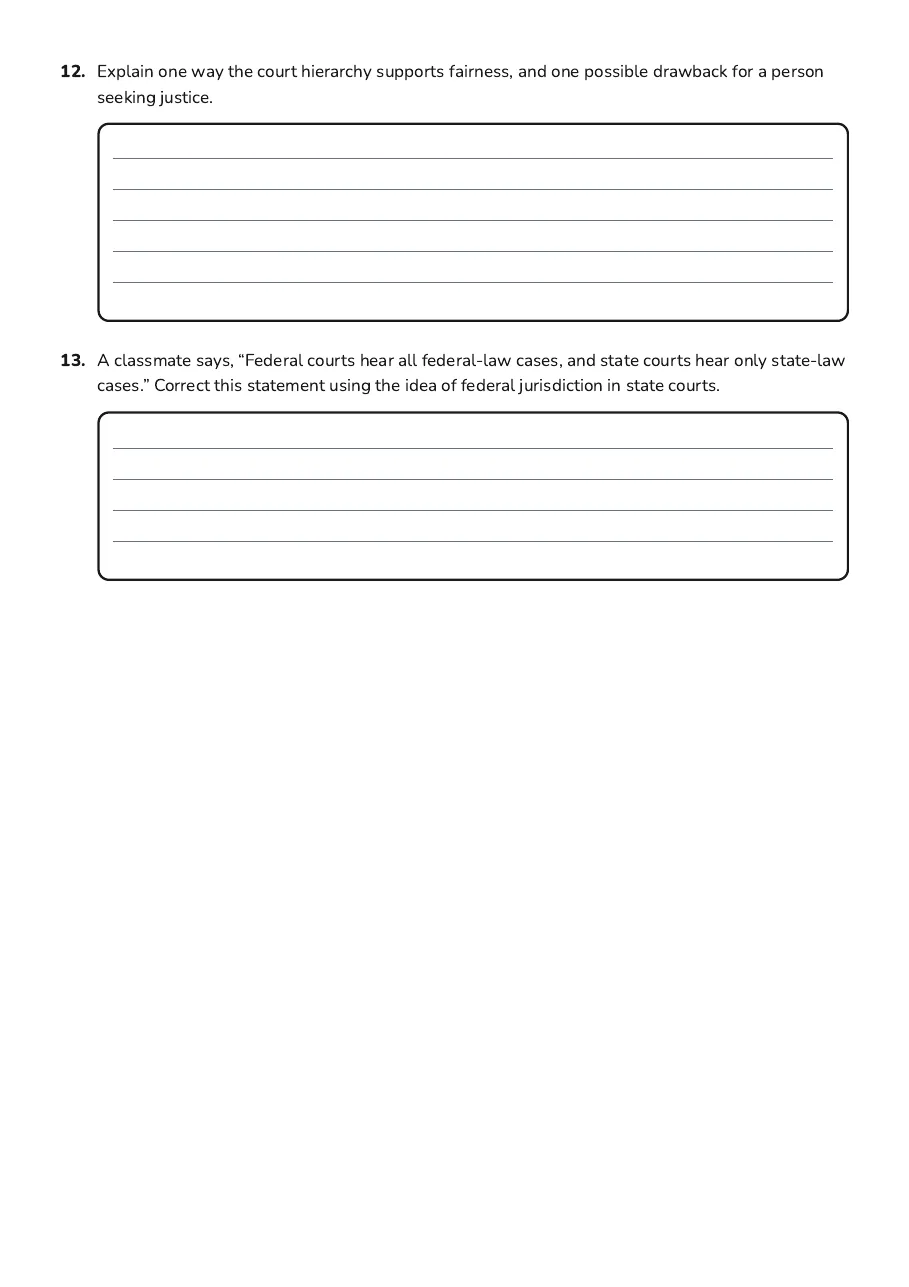
Australia has federal courts and courts established by each state and territory. They hear matters within the jurisdiction given to them by legislation and the Constitution. State and territory courts hear most criminal cases and many civil disputes. Federal courts hear matters arising under federal law, such as some disputes involving corporations, migration, or federal administrative decisions. Some state and territory courts can also exercise federal jurisdiction. The High Court of Australia is the nation’s highest court. It hears certain matters in its original jurisdiction and hears appeals from other courts when it grants special leave. The Federal Court of Australia hears many federal-law matters and appeals from some federal and state courts. Each state and territory has its own court structure; a typical structure includes a Magistrates or Local Court, a District or County Court in many jurisdictions, and a Supreme Court. Names, powers and appeal pathways vary.
LEVEL / EXAMPLE
TYPICAL ROLE
IMPORTANT QUALIFICATION
Magistrates / Local Court
Often deals with less serious criminal matters and smaller civil claims.
Name, limits and processes vary by jurisdiction.
District / County Court (where established)
Often hears more serious matters than the local or magistrates court, and some appeals.
Not every state or territory has this intermediate level.
State or territory Supreme Court
A superior court in its jurisdiction; hears serious matters and appeals.
The court’s divisions and jurisdiction vary by place.
Federal Court of Australia
Hears many matters under federal law and some appeals.
It is a federal court, not a state Supreme Court.
High Court of Australia
Highest court; decides constitutional matters and some appeals.
An appeal is not automatic; special leave is generally required.
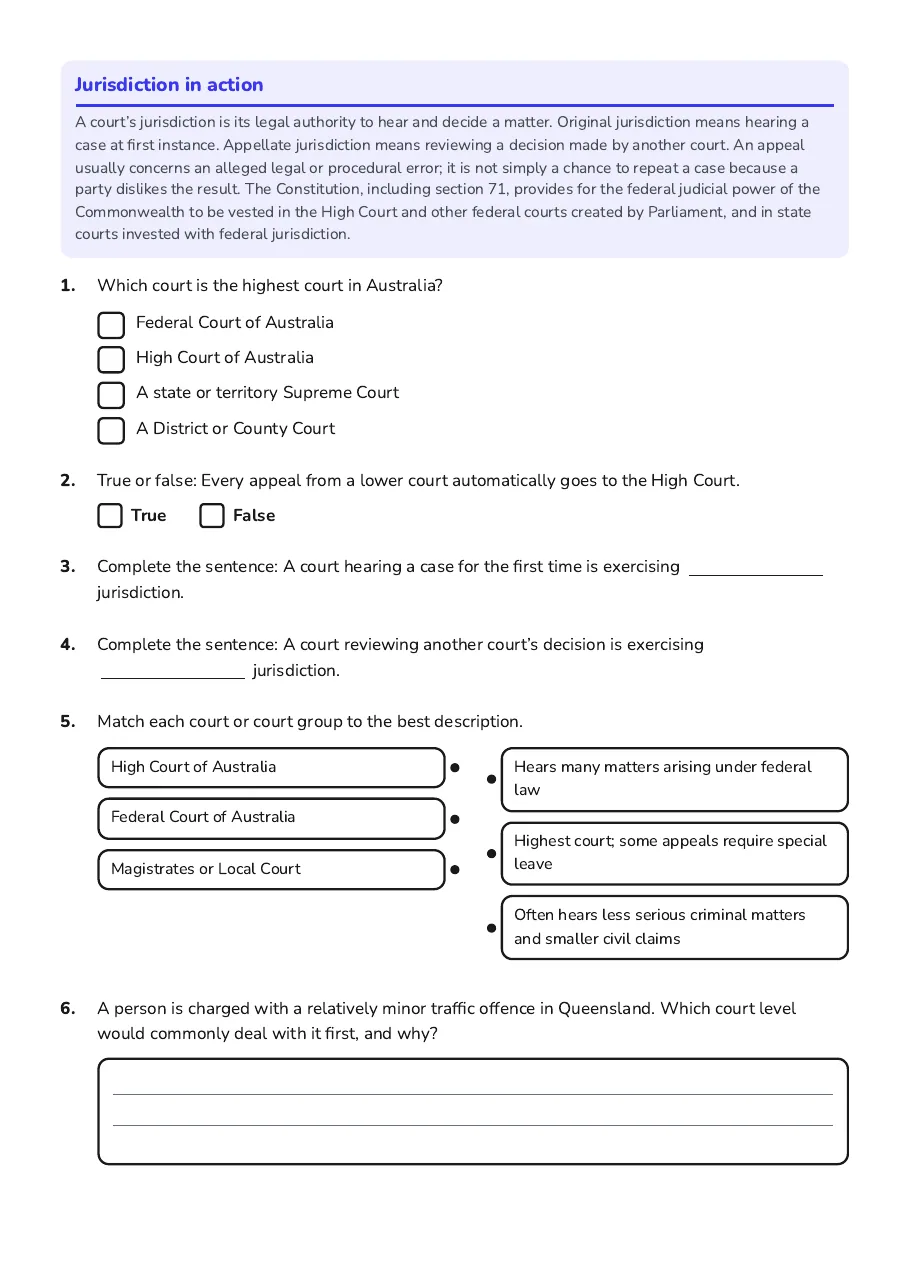
Jurisdiction in action
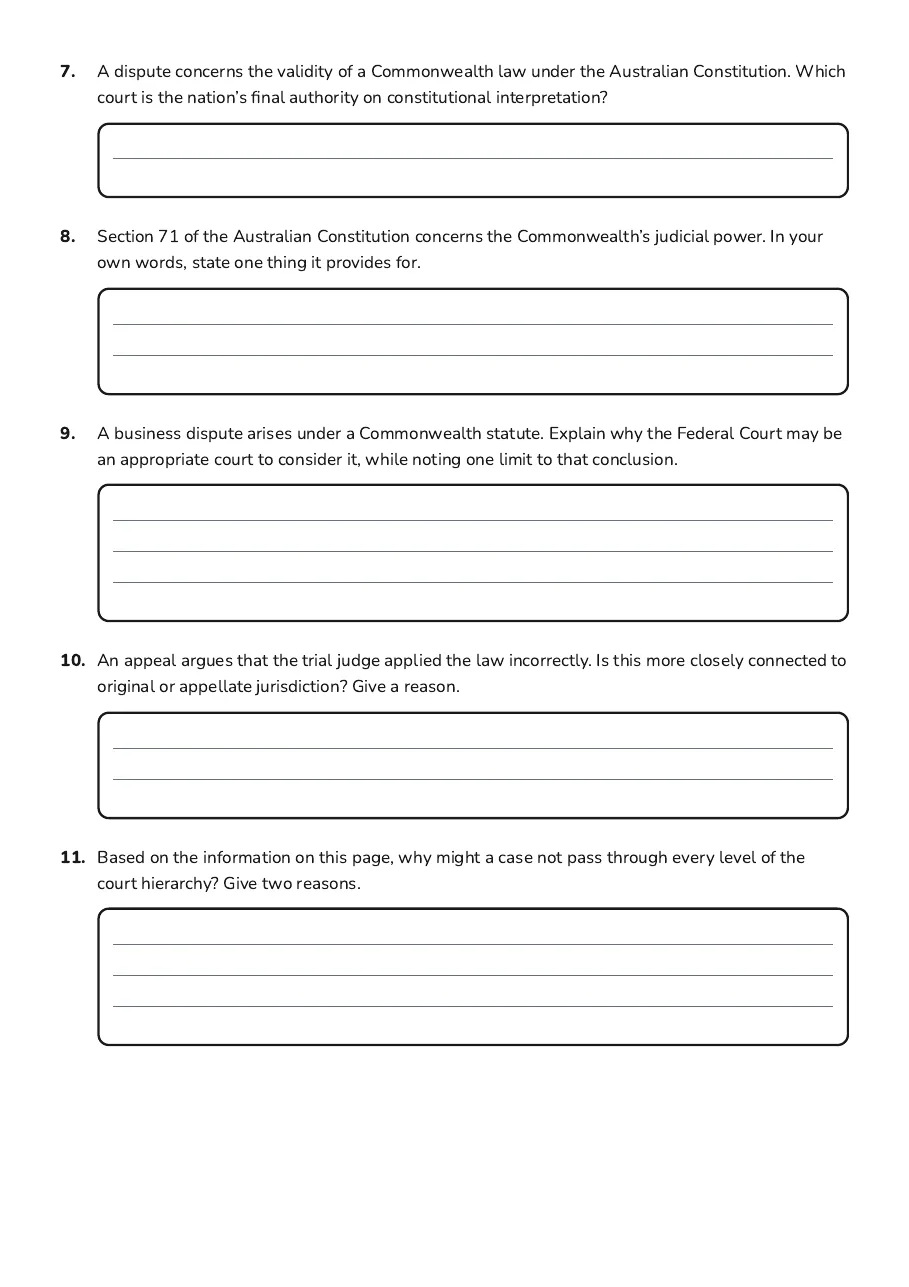
A court’s jurisdiction is its legal authority to hear and decide a matter. Original jurisdiction means hearing a case at first instance. Appellate jurisdiction means reviewing a decision made by another court. An appeal usually concerns an alleged legal or procedural error; it is not simply a chance to repeat a case because a party dislikes the result. The Constitution, including section 71, provides for the federal judicial power of the Commonwealth to be vested in the High Court and other federal courts created by Parliament, and in state courts invested with federal jurisdiction.
- Federal Court of Australia
- High Court of Australia
- A state or territory Supreme Court
- A District or County Court
- High Court of Australia
- Federal Court of Australia
- Magistrates or Local Court
- Hears many matters arising under federal law
- Highest court; some appeals require special leave
- Often hears less serious criminal matters and smaller civil claims
4 printable pages
Page 1
Page 2
Page 3
Page 4
About This Worksheet
Free in Kuraplan
Sign up free, grab the PDF, and customize it for your class.
Print-Ready
Formatted for standard paper. Clean layout, easy to read.
AI-Generated
Created with Kuraplan's AI, designed for real classroom use.
For Teachers & Parents
Use in classrooms, for homework, tutoring, or homeschool.
Need a custom version of this worksheet?
Kuraplan's AI generates custom worksheets in seconds — differentiated for every learner, aligned to your curriculum.
Generate Custom Worksheets — FreeMore Social Sciences Worksheets
Community Project Planning
Free
Australian Law Reform Fact Sheets
Free
Human Rights Debate Rubric
Free
Australian Referendums Constitutional Process
Free
Media and Law Reform
Free
Australian Constitution Fundamentals
Free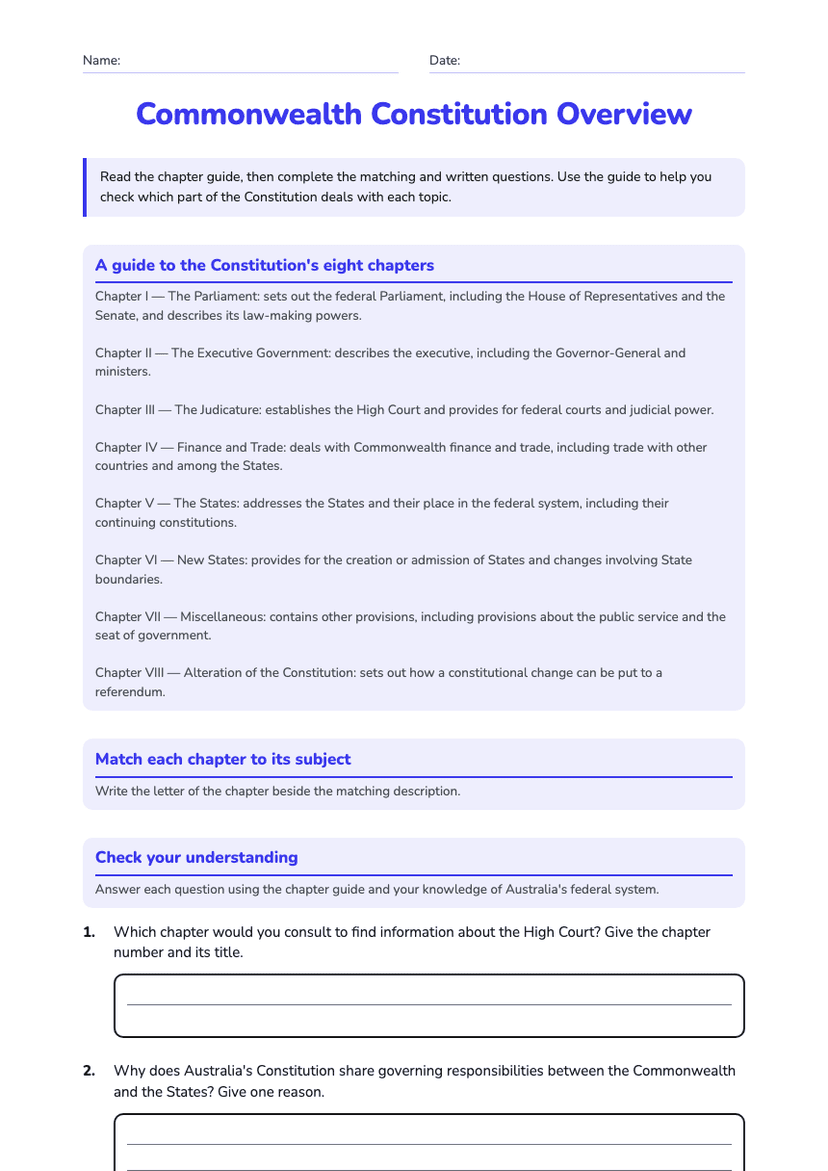
Commonwealth Constitution Overview
Free