Australian Deaf History Introduction
A free languages worksheet ready for your classroom. Open in Kuraplan to grab the print-ready PDF, customize it for your students, or generate a fresh version in seconds.
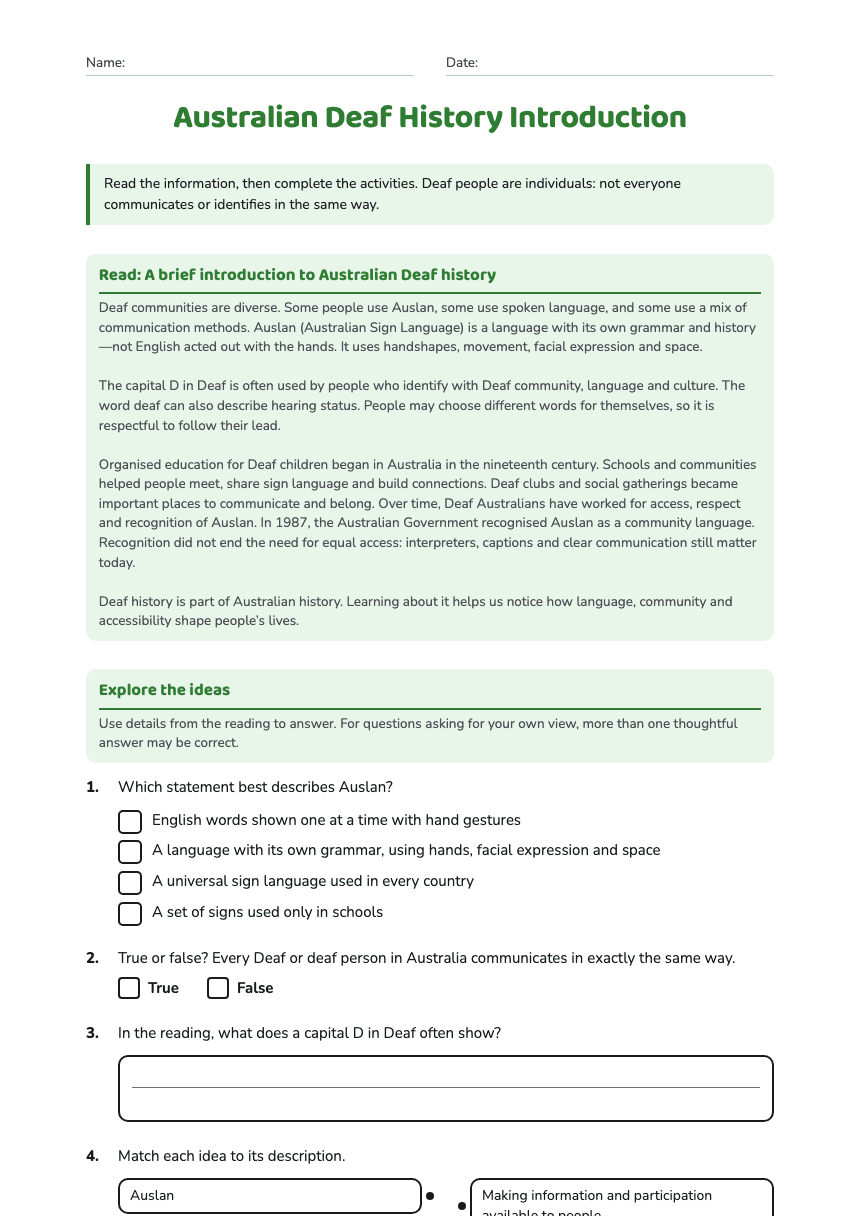
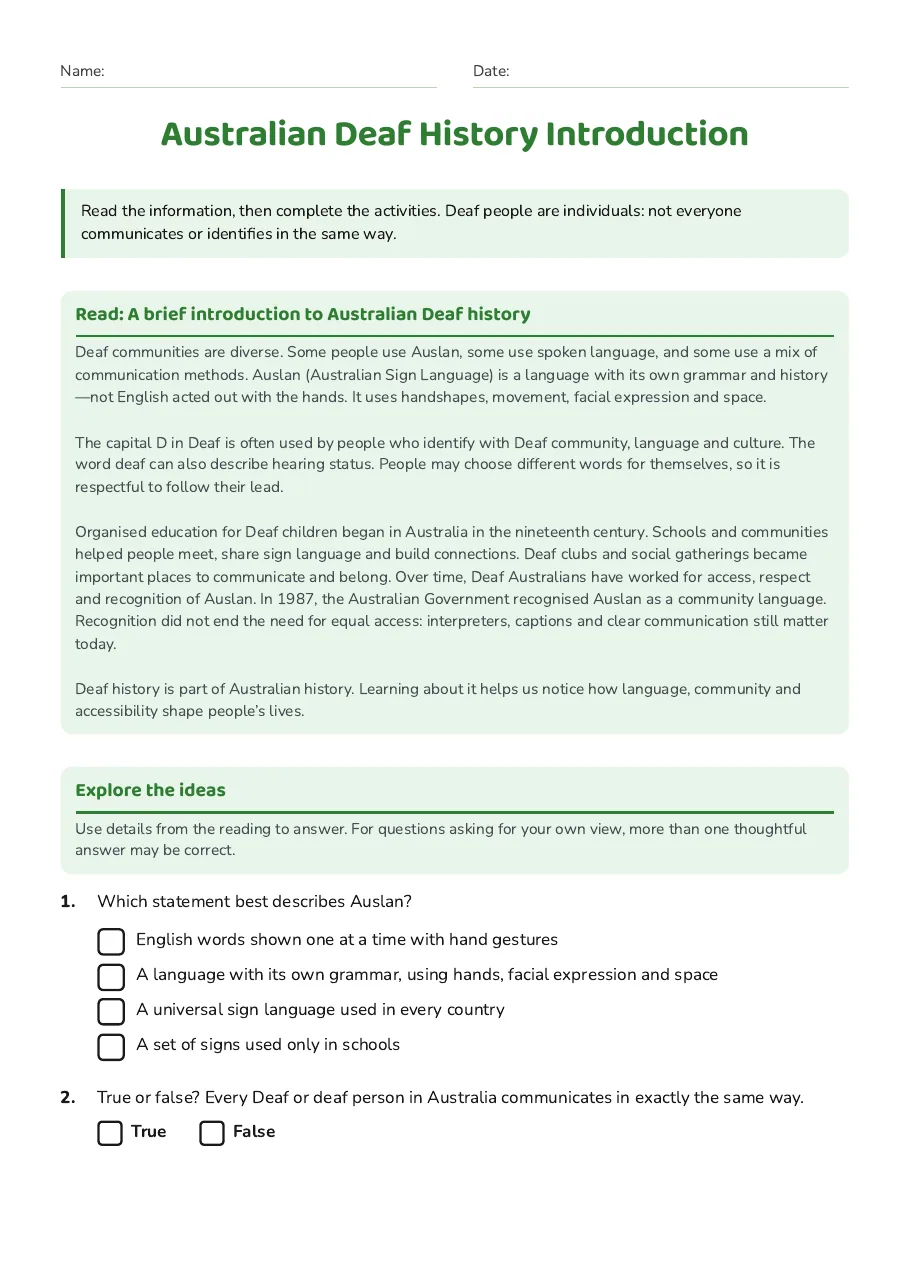
Australian Deaf History Introduction
Read: A brief introduction to Australian Deaf history
Deaf communities are diverse. Some people use Auslan, some use spoken language, and some use a mix of communication methods. Auslan (Australian Sign Language) is a language with its own grammar and history—not English acted out with the hands. It uses handshapes, movement, facial expression and space. The capital D in Deaf is often used by people who identify with Deaf community, language and culture. The word deaf can also describe hearing status. People may choose different words for themselves, so it is respectful to follow their lead. Organised education for Deaf children began in Australia in the nineteenth century. Schools and communities helped people meet, share sign language and build connections. Deaf clubs and social gatherings became important places to communicate and belong. Over time, Deaf Australians have worked for access, respect and recognition of Auslan. In 1987, the Australian Government recognised Auslan as a community language. Recognition did not end the need for equal access: interpreters, captions and clear communication still matter today. Deaf history is part of Australian history. Learning about it helps us notice how language, community and accessibility shape people’s lives.
Explore the ideas
Use details from the reading to answer. For questions asking for your own view, more than one thoughtful answer may be correct.
- English words shown one at a time with hand gestures
- A language with its own grammar, using hands, facial expression and space
- A universal sign language used in every country
- A set of signs used only in schools
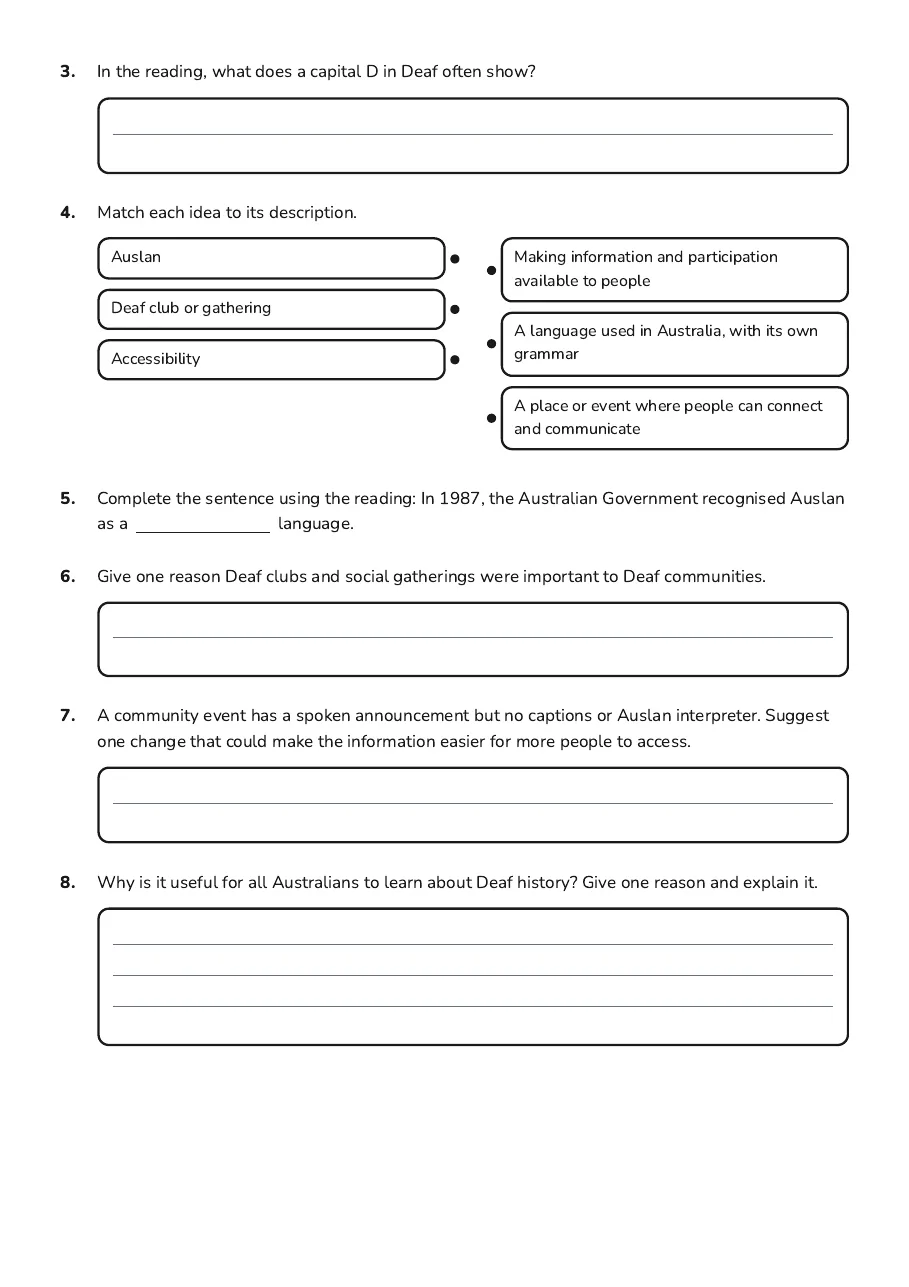
- Auslan
- Deaf club or gathering
- Accessibility
- Making information and participation available to people
- A language used in Australia, with its own grammar
- A place or event where people can connect and communicate
2 printable pages
Page 1
Page 2
About This Worksheet
Free in Kuraplan
Sign up free, grab the PDF, and customize it for your class.
Print-Ready
Formatted for standard paper. Clean layout, easy to read.
AI-Generated
Created with Kuraplan's AI, designed for real classroom use.
For Teachers & Parents
Use in classrooms, for homework, tutoring, or homeschool.
Need a custom version of this worksheet?
Kuraplan's AI generates custom worksheets in seconds — differentiated for every learner, aligned to your curriculum.
Generate Custom Worksheets — FreeMore Languages Worksheets
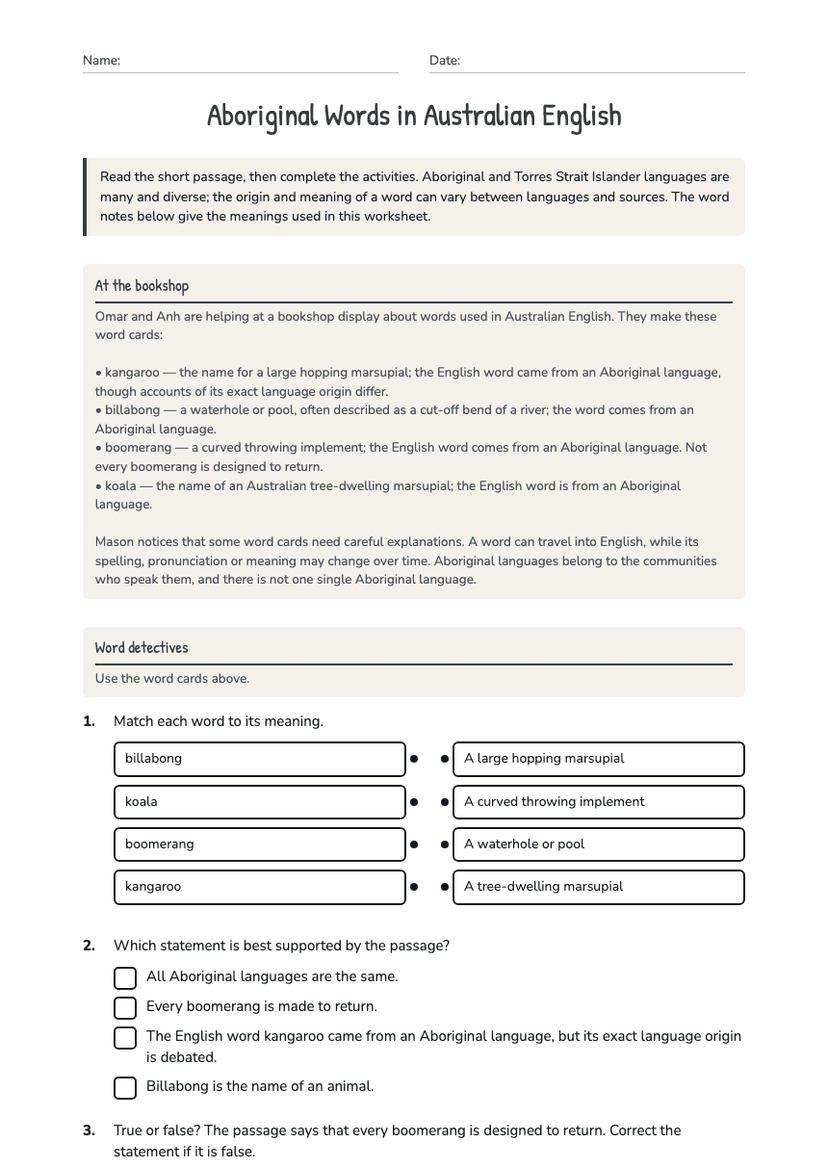
Aboriginal Words in Australian English
Free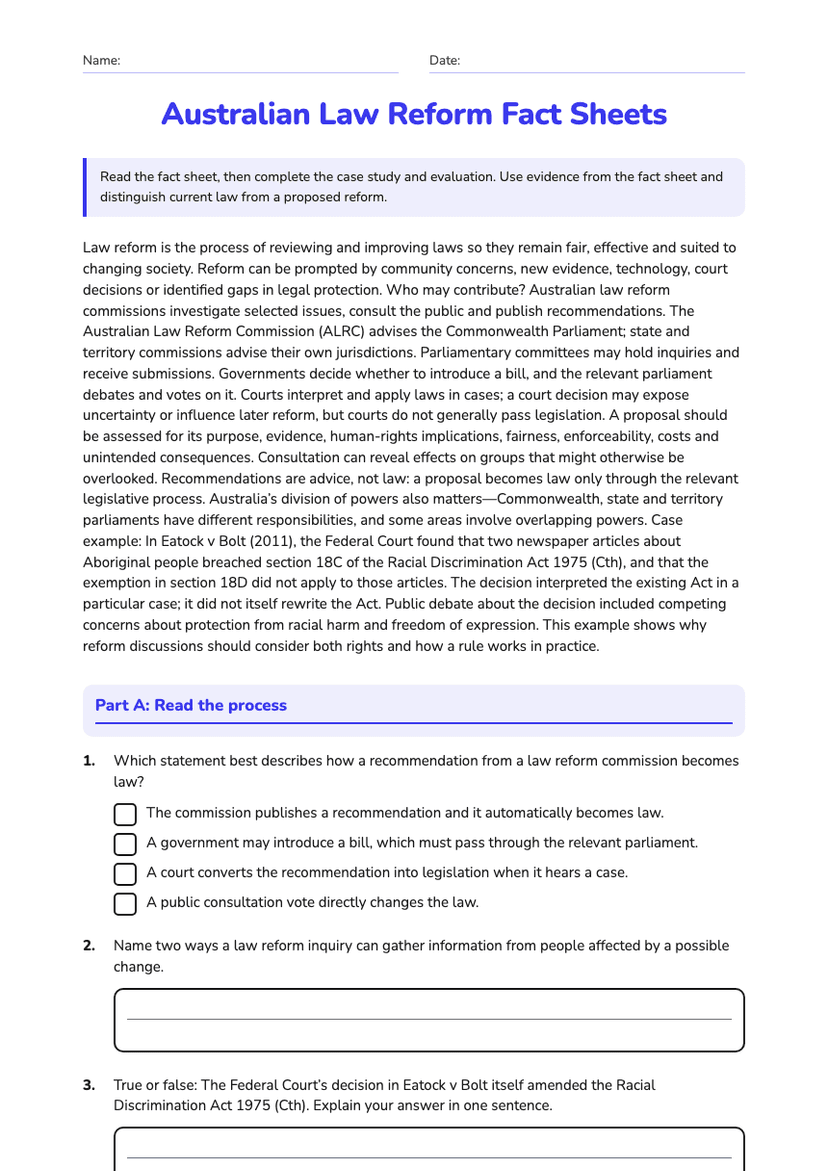
Australian Law Reform Fact Sheets
Free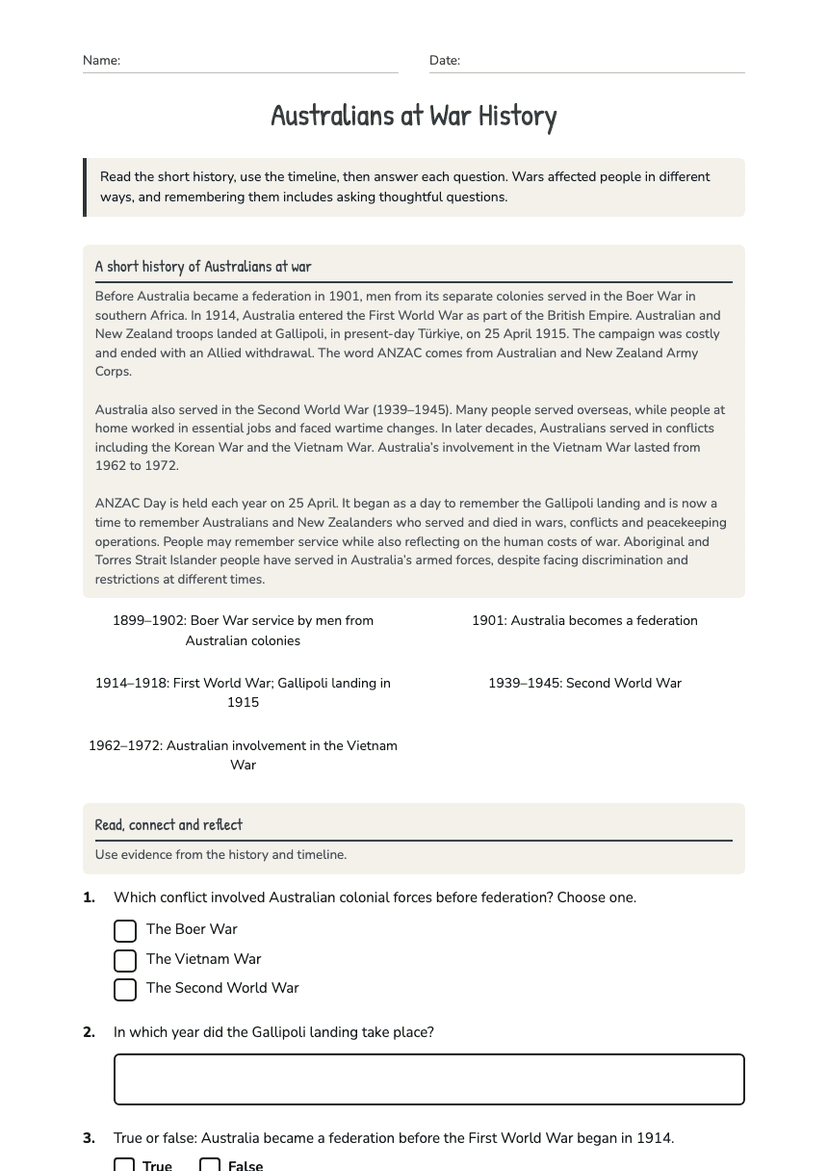
Australians at War History
Free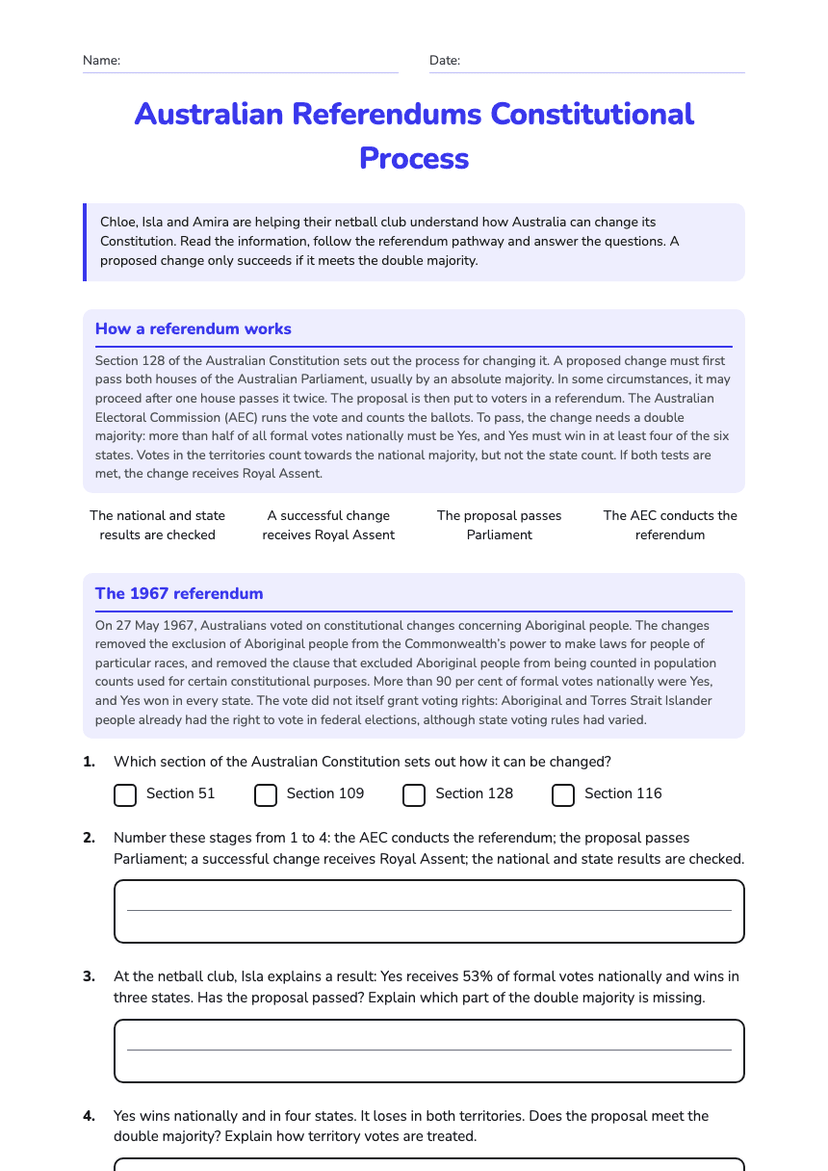
Australian Referendums Constitutional Process
Free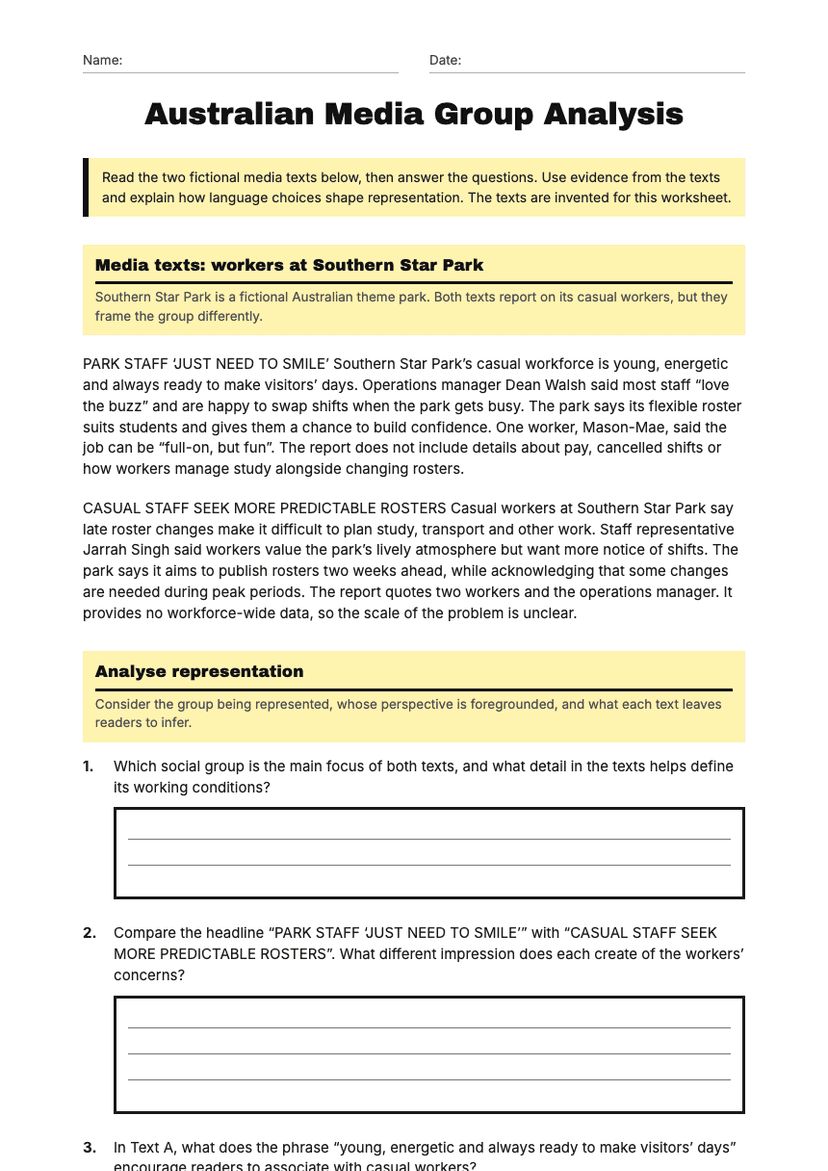
Australian Media Group Analysis
Free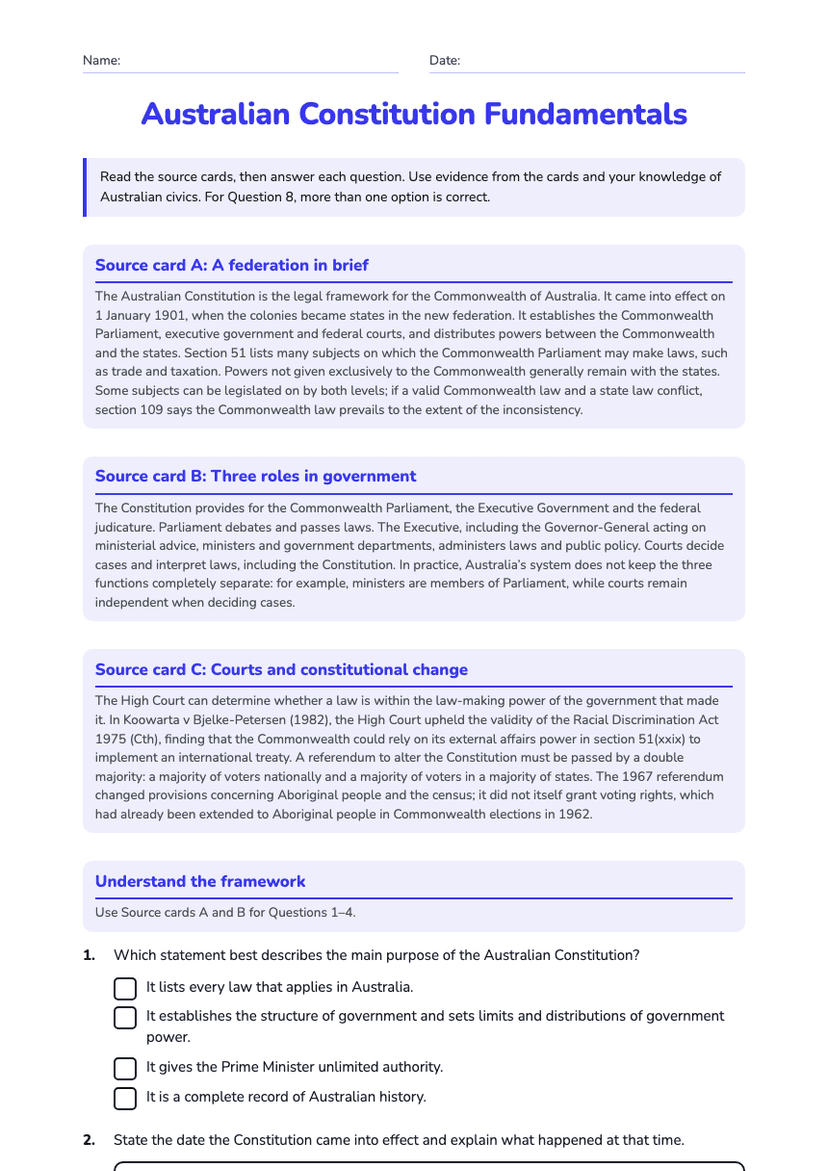
Australian Constitution Fundamentals
Free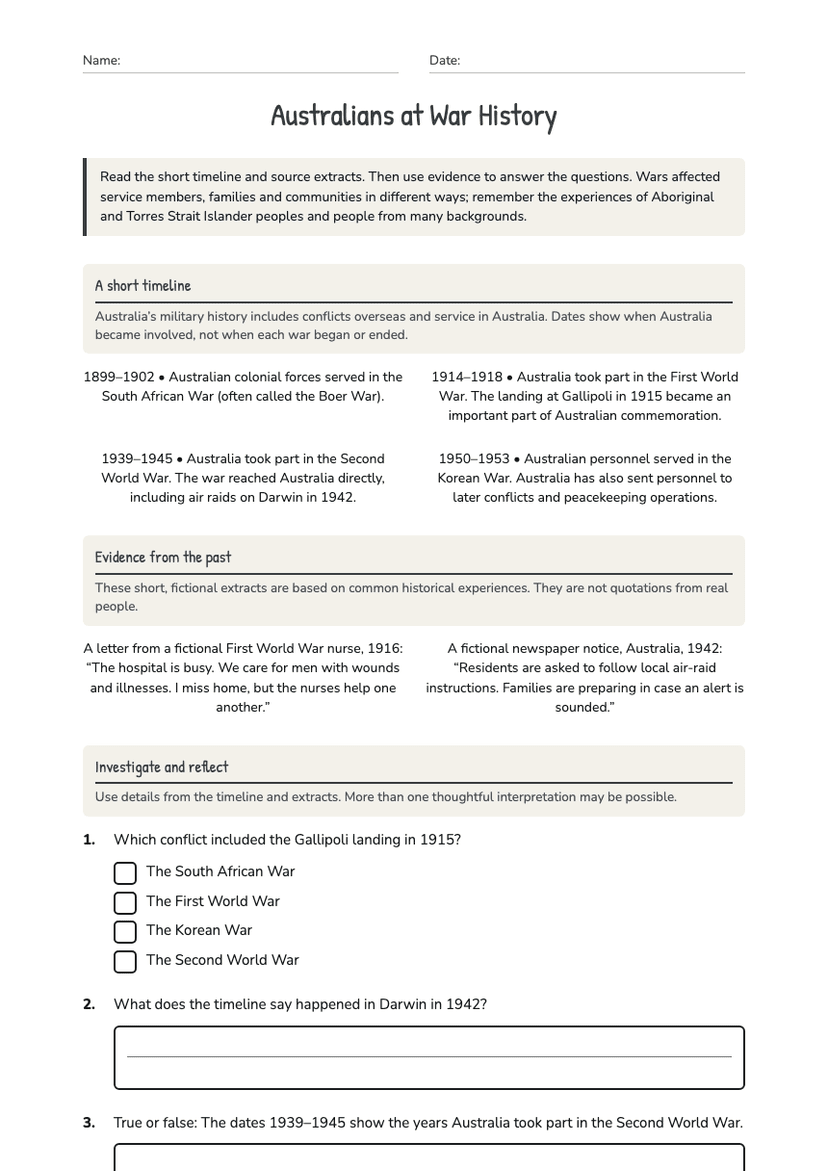
Australians at War History
Free