Australian Human Rights Laws
A free social sciences worksheet ready for your classroom. Open in Kuraplan to grab the print-ready PDF, customize it for your students, or generate a fresh version in seconds.
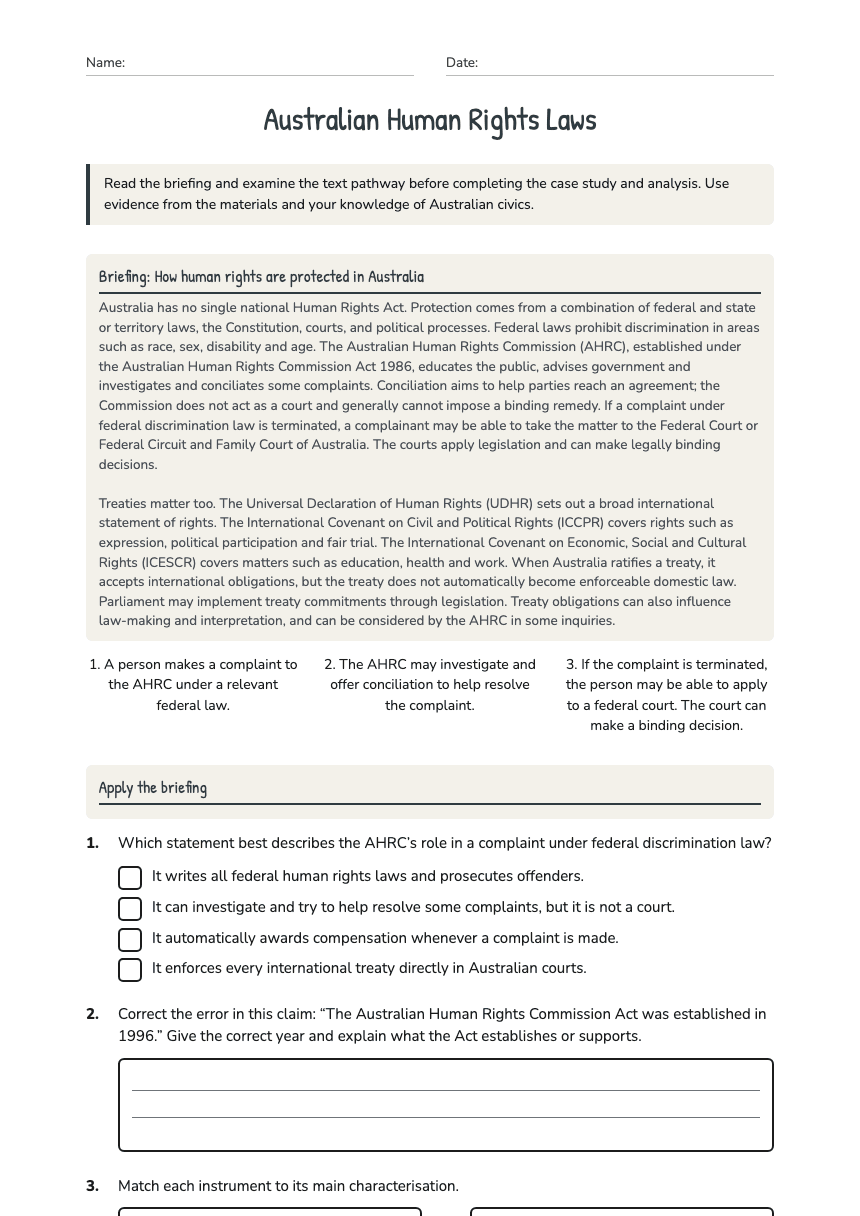
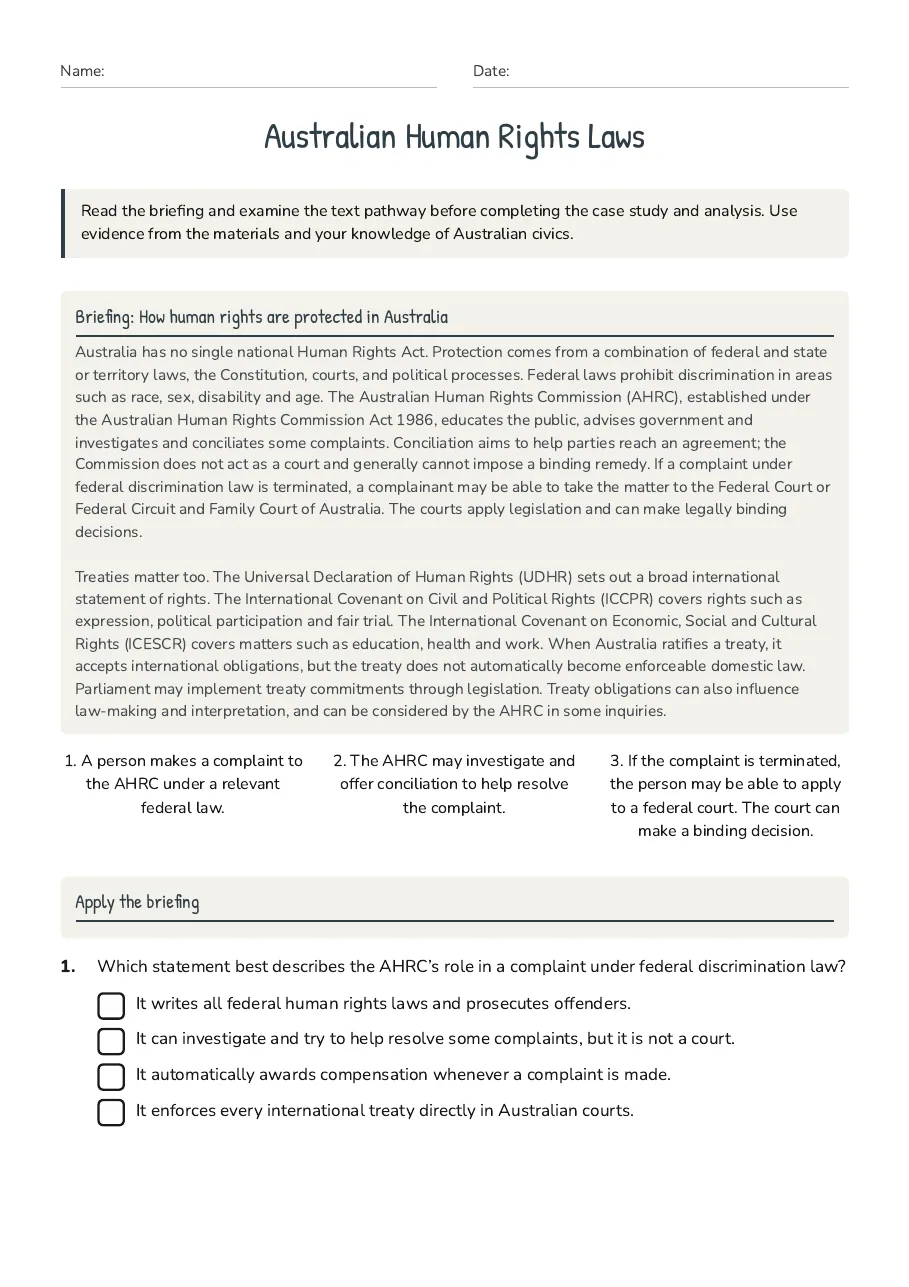
Australian Human Rights Laws
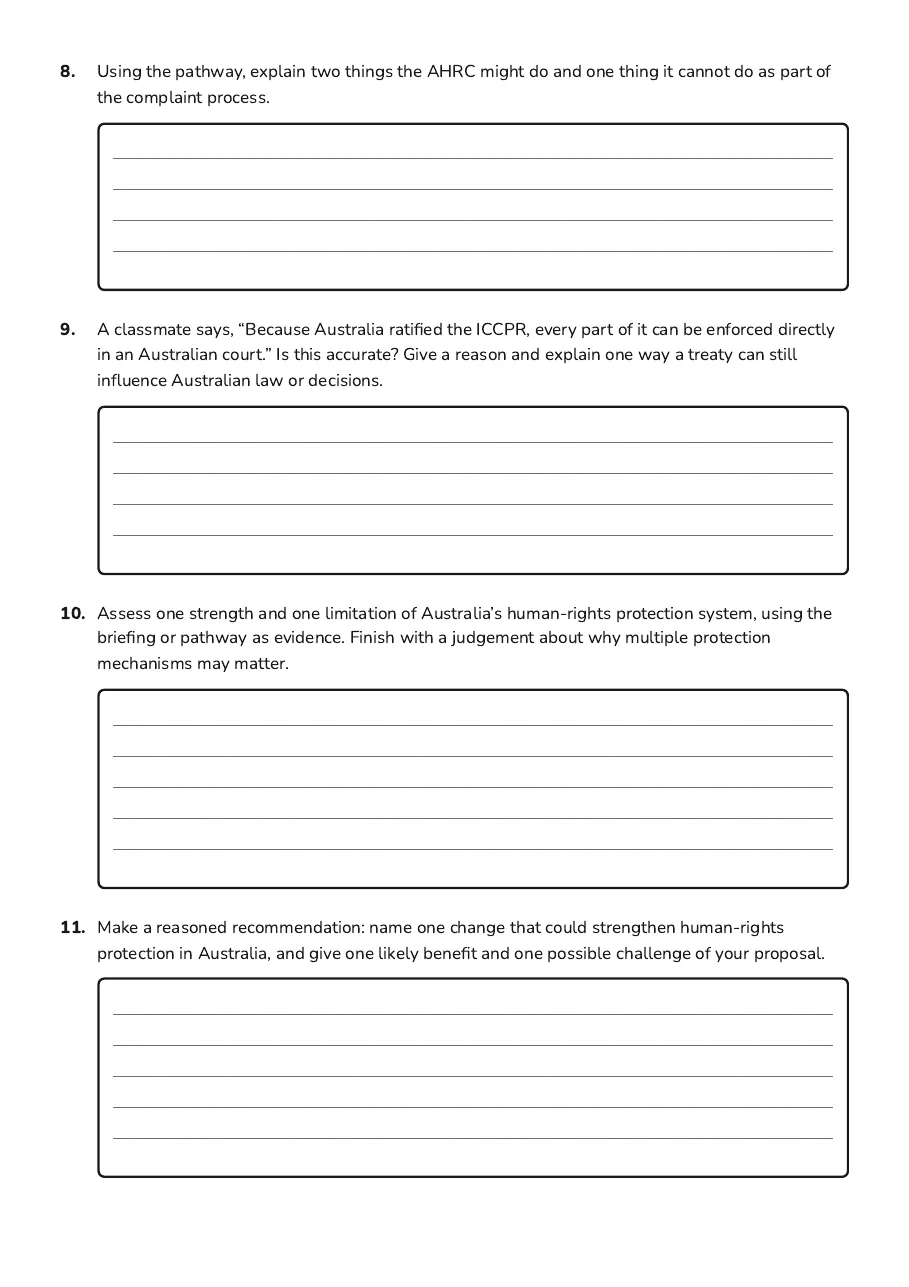
Briefing: How human rights are protected in Australia
Australia has no single national Human Rights Act. Protection comes from a combination of federal and state or territory laws, the Constitution, courts, and political processes. Federal laws prohibit discrimination in areas such as race, sex, disability and age. The Australian Human Rights Commission (AHRC), established under the Australian Human Rights Commission Act 1986, educates the public, advises government and investigates and conciliates some complaints. Conciliation aims to help parties reach an agreement; the Commission does not act as a court and generally cannot impose a binding remedy. If a complaint under federal discrimination law is terminated, a complainant may be able to take the matter to the Federal Court or Federal Circuit and Family Court of Australia. The courts apply legislation and can make legally binding decisions. Treaties matter too. The Universal Declaration of Human Rights (UDHR) sets out a broad international statement of rights. The International Covenant on Civil and Political Rights (ICCPR) covers rights such as expression, political participation and fair trial. The International Covenant on Economic, Social and Cultural Rights (ICESCR) covers matters such as education, health and work. When Australia ratifies a treaty, it accepts international obligations, but the treaty does not automatically become enforceable domestic law. Parliament may implement treaty commitments through legislation. Treaty obligations can also influence law-making and interpretation, and can be considered by the AHRC in some inquiries.
1. A person makes a complaint to the AHRC under a relevant federal law.
2. The AHRC may investigate and offer conciliation to help resolve the complaint.
3. If the complaint is terminated, the person may be able to apply to a federal court. The court can make a binding decision.
Apply the briefing
- It writes all federal human rights laws and prosecutes offenders.
- It can investigate and try to help resolve some complaints, but it is not a court.
- It automatically awards compensation whenever a complaint is made.
- It enforces every international treaty directly in Australian courts.
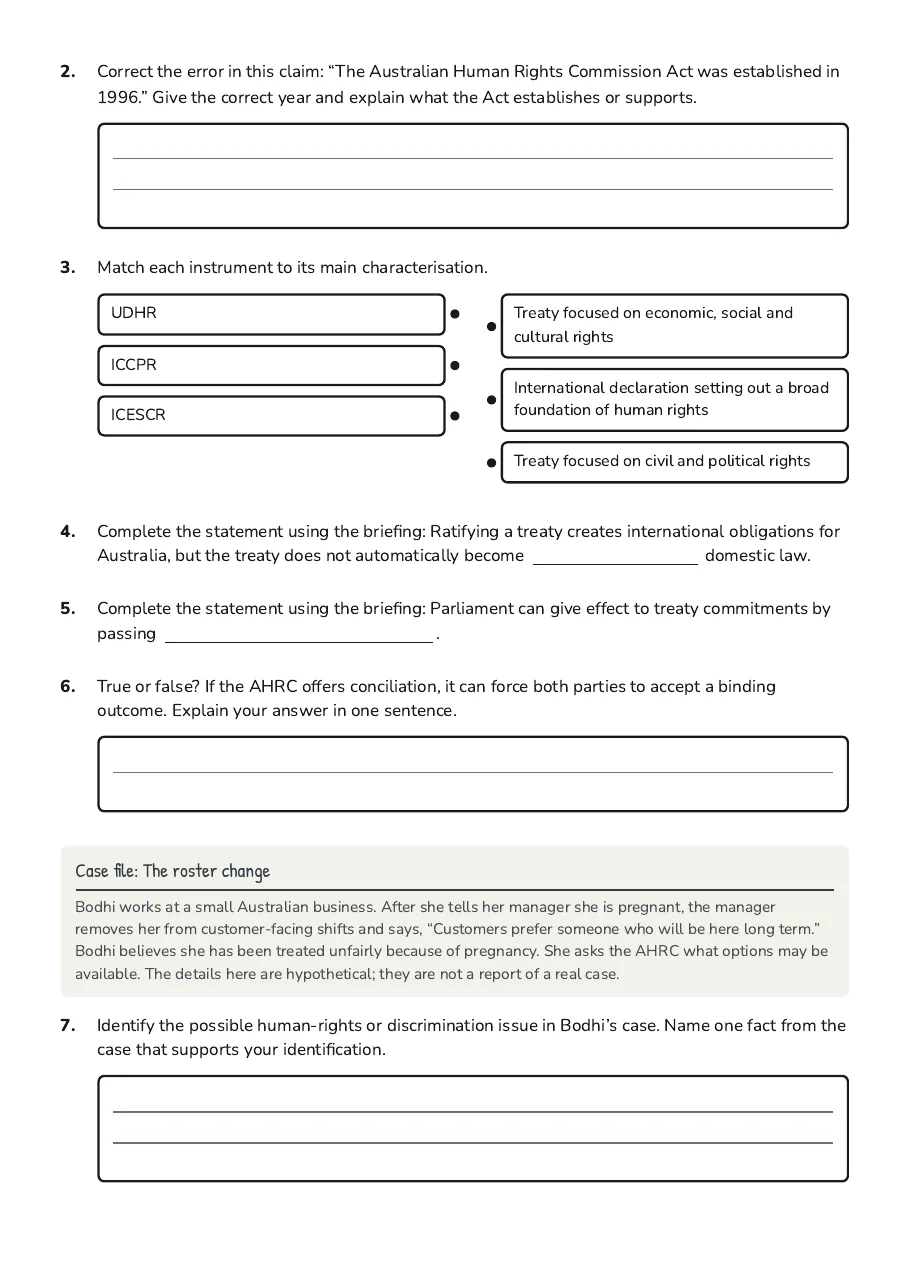
- UDHR
- ICCPR
- ICESCR
- Treaty focused on economic, social and cultural rights
- International declaration setting out a broad foundation of human rights
- Treaty focused on civil and political rights
Case file: The roster change
Bodhi works at a small Australian business. After she tells her manager she is pregnant, the manager removes her from customer-facing shifts and says, “Customers prefer someone who will be here long term.” Bodhi believes she has been treated unfairly because of pregnancy. She asks the AHRC what options may be available. The details here are hypothetical; they are not a report of a real case.
3 printable pages
Page 1
Page 2
Page 3
About This Worksheet
Free in Kuraplan
Sign up free, grab the PDF, and customize it for your class.
Print-Ready
Formatted for standard paper. Clean layout, easy to read.
AI-Generated
Created with Kuraplan's AI, designed for real classroom use.
For Teachers & Parents
Use in classrooms, for homework, tutoring, or homeschool.
Need a custom version of this worksheet?
Kuraplan's AI generates custom worksheets in seconds — differentiated for every learner, aligned to your curriculum.
Generate Custom Worksheets — FreeMore Social Sciences Worksheets
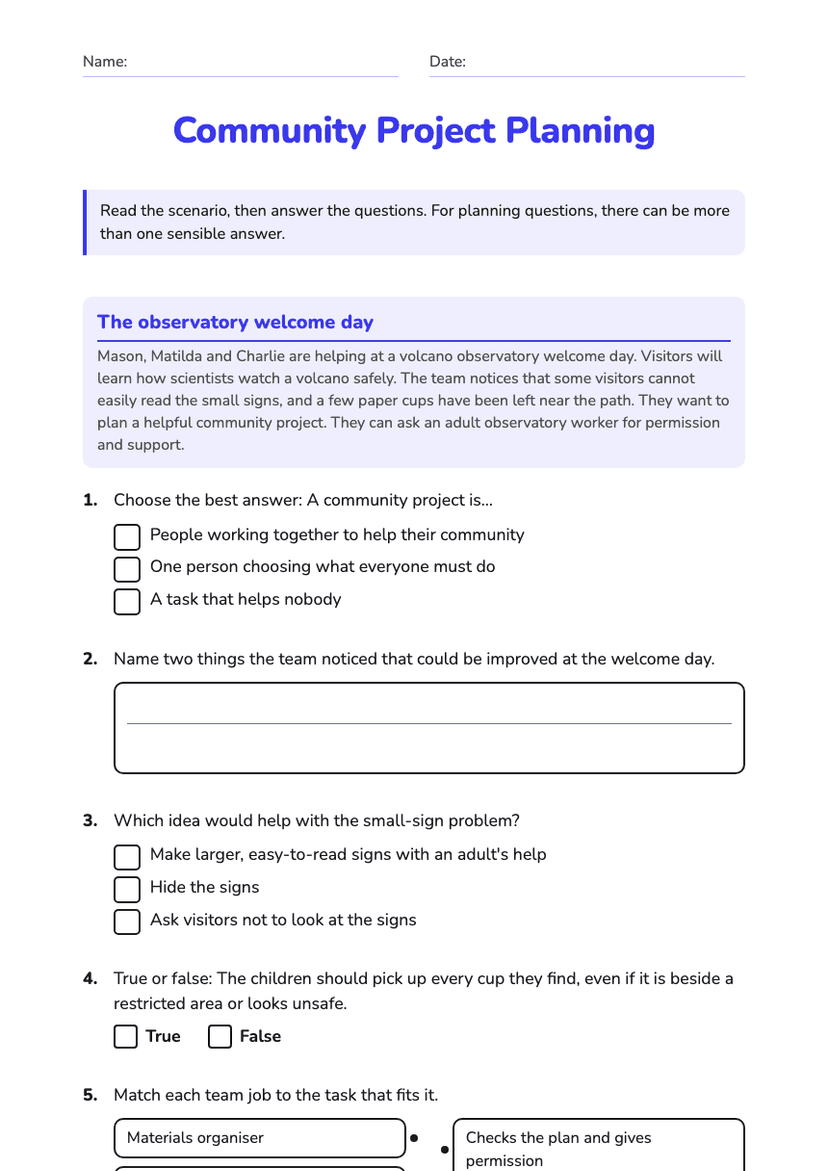
Community Project Planning
Free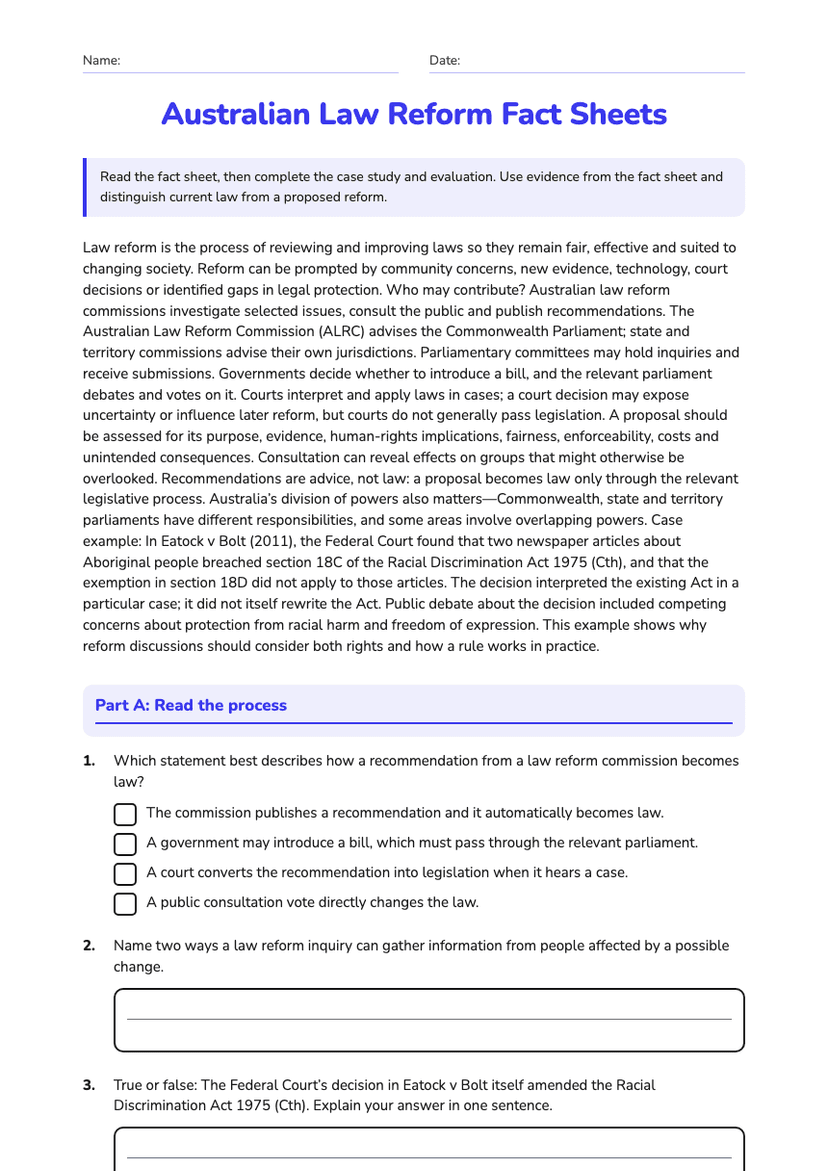
Australian Law Reform Fact Sheets
Free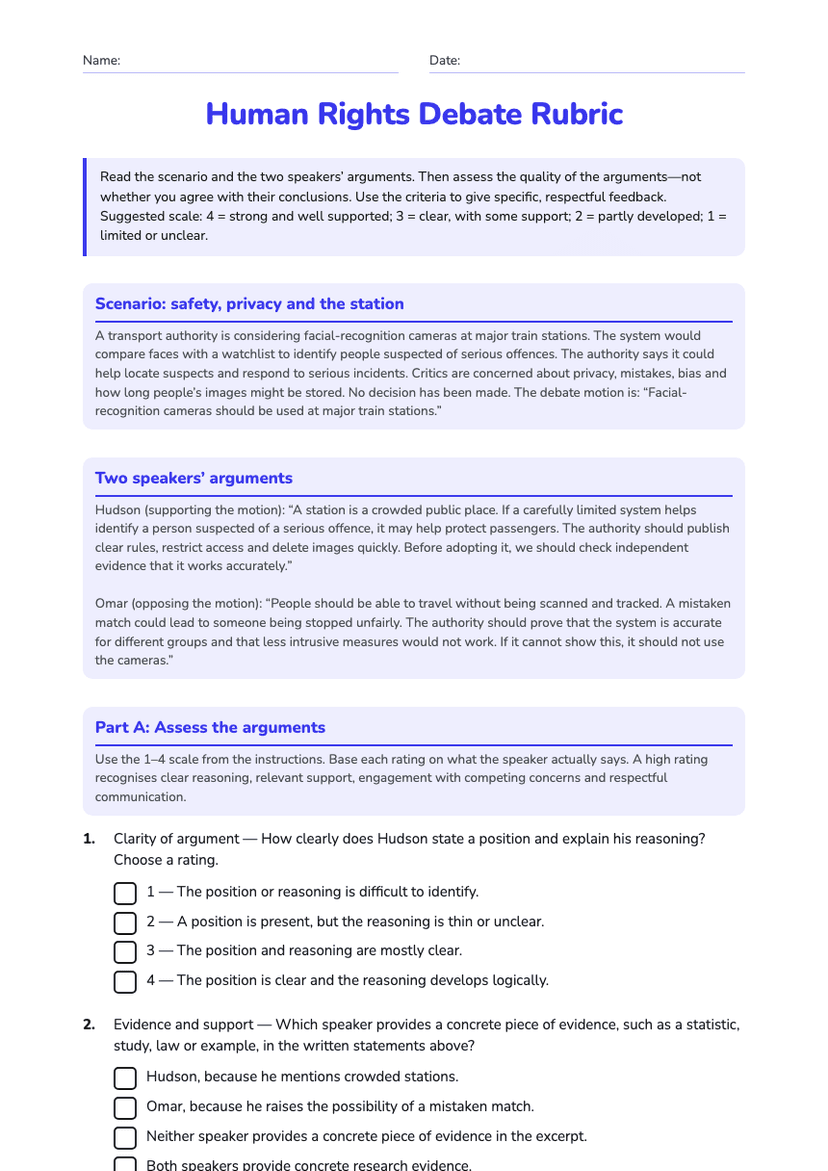
Human Rights Debate Rubric
Free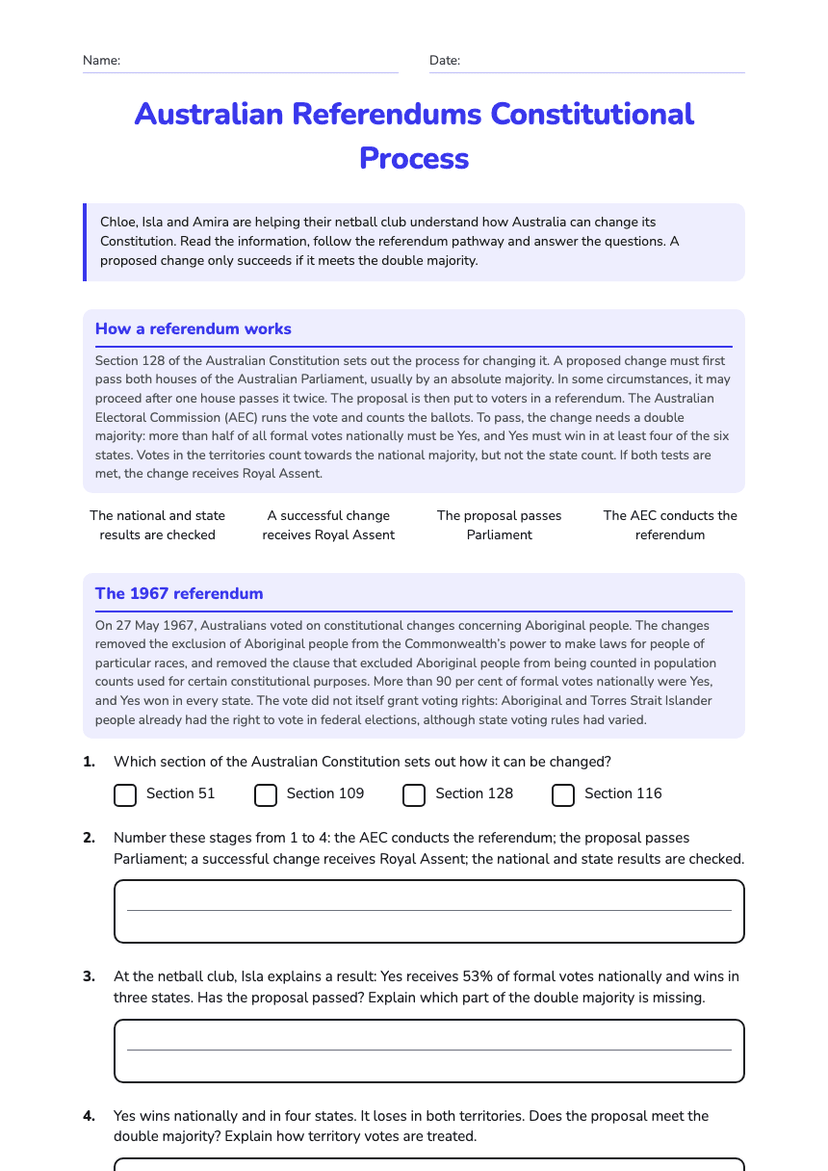
Australian Referendums Constitutional Process
Free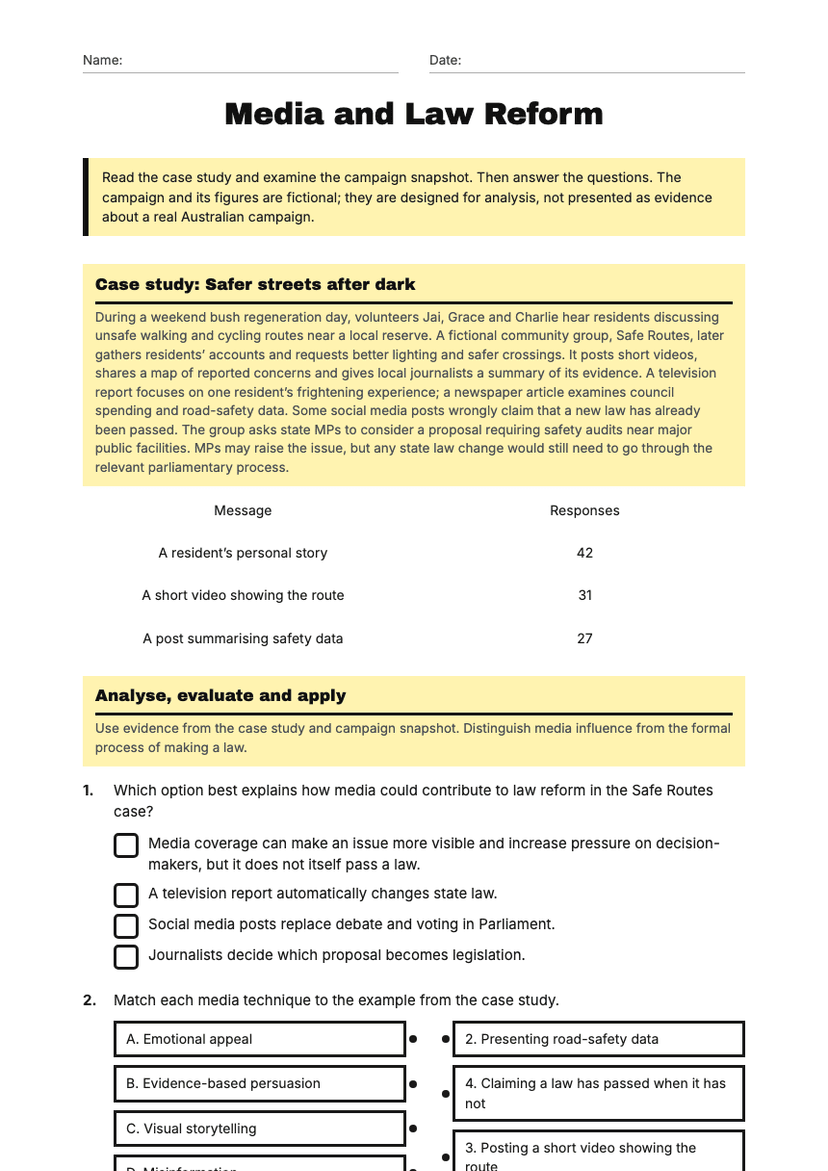
Media and Law Reform
Free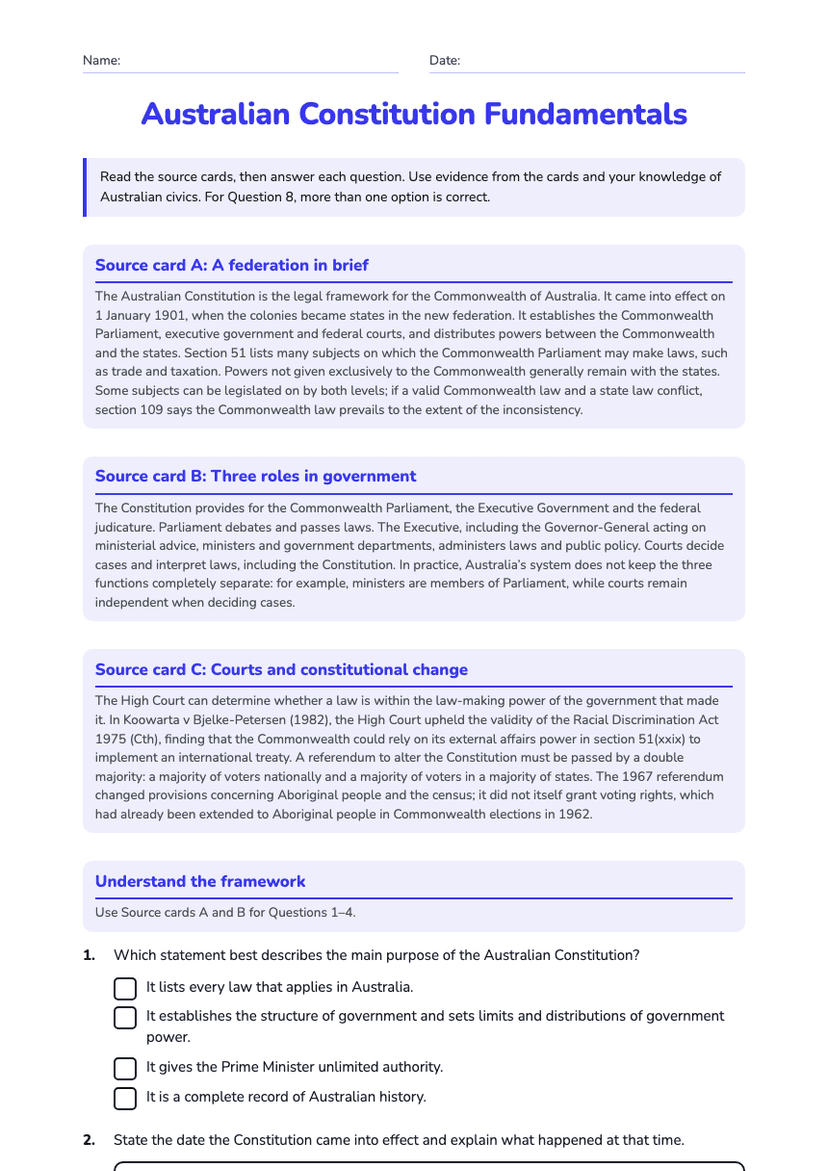
Australian Constitution Fundamentals
Free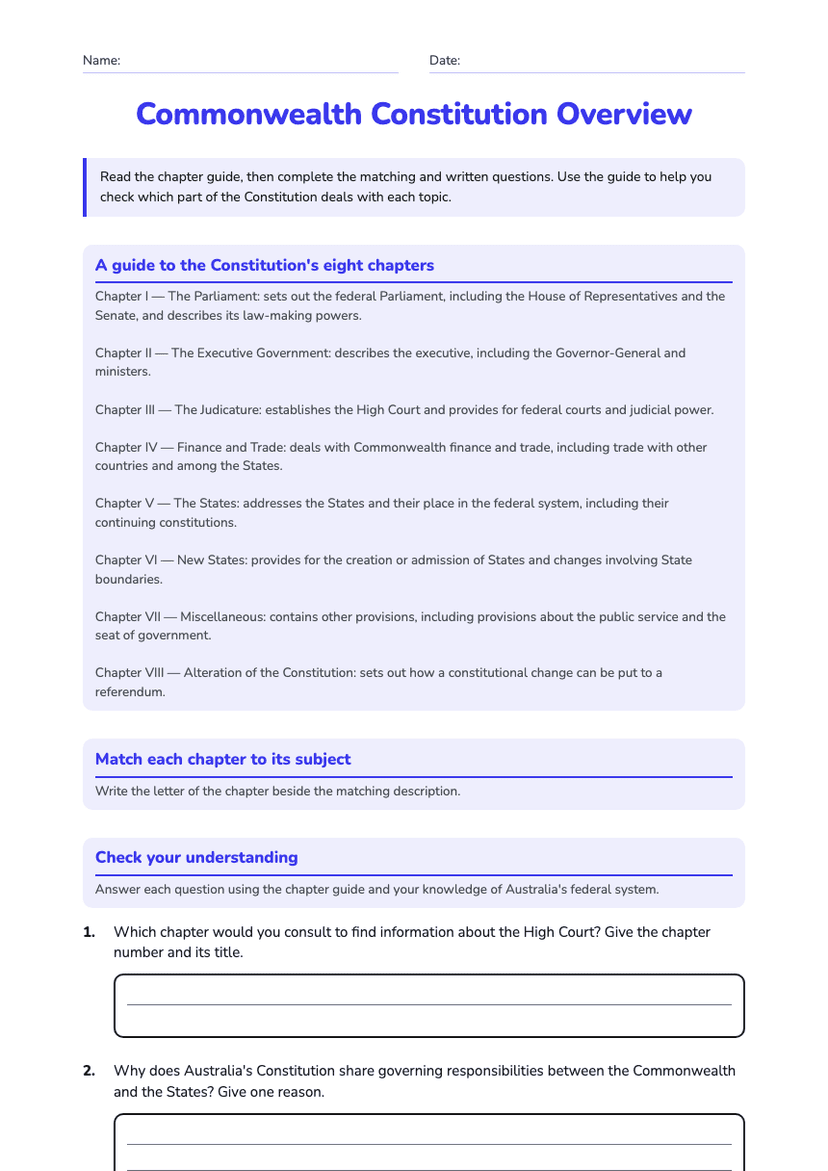
Commonwealth Constitution Overview
Free