Australian Human Rights Laws
A free social sciences worksheet ready for your classroom. Open in Kuraplan to grab the print-ready PDF, customize it for your students, or generate a fresh version in seconds.
Australian Human Rights Laws
📋 Part 1: Australian Human Rights Commission Act (1996)
What is the Australian Human Rights Commission Act?
The Australian Human Rights Commission Act (1996) established the Australian Human Rights Commission (AHRC) as Australia's national human rights institution. This Act gives the Commission the power to investigate complaints about discrimination and human rights violations.
Key Role of the AHRC:
• Investigate complaints about discrimination based on race, sex, disability, age, and sexual orientation
• Educate the public about human rights through campaigns and resources
• Advise government on human rights laws and policies
• Monitor Australia's compliance with international human rights treaties
Key Protections Include:
• Protection from racial discrimination in employment, education, and public services
• Sex discrimination protections including pregnancy and sexual harassment
• Disability discrimination protections in access to services and employment
• Age discrimination protections (people over 18 years)
AHRC stands for: _________________________________
🌏 Part 2: International Human Rights Treaties
Major International Treaties Affecting Australia:
1. Universal Declaration of Human Rights (1948)
• Foundation document for international human rights
• Sets out fundamental rights and freedoms for all people
• Includes rights to life, liberty, education, and freedom of speech
2. International Covenant on Civil and Political Rights (ICCPR)
• Australia signed in 1972, ratified in 1980
• Protects rights such as freedom of speech, religion, and assembly
• Right to fair trial and protection from torture
3. International Covenant on Economic, Social and Cultural Rights (ICESCR)
• Australia ratified in 1975
• Rights to education, healthcare, adequate housing, and work
• Progressive realisation of rights based on available resources
How these affect Australia: When Australia signs these treaties, it commits to protecting these rights and can be held accountable internationally, though domestic law changes are needed to enforce them locally.
🤔 Part 3: Critical Thinking Questions
About This Worksheet
Free in Kuraplan
Sign up free, grab the PDF, and customize it for your class.
Print-Ready
Formatted for standard paper. Clean layout, easy to read.
AI-Generated
Created with Kuraplan's AI, designed for real classroom use.
For Teachers & Parents
Use in classrooms, for homework, tutoring, or homeschool.
Need a custom version of this worksheet?
Kuraplan's AI generates custom worksheets in seconds — differentiated for every learner, aligned to your curriculum.
Generate Custom Worksheets — FreeMore Social Sciences Worksheets
Australian Diversity Categories
Free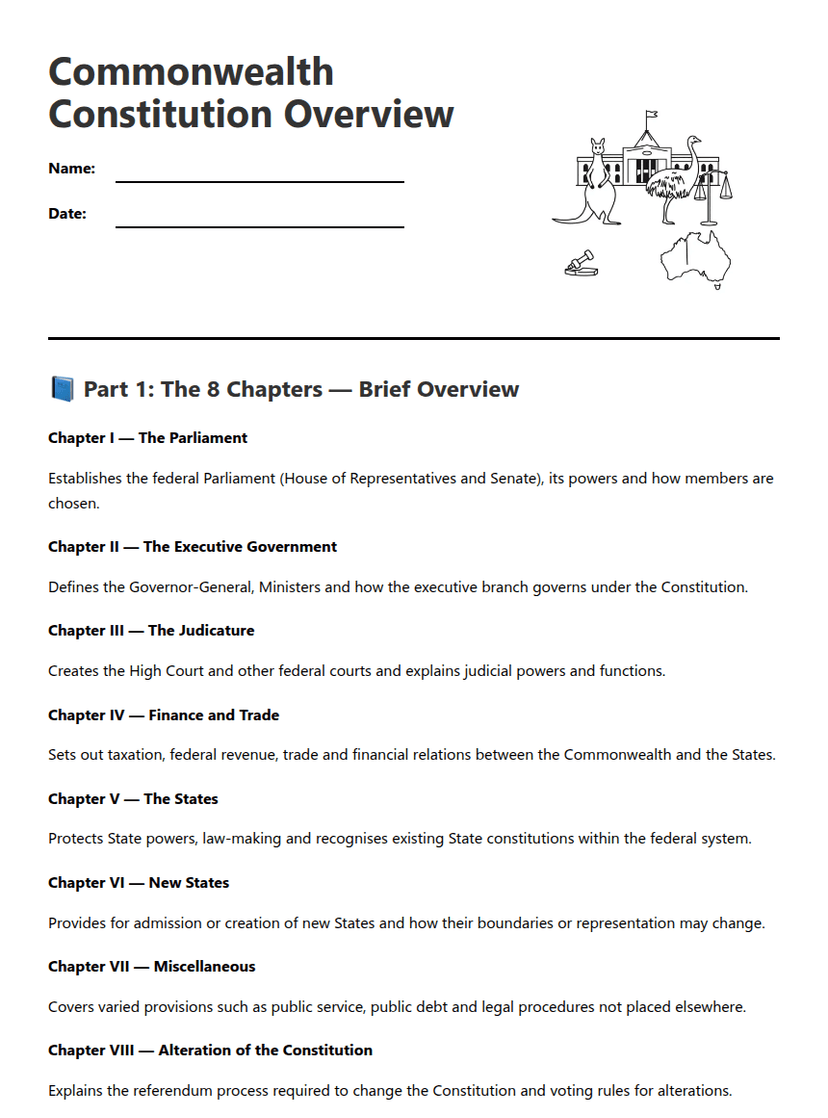
Commonwealth Constitution Overview
Free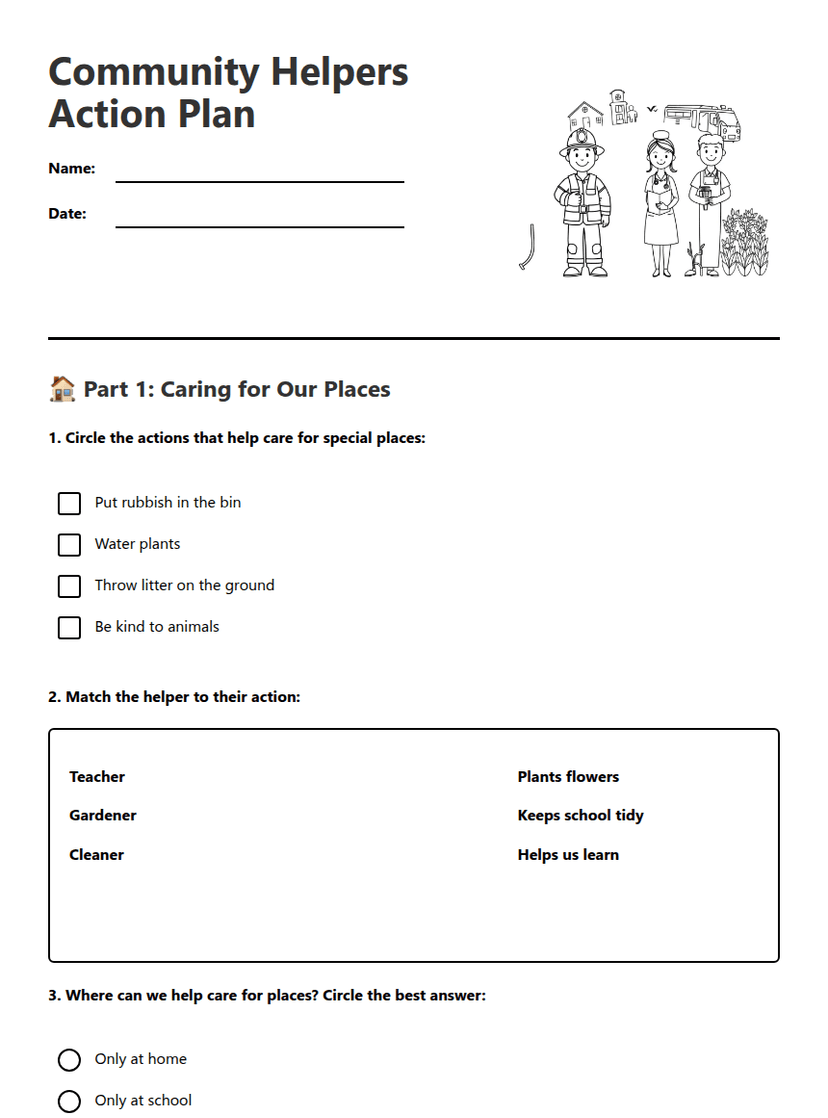
Community Helpers Action Plan
Free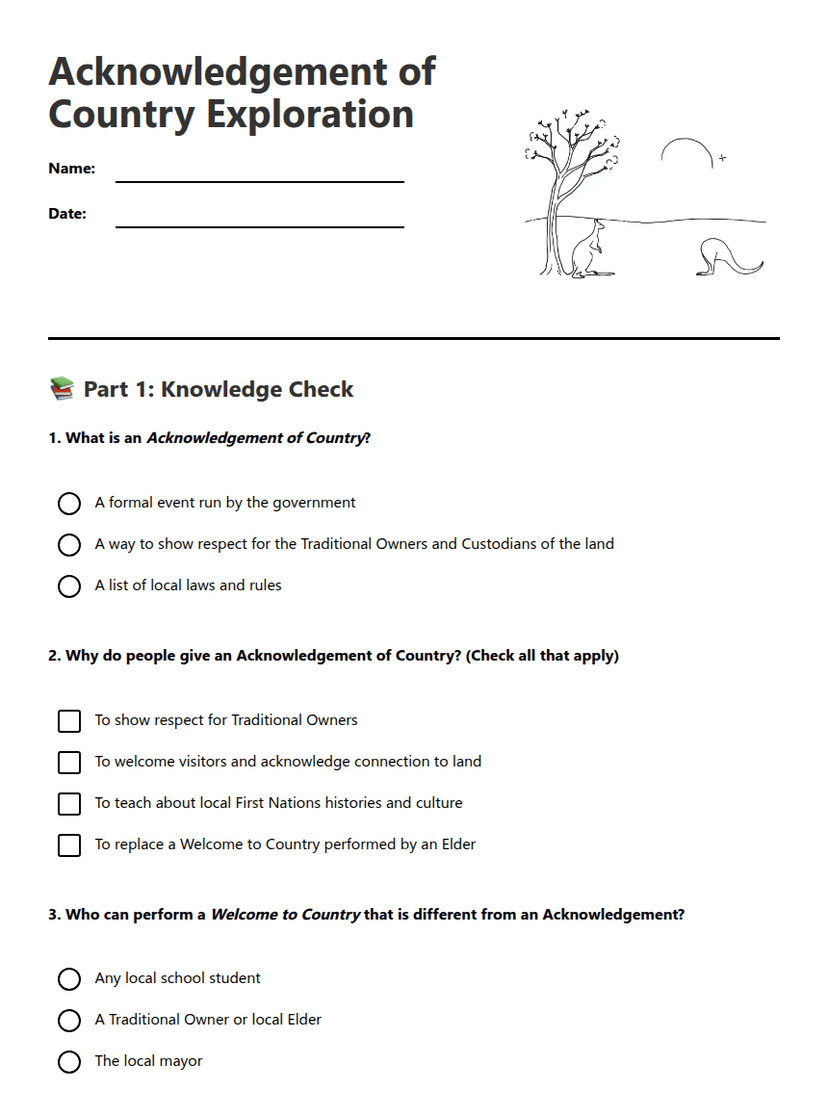
Acknowledgement of Country Exploration
Free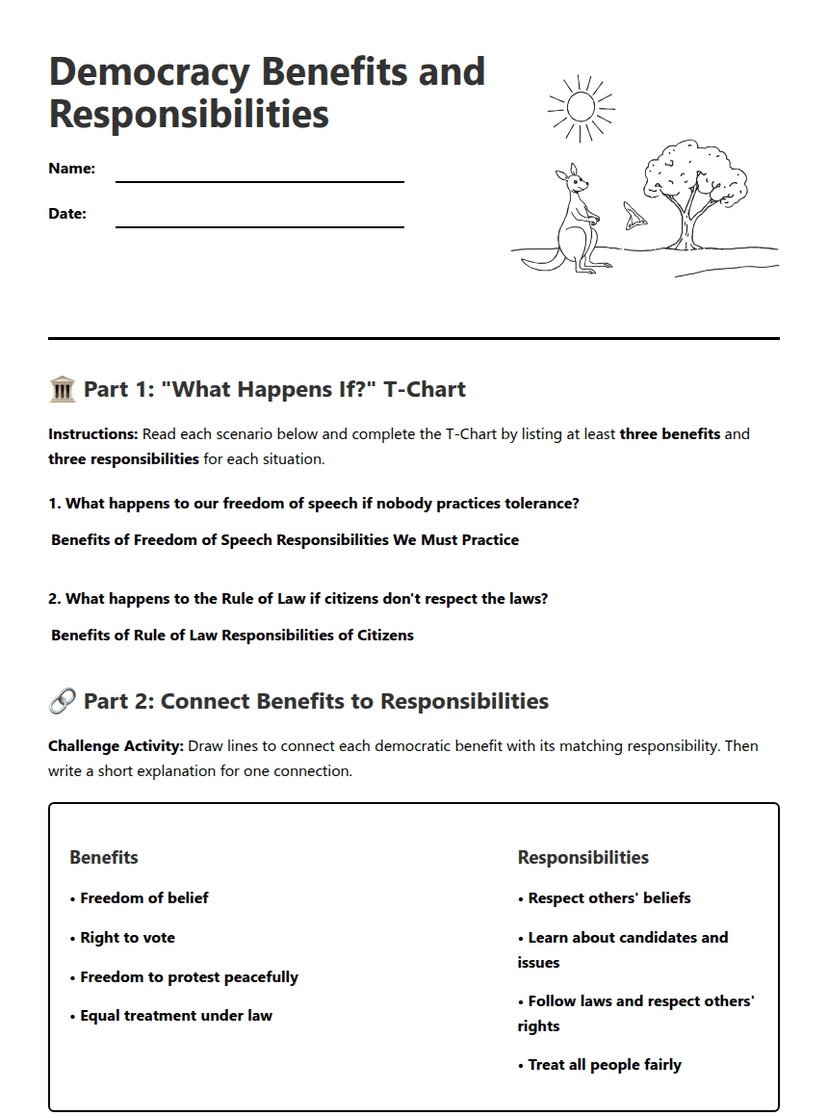
Democracy Benefits and Responsibilities
Free
Democracy in Action Diagram
Free
Treaty Principles Today
Free