Australian Law Reform Worksheet
A free social sciences worksheet ready for your classroom. Open in Kuraplan to grab the print-ready PDF, customize it for your students, or generate a fresh version in seconds.
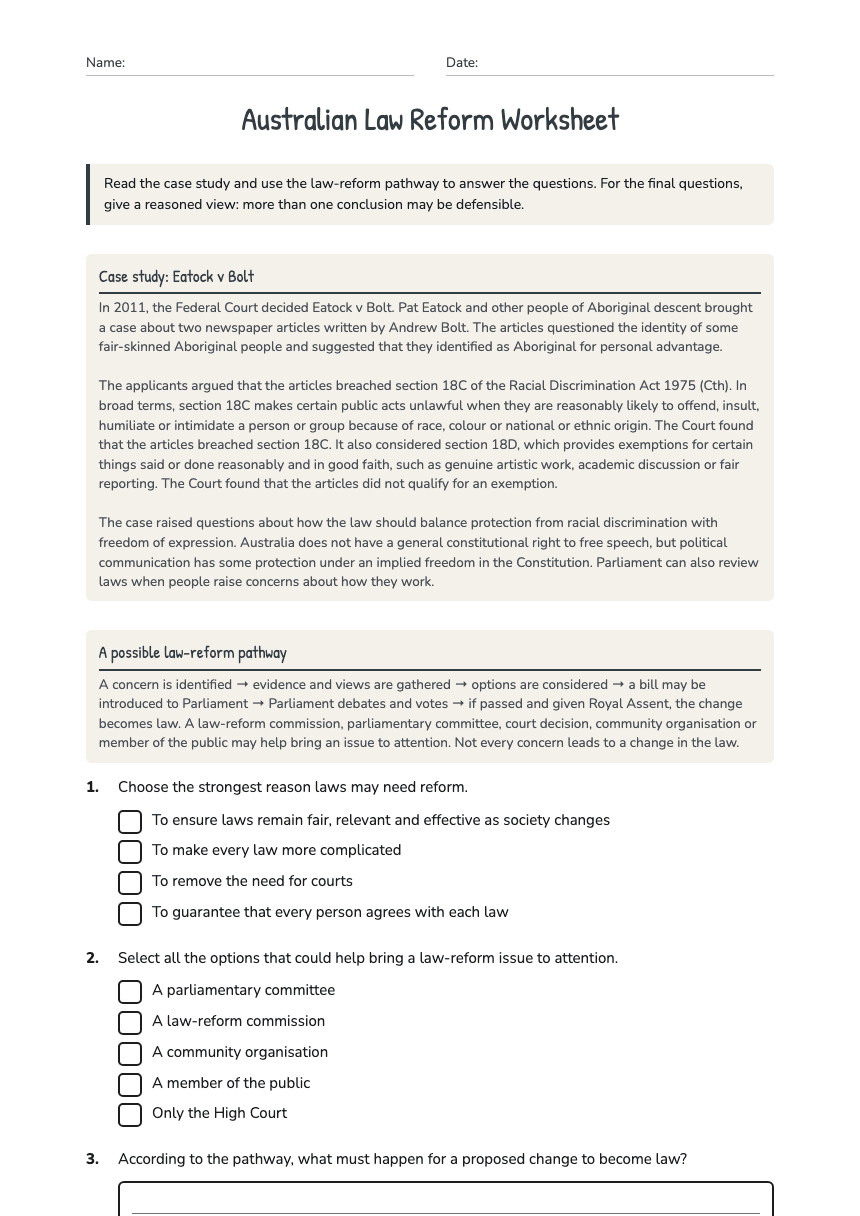
Australian Law Reform Worksheet
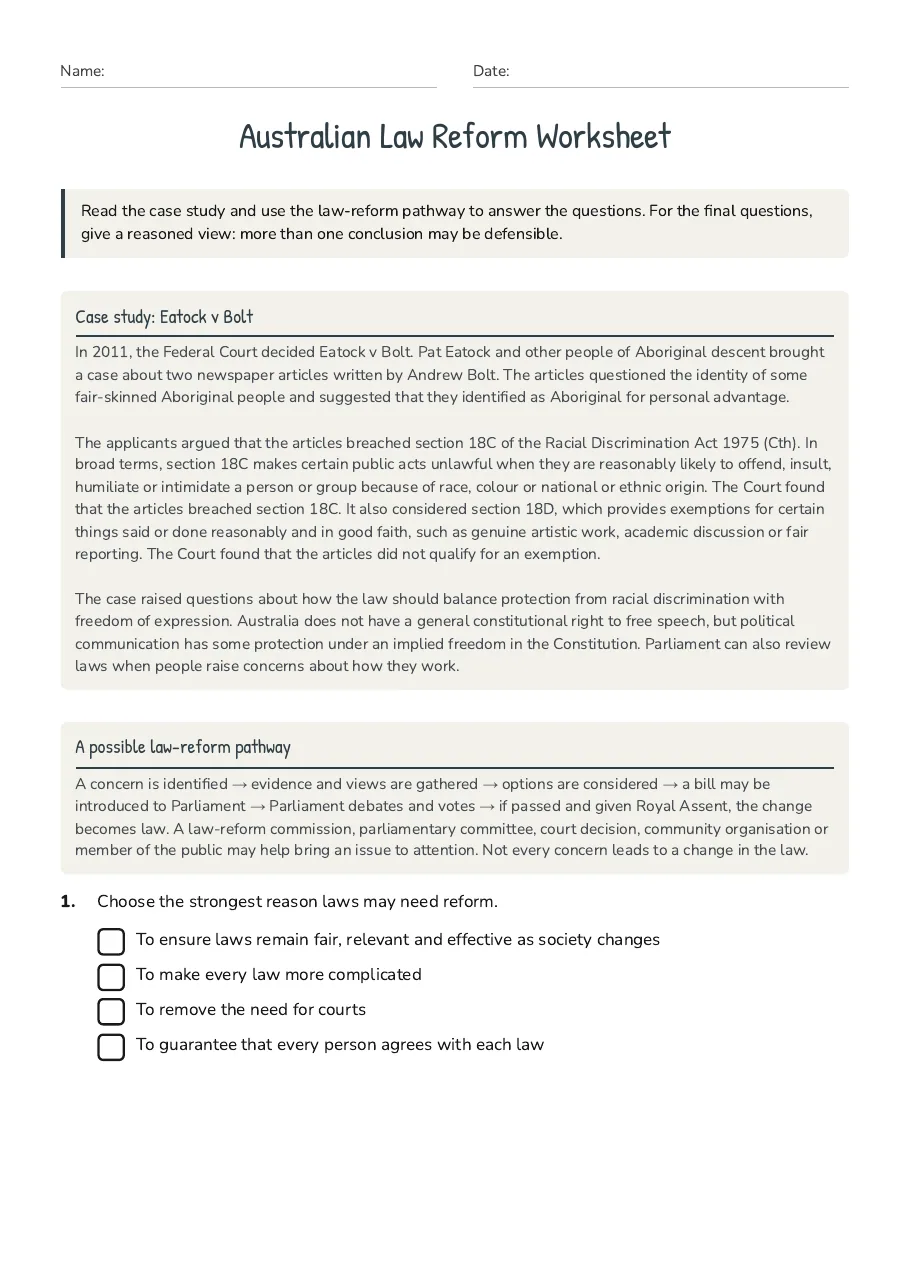
Case study: Eatock v Bolt
In 2011, the Federal Court decided Eatock v Bolt. Pat Eatock and other people of Aboriginal descent brought a case about two newspaper articles written by Andrew Bolt. The articles questioned the identity of some fair-skinned Aboriginal people and suggested that they identified as Aboriginal for personal advantage. The applicants argued that the articles breached section 18C of the Racial Discrimination Act 1975 (Cth). In broad terms, section 18C makes certain public acts unlawful when they are reasonably likely to offend, insult, humiliate or intimidate a person or group because of race, colour or national or ethnic origin. The Court found that the articles breached section 18C. It also considered section 18D, which provides exemptions for certain things said or done reasonably and in good faith, such as genuine artistic work, academic discussion or fair reporting. The Court found that the articles did not qualify for an exemption. The case raised questions about how the law should balance protection from racial discrimination with freedom of expression. Australia does not have a general constitutional right to free speech, but political communication has some protection under an implied freedom in the Constitution. Parliament can also review laws when people raise concerns about how they work.
A possible law-reform pathway
A concern is identified → evidence and views are gathered → options are considered → a bill may be introduced to Parliament → Parliament debates and votes → if passed and given Royal Assent, the change becomes law. A law-reform commission, parliamentary committee, court decision, community organisation or member of the public may help bring an issue to attention. Not every concern leads to a change in the law.
- To ensure laws remain fair, relevant and effective as society changes
- To make every law more complicated
- To remove the need for courts
- To guarantee that every person agrees with each law
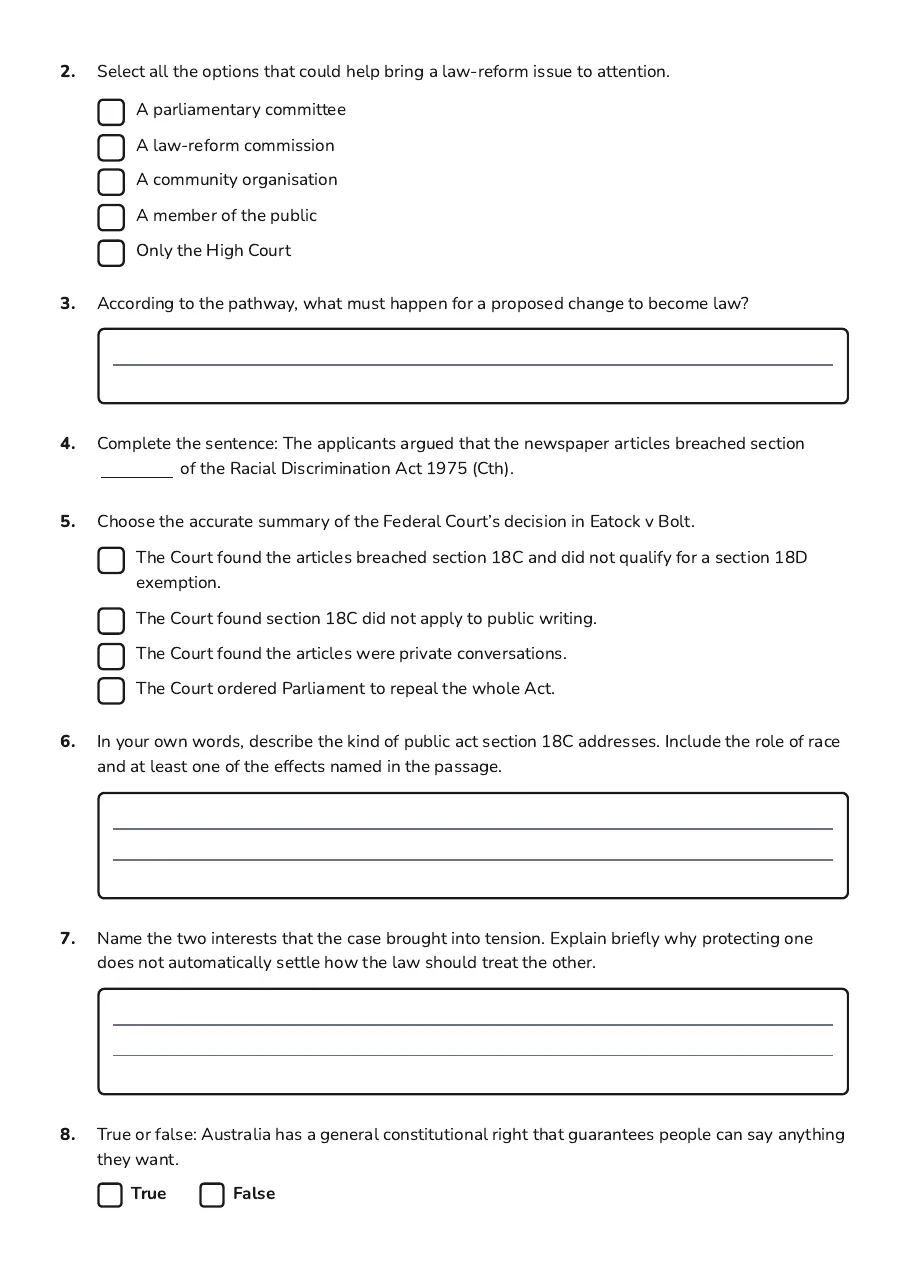
- A parliamentary committee
- A law-reform commission
- A community organisation
- A member of the public
- Only the High Court
- The Court found the articles breached section 18C and did not qualify for a section 18D exemption.
- The Court found section 18C did not apply to public writing.
- The Court found the articles were private conversations.
- The Court ordered Parliament to repeal the whole Act.
3 printable pages
Page 1
Page 2
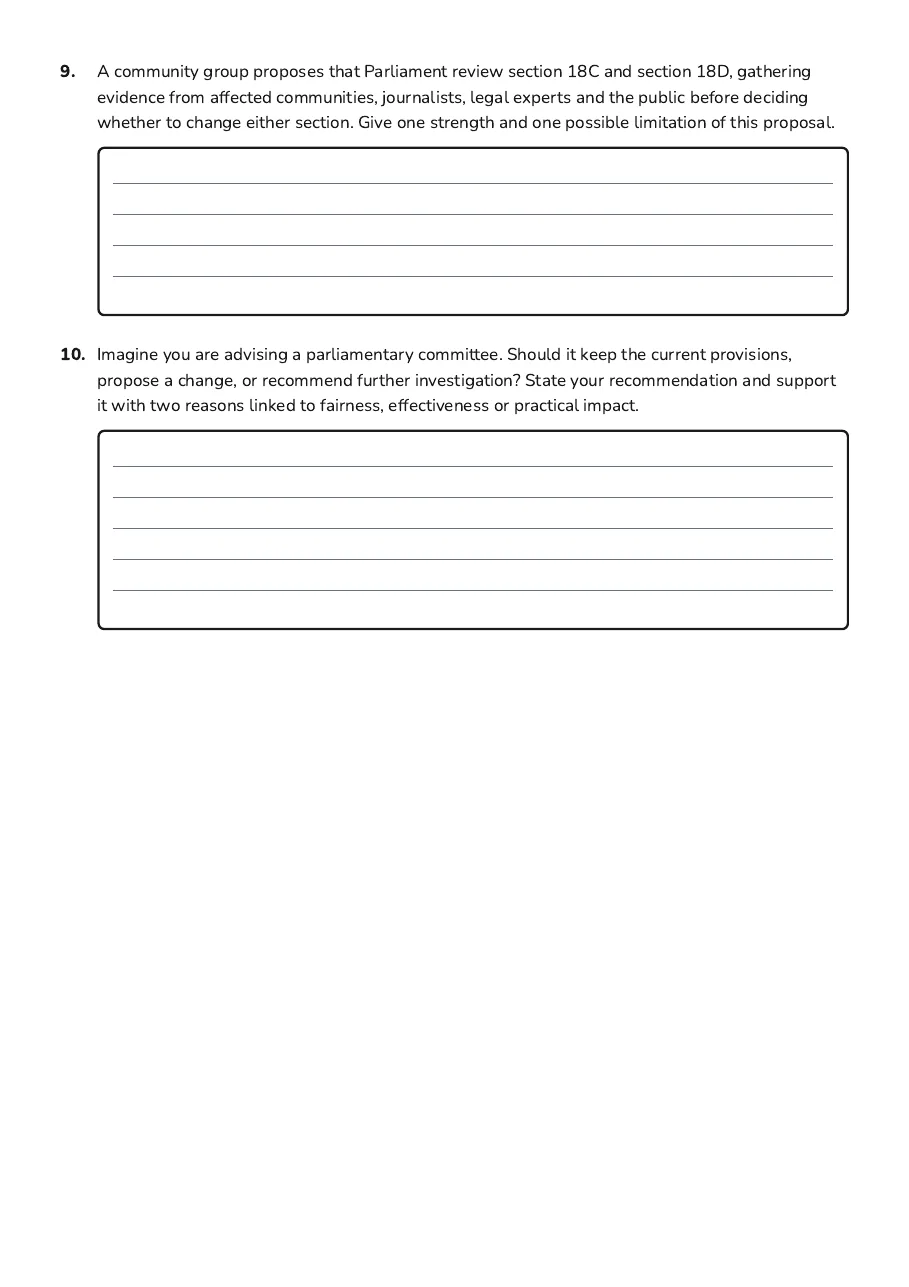
Page 3
About This Worksheet
Free in Kuraplan
Sign up free, grab the PDF, and customize it for your class.
Print-Ready
Formatted for standard paper. Clean layout, easy to read.
AI-Generated
Created with Kuraplan's AI, designed for real classroom use.
For Teachers & Parents
Use in classrooms, for homework, tutoring, or homeschool.
Need a custom version of this worksheet?
Kuraplan's AI generates custom worksheets in seconds — differentiated for every learner, aligned to your curriculum.
Generate Custom Worksheets — FreeMore Social Sciences Worksheets
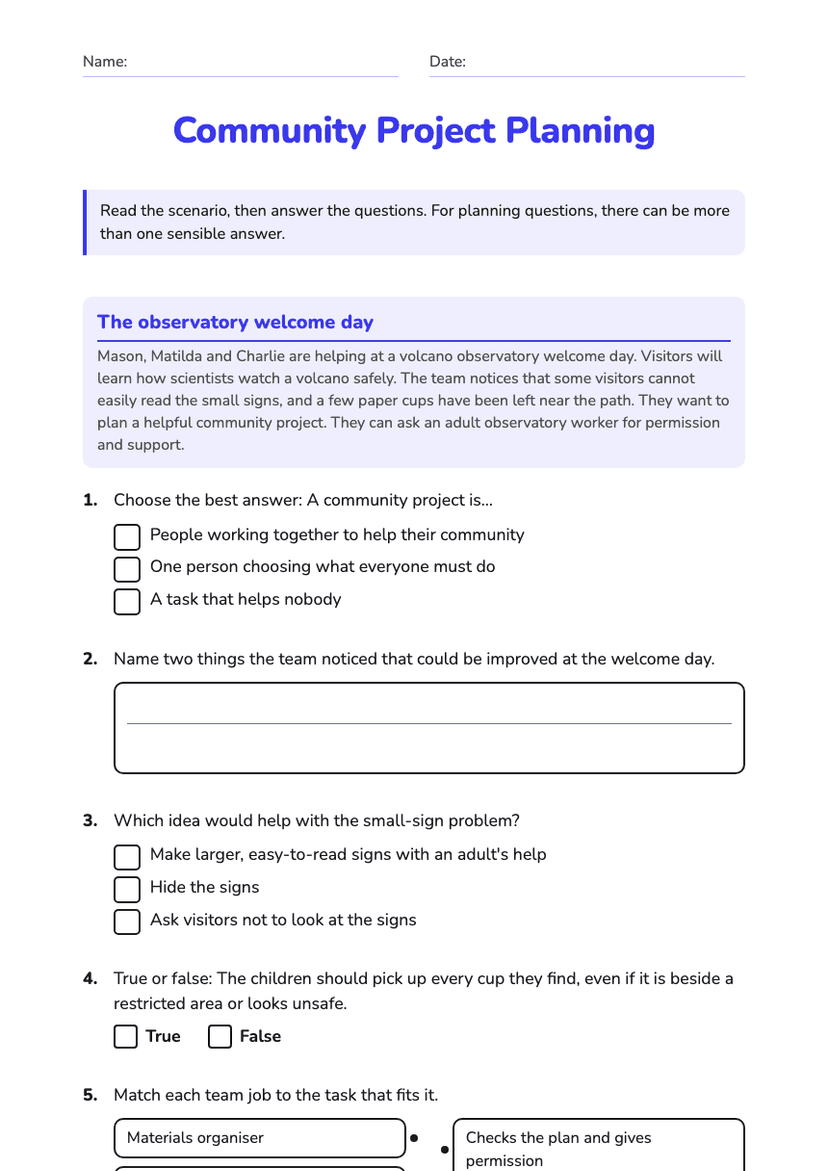
Community Project Planning
Free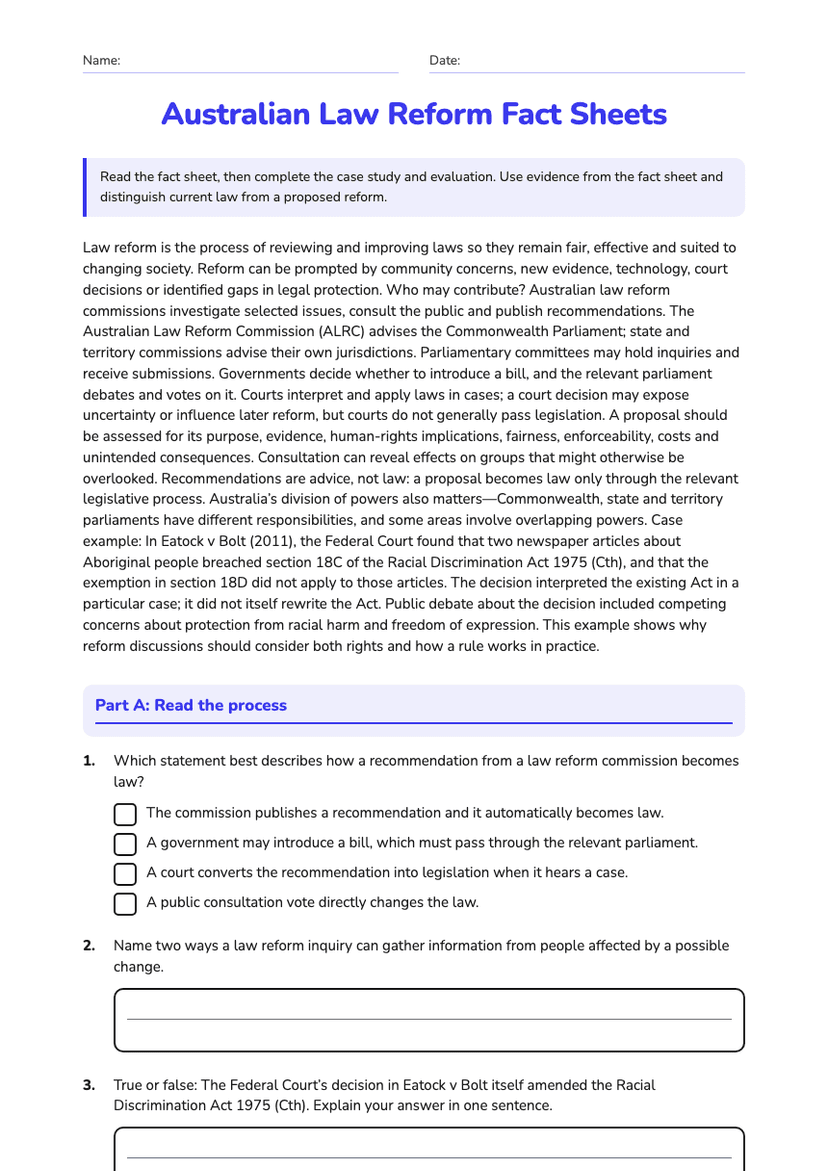
Australian Law Reform Fact Sheets
Free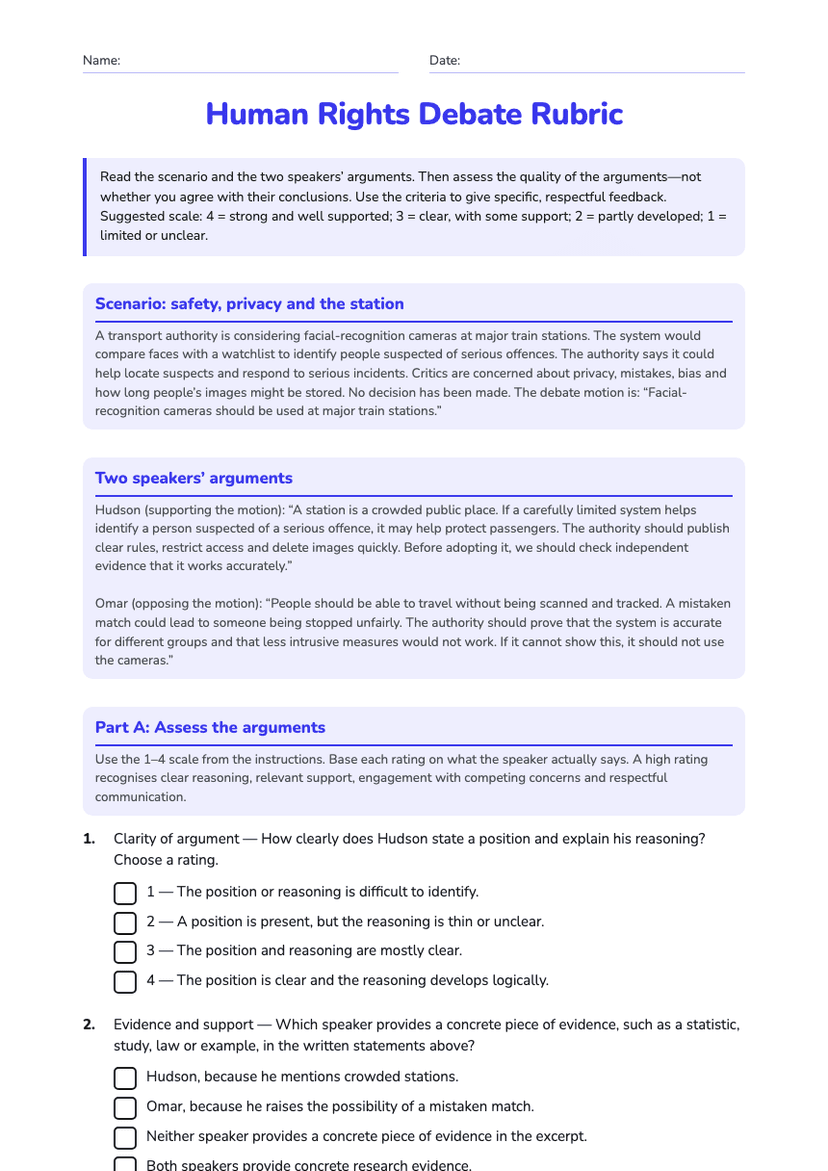
Human Rights Debate Rubric
Free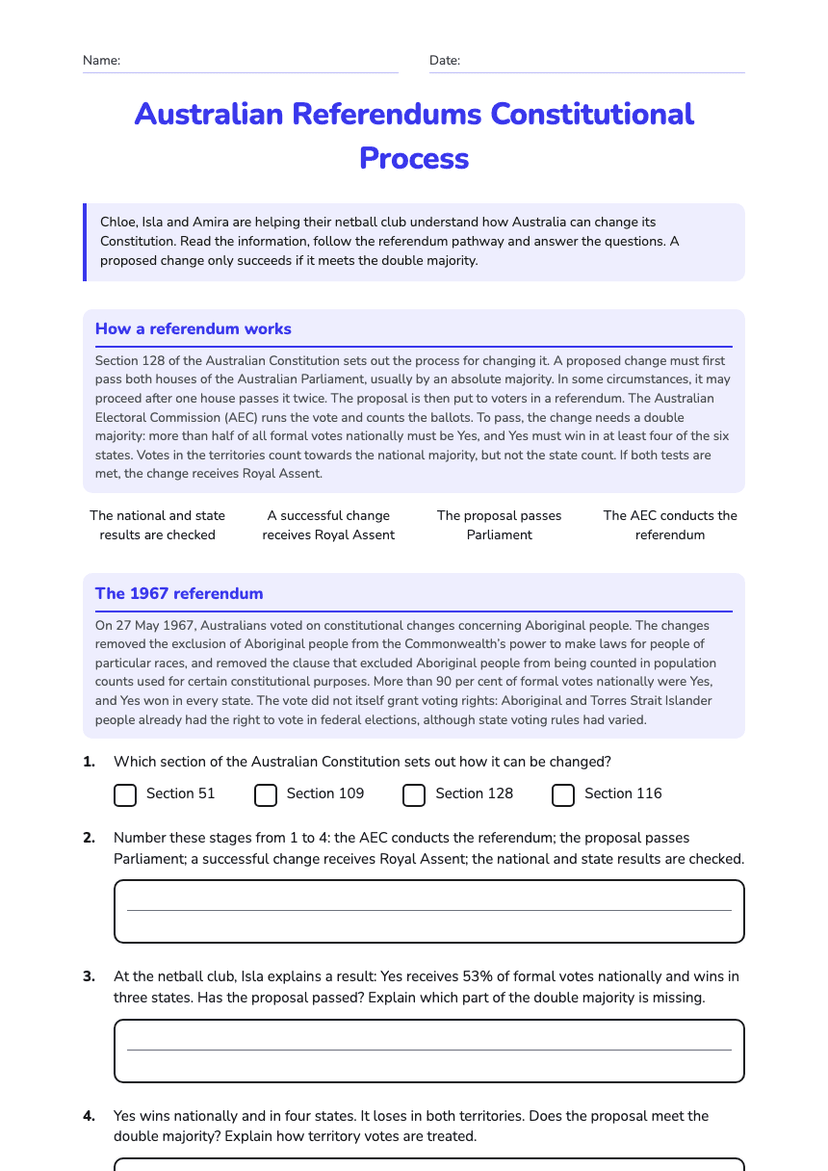
Australian Referendums Constitutional Process
Free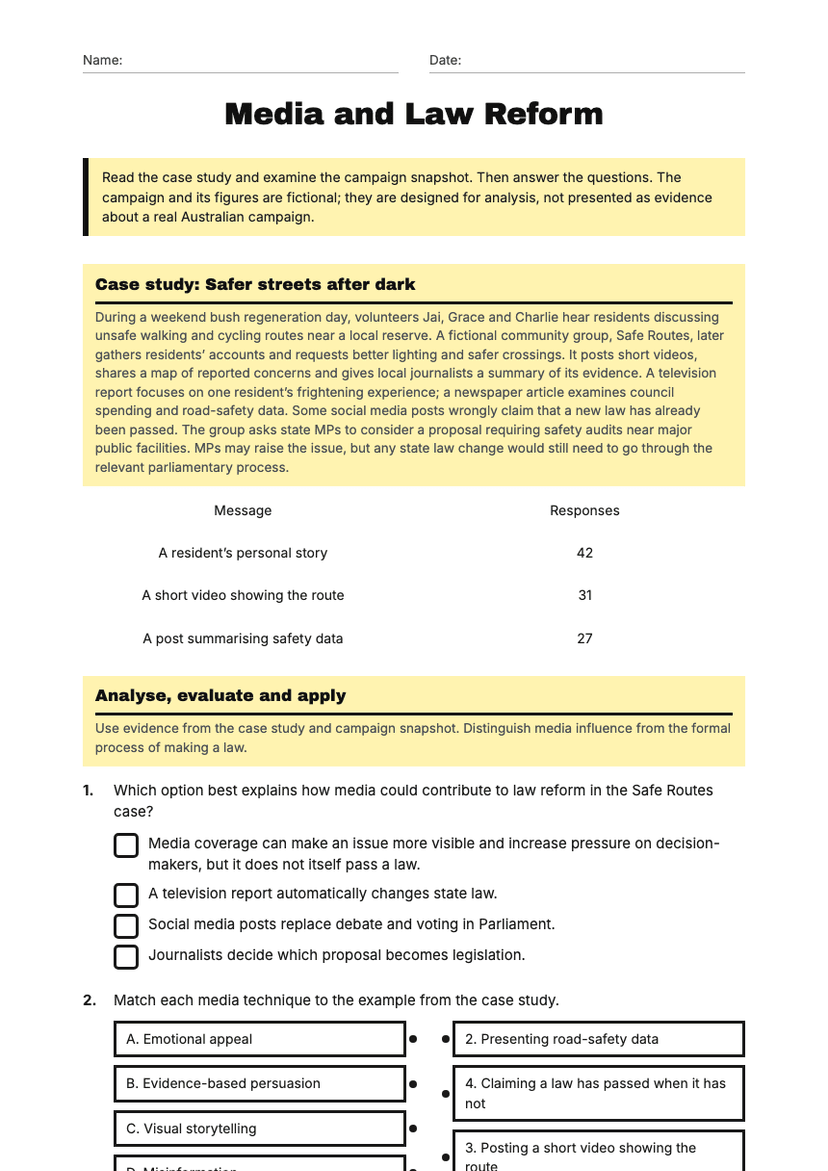
Media and Law Reform
Free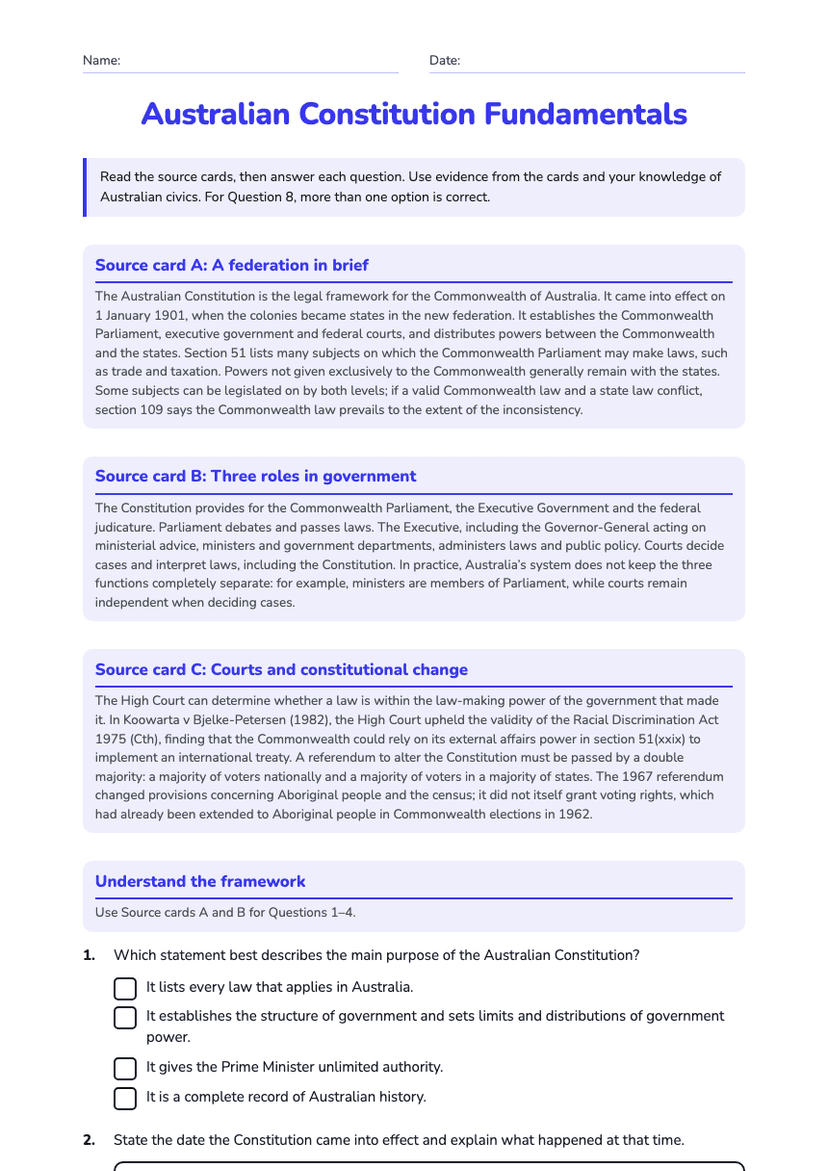
Australian Constitution Fundamentals
Free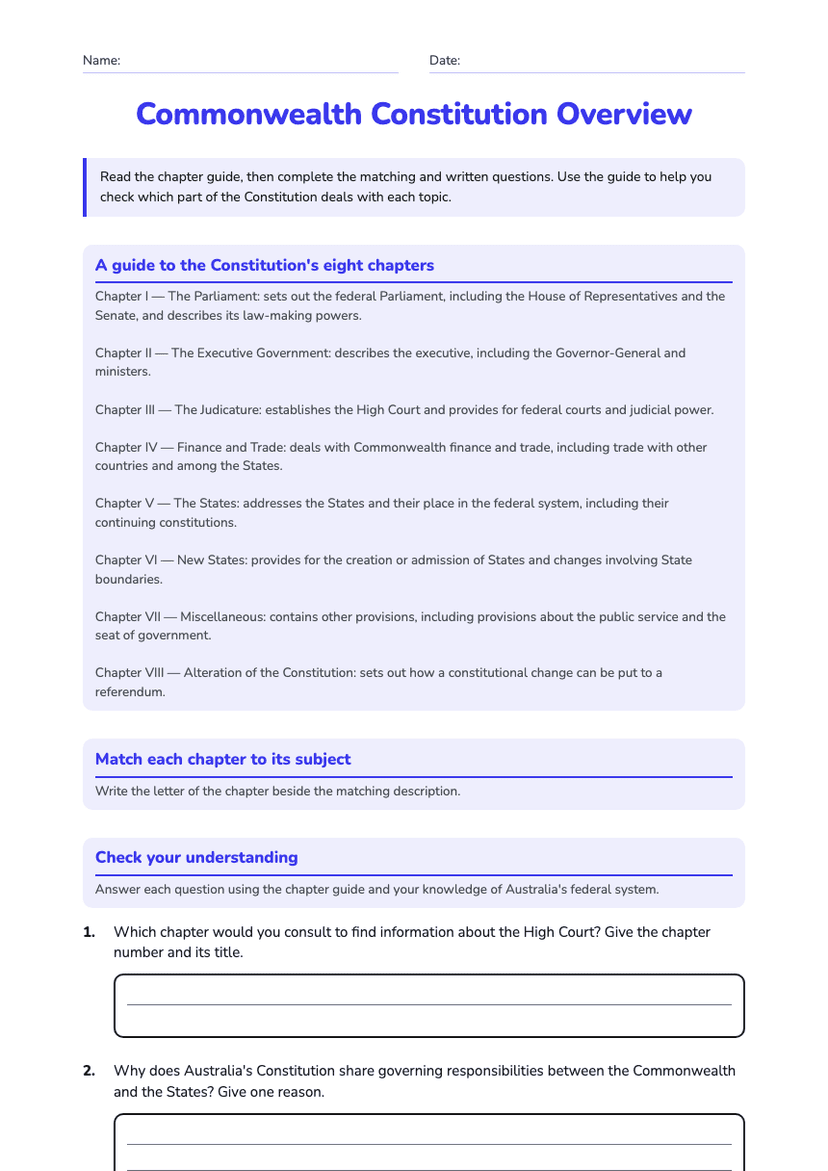
Commonwealth Constitution Overview
Free