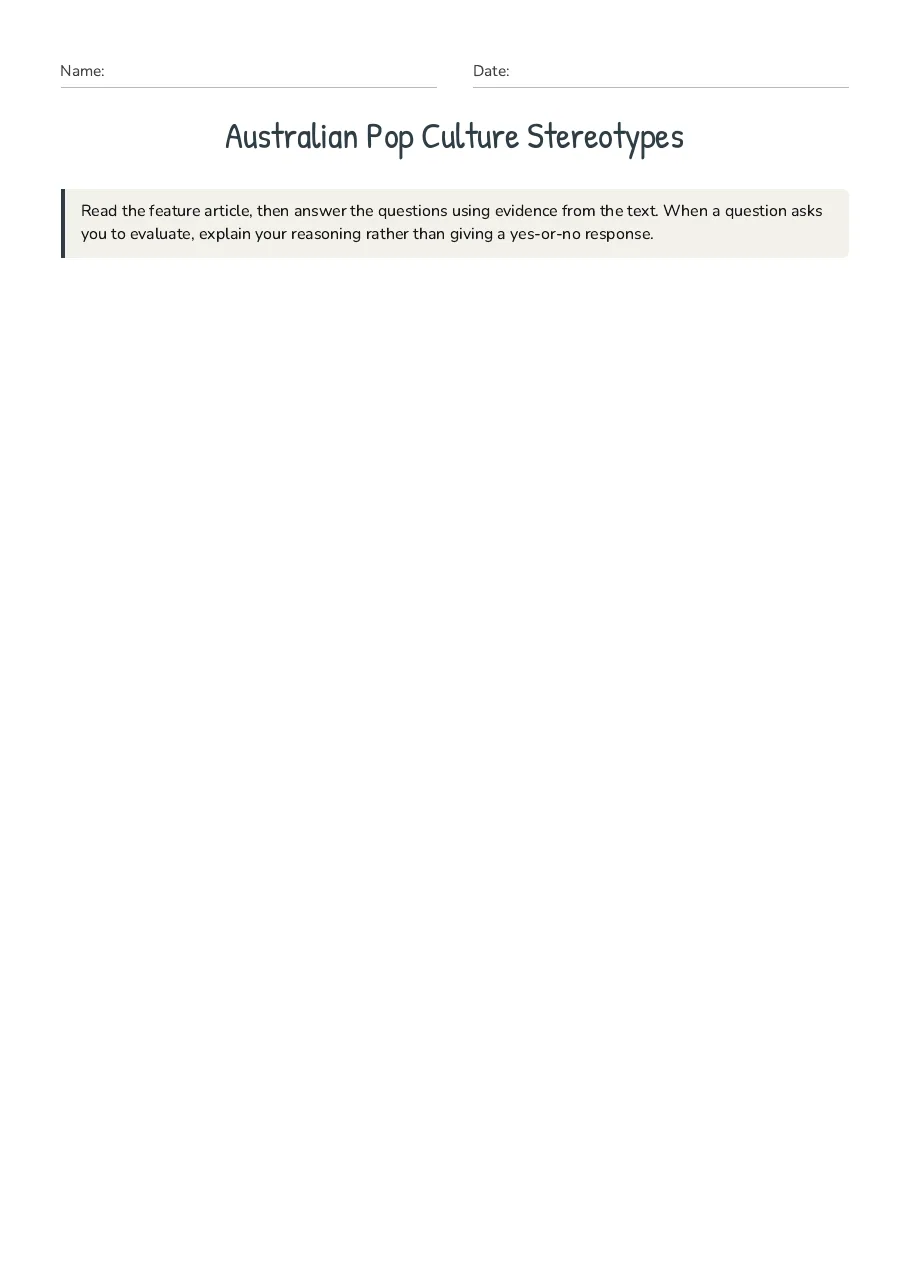
Australian Pop Culture Stereotypes
A free english worksheet ready for your classroom. Open in Kuraplan to grab the print-ready PDF, customize it for your students, or generate a fresh version in seconds.
Australian Pop Culture Stereotypes
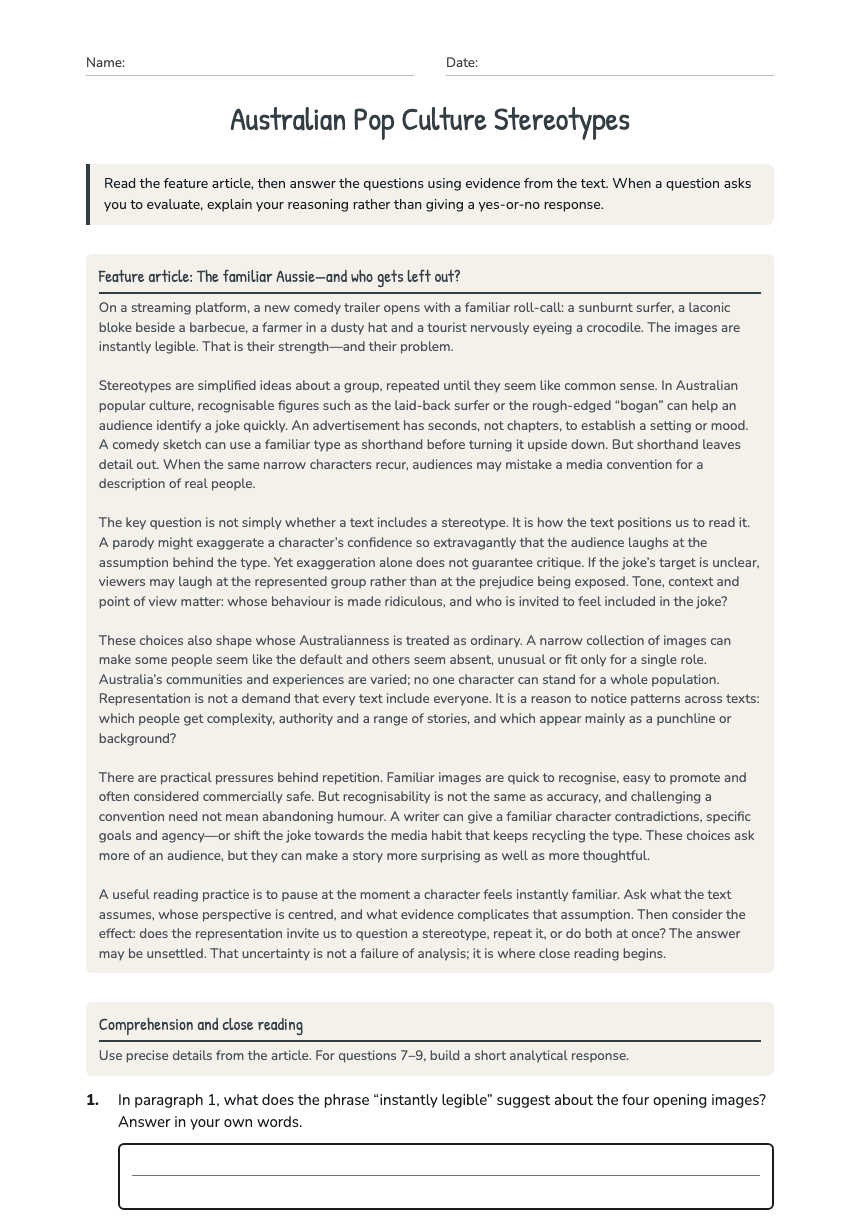
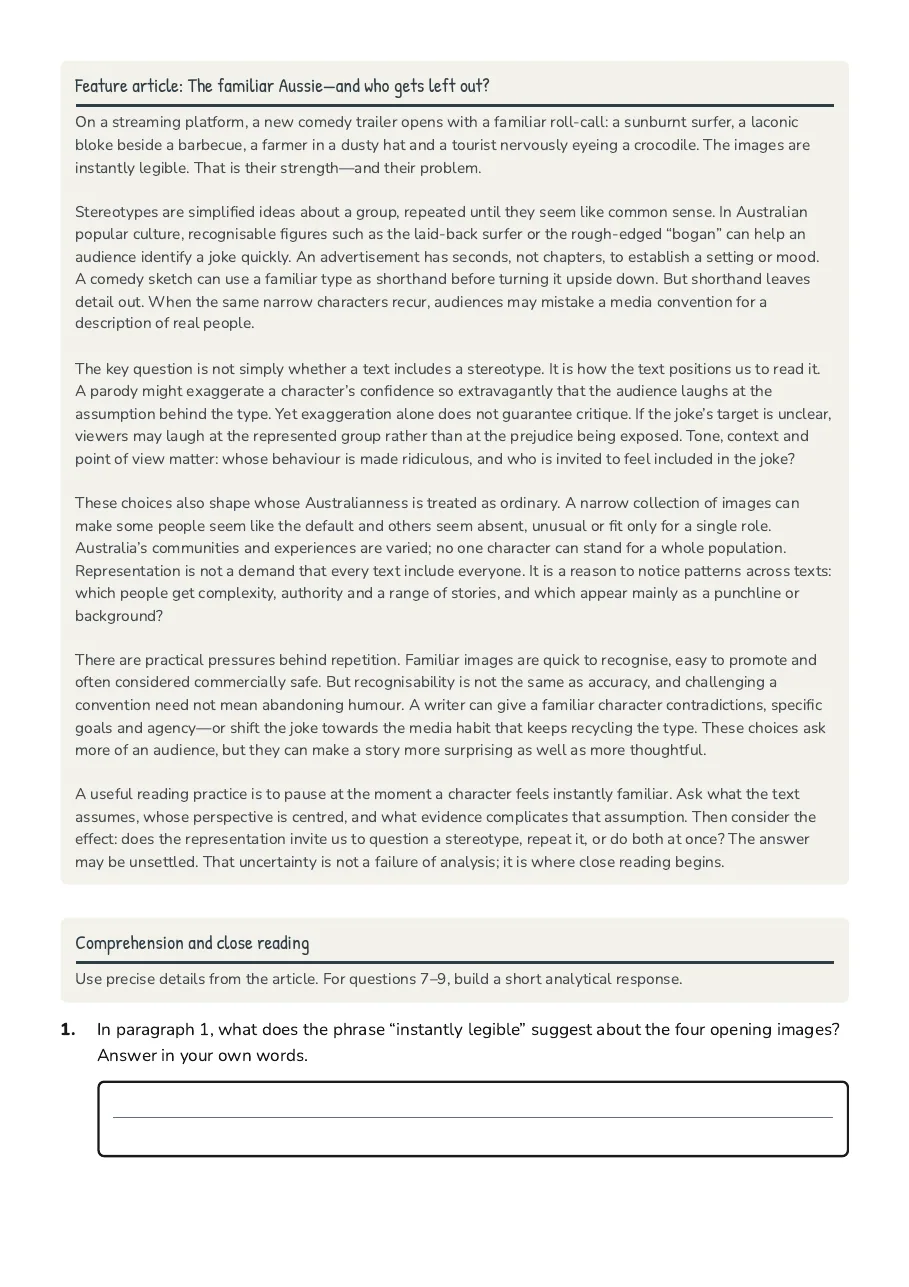
Feature article: The familiar Aussie—and who gets left out?
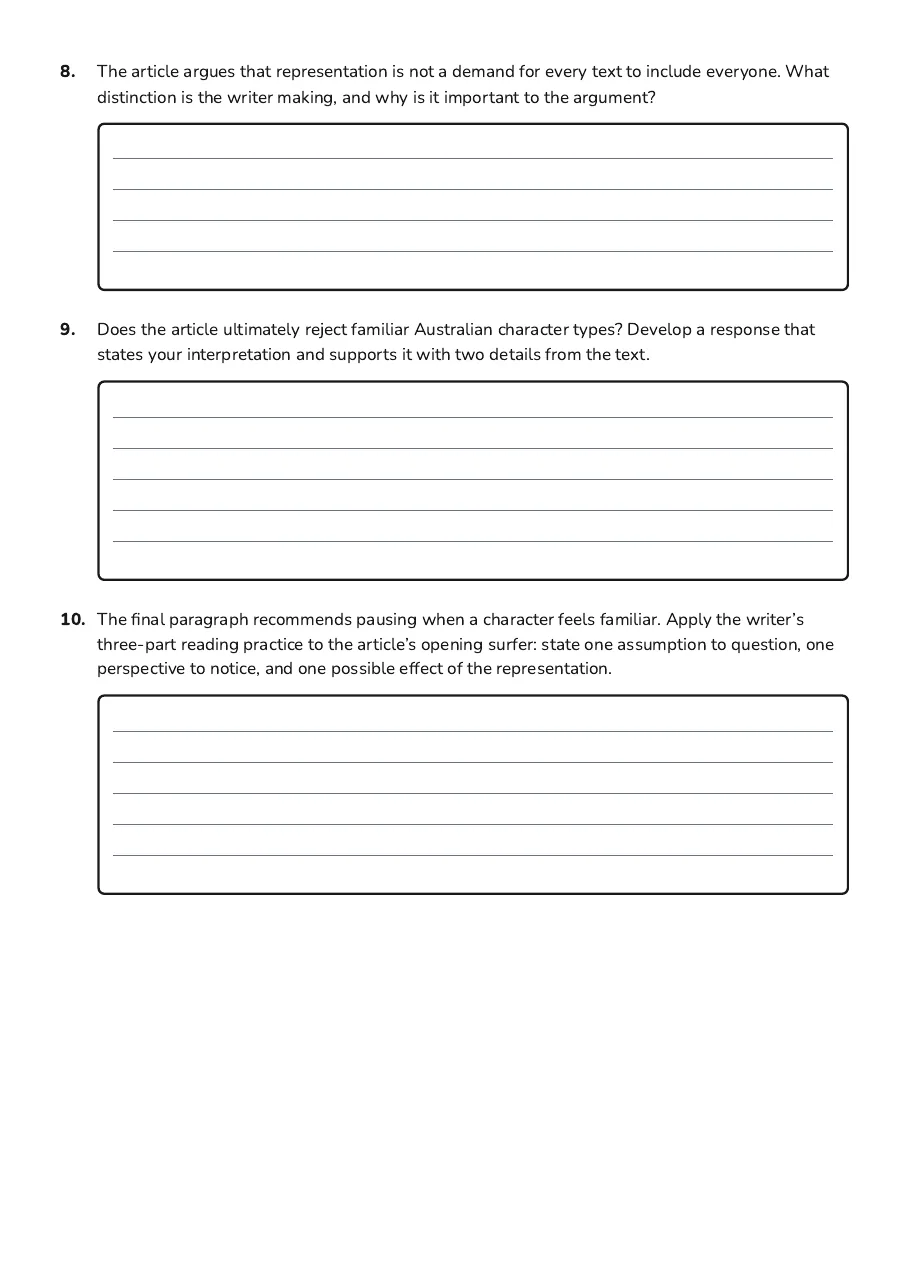
On a streaming platform, a new comedy trailer opens with a familiar roll-call: a sunburnt surfer, a laconic bloke beside a barbecue, a farmer in a dusty hat and a tourist nervously eyeing a crocodile. The images are instantly legible. That is their strength—and their problem. Stereotypes are simplified ideas about a group, repeated until they seem like common sense. In Australian popular culture, recognisable figures such as the laid-back surfer or the rough-edged “bogan” can help an audience identify a joke quickly. An advertisement has seconds, not chapters, to establish a setting or mood. A comedy sketch can use a familiar type as shorthand before turning it upside down. But shorthand leaves detail out. When the same narrow characters recur, audiences may mistake a media convention for a description of real people. The key question is not simply whether a text includes a stereotype. It is how the text positions us to read it. A parody might exaggerate a character’s confidence so extravagantly that the audience laughs at the assumption behind the type. Yet exaggeration alone does not guarantee critique. If the joke’s target is unclear, viewers may laugh at the represented group rather than at the prejudice being exposed. Tone, context and point of view matter: whose behaviour is made ridiculous, and who is invited to feel included in the joke? These choices also shape whose Australianness is treated as ordinary. A narrow collection of images can make some people seem like the default and others seem absent, unusual or fit only for a single role. Australia’s communities and experiences are varied; no one character can stand for a whole population. Representation is not a demand that every text include everyone. It is a reason to notice patterns across texts: which people get complexity, authority and a range of stories, and which appear mainly as a punchline or background? There are practical pressures behind repetition. Familiar images are quick to recognise, easy to promote and often considered commercially safe. But recognisability is not the same as accuracy, and challenging a convention need not mean abandoning humour. A writer can give a familiar character contradictions, specific goals and agency—or shift the joke towards the media habit that keeps recycling the type. These choices ask more of an audience, but they can make a story more surprising as well as more thoughtful. A useful reading practice is to pause at the moment a character feels instantly familiar. Ask what the text assumes, whose perspective is centred, and what evidence complicates that assumption. Then consider the effect: does the representation invite us to question a stereotype, repeat it, or do both at once? The answer may be unsettled. That uncertainty is not a failure of analysis; it is where close reading begins.
Comprehension and close reading
Use precise details from the article. For questions 7–9, build a short analytical response.
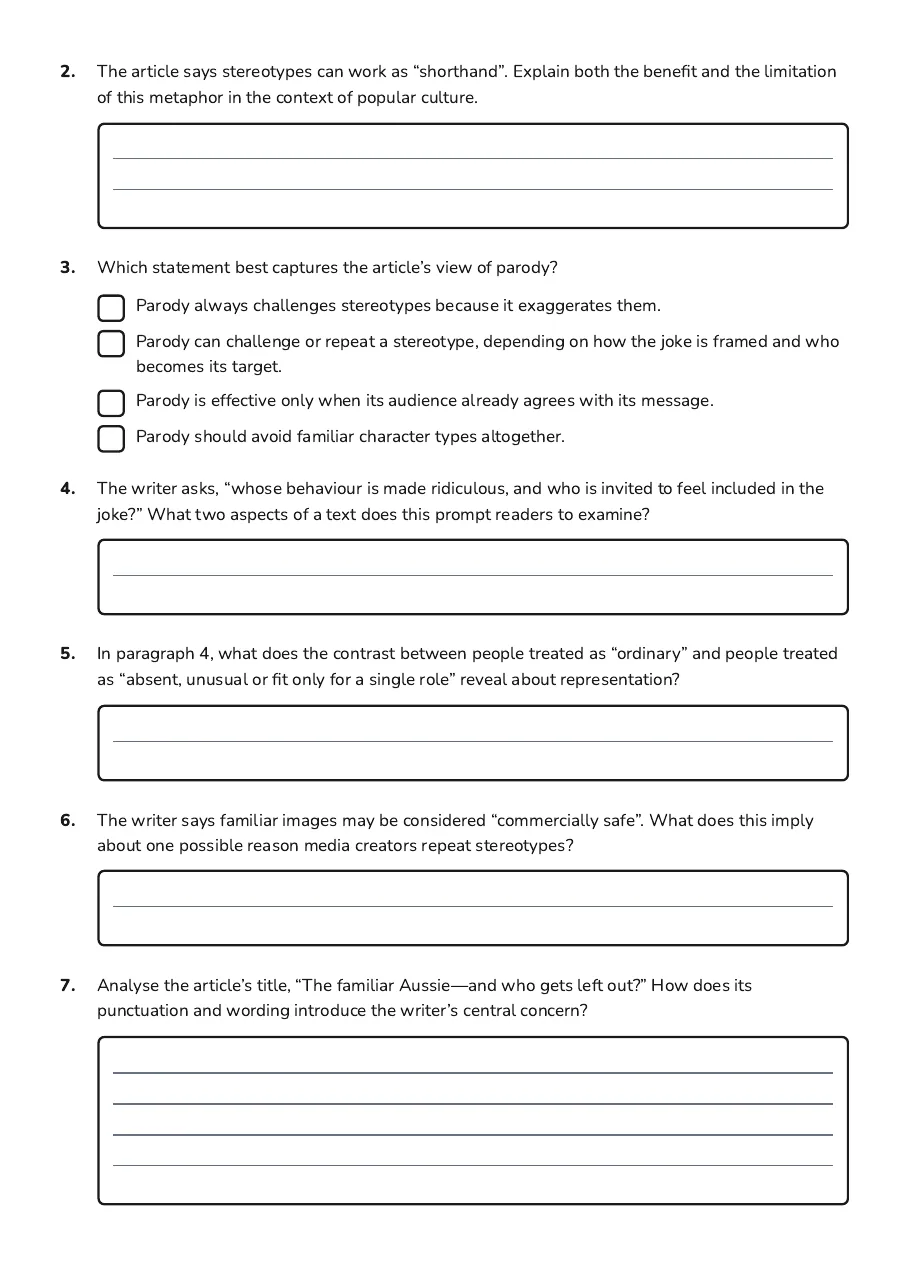
- Parody always challenges stereotypes because it exaggerates them.
- Parody can challenge or repeat a stereotype, depending on how the joke is framed and who becomes its target.
- Parody is effective only when its audience already agrees with its message.
- Parody should avoid familiar character types altogether.
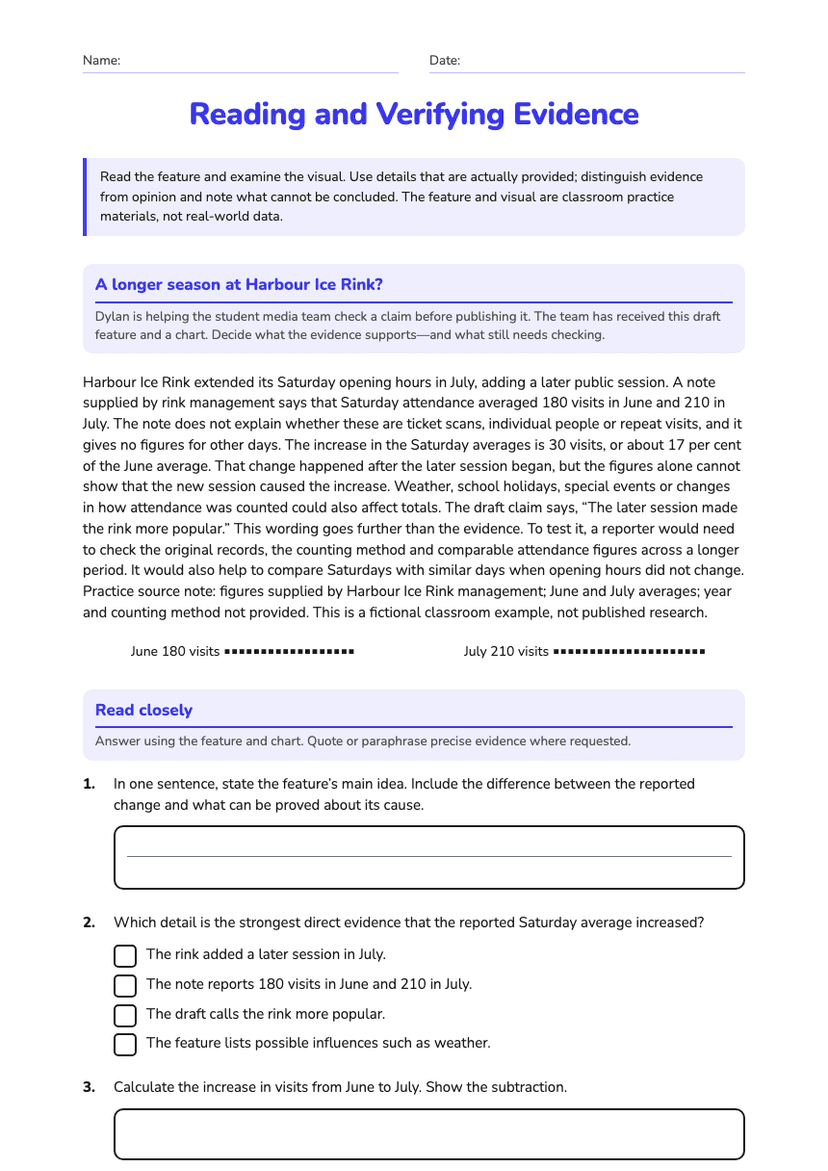
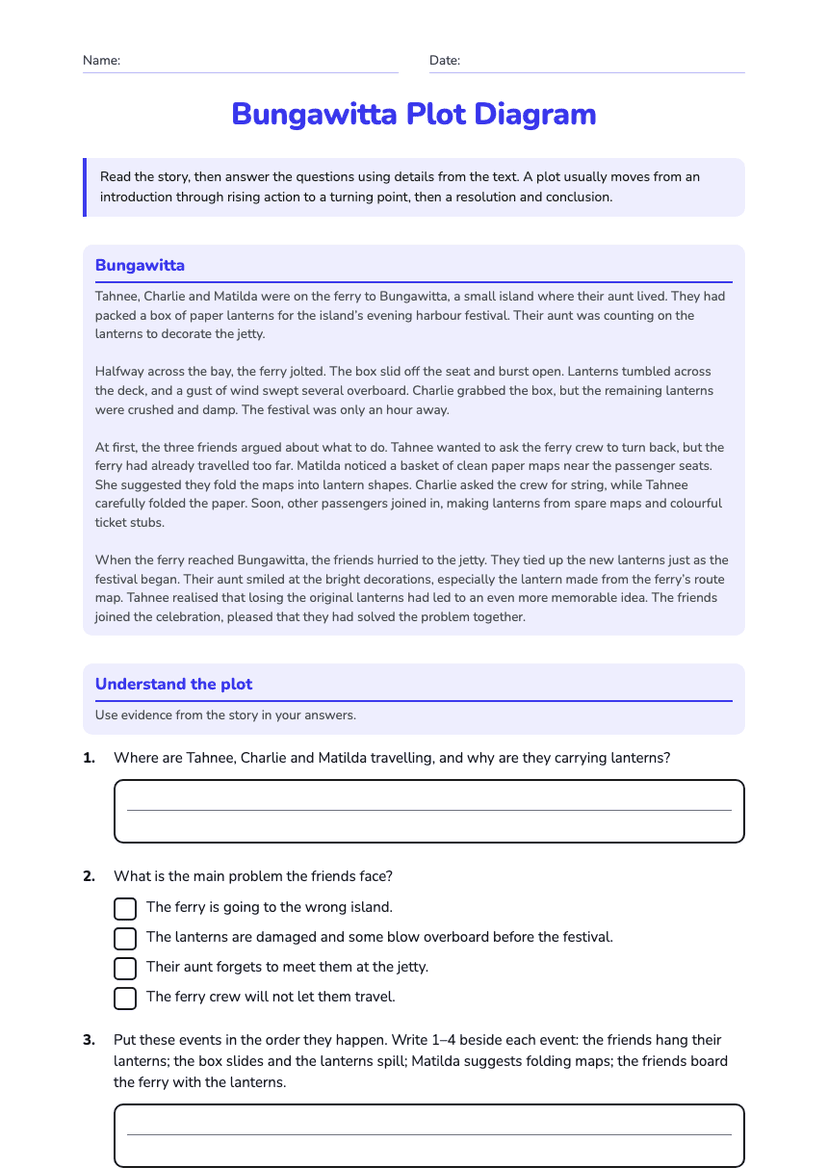
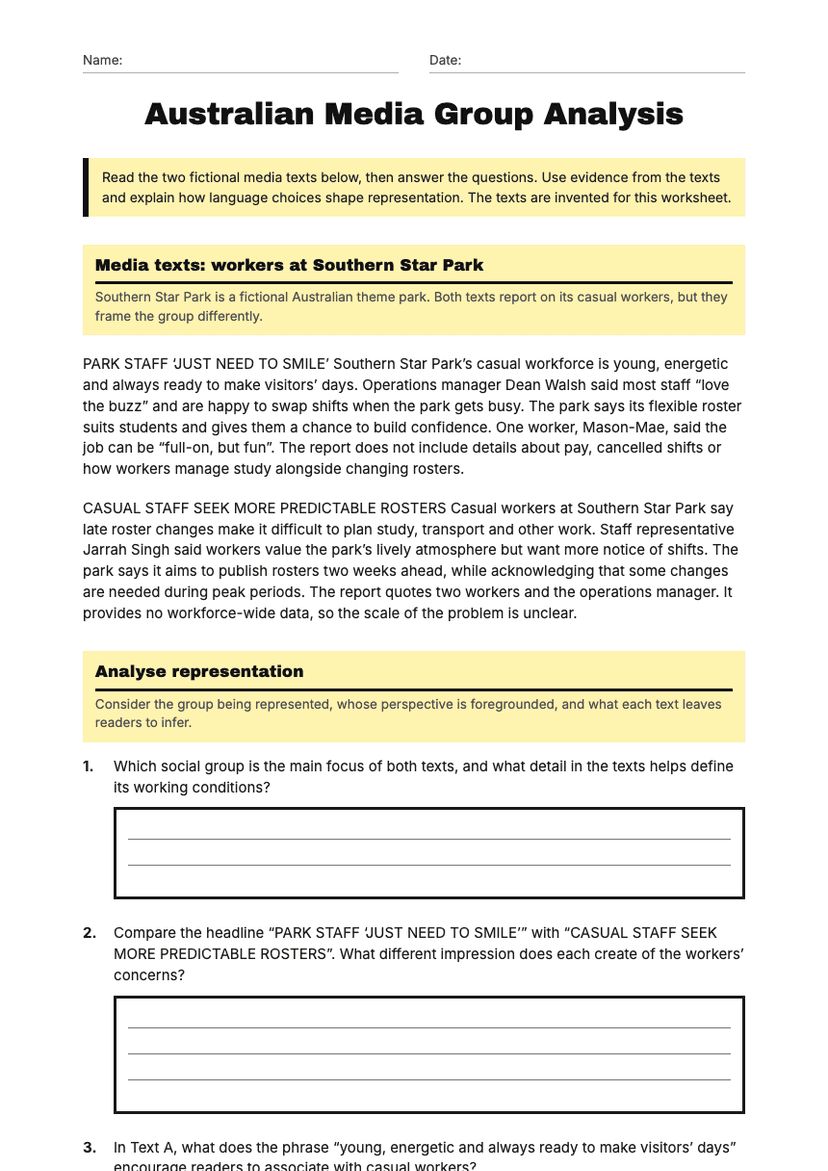
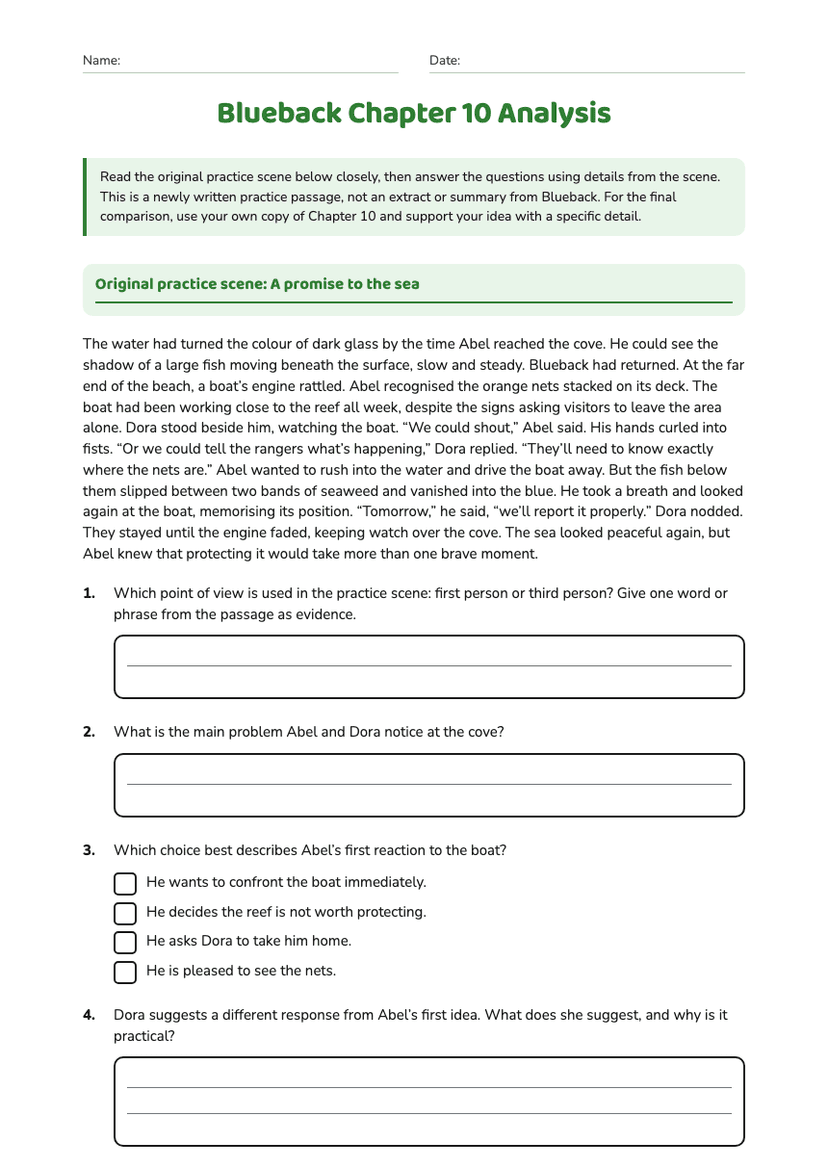
4 printable pages
Page 1
Page 2
Page 3
Page 4
About This Worksheet
Free in Kuraplan
Sign up free, grab the PDF, and customize it for your class.
Print-Ready
Formatted for standard paper. Clean layout, easy to read.
AI-Generated
Created with Kuraplan's AI, designed for real classroom use.
For Teachers & Parents
Use in classrooms, for homework, tutoring, or homeschool.
Need a custom version of this worksheet?
Kuraplan's AI generates custom worksheets in seconds — differentiated for every learner, aligned to your curriculum.
Generate Custom Worksheets — Free