Charles's Law Graph Analysis
A free science worksheet ready for your classroom. Open in Kuraplan to grab the print-ready PDF, customize it for your students, or generate a fresh version in seconds.

Charles's Law Graph Analysis
🎯 WALT (We Are Learning To)
We are learning to:
• Interpret Charles's Law graphs showing the relationship between gas volume and temperature
• Calculate unknown values using Charles's Law equation: V₁/T₁ = V₂/T₂
• Convert between Celsius and Kelvin temperature scales
📊 Study the Graph
The graph shows the volume of a gas sample at different temperatures (at constant pressure).
Graph Data Points:
• At 27°C: Volume = 150 mL
• At 127°C: Volume = 200 mL
• At 227°C: Volume = 250 mL
📚 Part 1: Graph Interpretation
🧮 Part 2: Calculations
Step 1: Convert temperatures to Kelvin
T₁ = 27°C + 273 = _______ K
T₂ = 127°C + 273 = _______ K
Step 2: Identify known values
V₁ = _______ mL
V₂ = ? (unknown)
Step 3: Apply Charles's Law equation
Step 4: Final answer: V₂ = _______ mL
✅ Success Criteria
I can demonstrate success by:
🌟 Differentiation Support
Need extra help? Remember: Always convert to Kelvin first, then substitute values into V₁/T₁ = V₂/T₂
Advanced learners: Research how Charles's Law applies to weather balloons at different altitudes.
About This Worksheet
Free in Kuraplan
Sign up free, grab the PDF, and customize it for your class.
Print-Ready
Formatted for standard paper. Clean layout, easy to read.
AI-Generated
Created with Kuraplan's AI, designed for real classroom use.
For Teachers & Parents
Use in classrooms, for homework, tutoring, or homeschool.
Need a custom version of this worksheet?
Kuraplan's AI generates custom worksheets in seconds — differentiated for every learner, aligned to your curriculum.
Generate Custom Worksheets — FreeMore Science Worksheets
Atomic Theory Research Worksheet
Free
Physical and Chemical Changes
Free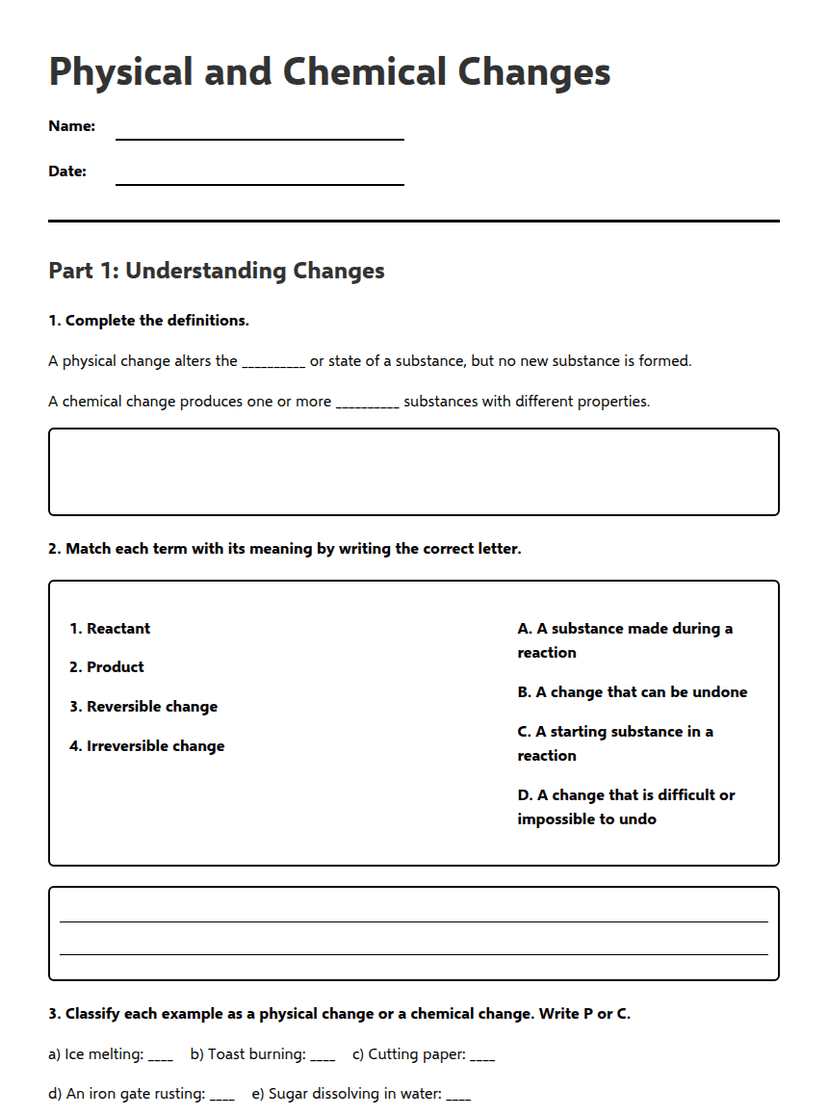
Physical and Chemical Changes
Free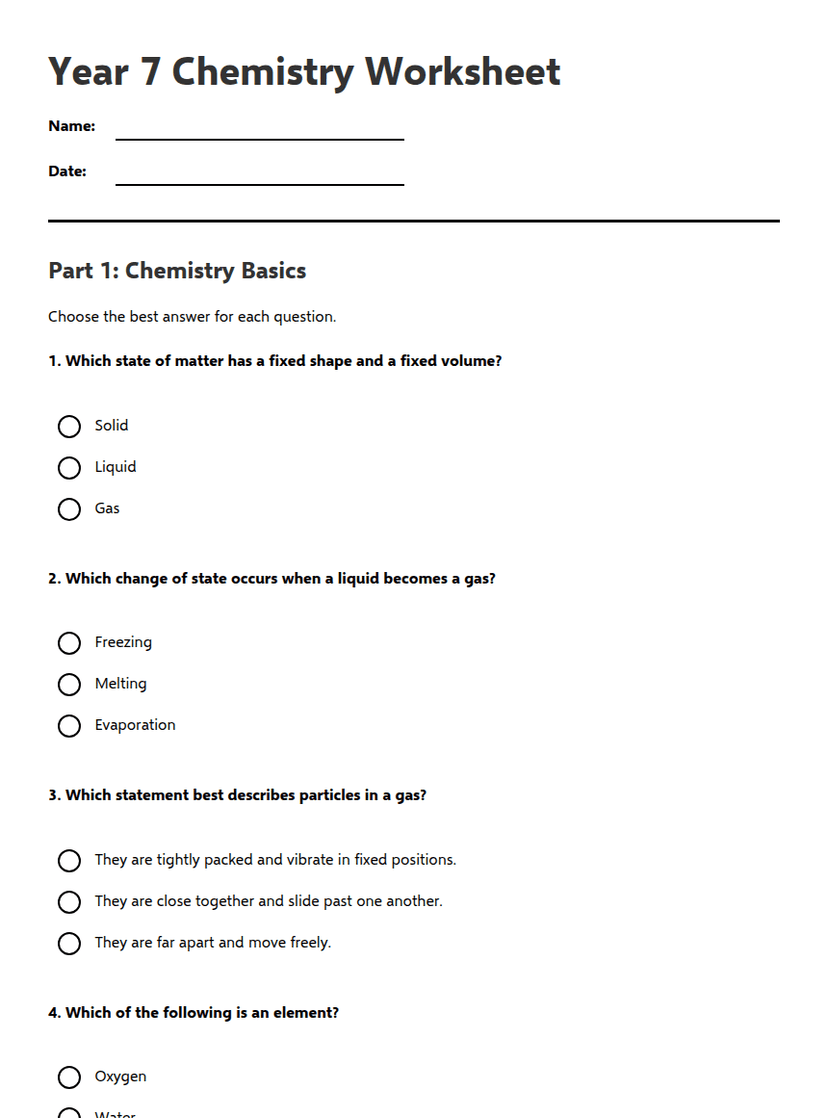
Year 7 Chemistry Worksheet
Free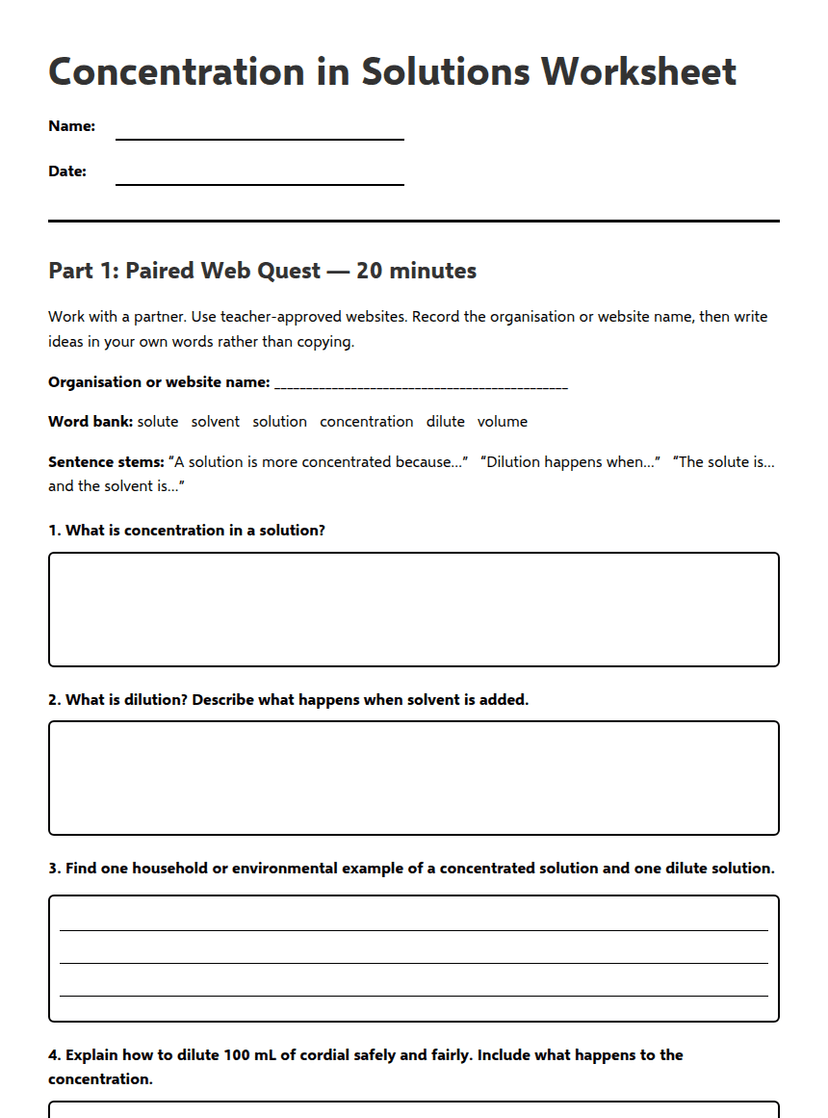
Concentration in Solutions Worksheet
Free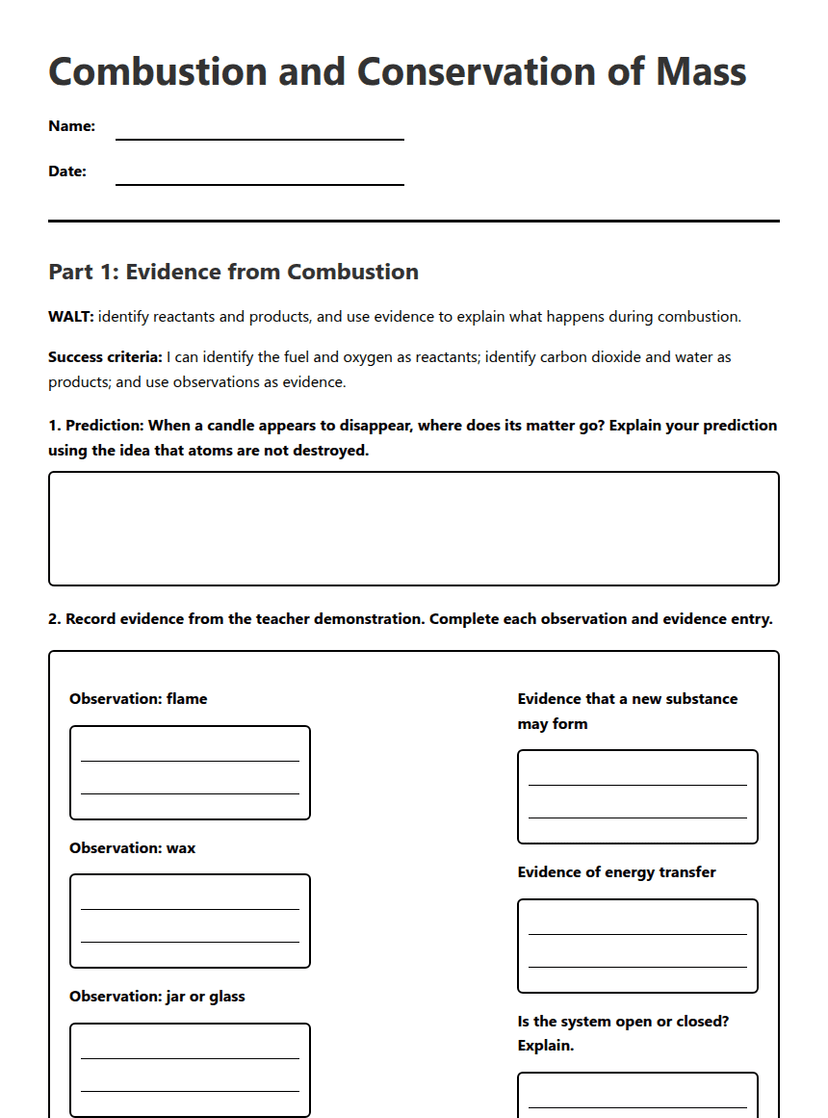
Combustion and Conservation of Mass
Free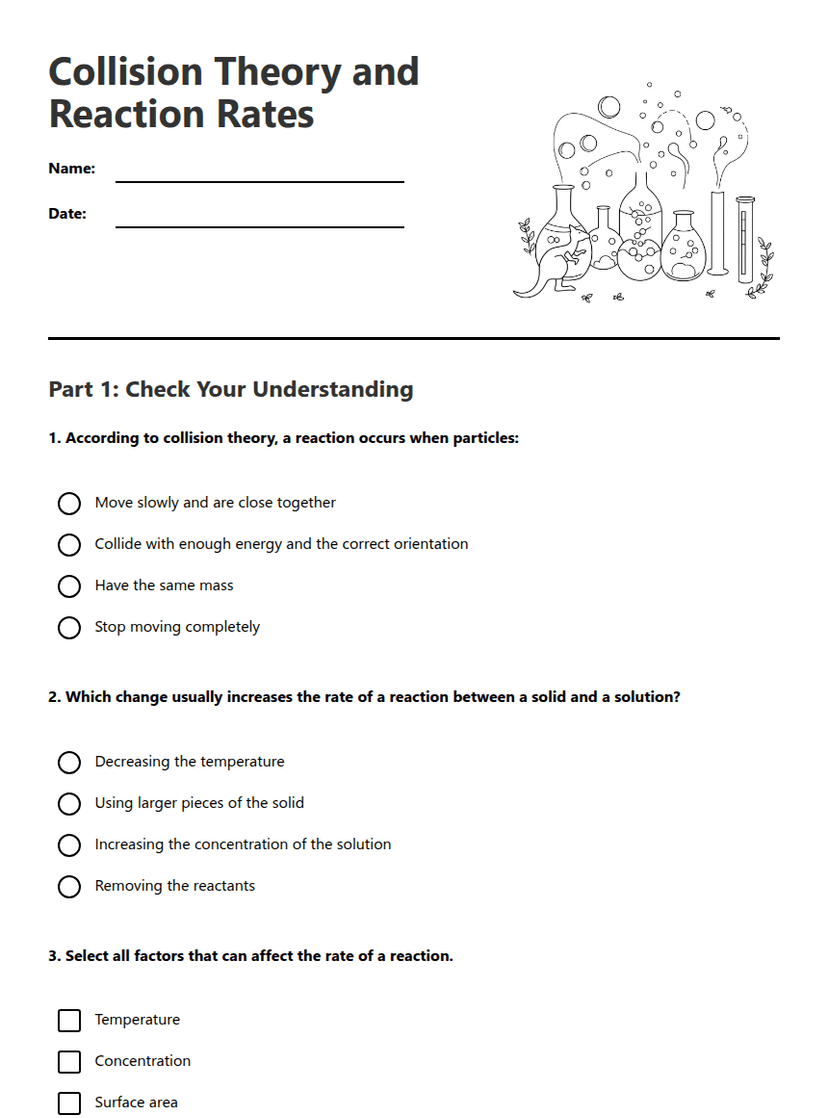
Collision Theory and Reaction Rates
Free