Chemical Reaction Types
A free science worksheet ready for your classroom. Open in Kuraplan to grab the print-ready PDF, customize it for your students, or generate a fresh version in seconds.

Chemical Reaction Types
🧪 Part 1: Identifying Reaction Types
⚗️ Part 2: Classifying Chemical Reactions
a) 2H₂ + O₂ → 2H₂O
Reaction type: ________________________
b) 2H₂O → 2H₂ + O₂
Reaction type: ________________________
c) Zn + CuSO₄ → ZnSO₄ + Cu
Reaction type: ________________________
d) AgNO₃ + NaCl → AgCl + NaNO₃
Reaction type: ________________________
e) CH₄ + 2O₂ → CO₂ + 2H₂O
Reaction type: ________________________
🌍 Part 3: Real-Life Applications
a) When you burn petrol in a car engine, this is an example of a _____________ reaction.
b) Photosynthesis, where plants combine carbon dioxide and water to make glucose, is an example of a _____________ reaction.
c) When electrolysis breaks water into hydrogen and oxygen gases, this is a _____________ reaction.
d) When iron nails are placed in copper sulfate solution and copper metal forms, this is a _____________ reaction.
🔬 Part 4: Problem Solving
Synthesis: Sodium + Chlorine → _________________
Decomposition: Calcium carbonate → _________________ + _________________
Single Replacement: Magnesium + _________________ → Magnesium chloride + Hydrogen
Double Replacement: Silver nitrate + Sodium chloride → _________________ + _________________
a) Car engines and heating systems: _________________
b) Metal extraction from ores: _________________
c) Making new compounds in industry: _________________
d) Breaking down waste materials: _________________
📝 Part 5: Critical Thinking
About This Worksheet
Free in Kuraplan
Sign up free, grab the PDF, and customize it for your class.
Print-Ready
Formatted for standard paper. Clean layout, easy to read.
AI-Generated
Created with Kuraplan's AI, designed for real classroom use.
For Teachers & Parents
Use in classrooms, for homework, tutoring, or homeschool.
Need a custom version of this worksheet?
Kuraplan's AI generates custom worksheets in seconds — differentiated for every learner, aligned to your curriculum.
Generate Custom Worksheets — FreeMore Science Worksheets
Atomic Theory Research Worksheet
Free
Physical and Chemical Changes
Free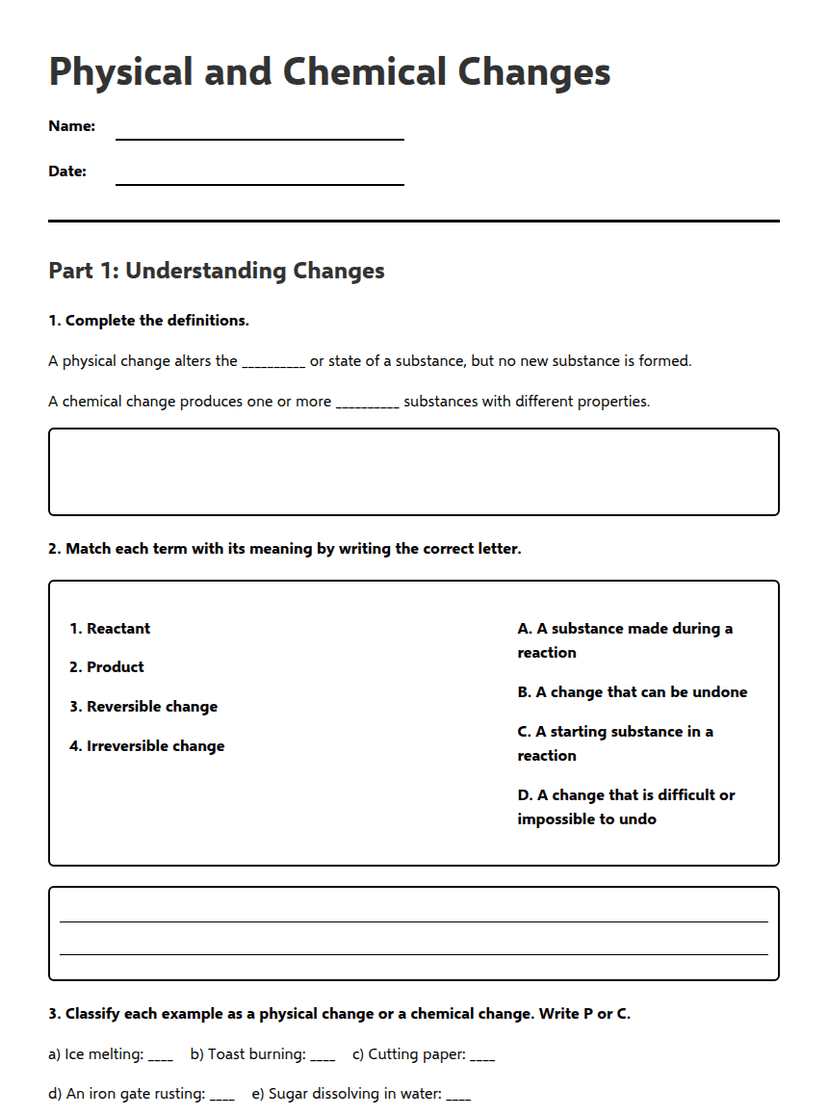
Physical and Chemical Changes
Free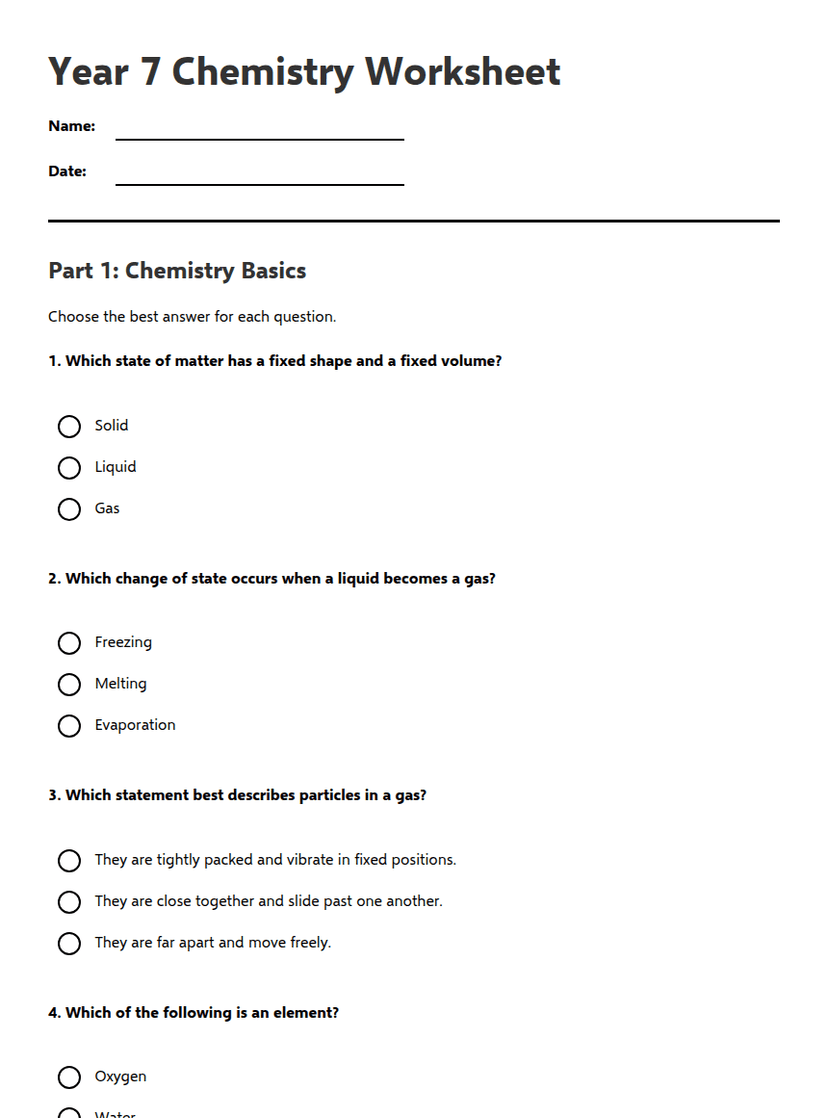
Year 7 Chemistry Worksheet
Free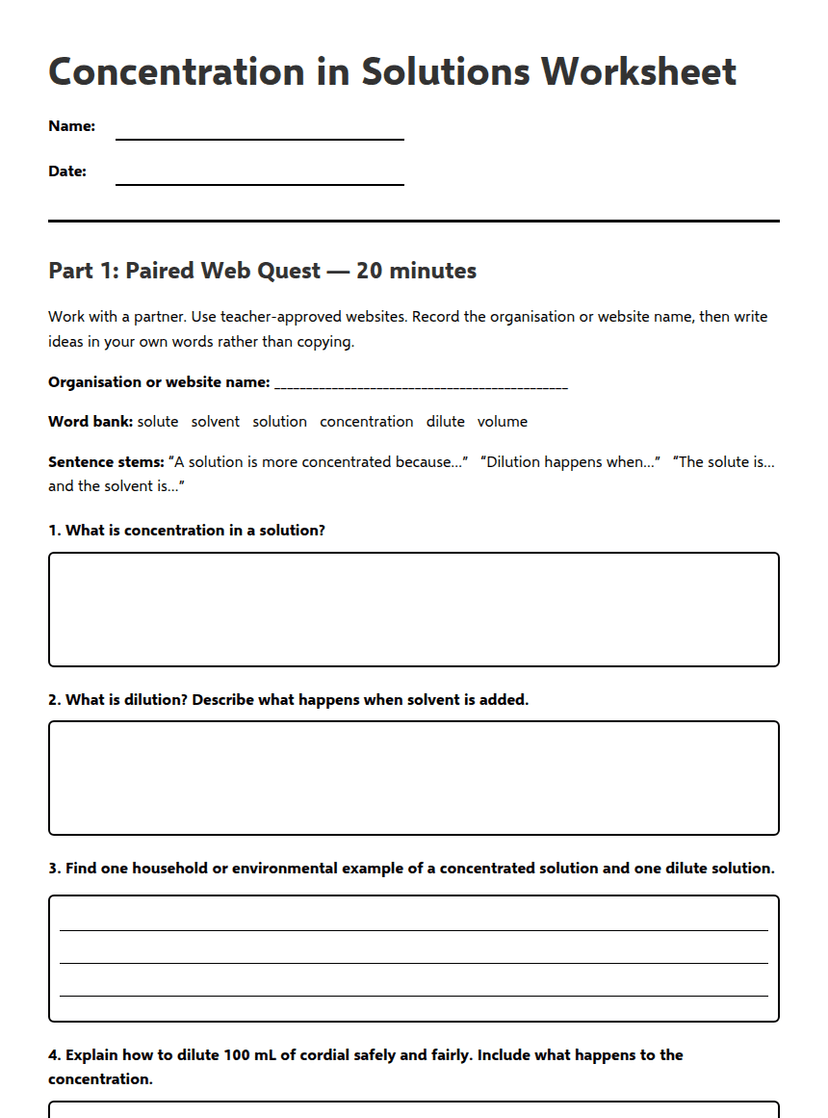
Concentration in Solutions Worksheet
Free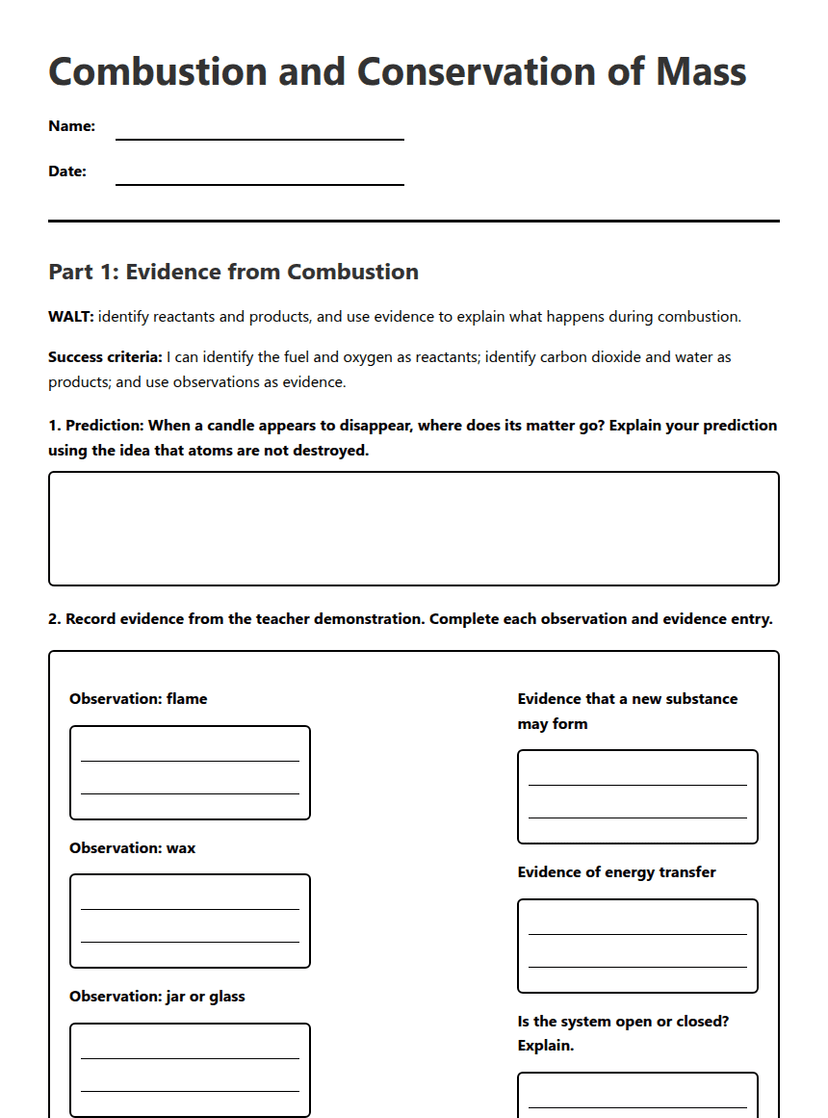
Combustion and Conservation of Mass
Free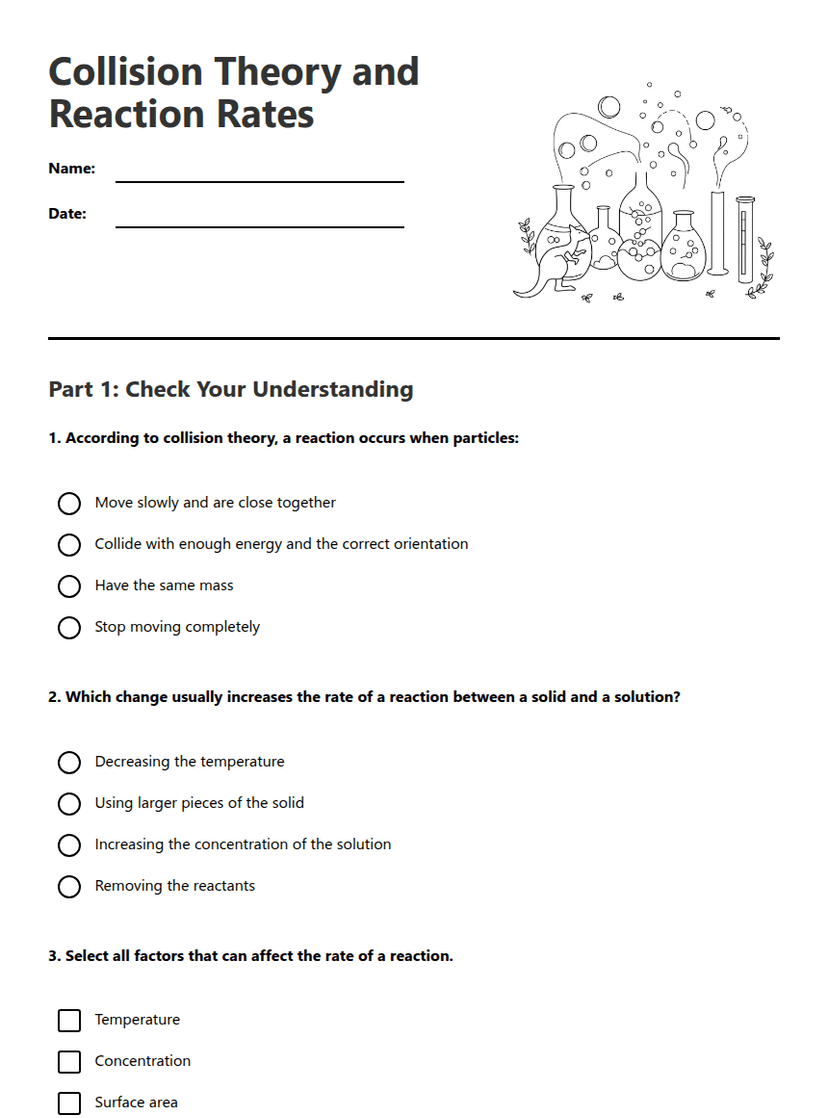
Collision Theory and Reaction Rates
Free