ArtFreePrintable

Colour Wheel Emotions

A free art worksheet ready for your classroom. Open in Kuraplan to grab the print-ready PDF, customize it for your students, or generate a fresh version in seconds.
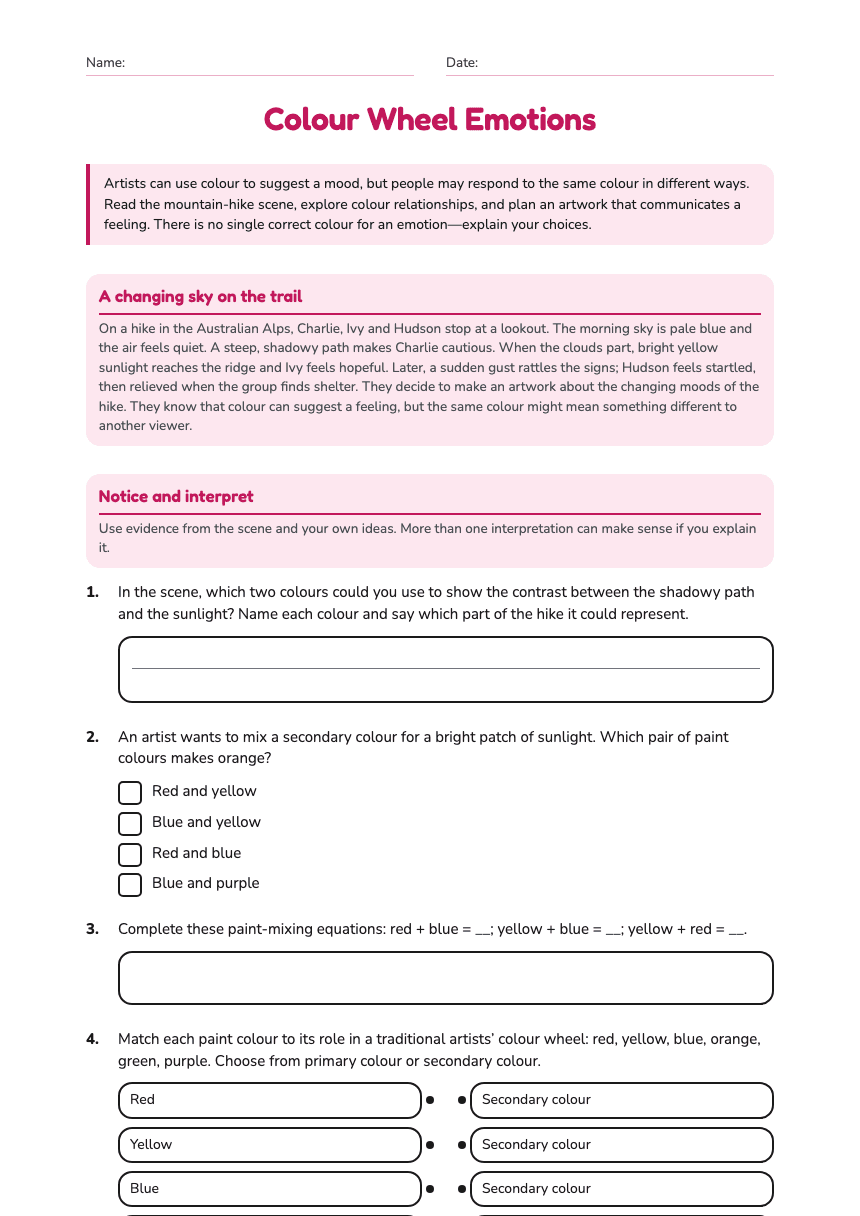
Colour Wheel Emotions worksheet preview
Name:Date:

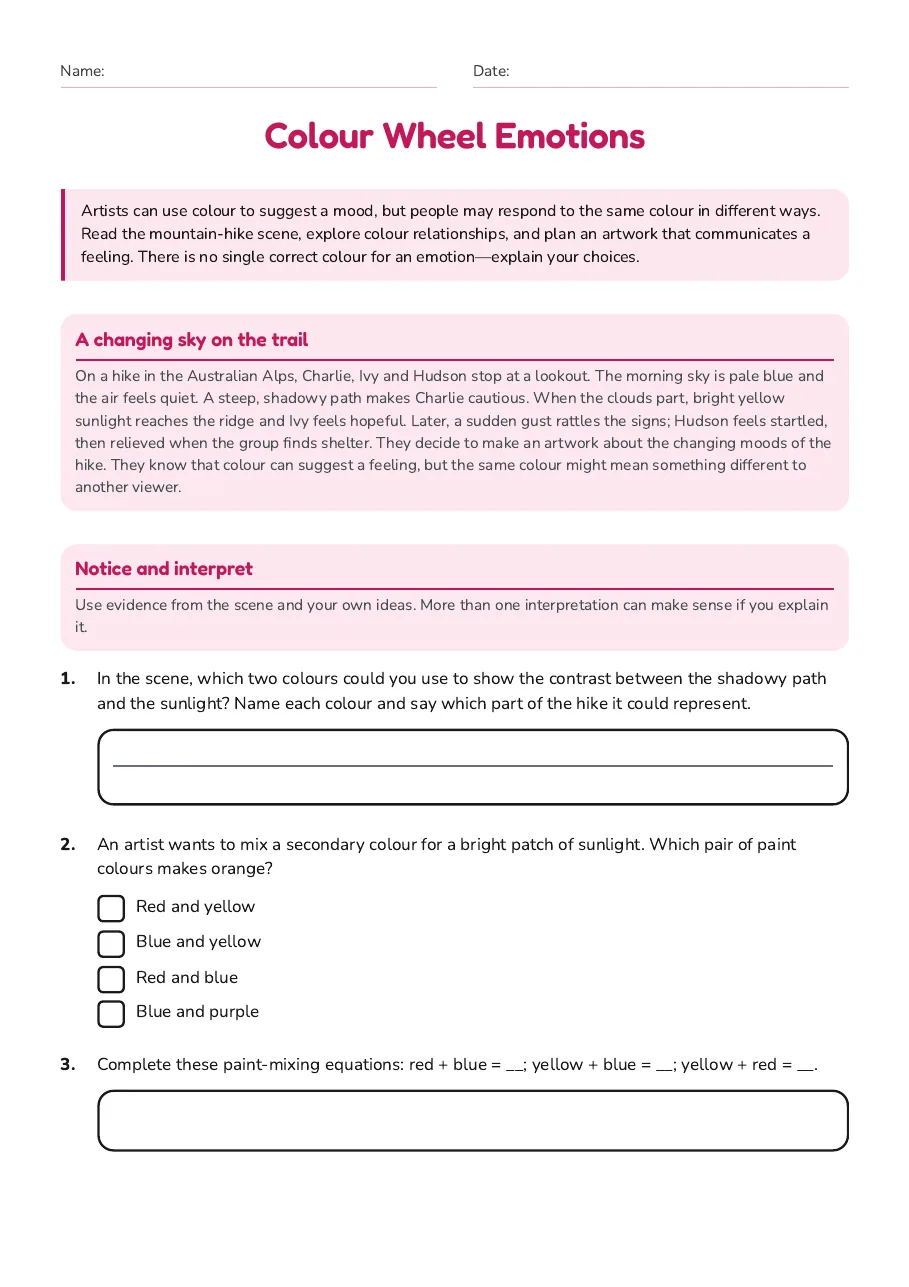
Colour Wheel Emotions

Artists can use colour to suggest a mood, but people may respond to the same colour in different ways. Read the mountain-hike scene, explore colour relationships, and plan an artwork that communicates a feeling. There is no single correct colour for an emotion—explain your choices.

A changing sky on the trail

On a hike in the Australian Alps, Charlie, Ivy and Hudson stop at a lookout. The morning sky is pale blue and the air feels quiet. A steep, shadowy path makes Charlie cautious. When the clouds part, bright yellow sunlight reaches the ridge and Ivy feels hopeful. Later, a sudden gust rattles the signs; Hudson feels startled, then relieved when the group finds shelter. They decide to make an artwork about the changing moods of the hike. They know that colour can suggest a feeling, but the same colour might mean something different to another viewer.

Notice and interpret

Use evidence from the scene and your own ideas. More than one interpretation can make sense if you explain it.

1.In the scene, which two colours could you use to show the contrast between the shadowy path and the sunlight? Name each colour and say which part of the hike it could represent.
2.An artist wants to mix a secondary colour for a bright patch of sunlight. Which pair of paint colours makes orange?
  • Red and yellow
  • Blue and yellow
  • Red and blue
  • Blue and purple
3.Complete these paint-mixing equations: red + blue = __; yellow + blue = __; yellow + red = __.
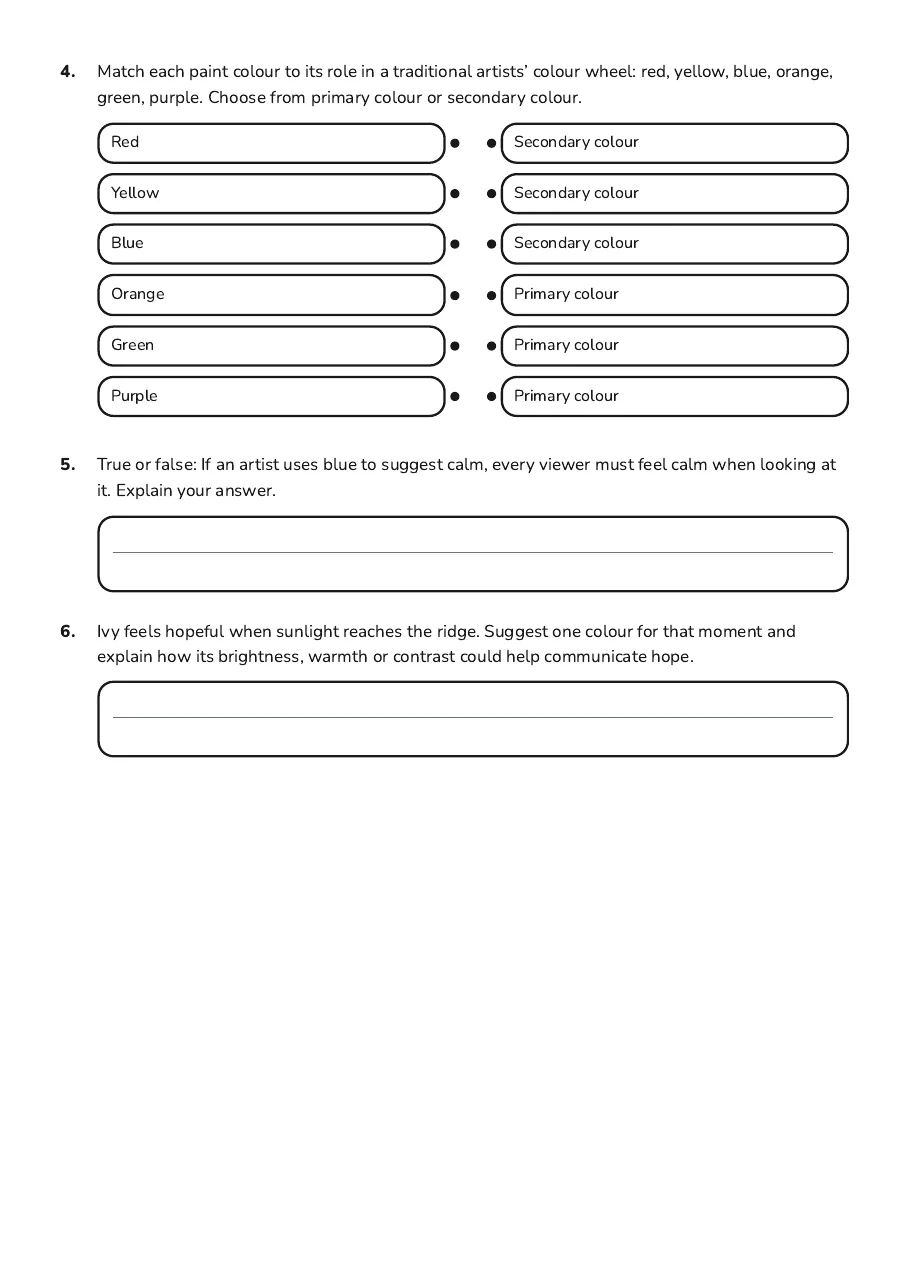
4.Match each paint colour to its role in a traditional artists’ colour wheel: red, yellow, blue, orange, green, purple. Choose from primary colour or secondary colour.
  • Red
  • Yellow
  • Blue
  • Orange
  • Green
  • Purple
  • Secondary colour
  • Secondary colour
  • Secondary colour
  • Primary colour
  • Primary colour
  • Primary colour
5.True or false: If an artist uses blue to suggest calm, every viewer must feel calm when looking at it. Explain your answer.
6.Ivy feels hopeful when sunlight reaches the ridge. Suggest one colour for that moment and explain how its brightness, warmth or contrast could help communicate hope.

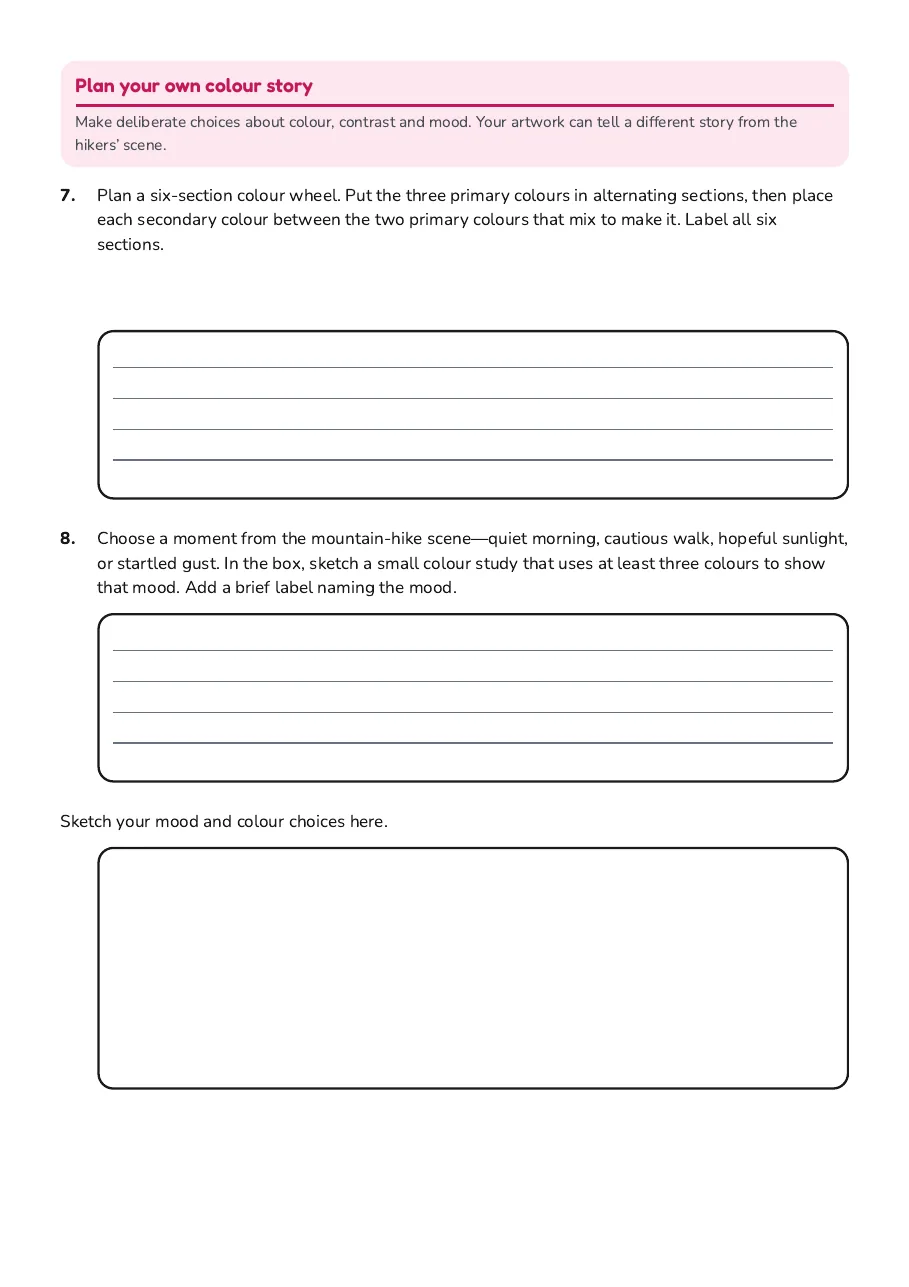
Plan your own colour story

Make deliberate choices about colour, contrast and mood. Your artwork can tell a different story from the hikers’ scene.

7.Plan a six-section colour wheel. Put the three primary colours in alternating sections, then place each secondary colour between the two primary colours that mix to make it. Label all six sections.
8.Choose a moment from the mountain-hike scene—quiet morning, cautious walk, hopeful sunlight, or startled gust. In the box, sketch a small colour study that uses at least three colours to show that mood. Add a brief label naming the mood.
Sketch your mood and colour choices here.
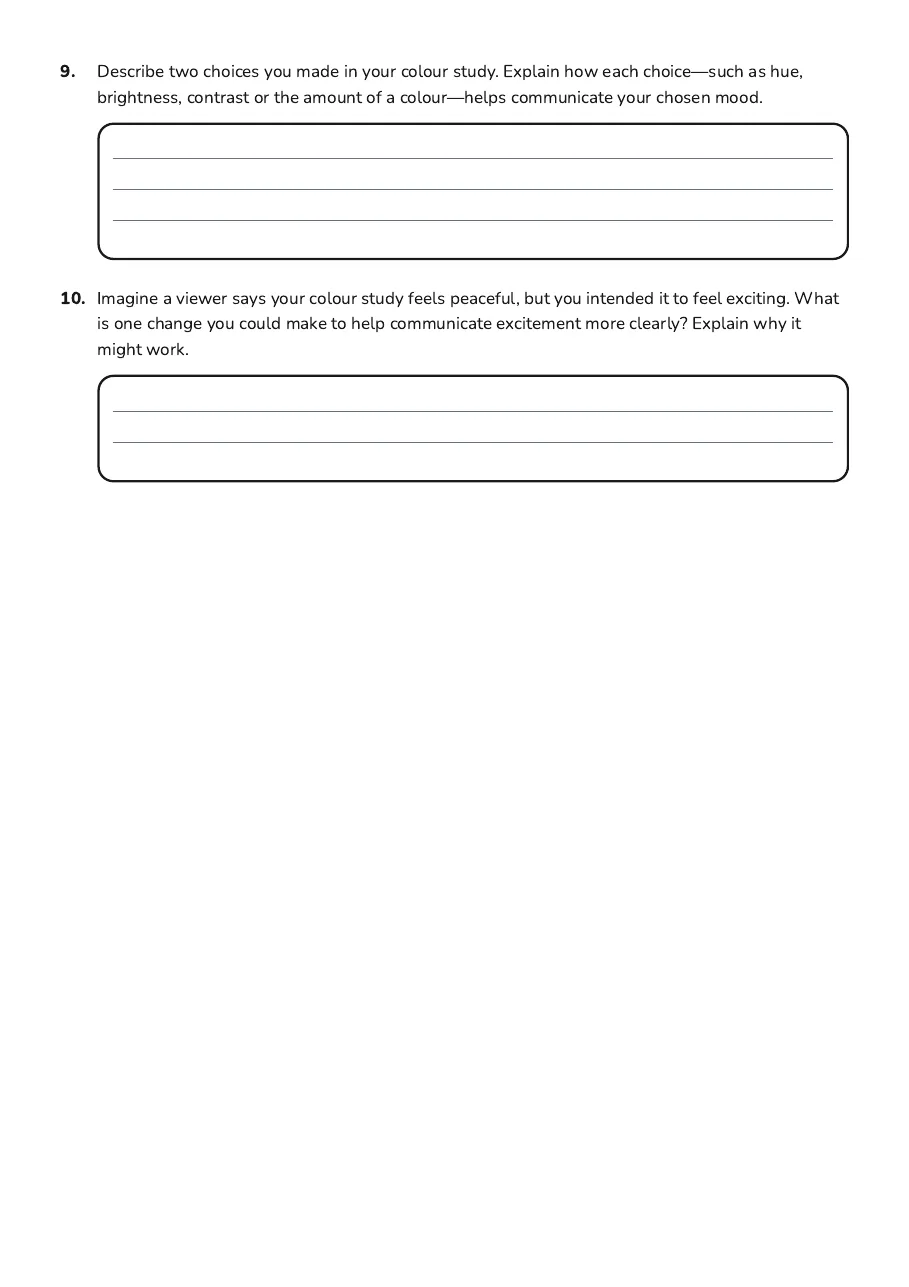
9.Describe two choices you made in your colour study. Explain how each choice—such as hue, brightness, contrast or the amount of a colour—helps communicate your chosen mood.
10.Imagine a viewer says your colour study feels peaceful, but you intended it to feel exciting. What is one change you could make to help communicate excitement more clearly? Explain why it might work.

4 printable pages

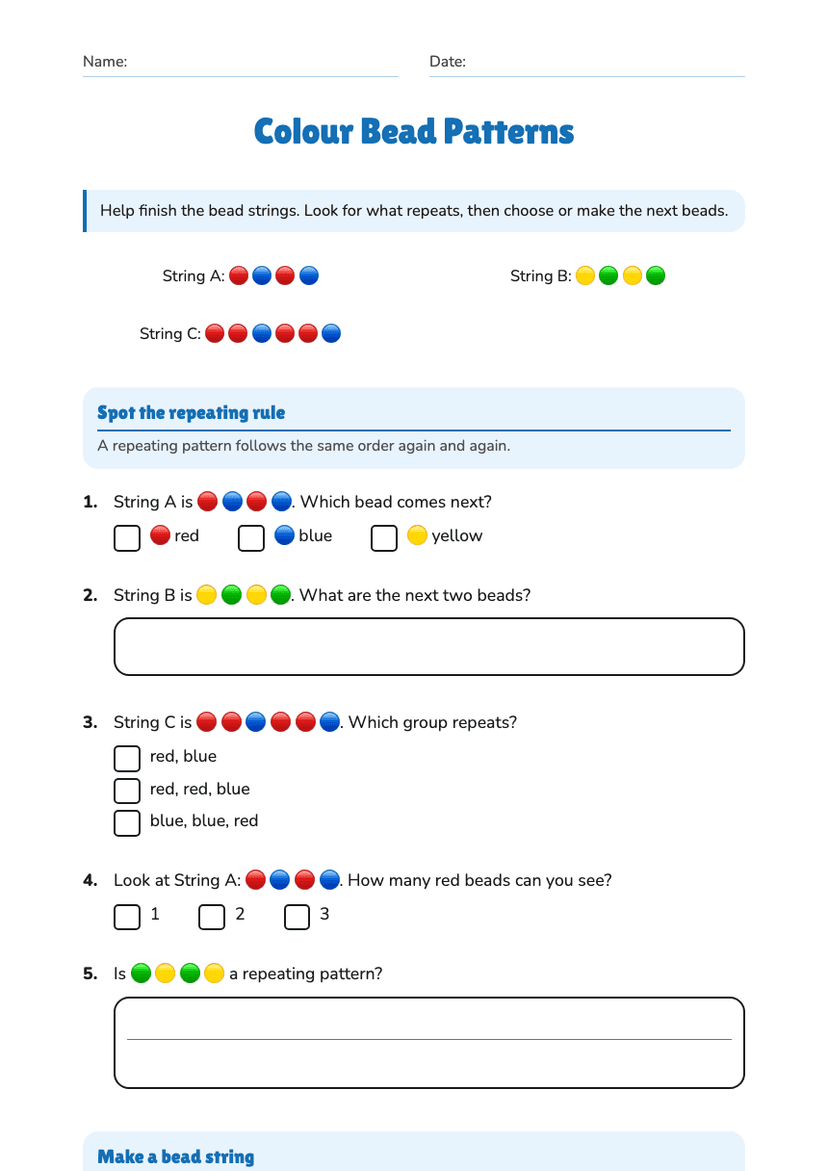
  • Colour Wheel Emotions, page 1 of 4: A changing sky on the trail, Notice and interpret

    Page 1

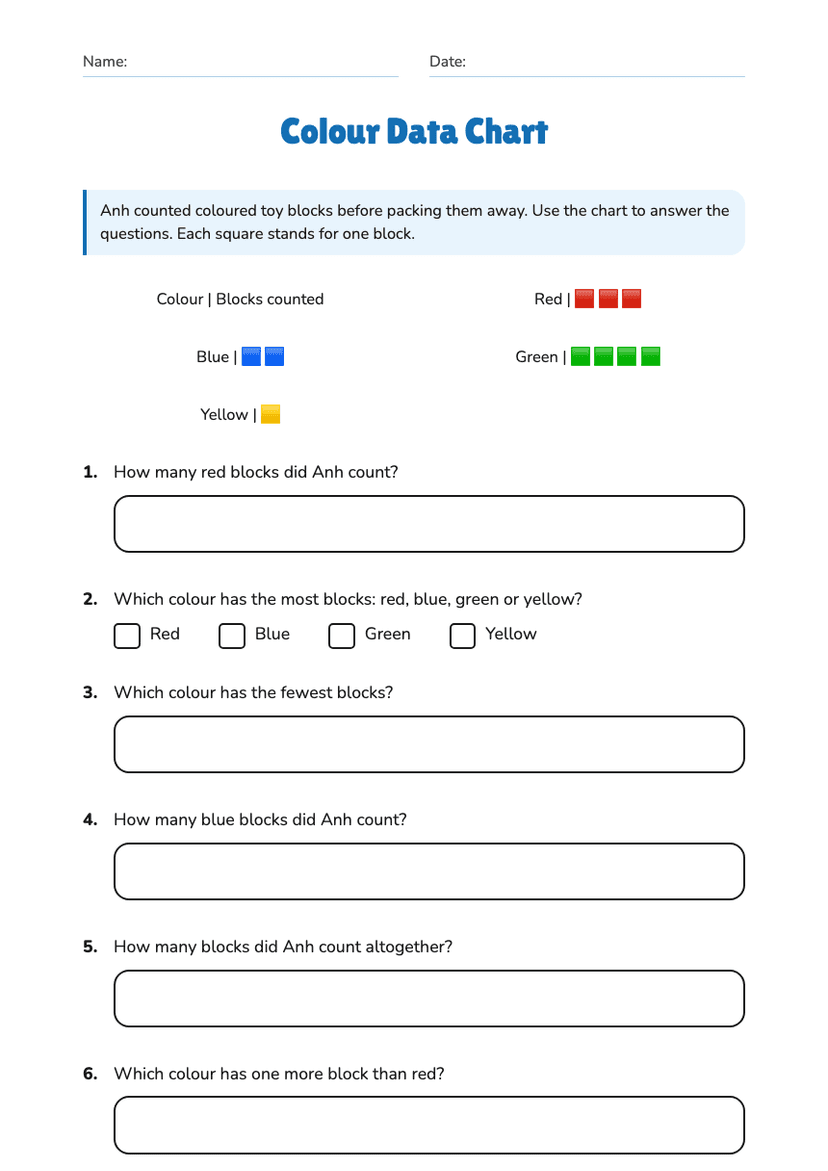
  • Colour Wheel Emotions, page 2 of 4: 4. Match each paint colour to its role in a traditional artists’ colour wheel: red,…

    Page 2

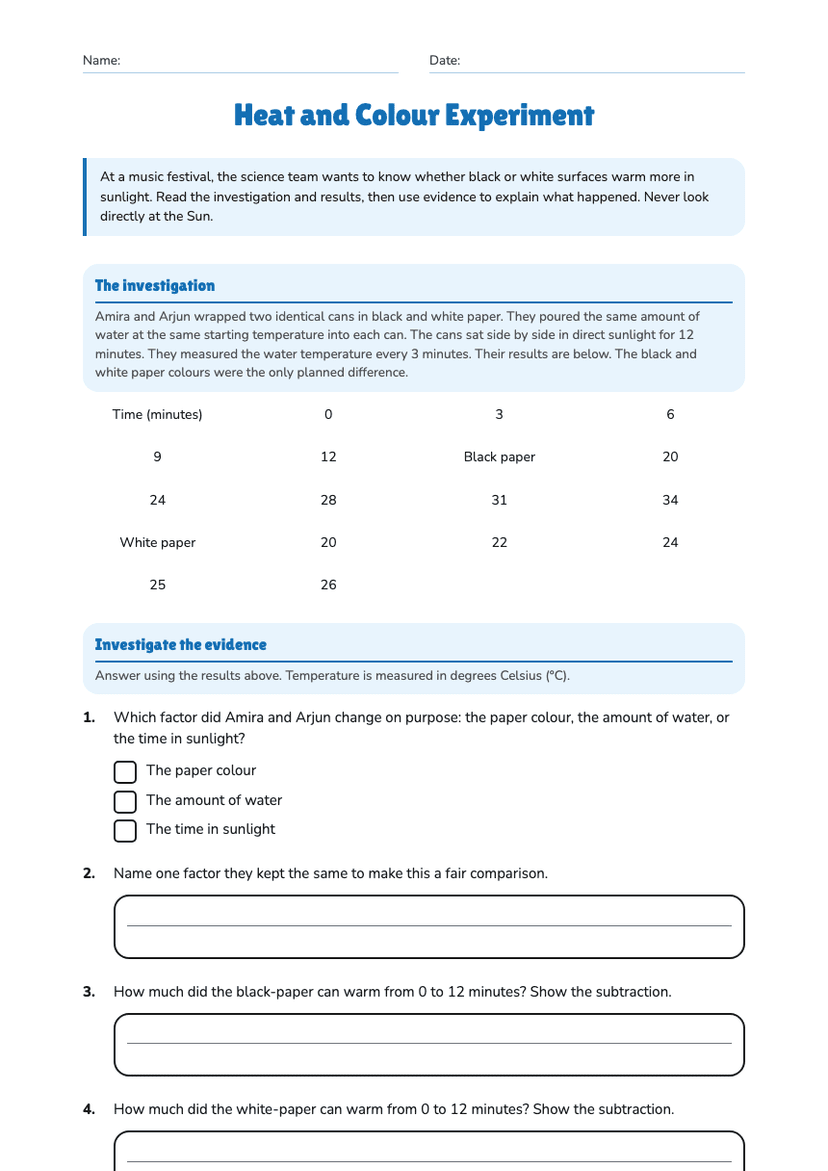
  • Colour Wheel Emotions, page 3 of 4: Plan your own colour story

    Page 3

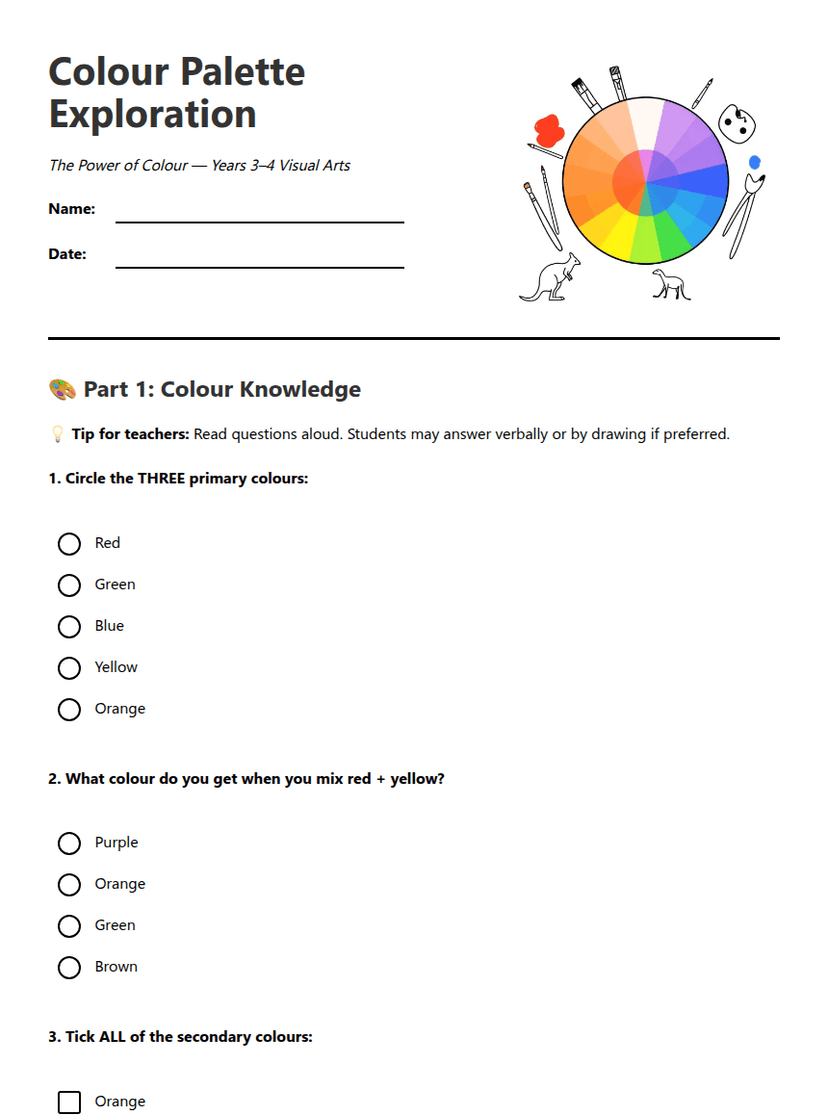
  • Colour Wheel Emotions, page 4 of 4: 9. Describe two choices you made in your colour study. Explain how each choice—such as…

    Page 4

About This Worksheet

Free in Kuraplan

Sign up free, grab the PDF, and customize it for your class.

Print-Ready

Formatted for standard paper. Clean layout, easy to read.

AI-Generated

Created with Kuraplan's AI, designed for real classroom use.

For Teachers & Parents

Use in classrooms, for homework, tutoring, or homeschool.

Need a custom version of this worksheet?

Kuraplan's AI generates custom worksheets in seconds — differentiated for every learner, aligned to your curriculum.

Generate Custom Worksheets — Free
No credit card Curriculum-aligned Under 60 seconds