Common Materials Properties
A free science worksheet ready for your classroom. Open in Kuraplan to grab the print-ready PDF, customize it for your students, or generate a fresh version in seconds.
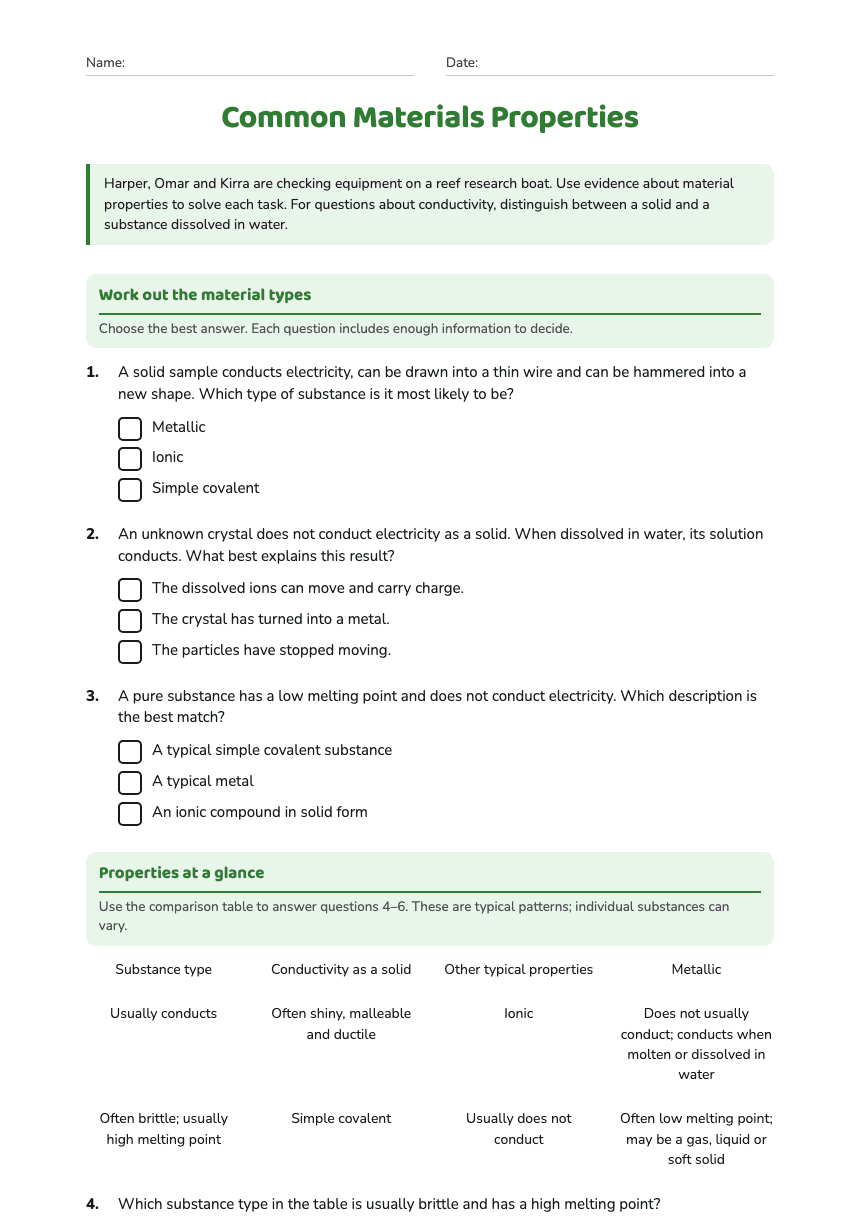
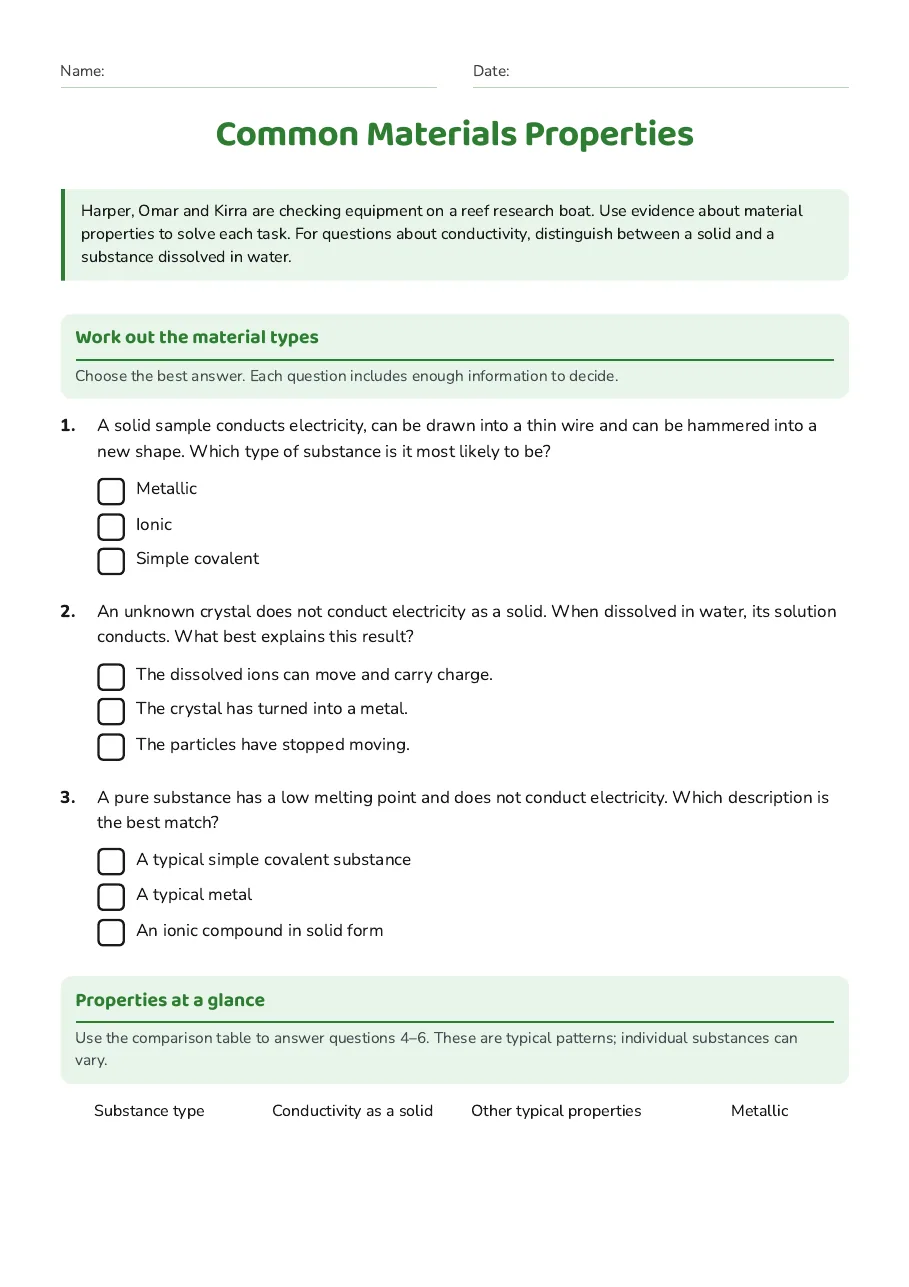
Common Materials Properties
Work out the material types
Choose the best answer. Each question includes enough information to decide.
- Metallic
- Ionic
- Simple covalent
- The dissolved ions can move and carry charge.
- The crystal has turned into a metal.
- The particles have stopped moving.
- A typical simple covalent substance
- A typical metal
- An ionic compound in solid form
Properties at a glance
Use the comparison table to answer questions 4–6. These are typical patterns; individual substances can vary.
Substance type
Conductivity as a solid
Other typical properties
Metallic
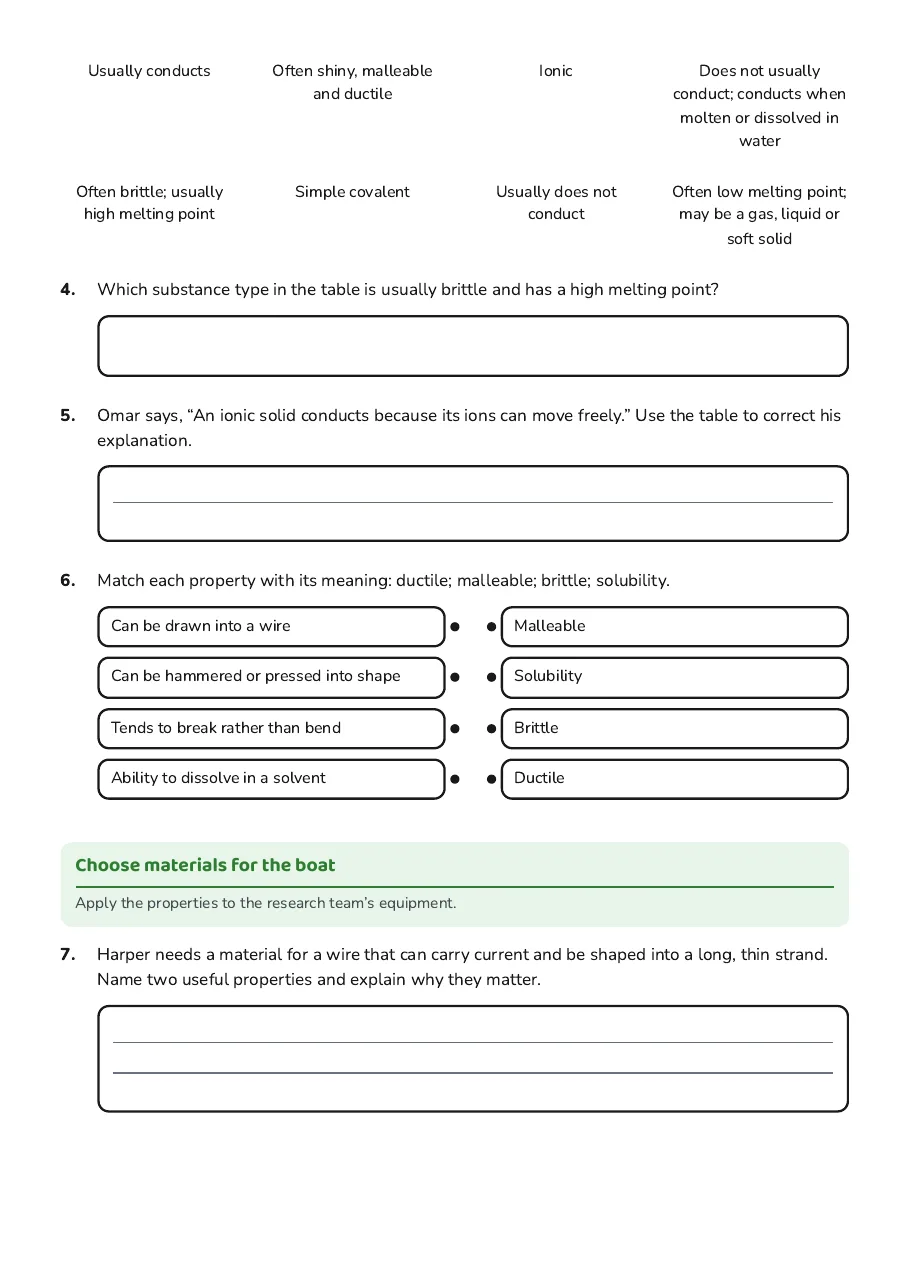
Usually conducts
Often shiny, malleable and ductile
Ionic
Does not usually conduct; conducts when molten or dissolved in water
Often brittle; usually high melting point
Simple covalent
Usually does not conduct
Often low melting point; may be a gas, liquid or soft solid
- Can be drawn into a wire
- Can be hammered or pressed into shape
- Tends to break rather than bend
- Ability to dissolve in a solvent
- Malleable
- Solubility
- Brittle
- Ductile
Choose materials for the boat
Apply the properties to the research team’s equipment.
3 printable pages
Page 1
Page 2
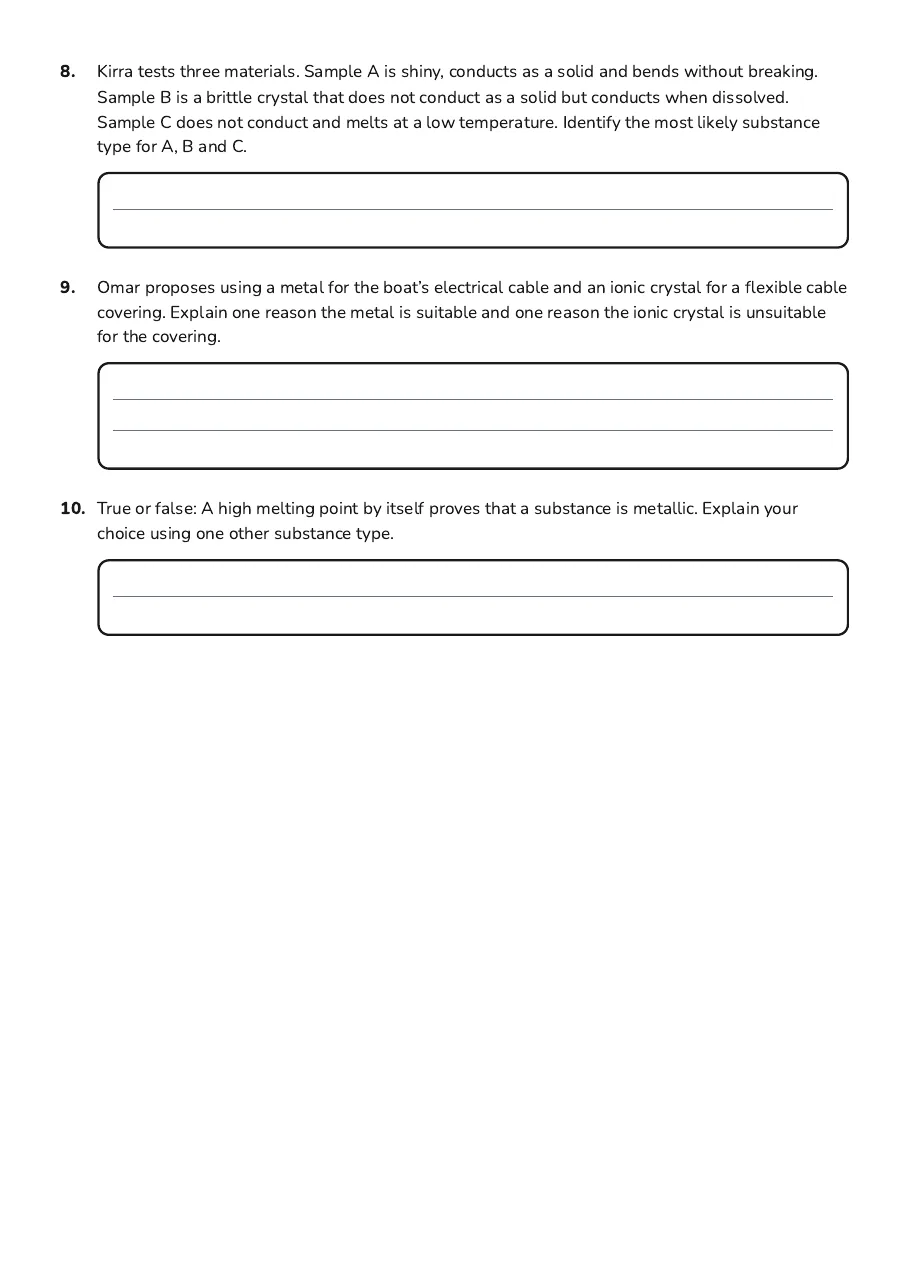
Page 3
About This Worksheet
Free in Kuraplan
Sign up free, grab the PDF, and customize it for your class.
Print-Ready
Formatted for standard paper. Clean layout, easy to read.
AI-Generated
Created with Kuraplan's AI, designed for real classroom use.
For Teachers & Parents
Use in classrooms, for homework, tutoring, or homeschool.
Need a custom version of this worksheet?
Kuraplan's AI generates custom worksheets in seconds — differentiated for every learner, aligned to your curriculum.
Generate Custom Worksheets — FreeMore Science Worksheets
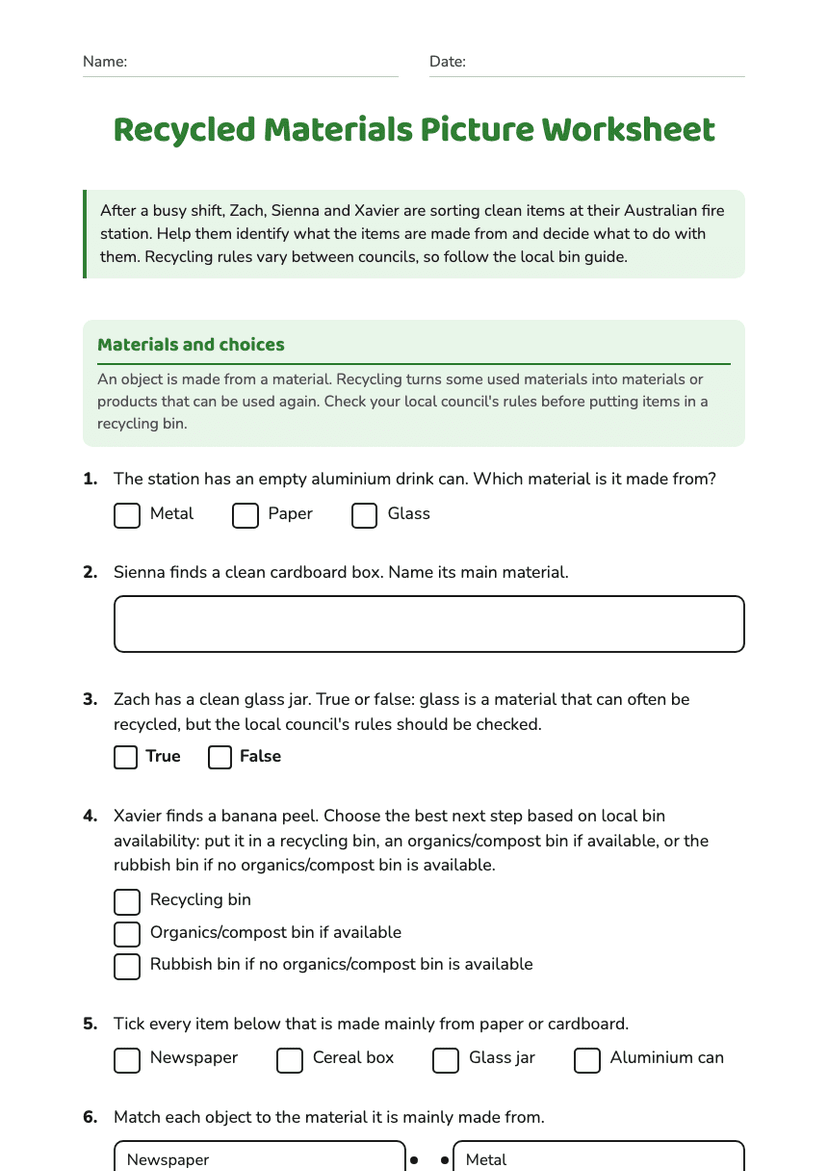
Recycled Materials Picture Worksheet
Free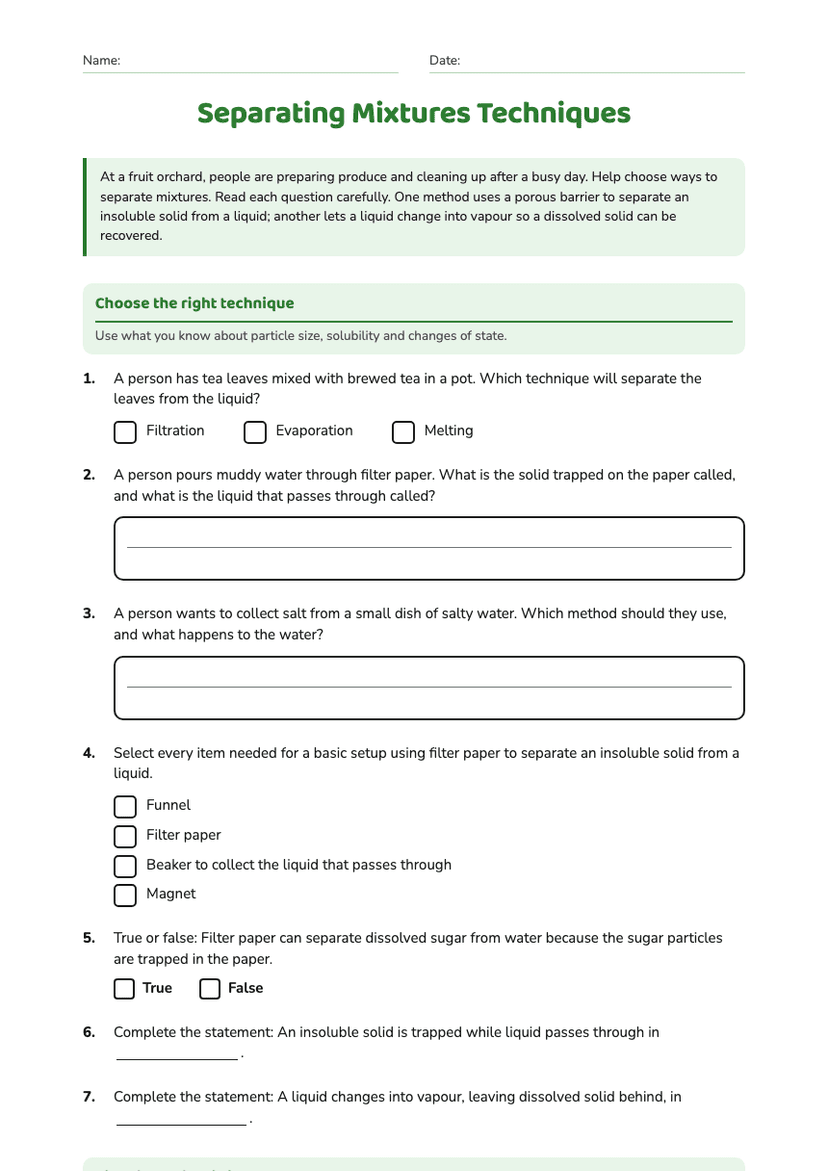
Separating Mixtures Techniques
Free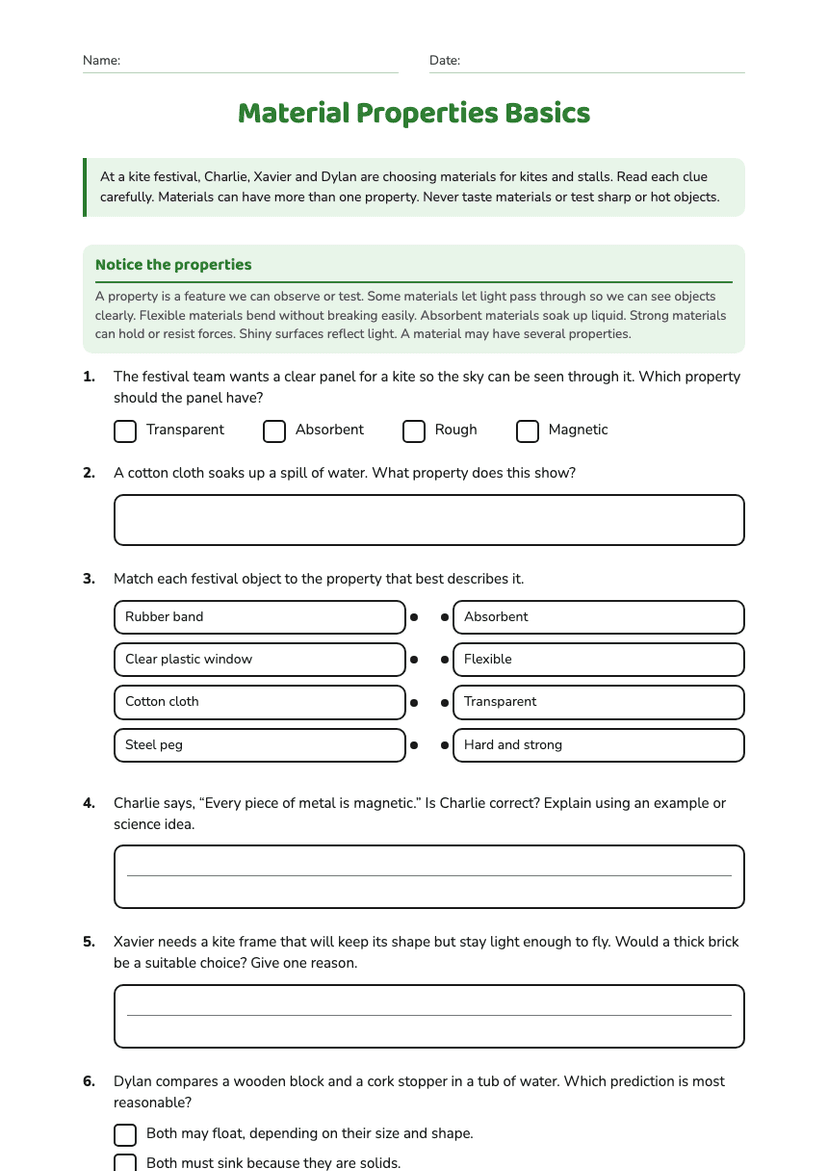
Material Properties Basics
Free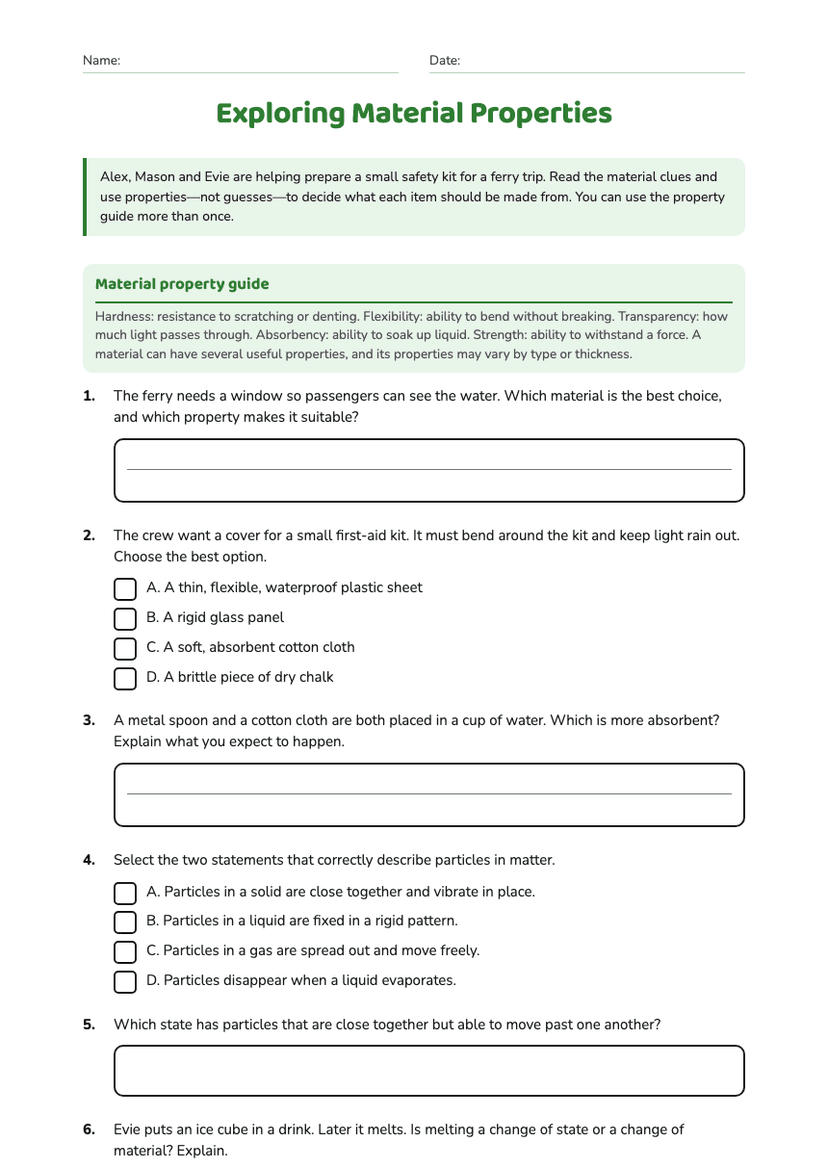
Exploring Material Properties
Free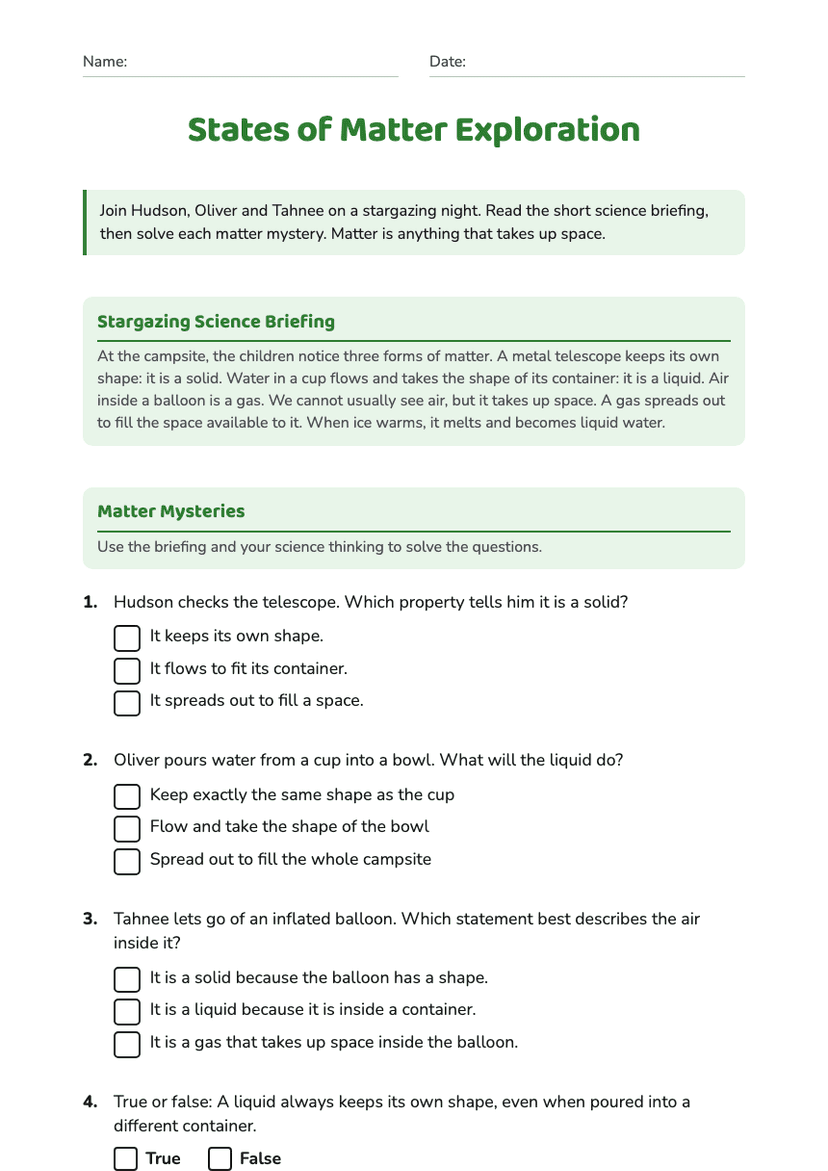
States of Matter Exploration
Free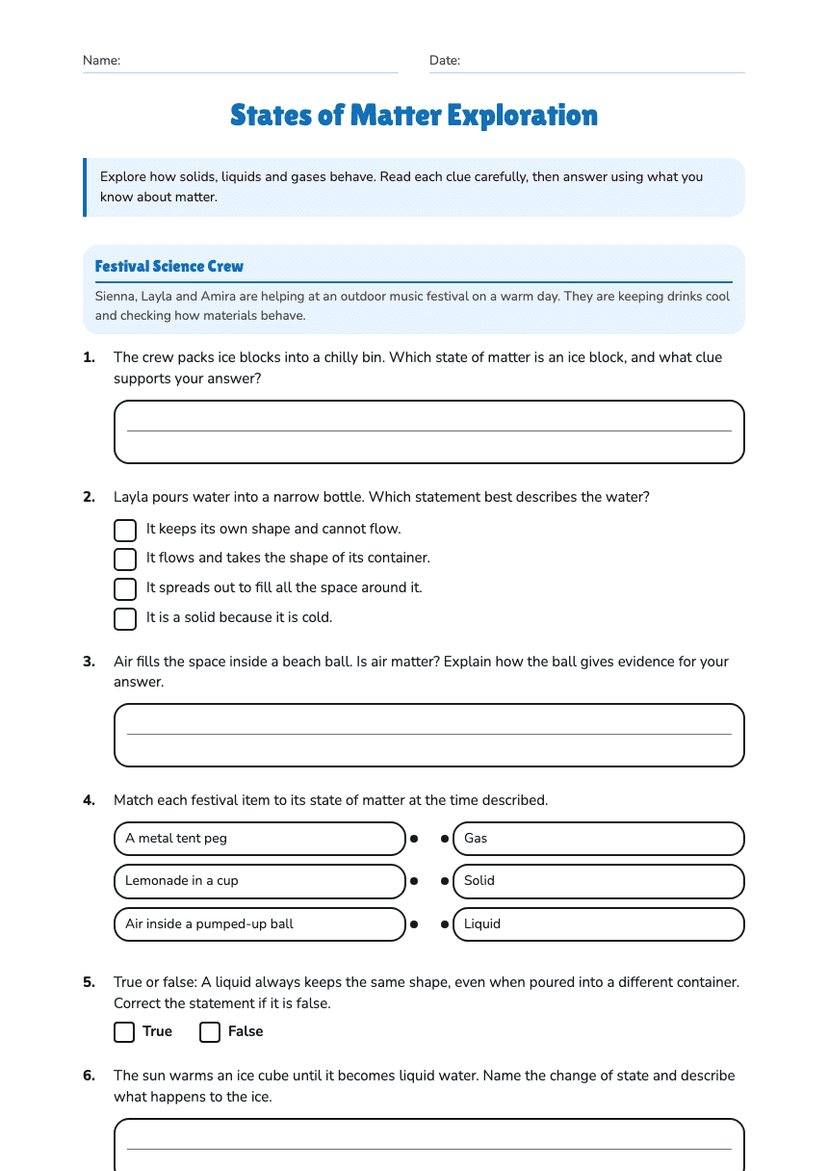
States of Matter Exploration
Free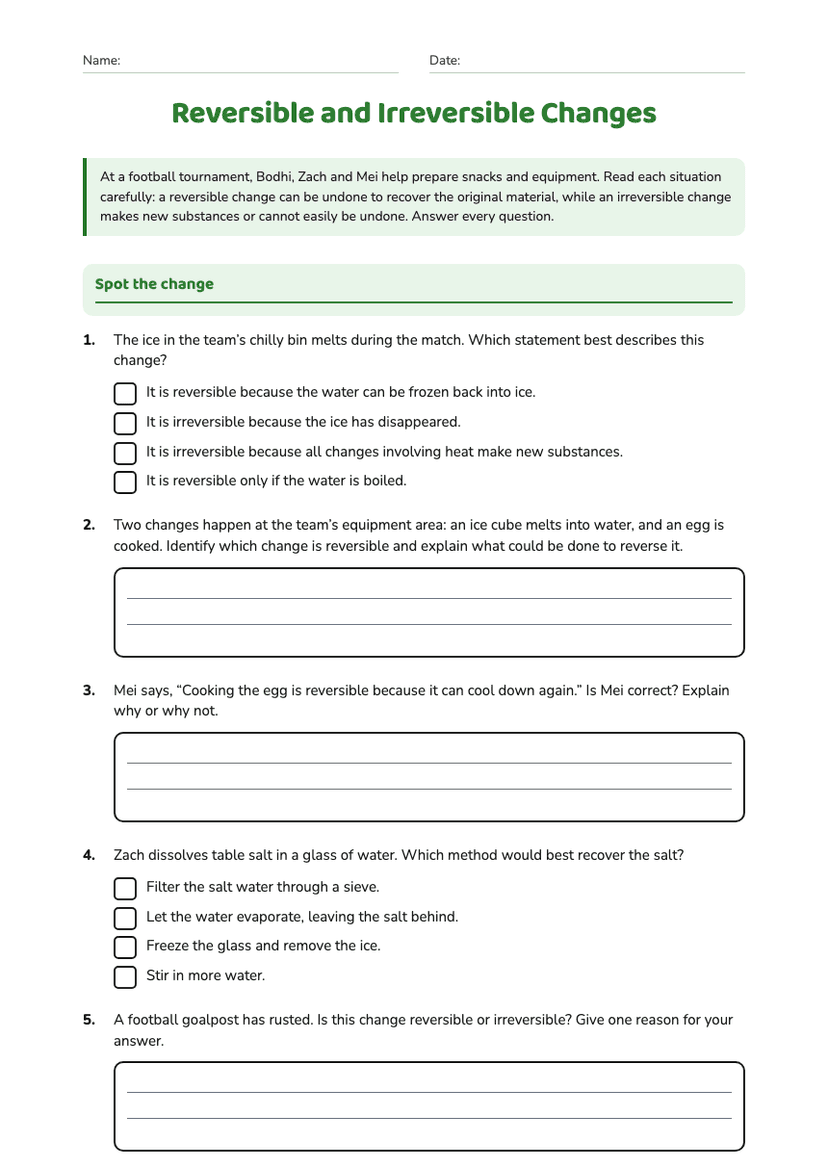
Reversible and Irreversible Changes
Free