MathsFreePrintable

Digital Shape Hunt Rubric

A free maths worksheet ready for your classroom. Open in Kuraplan to grab the print-ready PDF, customize it for your students, or generate a fresh version in seconds.
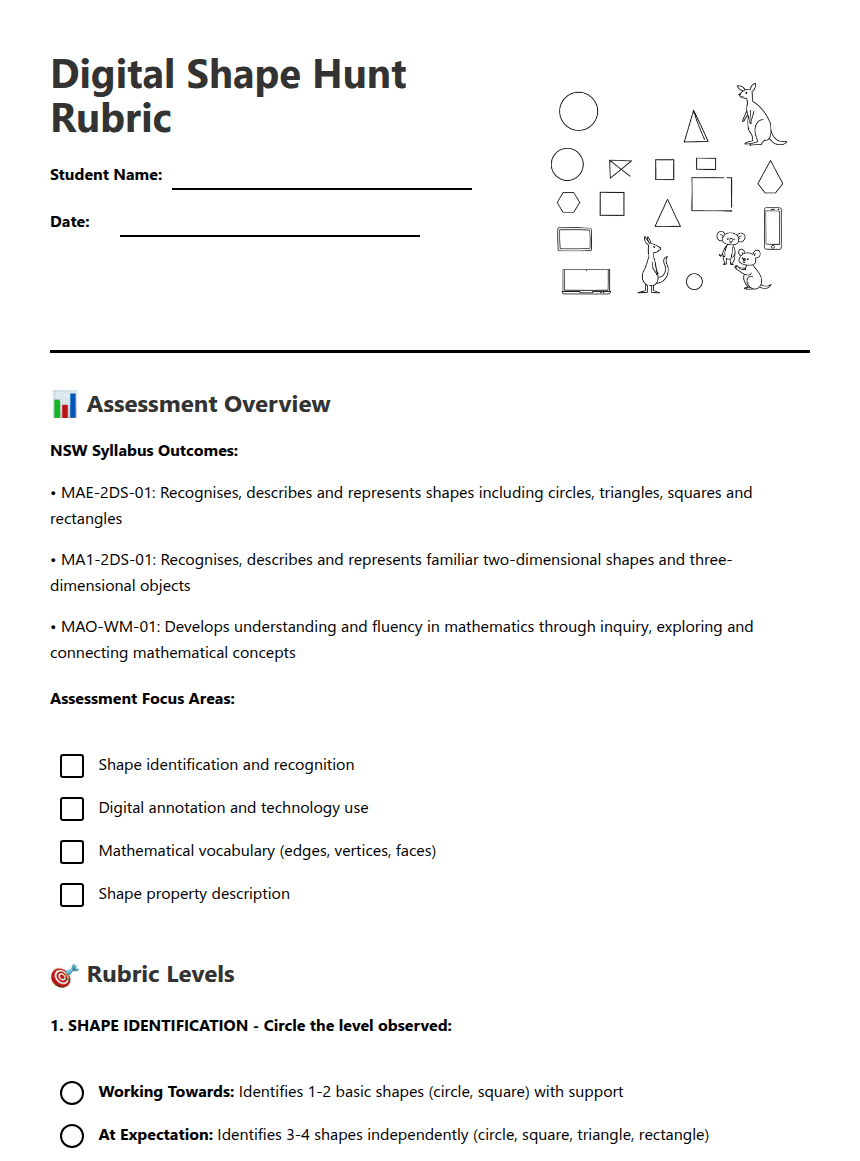
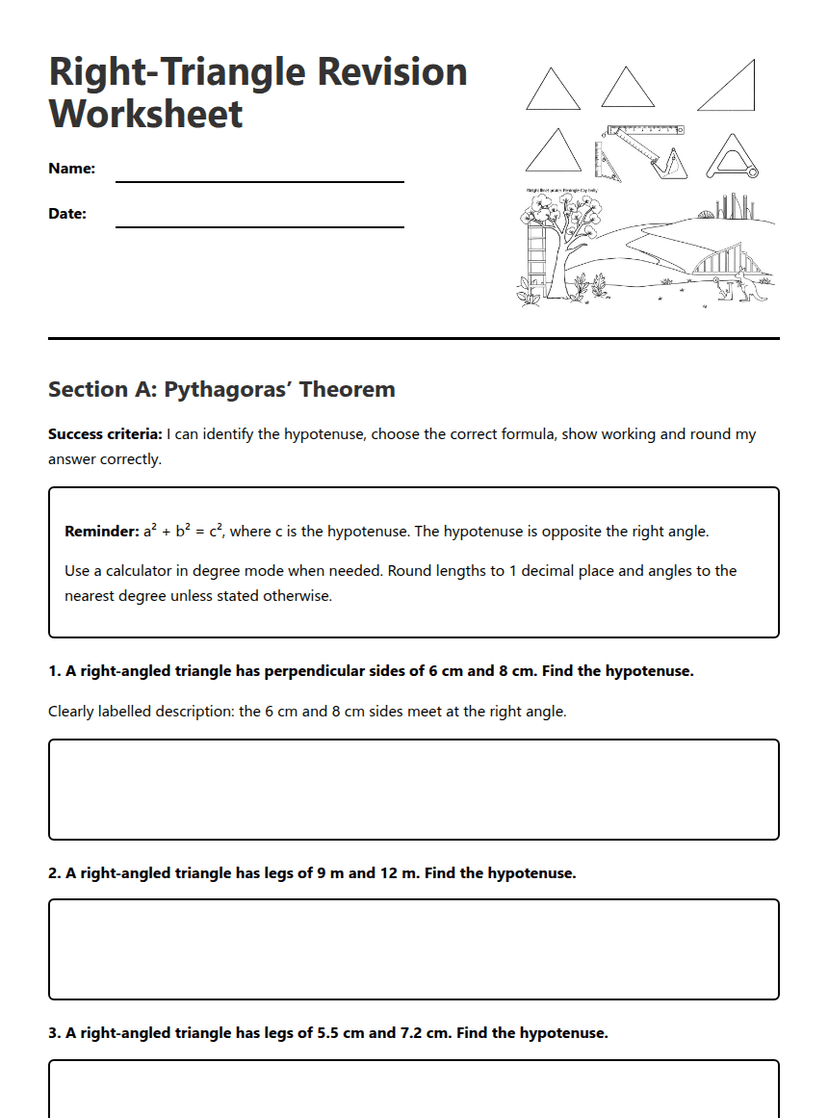
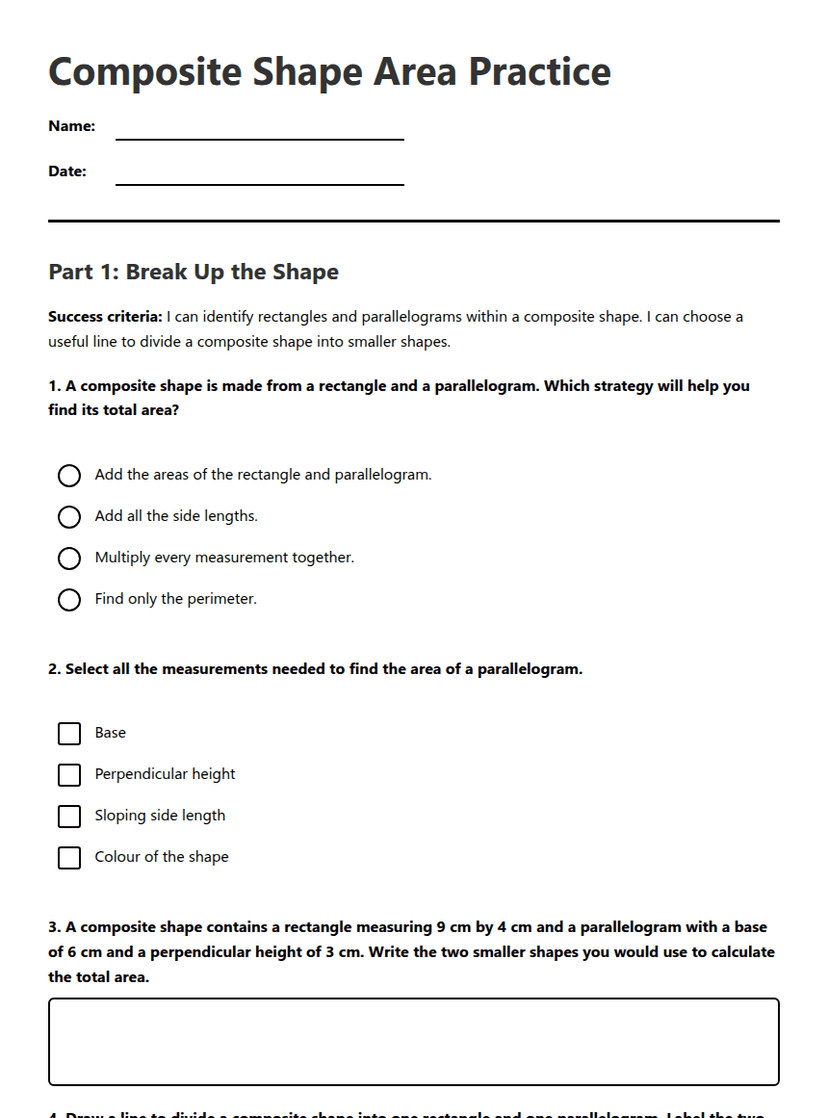
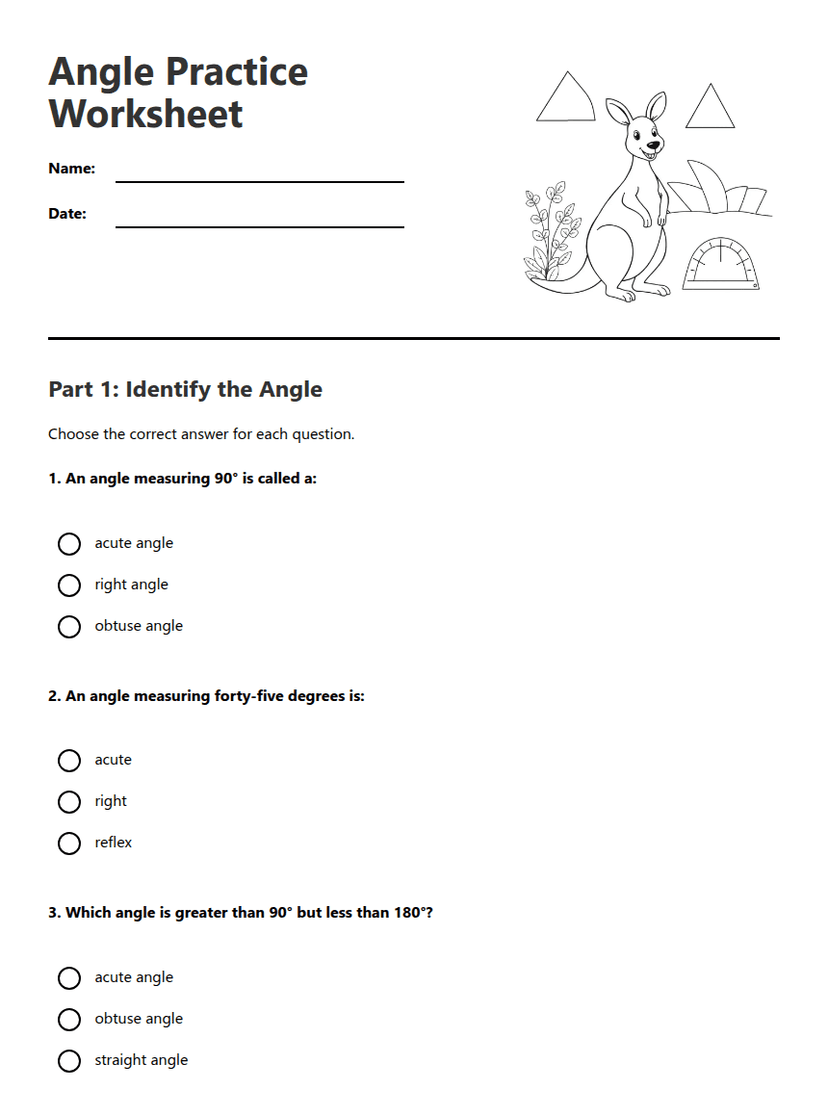
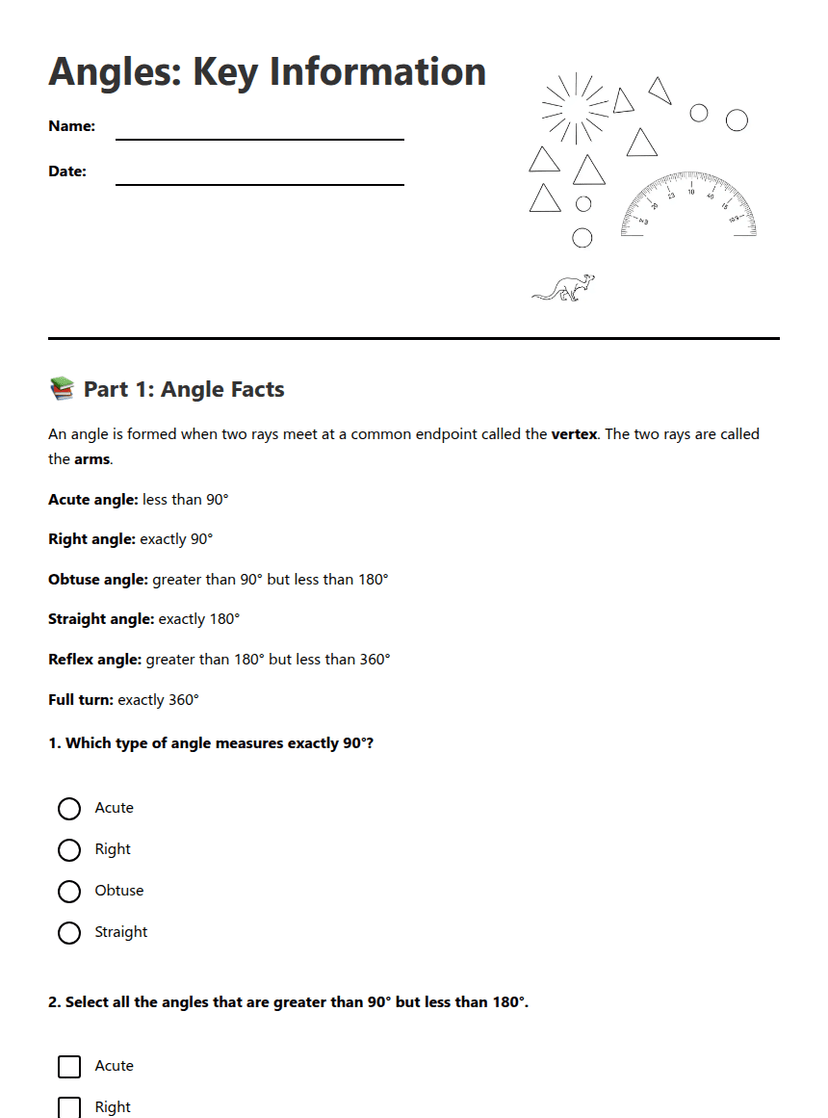
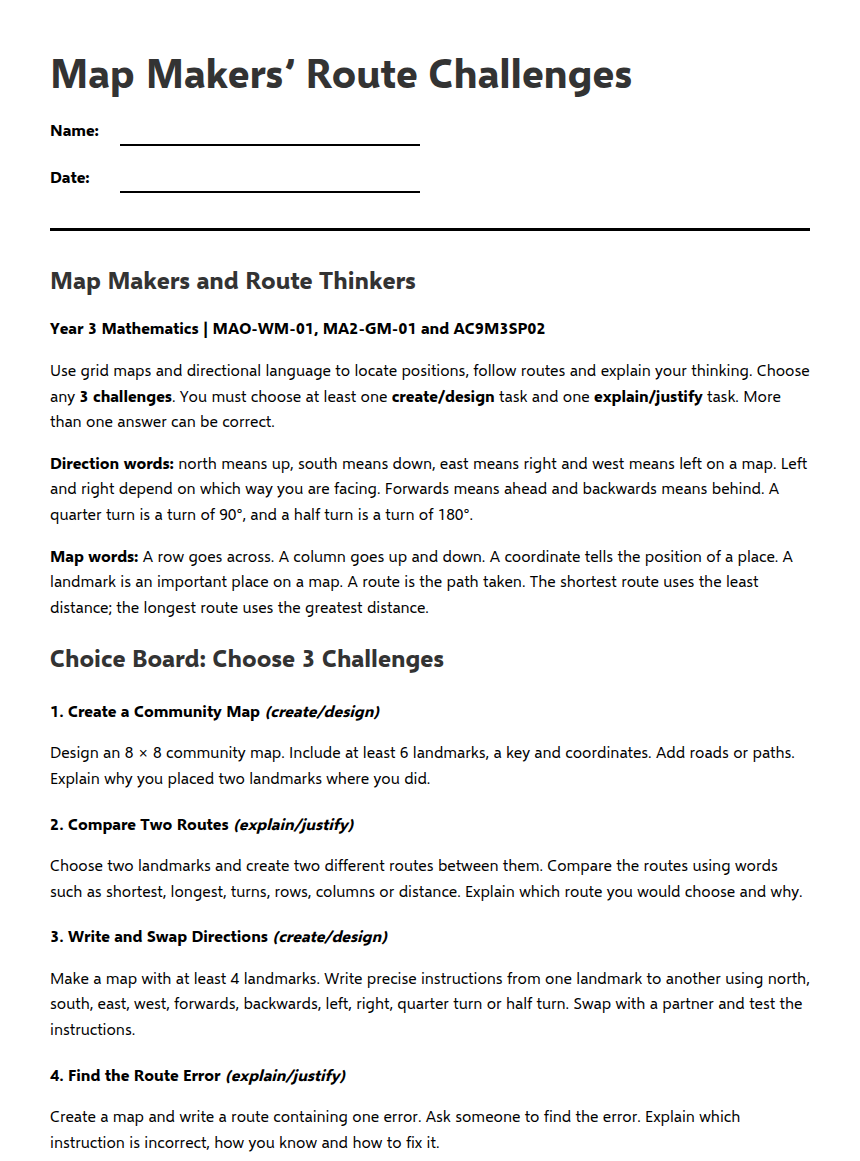
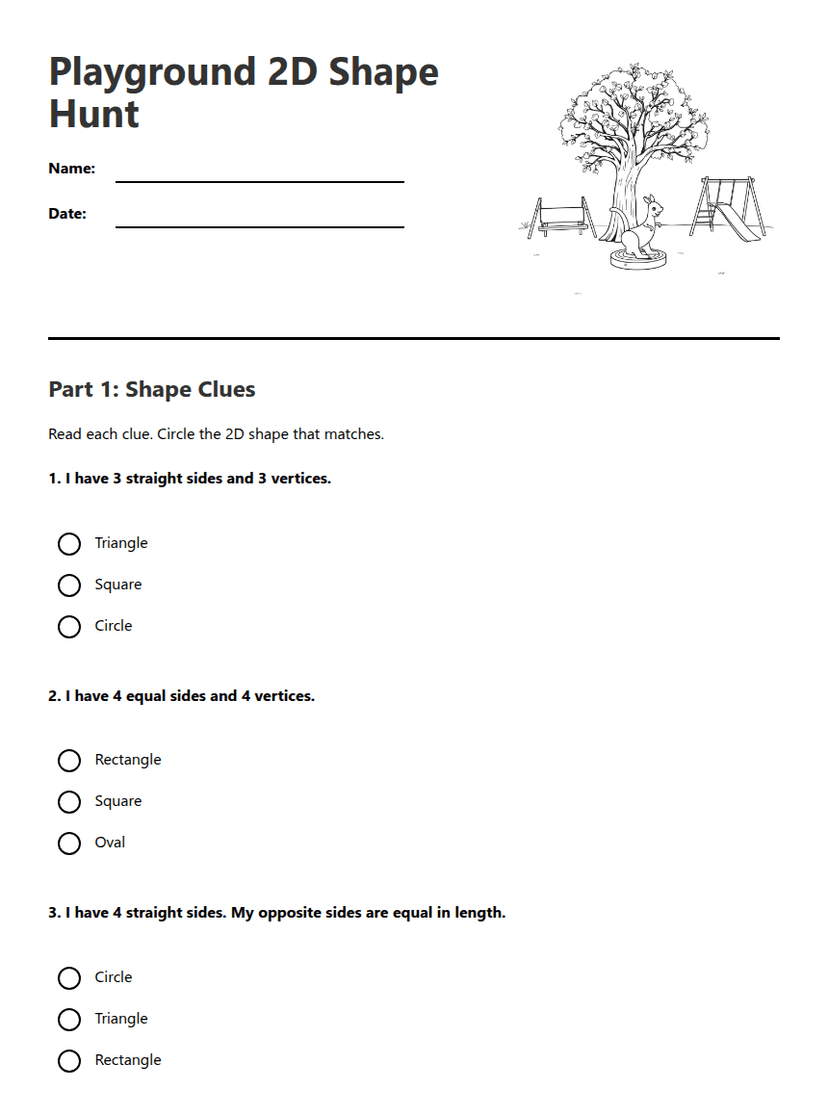
Digital Shape Hunt Rubric worksheet preview
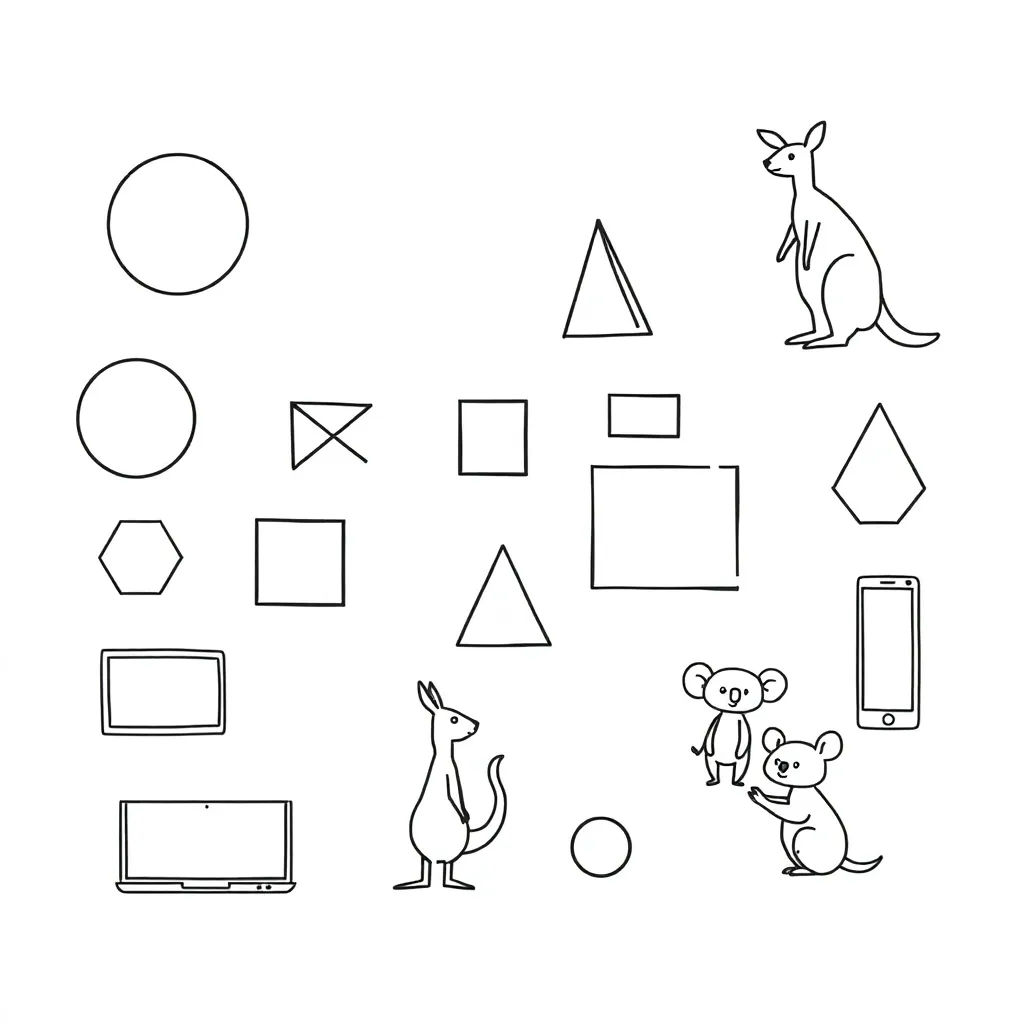
Digital Shape Hunt Rubric

Digital shapes and tablet illustration

📊 Assessment Overview

NSW Syllabus Outcomes:

• MAE-2DS-01: Recognises, describes and represents shapes including circles, triangles, squares and rectangles

• MA1-2DS-01: Recognises, describes and represents familiar two-dimensional shapes and three-dimensional objects

• MAO-WM-01: Develops understanding and fluency in mathematics through inquiry, exploring and connecting mathematical concepts

Assessment Focus Areas:

Shape identification and recognition

Digital annotation and technology use

Mathematical vocabulary (edges, vertices, faces)

Shape property description

🎯 Rubric Levels

1. SHAPE IDENTIFICATION - Circle the level observed:

Working Towards: Identifies 1-2 basic shapes (circle, square) with support

At Expectation: Identifies 3-4 shapes independently (circle, square, triangle, rectangle)

Beyond Expectation: Identifies 5+ shapes including complex shapes (pentagon, hexagon, oval)

2. DIGITAL ANNOTATION SKILLS - Circle the level observed:

Working Towards: Uses digital tools with significant assistance, basic tapping/touching

At Expectation: Uses digital annotation tools independently to mark and label shapes

Beyond Expectation: Confidently uses multiple digital features (drawing, text, colours) creatively

3. MATHEMATICAL VOCABULARY - Circle the level observed:

Working Towards: Uses 1-2 shape names correctly (circle, square)

At Expectation: Uses shape names and basic properties (sides, corners)

Beyond Expectation: Uses precise vocabulary (vertices, edges, faces, parallel lines)

4. SHAPE PROPERTIES DESCRIPTION - Circle the level observed:

Working Towards: Describes basic features with prompting ("round", "has corners")

At Expectation: Describes number of sides and corners independently

Beyond Expectation: Compares shapes and explains similarities/differences in detail

📝 Evidence Examples & Notes

Observable Evidence Examples:
Differentiation Strategies Used:

Visual supports/shape cards provided

Peer support/buddy system

Extended time given

Extension activities provided (shape creation, pattern making)

Next Steps/Learning Goals:
Teacher Comments:

About This Worksheet

Free in Kuraplan

Sign up free, grab the PDF, and customize it for your class.

Print-Ready

Formatted for standard paper. Clean layout, easy to read.

AI-Generated

Created with Kuraplan's AI, designed for real classroom use.

For Teachers & Parents

Use in classrooms, for homework, tutoring, or homeschool.

Need a custom version of this worksheet?

Kuraplan's AI generates custom worksheets in seconds — differentiated for every learner, aligned to your curriculum.

Generate Custom Worksheets — Free
No credit card Curriculum-aligned Under 60 seconds