Drama Vocabulary Reference Sheet
A free english worksheet ready for your classroom. Open in Kuraplan to grab the print-ready PDF, customize it for your students, or generate a fresh version in seconds.
Drama Vocabulary Reference Sheet
🎭 Part 1: Essential Drama Terms
Definition: Written instructions in a play script that describe actions, movements, settings, and how lines should be delivered.
Example: [Enter HAMLET, stage left, looking troubled. He moves slowly towards the window.]
Definition: Objects used by actors during a performance to enhance the story or character.
Example: A sword in a battle scene, a letter that contains important news, or a telephone for a phone conversation.
Definition: The planned movement and positioning of actors on stage during a performance.
Example: The director decides that Character A will stand upstage centre whilst Character B paces downstage left.
Definition: The attitude or emotional quality conveyed by the playwright's choice of words and style.
Example: A scene might have a menacing tone through dark imagery and threatening dialogue.
Definition: The atmosphere or emotional feeling created for the audience through staging, lighting, and performance.
Example: Dim lighting and eerie music create a suspenseful mood in a thriller.
Definition: The process by which a playwright reveals a character's personality, motivations, and traits through dialogue, actions, and stage directions.
Example: A character who constantly interrupts others might be characterised as impatient or rude.
💬 Part 2: Dialogue and Performance Terms
Definition: Conversation between two or more characters in a play.
Example: ROMEO: "But soft, what light through yonder window breaks?" JULIET: "Romeo, Romeo, wherefore art thou Romeo?"
Definition: A long speech delivered by one character to other characters on stage.
Example: A character explaining their life story to their family during a dramatic confrontation.
Definition: A speech delivered by a character when alone on stage, revealing their inner thoughts to the audience.
Example: Hamlet's famous "To be or not to be" speech where he contemplates life and death.
Definition: When the audience knows something that one or more characters on stage do not know.
Example: In Romeo and Juliet, the audience knows Juliet is not really dead, but Romeo believes she is.
Definition: The time and place where the action of the play occurs, established through stage directions, dialogue, and design elements.
Example: A play might be set in 1960s Melbourne, in a small suburban kitchen during breakfast time.
✏️ Part 3: Quick Reference Practice
The _____________ of the play was established through dim lighting and ominous music, creating a sense of foreboding for the audience.
1. _________________________
2. _________________________
3. _________________________
About This Worksheet
Free in Kuraplan
Sign up free, grab the PDF, and customize it for your class.
Print-Ready
Formatted for standard paper. Clean layout, easy to read.
AI-Generated
Created with Kuraplan's AI, designed for real classroom use.
For Teachers & Parents
Use in classrooms, for homework, tutoring, or homeschool.
Need a custom version of this worksheet?
Kuraplan's AI generates custom worksheets in seconds — differentiated for every learner, aligned to your curriculum.
Generate Custom Worksheets — FreeMore English Worksheets
Descriptive Words for Twits
Free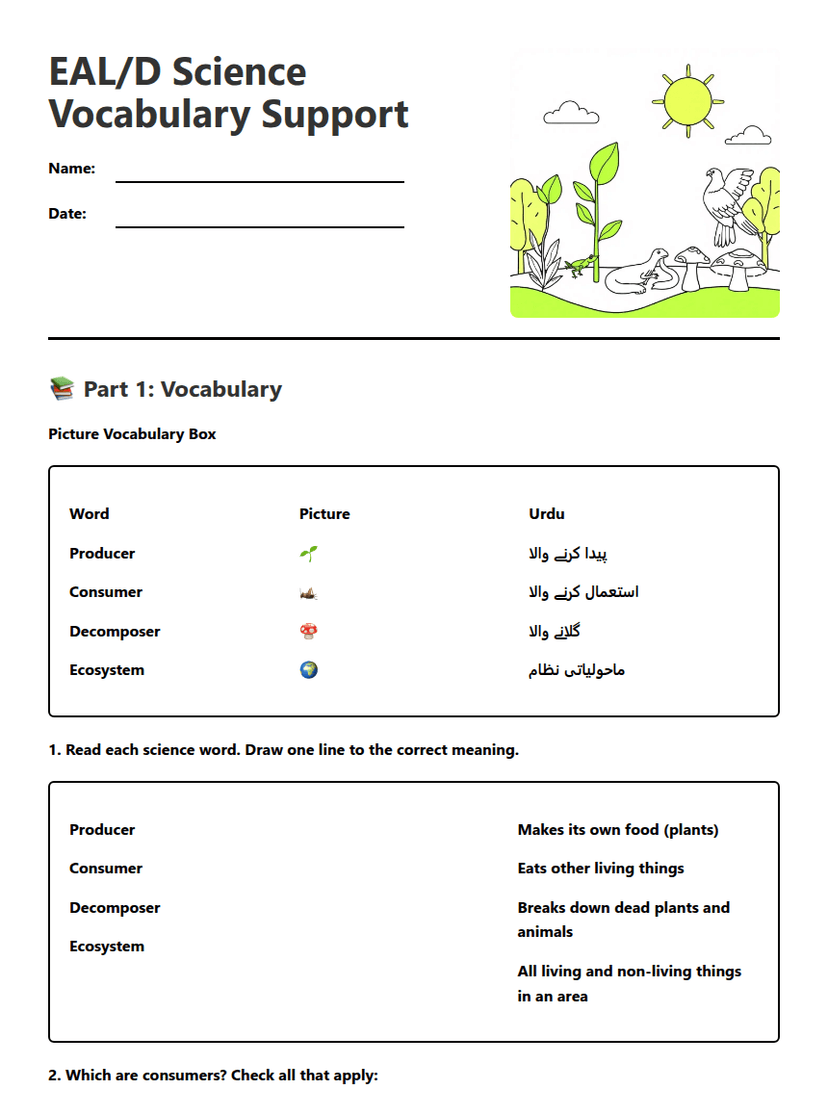
EAL/D Science Vocabulary Support
Free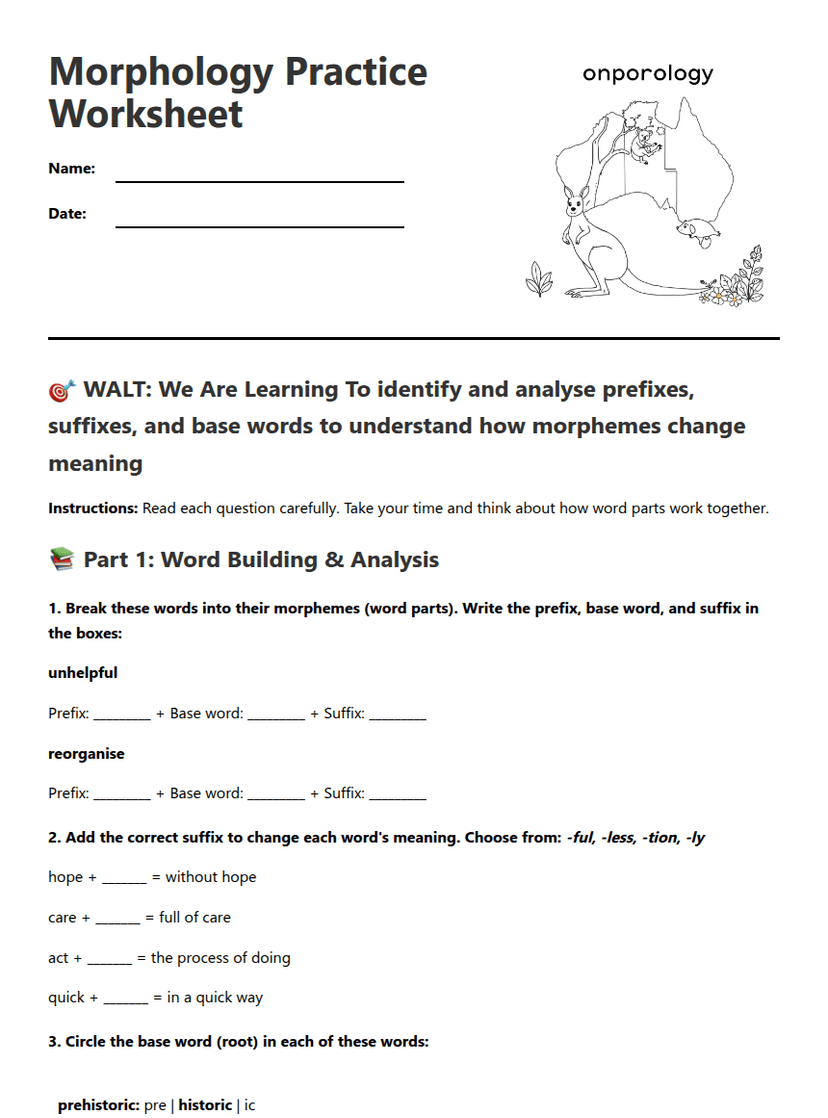
Morphology Practice Worksheet
Free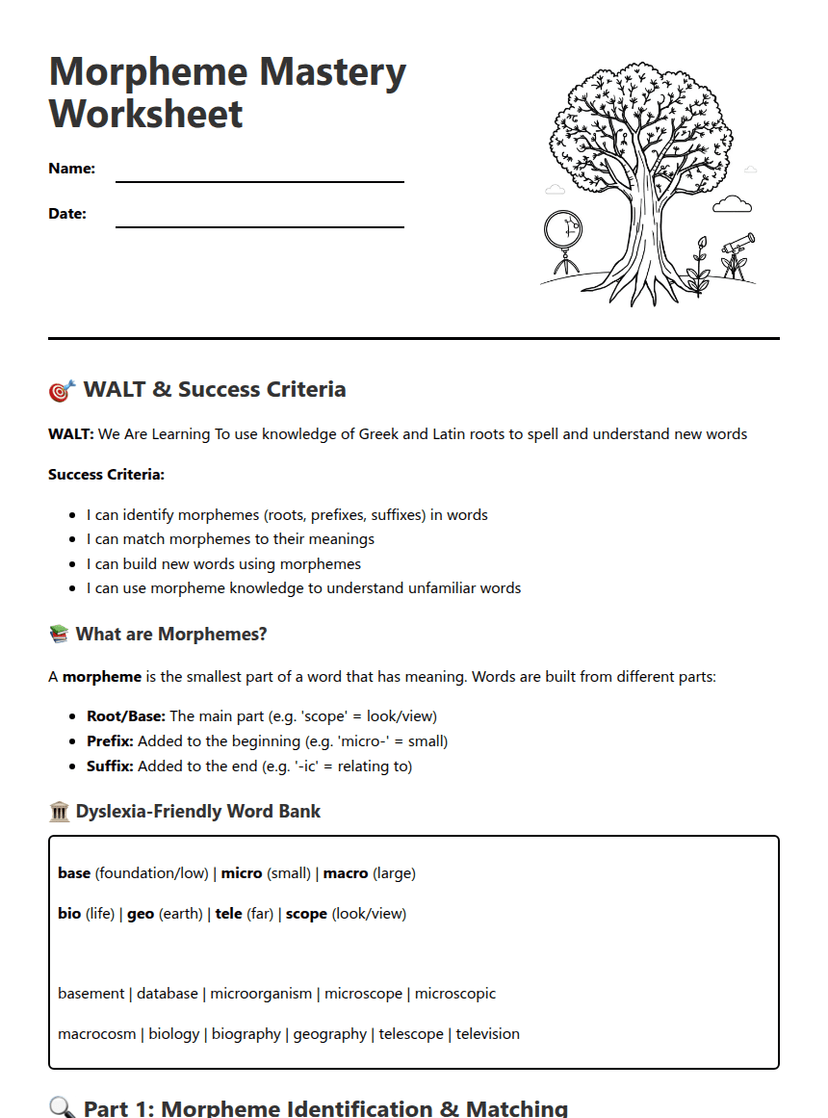
Morpheme Mastery Worksheet
Free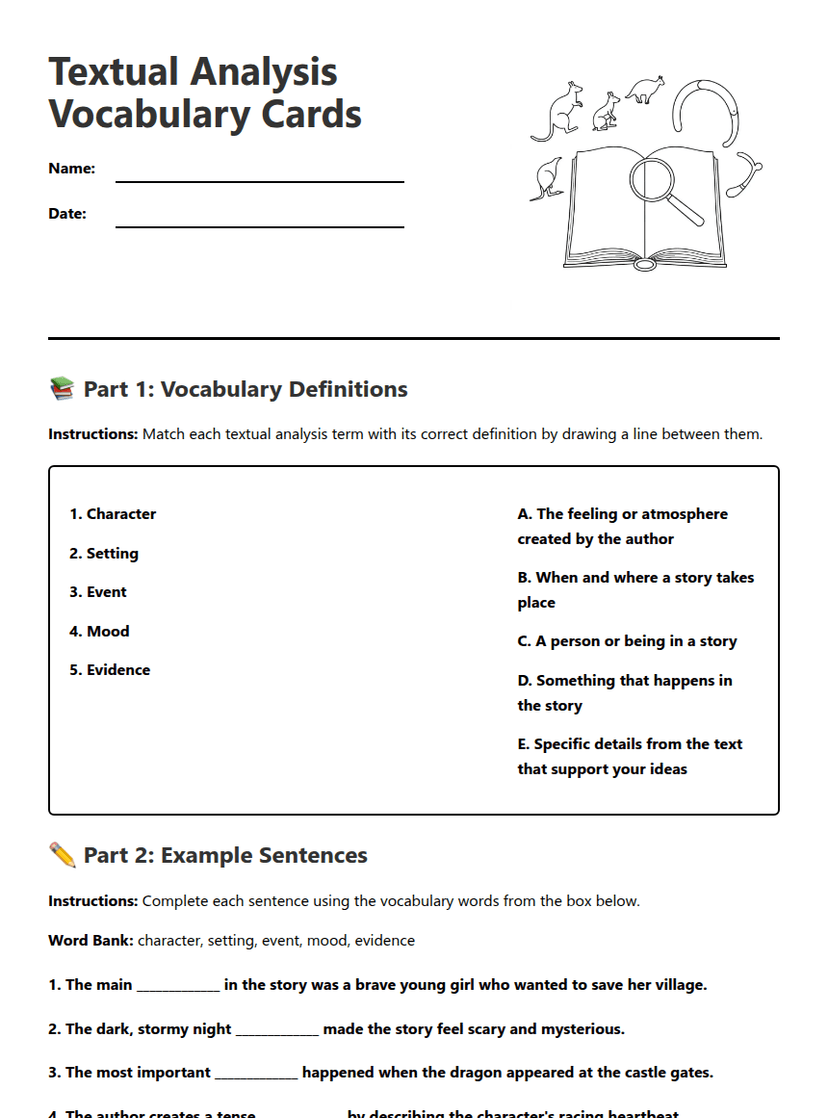
Textual Analysis Vocabulary Cards
Free
Metalanguage Match-Up Worksheet
Free
Metalanguage Vocabulary Match
Free