EnglishFreePrintable

Forensic Science Introduction

A free english worksheet ready for your classroom. Open in Kuraplan to grab the print-ready PDF, customize it for your students, or generate a fresh version in seconds.

Forensic Science Introduction worksheet preview
Forensic Science Introduction

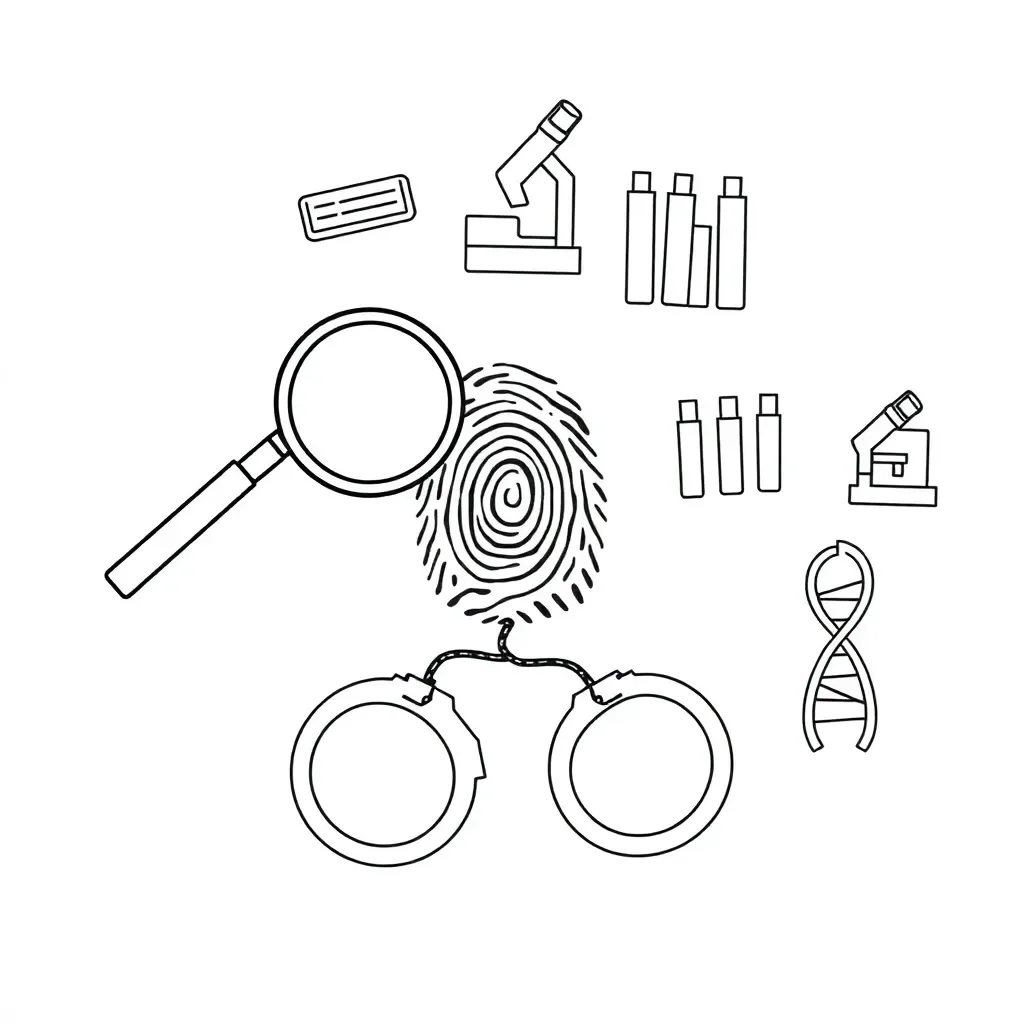
Crime scene investigation illustration

🔍 Part 1: Forensic Science Basics

1. What is forensic science?

The study of ancient artefacts

The application of scientific technology to supply factual information about crime events

The study of plant biology

The analysis of weather patterns

2. Locard's Exchange Principle states that:

Every contact leaves a trace

Crime scenes should be photographed

Evidence must be collected quickly

Witnesses are always reliable

3. Which of these are types of forensic scientists? (Tick all that apply)

Forensic biologist

Fingerprint analyst

Ballistics expert

Marine biologist

Forensic pathologist

4. Fill in the blanks using the words provided:

Word bank: suspect, alibi, accomplice, corpus delicti

a) A person believed to have committed a crime is called a _______________.

b) An _______________ is someone who helps another person commit a crime.

c) An _______________ is evidence that shows a person was somewhere else when a crime occurred.

d) _______________ _______________ refers to the body of evidence that proves a crime has been committed.

🔬 Part 2: Crime Scene Procedures

5. The 7S's of crime scene investigation help preserve evidence. Match each 'S' with its correct description by writing the letter in the box:
□ Secure (the scene)
□ Separate (witnesses)
□ Scan (the area)
□ Sketch (the scene)
A. Draw a detailed map of evidence locations
B. Keep witnesses apart to prevent contamination of stories
C. Take an initial look around without disturbing anything
D. Block off the area to prevent contamination
6. Why is it important to follow strict procedures at a crime scene? Give two reasons:
7. Explain what crime scene etiquette means and why it matters:

🎯 Part 3: Extension Challenge

8. Advanced Task: Choose one type of forensic scientist (biologist, pathologist, chemist, fingerprint analyst, ballistics expert). Research and describe what skills they need and what type of evidence they analyse:
9. Critical Thinking: How might emerging technologies like AI change forensic investigations in the future?

✅ Success Criteria Checklist

By the end of this worksheet, I can:

Define forensic science and explain its role in crime investigations

Explain Locard's Exchange Principle

Use forensic terminology correctly

Identify different types of forensic scientists and their roles

Describe the 7S's of crime scene procedures

Explain why crime scene etiquette is important

About This Worksheet

Free in Kuraplan

Sign up free, grab the PDF, and customize it for your class.

Print-Ready

Formatted for standard paper. Clean layout, easy to read.

AI-Generated

Created with Kuraplan's AI, designed for real classroom use.

For Teachers & Parents

Use in classrooms, for homework, tutoring, or homeschool.

Need a custom version of this worksheet?

Kuraplan's AI generates custom worksheets in seconds — differentiated for every learner, aligned to your curriculum.

Generate Custom Worksheets — Free
No credit card Curriculum-aligned Under 60 seconds