Gangs: Then and Now
A free english worksheet ready for your classroom. Open in Kuraplan to grab the print-ready PDF, customize it for your students, or generate a fresh version in seconds.
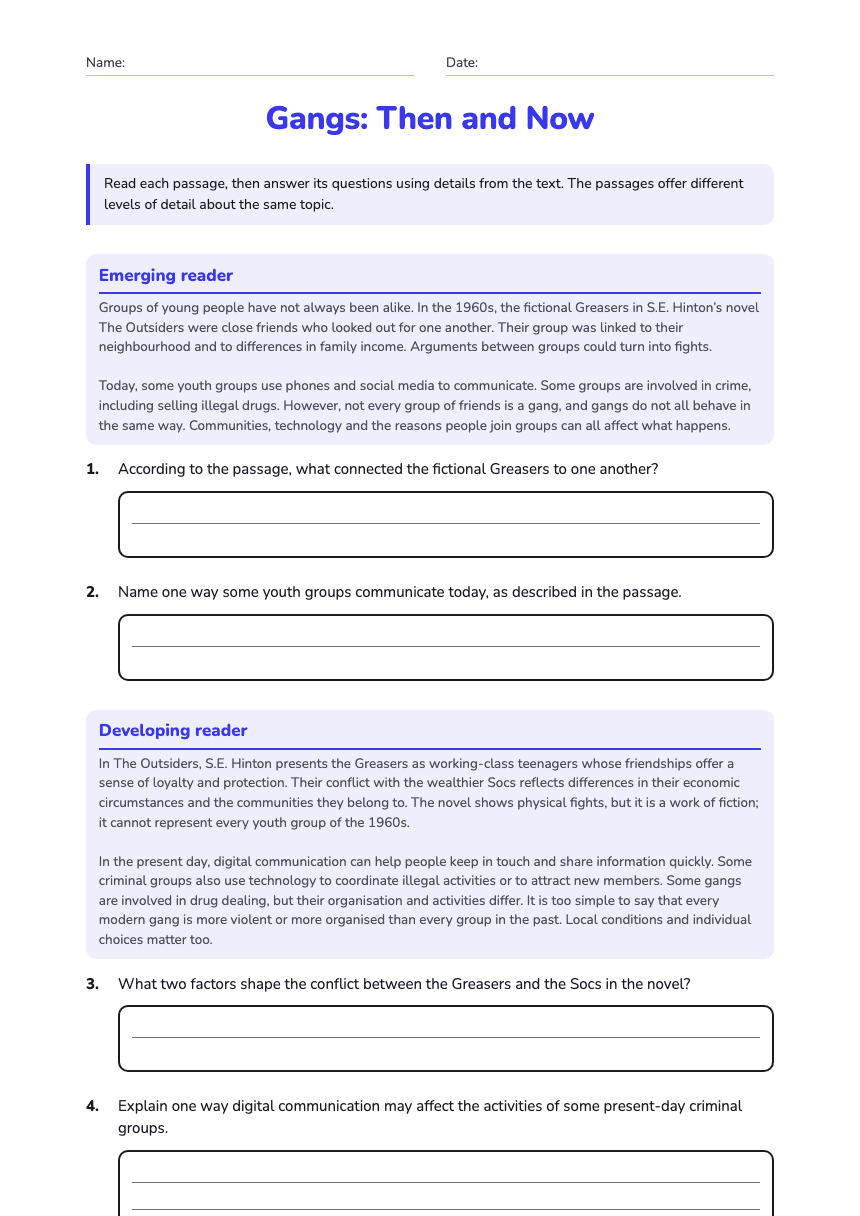
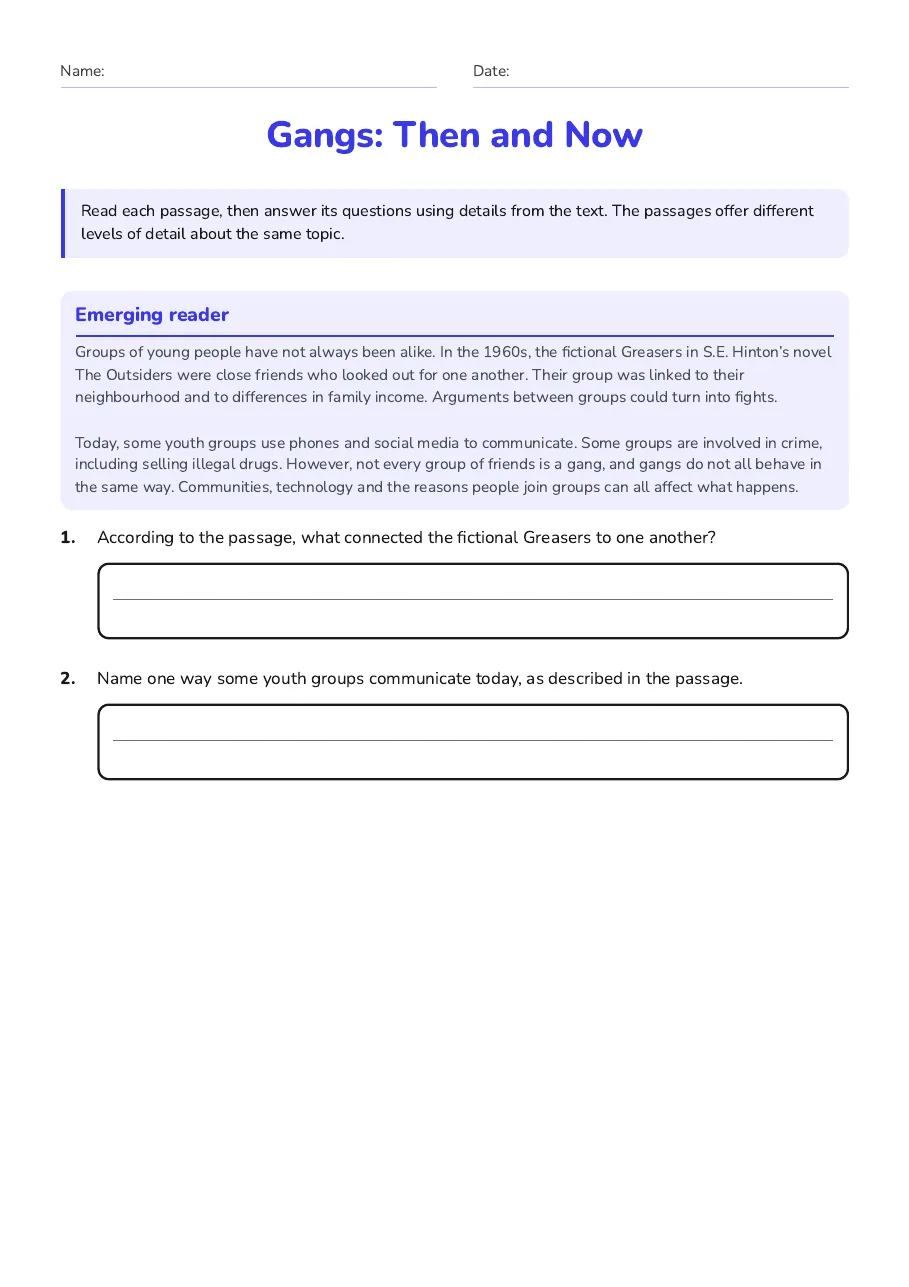
Gangs: Then and Now
Emerging reader
Groups of young people have not always been alike. In the 1960s, the fictional Greasers in S.E. Hinton’s novel The Outsiders were close friends who looked out for one another. Their group was linked to their neighbourhood and to differences in family income. Arguments between groups could turn into fights. Today, some youth groups use phones and social media to communicate. Some groups are involved in crime, including selling illegal drugs. However, not every group of friends is a gang, and gangs do not all behave in the same way. Communities, technology and the reasons people join groups can all affect what happens.
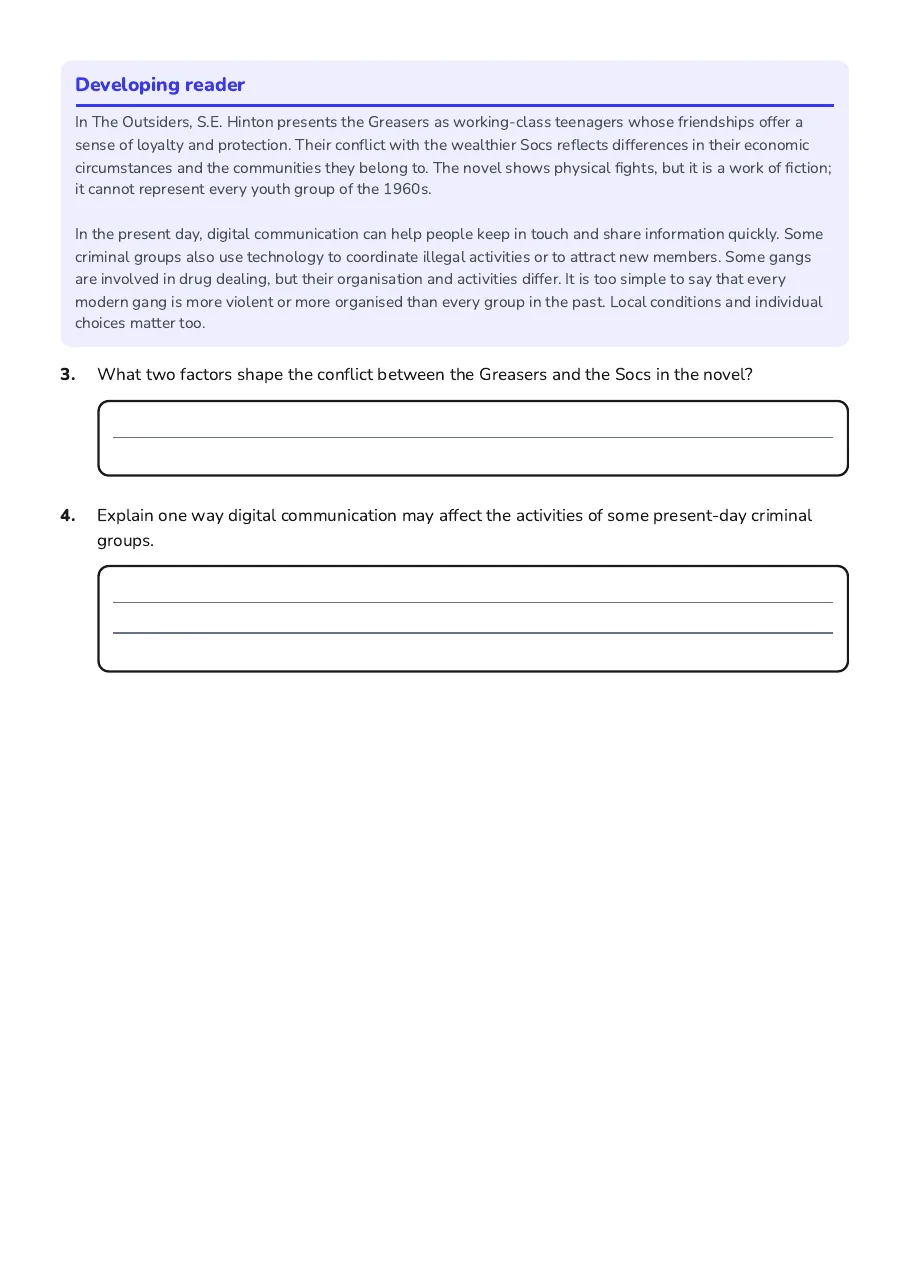
Developing reader
In The Outsiders, S.E. Hinton presents the Greasers as working-class teenagers whose friendships offer a sense of loyalty and protection. Their conflict with the wealthier Socs reflects differences in their economic circumstances and the communities they belong to. The novel shows physical fights, but it is a work of fiction; it cannot represent every youth group of the 1960s. In the present day, digital communication can help people keep in touch and share information quickly. Some criminal groups also use technology to coordinate illegal activities or to attract new members. Some gangs are involved in drug dealing, but their organisation and activities differ. It is too simple to say that every modern gang is more violent or more organised than every group in the past. Local conditions and individual choices matter too.
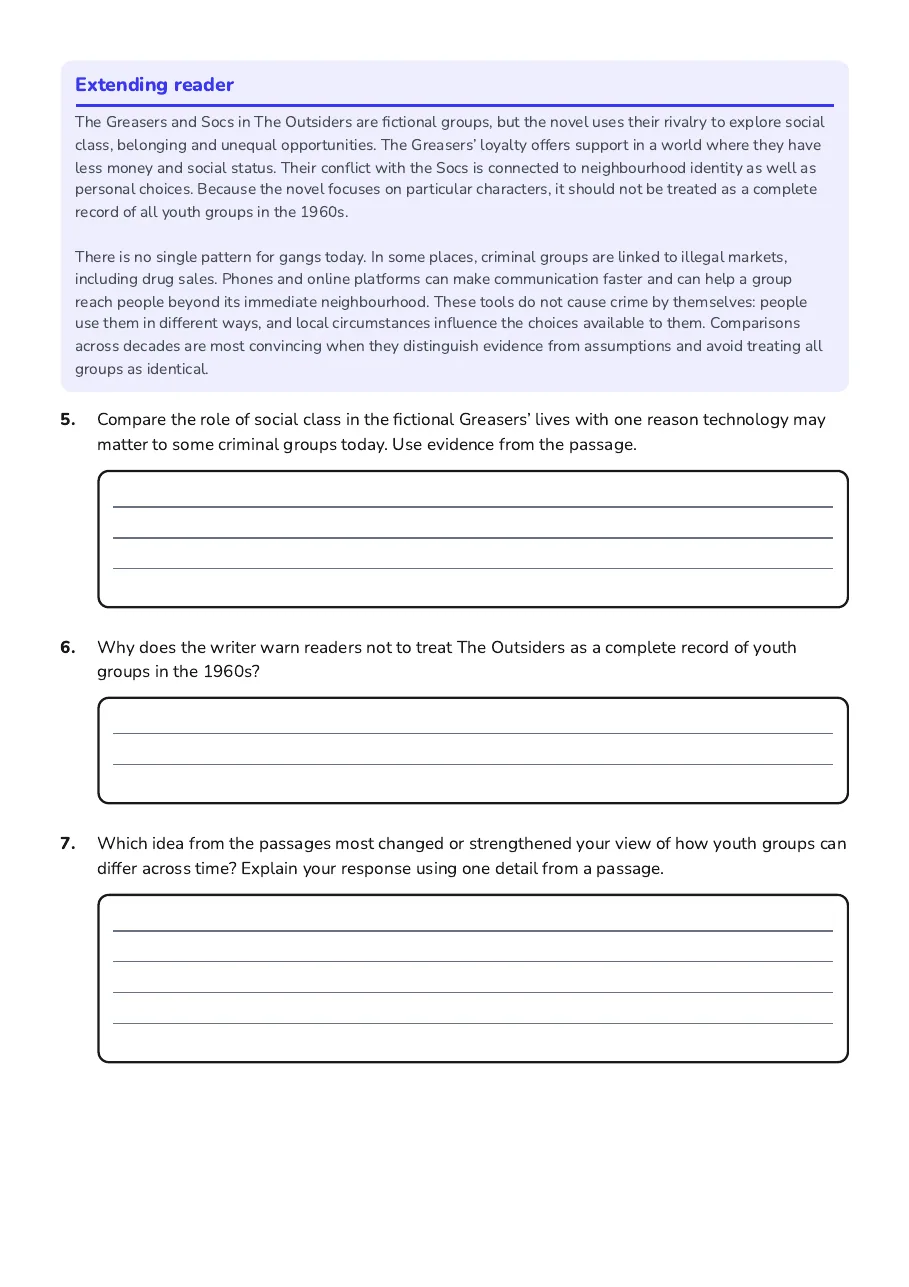
Extending reader
The Greasers and Socs in The Outsiders are fictional groups, but the novel uses their rivalry to explore social class, belonging and unequal opportunities. The Greasers’ loyalty offers support in a world where they have less money and social status. Their conflict with the Socs is connected to neighbourhood identity as well as personal choices. Because the novel focuses on particular characters, it should not be treated as a complete record of all youth groups in the 1960s. There is no single pattern for gangs today. In some places, criminal groups are linked to illegal markets, including drug sales. Phones and online platforms can make communication faster and can help a group reach people beyond its immediate neighbourhood. These tools do not cause crime by themselves: people use them in different ways, and local circumstances influence the choices available to them. Comparisons across decades are most convincing when they distinguish evidence from assumptions and avoid treating all groups as identical.
3 printable pages
Page 1
Page 2
Page 3
About This Worksheet
Free in Kuraplan
Sign up free, grab the PDF, and customize it for your class.
Print-Ready
Formatted for standard paper. Clean layout, easy to read.
AI-Generated
Created with Kuraplan's AI, designed for real classroom use.
For Teachers & Parents
Use in classrooms, for homework, tutoring, or homeschool.
Need a custom version of this worksheet?
Kuraplan's AI generates custom worksheets in seconds — differentiated for every learner, aligned to your curriculum.
Generate Custom Worksheets — Free