Gothic Imagery Analysis
A free english worksheet ready for your classroom. Open in Kuraplan to grab the print-ready PDF, customize it for your students, or generate a fresh version in seconds.
Gothic Imagery Analysis
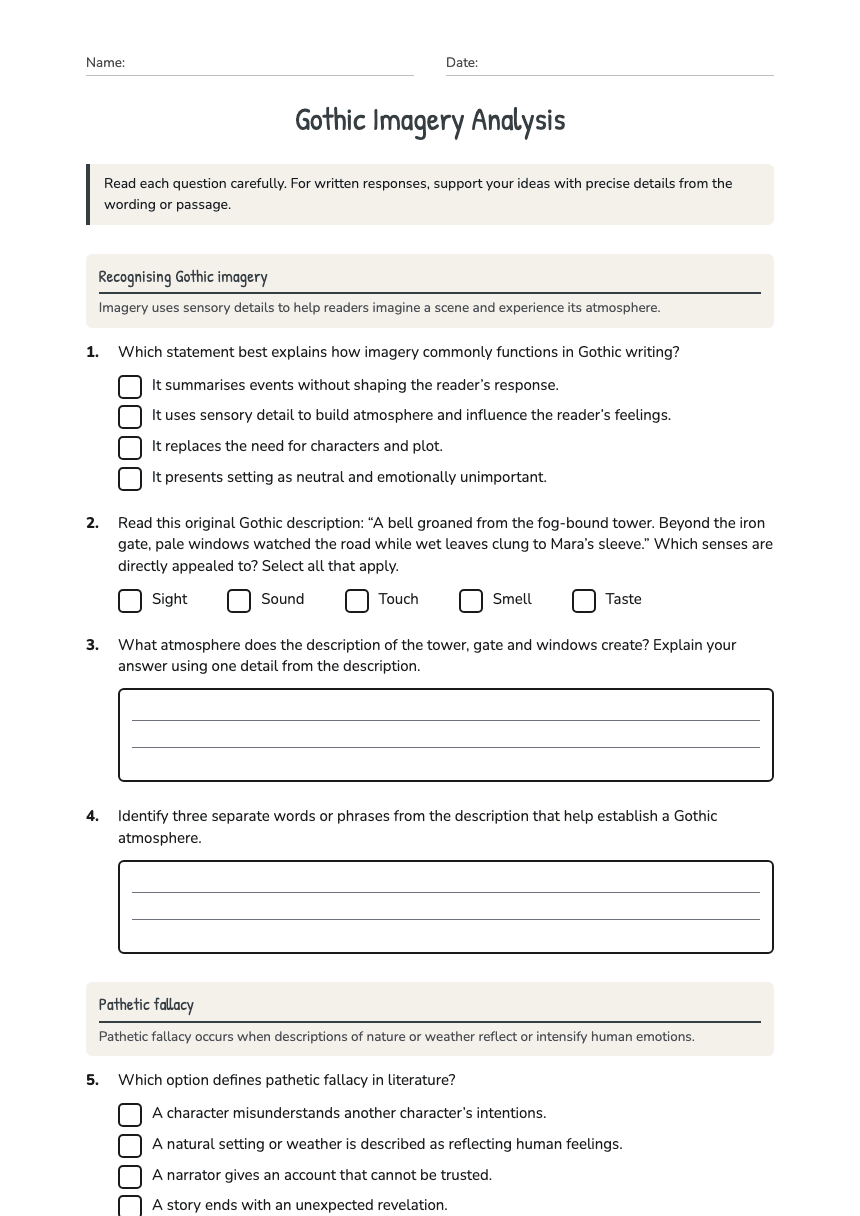
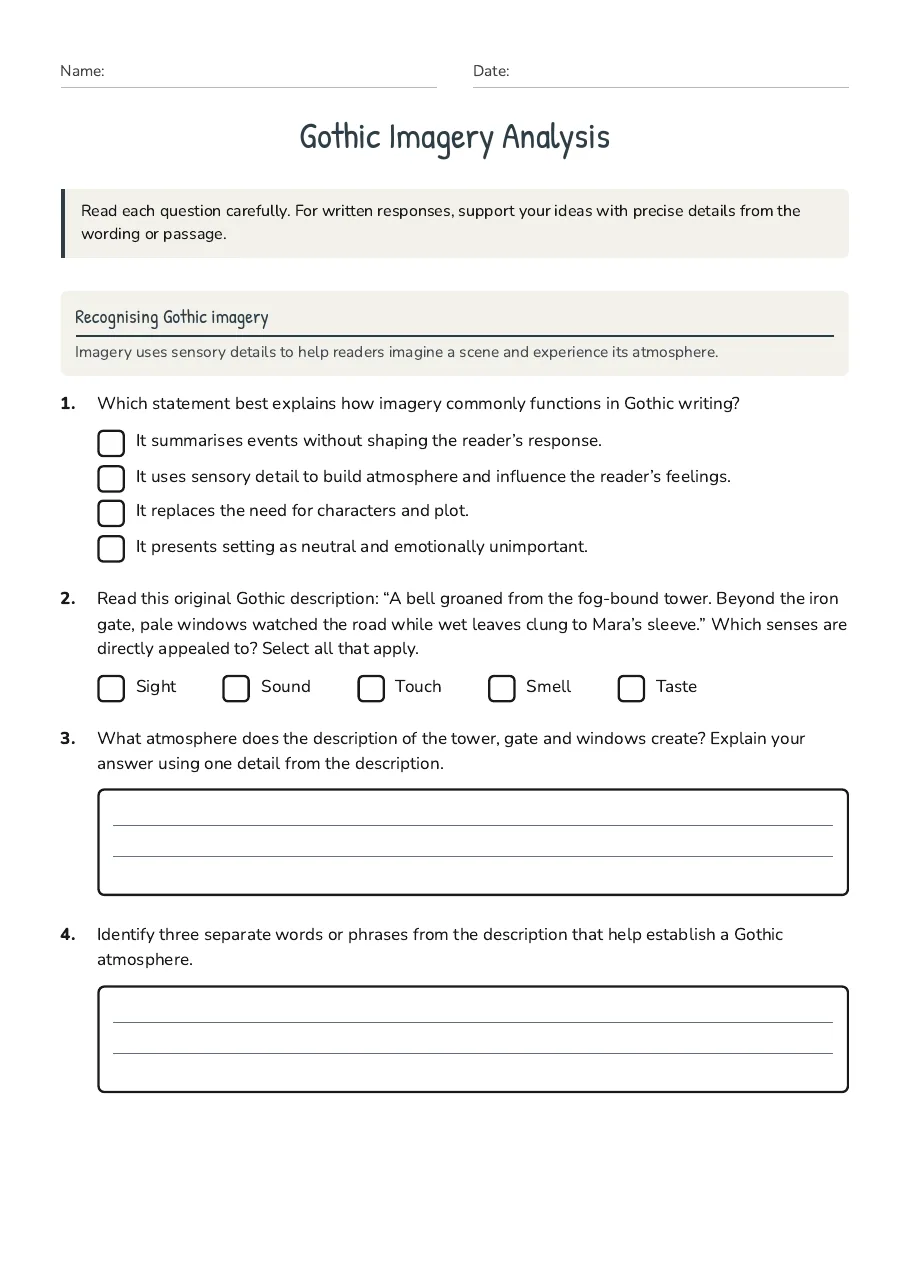
Recognising Gothic imagery
Imagery uses sensory details to help readers imagine a scene and experience its atmosphere.
- It summarises events without shaping the reader’s response.
- It uses sensory detail to build atmosphere and influence the reader’s feelings.
- It replaces the need for characters and plot.
- It presents setting as neutral and emotionally unimportant.
- Sight
- Sound
- Touch
- Smell
- Taste
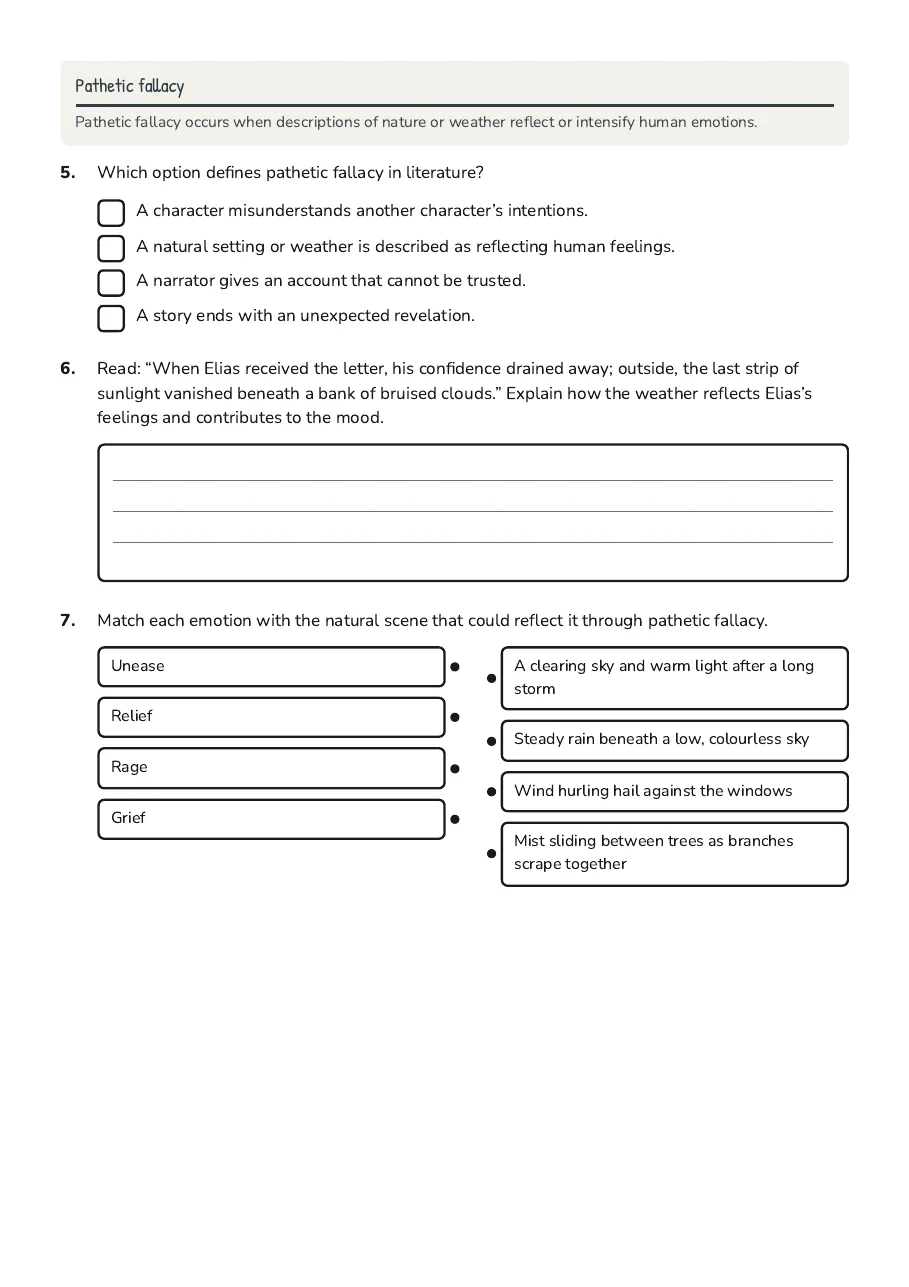
Pathetic fallacy
Pathetic fallacy occurs when descriptions of nature or weather reflect or intensify human emotions.
- A character misunderstands another character’s intentions.
- A natural setting or weather is described as reflecting human feelings.
- A narrator gives an account that cannot be trusted.
- A story ends with an unexpected revelation.
- Unease
- Relief
- Rage
- Grief
- A clearing sky and warm light after a long storm
- Steady rain beneath a low, colourless sky
- Wind hurling hail against the windows
- Mist sliding between trees as branches scrape together
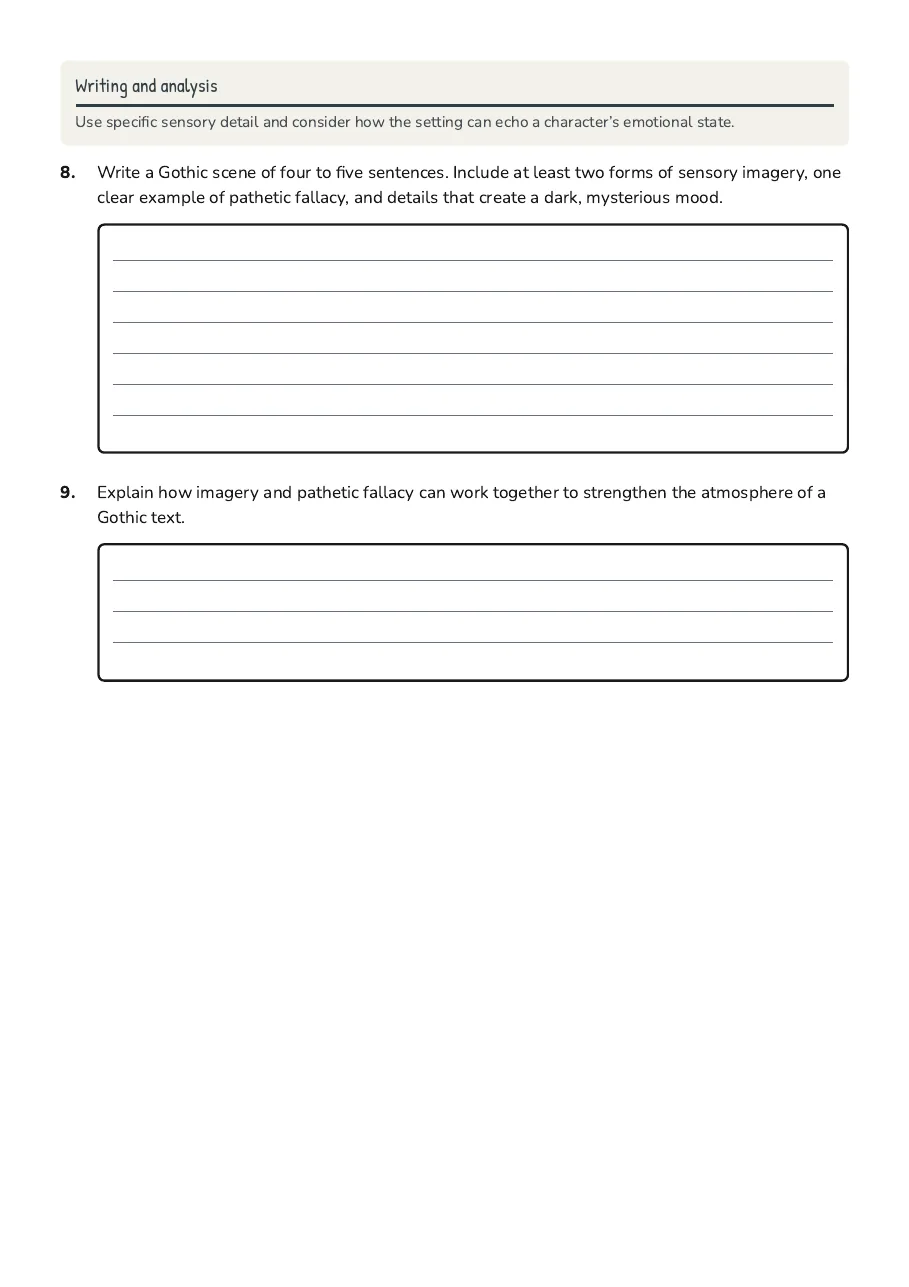
Writing and analysis
Use specific sensory detail and consider how the setting can echo a character’s emotional state.
3 printable pages
Page 1
Page 2
Page 3
About This Worksheet
Free in Kuraplan
Sign up free, grab the PDF, and customize it for your class.
Print-Ready
Formatted for standard paper. Clean layout, easy to read.
AI-Generated
Created with Kuraplan's AI, designed for real classroom use.
For Teachers & Parents
Use in classrooms, for homework, tutoring, or homeschool.
Need a custom version of this worksheet?
Kuraplan's AI generates custom worksheets in seconds — differentiated for every learner, aligned to your curriculum.
Generate Custom Worksheets — Free