Imaginative Storytelling Workshop
A free english worksheet ready for your classroom. Open in Kuraplan to grab the print-ready PDF, customize it for your students, or generate a fresh version in seconds.
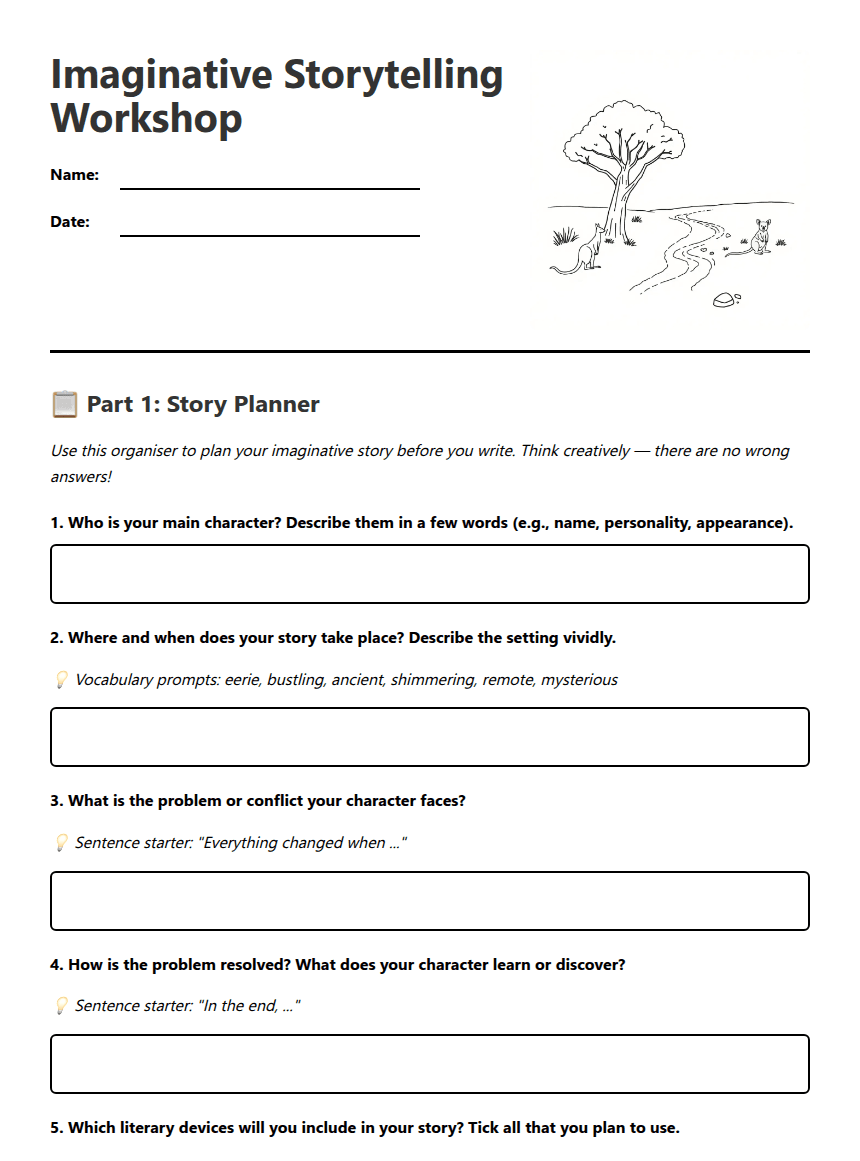
Imaginative Storytelling Workshop
📋 Part 1: Story Planner
Use this organiser to plan your imaginative story before you write. Think creatively — there are no wrong answers!
💡 Vocabulary prompts: eerie, bustling, ancient, shimmering, remote, mysterious
💡 Sentence starter: "Everything changed when ..."
💡 Sentence starter: "In the end, ..."
✏️ Part 2: Story Writing
Using your planner, write the opening paragraph of your story. Focus on vivid descriptions and engaging language. Aim to hook your reader straight away!
💡 Sentence starters: "The moment I stepped inside ...", "Nobody believed me when I said ...", "It was the strangest thing I had ever seen ..."
🎨 Part 3: Story Illustration
Draw a scene from your story — it could be your setting, your character, or the key moment of conflict. Add a caption below your drawing.
_____________________________________________________________________________
About This Worksheet
Free in Kuraplan
Sign up free, grab the PDF, and customize it for your class.
Print-Ready
Formatted for standard paper. Clean layout, easy to read.
AI-Generated
Created with Kuraplan's AI, designed for real classroom use.
For Teachers & Parents
Use in classrooms, for homework, tutoring, or homeschool.
Need a custom version of this worksheet?
Kuraplan's AI generates custom worksheets in seconds — differentiated for every learner, aligned to your curriculum.
Generate Custom Worksheets — FreeMore English Worksheets
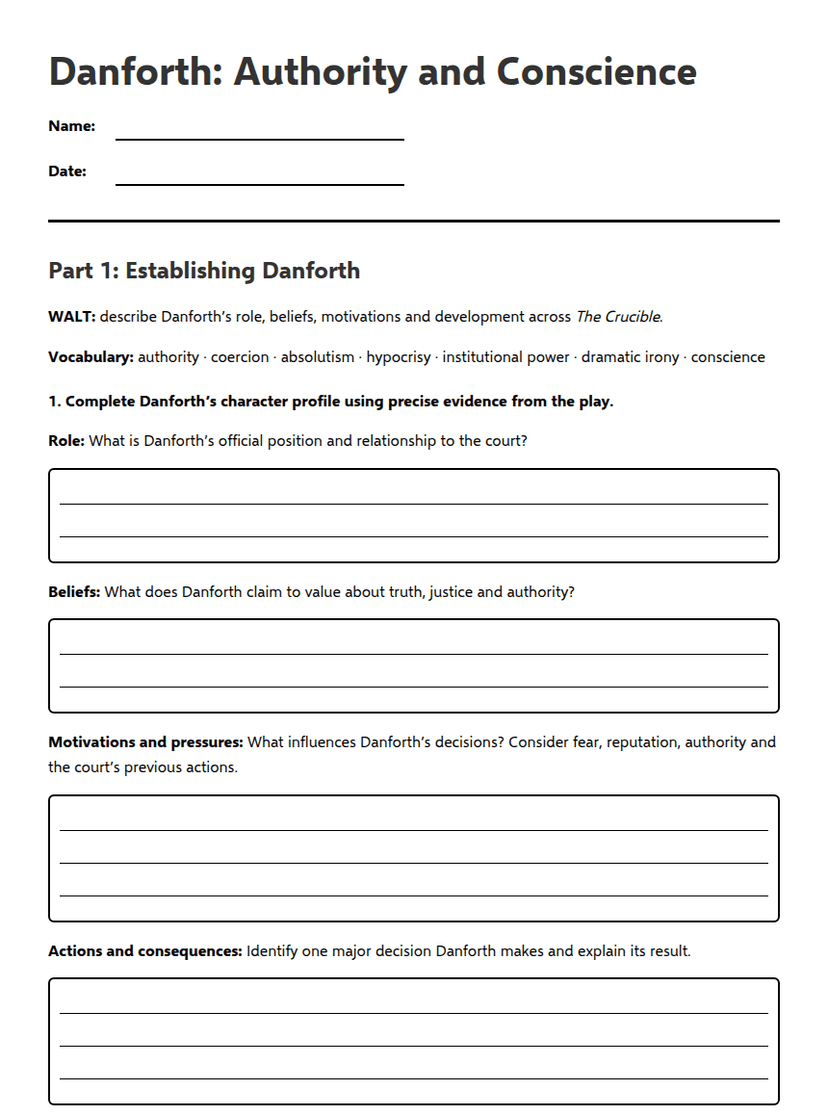
Danforth: Authority and Conscience
Free
I Survived the Nazis Worksheet
Free
Fairytale Archetype Explorer
Free
We Are Wolves Themes
Free
Fairytale Conventions Comparison
Free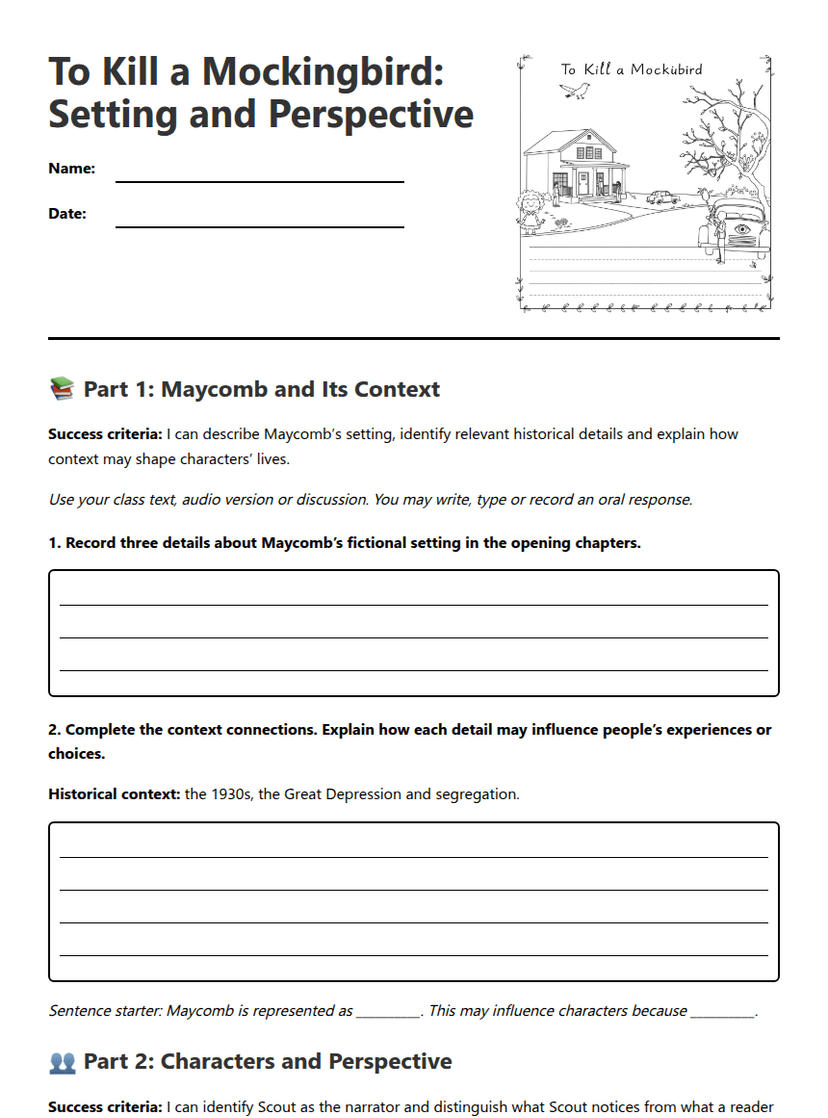
To Kill a Mockingbird: Setting and Perspective
Free
Adventure Story Elements
Free