Social SciencesFreePrintable

Indigenous Water Cultural Significance

A free social sciences worksheet ready for your classroom. Open in Kuraplan to grab the print-ready PDF, customize it for your students, or generate a fresh version in seconds.
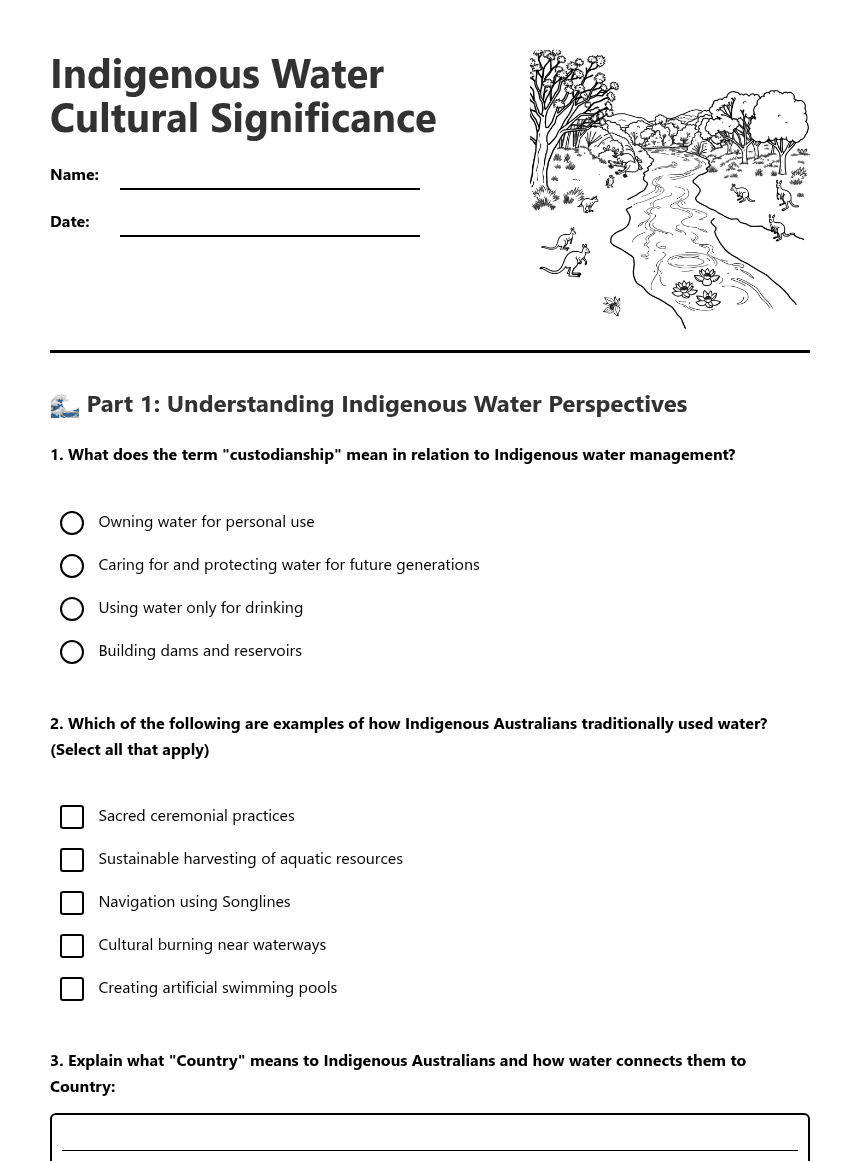
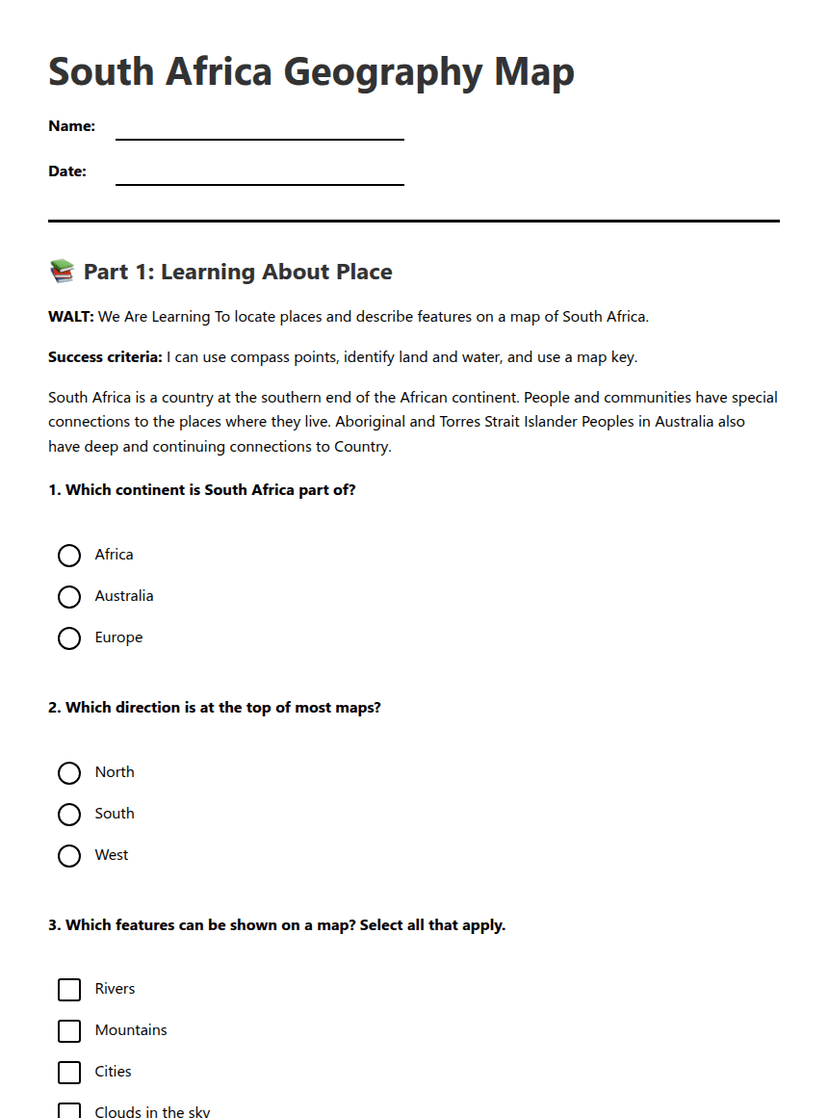
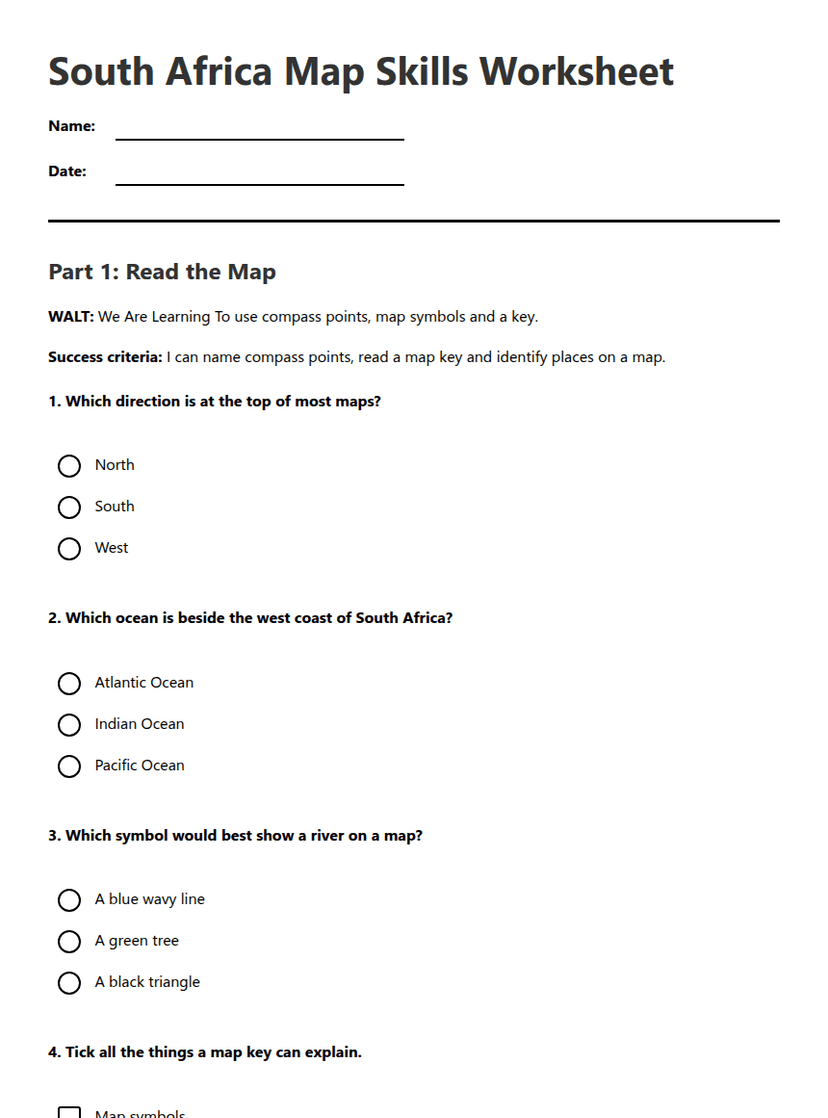
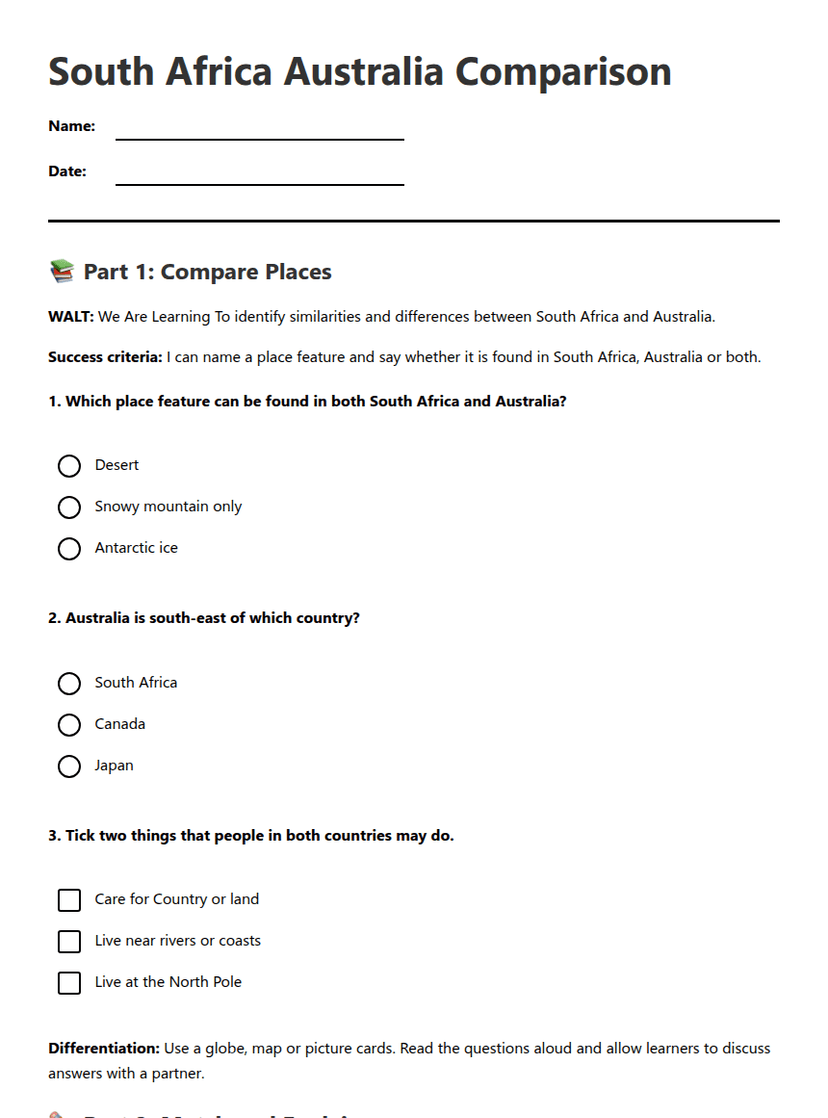
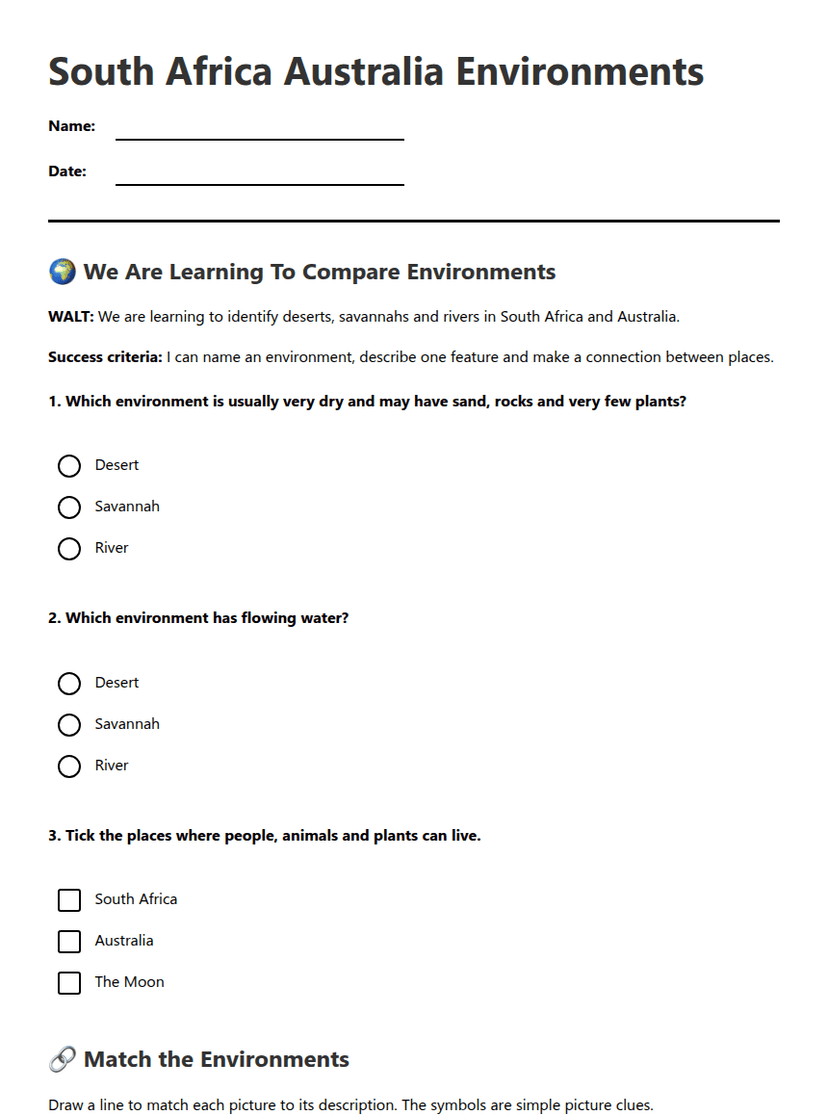
Indigenous Water Cultural Significance worksheet preview
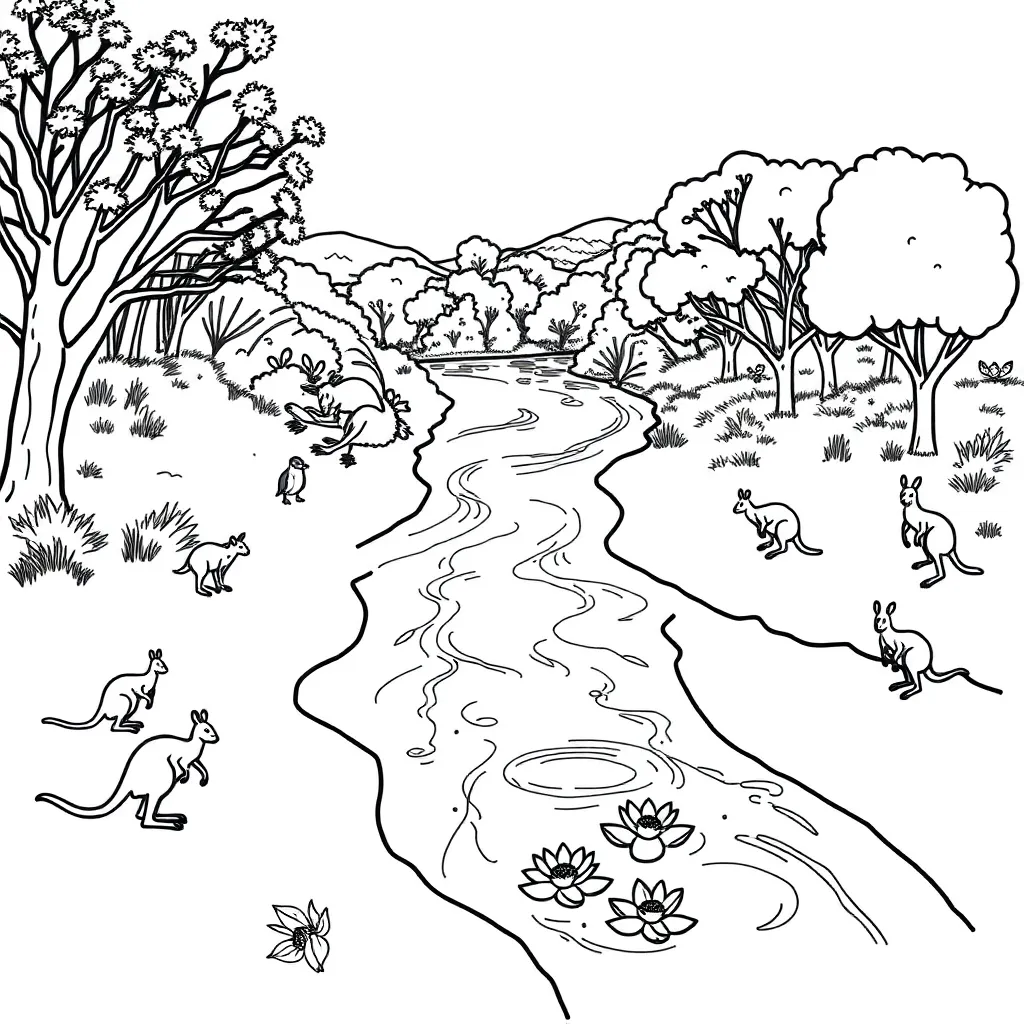
Indigenous Water Cultural Significance

Indigenous Water Cultural Significance

Aboriginal waterhole and traditional water management illustration

🌊 Part 1: Understanding Indigenous Water Perspectives

1. What does the term "custodianship" mean in relation to Indigenous water management?

Owning water for personal use

Caring for and protecting water for future generations

Using water only for drinking

Building dams and reservoirs

2. Which of the following are examples of how Indigenous Australians traditionally used water? (Select all that apply)

Sacred ceremonial practices

Sustainable harvesting of aquatic resources

Navigation using Songlines

Cultural burning near waterways

Creating artificial swimming pools

3. Explain what "Country" means to Indigenous Australians and how water connects them to Country:

📚 Part 2: Key Vocabulary and Concepts

4. Match the Indigenous water-related terms with their correct meanings:
1. Waterholes
2. Songlines
3. Dreaming stories
4. Cultural burning
A. Traditional fire management near water sources
B. Sacred creation stories about water formation
C. Navigation paths connecting water sources
D. Sacred sites for ceremony and water collection
5. Fill in the blanks about Indigenous water management:

Indigenous Australians have been practicing _____________ harvesting of aquatic resources for over _______ years. Their water management techniques focus on _____________ rather than exploitation, ensuring that water sources remain healthy for _____________ generations.

6. What is "sustainable harvesting" in the context of Indigenous water practices?

🎨 Part 3: Reflection and Application

7. Draw a simple diagram showing how Indigenous communities traditionally managed water sources. Include at least three different elements (e.g., waterholes, vegetation, seasonal practices):
8. How can Indigenous knowledge about water help us with contemporary water conservation challenges?
9. Why is it important to respect Indigenous perspectives on water management today?

They have thousands of years of successful experience

Their methods are environmentally sustainable

It acknowledges their cultural rights and knowledge

All of the above

💭 Part 4: Critical Thinking and Personal Connection

10. Compare traditional Indigenous water management with modern water management approaches. List two similarities and two differences:

Similarities:

Differences:

11. Write a short paragraph explaining why water is culturally significant to Indigenous Australians. Use at least three vocabulary words from this lesson:
12. Reflection: What is one thing you learned about Indigenous water cultural significance that you didn't know before? How might this change how you think about water conservation?

About This Worksheet

Free in Kuraplan

Sign up free, grab the PDF, and customize it for your class.

Print-Ready

Formatted for standard paper. Clean layout, easy to read.

AI-Generated

Created with Kuraplan's AI, designed for real classroom use.

For Teachers & Parents

Use in classrooms, for homework, tutoring, or homeschool.

Need a custom version of this worksheet?

Kuraplan's AI generates custom worksheets in seconds — differentiated for every learner, aligned to your curriculum.

Generate Custom Worksheets — Free
No credit card Curriculum-aligned Under 60 seconds