MathsFreePrintable
Introduction to Fractions
A free maths worksheet ready for your classroom. Open in Kuraplan to grab the print-ready PDF, customize it for your students, or generate a fresh version in seconds.
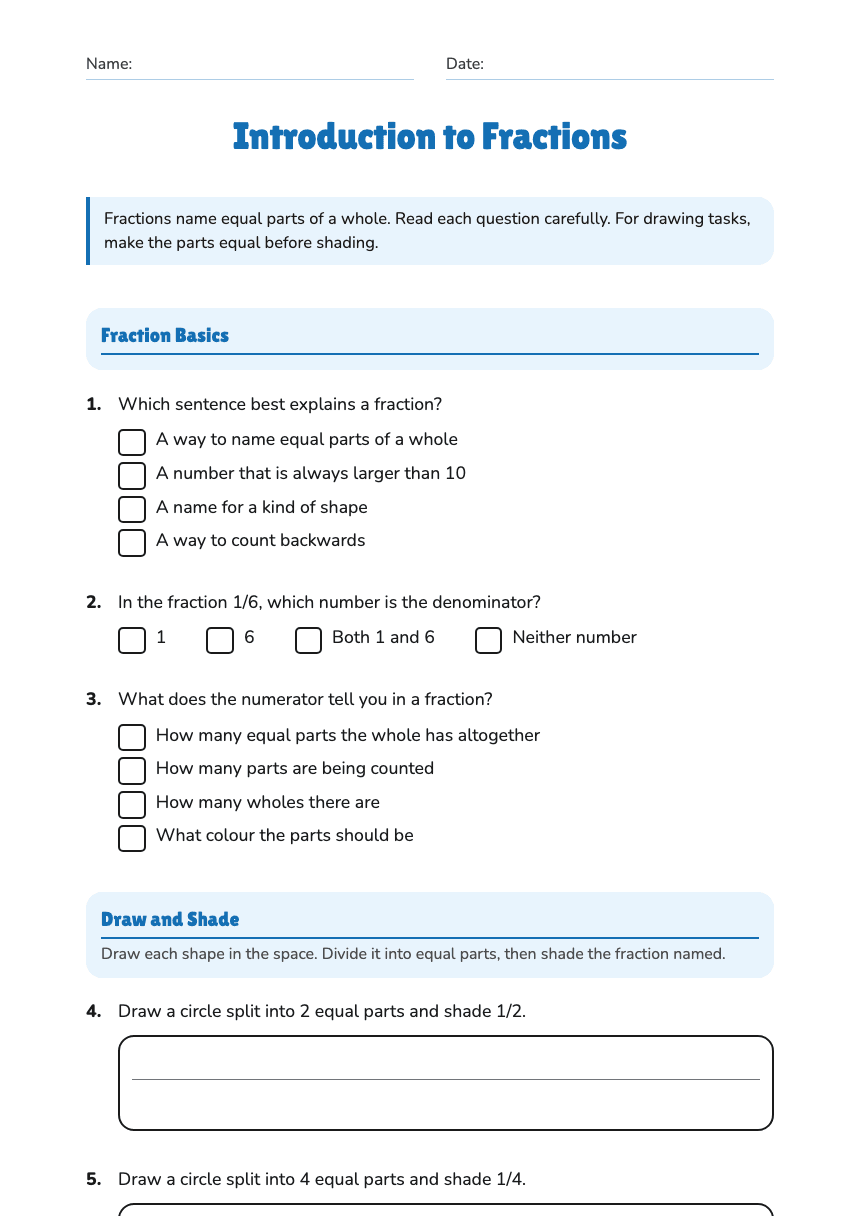
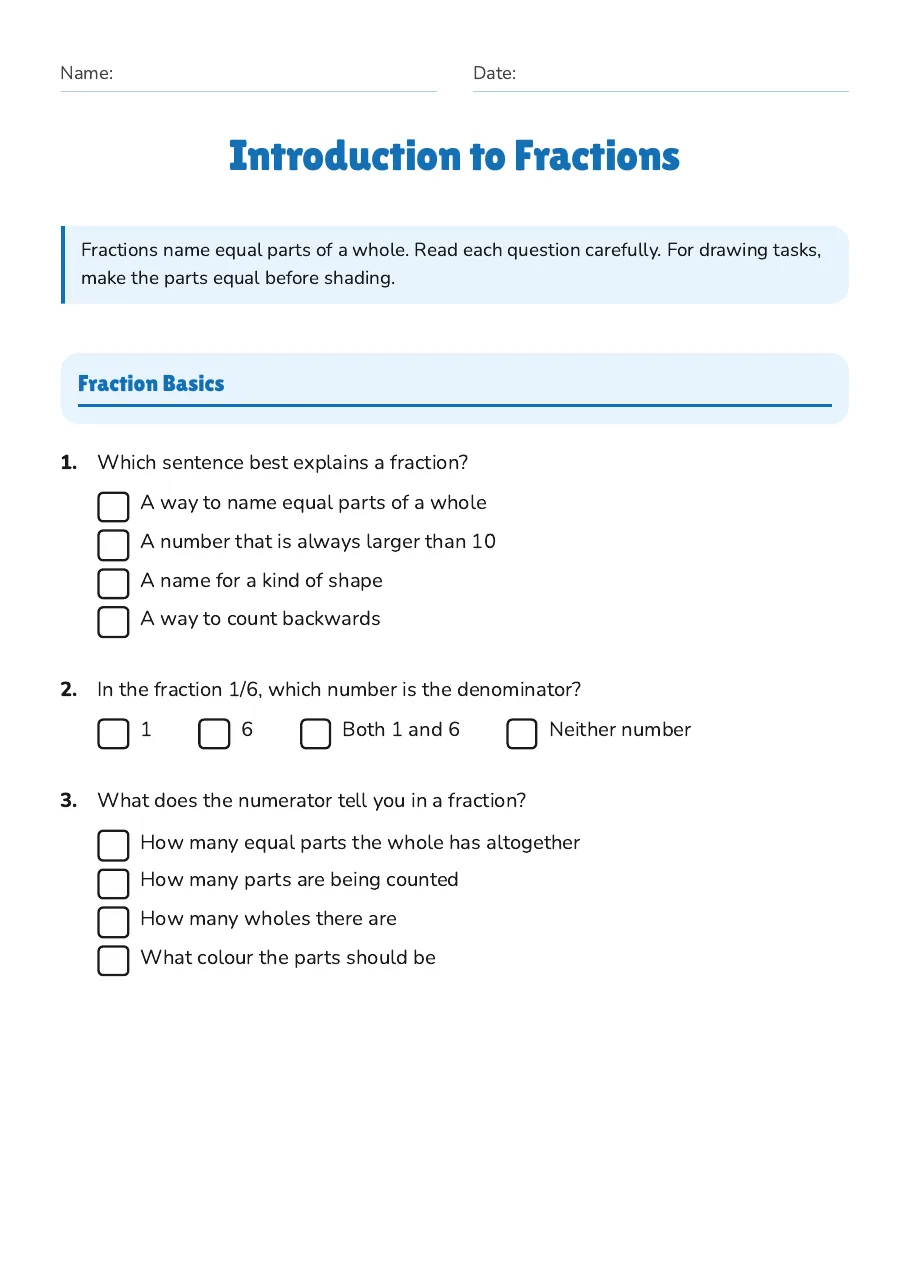
Name:Date:
Introduction to Fractions
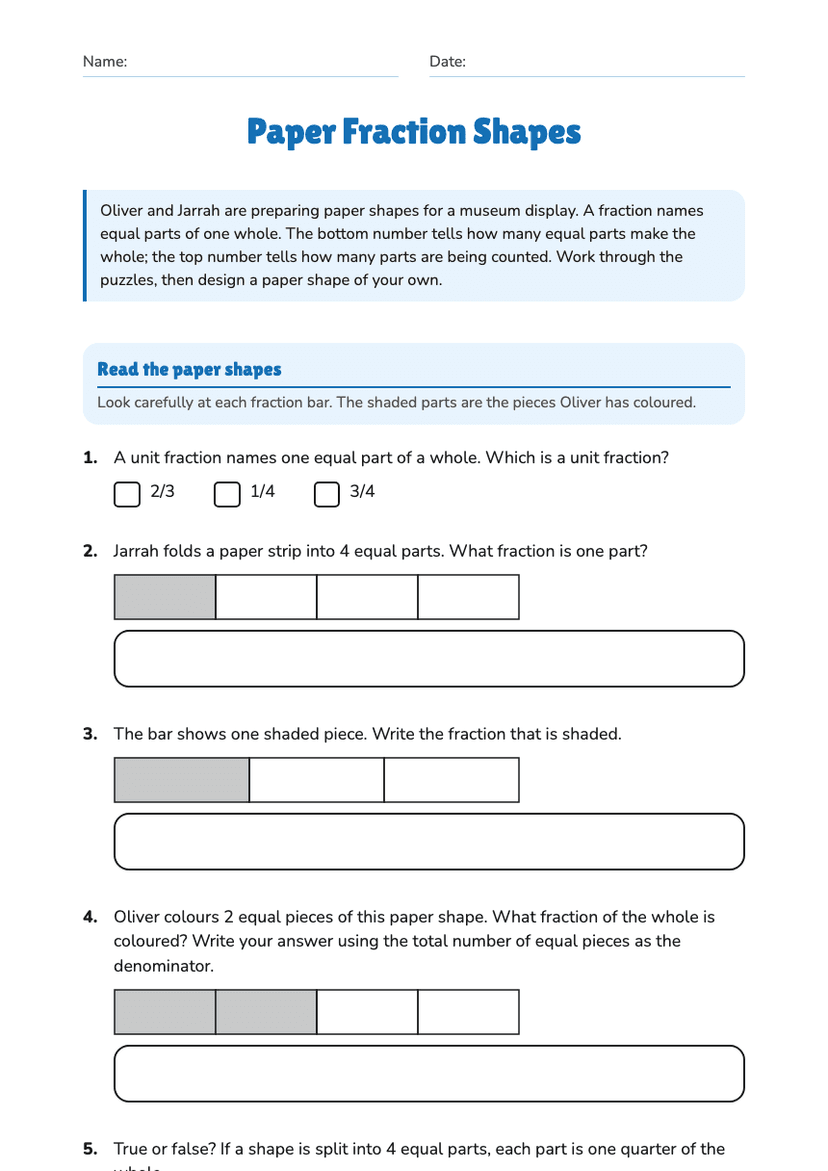
Fractions name equal parts of a whole. Read each question carefully. For drawing tasks, make the parts equal before shading.
Fraction Basics
1.Which sentence best explains a fraction?
- A way to name equal parts of a whole
- A number that is always larger than 10
- A name for a kind of shape
- A way to count backwards
2.In the fraction 1/6, which number is the denominator?
- 1
- 6
- Both 1 and 6
- Neither number
3.What does the numerator tell you in a fraction?
- How many equal parts the whole has altogether
- How many parts are being counted
- How many wholes there are
- What colour the parts should be
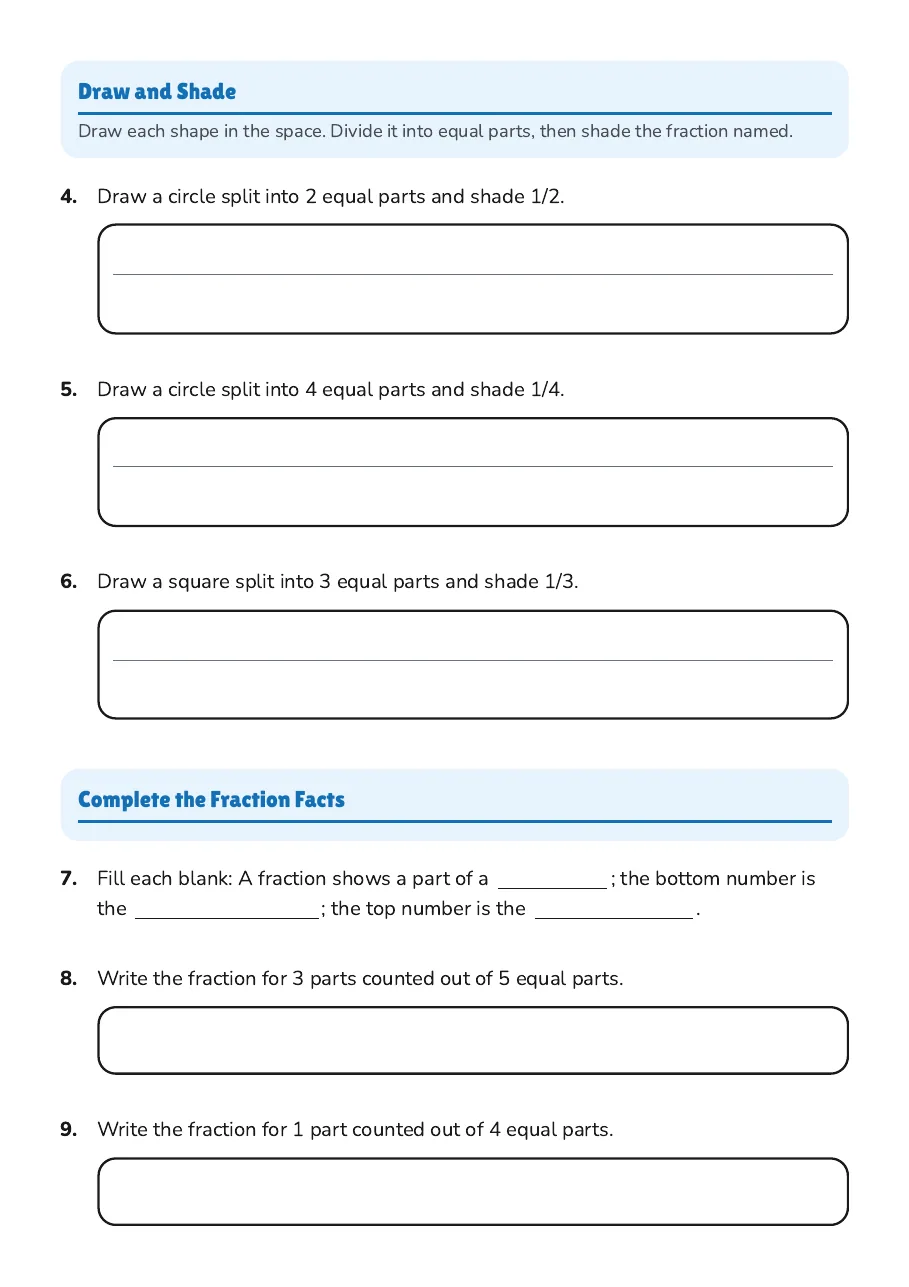
Draw and Shade
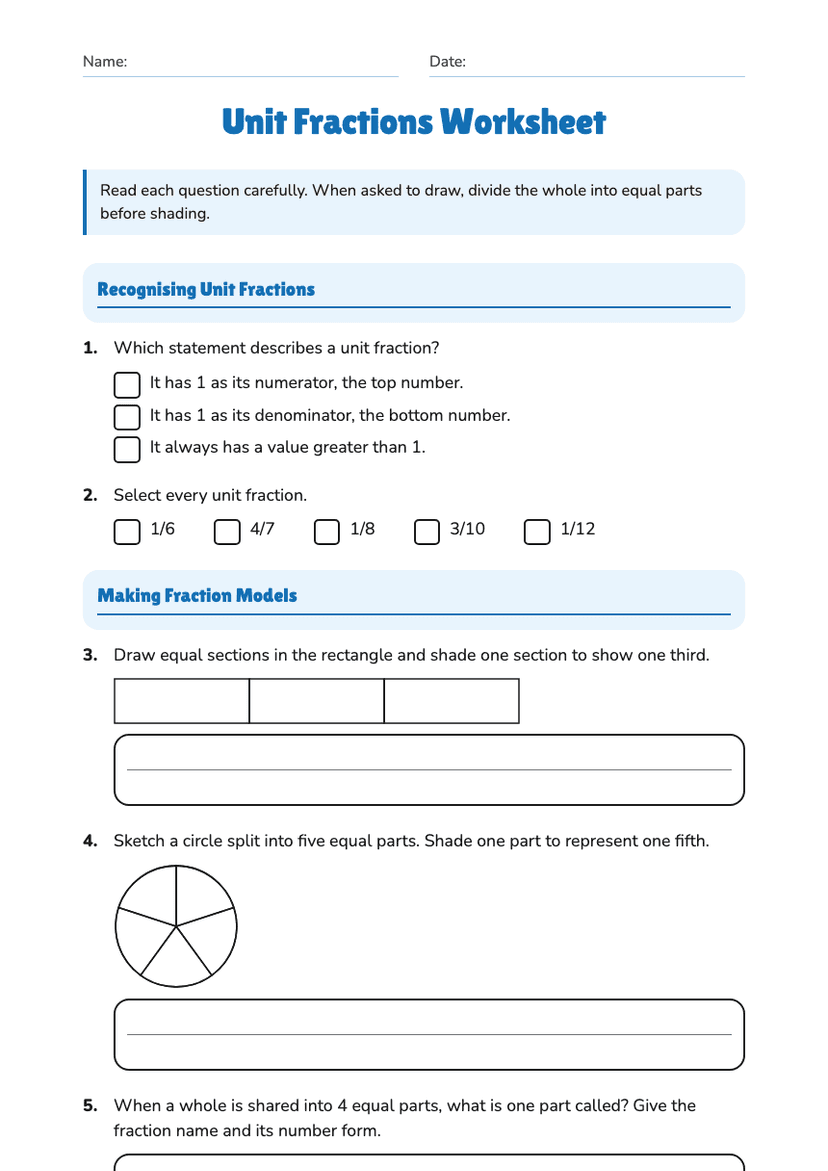
Draw each shape in the space. Divide it into equal parts, then shade the fraction named.
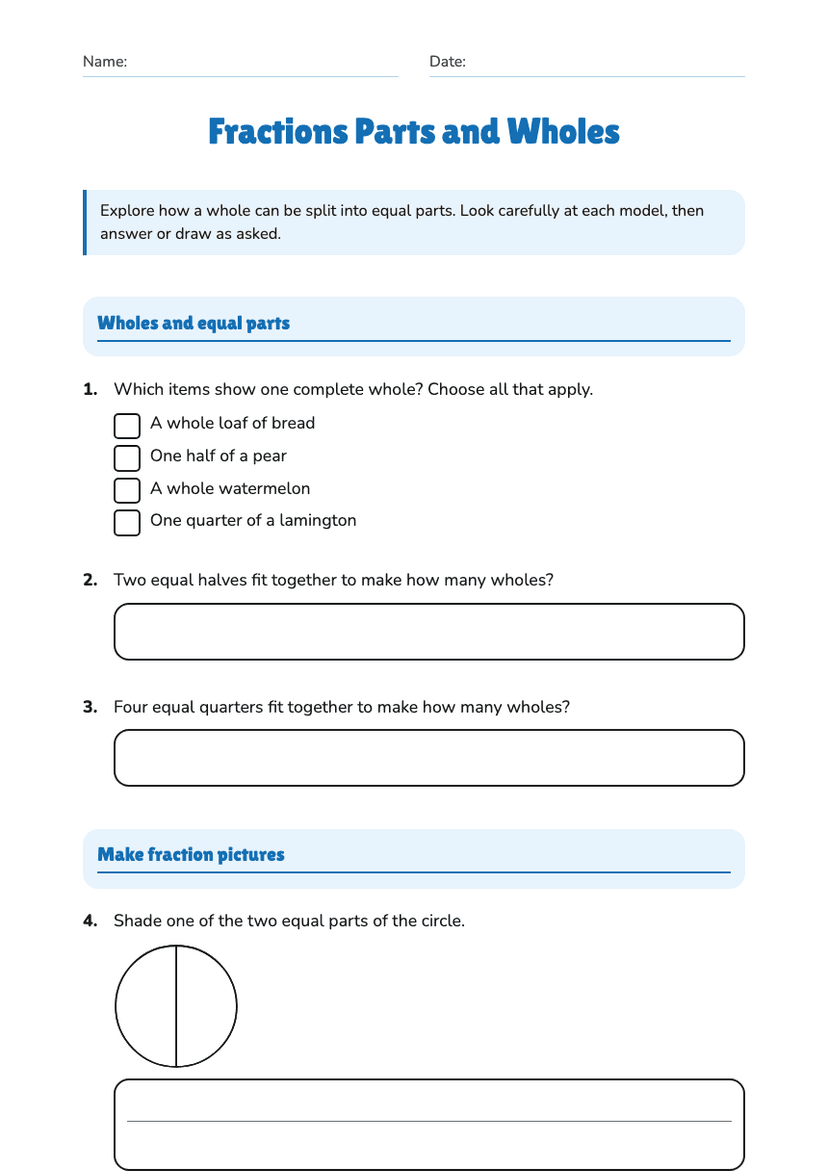
4.Draw a circle split into 2 equal parts and shade 1/2.
5.Draw a circle split into 4 equal parts and shade 1/4.
6.Draw a square split into 3 equal parts and shade 1/3.
Complete the Fraction Facts
7.Fill each blank: A fraction shows a part of a ; the bottom number is the ; the top number is the .
8.Write the fraction for 3 parts counted out of 5 equal parts.
9.Write the fraction for 1 part counted out of 4 equal parts.
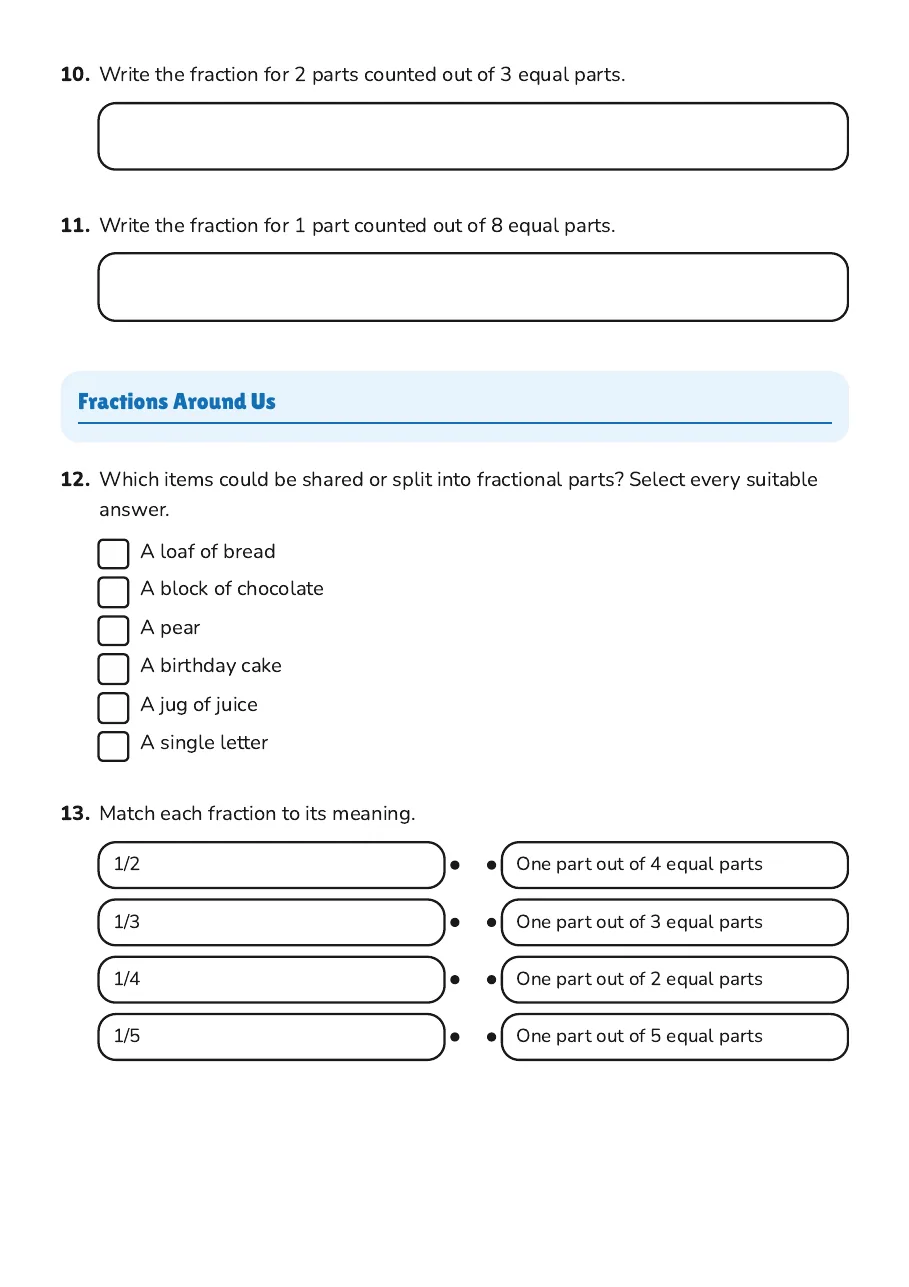
10.Write the fraction for 2 parts counted out of 3 equal parts.
11.Write the fraction for 1 part counted out of 8 equal parts.
Fractions Around Us
12.Which items could be shared or split into fractional parts? Select every suitable answer.
- A loaf of bread
- A block of chocolate
- A pear
- A birthday cake
- A jug of juice
- A single letter
13.Match each fraction to its meaning.
- 1/2
- 1/3
- 1/4
- 1/5
- One part out of 4 equal parts
- One part out of 3 equal parts
- One part out of 2 equal parts
- One part out of 5 equal parts
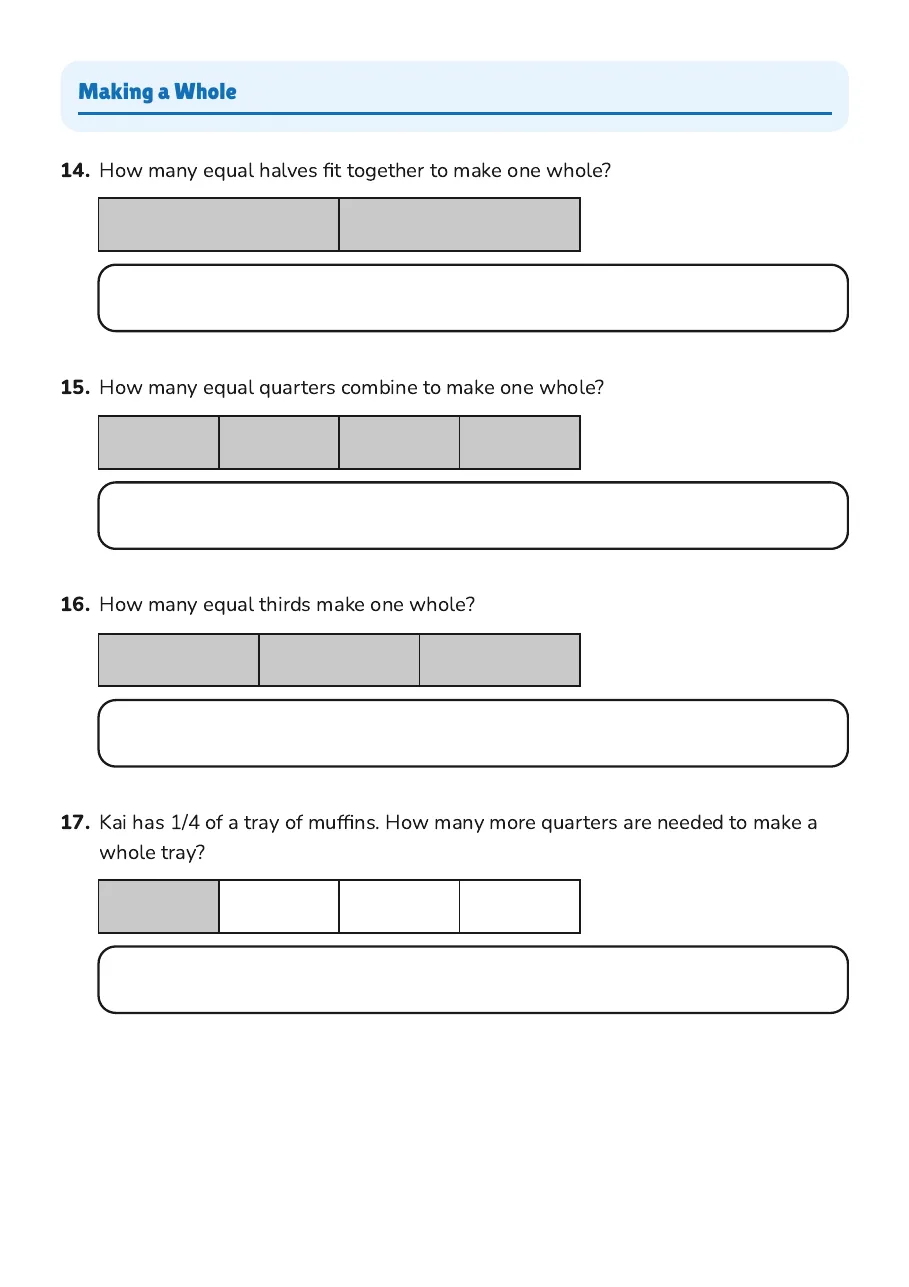
Making a Whole
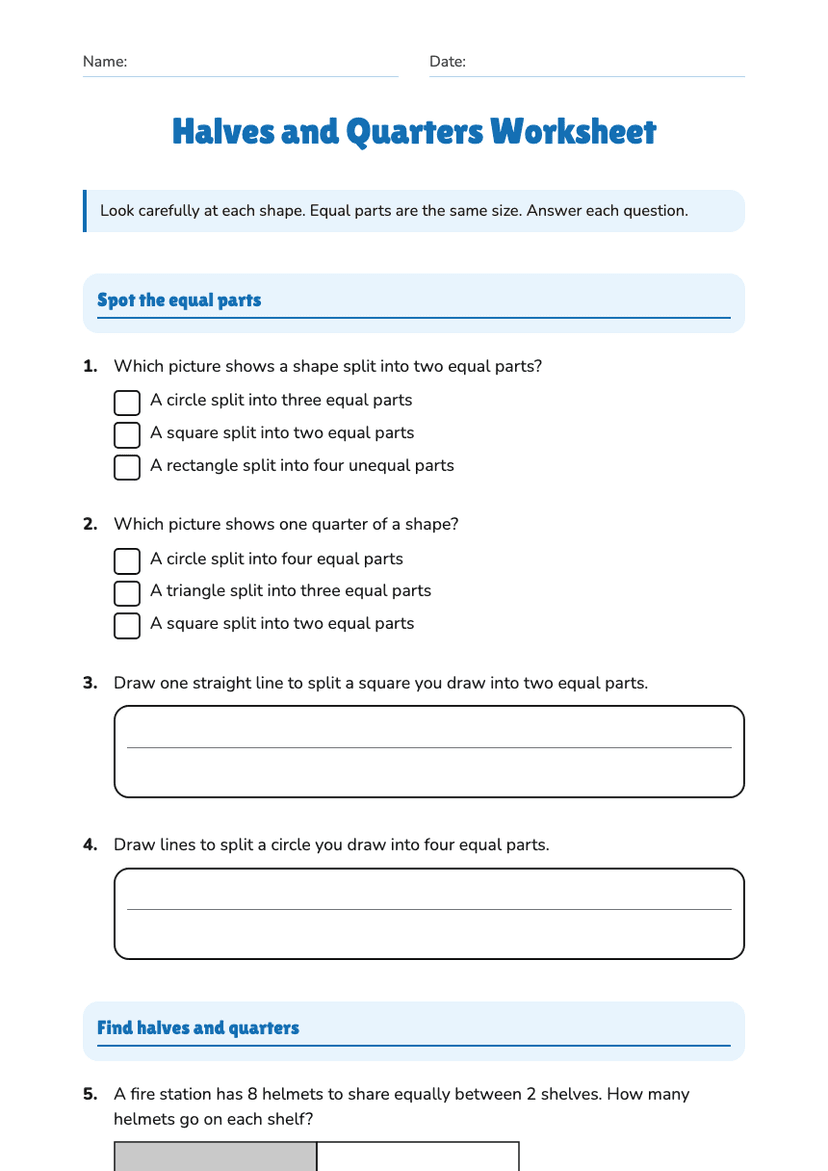
14.How many equal halves fit together to make one whole?
15.How many equal quarters combine to make one whole?
16.How many equal thirds make one whole?
17.Kai has 1/4 of a tray of muffins. How many more quarters are needed to make a whole tray?
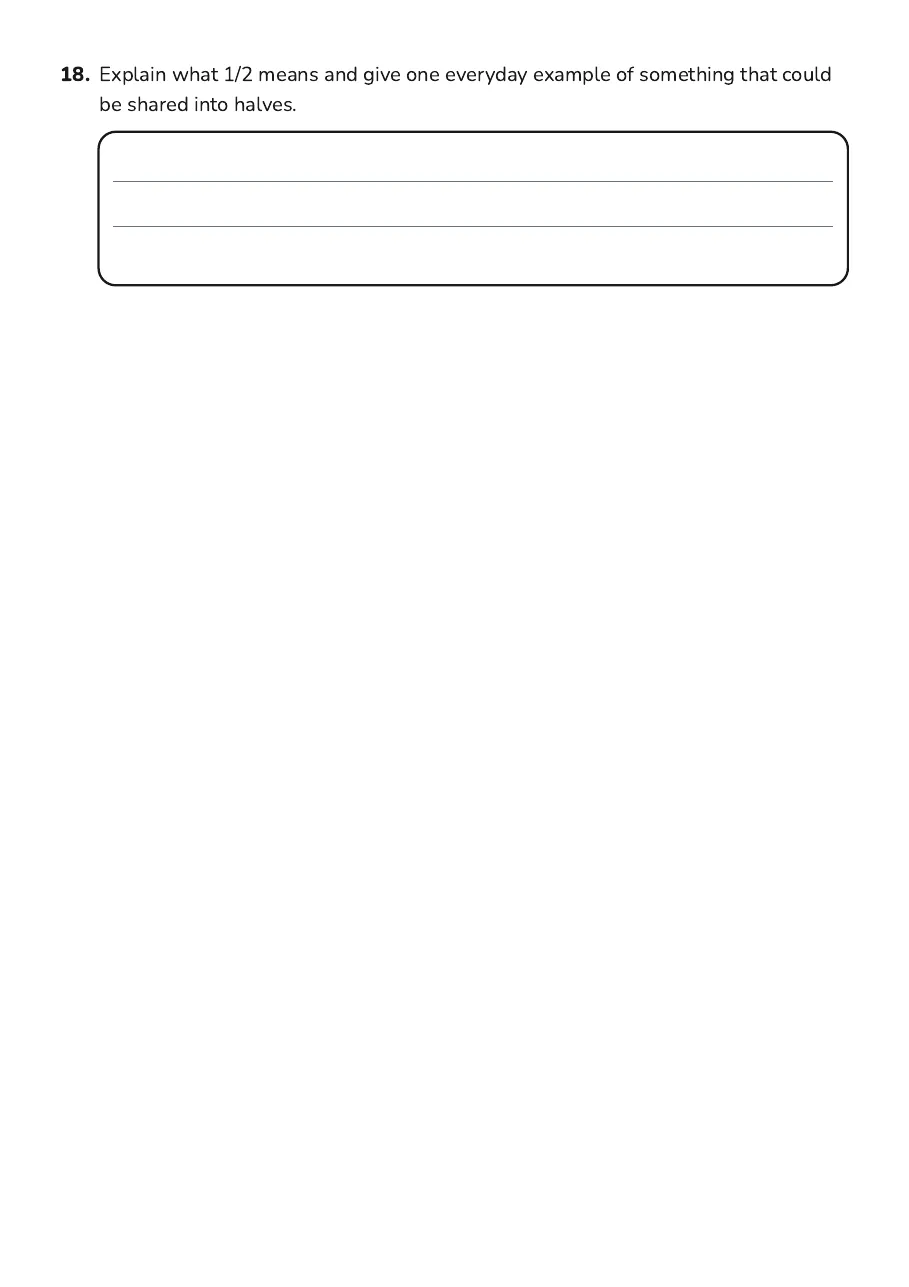
18.Explain what 1/2 means and give one everyday example of something that could be shared into halves.
5 printable pages
Page 1
Page 2
Page 3
Page 4
Page 5
About This Worksheet
Free in Kuraplan
Sign up free, grab the PDF, and customize it for your class.
Print-Ready
Formatted for standard paper. Clean layout, easy to read.
AI-Generated
Created with Kuraplan's AI, designed for real classroom use.
For Teachers & Parents
Use in classrooms, for homework, tutoring, or homeschool.
Need a custom version of this worksheet?
Kuraplan's AI generates custom worksheets in seconds — differentiated for every learner, aligned to your curriculum.
Generate Custom Worksheets — Free No credit card Curriculum-aligned Under 60 seconds