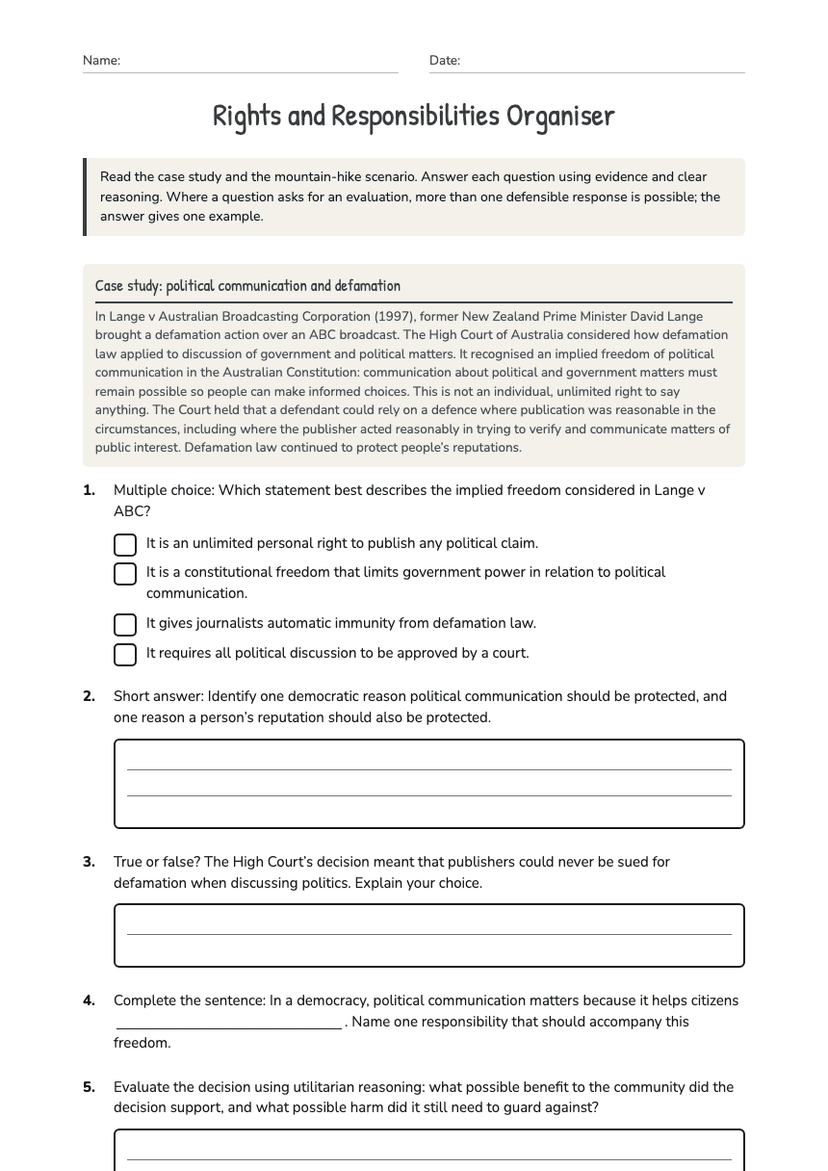
Key Features of the Constitution
A free social sciences worksheet ready for your classroom. Open in Kuraplan to grab the print-ready PDF, customize it for your students, or generate a fresh version in seconds.

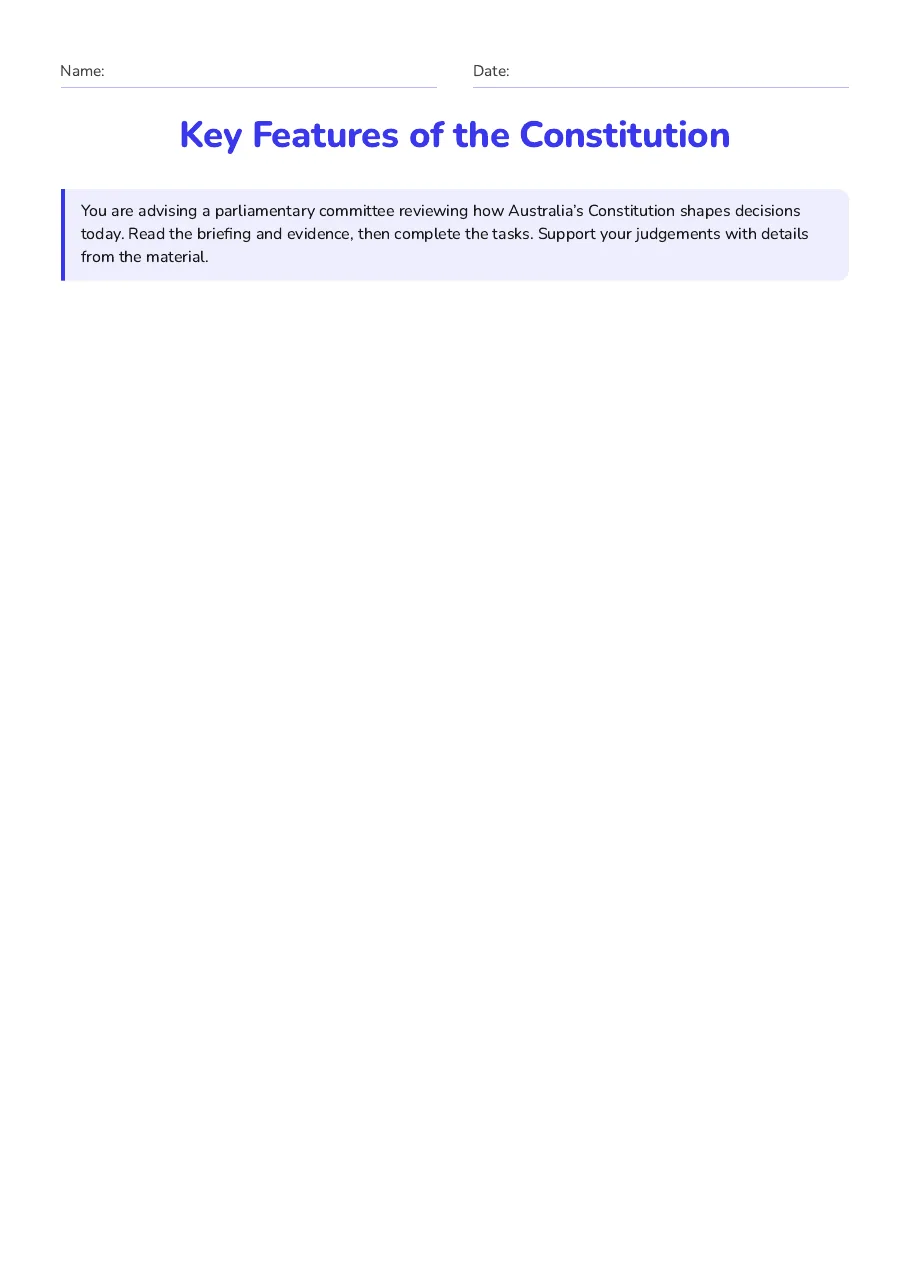
Key Features of the Constitution
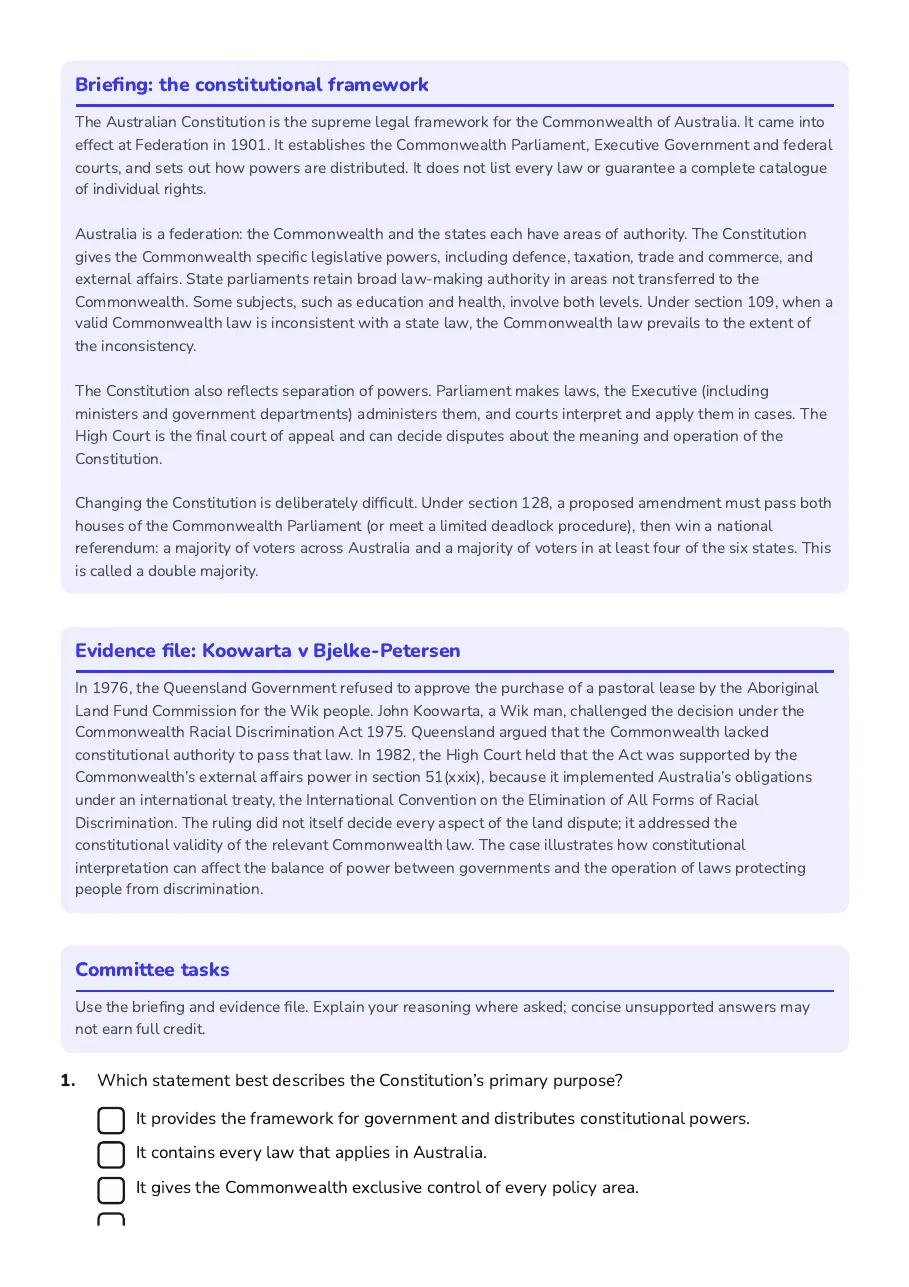
Briefing: the constitutional framework
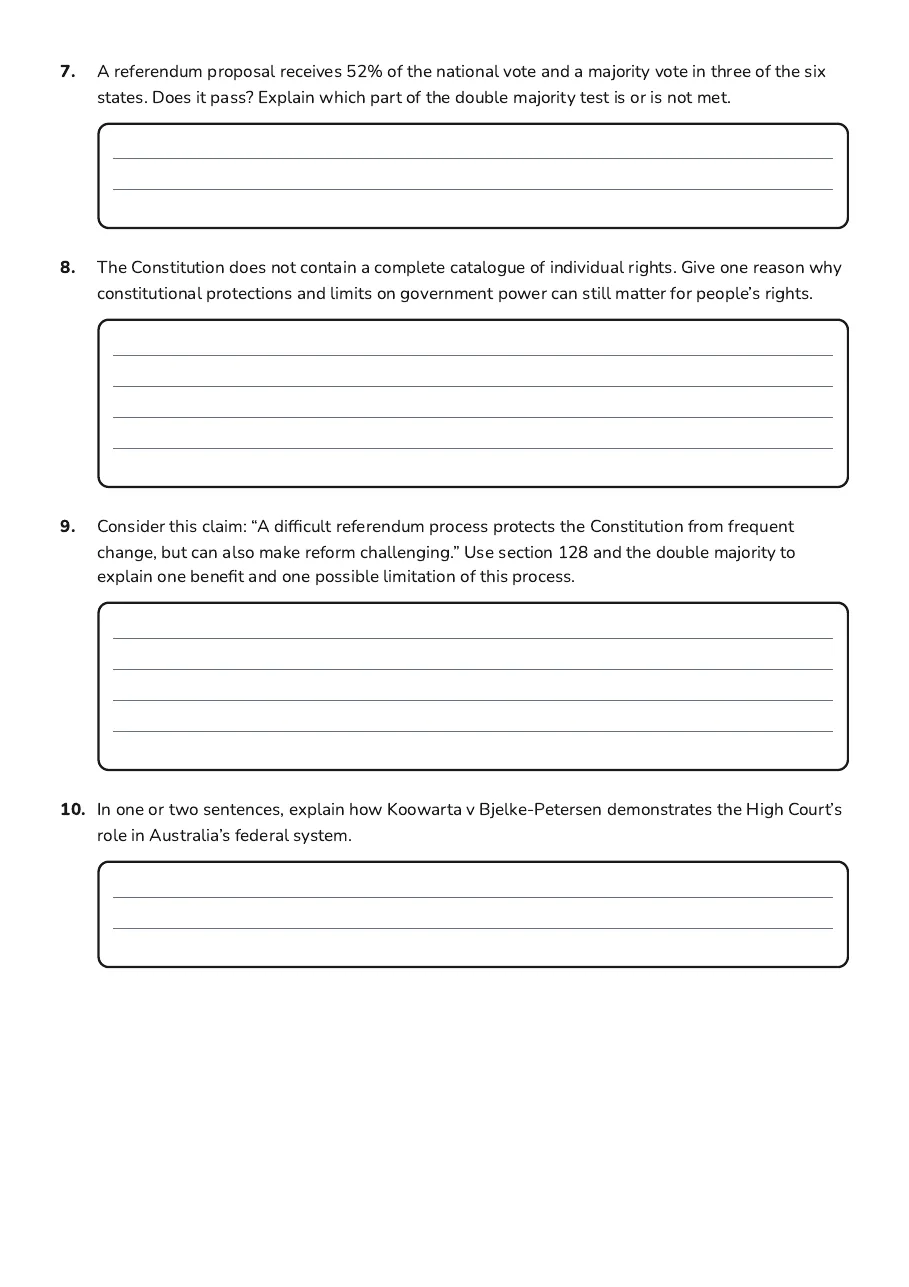
The Australian Constitution is the supreme legal framework for the Commonwealth of Australia. It came into effect at Federation in 1901. It establishes the Commonwealth Parliament, Executive Government and federal courts, and sets out how powers are distributed. It does not list every law or guarantee a complete catalogue of individual rights. Australia is a federation: the Commonwealth and the states each have areas of authority. The Constitution gives the Commonwealth specific legislative powers, including defence, taxation, trade and commerce, and external affairs. State parliaments retain broad law-making authority in areas not transferred to the Commonwealth. Some subjects, such as education and health, involve both levels. Under section 109, when a valid Commonwealth law is inconsistent with a state law, the Commonwealth law prevails to the extent of the inconsistency. The Constitution also reflects separation of powers. Parliament makes laws, the Executive (including ministers and government departments) administers them, and courts interpret and apply them in cases. The High Court is the final court of appeal and can decide disputes about the meaning and operation of the Constitution. Changing the Constitution is deliberately difficult. Under section 128, a proposed amendment must pass both houses of the Commonwealth Parliament (or meet a limited deadlock procedure), then win a national referendum: a majority of voters across Australia and a majority of voters in at least four of the six states. This is called a double majority.
Evidence file: Koowarta v Bjelke-Petersen
In 1976, the Queensland Government refused to approve the purchase of a pastoral lease by the Aboriginal Land Fund Commission for the Wik people. John Koowarta, a Wik man, challenged the decision under the Commonwealth Racial Discrimination Act 1975. Queensland argued that the Commonwealth lacked constitutional authority to pass that law. In 1982, the High Court held that the Act was supported by the Commonwealth’s external affairs power in section 51(xxix), because it implemented Australia’s obligations under an international treaty, the International Convention on the Elimination of All Forms of Racial Discrimination. The ruling did not itself decide every aspect of the land dispute; it addressed the constitutional validity of the relevant Commonwealth law. The case illustrates how constitutional interpretation can affect the balance of power between governments and the operation of laws protecting people from discrimination.
Committee tasks
Use the briefing and evidence file. Explain your reasoning where asked; concise unsupported answers may not earn full credit.
- It provides the framework for government and distributes constitutional powers.
- It contains every law that applies in Australia.
- It gives the Commonwealth exclusive control of every policy area.
- It is a complete list of individual rights and freedoms.
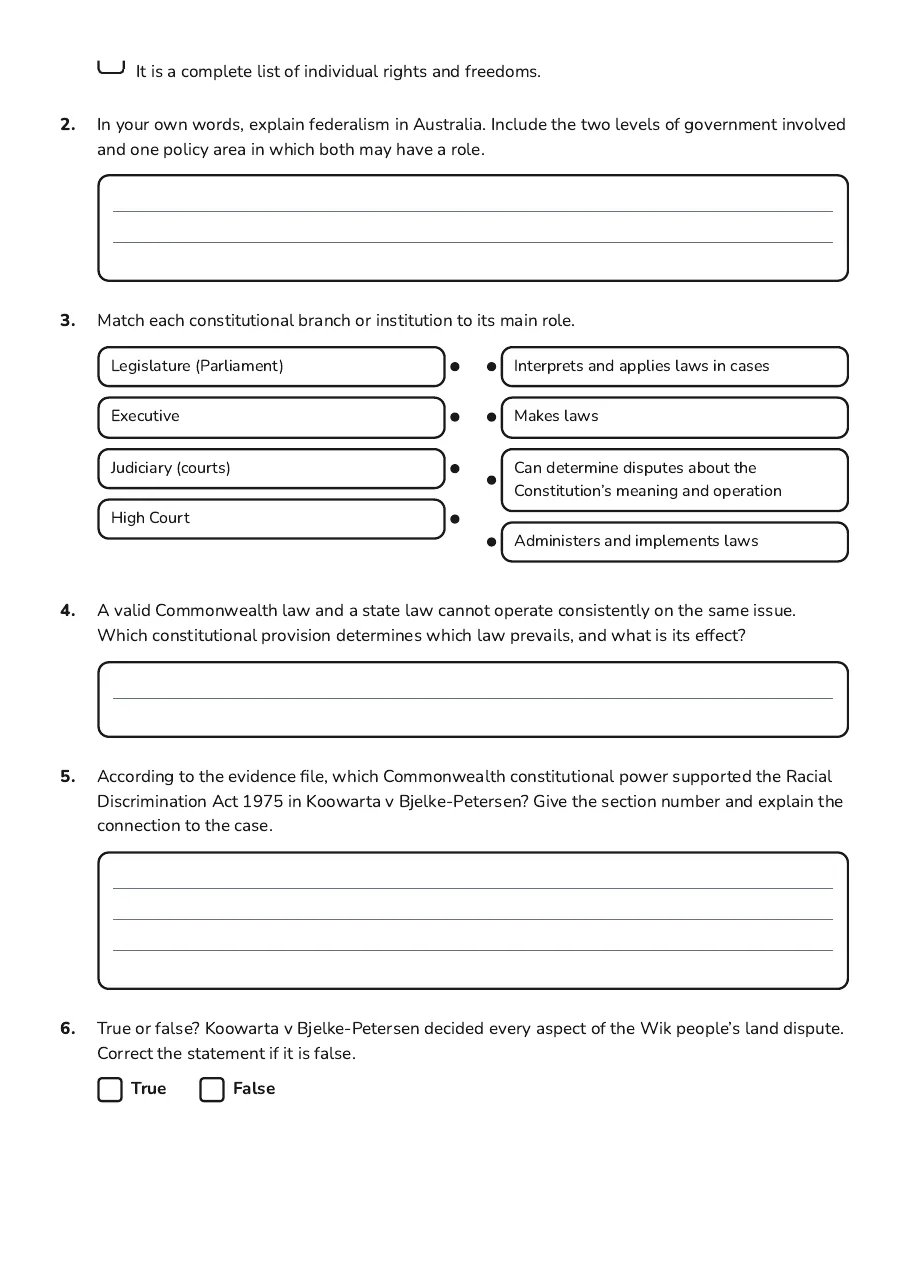
- Legislature (Parliament)
- Executive
- Judiciary (courts)
- High Court
- Interprets and applies laws in cases
- Makes laws
- Can determine disputes about the Constitution’s meaning and operation
- Administers and implements laws
4 printable pages
Page 1
Page 2
Page 3
Page 4
About This Worksheet
Free in Kuraplan
Sign up free, grab the PDF, and customize it for your class.
Print-Ready
Formatted for standard paper. Clean layout, easy to read.
AI-Generated
Created with Kuraplan's AI, designed for real classroom use.
For Teachers & Parents
Use in classrooms, for homework, tutoring, or homeschool.
Need a custom version of this worksheet?
Kuraplan's AI generates custom worksheets in seconds — differentiated for every learner, aligned to your curriculum.
Generate Custom Worksheets — FreeMore Social Sciences Worksheets
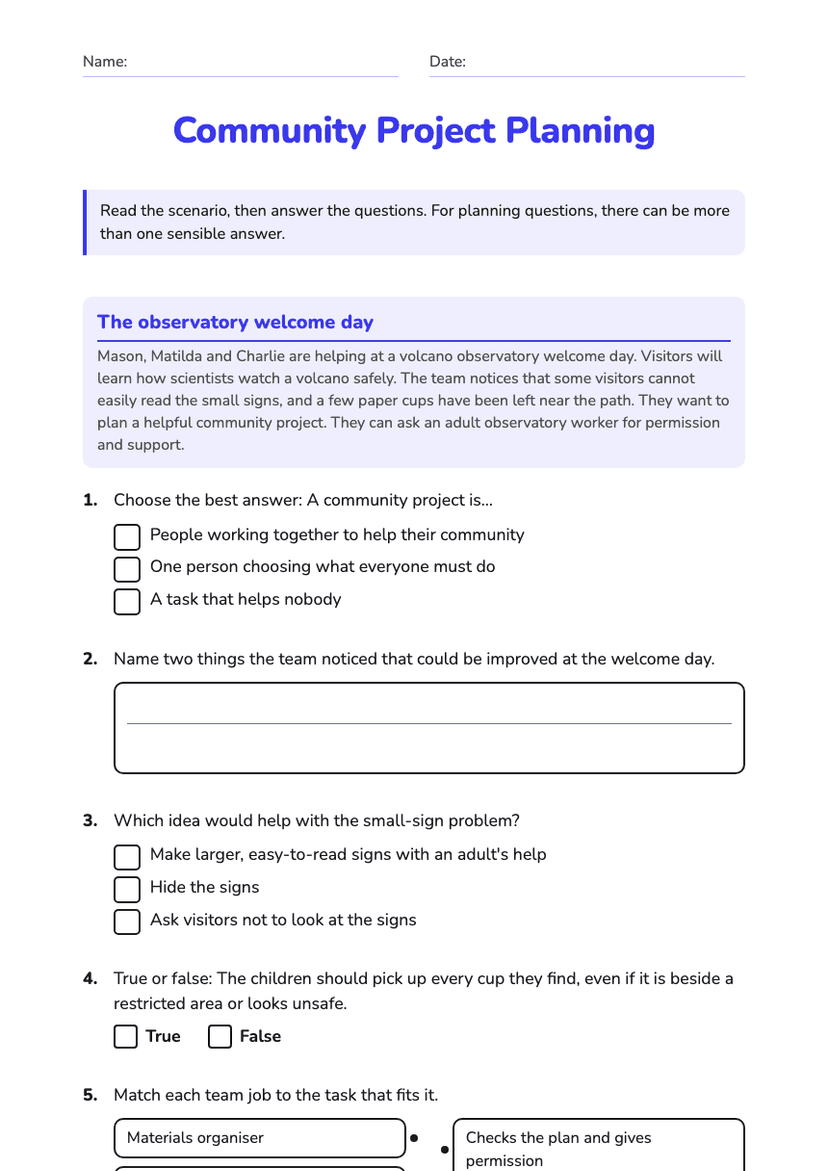
Community Project Planning
Free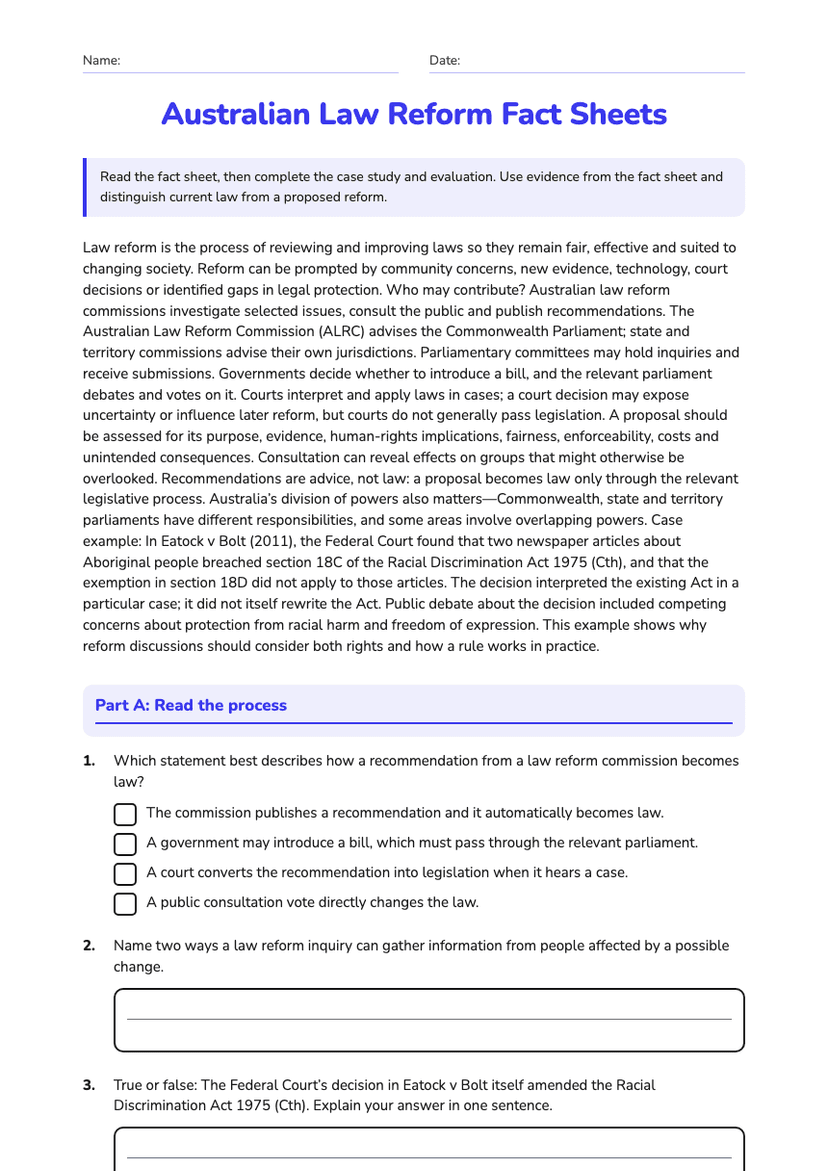
Australian Law Reform Fact Sheets
Free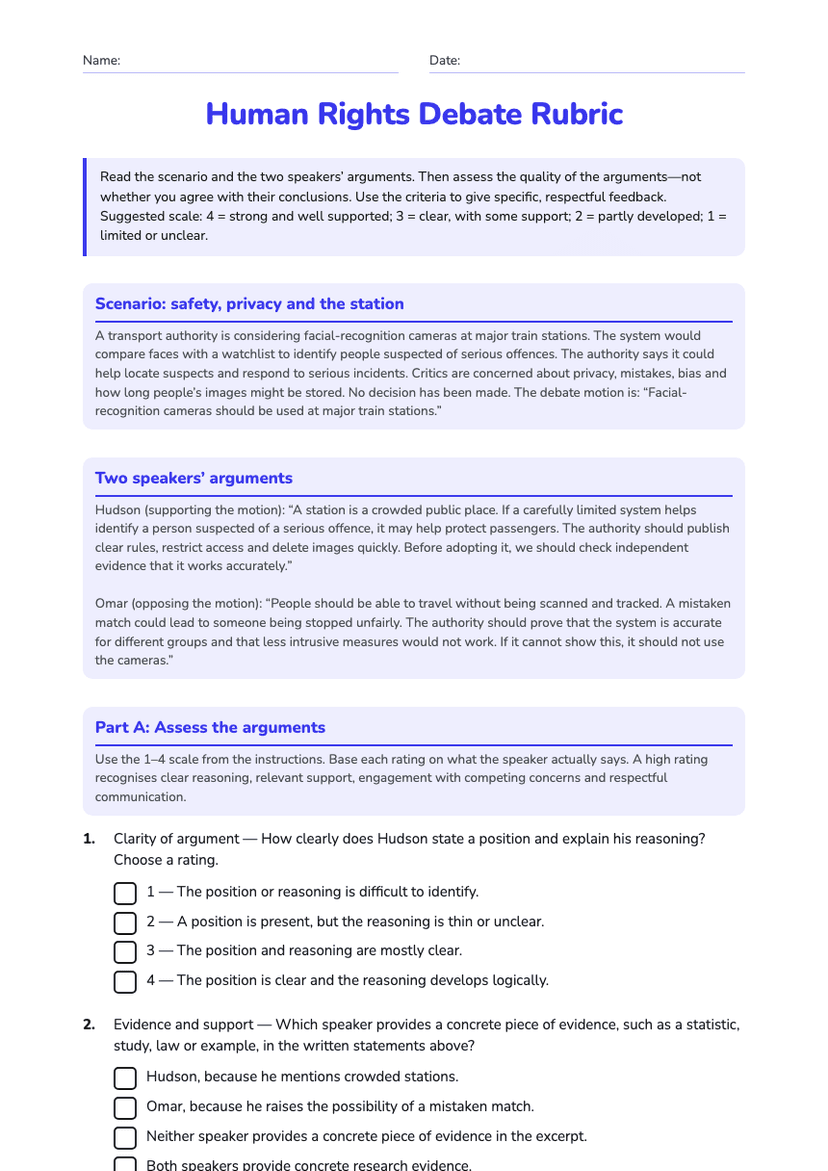
Human Rights Debate Rubric
Free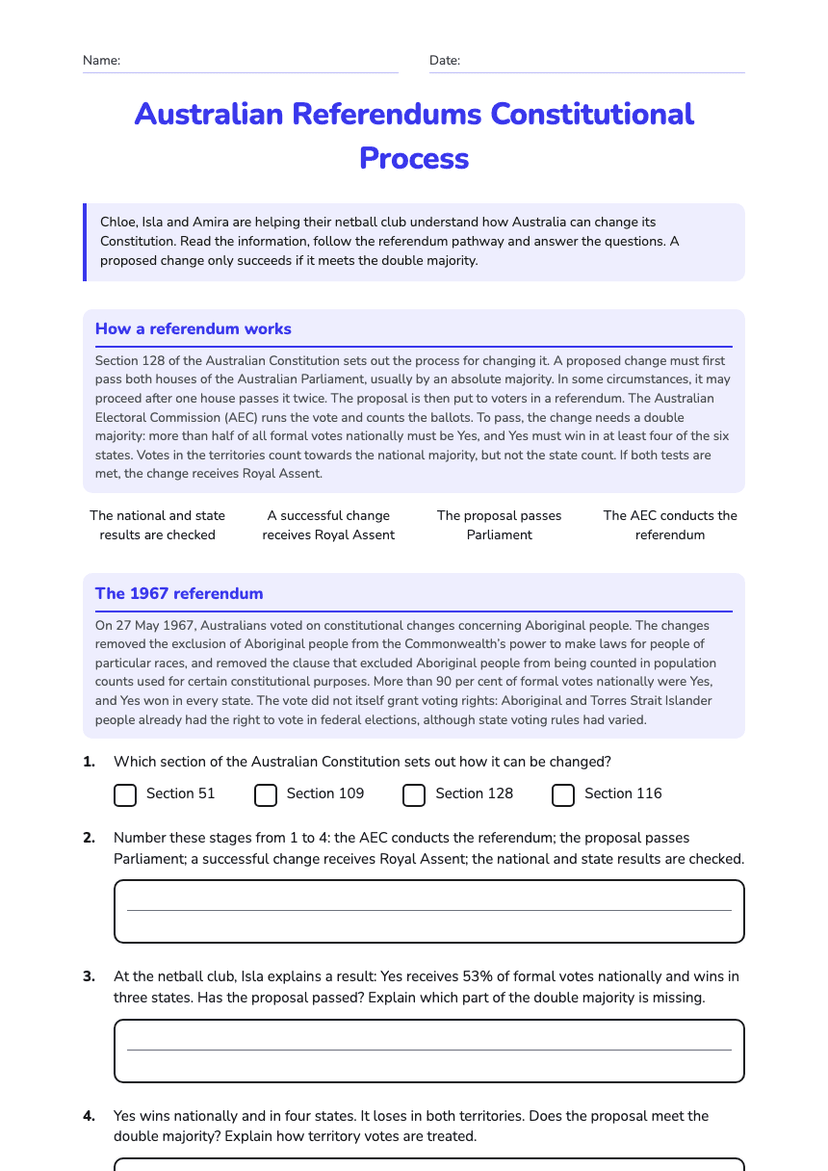
Australian Referendums Constitutional Process
Free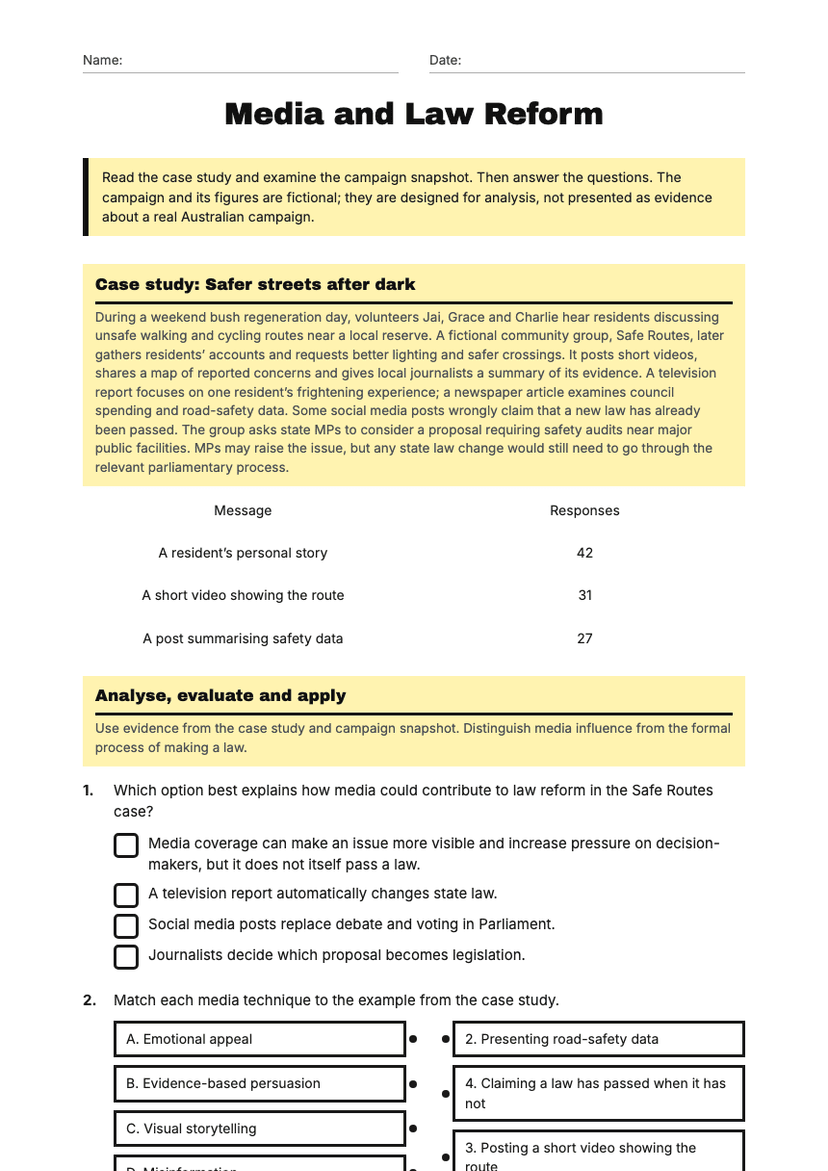
Media and Law Reform
Free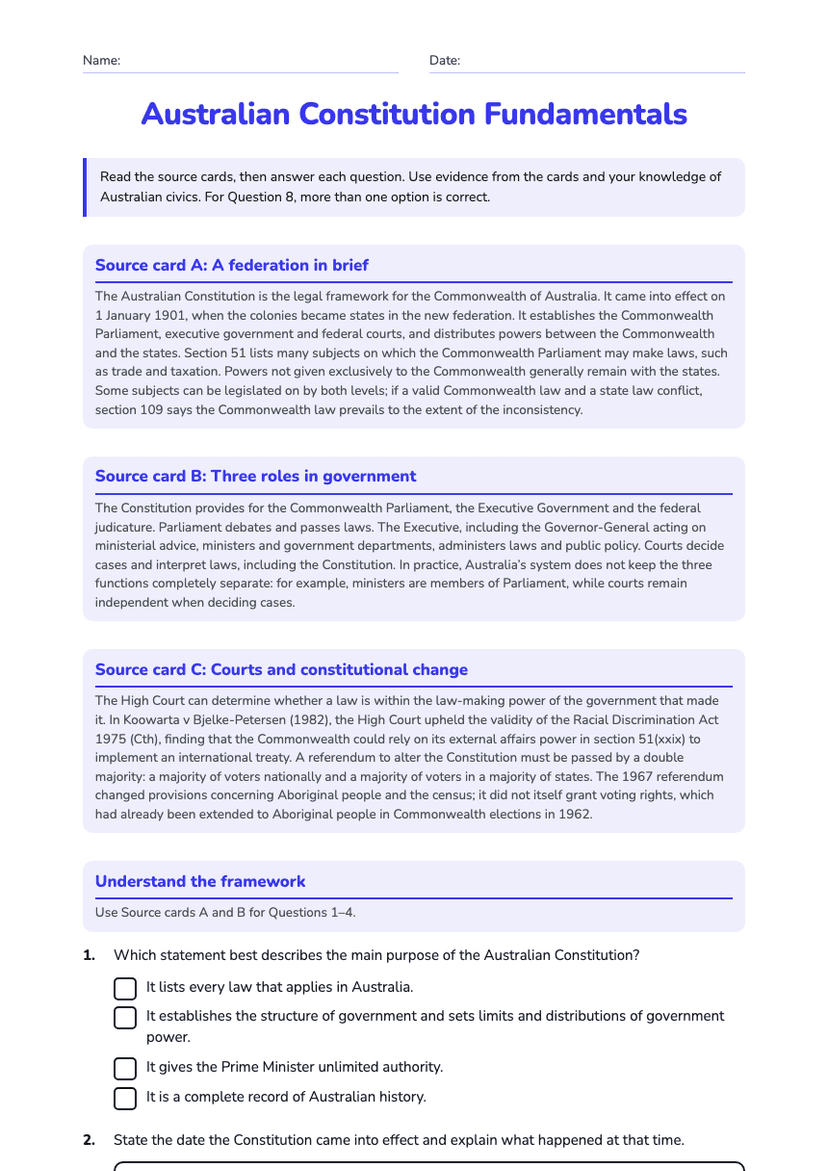
Australian Constitution Fundamentals
Free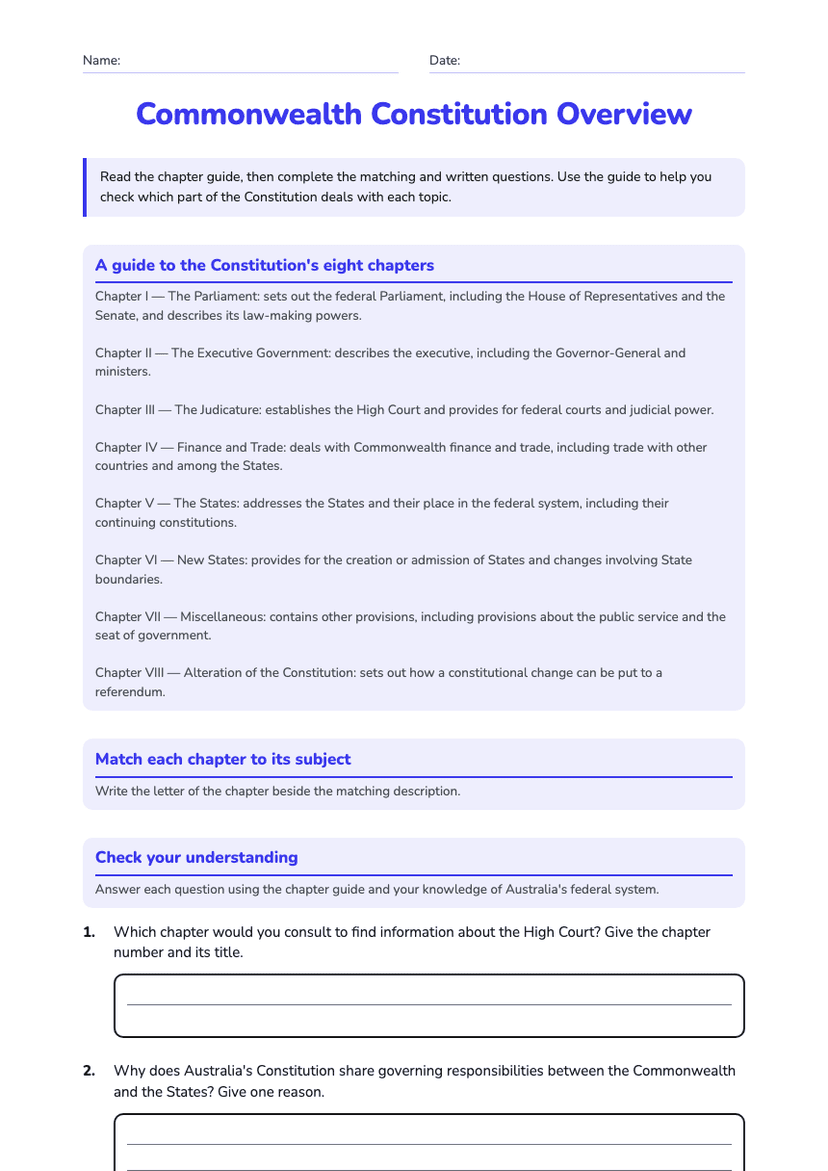
Commonwealth Constitution Overview
Free