Lab Report Section Sorting
A free science worksheet ready for your classroom. Open in Kuraplan to grab the print-ready PDF, customize it for your students, or generate a fresh version in seconds.
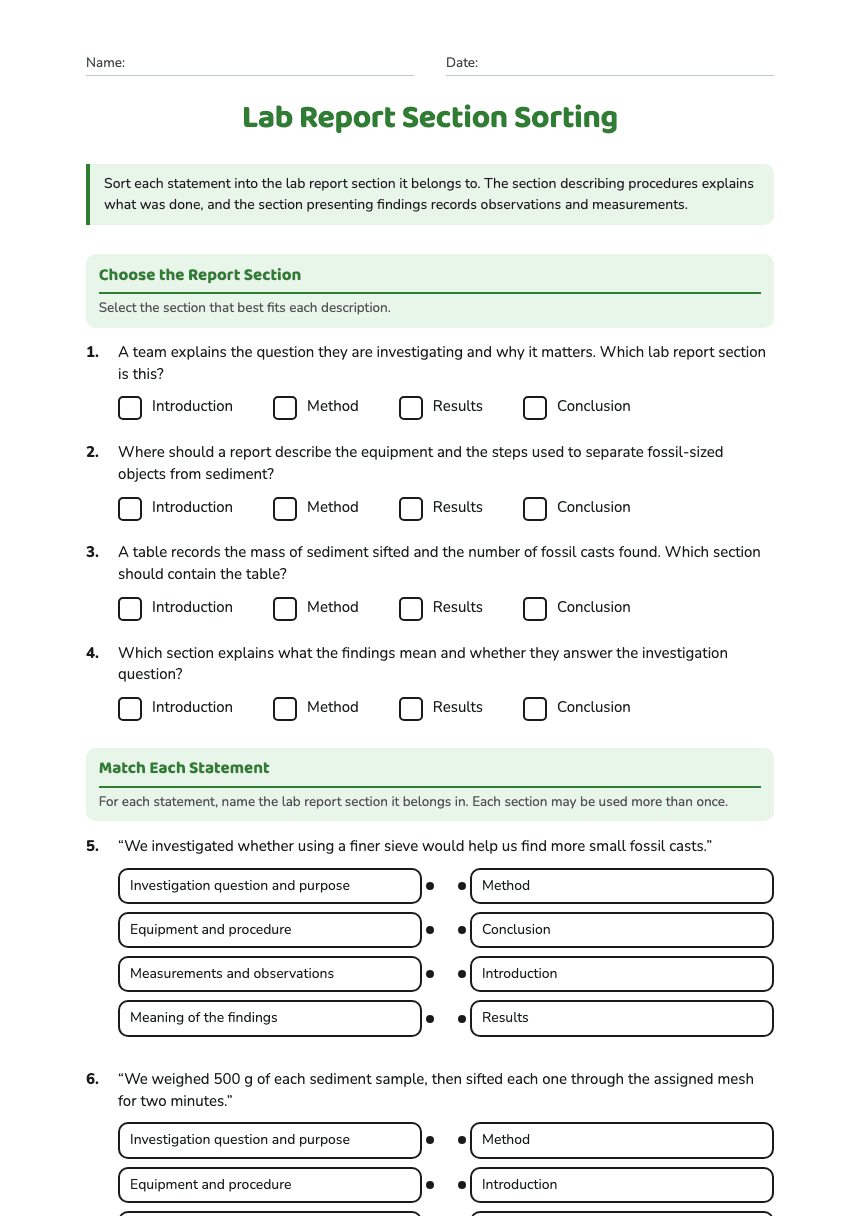
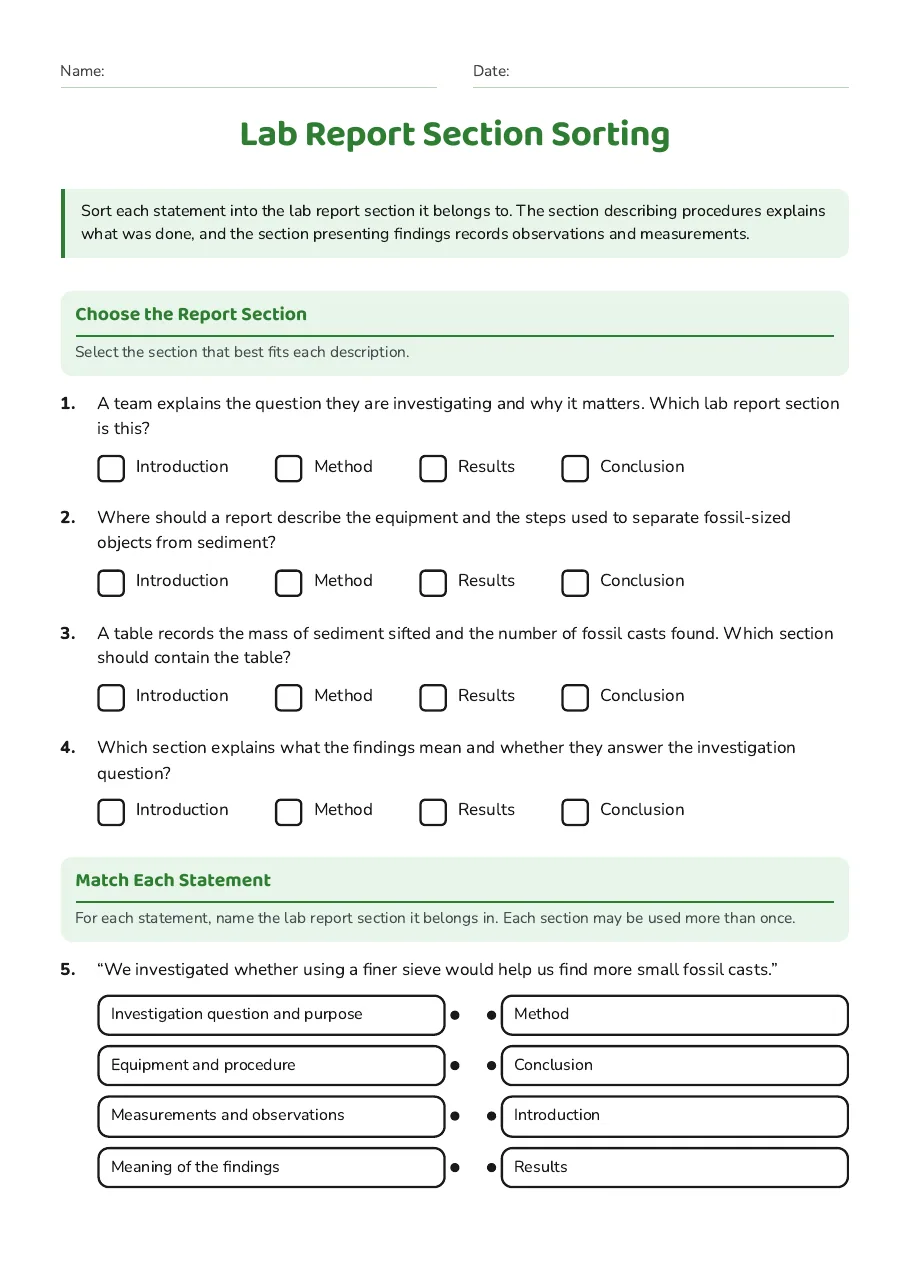
Lab Report Section Sorting
Choose the Report Section
Select the section that best fits each description.
- Introduction
- Method
- Results
- Conclusion
- Introduction
- Method
- Results
- Conclusion
- Introduction
- Method
- Results
- Conclusion
- Introduction
- Method
- Results
- Conclusion
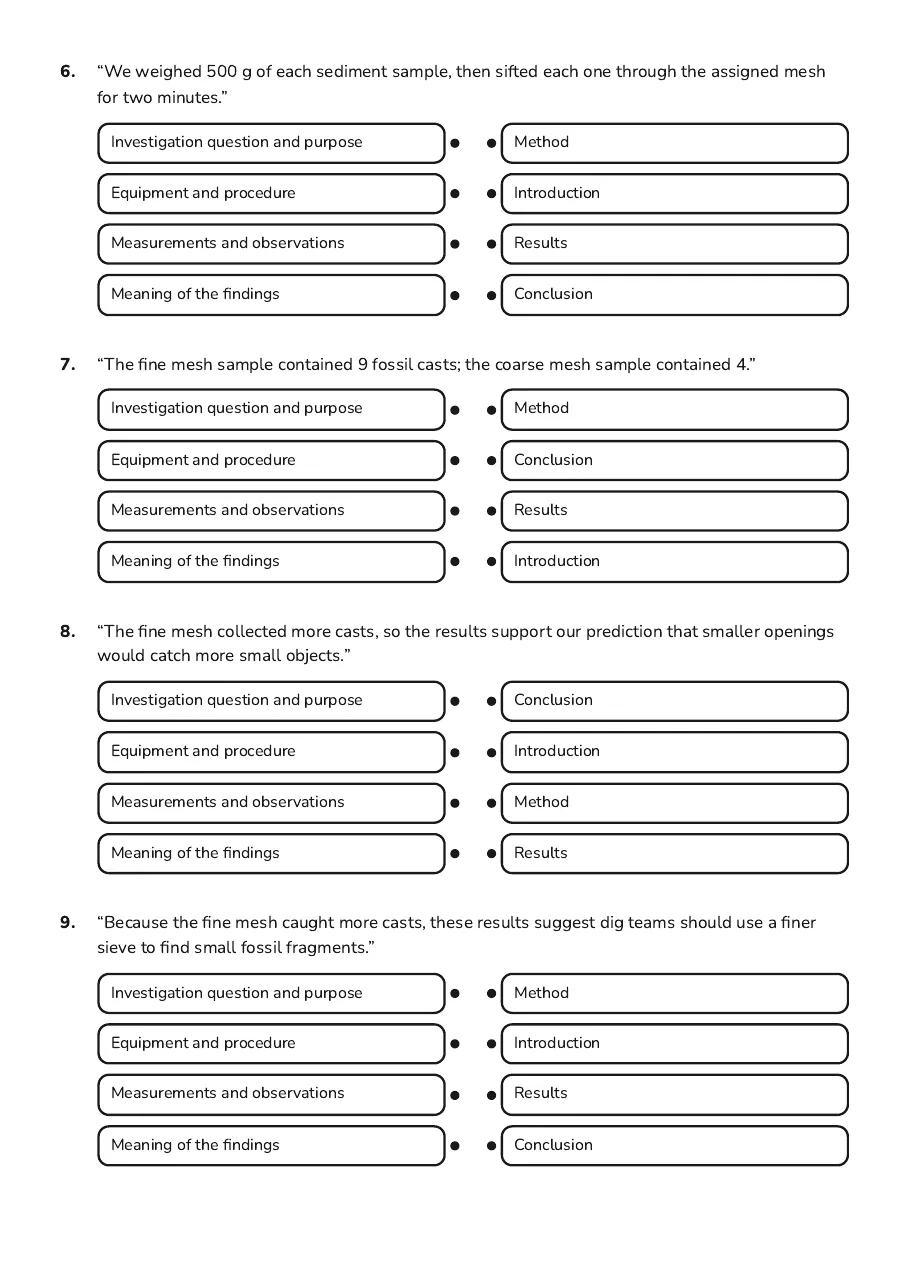
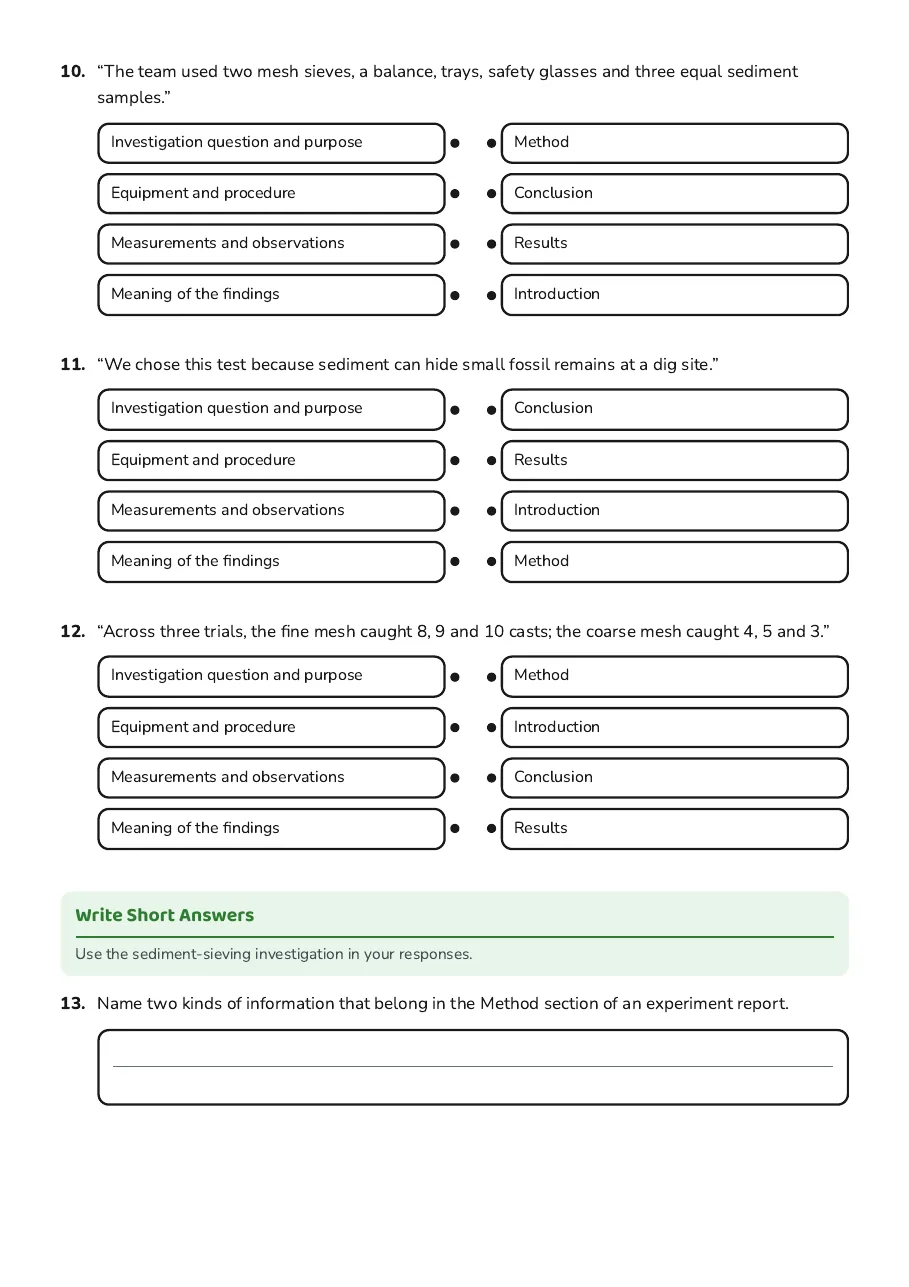
Match Each Statement
For each statement, name the lab report section it belongs in. Each section may be used more than once.
- Investigation question and purpose
- Equipment and procedure
- Measurements and observations
- Meaning of the findings
- Method
- Conclusion
- Introduction
- Results
- Investigation question and purpose
- Equipment and procedure
- Measurements and observations
- Meaning of the findings
- Method
- Introduction
- Results
- Conclusion
- Investigation question and purpose
- Equipment and procedure
- Measurements and observations
- Meaning of the findings
- Method
- Conclusion
- Results
- Introduction
- Investigation question and purpose
- Equipment and procedure
- Measurements and observations
- Meaning of the findings
- Conclusion
- Introduction
- Method
- Results
- Investigation question and purpose
- Equipment and procedure
- Measurements and observations
- Meaning of the findings
- Method
- Introduction
- Results
- Conclusion
- Investigation question and purpose
- Equipment and procedure
- Measurements and observations
- Meaning of the findings
- Method
- Conclusion
- Results
- Introduction
- Investigation question and purpose
- Equipment and procedure
- Measurements and observations
- Meaning of the findings
- Conclusion
- Results
- Introduction
- Method
- Investigation question and purpose
- Equipment and procedure
- Measurements and observations
- Meaning of the findings
- Method
- Introduction
- Conclusion
- Results
Write Short Answers
Use the sediment-sieving investigation in your responses.
4 printable pages
Page 1
Page 2
Page 3

Page 4
About This Worksheet
Free in Kuraplan
Sign up free, grab the PDF, and customize it for your class.
Print-Ready
Formatted for standard paper. Clean layout, easy to read.
AI-Generated
Created with Kuraplan's AI, designed for real classroom use.
For Teachers & Parents
Use in classrooms, for homework, tutoring, or homeschool.
Need a custom version of this worksheet?
Kuraplan's AI generates custom worksheets in seconds — differentiated for every learner, aligned to your curriculum.
Generate Custom Worksheets — FreeMore Science Worksheets
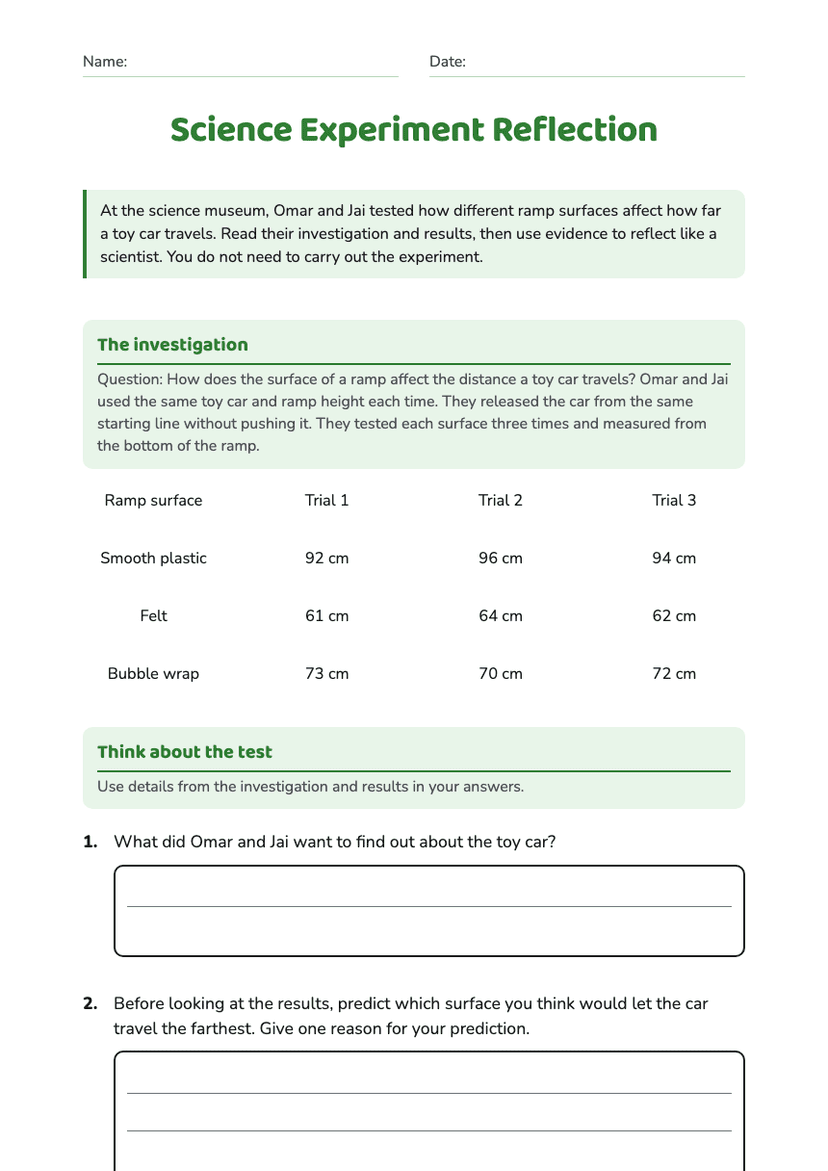
Science Experiment Reflection
Free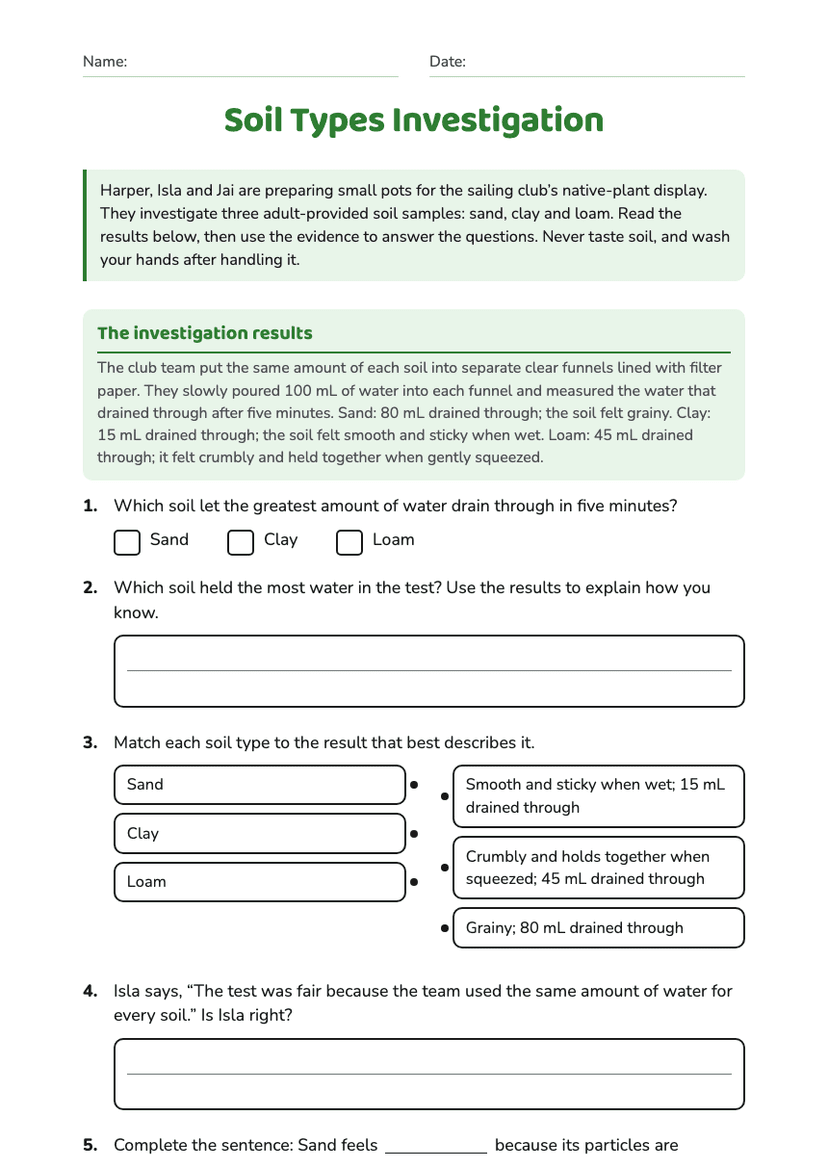
Soil Types Investigation
Free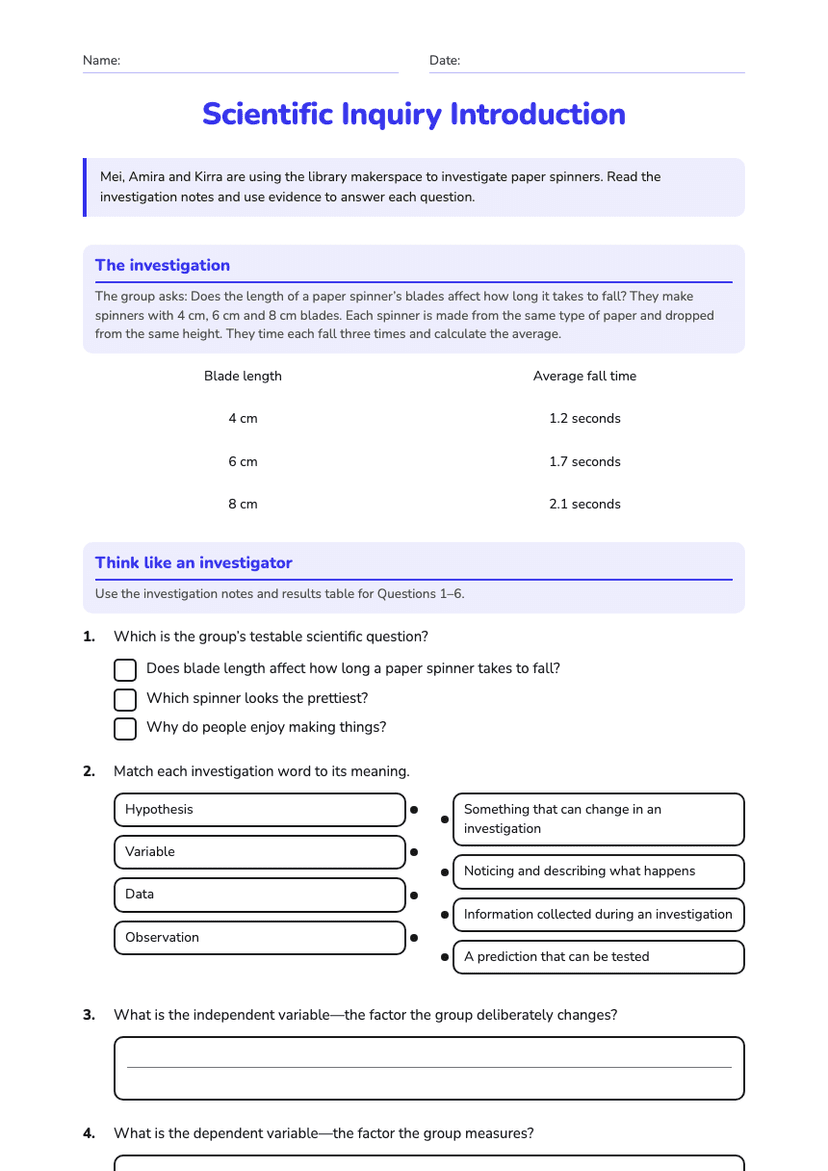
Scientific Inquiry Introduction
Free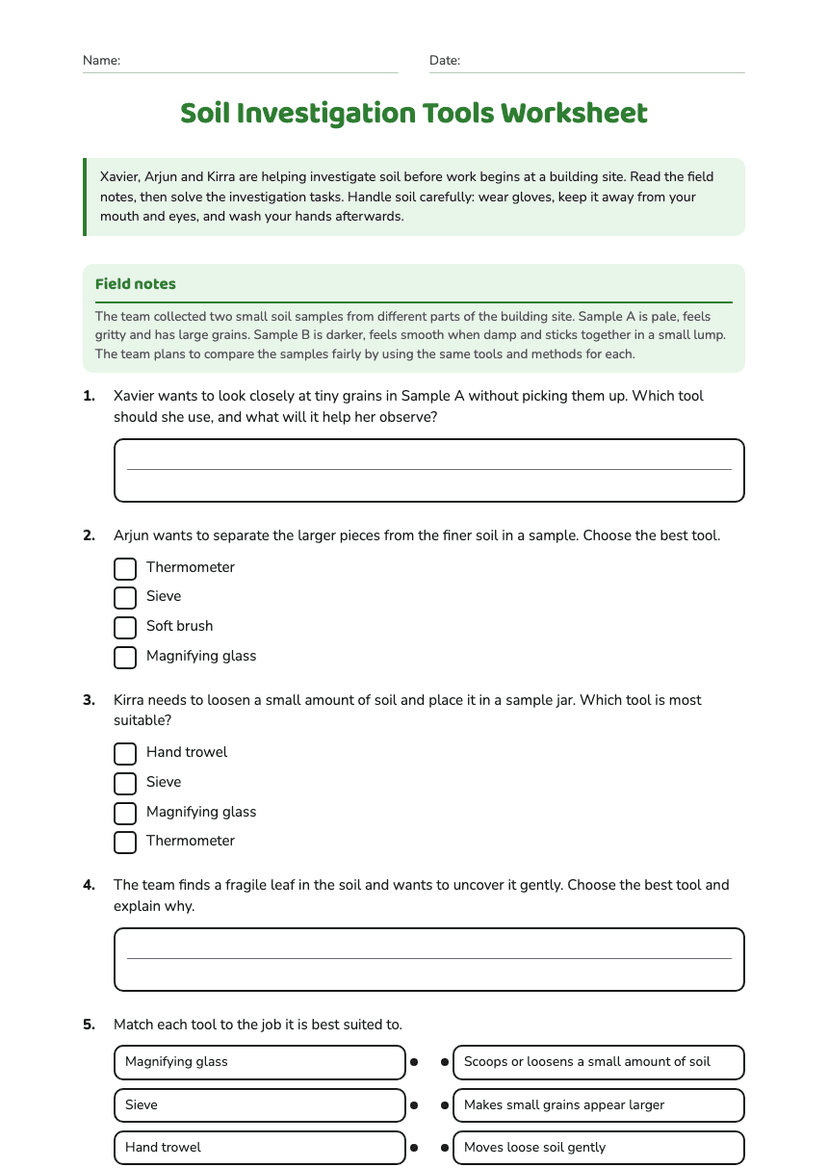
Soil Investigation Tools Worksheet
Free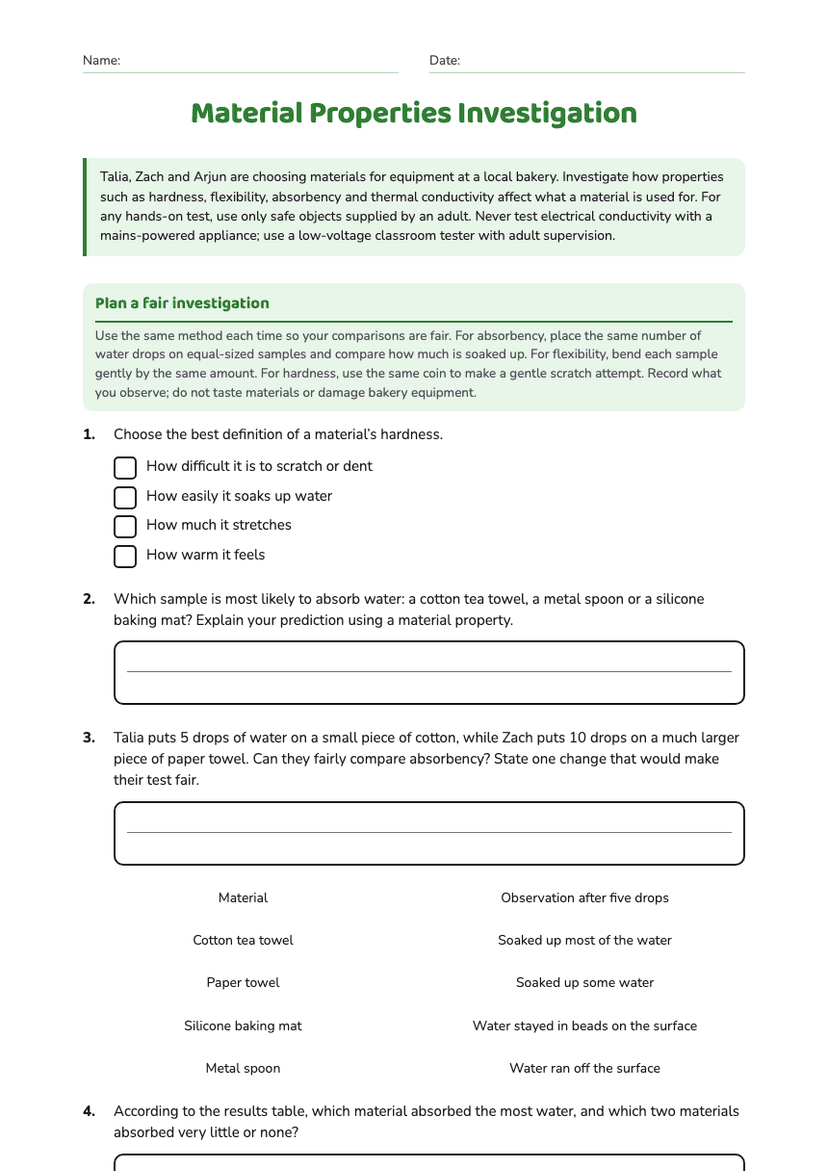
Material Properties Investigation
Free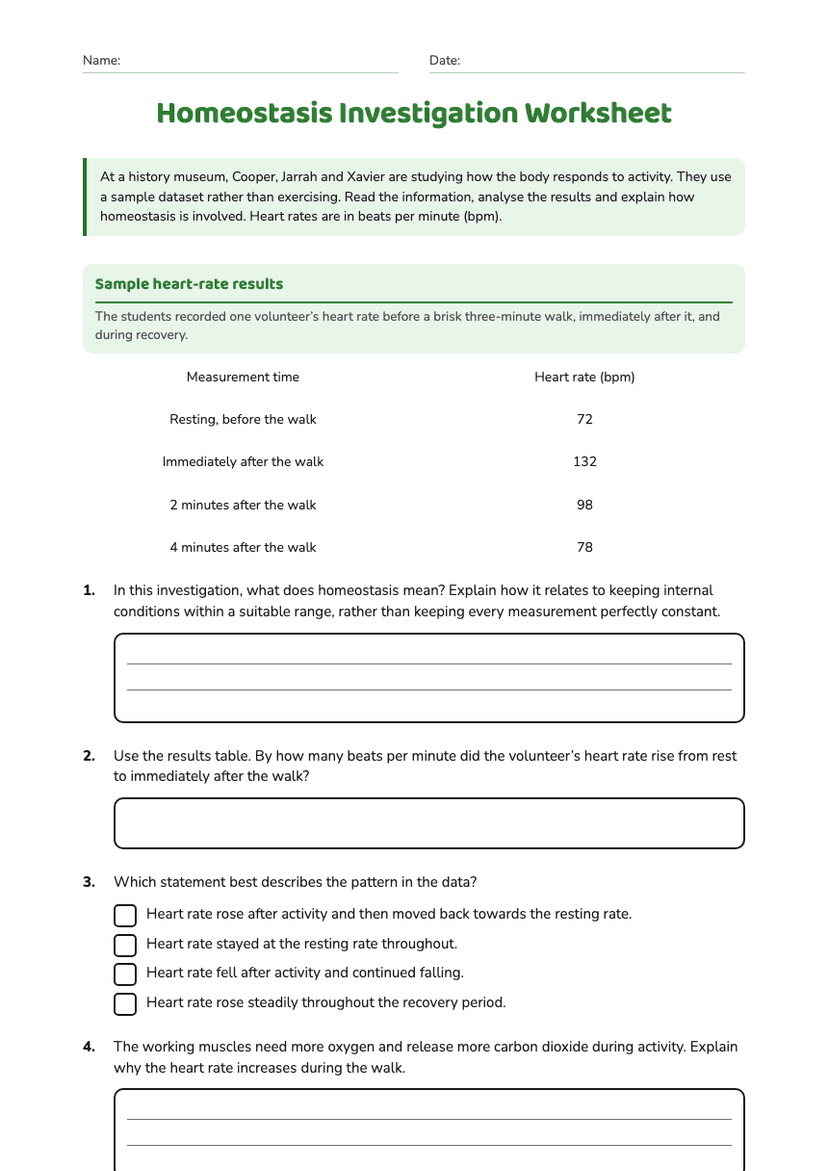
Homeostasis Investigation Worksheet
Free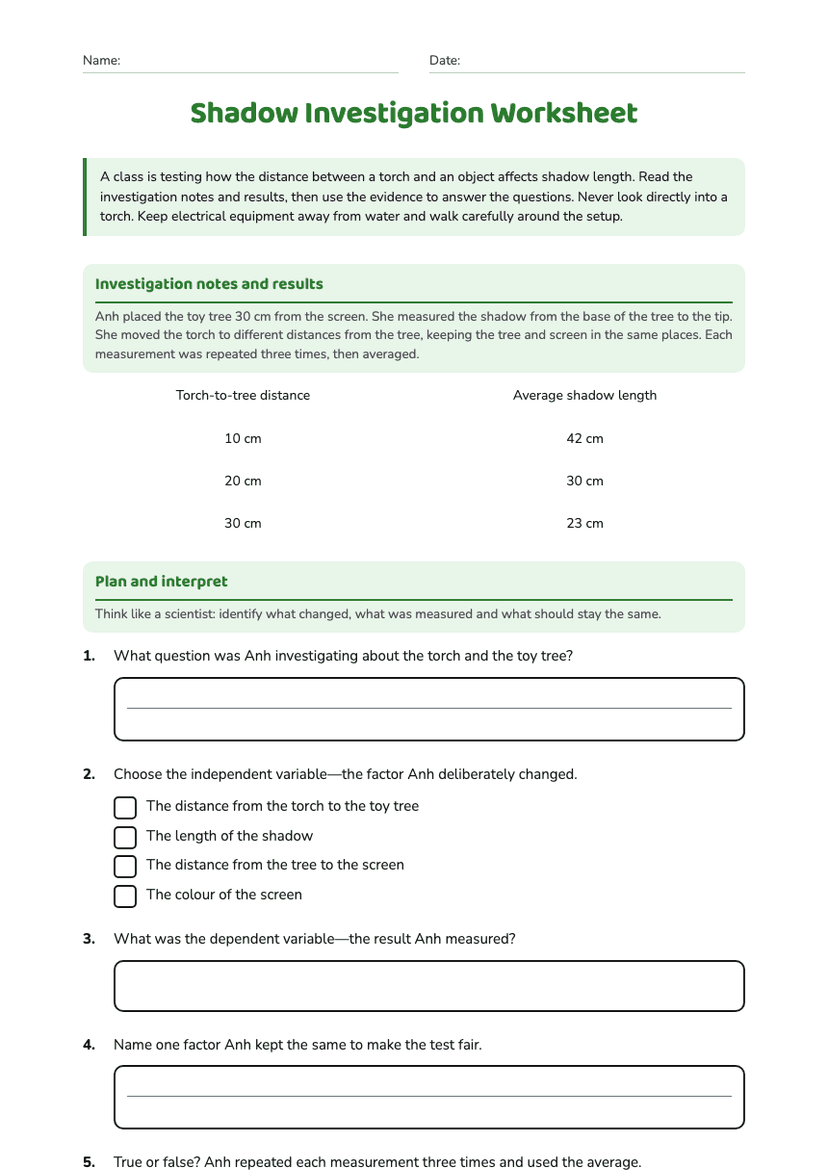
Shadow Investigation Worksheet
Free