Laws and Governance Introduction
A free social sciences worksheet ready for your classroom. Open in Kuraplan to grab the print-ready PDF, customize it for your students, or generate a fresh version in seconds.
Laws and Governance Introduction
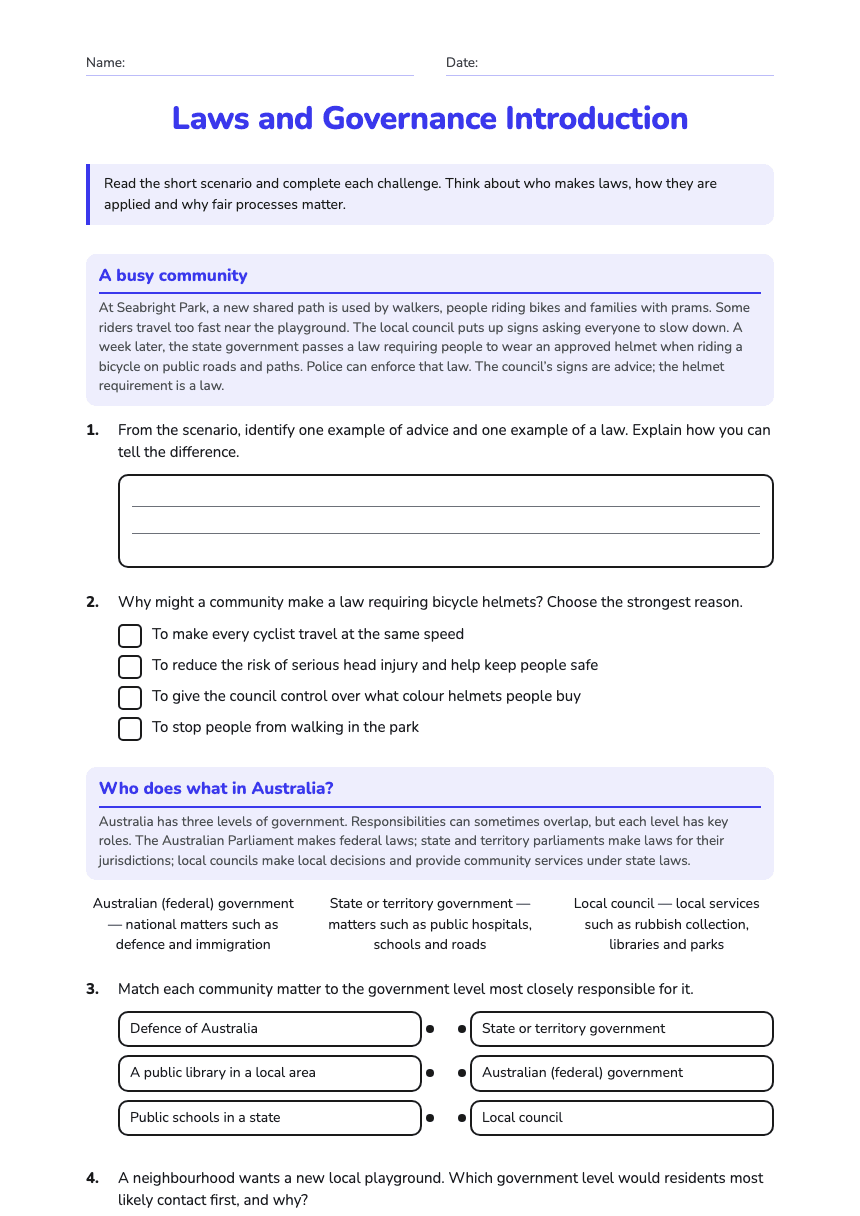
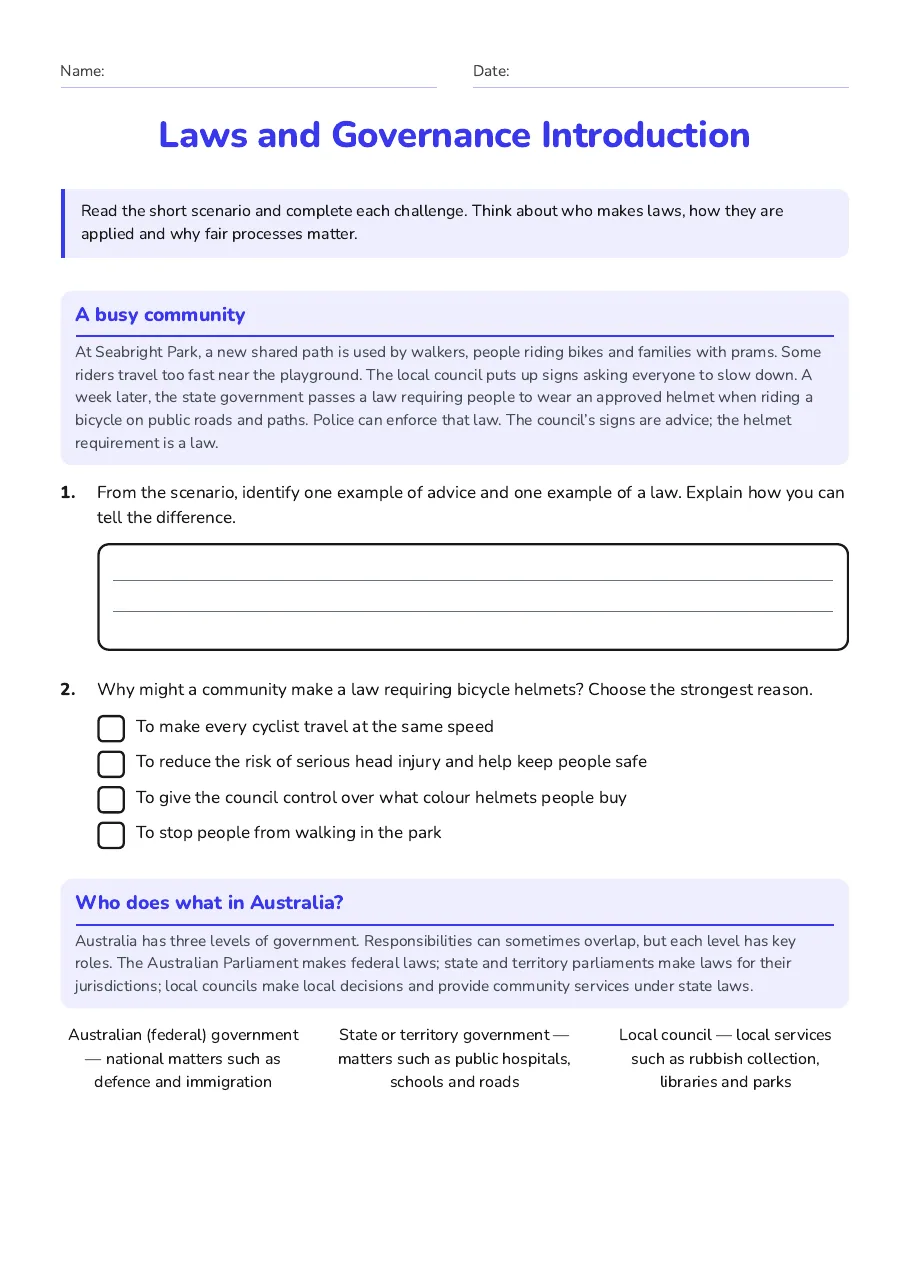
A busy community
At Seabright Park, a new shared path is used by walkers, people riding bikes and families with prams. Some riders travel too fast near the playground. The local council puts up signs asking everyone to slow down. A week later, the state government passes a law requiring people to wear an approved helmet when riding a bicycle on public roads and paths. Police can enforce that law. The council’s signs are advice; the helmet requirement is a law.
- To make every cyclist travel at the same speed
- To reduce the risk of serious head injury and help keep people safe
- To give the council control over what colour helmets people buy
- To stop people from walking in the park
Who does what in Australia?
Australia has three levels of government. Responsibilities can sometimes overlap, but each level has key roles. The Australian Parliament makes federal laws; state and territory parliaments make laws for their jurisdictions; local councils make local decisions and provide community services under state laws.
Australian (federal) government — national matters such as defence and immigration
State or territory government — matters such as public hospitals, schools and roads
Local council — local services such as rubbish collection, libraries and parks
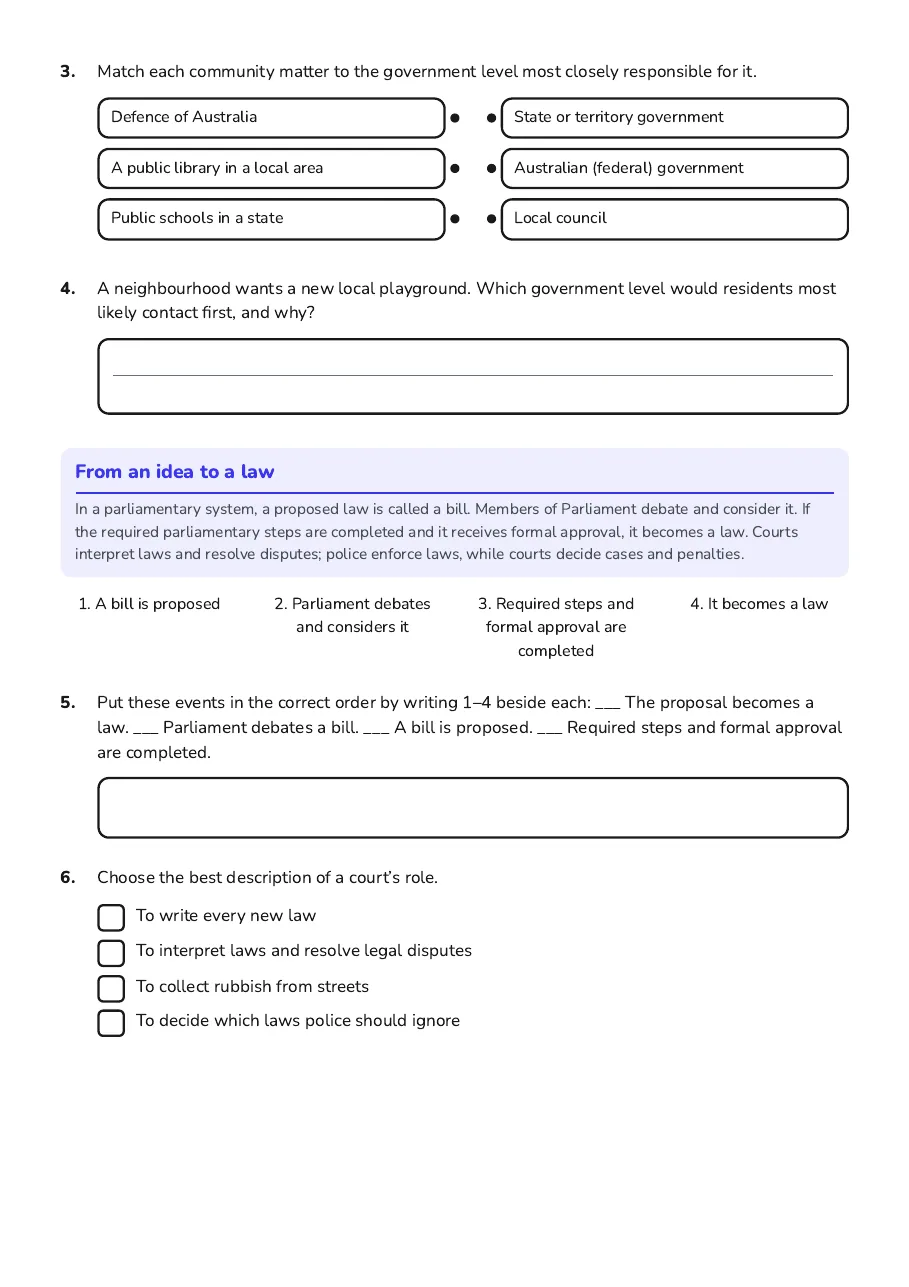
- Defence of Australia
- A public library in a local area
- Public schools in a state
- State or territory government
- Australian (federal) government
- Local council
From an idea to a law
In a parliamentary system, a proposed law is called a bill. Members of Parliament debate and consider it. If the required parliamentary steps are completed and it receives formal approval, it becomes a law. Courts interpret laws and resolve disputes; police enforce laws, while courts decide cases and penalties.
1. A bill is proposed
2. Parliament debates and considers it
3. Required steps and formal approval are completed
4. It becomes a law
- To write every new law
- To interpret laws and resolve legal disputes
- To collect rubbish from streets
- To decide which laws police should ignore
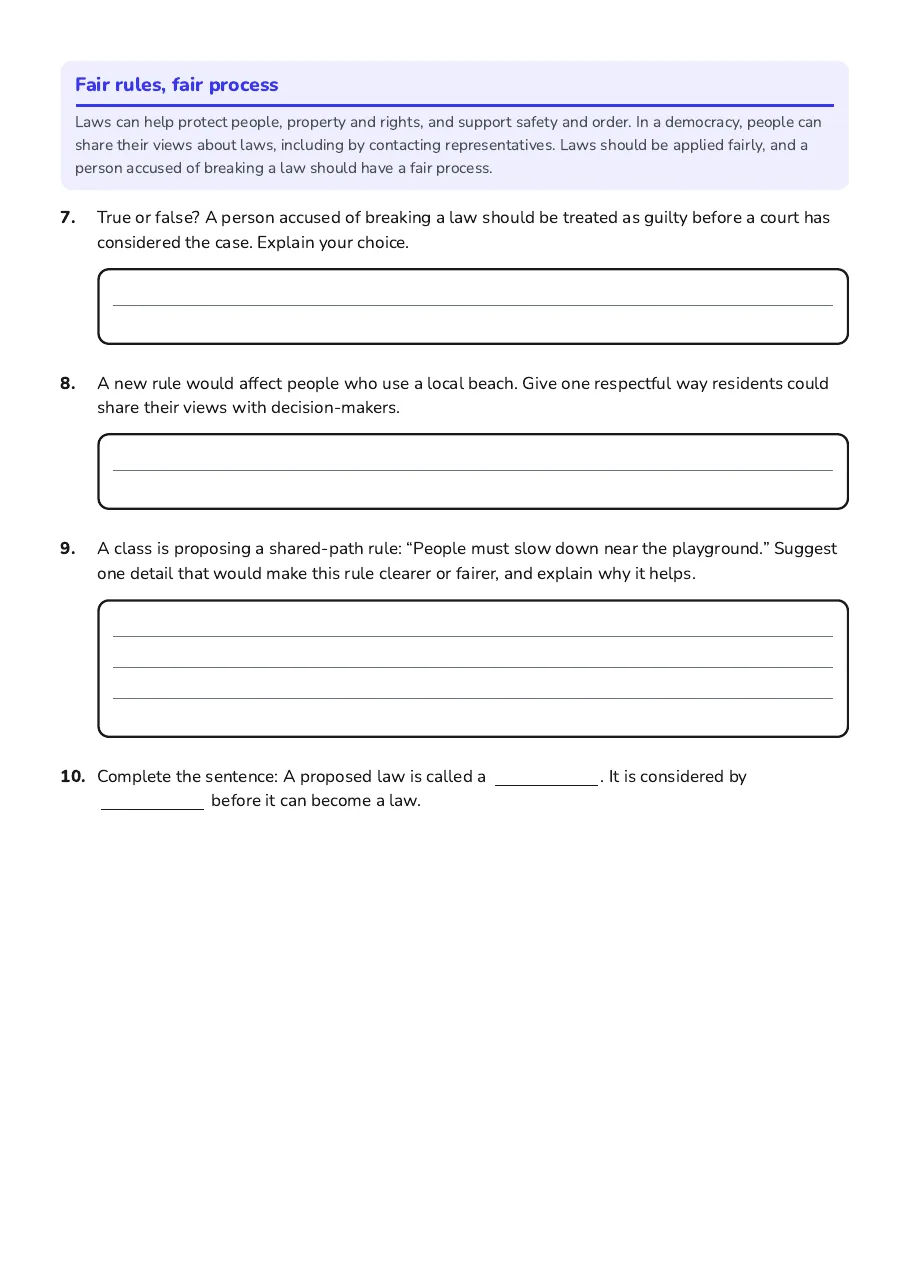
Fair rules, fair process
Laws can help protect people, property and rights, and support safety and order. In a democracy, people can share their views about laws, including by contacting representatives. Laws should be applied fairly, and a person accused of breaking a law should have a fair process.
3 printable pages
Page 1
Page 2
Page 3
About This Worksheet
Free in Kuraplan
Sign up free, grab the PDF, and customize it for your class.
Print-Ready
Formatted for standard paper. Clean layout, easy to read.
AI-Generated
Created with Kuraplan's AI, designed for real classroom use.
For Teachers & Parents
Use in classrooms, for homework, tutoring, or homeschool.
Need a custom version of this worksheet?
Kuraplan's AI generates custom worksheets in seconds — differentiated for every learner, aligned to your curriculum.
Generate Custom Worksheets — FreeMore Social Sciences Worksheets
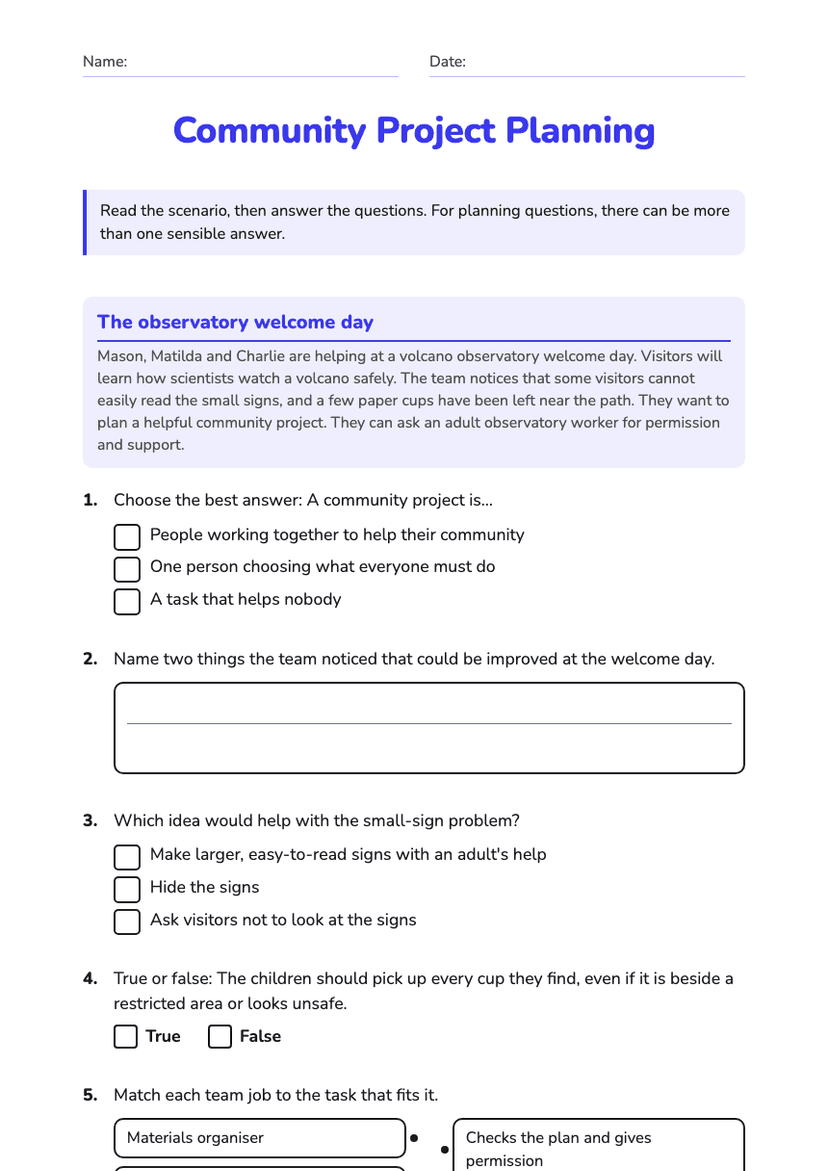
Community Project Planning
Free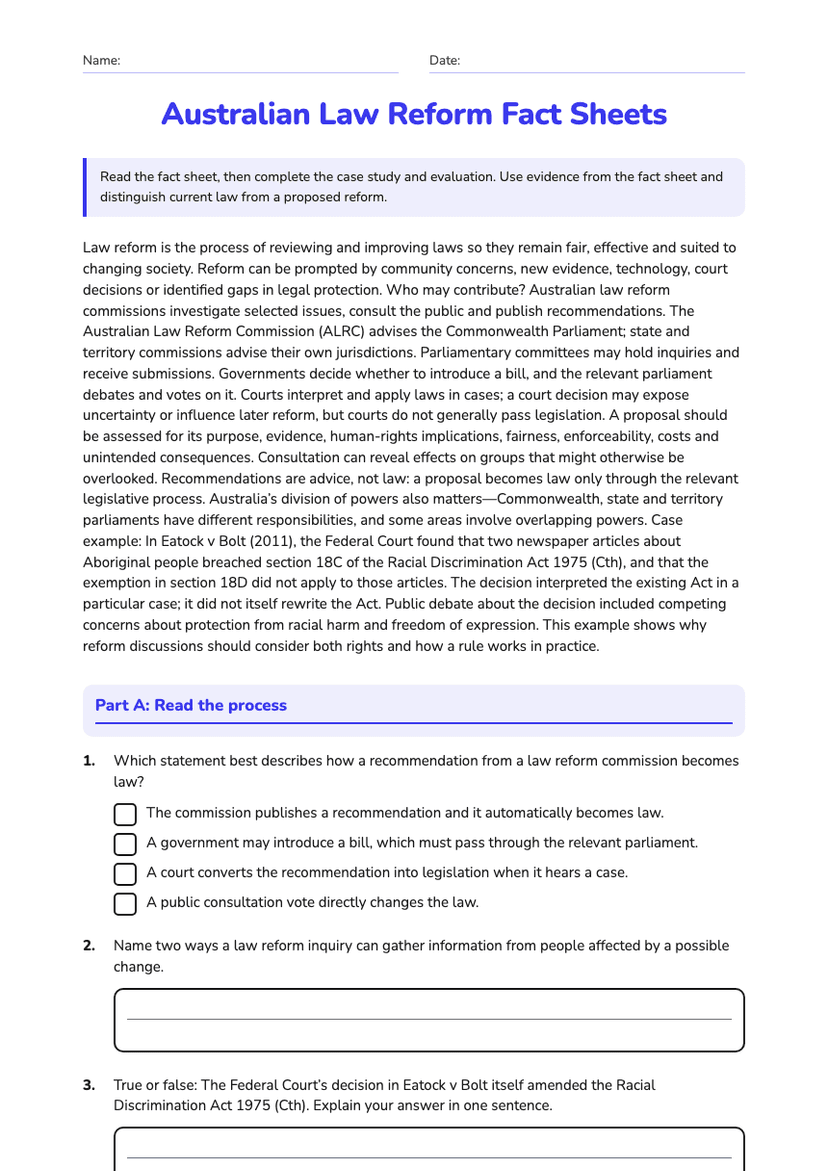
Australian Law Reform Fact Sheets
Free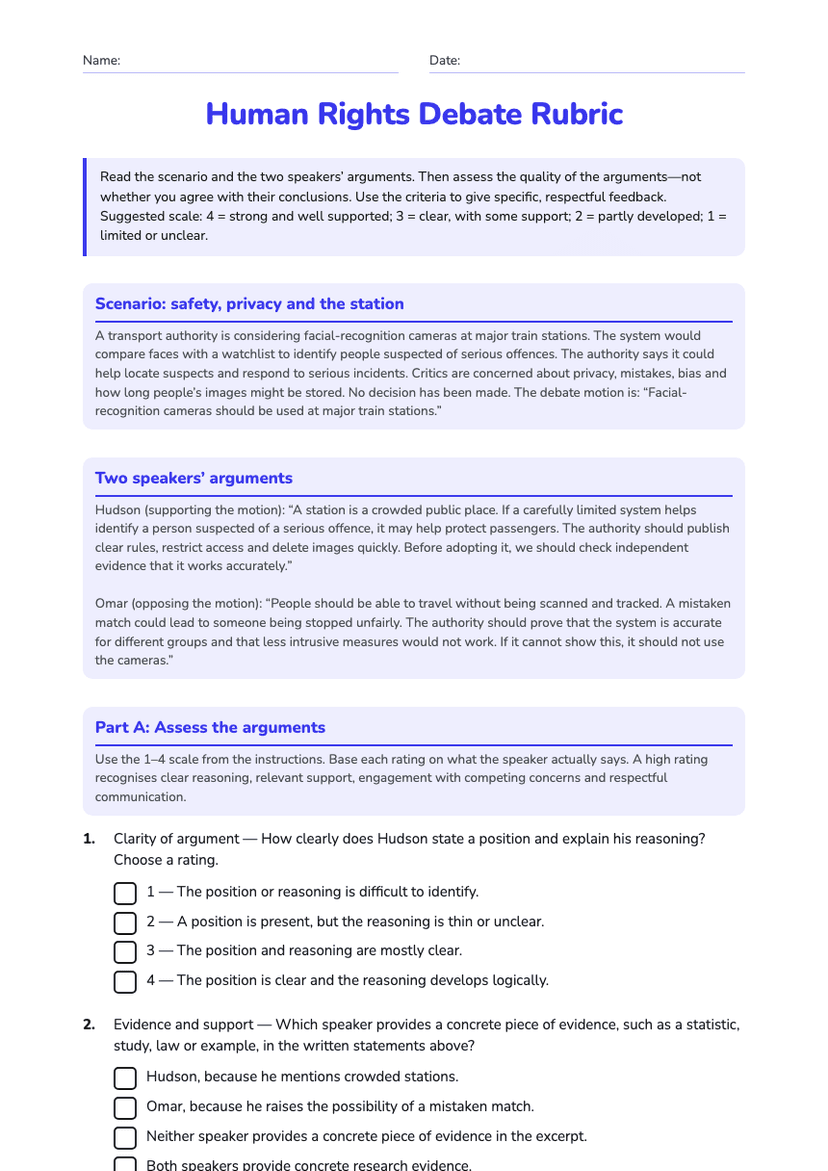
Human Rights Debate Rubric
Free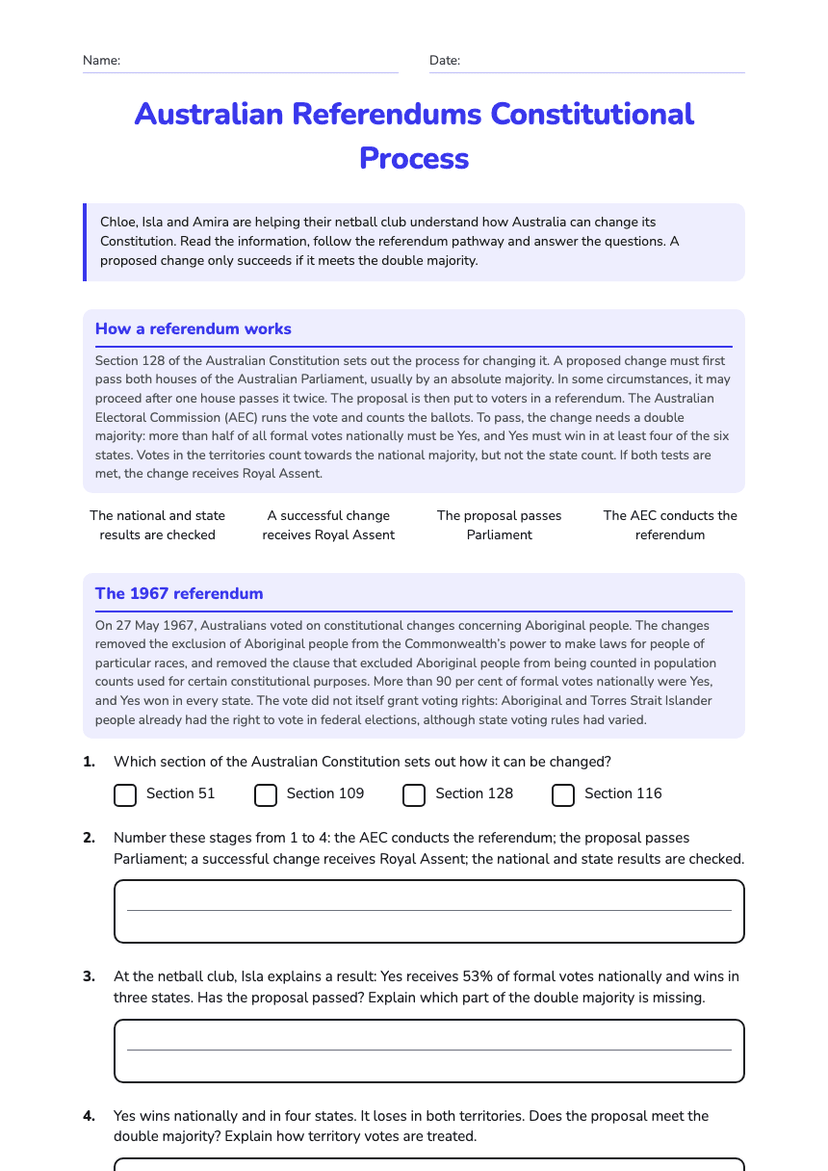
Australian Referendums Constitutional Process
Free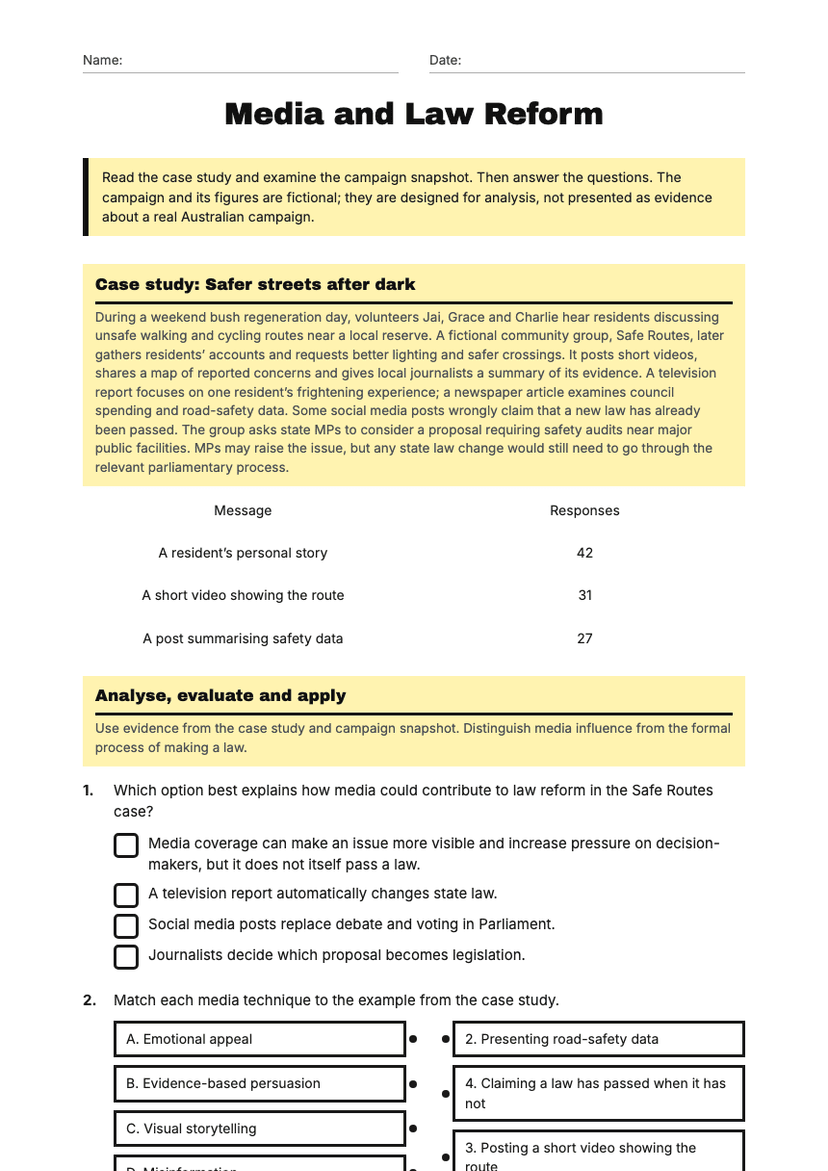
Media and Law Reform
Free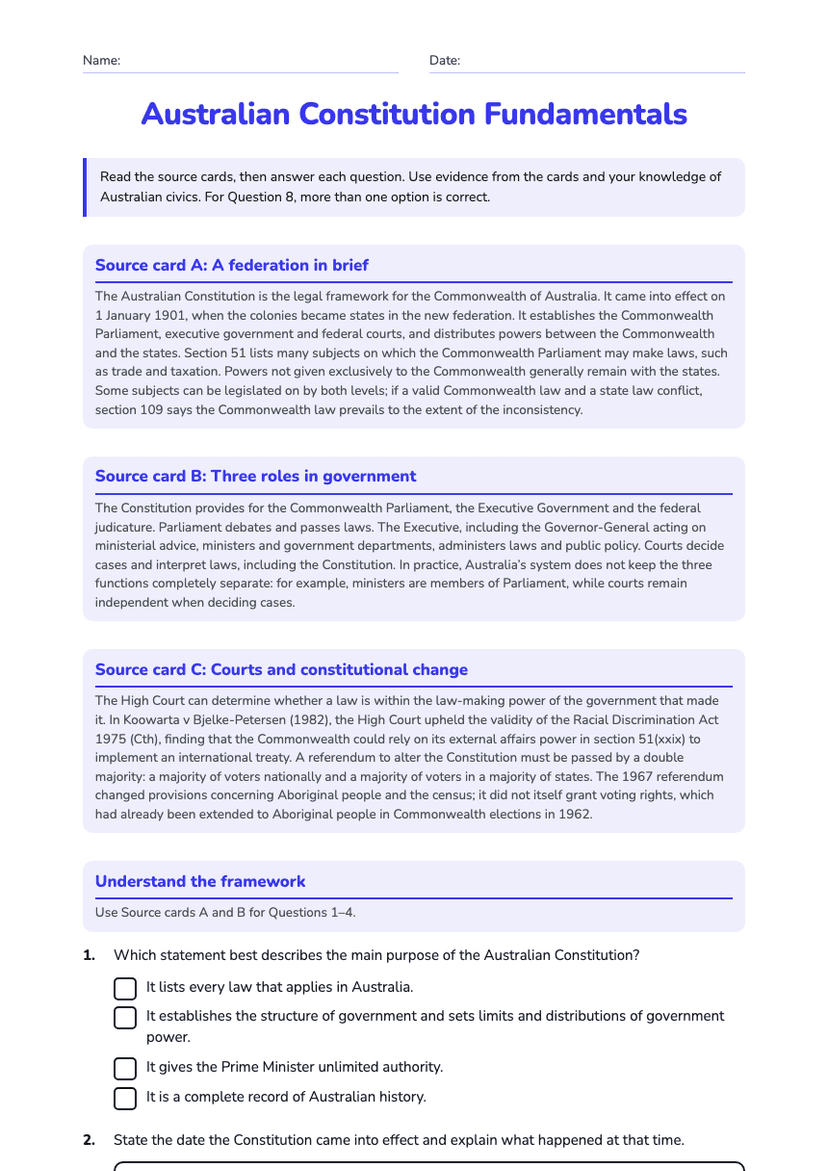
Australian Constitution Fundamentals
Free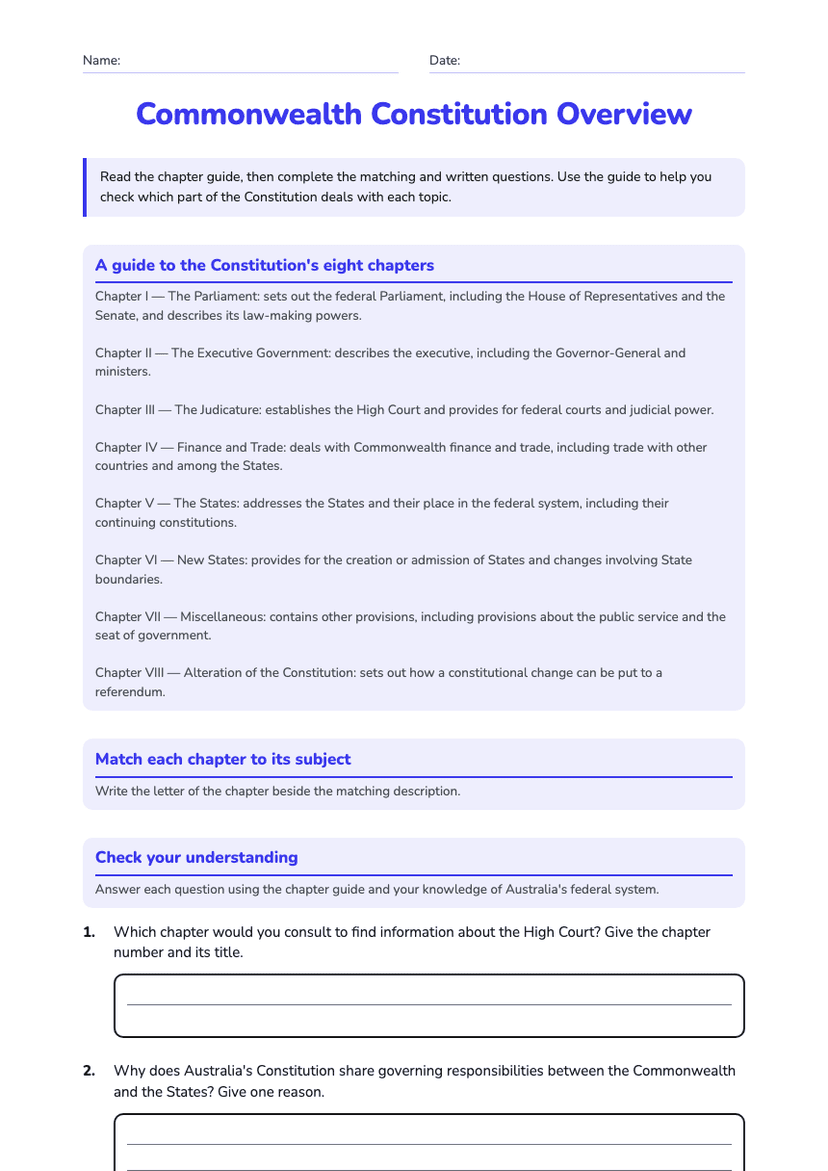
Commonwealth Constitution Overview
Free