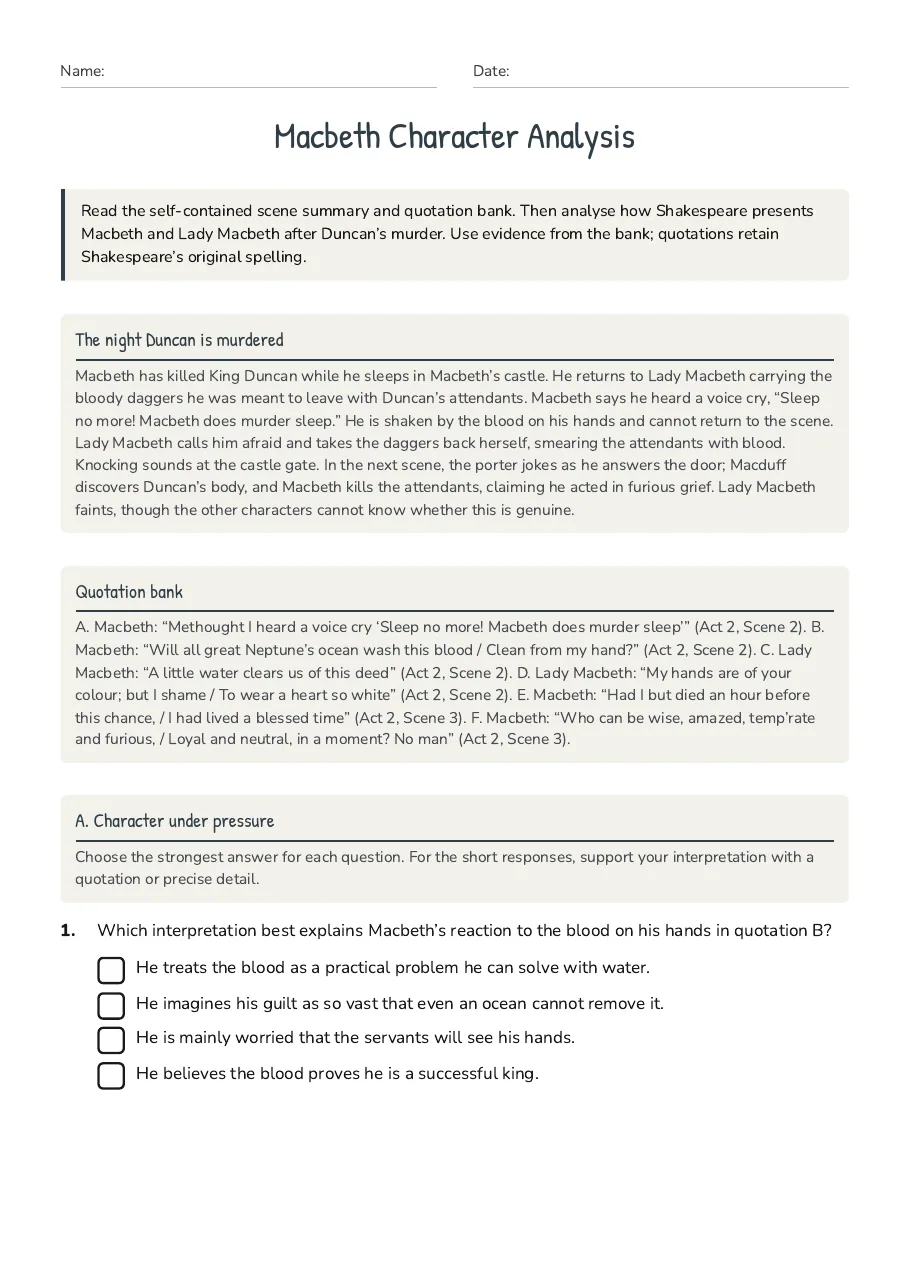
Macbeth Character Analysis
A free english worksheet ready for your classroom. Open in Kuraplan to grab the print-ready PDF, customize it for your students, or generate a fresh version in seconds.
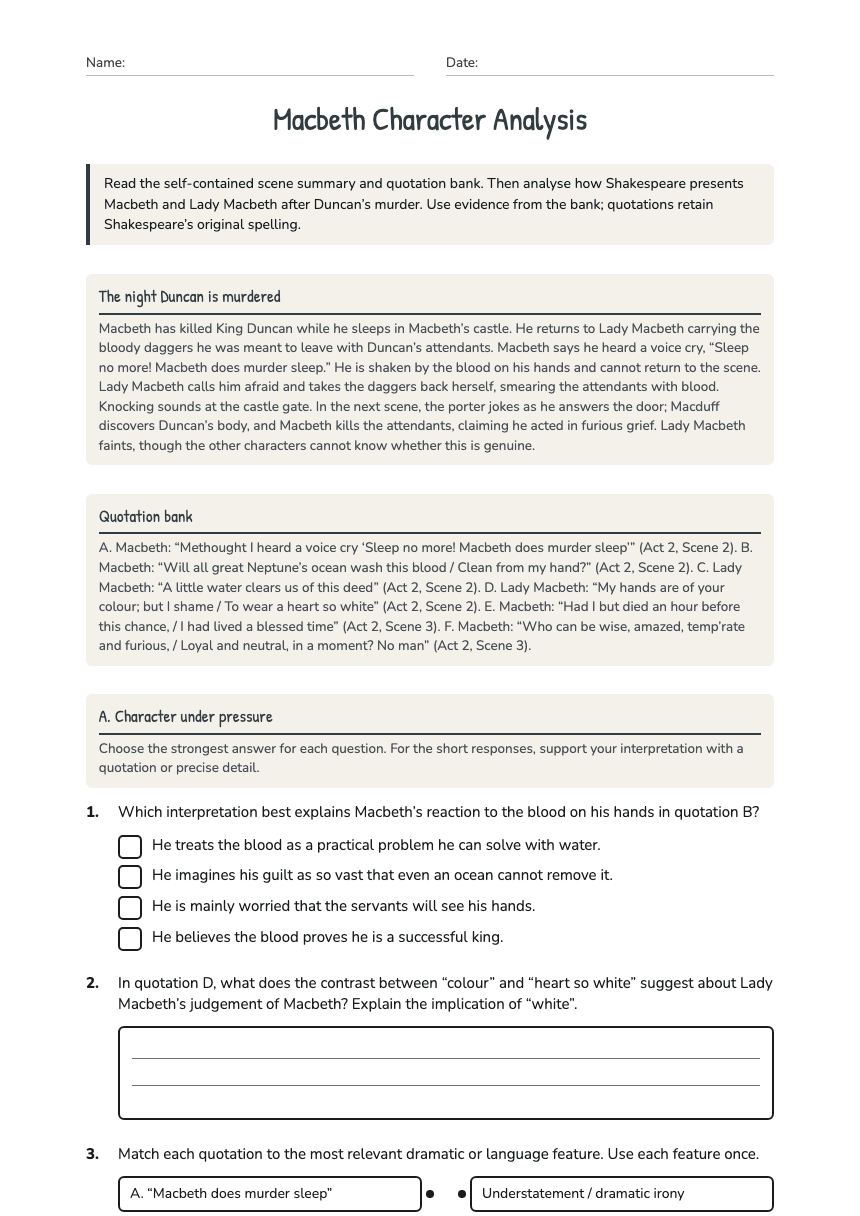
Macbeth Character Analysis
The night Duncan is murdered
Macbeth has killed King Duncan while he sleeps in Macbeth’s castle. He returns to Lady Macbeth carrying the bloody daggers he was meant to leave with Duncan’s attendants. Macbeth says he heard a voice cry, “Sleep no more! Macbeth does murder sleep.” He is shaken by the blood on his hands and cannot return to the scene. Lady Macbeth calls him afraid and takes the daggers back herself, smearing the attendants with blood. Knocking sounds at the castle gate. In the next scene, the porter jokes as he answers the door; Macduff discovers Duncan’s body, and Macbeth kills the attendants, claiming he acted in furious grief. Lady Macbeth faints, though the other characters cannot know whether this is genuine.
Quotation bank
A. Macbeth: “Methought I heard a voice cry ‘Sleep no more! Macbeth does murder sleep’” (Act 2, Scene 2). B. Macbeth: “Will all great Neptune’s ocean wash this blood / Clean from my hand?” (Act 2, Scene 2). C. Lady Macbeth: “A little water clears us of this deed” (Act 2, Scene 2). D. Lady Macbeth: “My hands are of your colour; but I shame / To wear a heart so white” (Act 2, Scene 2). E. Macbeth: “Had I but died an hour before this chance, / I had lived a blessed time” (Act 2, Scene 3). F. Macbeth: “Who can be wise, amazed, temp’rate and furious, / Loyal and neutral, in a moment? No man” (Act 2, Scene 3).
A. Character under pressure
Choose the strongest answer for each question. For the short responses, support your interpretation with a quotation or precise detail.
- He treats the blood as a practical problem he can solve with water.
- He imagines his guilt as so vast that even an ocean cannot remove it.
- He is mainly worried that the servants will see his hands.
- He believes the blood proves he is a successful king.
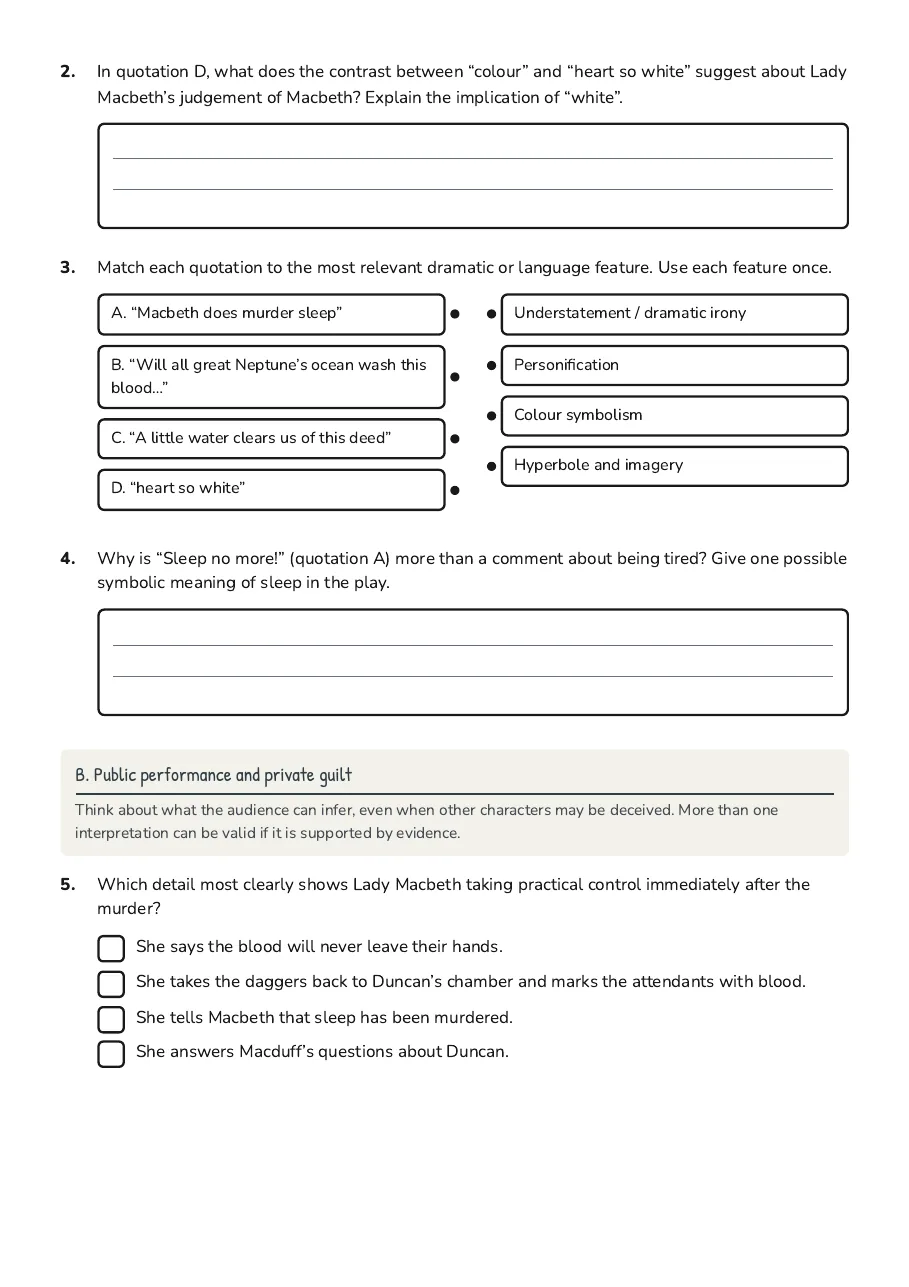
- A. “Macbeth does murder sleep”
- B. “Will all great Neptune’s ocean wash this blood…”
- C. “A little water clears us of this deed”
- D. “heart so white”
- Understatement / dramatic irony
- Personification
- Colour symbolism
- Hyperbole and imagery
B. Public performance and private guilt
Think about what the audience can infer, even when other characters may be deceived. More than one interpretation can be valid if it is supported by evidence.
- She says the blood will never leave their hands.
- She takes the daggers back to Duncan’s chamber and marks the attendants with blood.
- She tells Macbeth that sleep has been murdered.
- She answers Macduff’s questions about Duncan.
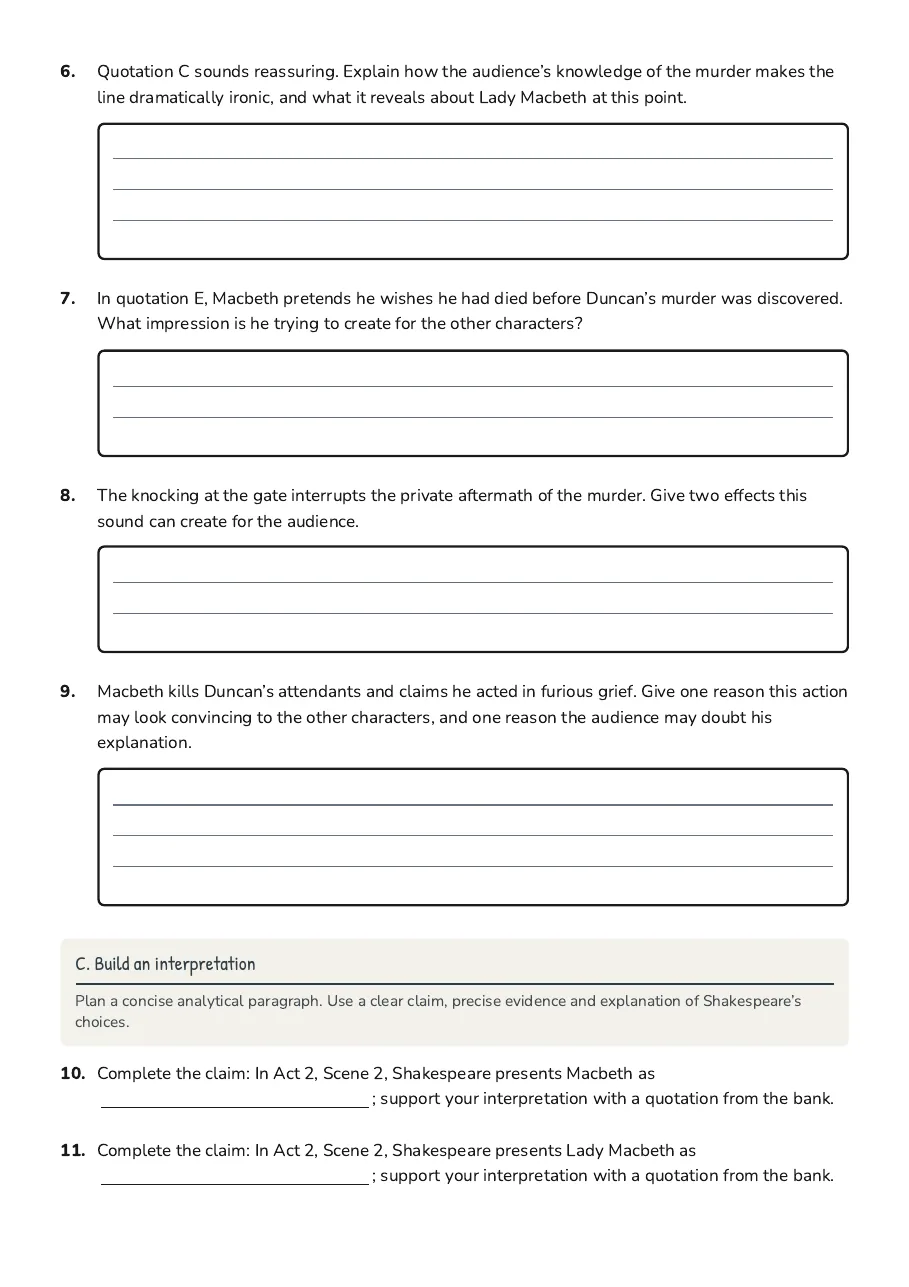
C. Build an interpretation
Plan a concise analytical paragraph. Use a clear claim, precise evidence and explanation of Shakespeare’s choices.
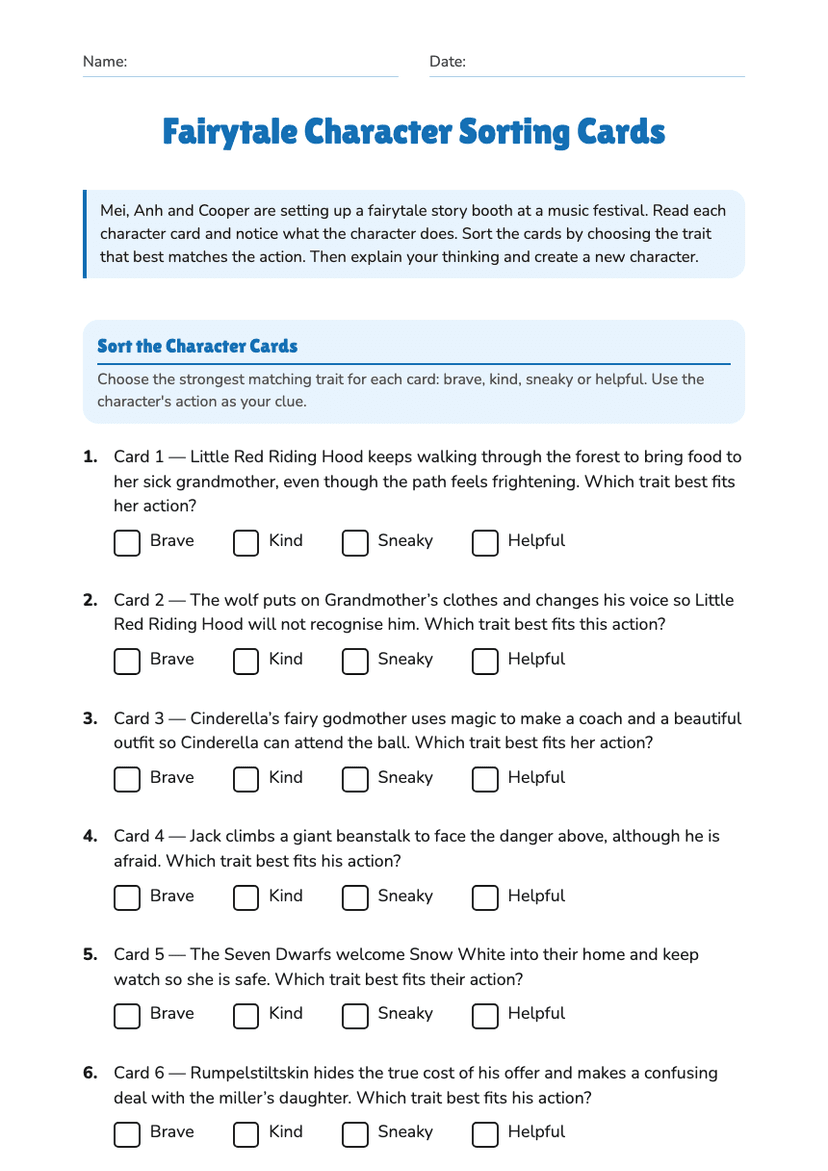
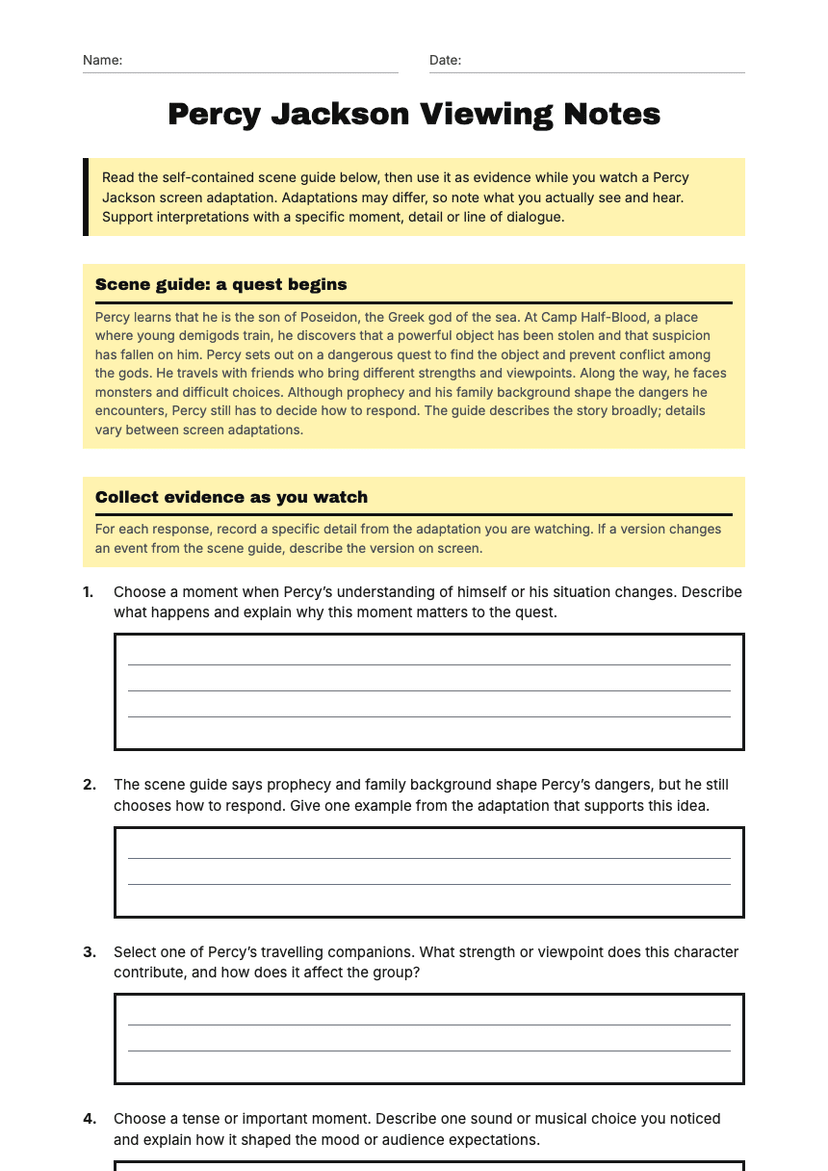
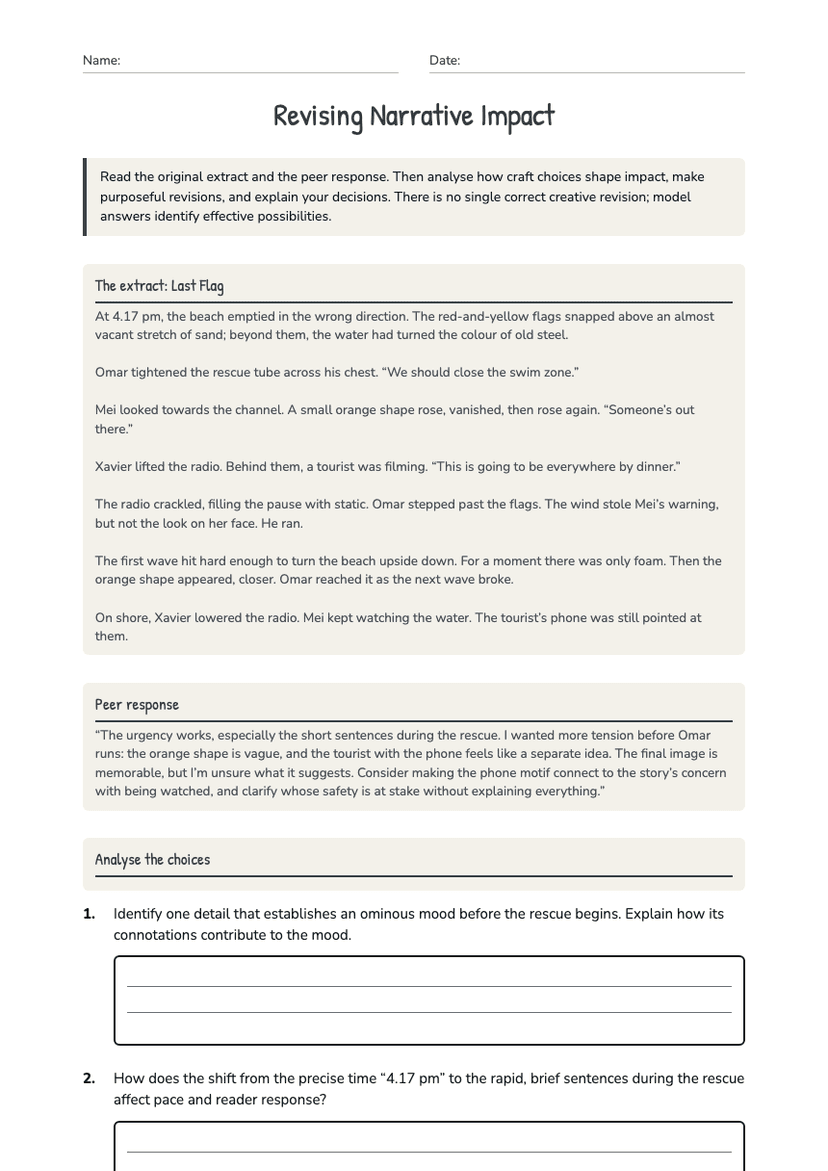
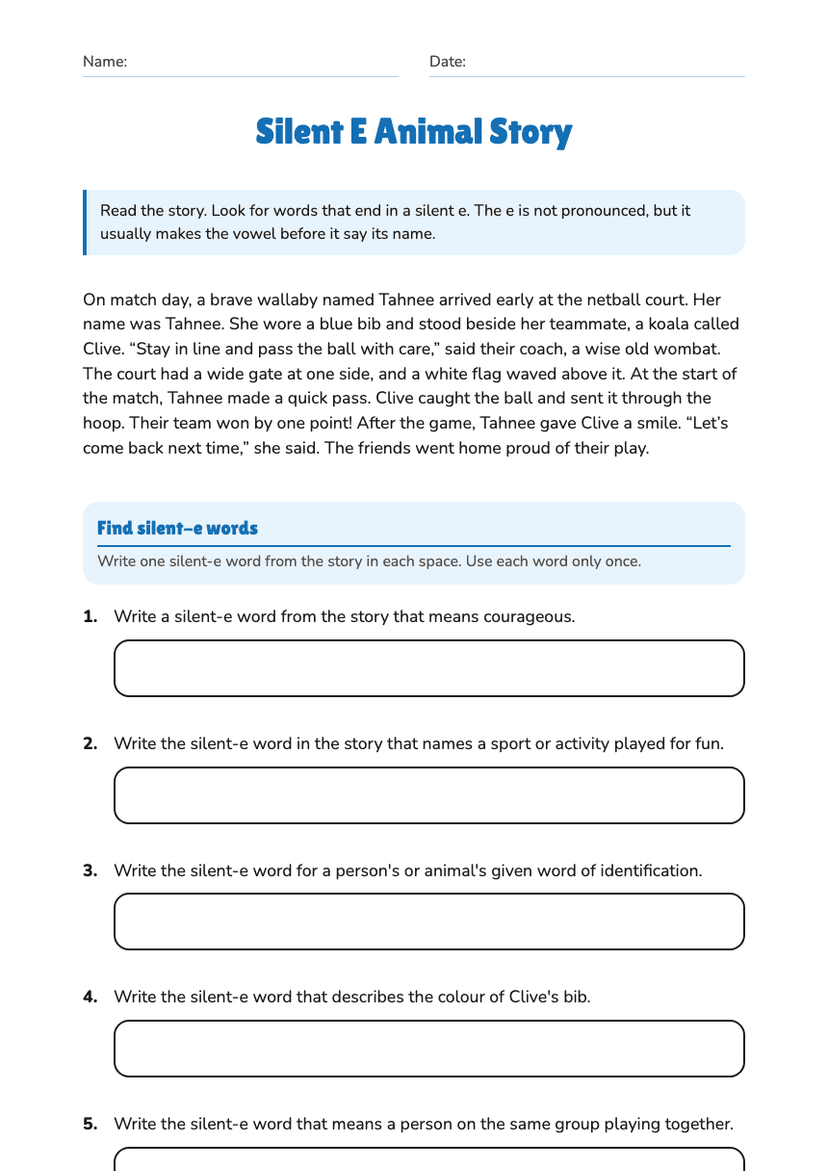
4 printable pages
Page 1
Page 2
Page 3
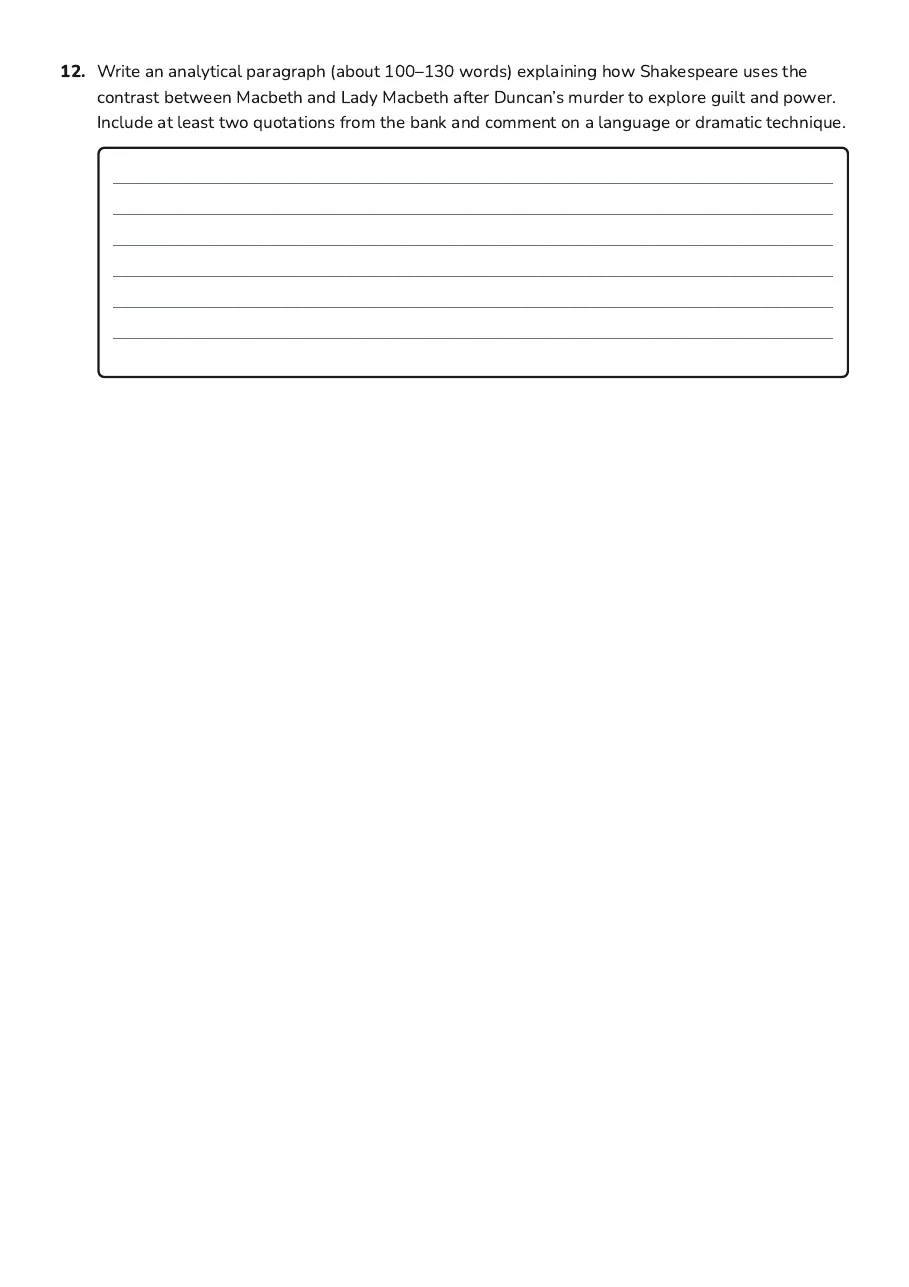
Page 4
About This Worksheet
Free in Kuraplan
Sign up free, grab the PDF, and customize it for your class.
Print-Ready
Formatted for standard paper. Clean layout, easy to read.
AI-Generated
Created with Kuraplan's AI, designed for real classroom use.
For Teachers & Parents
Use in classrooms, for homework, tutoring, or homeschool.
Need a custom version of this worksheet?
Kuraplan's AI generates custom worksheets in seconds — differentiated for every learner, aligned to your curriculum.
Generate Custom Worksheets — Free