Malaysian Folk Tale Worksheet
A free english worksheet ready for your classroom. Open in Kuraplan to grab the print-ready PDF, customize it for your students, or generate a fresh version in seconds.
Bawang Merah danBawang Putih
📖 Part 1: Reading - Bawang Putih dan Bawang Merah
Read this excerpt from a traditional Malaysian/Indonesian folk tale:
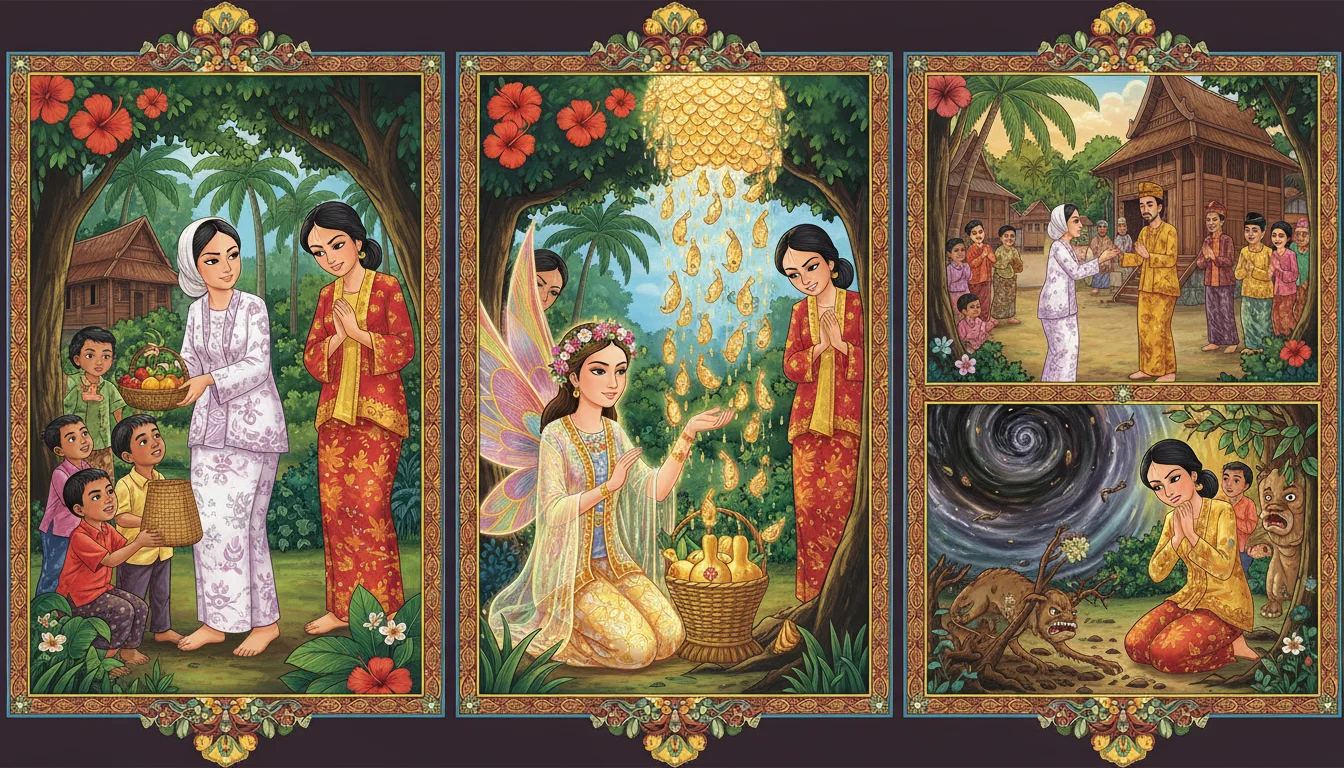
Bawang Putih lived with her stepmother and stepsister, Bawang Merah. Every day, Bawang Putih worked hard cleaning the house and cooking meals. She never complained because she believed children must always respect and obey their elders, even when treated unfairly.
Bawang Merah was jealous of Bawang Putih's beauty and kindness. She often demanded that Bawang Putih do extra work. "Wash my clothes again!" she would shout. Bawang Putih always obeyed because in her culture, harmony in the family was more important than her own comfort.
One day, Bawang Putih helped an old woman by the river. The woman was actually a fairy in disguise. Because of Bawang Putih's genuine kindness and respect for elders, the fairy rewarded her with gold and jewels. When Bawang Merah tried to copy this kindness to get rewards, her selfish motives were revealed, and she received nothing.
The story teaches that true kindness comes from the heart, and those who show genuine respect and care for others will find happiness, while selfishness leads to emptiness.
Bilingual Glossary (English/Malay):
Culture (Budaya) - the beliefs and customs of a group of people
Assumptions (Andaian) - ideas we believe are true without questioning
Respect (Hormat) - showing honour and consideration to others
Kindness (Kebaikan) - being caring and helpful to others
Jealousy (Cemburu) - feeling angry when someone has something you want
🤔 Part 2: Understanding Cultural Assumptions
✍️ Part 3: Personal Reflection
One cultural assumption I noticed in this story is...
This made me think about...
In my culture, we assume that...
About This Worksheet
Free in Kuraplan
Sign up free, grab the PDF, and customize it for your class.
Print-Ready
Formatted for standard paper. Clean layout, easy to read.
AI-Generated
Created with Kuraplan's AI, designed for real classroom use.
For Teachers & Parents
Use in classrooms, for homework, tutoring, or homeschool.
Need a custom version of this worksheet?
Kuraplan's AI generates custom worksheets in seconds — differentiated for every learner, aligned to your curriculum.
Generate Custom Worksheets — Free