Material World Game Lab
A free science worksheet ready for your classroom. Open in Kuraplan to grab the print-ready PDF, customize it for your students, or generate a fresh version in seconds.
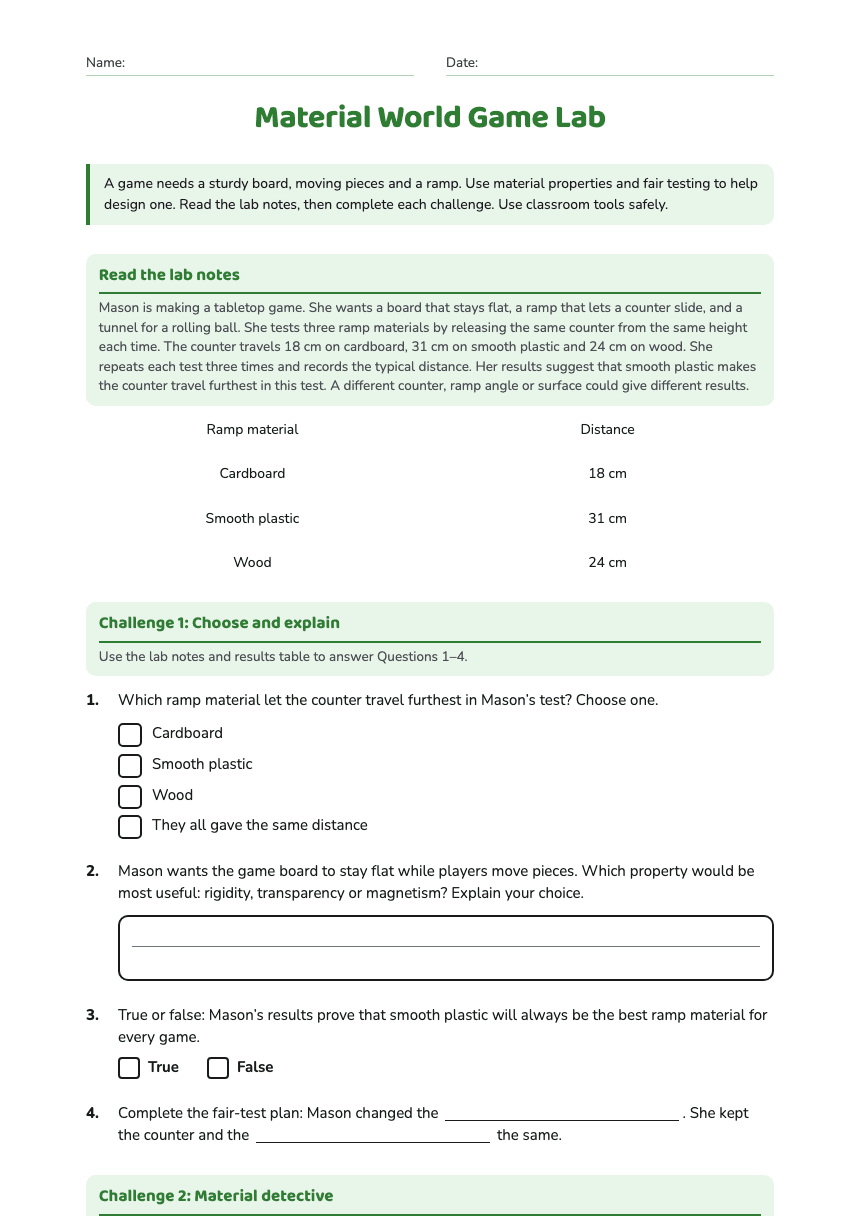
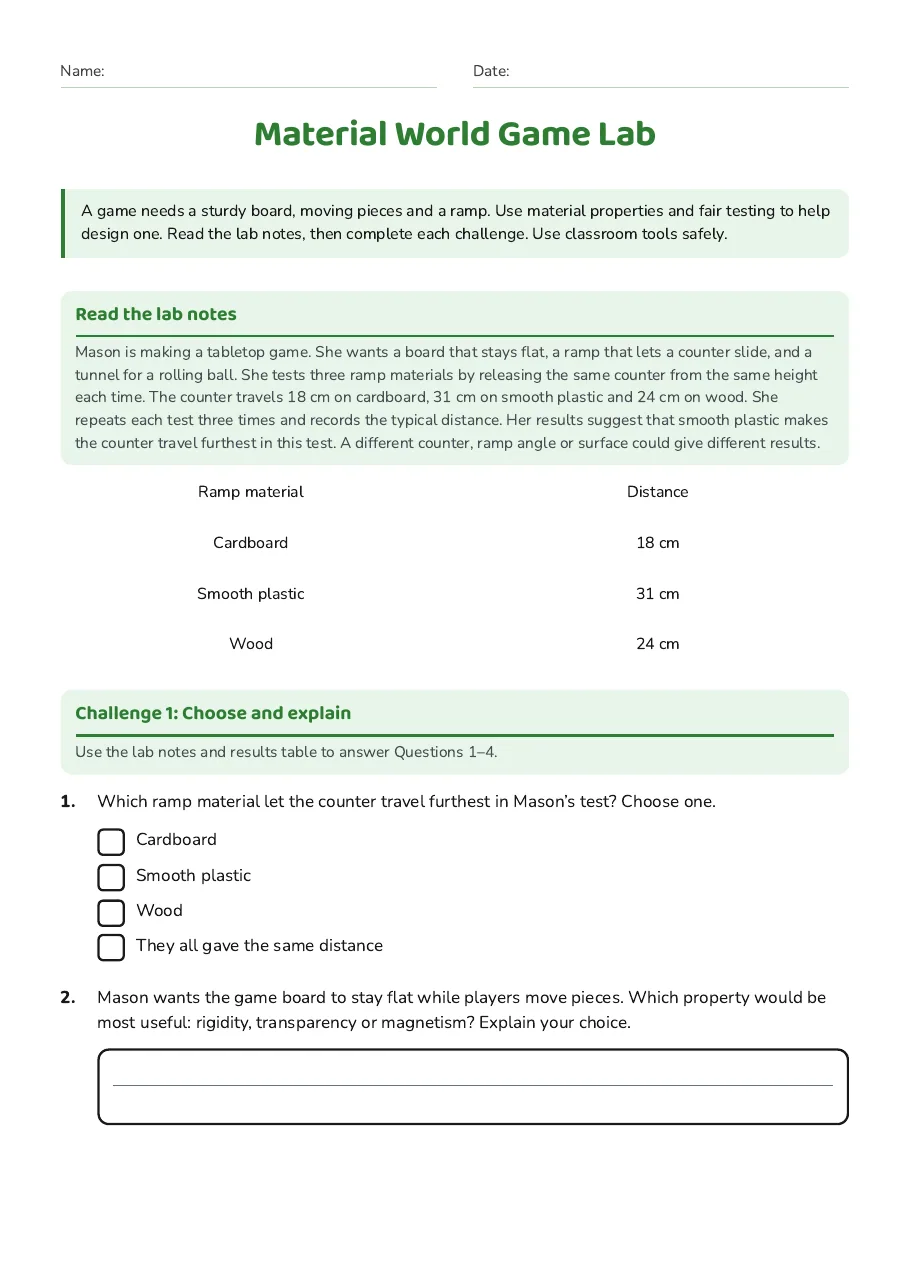
Material World Game Lab
Read the lab notes
Mason is making a tabletop game. She wants a board that stays flat, a ramp that lets a counter slide, and a tunnel for a rolling ball. She tests three ramp materials by releasing the same counter from the same height each time. The counter travels 18 cm on cardboard, 31 cm on smooth plastic and 24 cm on wood. She repeats each test three times and records the typical distance. Her results suggest that smooth plastic makes the counter travel furthest in this test. A different counter, ramp angle or surface could give different results.
Ramp material
Distance
Cardboard
18 cm
Smooth plastic
31 cm
Wood
24 cm
Challenge 1: Choose and explain
Use the lab notes and results table to answer Questions 1–4.
- Cardboard
- Smooth plastic
- Wood
- They all gave the same distance
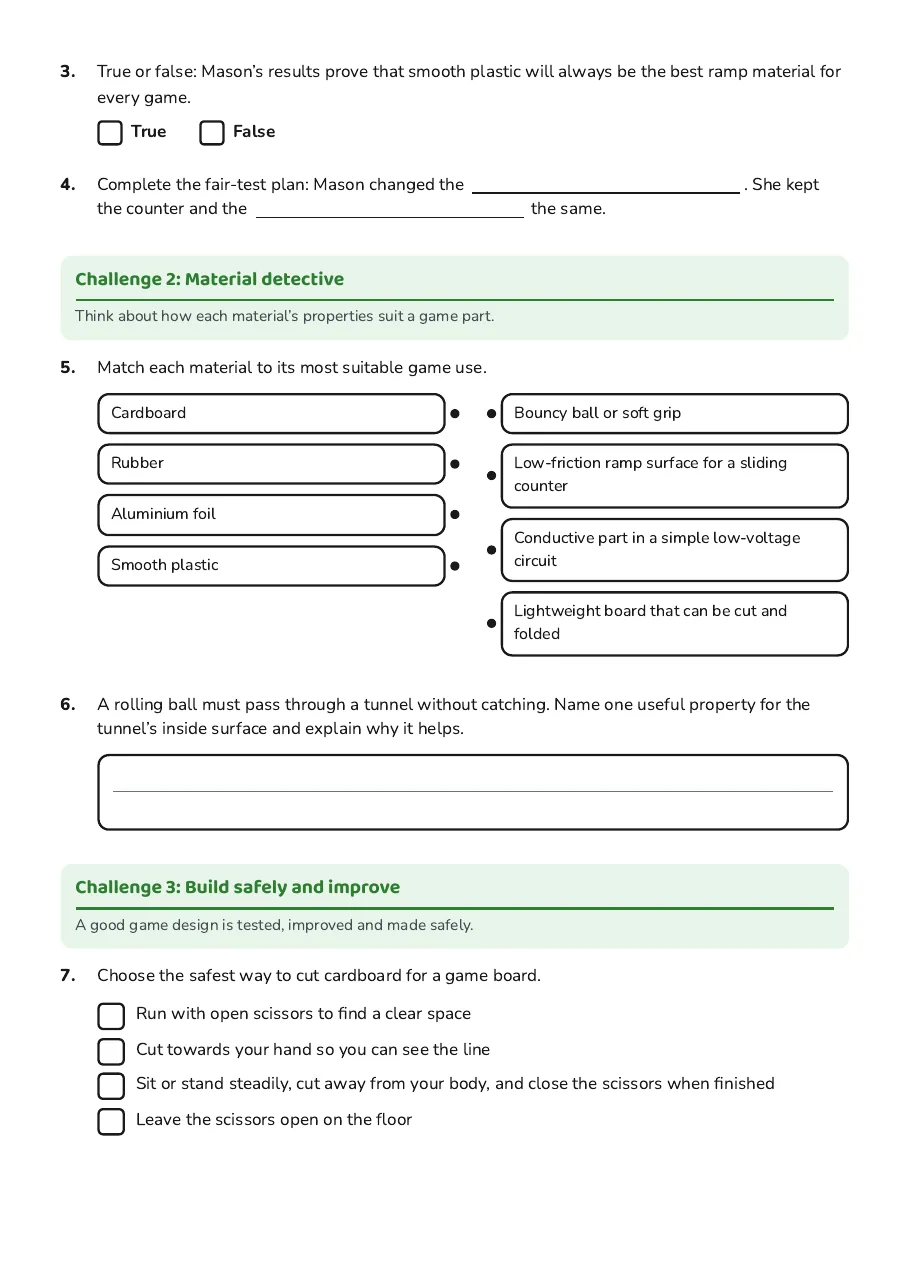
Challenge 2: Material detective
Think about how each material’s properties suit a game part.
- Cardboard
- Rubber
- Aluminium foil
- Smooth plastic
- Bouncy ball or soft grip
- Low-friction ramp surface for a sliding counter
- Conductive part in a simple low-voltage circuit
- Lightweight board that can be cut and folded
Challenge 3: Build safely and improve
A good game design is tested, improved and made safely.
- Run with open scissors to find a clear space
- Cut towards your hand so you can see the line
- Sit or stand steadily, cut away from your body, and close the scissors when finished
- Leave the scissors open on the floor
3 printable pages
Page 1
Page 2
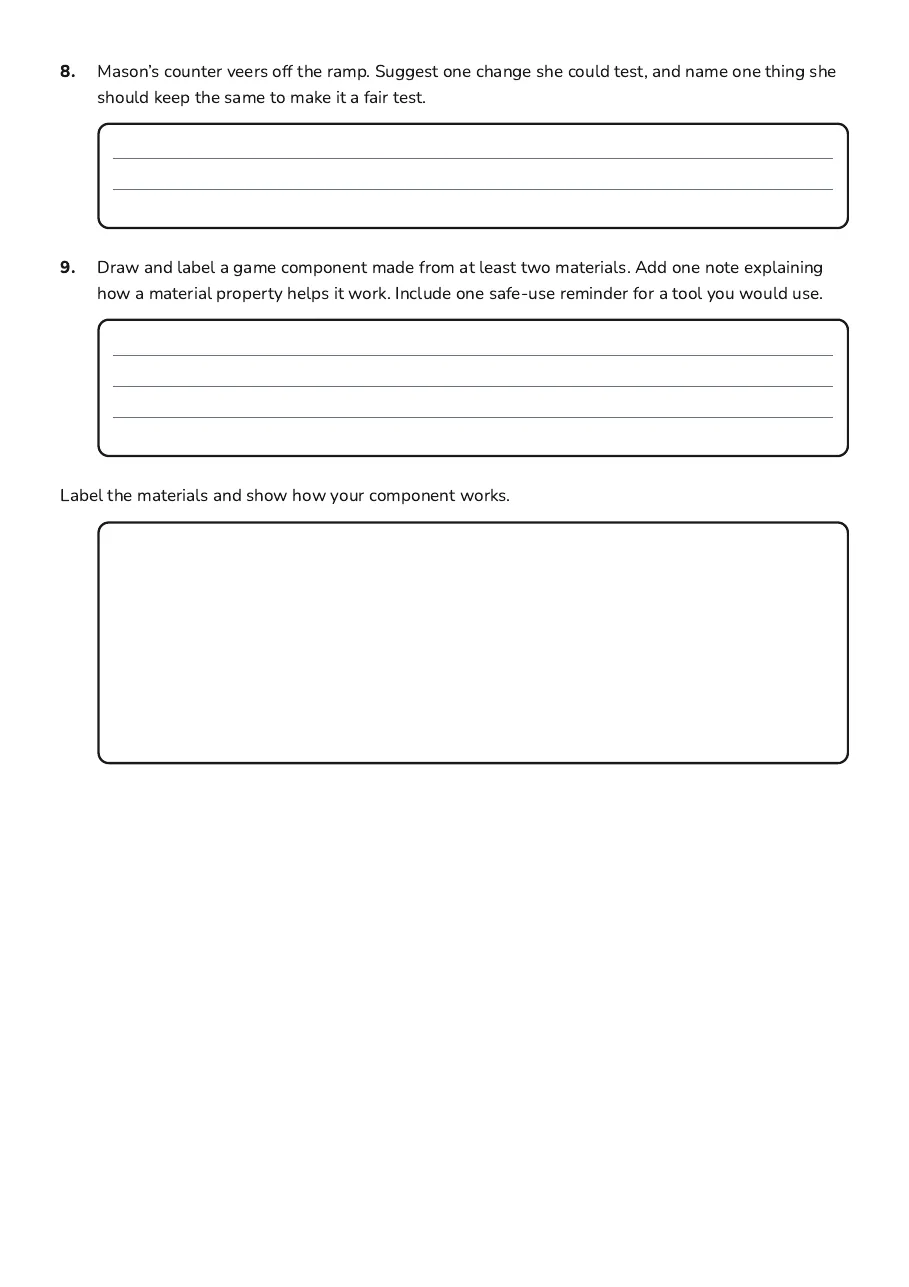
Page 3
About This Worksheet
Free in Kuraplan
Sign up free, grab the PDF, and customize it for your class.
Print-Ready
Formatted for standard paper. Clean layout, easy to read.
AI-Generated
Created with Kuraplan's AI, designed for real classroom use.
For Teachers & Parents
Use in classrooms, for homework, tutoring, or homeschool.
Need a custom version of this worksheet?
Kuraplan's AI generates custom worksheets in seconds — differentiated for every learner, aligned to your curriculum.
Generate Custom Worksheets — FreeMore Science Worksheets
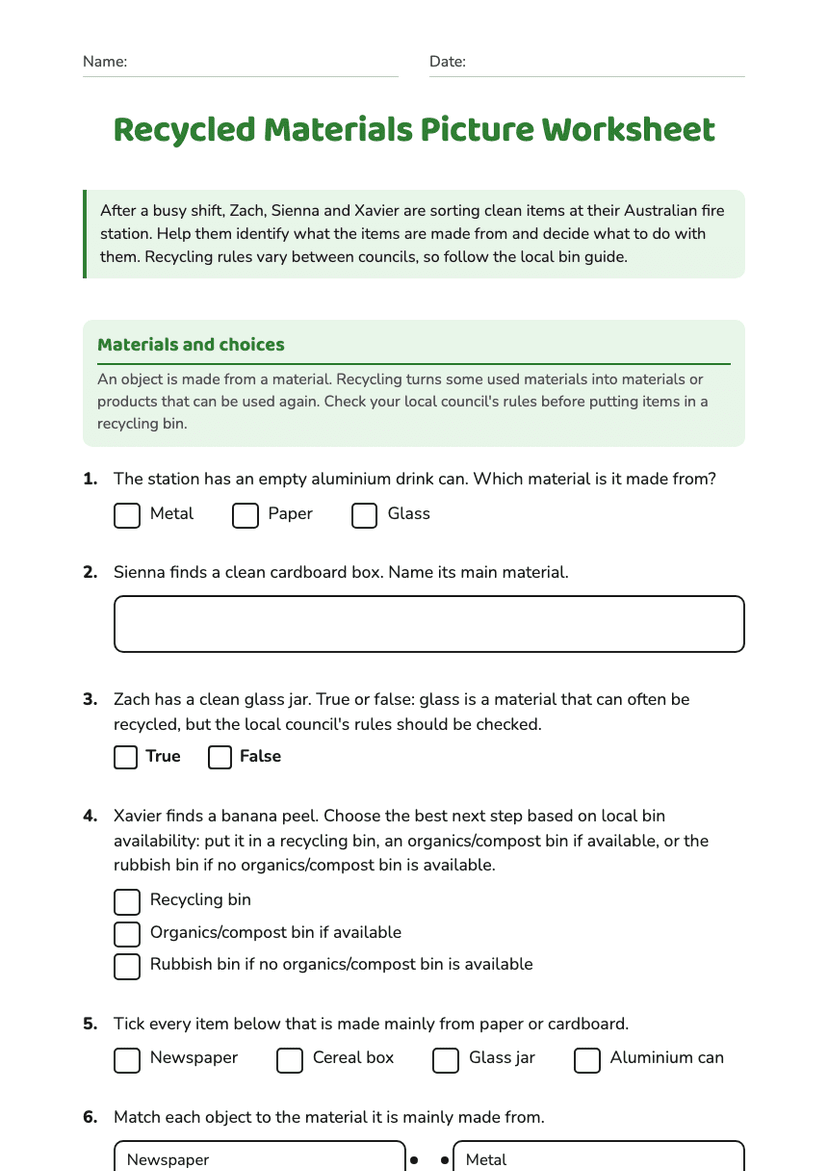
Recycled Materials Picture Worksheet
Free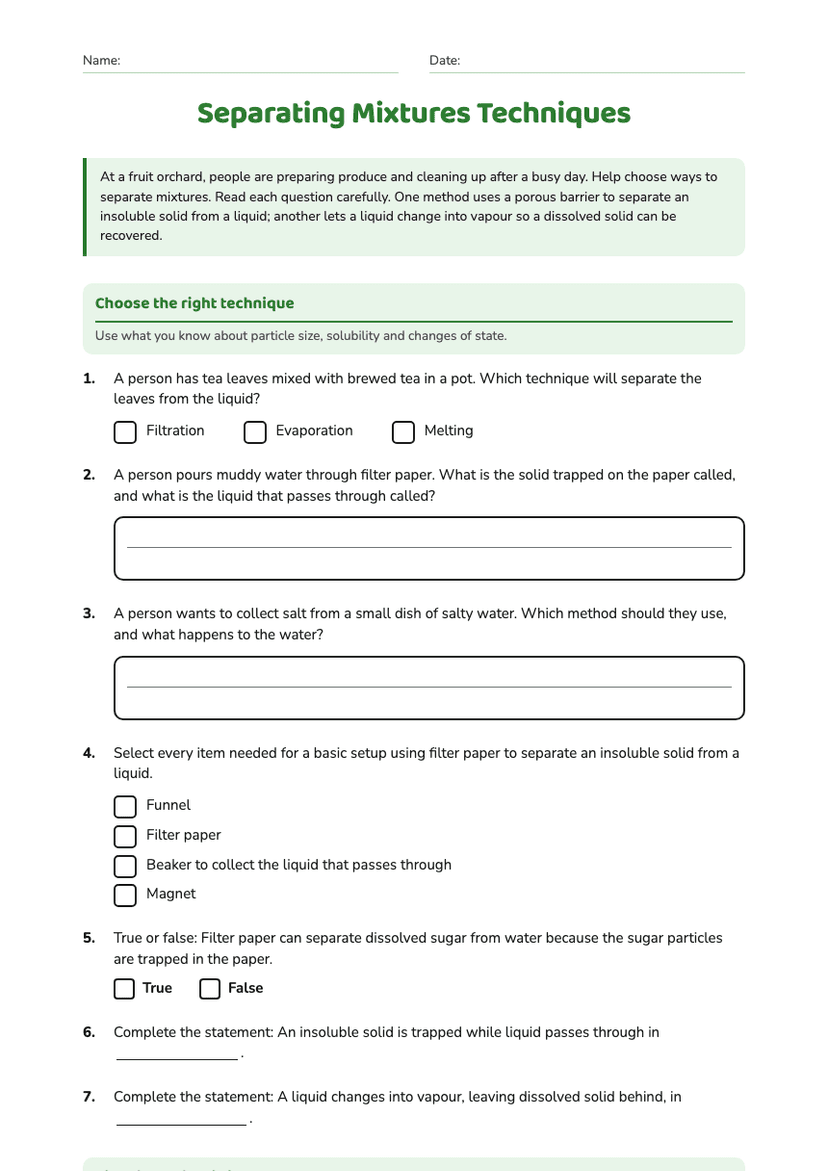
Separating Mixtures Techniques
Free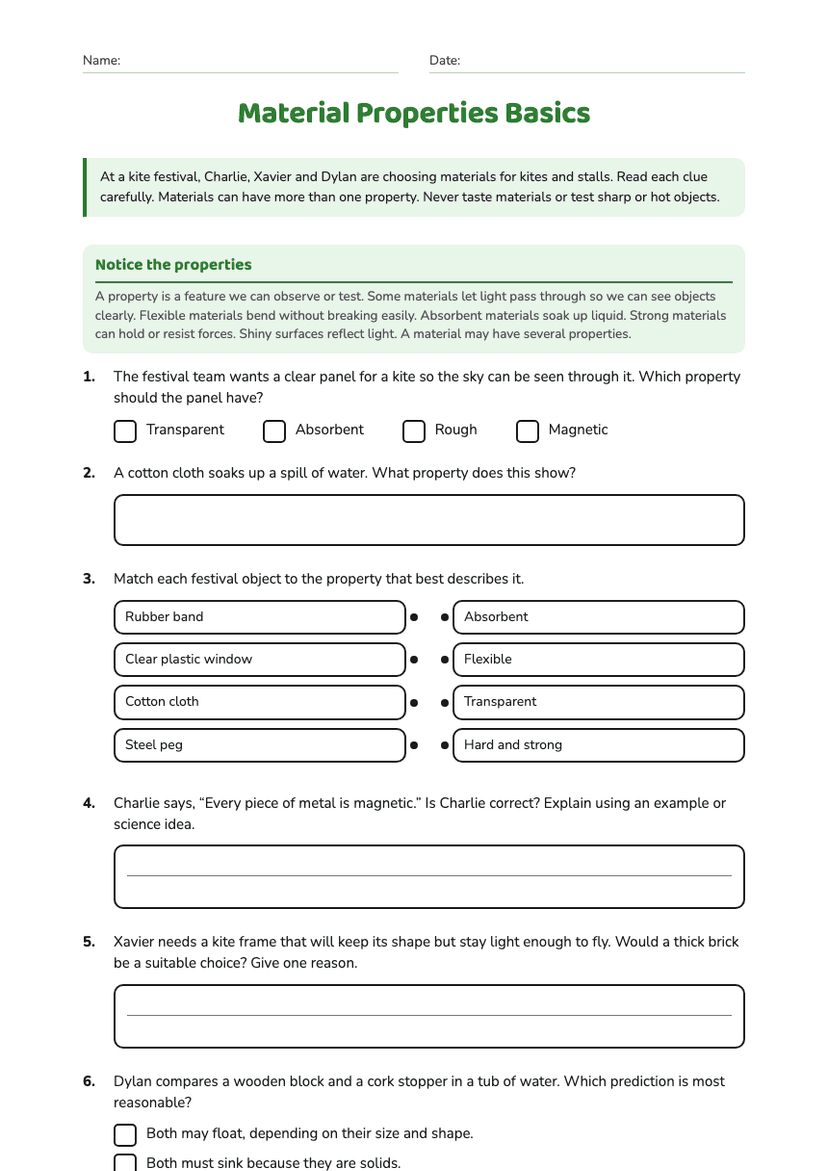
Material Properties Basics
Free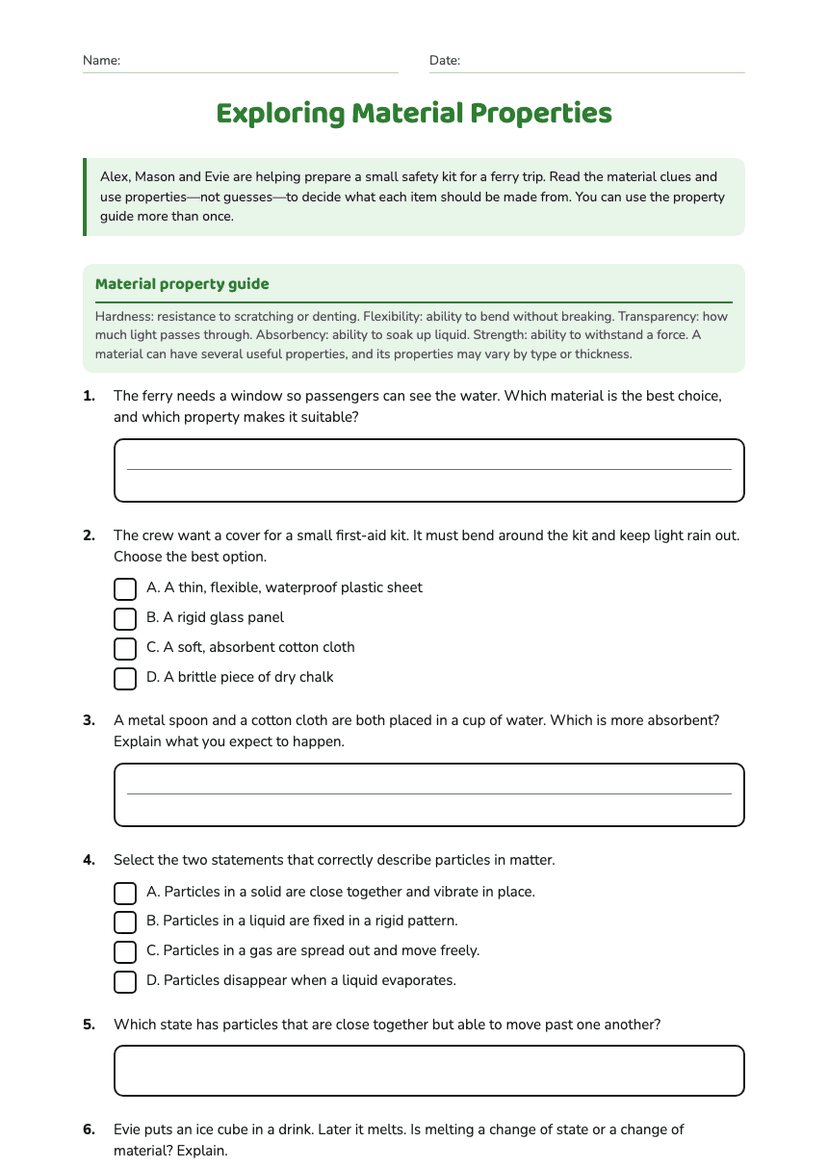
Exploring Material Properties
Free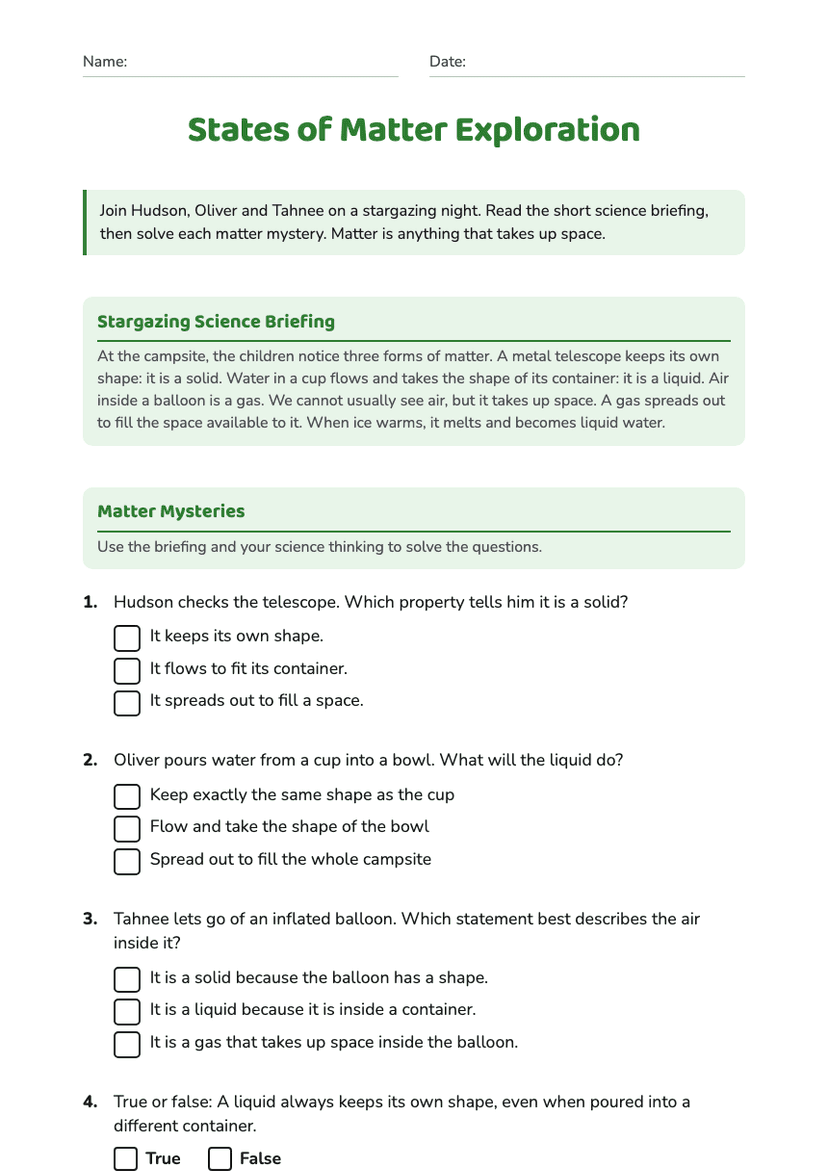
States of Matter Exploration
Free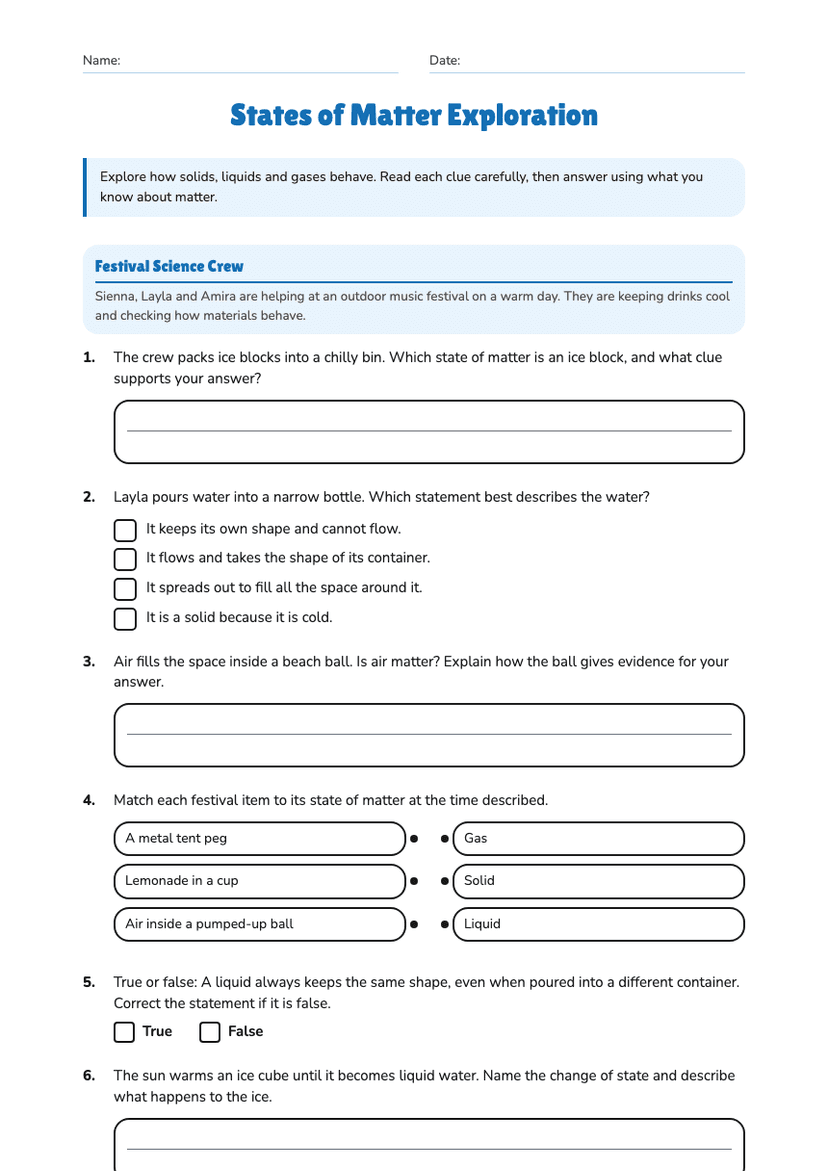
States of Matter Exploration
Free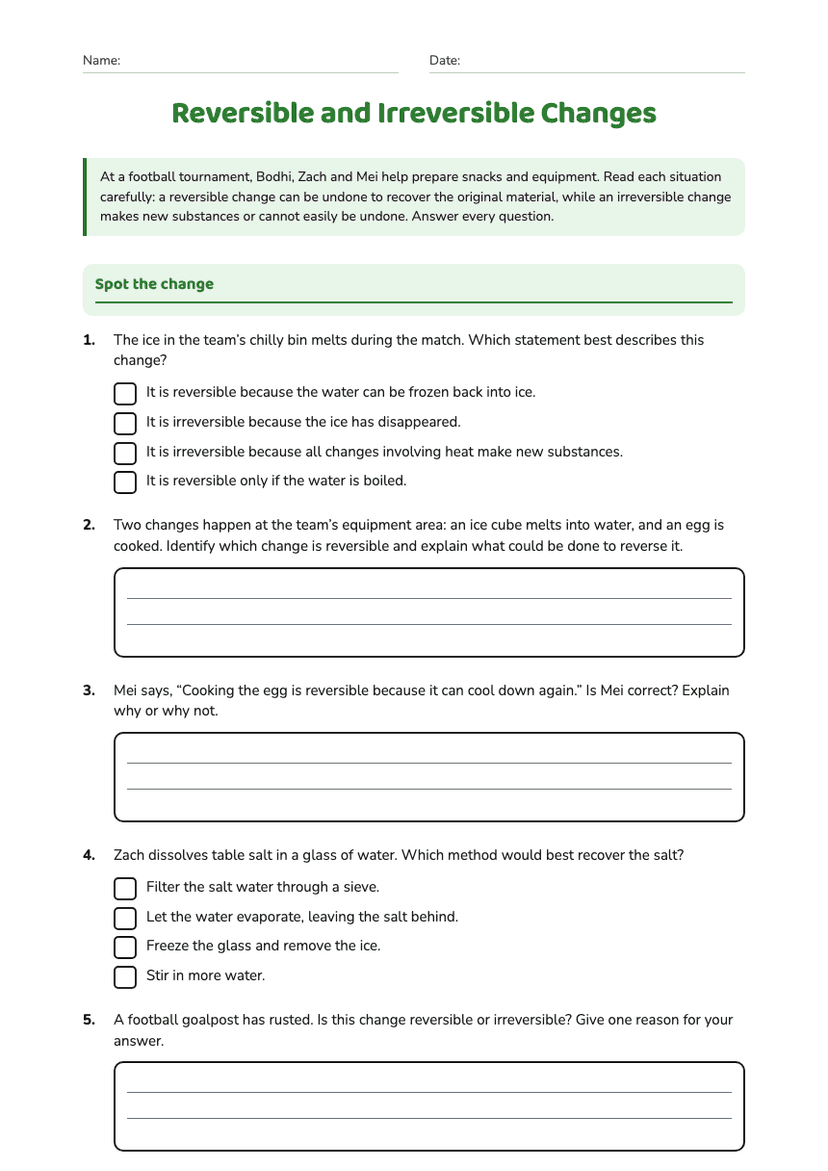
Reversible and Irreversible Changes
Free