Matter and Its Properties
A free science worksheet ready for your classroom. Open in Kuraplan to grab the print-ready PDF, customize it for your students, or generate a fresh version in seconds.
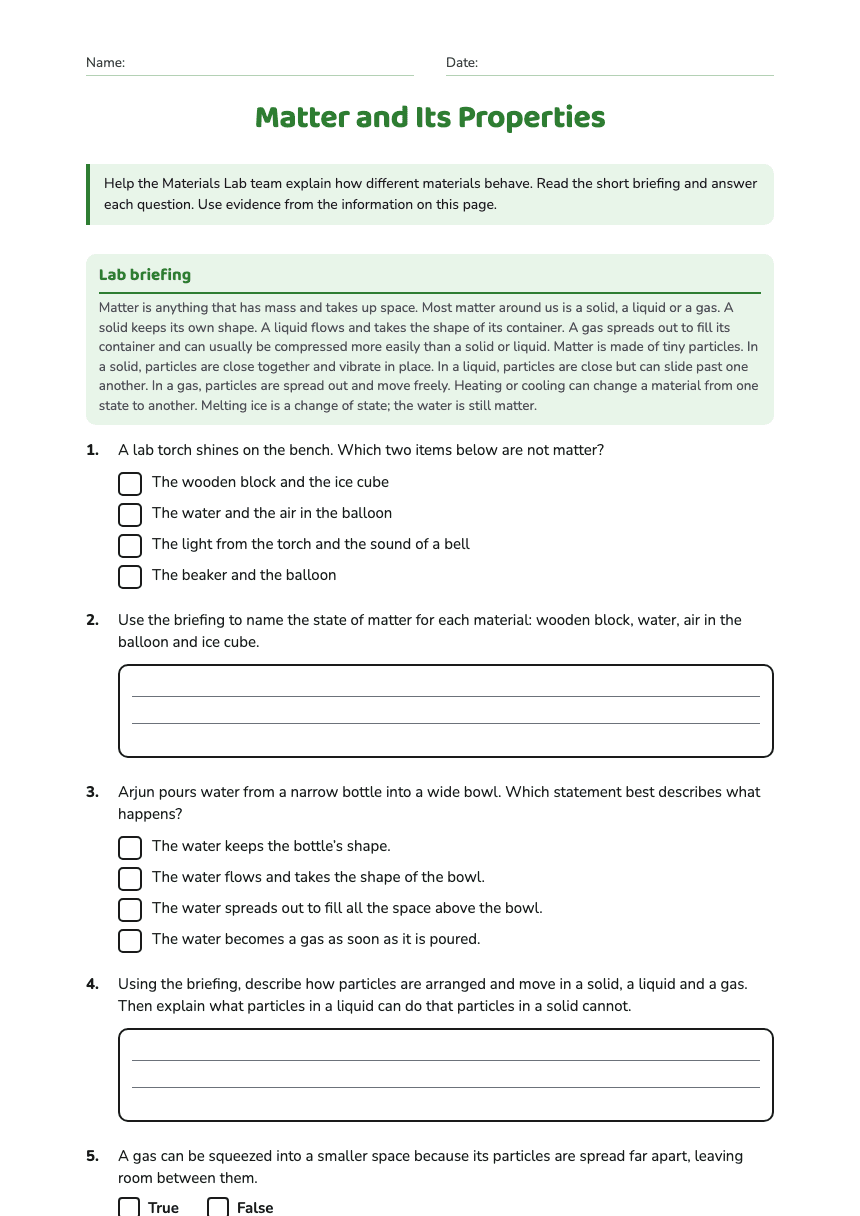
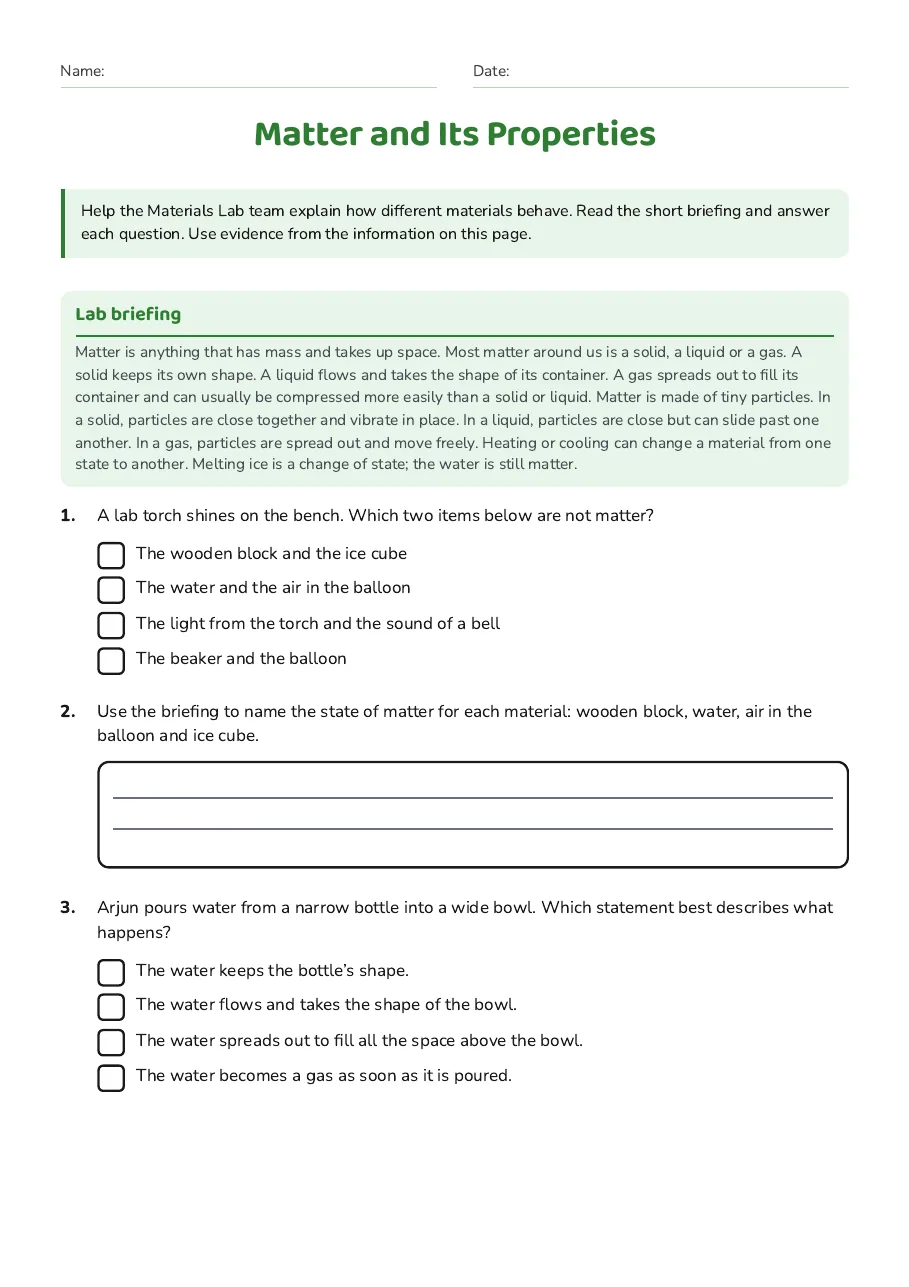
Matter and Its Properties
Lab briefing
Matter is anything that has mass and takes up space. Most matter around us is a solid, a liquid or a gas. A solid keeps its own shape. A liquid flows and takes the shape of its container. A gas spreads out to fill its container and can usually be compressed more easily than a solid or liquid. Matter is made of tiny particles. In a solid, particles are close together and vibrate in place. In a liquid, particles are close but can slide past one another. In a gas, particles are spread out and move freely. Heating or cooling can change a material from one state to another. Melting ice is a change of state; the water is still matter.
- The wooden block and the ice cube
- The water and the air in the balloon
- The light from the torch and the sound of a bell
- The beaker and the balloon
- The water keeps the bottle’s shape.
- The water flows and takes the shape of the bowl.
- The water spreads out to fill all the space above the bowl.
- The water becomes a gas as soon as it is poured.
3 printable pages
Page 1
Page 2
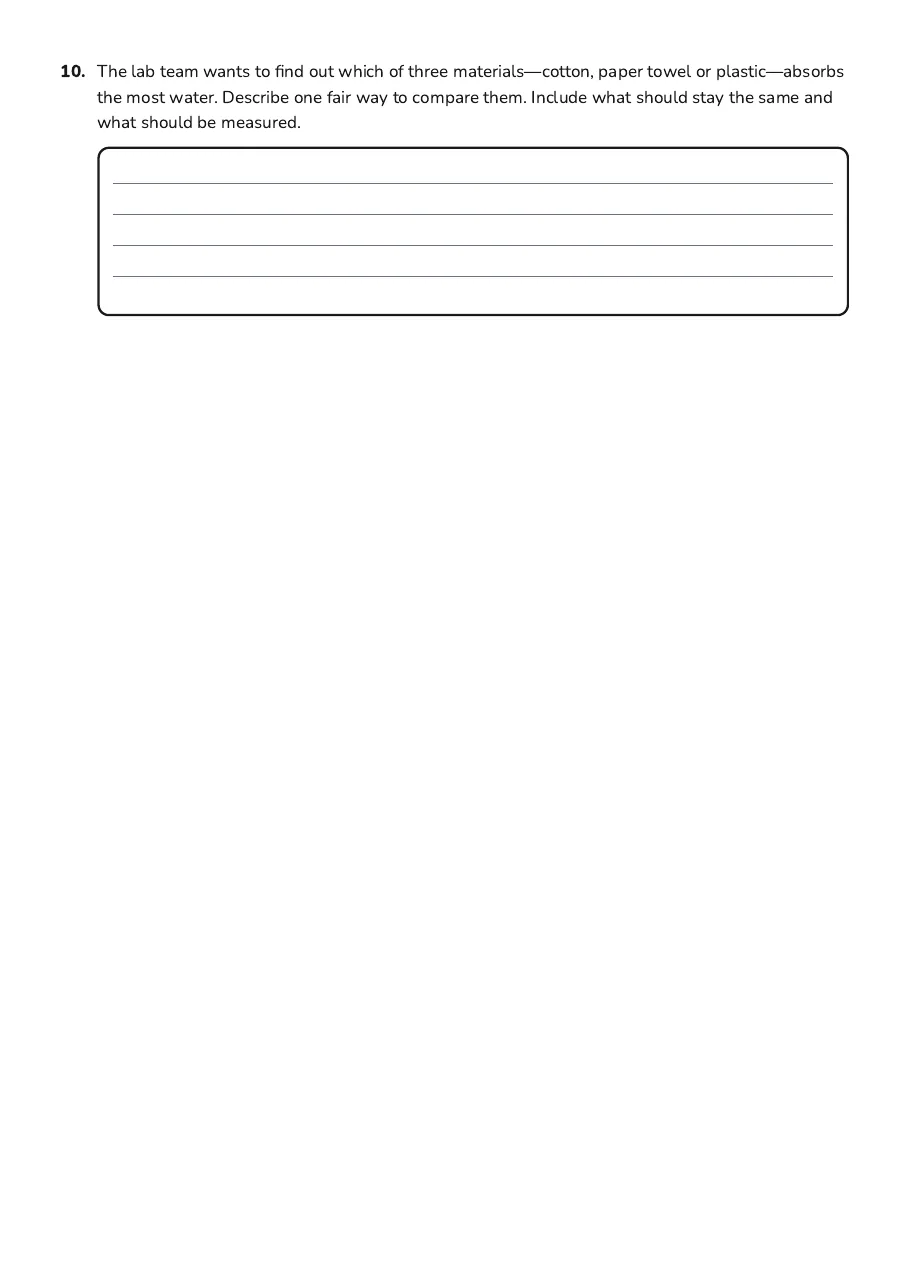
Page 3
About This Worksheet
Free in Kuraplan
Sign up free, grab the PDF, and customize it for your class.
Print-Ready
Formatted for standard paper. Clean layout, easy to read.
AI-Generated
Created with Kuraplan's AI, designed for real classroom use.
For Teachers & Parents
Use in classrooms, for homework, tutoring, or homeschool.
Need a custom version of this worksheet?
Kuraplan's AI generates custom worksheets in seconds — differentiated for every learner, aligned to your curriculum.
Generate Custom Worksheets — FreeMore Science Worksheets
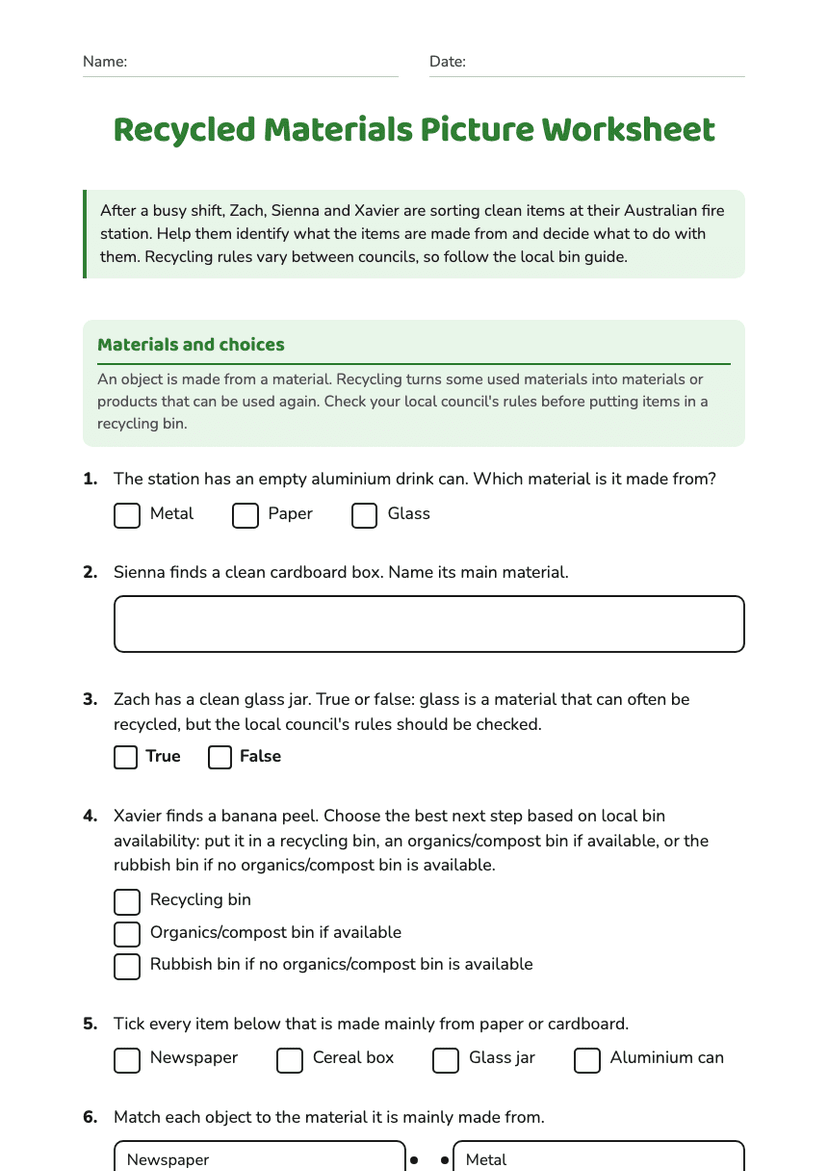
Recycled Materials Picture Worksheet
Free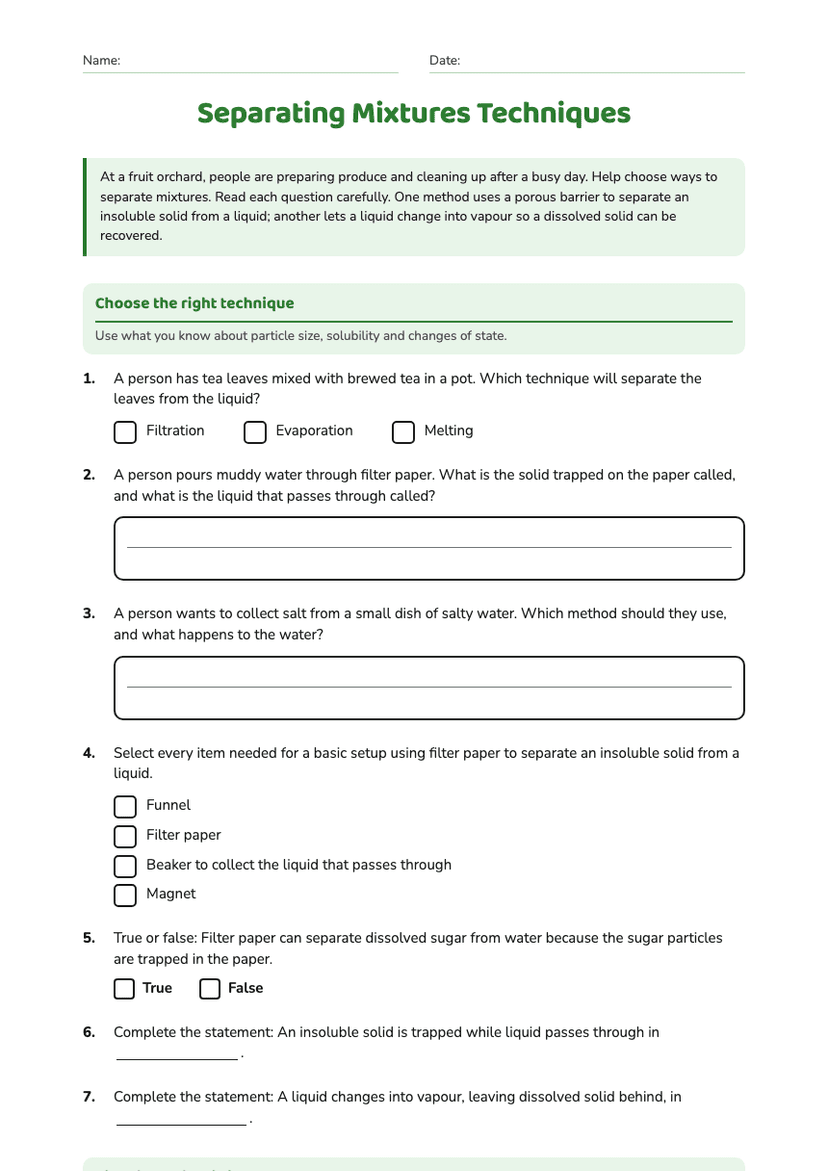
Separating Mixtures Techniques
Free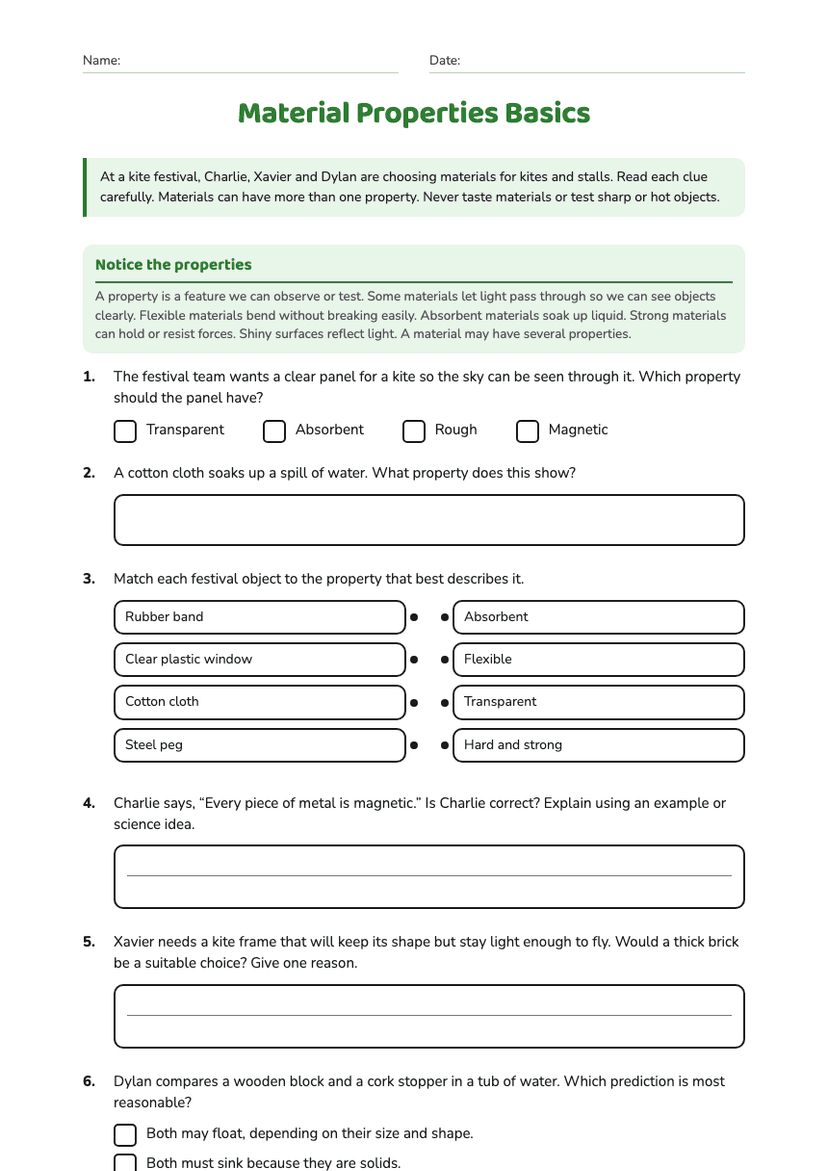
Material Properties Basics
Free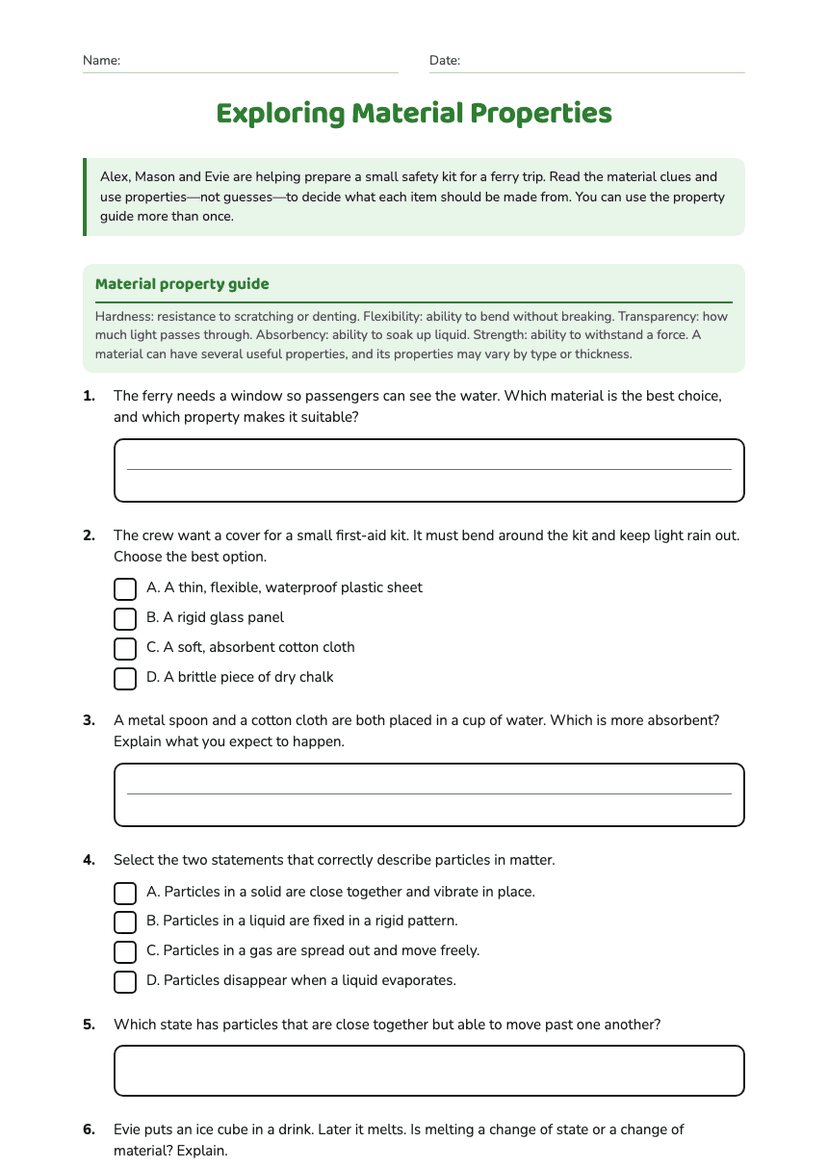
Exploring Material Properties
Free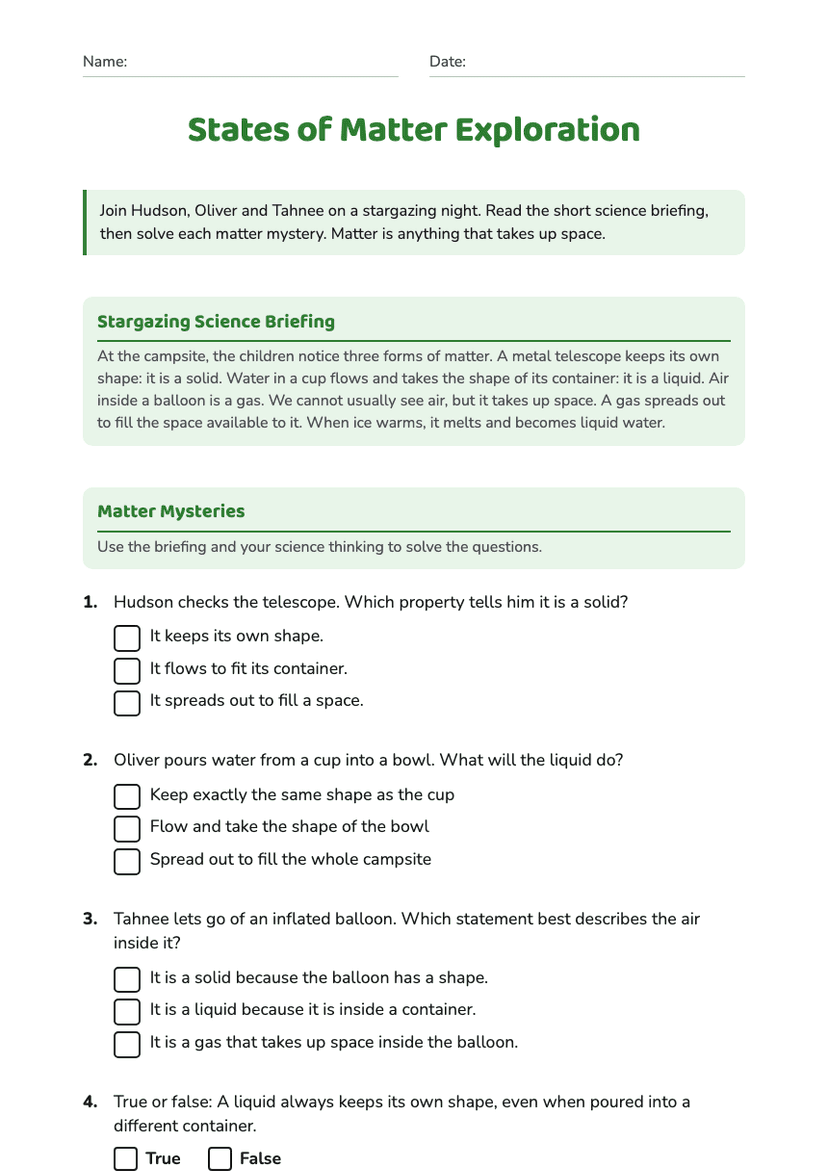
States of Matter Exploration
Free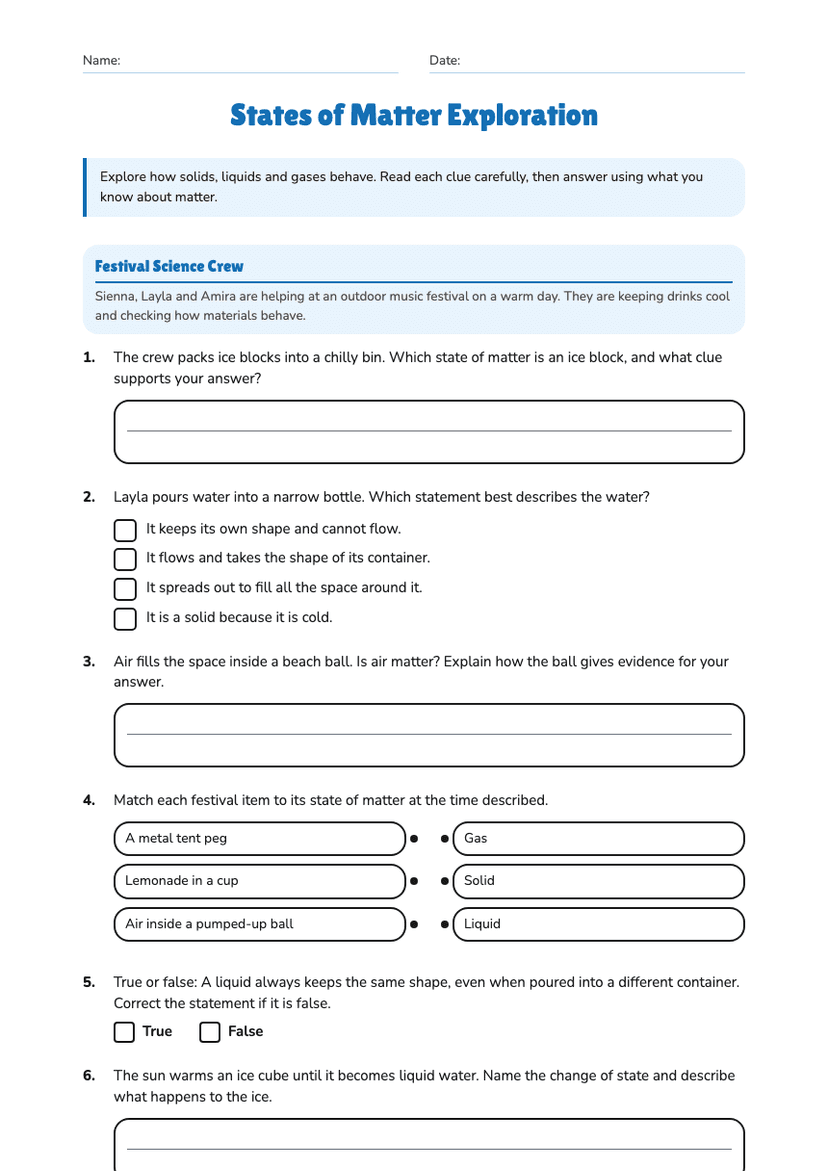
States of Matter Exploration
Free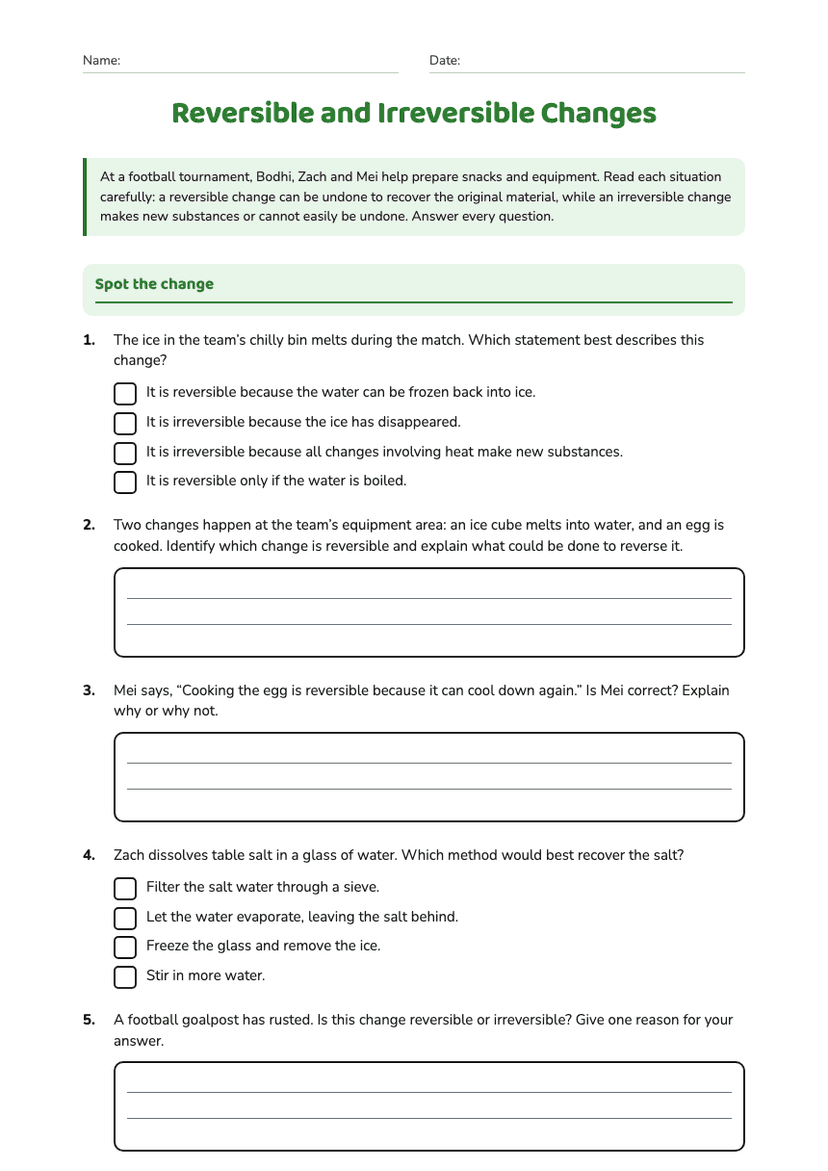
Reversible and Irreversible Changes
Free