Matter and Particle Models
A free science worksheet ready for your classroom. Open in Kuraplan to grab the print-ready PDF, customize it for your students, or generate a fresh version in seconds.
Matter and Particle Models
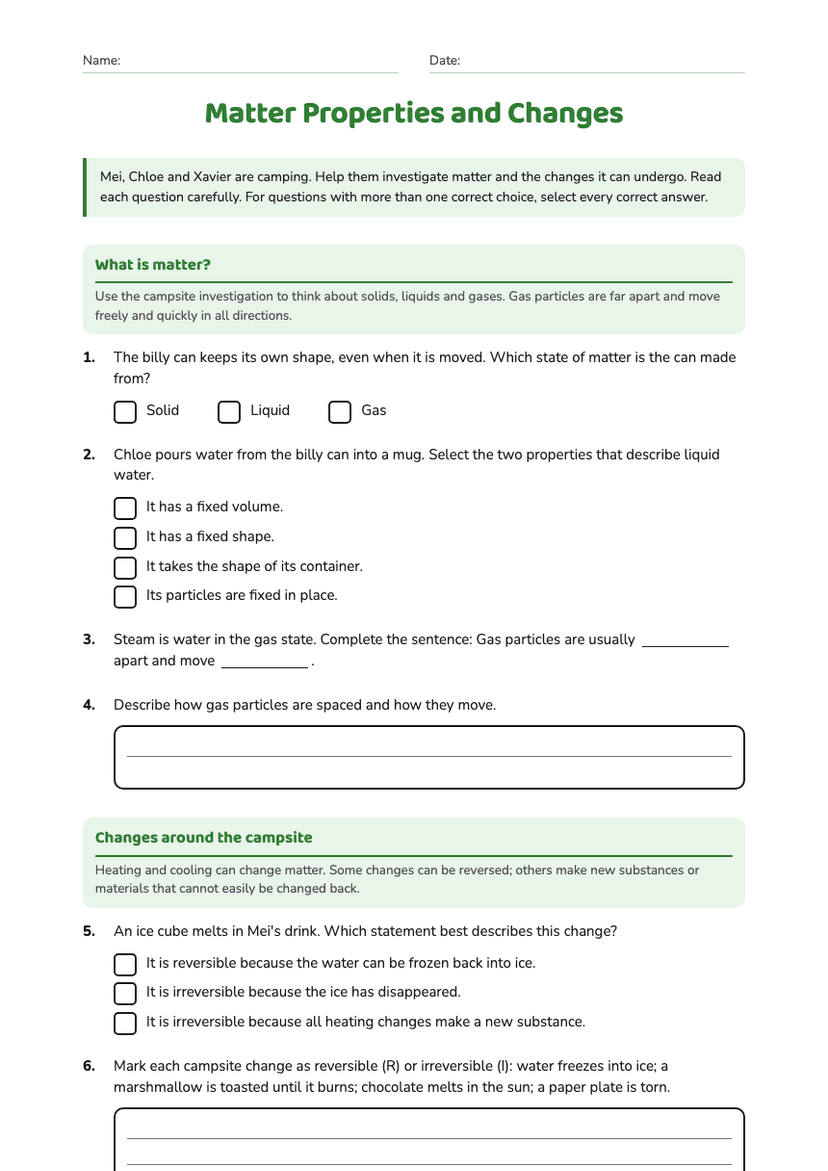
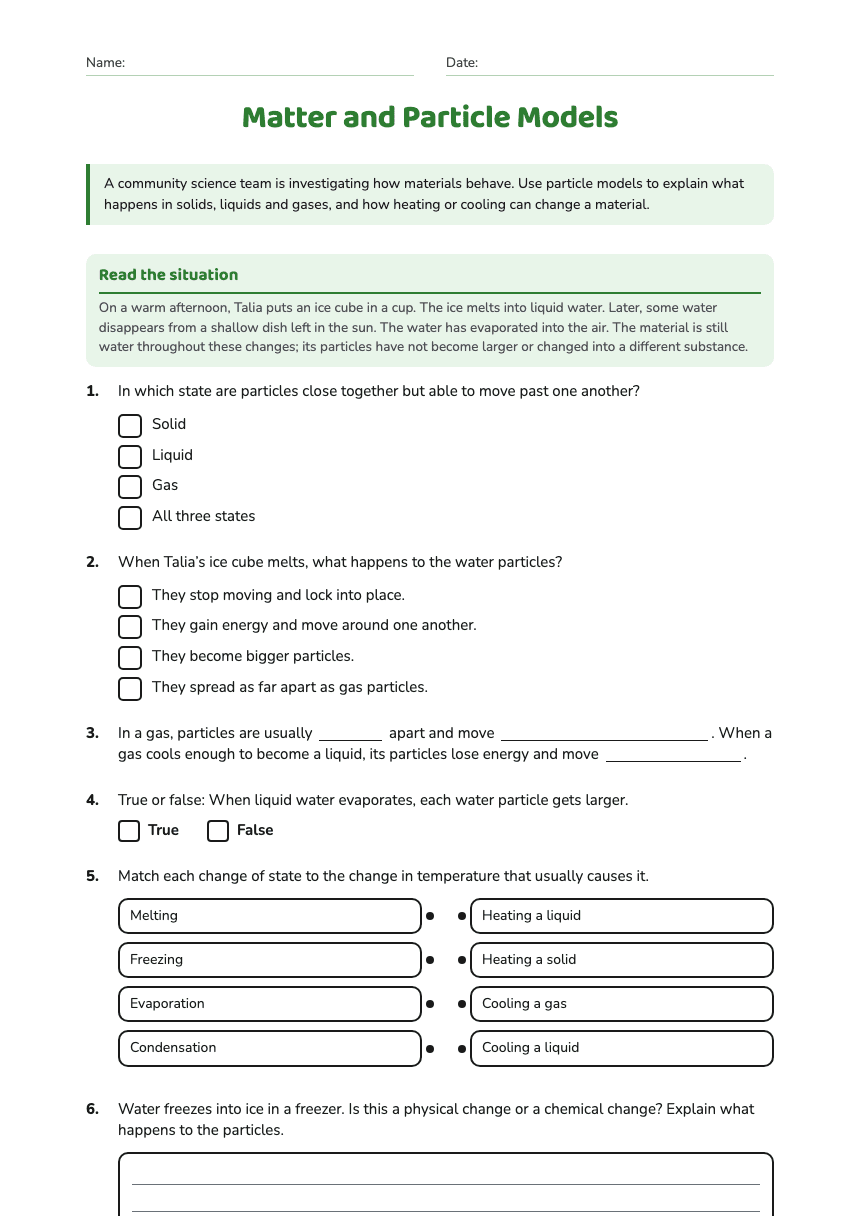
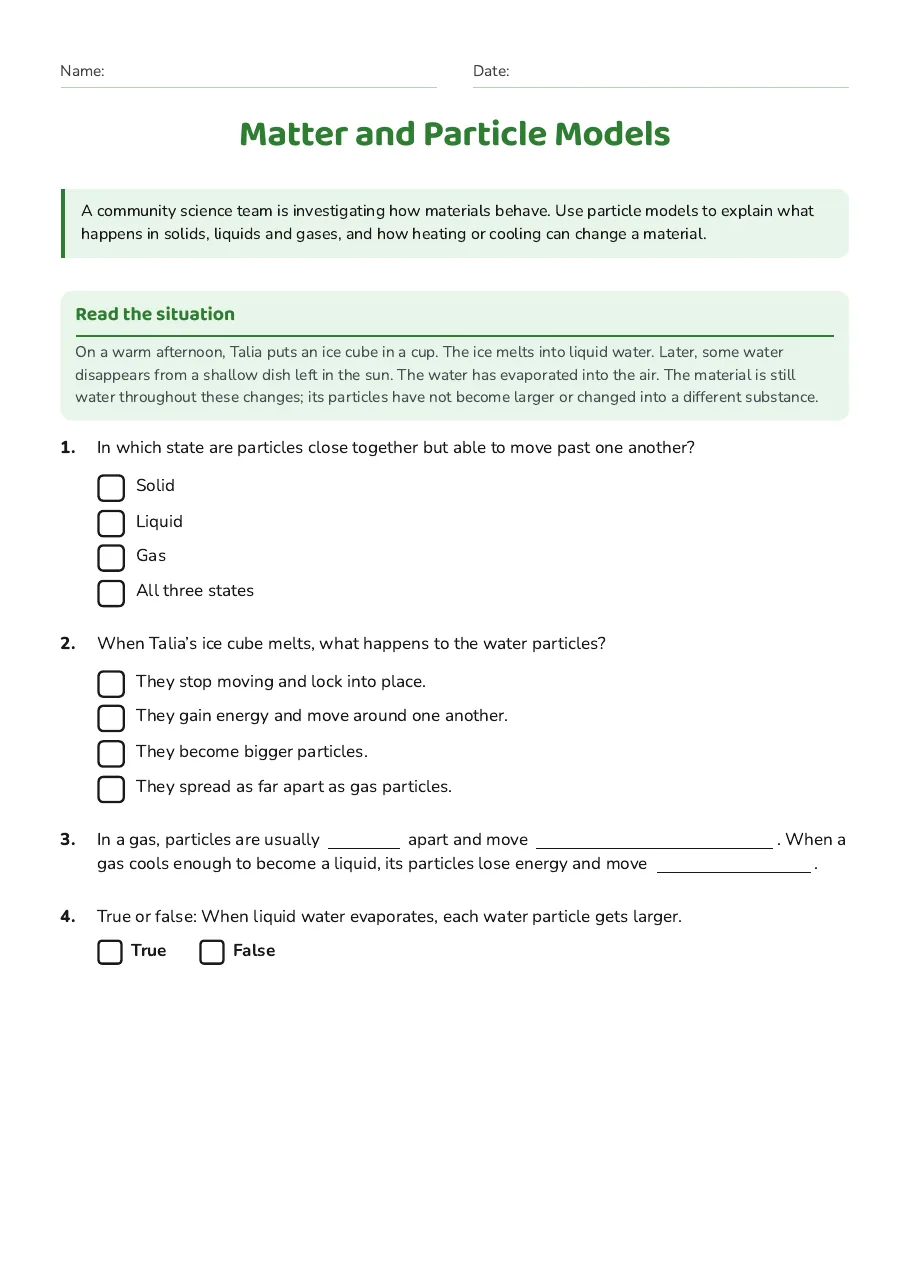
Read the situation
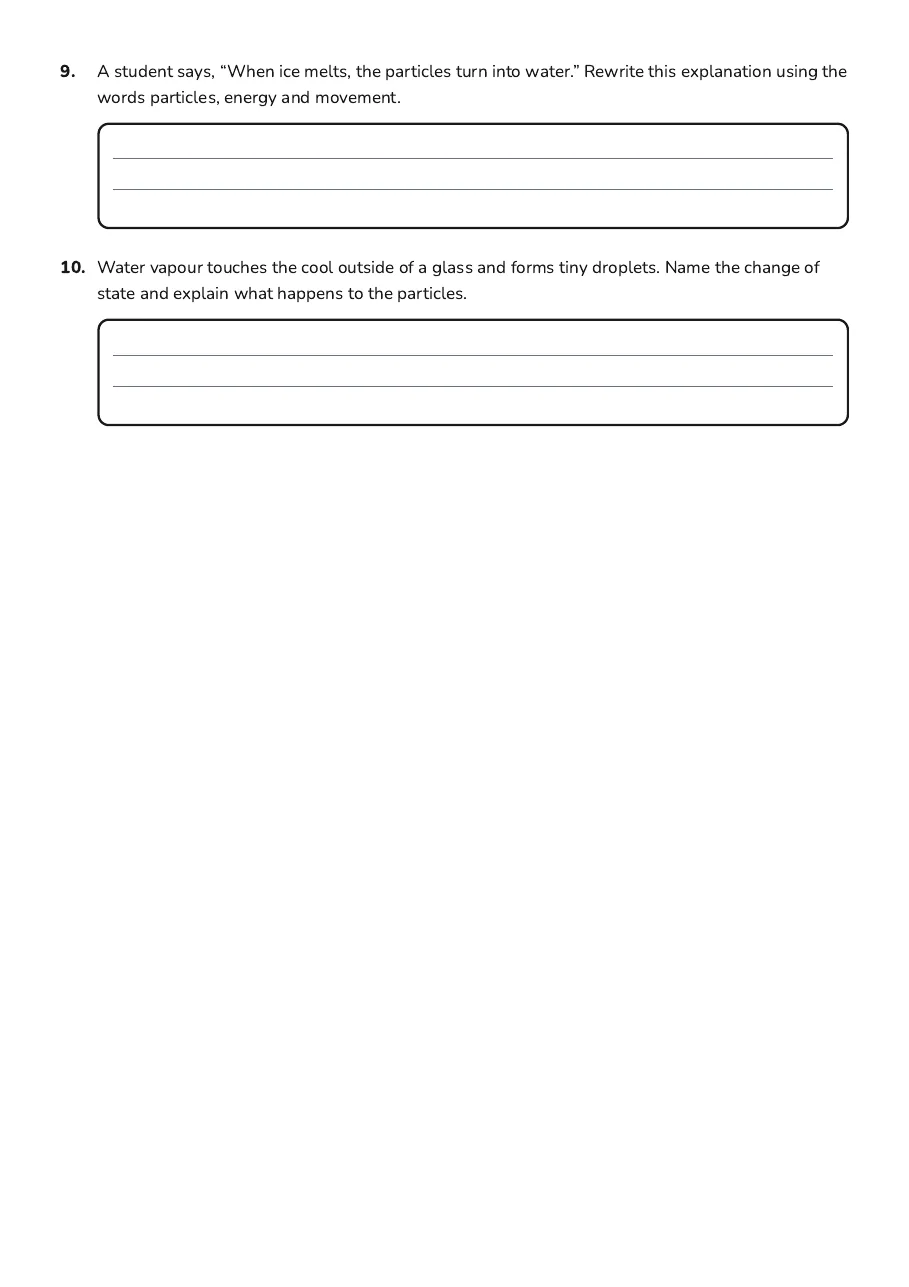
On a warm afternoon, Talia puts an ice cube in a cup. The ice melts into liquid water. Later, some water disappears from a shallow dish left in the sun. The water has evaporated into the air. The material is still water throughout these changes; its particles have not become larger or changed into a different substance.
- Solid
- Liquid
- Gas
- All three states
- They stop moving and lock into place.
- They gain energy and move around one another.
- They become bigger particles.
- They spread as far apart as gas particles.
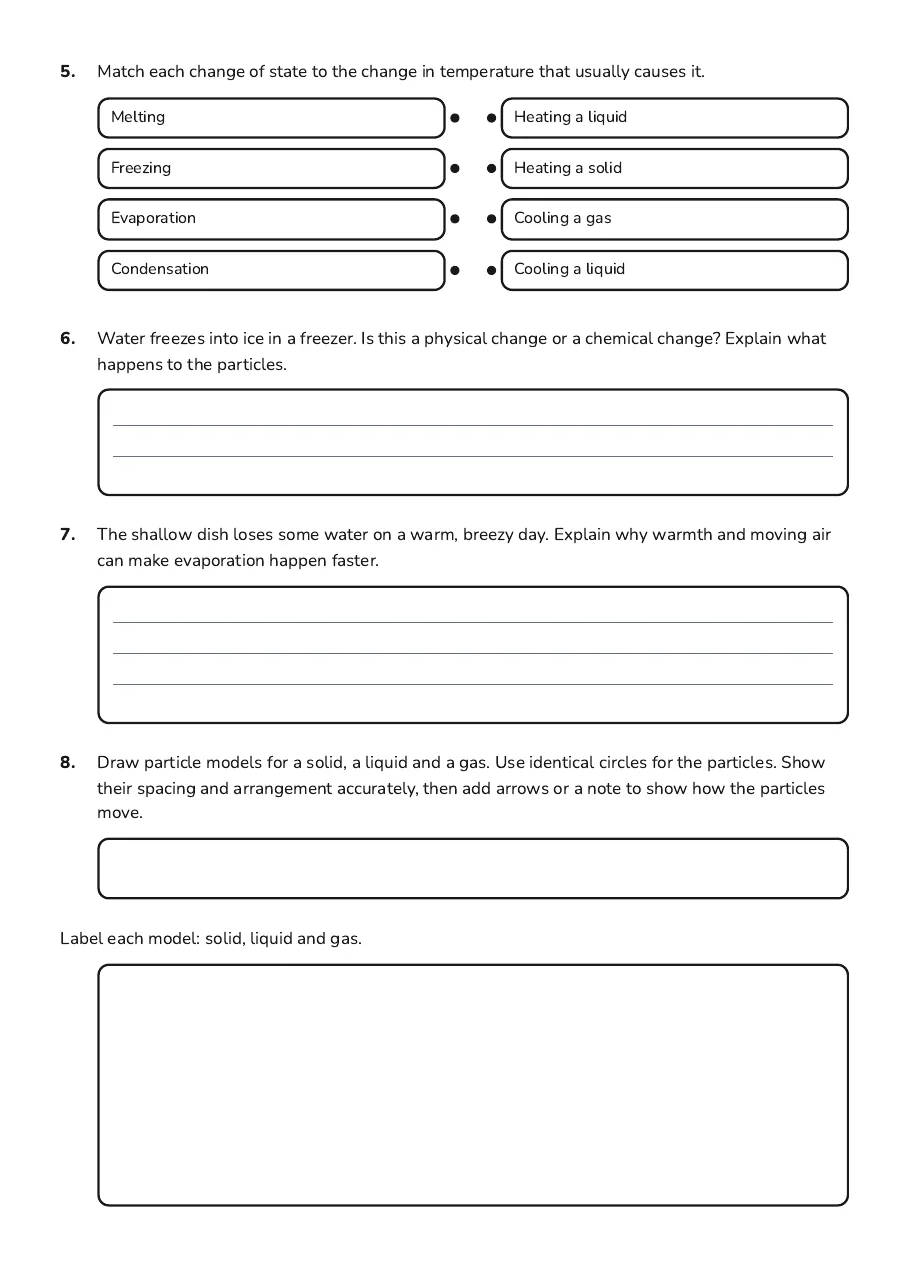
- Melting
- Freezing
- Evaporation
- Condensation
- Heating a liquid
- Heating a solid
- Cooling a gas
- Cooling a liquid
3 printable pages
Page 1
Page 2
Page 3
About This Worksheet
Free in Kuraplan
Sign up free, grab the PDF, and customize it for your class.
Print-Ready
Formatted for standard paper. Clean layout, easy to read.
AI-Generated
Created with Kuraplan's AI, designed for real classroom use.
For Teachers & Parents
Use in classrooms, for homework, tutoring, or homeschool.
Need a custom version of this worksheet?
Kuraplan's AI generates custom worksheets in seconds — differentiated for every learner, aligned to your curriculum.
Generate Custom Worksheets — FreeMore Science Worksheets
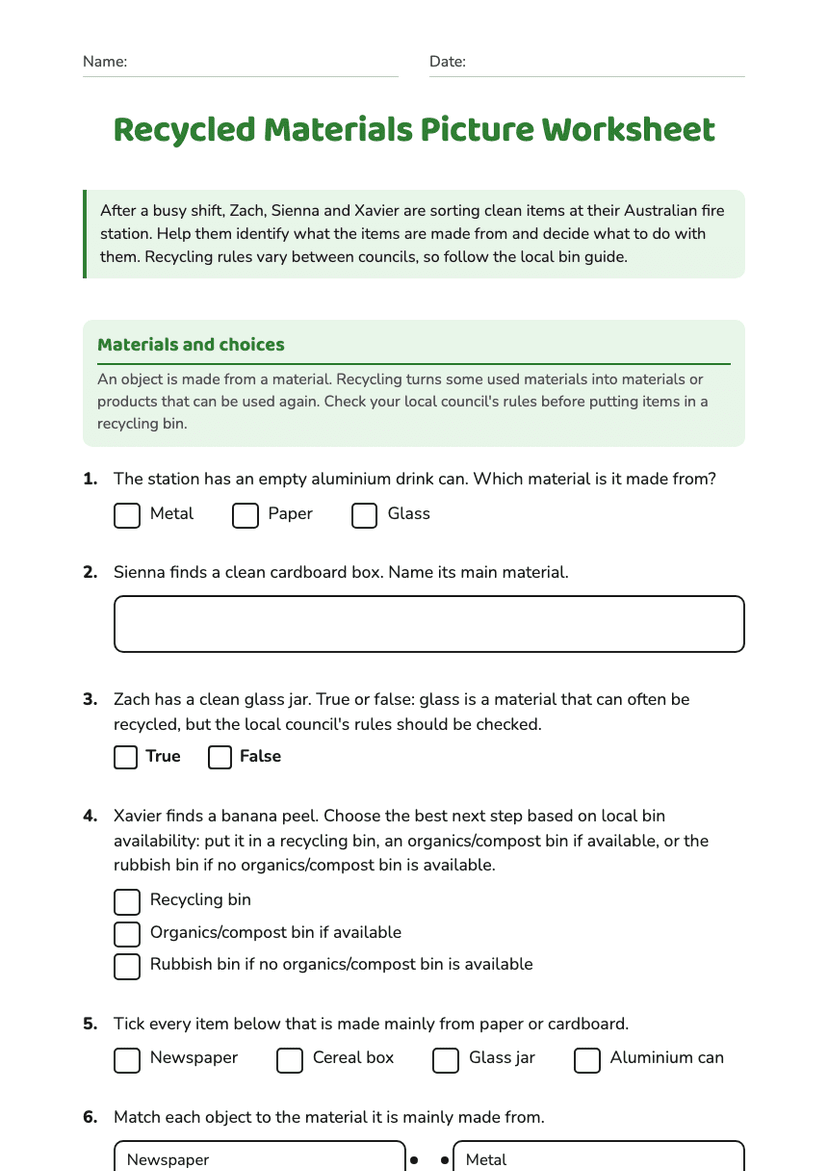
Recycled Materials Picture Worksheet
Free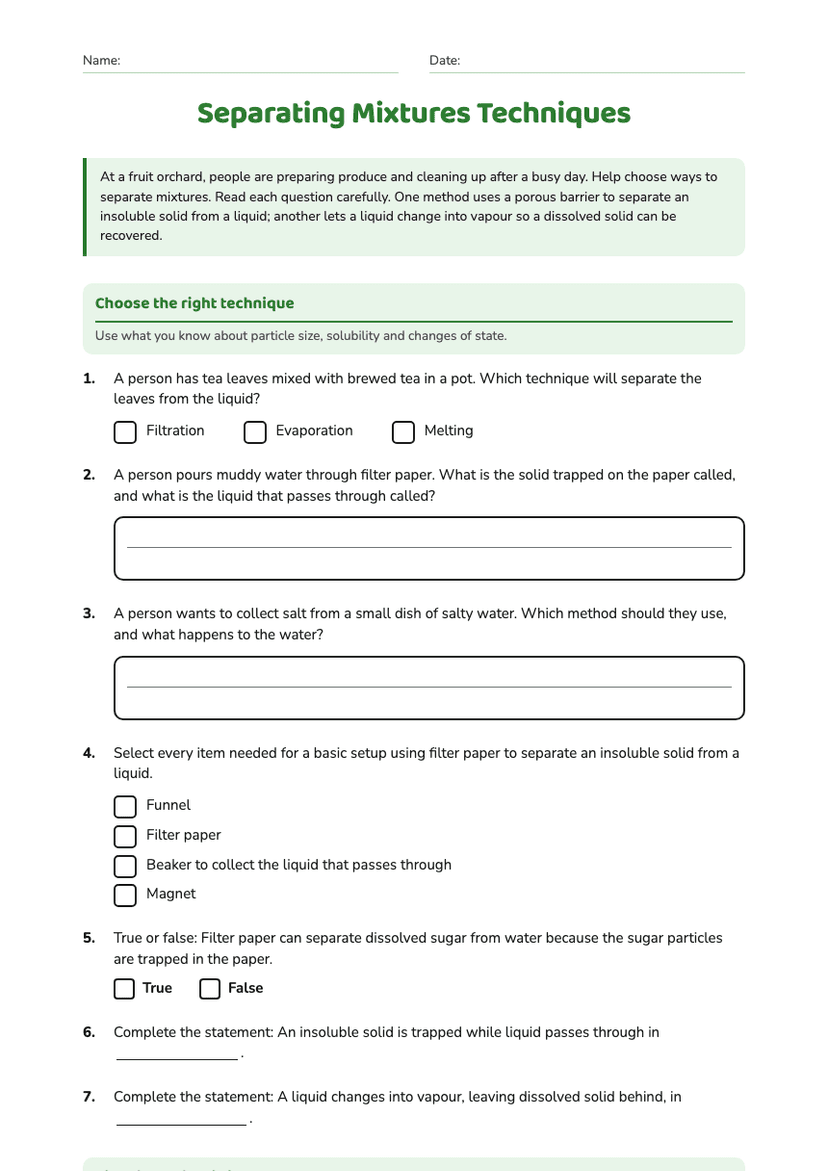
Separating Mixtures Techniques
Free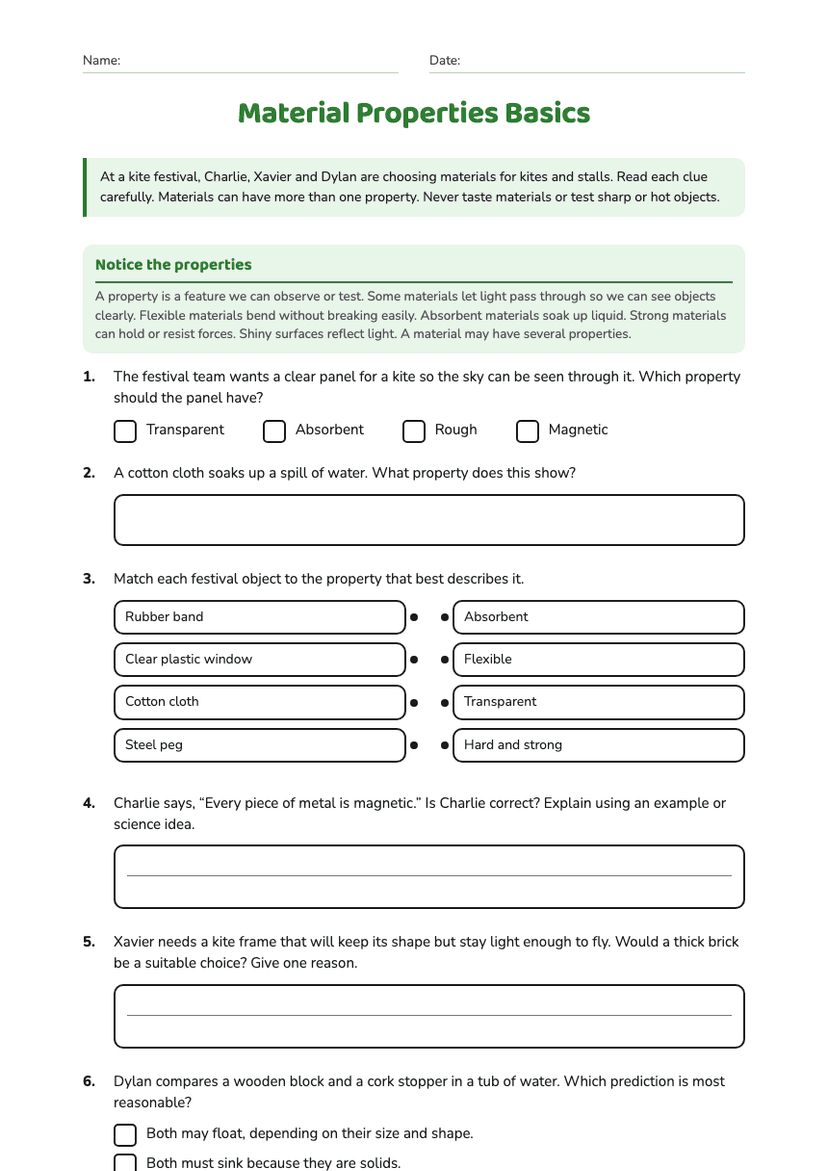
Material Properties Basics
Free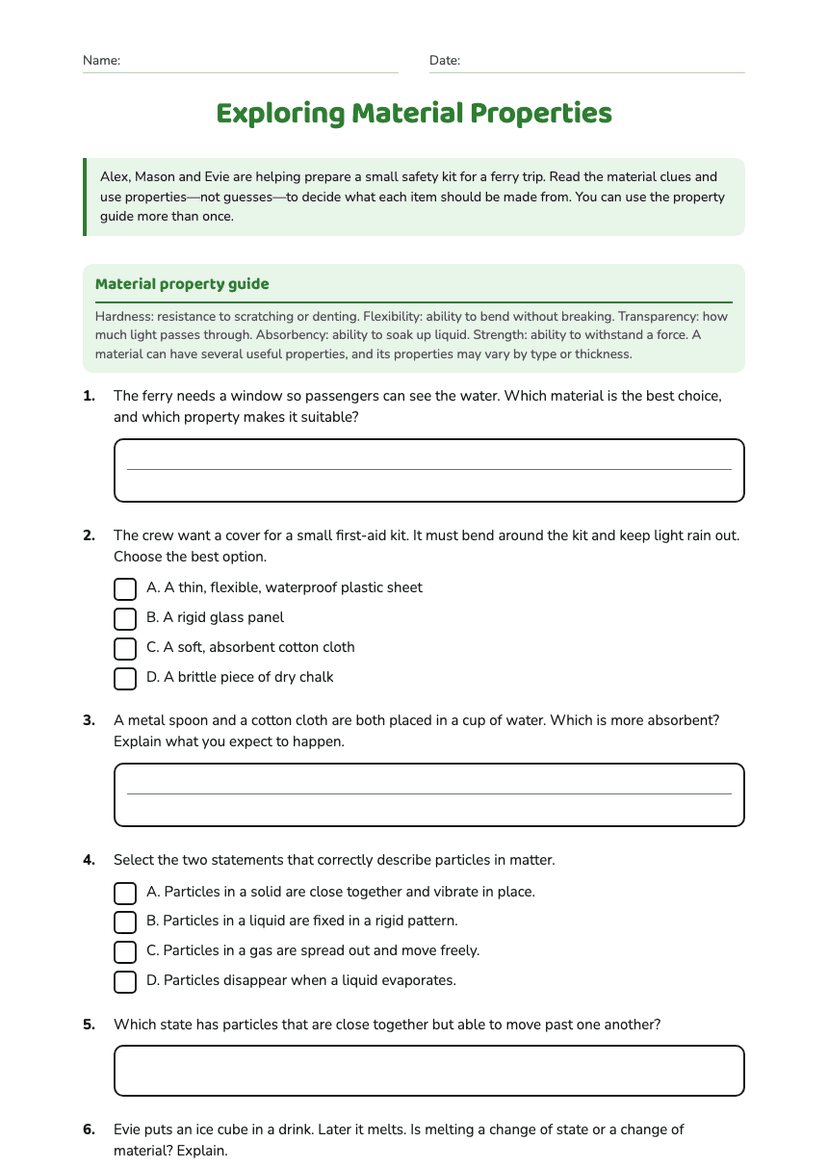
Exploring Material Properties
Free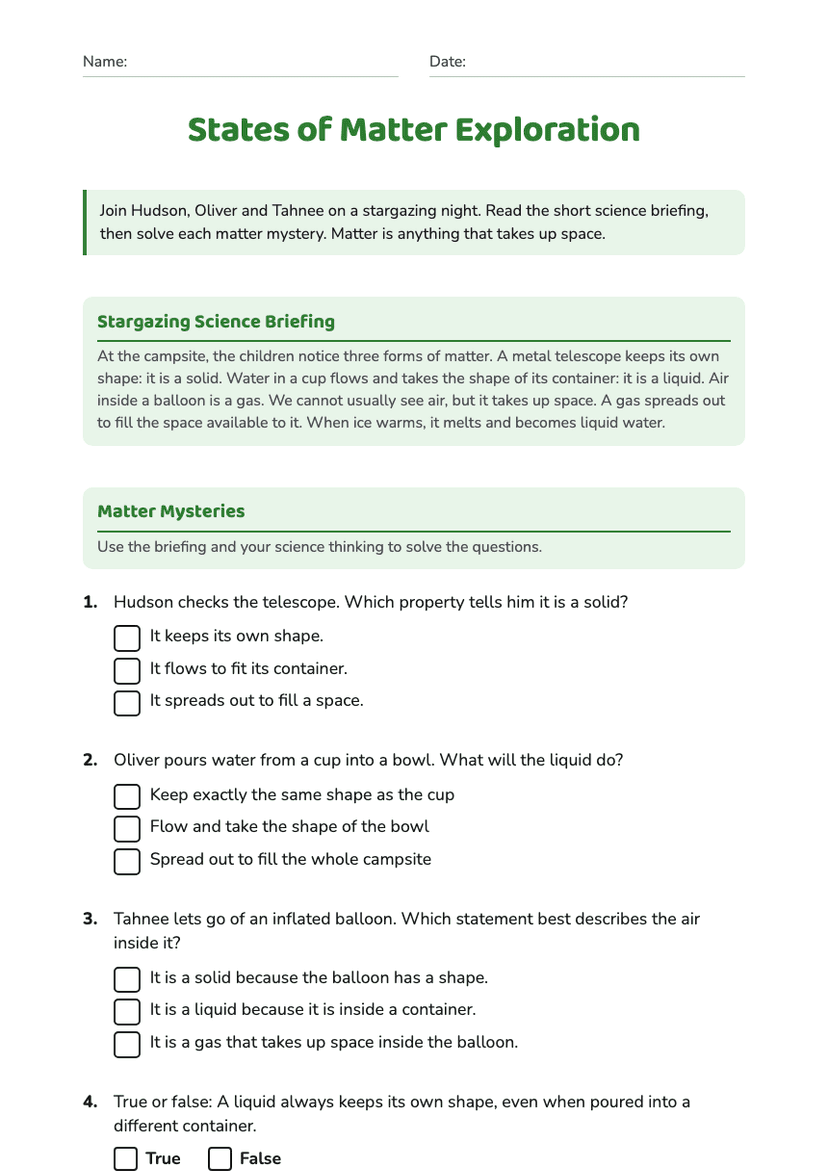
States of Matter Exploration
Free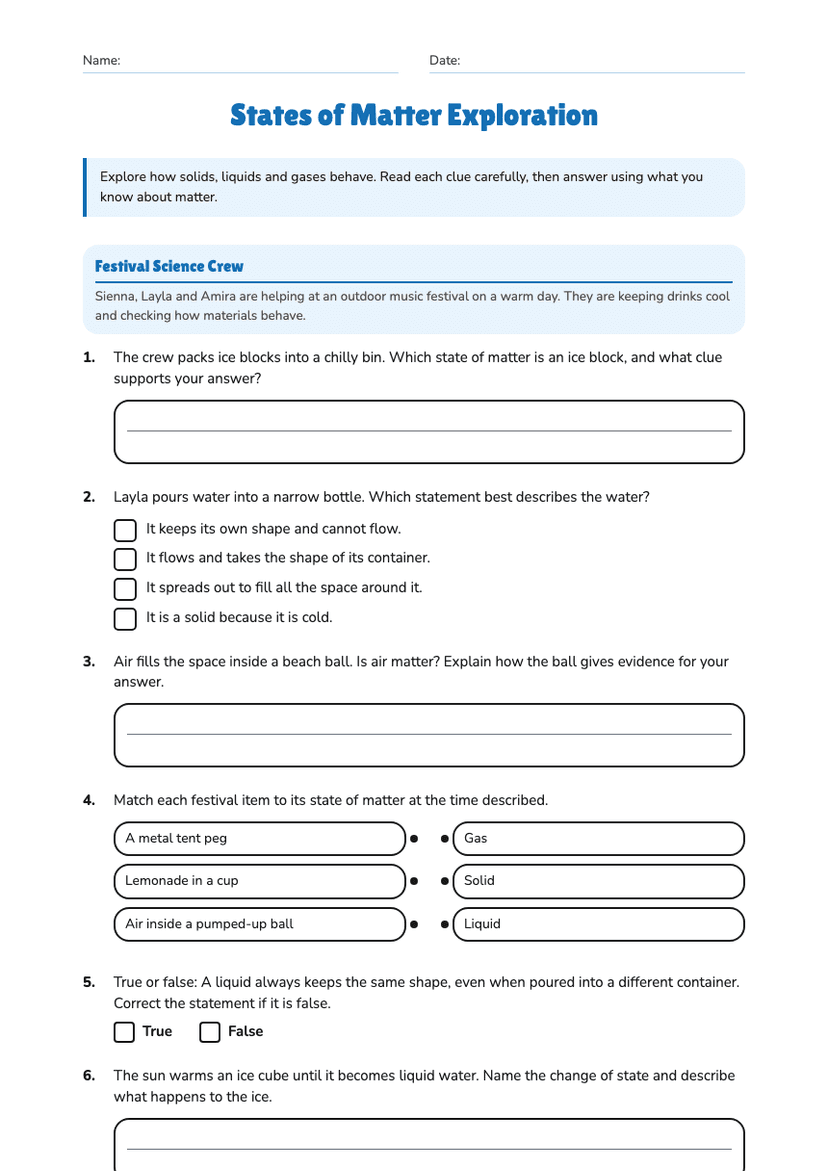
States of Matter Exploration
Free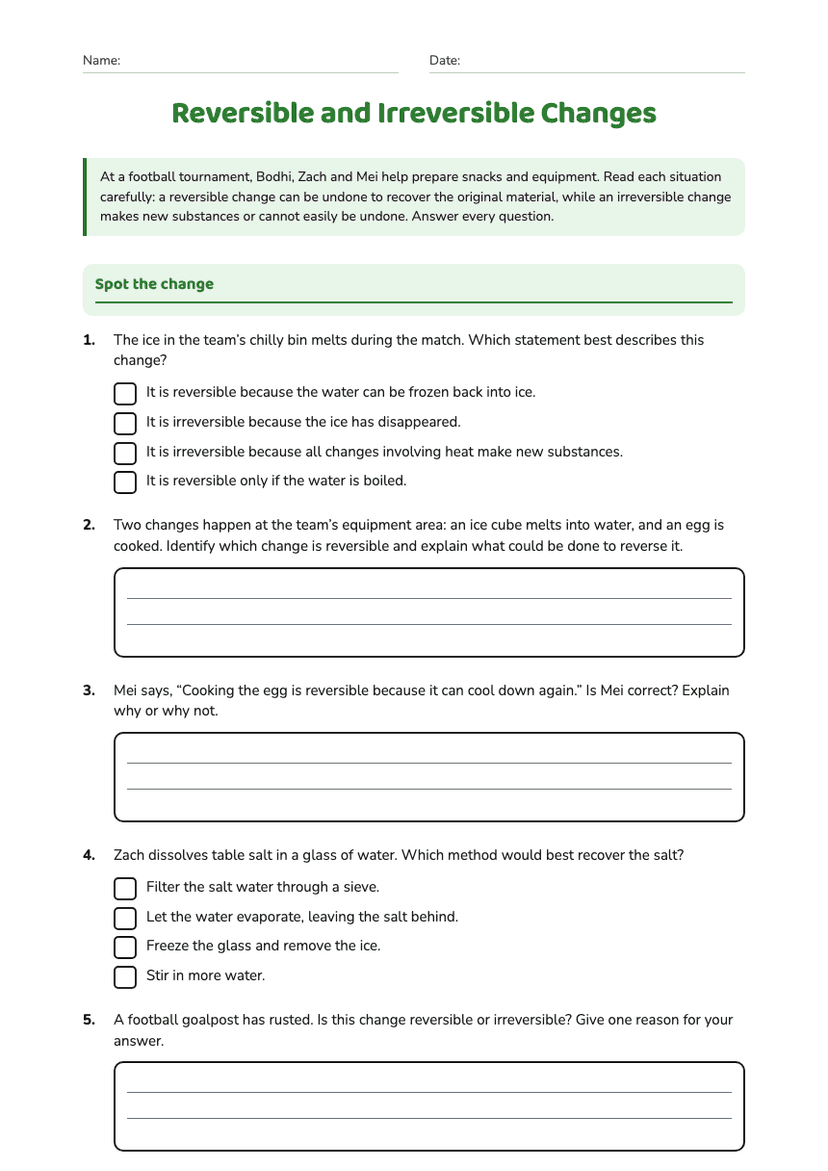
Reversible and Irreversible Changes
Free