Parody Assessment Self-Evaluation
A free english worksheet ready for your classroom. Open in Kuraplan to grab the print-ready PDF, customize it for your students, or generate a fresh version in seconds.
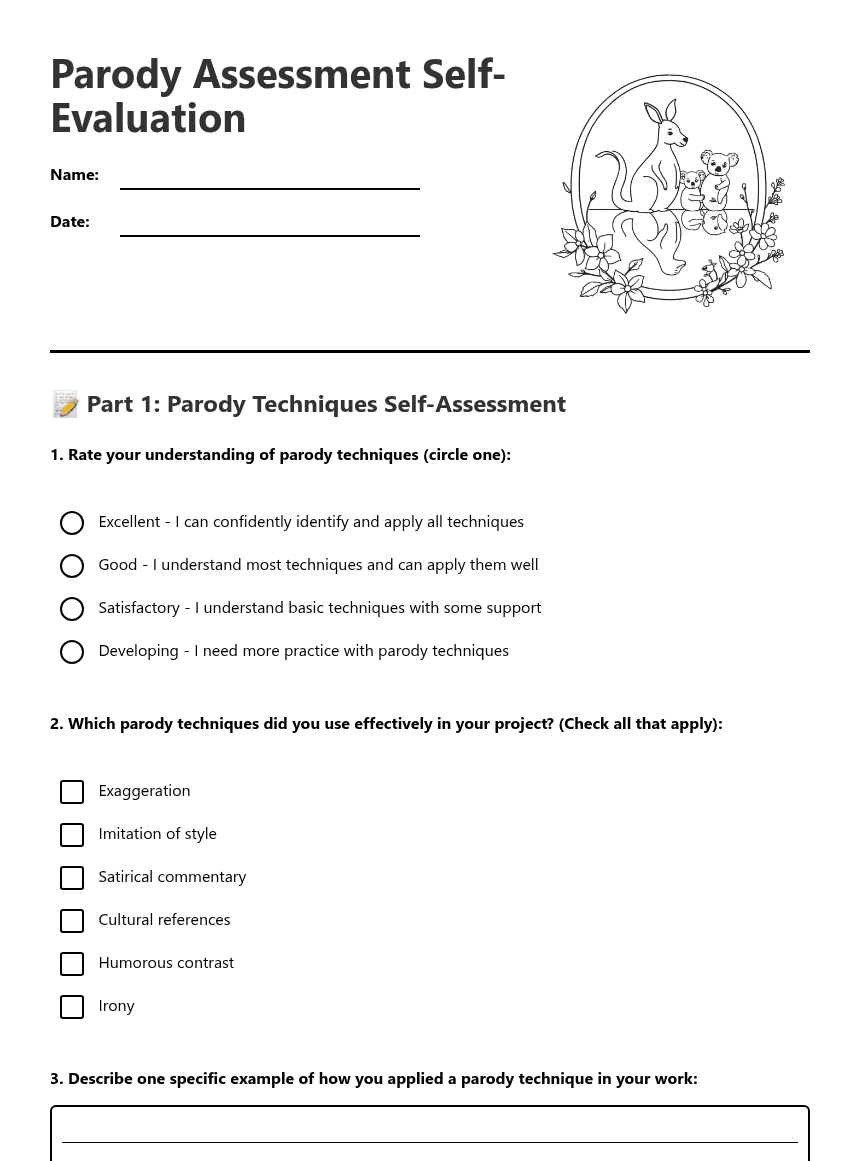
Parody Assessment Self-Evaluation
📝 Part 1: Parody Techniques Self-Assessment
🌏 Part 2: Cultural Representation Reflection
🔄 Part 3: Learning Journey and Growth
At the beginning of the unit, I thought parody was: _________________________________
_________________________________________________________________________
Now I understand that parody is: ____________________________________________
_________________________________________________________________________
🎯 Part 4: Process Reflection and Challenges
🚀 Part 5: Future Learning Goals
Goal 1: ________________________________________________________________
_________________________________________________________________________
_________________________________________________________________________
Goal 2: ________________________________________________________________
_________________________________________________________________________
_________________________________________________________________________
⭐ Part 6: Overall Unit Reflection
About This Worksheet
Free in Kuraplan
Sign up free, grab the PDF, and customize it for your class.
Print-Ready
Formatted for standard paper. Clean layout, easy to read.
AI-Generated
Created with Kuraplan's AI, designed for real classroom use.
For Teachers & Parents
Use in classrooms, for homework, tutoring, or homeschool.
Need a custom version of this worksheet?
Kuraplan's AI generates custom worksheets in seconds — differentiated for every learner, aligned to your curriculum.
Generate Custom Worksheets — FreeMore English Worksheets
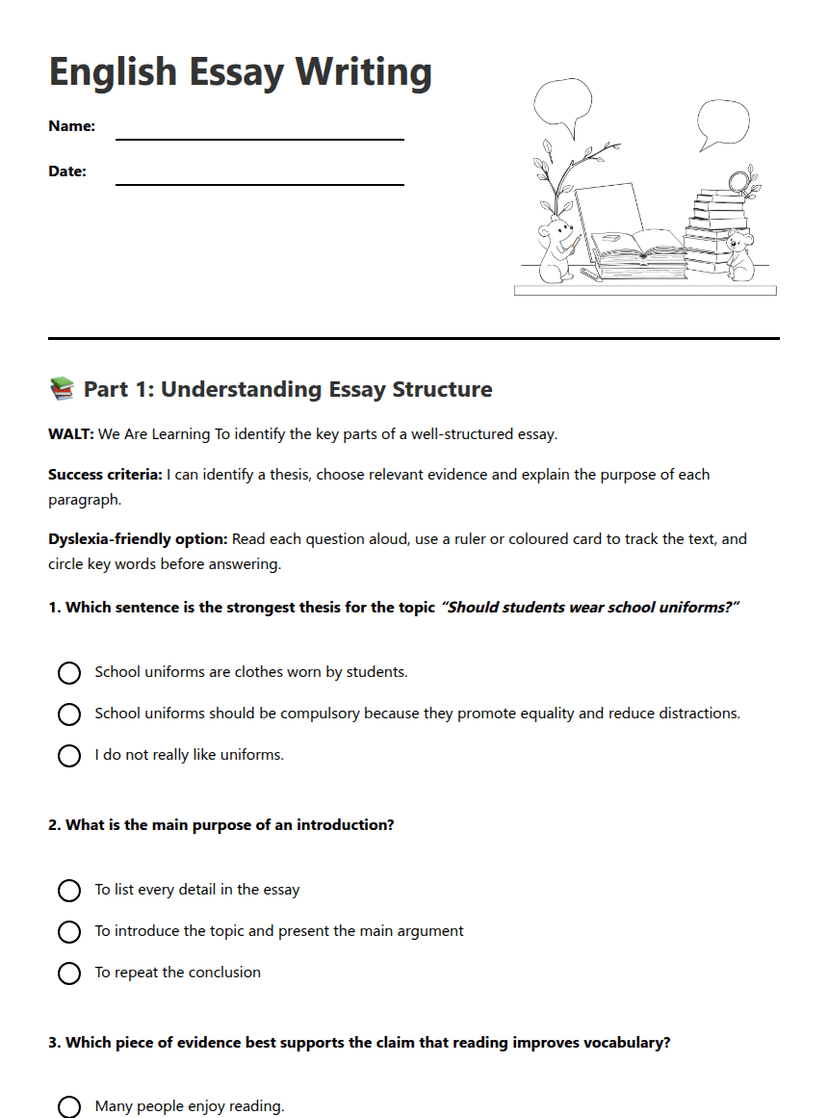
English Essay Writing
Free
English Writing Practice
Free
Paragraph Builder: Connect and Explain
Free
First, Next, Last: Planting a Seed
Free
My Weekend News Worksheet
Free
My Weekend Life Skills
Free
Discursive Writing: Analyse and Draft
Free