Percy Jackson Allusions Glossary
A free english worksheet ready for your classroom. Open in Kuraplan to grab the print-ready PDF, customize it for your students, or generate a fresh version in seconds.

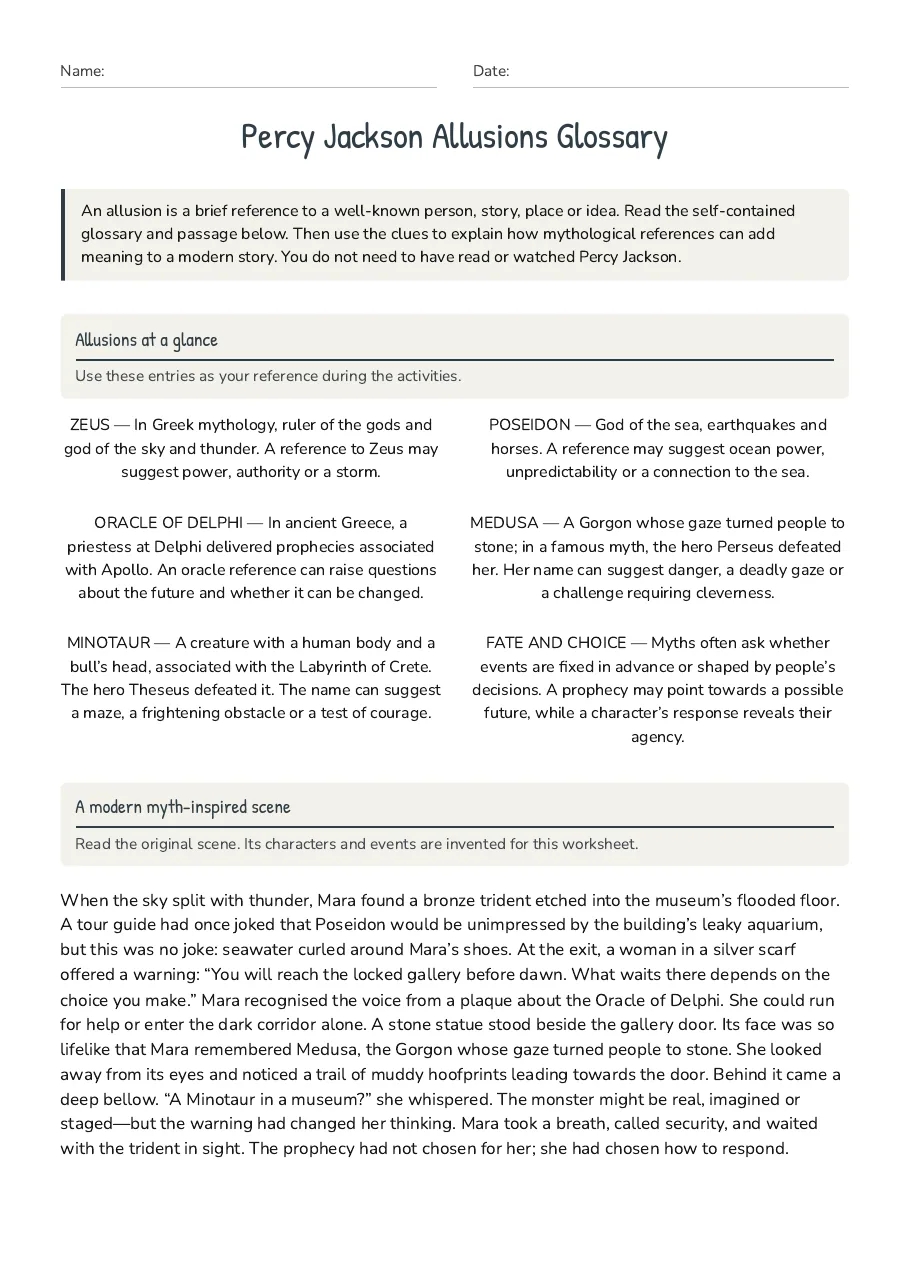
Percy Jackson Allusions Glossary
Allusions at a glance
Use these entries as your reference during the activities.
ZEUS — In Greek mythology, ruler of the gods and god of the sky and thunder. A reference to Zeus may suggest power, authority or a storm.
POSEIDON — God of the sea, earthquakes and horses. A reference may suggest ocean power, unpredictability or a connection to the sea.
ORACLE OF DELPHI — In ancient Greece, a priestess at Delphi delivered prophecies associated with Apollo. An oracle reference can raise questions about the future and whether it can be changed.
MEDUSA — A Gorgon whose gaze turned people to stone; in a famous myth, the hero Perseus defeated her. Her name can suggest danger, a deadly gaze or a challenge requiring cleverness.
MINOTAUR — A creature with a human body and a bull’s head, associated with the Labyrinth of Crete. The hero Theseus defeated it. The name can suggest a maze, a frightening obstacle or a test of courage.
FATE AND CHOICE — Myths often ask whether events are fixed in advance or shaped by people’s decisions. A prophecy may point towards a possible future, while a character’s response reveals their agency.
A modern myth-inspired scene
Read the original scene. Its characters and events are invented for this worksheet.
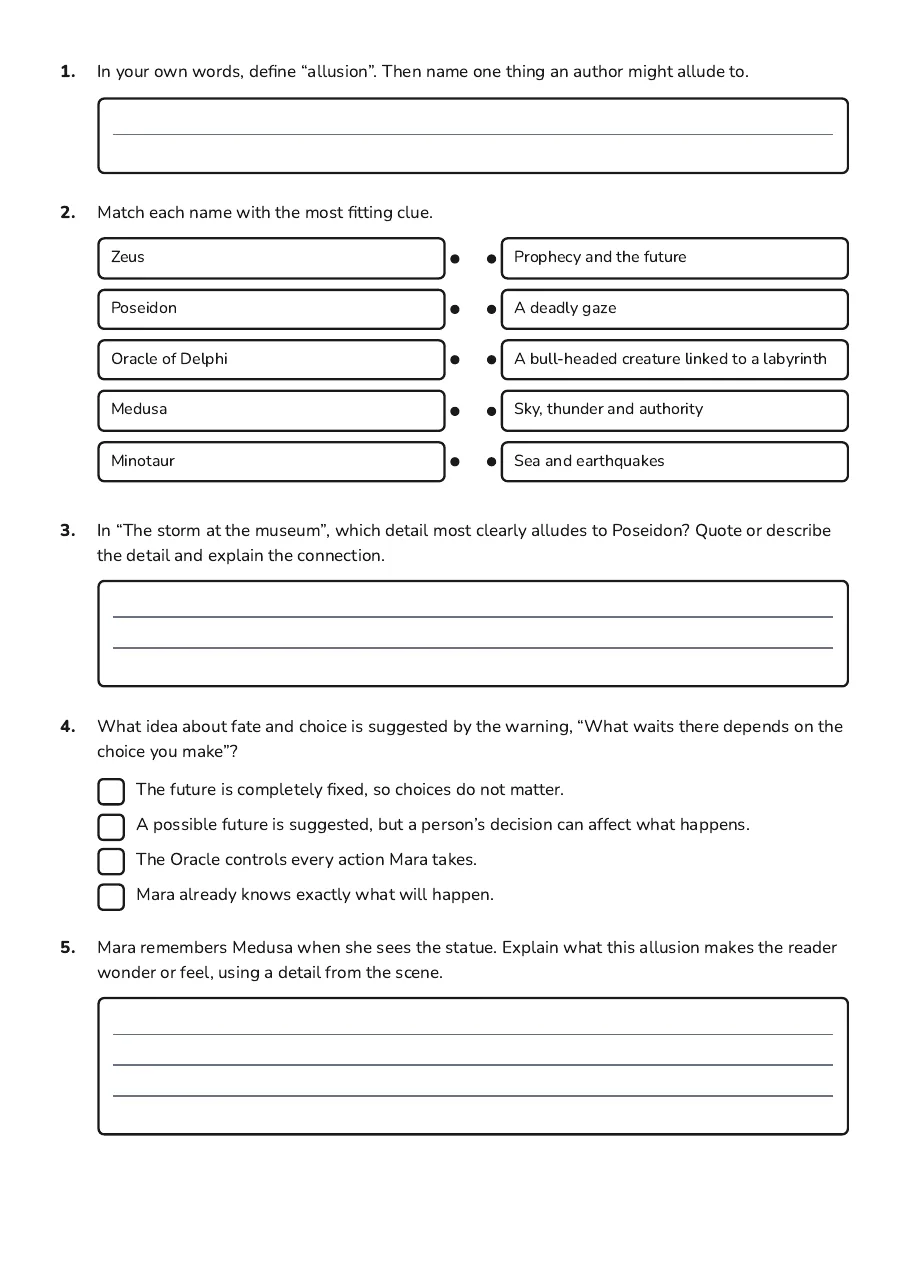
- Zeus
- Poseidon
- Oracle of Delphi
- Medusa
- Minotaur
- Prophecy and the future
- A deadly gaze
- A bull-headed creature linked to a labyrinth
- Sky, thunder and authority
- Sea and earthquakes
- The future is completely fixed, so choices do not matter.
- A possible future is suggested, but a person’s decision can affect what happens.
- The Oracle controls every action Mara takes.
- Mara already knows exactly what will happen.
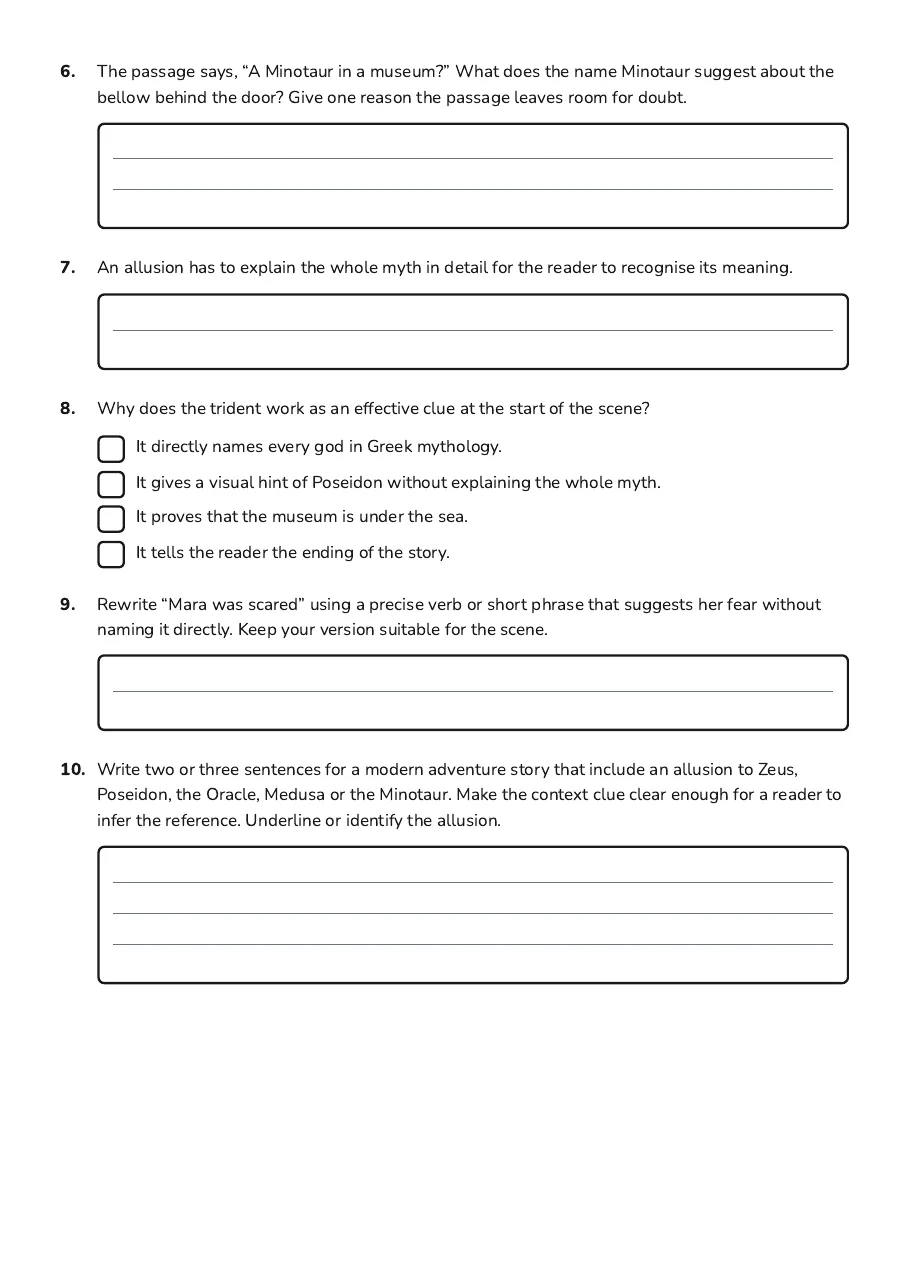
- It directly names every god in Greek mythology.
- It gives a visual hint of Poseidon without explaining the whole myth.
- It proves that the museum is under the sea.
- It tells the reader the ending of the story.
3 printable pages
Page 1
Page 2
Page 3
About This Worksheet
Free in Kuraplan
Sign up free, grab the PDF, and customize it for your class.
Print-Ready
Formatted for standard paper. Clean layout, easy to read.
AI-Generated
Created with Kuraplan's AI, designed for real classroom use.
For Teachers & Parents
Use in classrooms, for homework, tutoring, or homeschool.
Need a custom version of this worksheet?
Kuraplan's AI generates custom worksheets in seconds — differentiated for every learner, aligned to your curriculum.
Generate Custom Worksheets — FreeMore English Worksheets
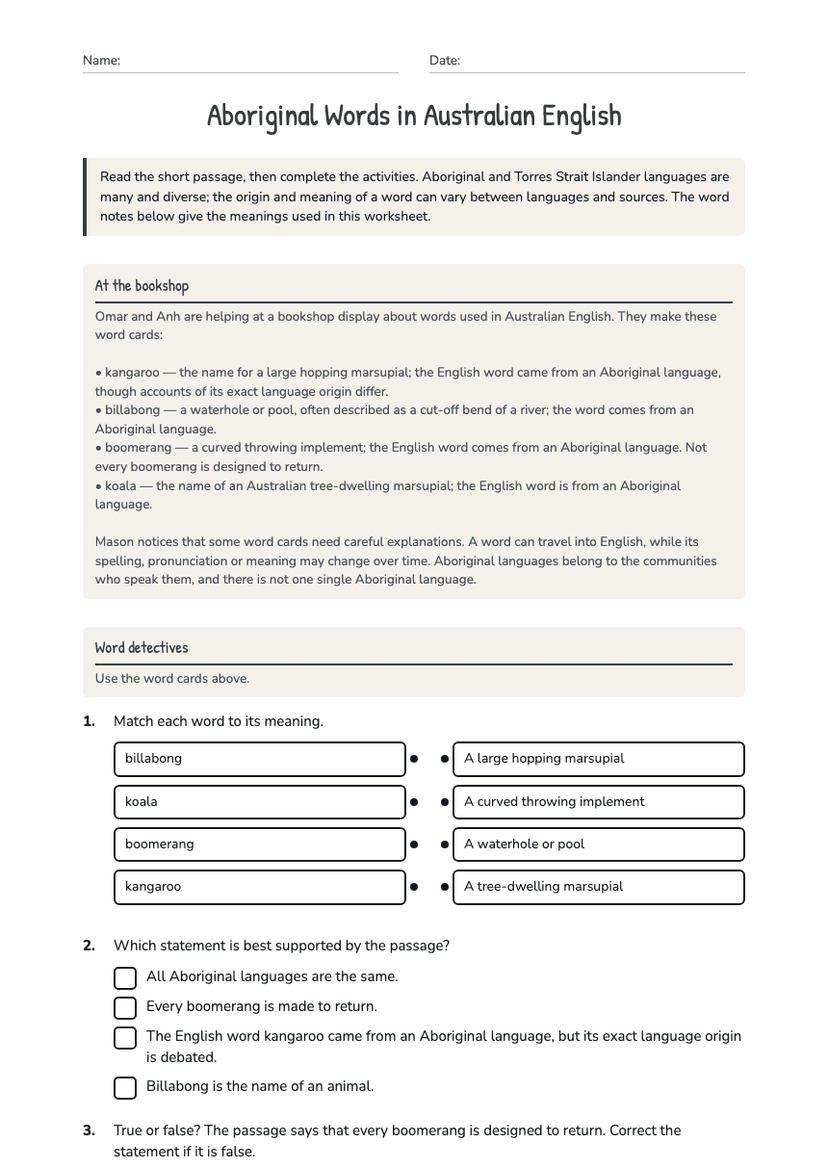
Aboriginal Words in Australian English
Free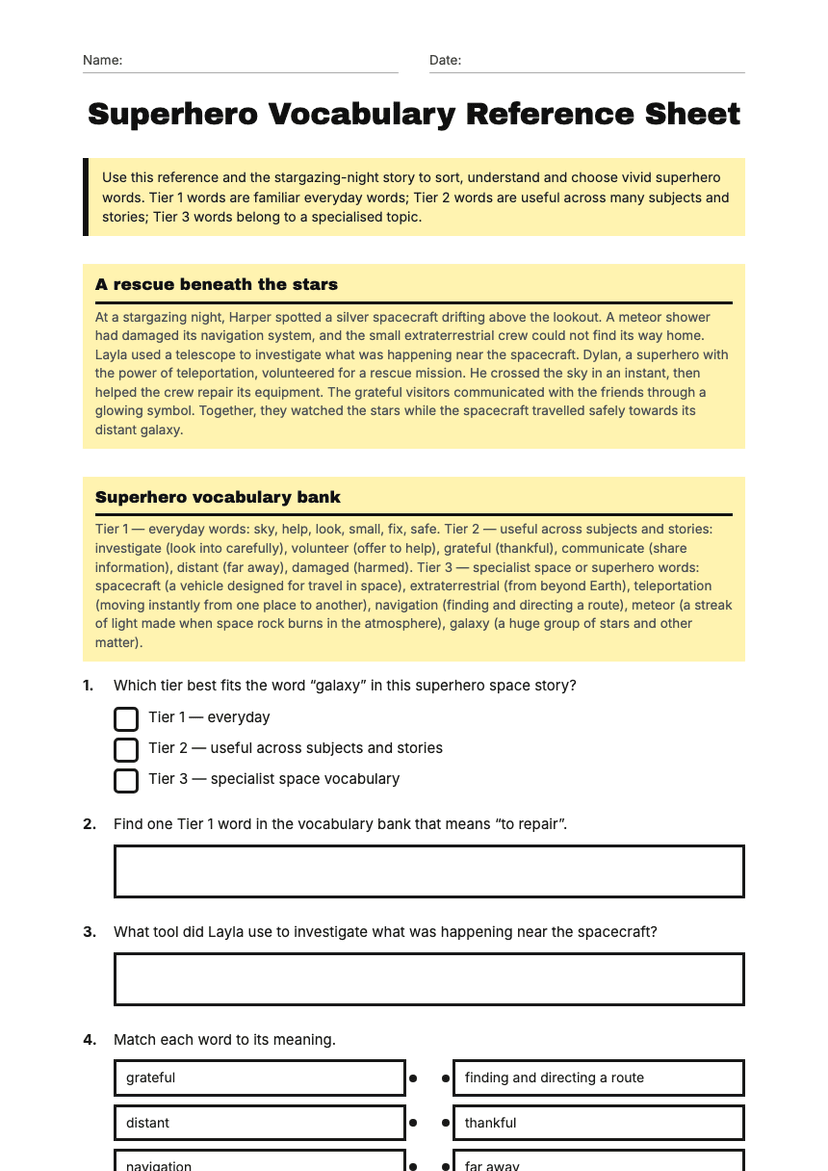
Superhero Vocabulary Reference Sheet
Free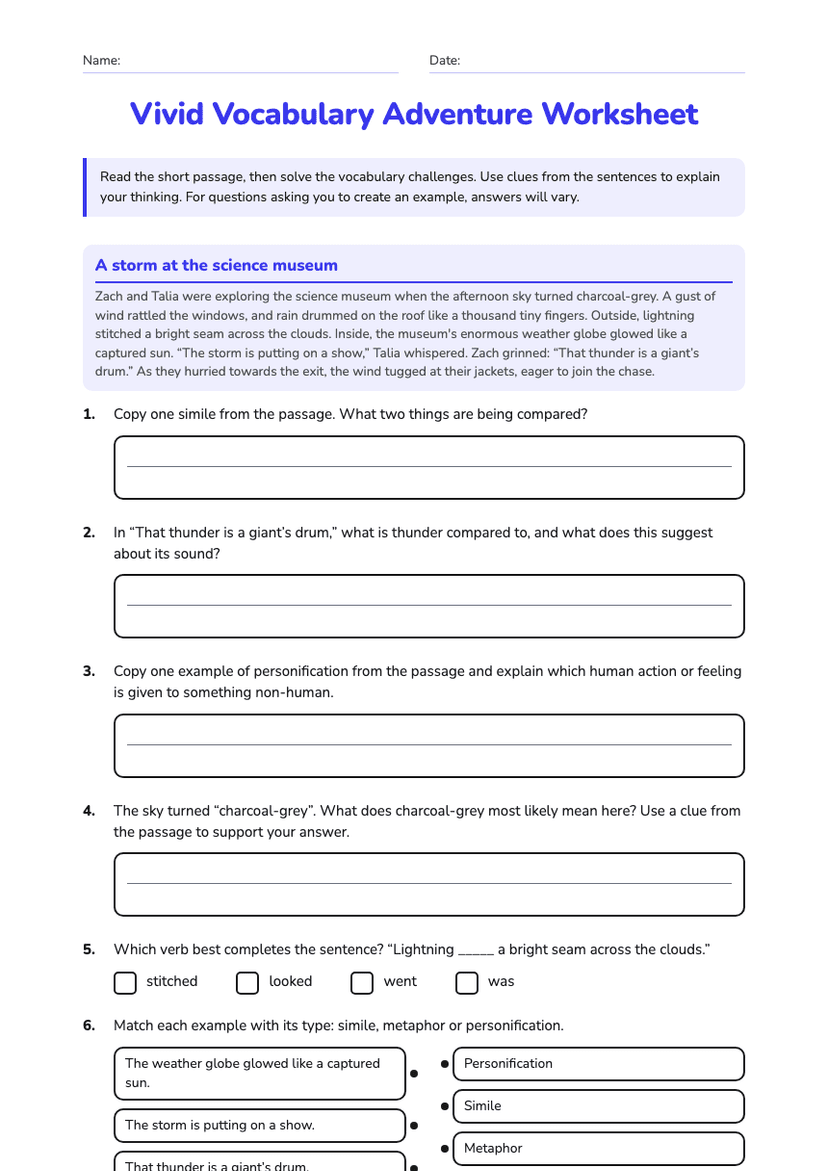
Vivid Vocabulary Adventure Worksheet
Free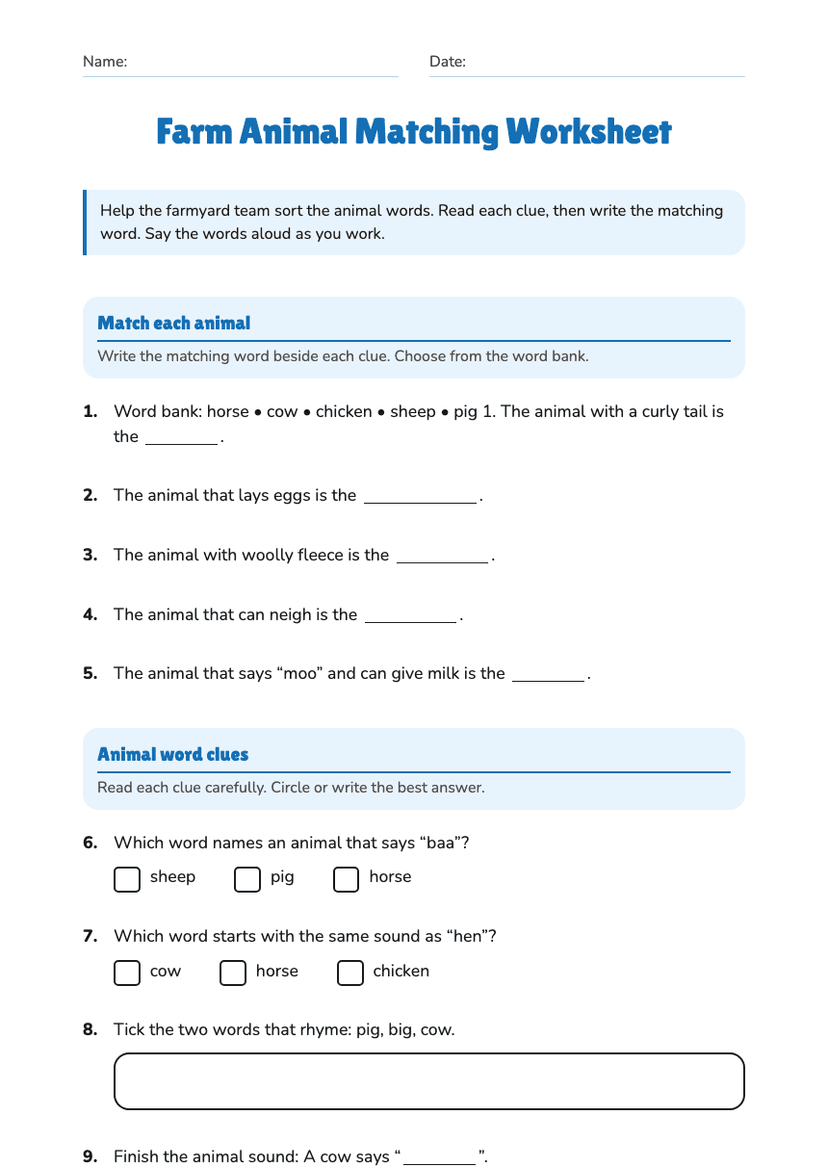
Farm Animal Matching Worksheet
Free
Time Vocabulary Drawing Worksheet
Free
Winter Vocabulary Cloze
Free
47 Degrees Symbol List
Free