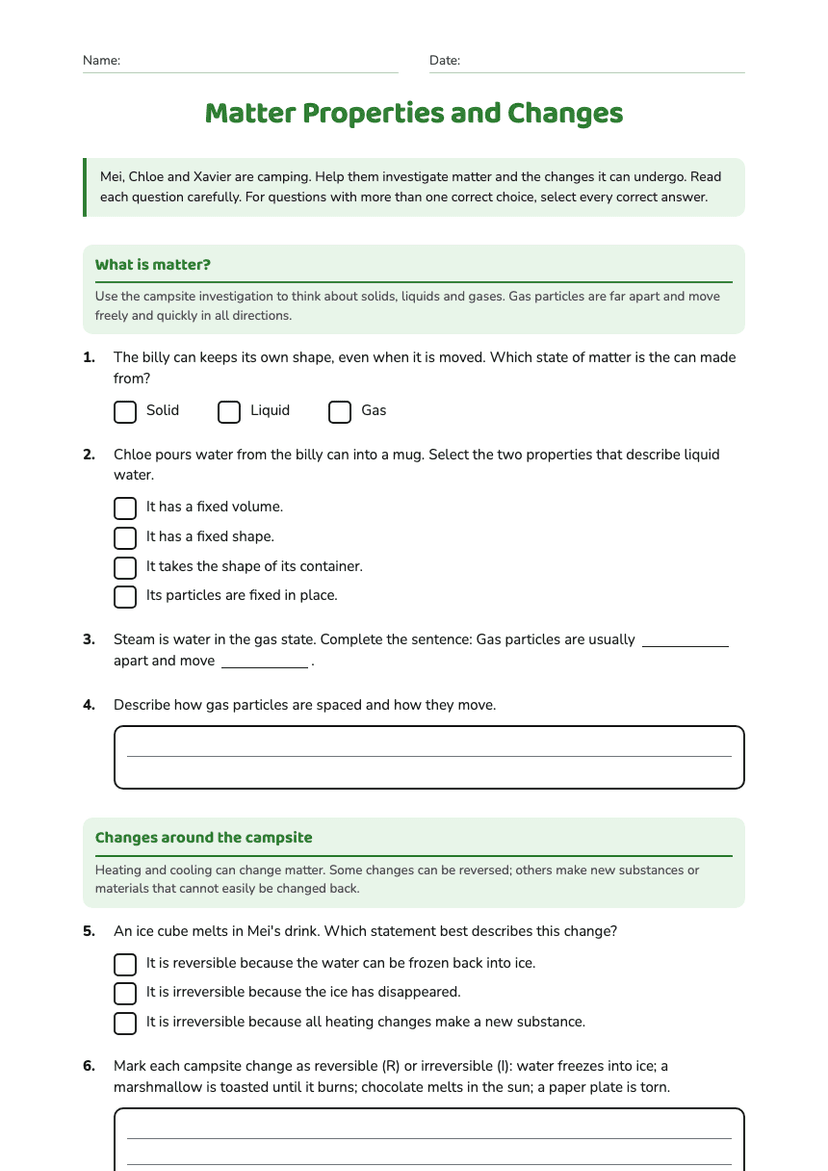
Physical and Chemical Changes
A free science worksheet ready for your classroom. Open in Kuraplan to grab the print-ready PDF, customize it for your students, or generate a fresh version in seconds.
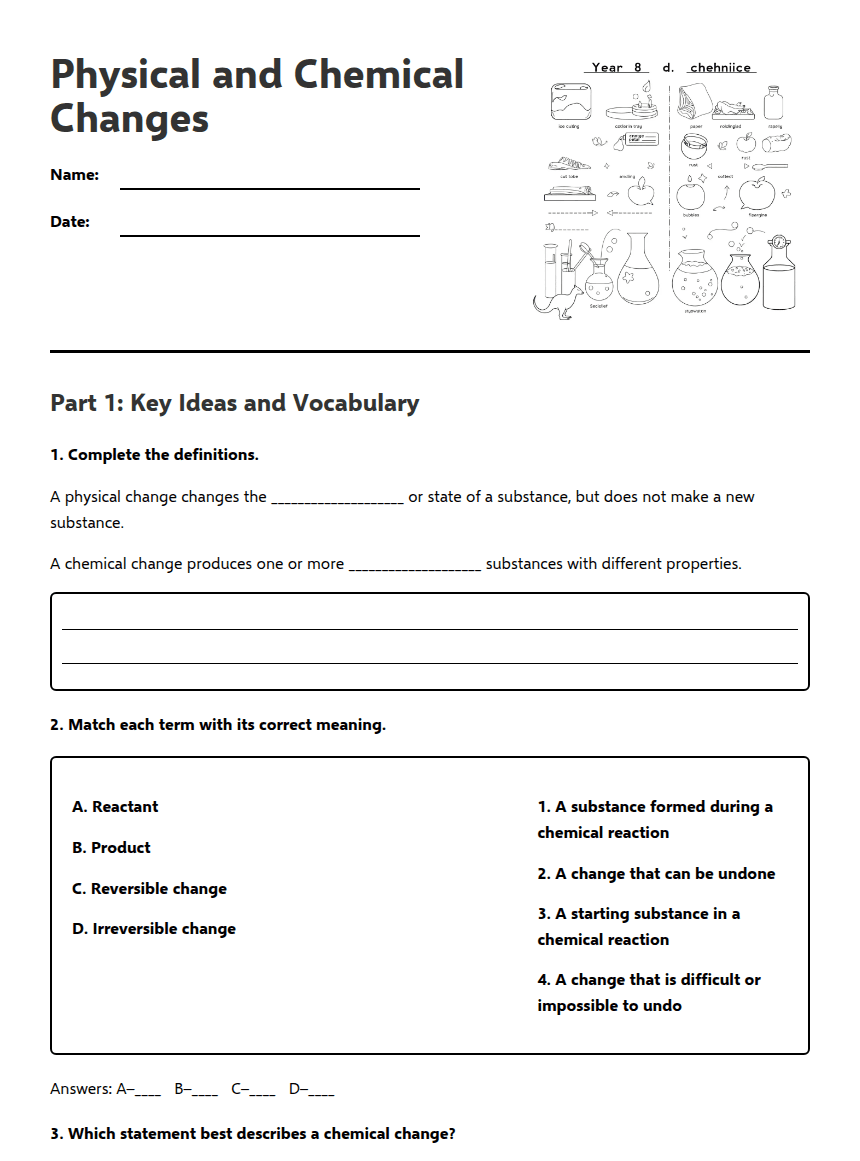
Physical and Chemical Changes
Part 1: Key Ideas and Vocabulary
A physical change changes the ____________________ or state of a substance, but does not make a new substance.
A chemical change produces one or more ____________________ substances with different properties.
Answers: A–____ B–____ C–____ D–____
Part 2: Classifying Changes
a. Ice melting: ____
b. Paper burning: ____
c. Water evaporating: ____
d. An apple turning brown: ____
e. A piece of wood being cut: ____
f. Iron rusting: ____
Part 3: Practical Investigation — Vinegar and Bicarbonate
Aim: To investigate the reaction between vinegar and sodium bicarbonate.
Equipment: Small plastic cup, 50 mL vinegar, 2 teaspoons sodium bicarbonate, teaspoon, tray, safety glasses and thermometer.
Safety: Wear safety glasses. Do not taste the substances. Keep the mixture away from eyes and mouth. Wash hands after the investigation. Work in a well-ventilated area.
Method:
1. Place the cup on a tray and pour in 50 mL of vinegar.
2. Measure two teaspoons of sodium bicarbonate.
3. Predict what will happen, then add the sodium bicarbonate to the vinegar.
4. Observe the reaction for two minutes. Record the starting and final temperature if a thermometer is available.
5. Dispose of the mixture as instructed by your teacher and clean the equipment.
Starting temperature: __________ °C Final temperature: __________ °C
Gas bubbles or fizzing: ________________________________________________
Other observations: ____________________________________________________
Was the reaction a physical or chemical change? Use two observations to justify your answer.
Higher-order question: How could you design a fair test to investigate whether using more sodium bicarbonate changes the amount of gas produced?
Teacher Answer Key
1. shape; new. 2. A–3, B–1, C–2, D–4. 3. A new substance is formed.
4. a P, b C, c P, d C, e P, f C.
5. Gas bubbles form; a new colour appears; a solid precipitate forms; heat or light is produced.
6. Melting changes chocolate from solid to liquid, but it remains the same substance and can be cooled to solidify again.
7. Burning wood forms new substances, such as ash and gases. Evidence may include heat, light, smoke or a colour change.
8–10. Answers will vary. Expected observations include fizzing and gas bubbles, and possibly a temperature change. The reaction is chemical because new substances, including carbon dioxide gas, are formed. A fair test should change only the amount of sodium bicarbonate, keep the vinegar volume and concentration constant, and measure the gas produced in the same way.
About This Worksheet
Free in Kuraplan
Sign up free, grab the PDF, and customize it for your class.
Print-Ready
Formatted for standard paper. Clean layout, easy to read.
AI-Generated
Created with Kuraplan's AI, designed for real classroom use.
For Teachers & Parents
Use in classrooms, for homework, tutoring, or homeschool.
Need a custom version of this worksheet?
Kuraplan's AI generates custom worksheets in seconds — differentiated for every learner, aligned to your curriculum.
Generate Custom Worksheets — FreeMore Science Worksheets
Recycled Materials Picture Worksheet
Free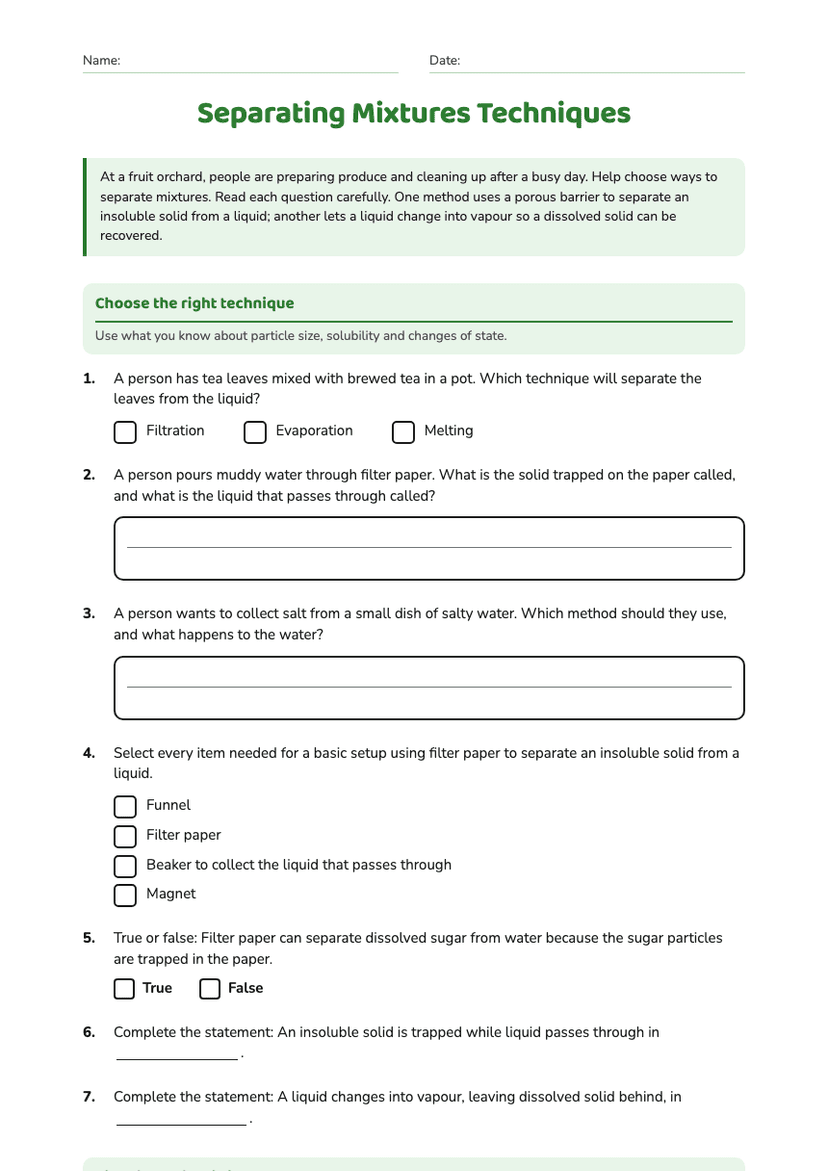
Separating Mixtures Techniques
Free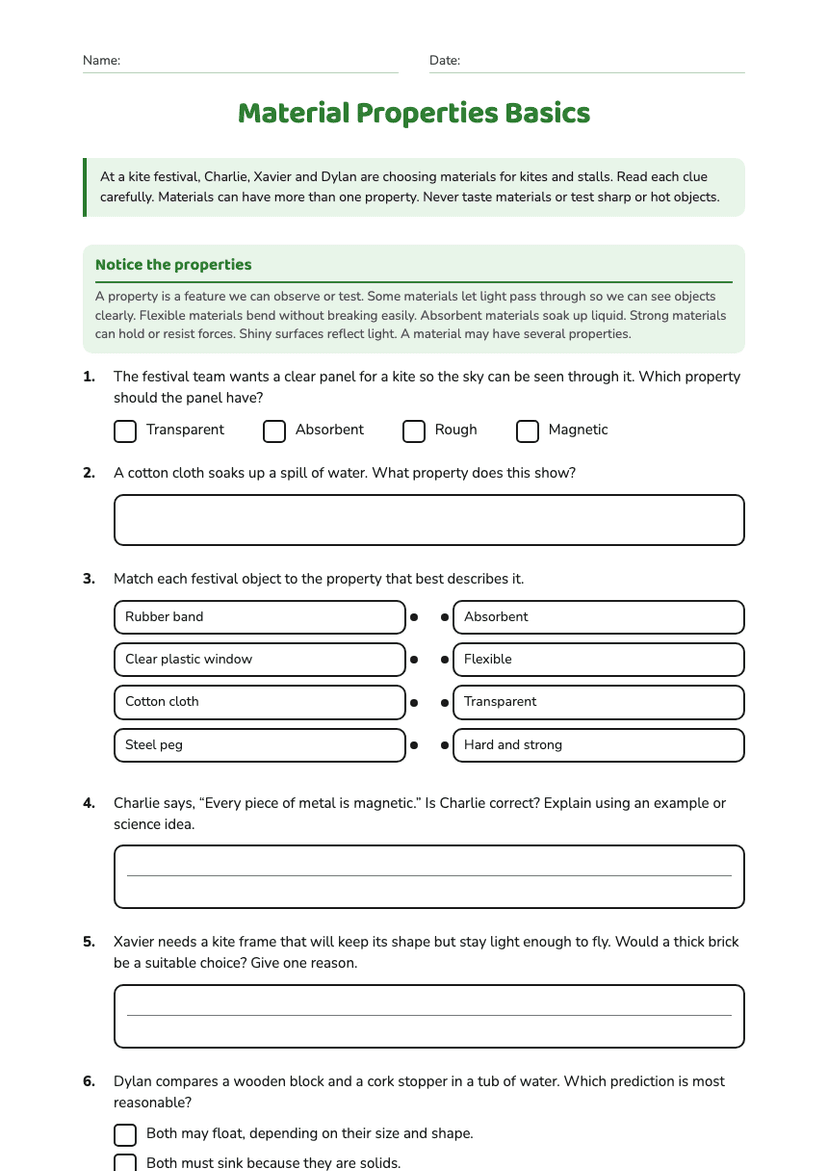
Material Properties Basics
Free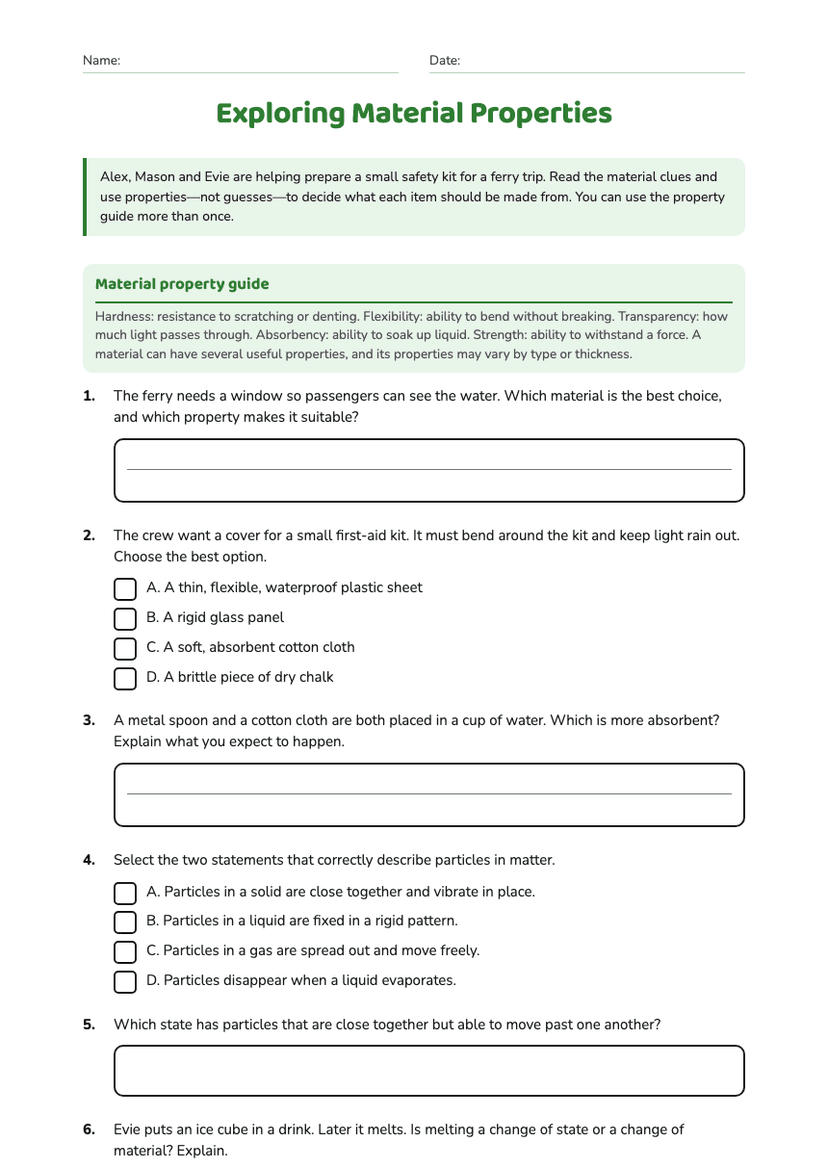
Exploring Material Properties
Free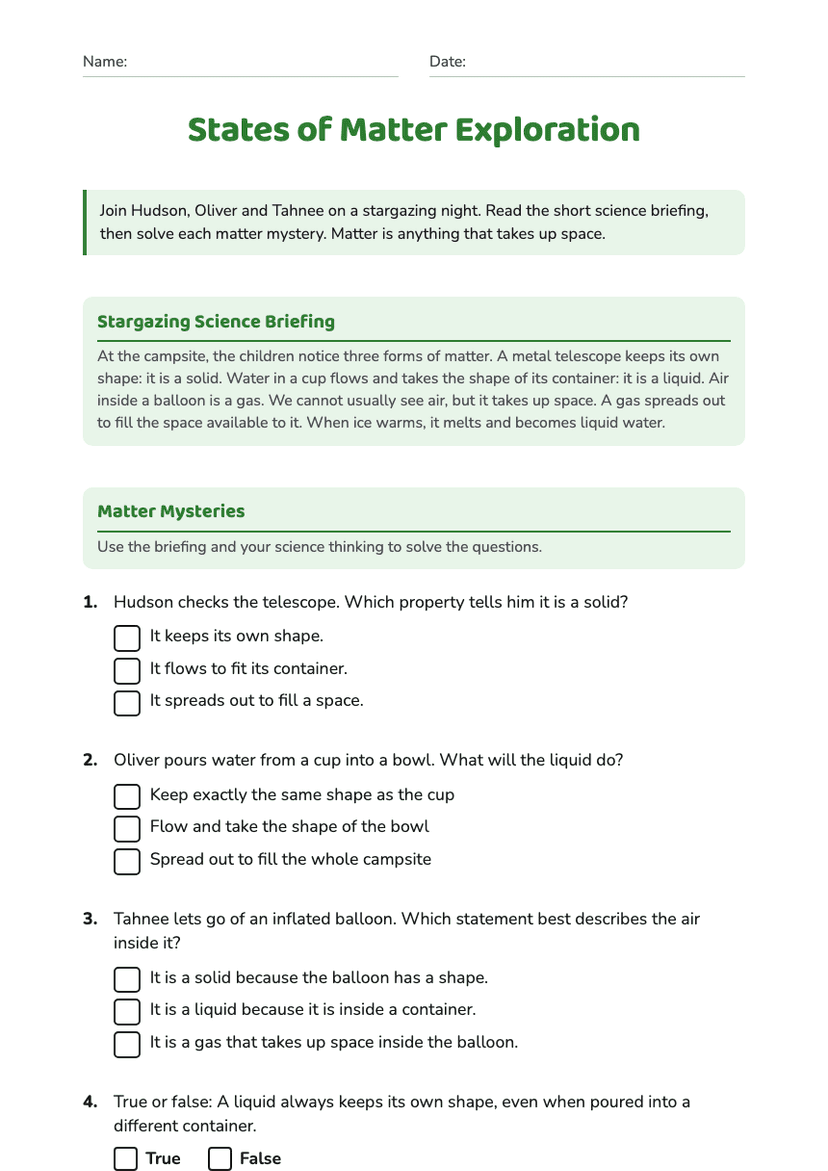
States of Matter Exploration
Free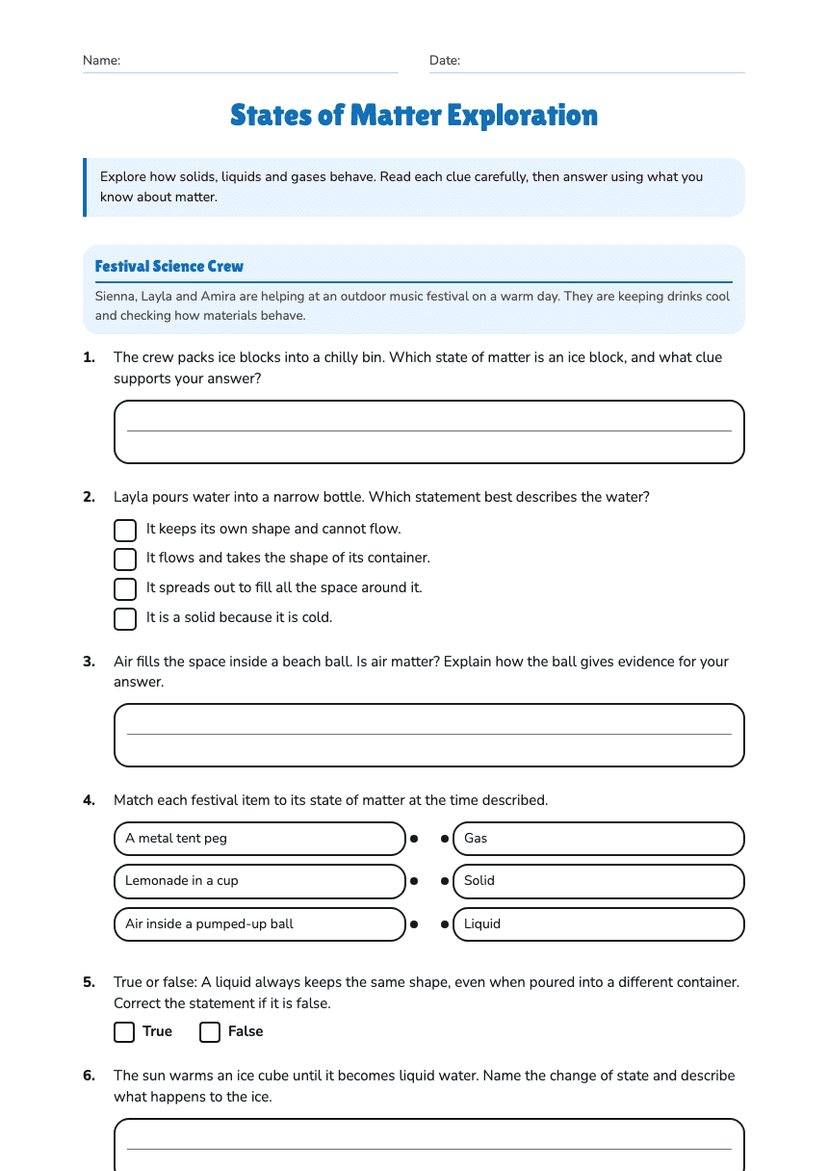
States of Matter Exploration
Free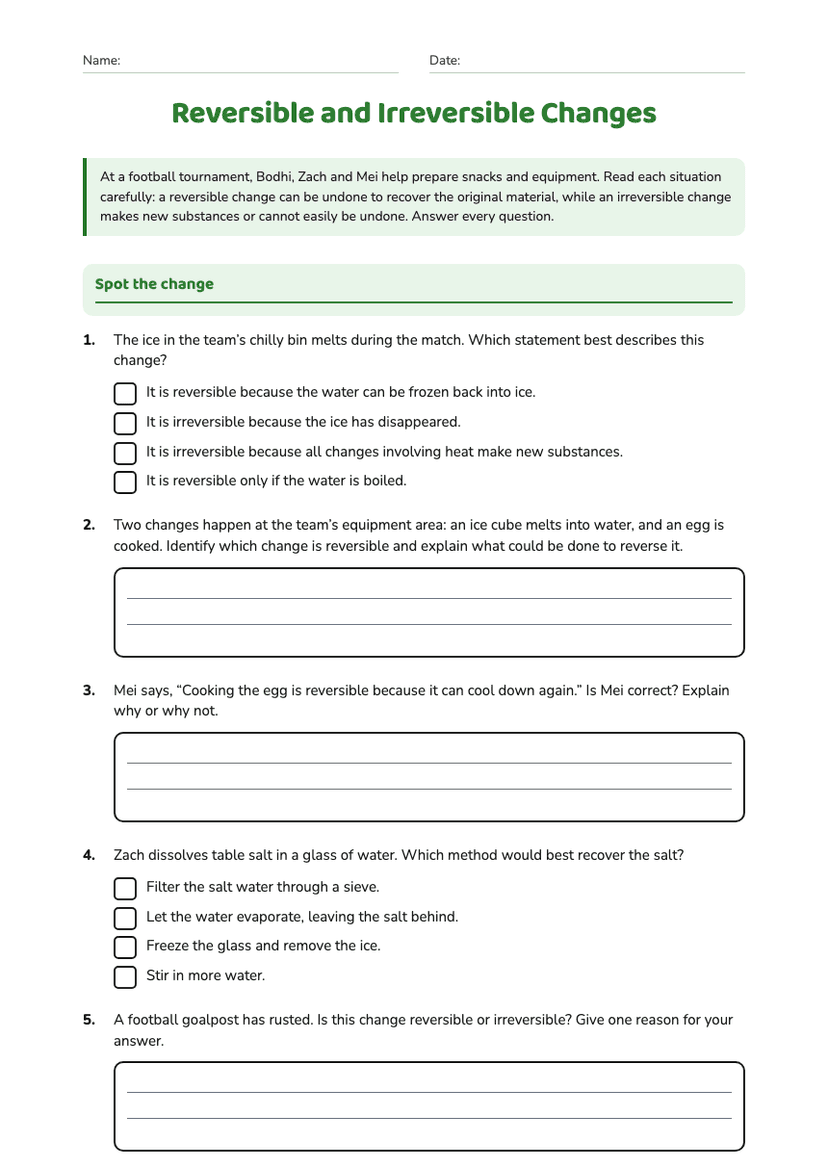
Reversible and Irreversible Changes
Free