Physical and Chemical Changes
A free science worksheet ready for your classroom. Open in Kuraplan to grab the print-ready PDF, customize it for your students, or generate a fresh version in seconds.
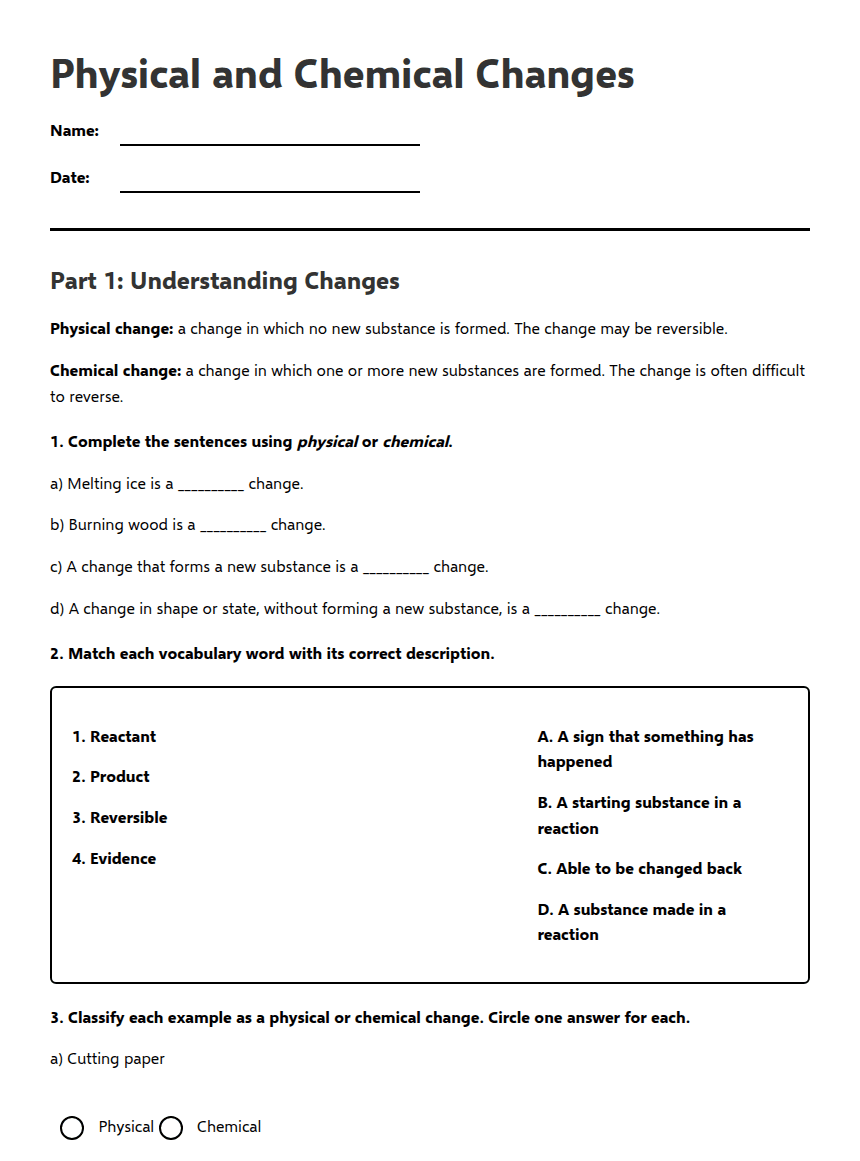
Physical and Chemical Changes
Part 1: Understanding Changes
Physical change: a change in which no new substance is formed. The change may be reversible.
Chemical change: a change in which one or more new substances are formed. The change is often difficult to reverse.
a) Melting ice is a __________ change.
b) Burning wood is a __________ change.
c) A change that forms a new substance is a __________ change.
d) A change in shape or state, without forming a new substance, is a __________ change.
a) Cutting paper
b) Rusting iron
c) Dissolving sugar in water
d) Cooking an egg
e) Crushing a soft drink can
f) A candle burning
Part 2: Practical Activity — Vinegar and Bicarbonate
Aim: To observe the reaction between vinegar and sodium bicarbonate and identify evidence of a chemical change.
Equipment: Small plastic cup, 50 mL vinegar, 2 teaspoons sodium bicarbonate, balloon, funnel, measuring cylinder, safety glasses and tray.
Safety: Wear safety glasses. Do not taste the materials. Keep the mixture away from eyes and skin. Do not seal the cup with a rigid lid. Wash hands after the activity.
Method:
1. Place the cup on a tray and measure 50 mL of vinegar into it.
2. Use a funnel to place 2 teaspoons of sodium bicarbonate into the balloon.
3. Carefully fit the balloon over the cup without tipping in the powder.
4. Lift the balloon so the sodium bicarbonate falls into the vinegar. Observe carefully.
Teacher Answer Key
1. a) physical b) chemical c) chemical d) physical
2. 1–B, 2–D, 3–C, 4–A
3. a) Physical b) Chemical c) Physical d) Chemical e) Physical f) Chemical
4. Accept: bubbles or gas produced, colour change, temperature change, light produced, sound produced, a new solid or precipitate, or a new smell.
5. Answers will vary. A suitable prediction is that bubbles will form, the mixture may become cooler, and the balloon may inflate.
6. Before mixing: vinegar is a liquid, sodium bicarbonate is a white powder, and the balloon is flat. After mixing: bubbles or fizzing occur, the mixture may cool, and the balloon inflates as gas is produced.
7. This is a chemical change because bubbles show that a gas was produced, indicating that new substances formed.
8. Change the volume of vinegar while keeping the amount of sodium bicarbonate and other conditions the same. Measure balloon circumference or the volume of gas produced.
About This Worksheet
Free in Kuraplan
Sign up free, grab the PDF, and customize it for your class.
Print-Ready
Formatted for standard paper. Clean layout, easy to read.
AI-Generated
Created with Kuraplan's AI, designed for real classroom use.
For Teachers & Parents
Use in classrooms, for homework, tutoring, or homeschool.
Need a custom version of this worksheet?
Kuraplan's AI generates custom worksheets in seconds — differentiated for every learner, aligned to your curriculum.
Generate Custom Worksheets — FreeMore Science Worksheets
Elements & Compounds Worksheet
Free
Elements and Compounds Worksheet
Free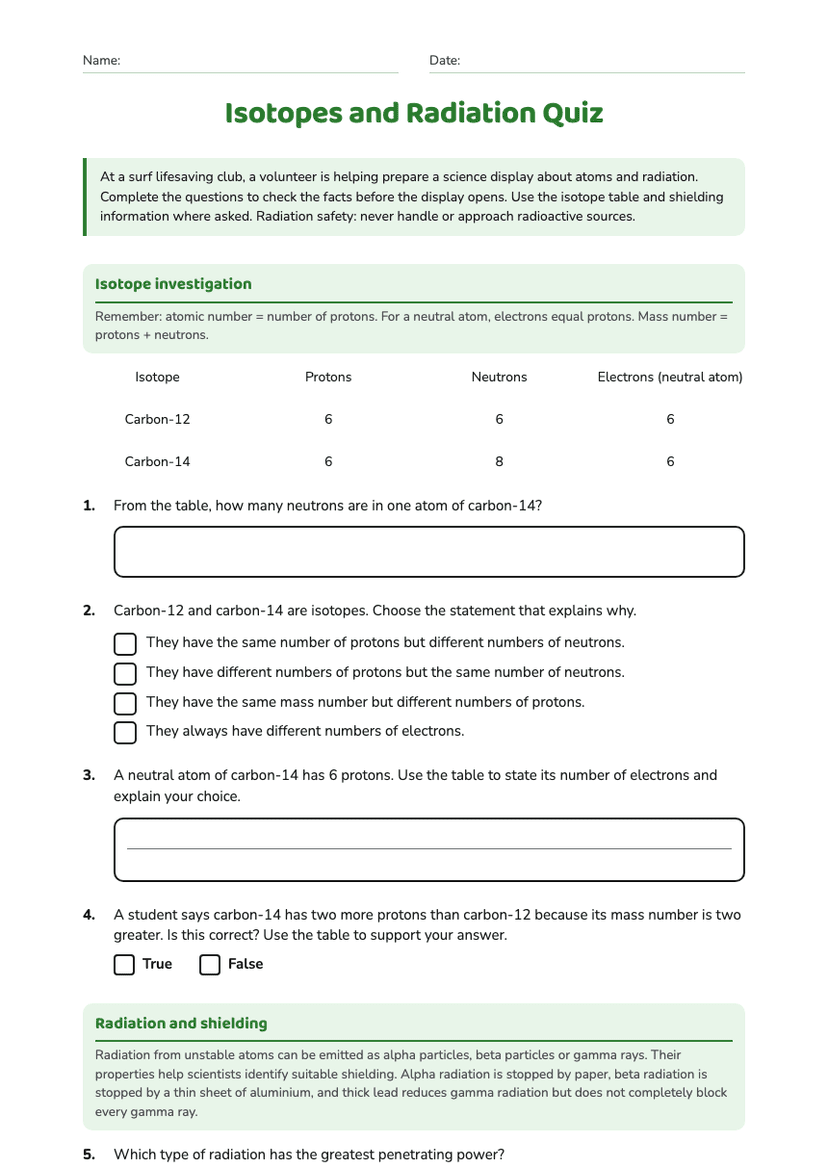
Isotopes and Radiation Quiz
Free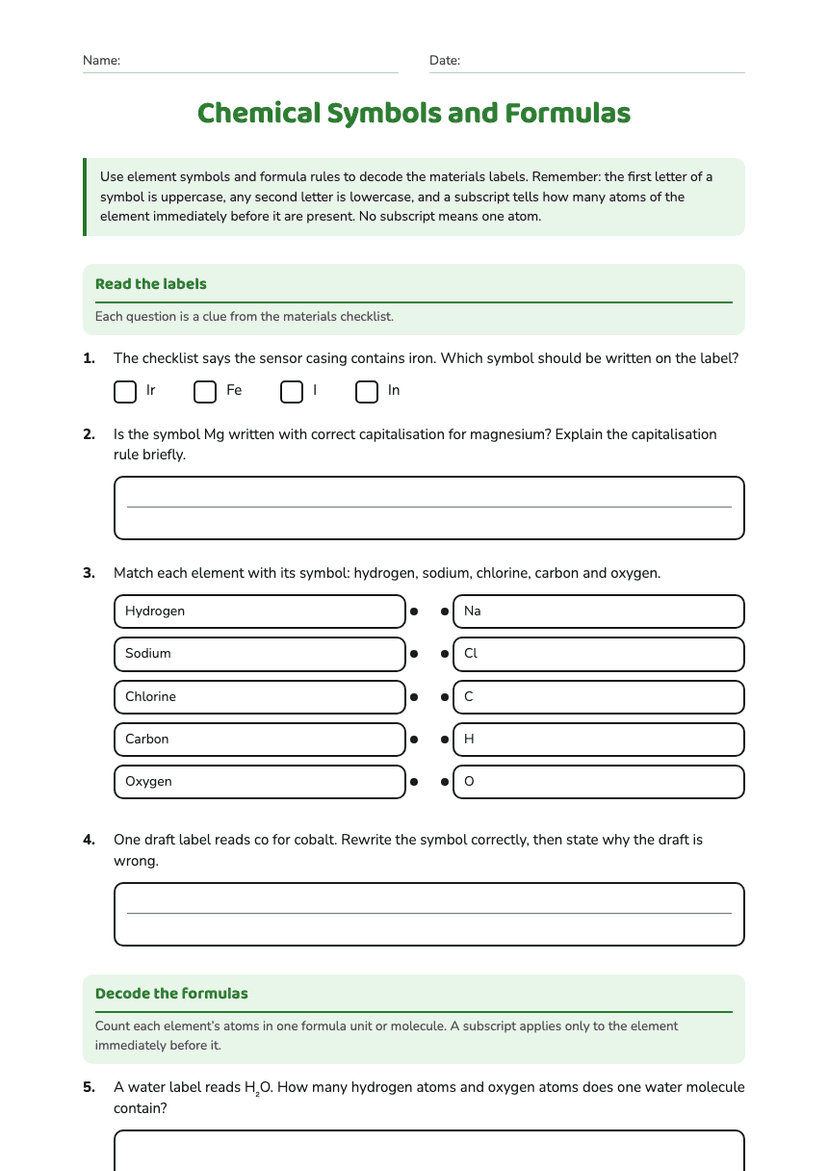
Chemical Symbols and Formulas
Free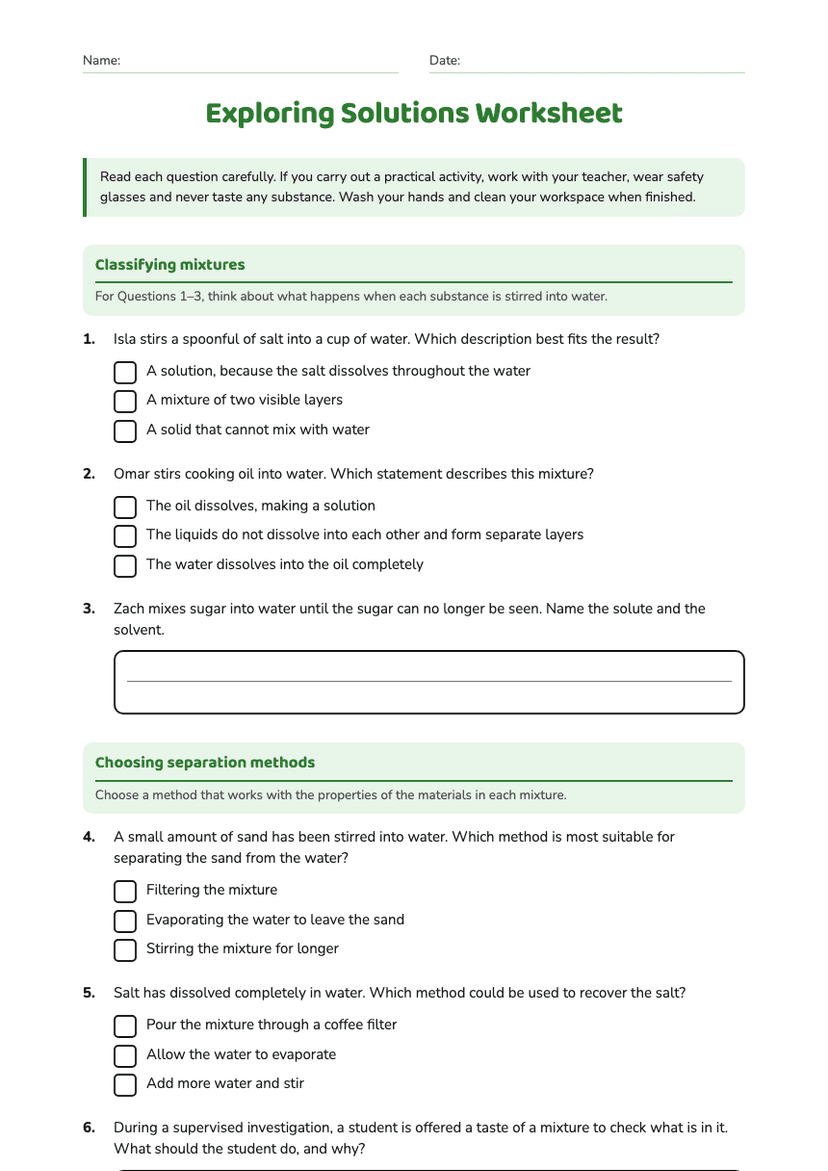
Exploring Solutions Worksheet
Free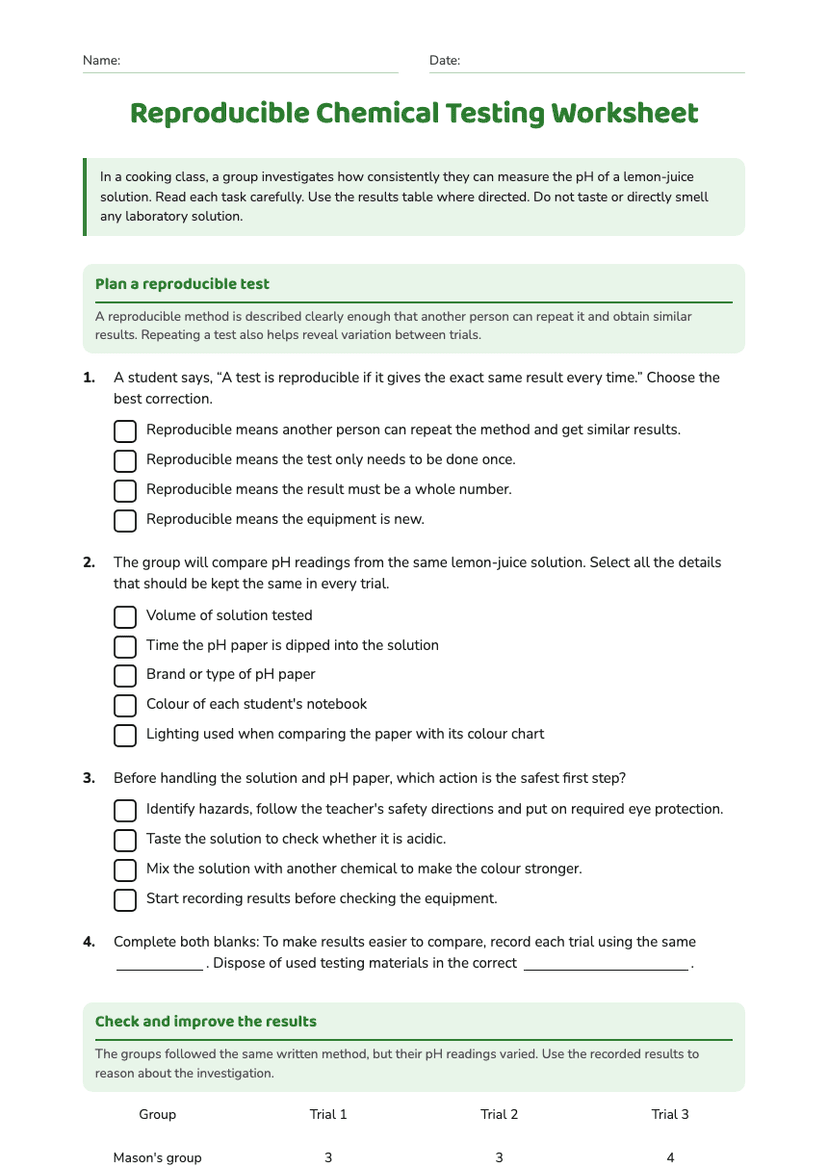
Reproducible Chemical Testing Worksheet
Free
Conservation of Mass
Free