Right to Be Safe
A free health worksheet ready for your classroom. Open in Kuraplan to grab the print-ready PDF, customize it for your students, or generate a fresh version in seconds.
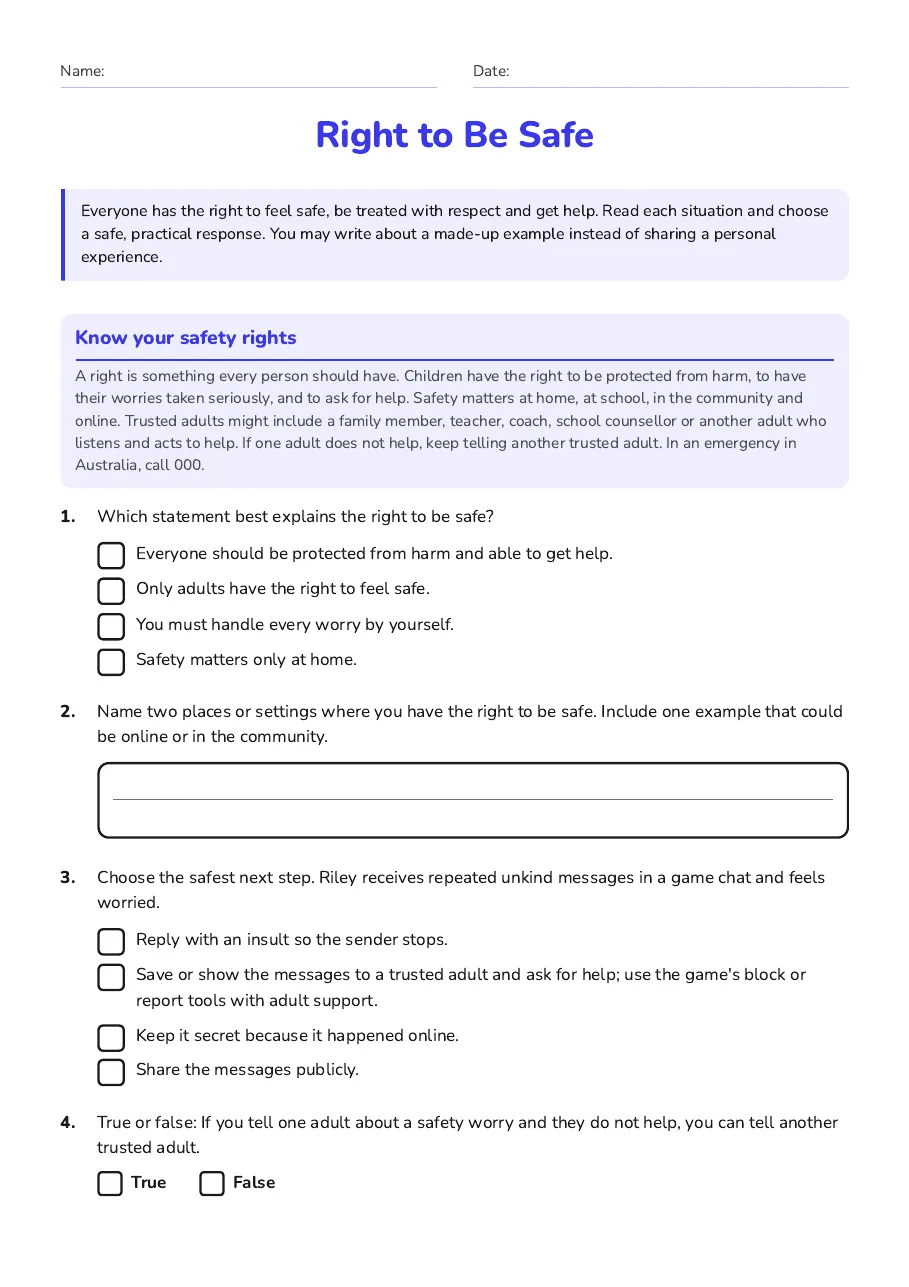
Right to Be Safe
Know your safety rights
A right is something every person should have. Children have the right to be protected from harm, to have their worries taken seriously, and to ask for help. Safety matters at home, at school, in the community and online. Trusted adults might include a family member, teacher, coach, school counsellor or another adult who listens and acts to help. If one adult does not help, keep telling another trusted adult. In an emergency in Australia, call 000.
- Everyone should be protected from harm and able to get help.
- Only adults have the right to feel safe.
- You must handle every worry by yourself.
- Safety matters only at home.
- Reply with an insult so the sender stops.
- Save or show the messages to a trusted adult and ask for help; use the game's block or report tools with adult support.
- Keep it secret because it happened online.
- Share the messages publicly.
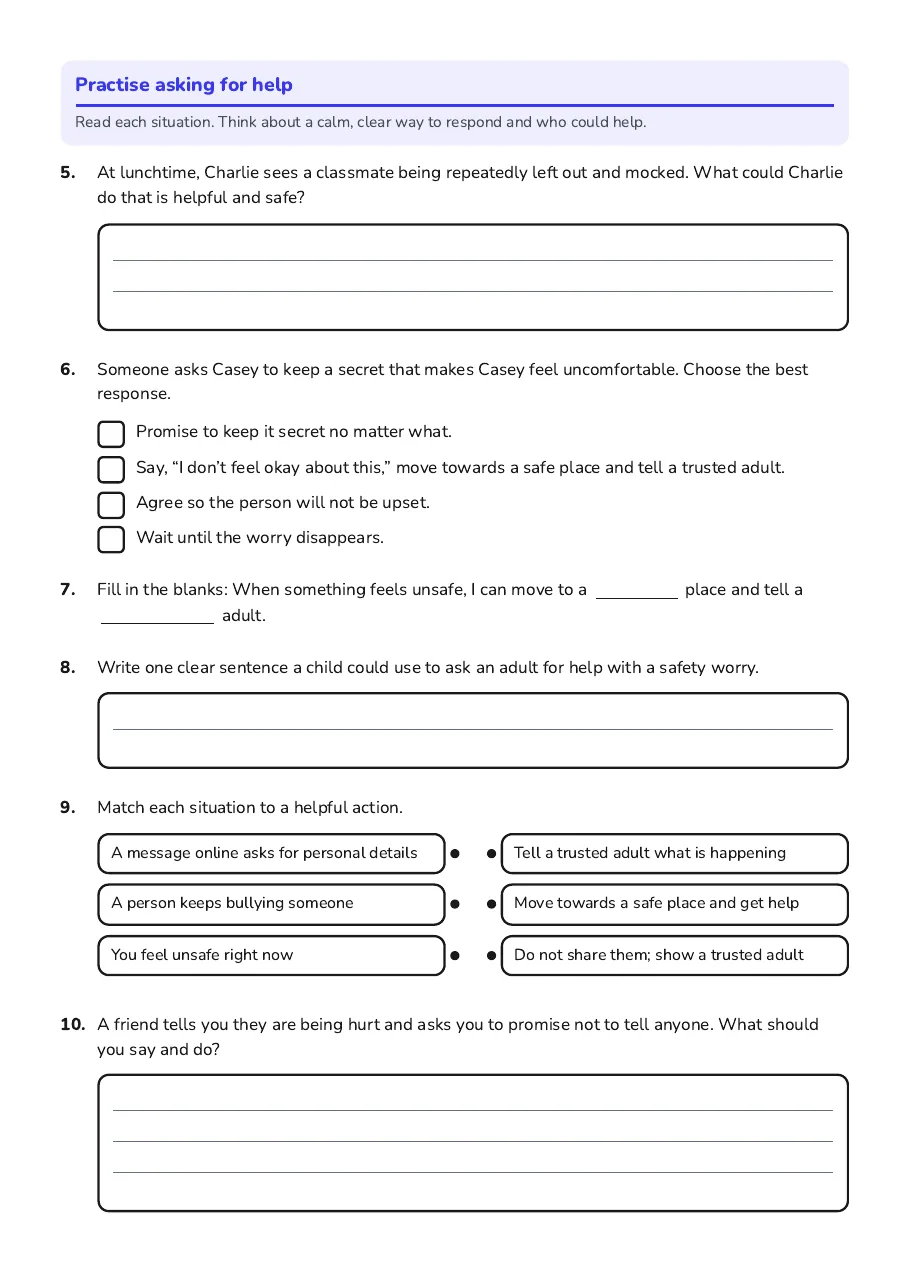
Practise asking for help
Read each situation. Think about a calm, clear way to respond and who could help.
- Promise to keep it secret no matter what.
- Say, “I don’t feel okay about this,” move towards a safe place and tell a trusted adult.
- Agree so the person will not be upset.
- Wait until the worry disappears.
- A message online asks for personal details
- A person keeps bullying someone
- You feel unsafe right now
- Tell a trusted adult what is happening
- Move towards a safe place and get help
- Do not share them; show a trusted adult
3 printable pages
Page 1
Page 2
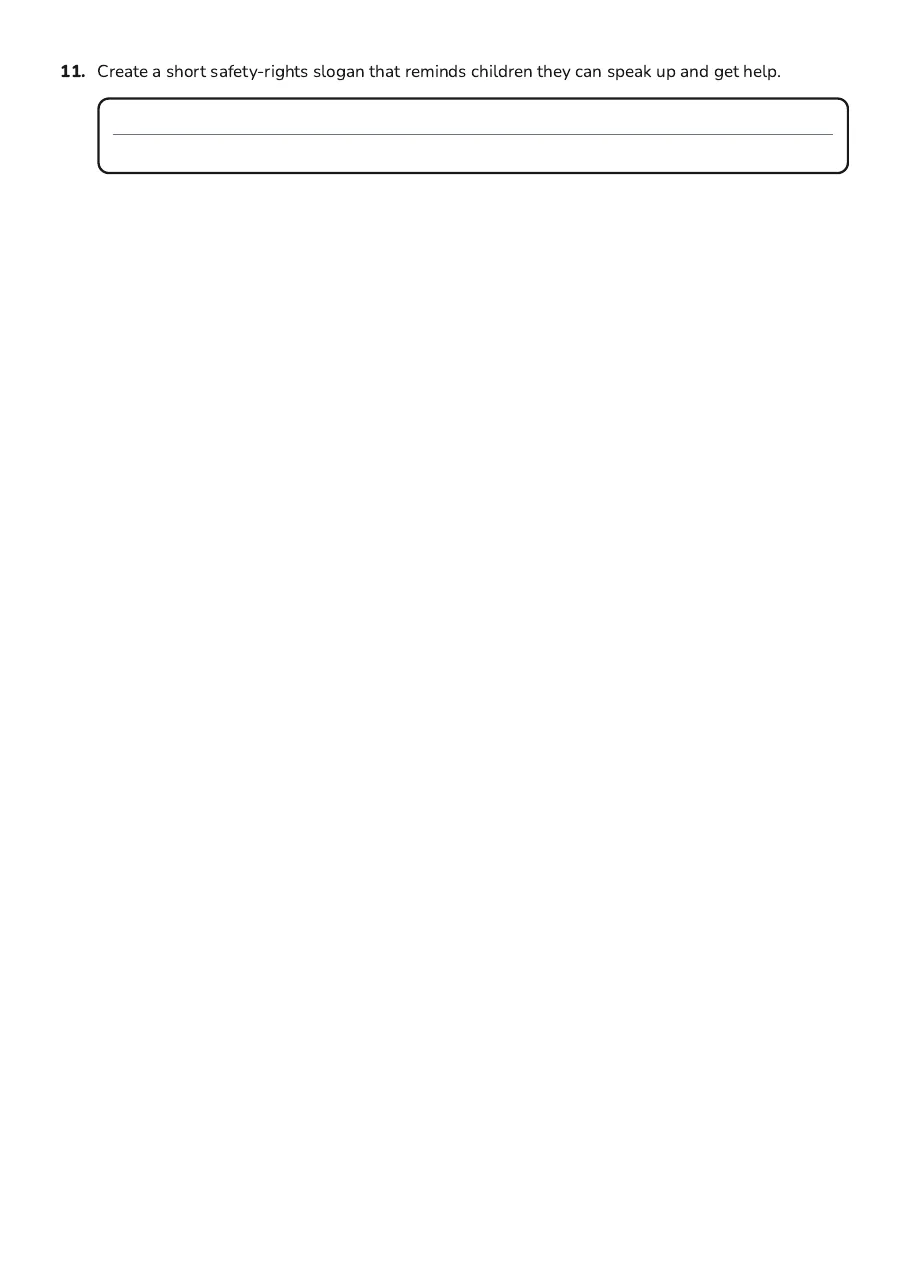
Page 3
About This Worksheet
Free in Kuraplan
Sign up free, grab the PDF, and customize it for your class.
Print-Ready
Formatted for standard paper. Clean layout, easy to read.
AI-Generated
Created with Kuraplan's AI, designed for real classroom use.
For Teachers & Parents
Use in classrooms, for homework, tutoring, or homeschool.
Need a custom version of this worksheet?
Kuraplan's AI generates custom worksheets in seconds — differentiated for every learner, aligned to your curriculum.
Generate Custom Worksheets — FreeMore Health Worksheets
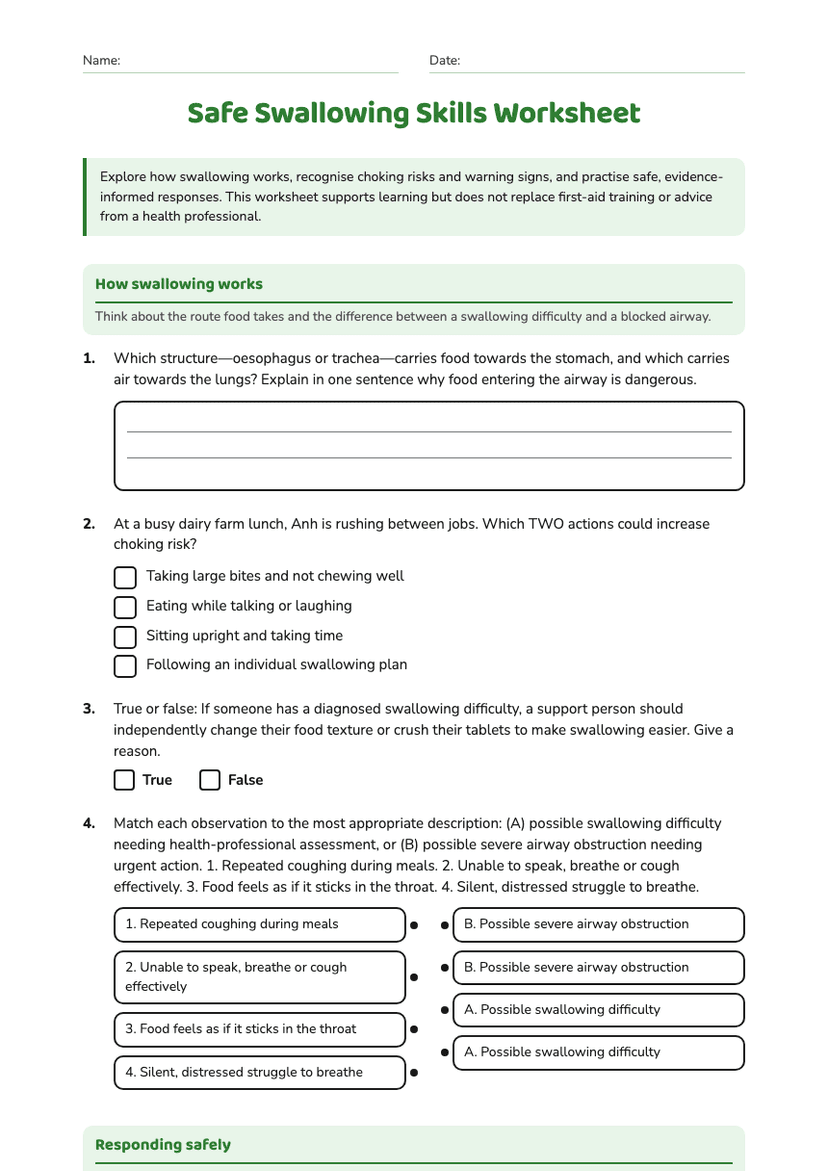
Safe Swallowing Skills Worksheet
Free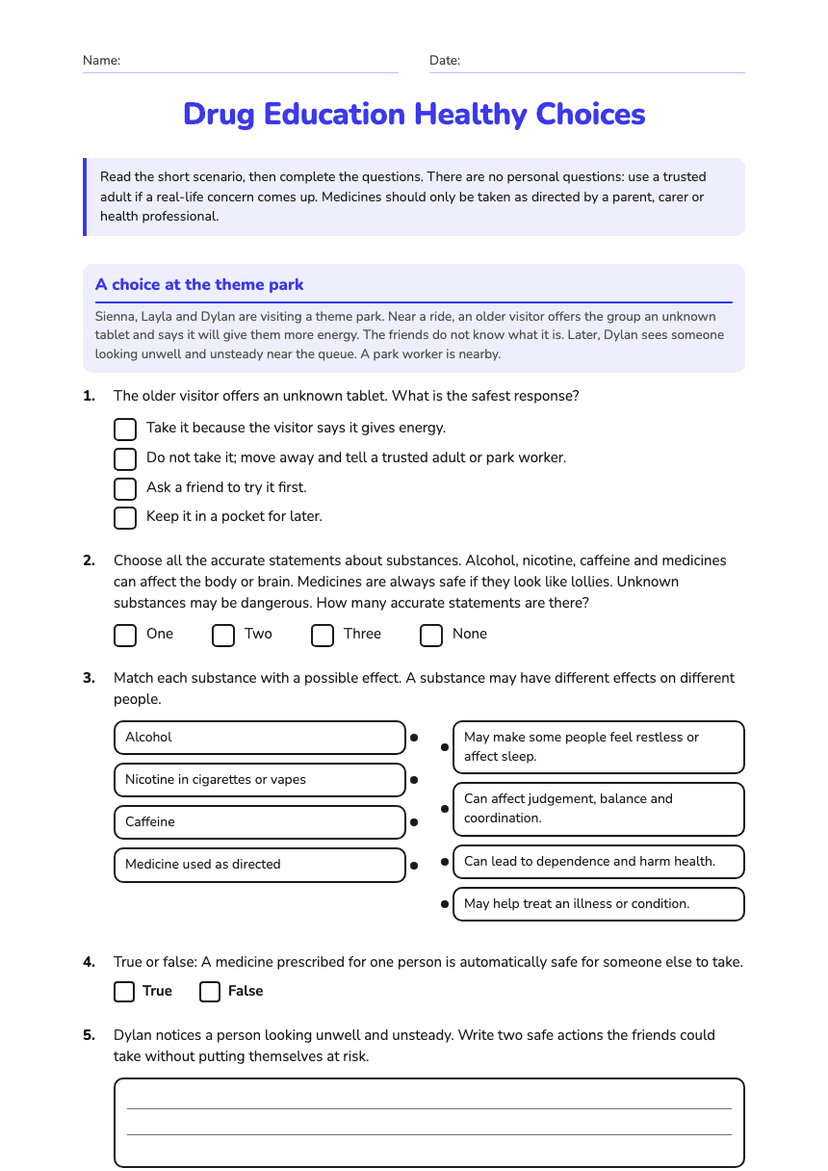
Drug Education Healthy Choices
Free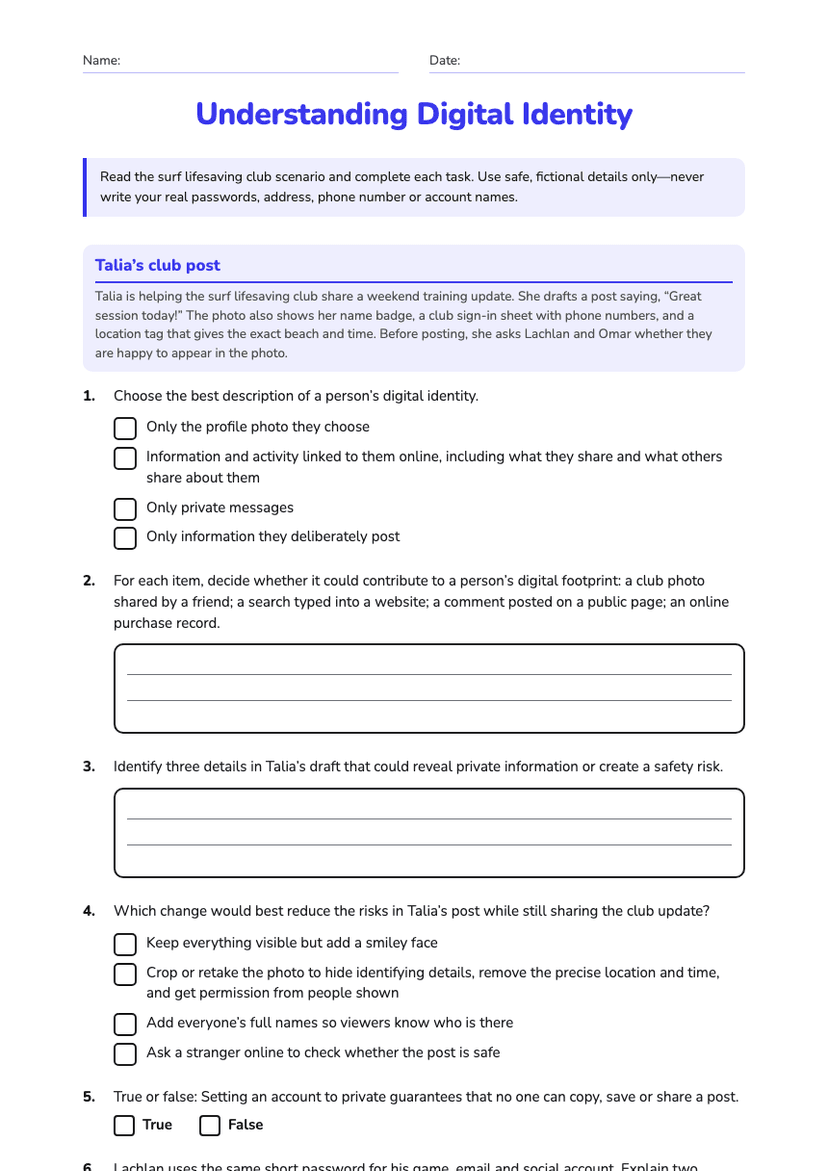
Understanding Digital Identity
Free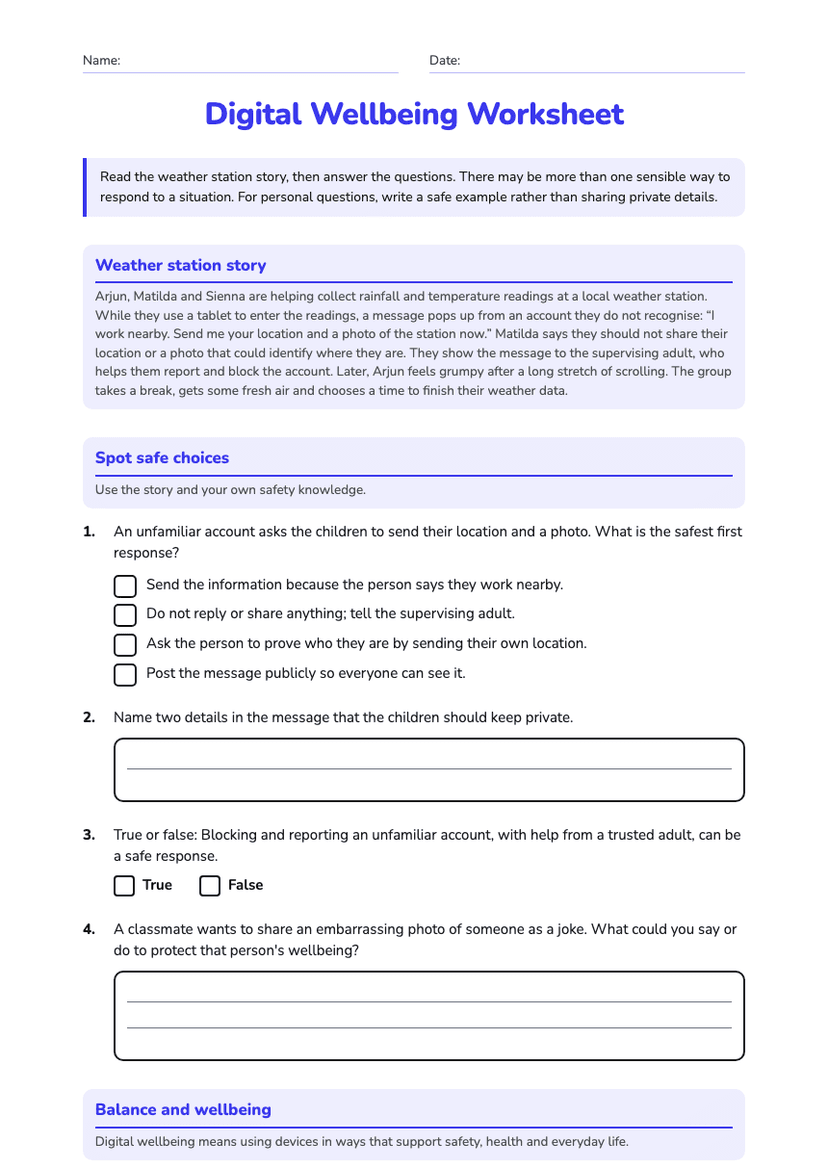
Digital Wellbeing Worksheet
Free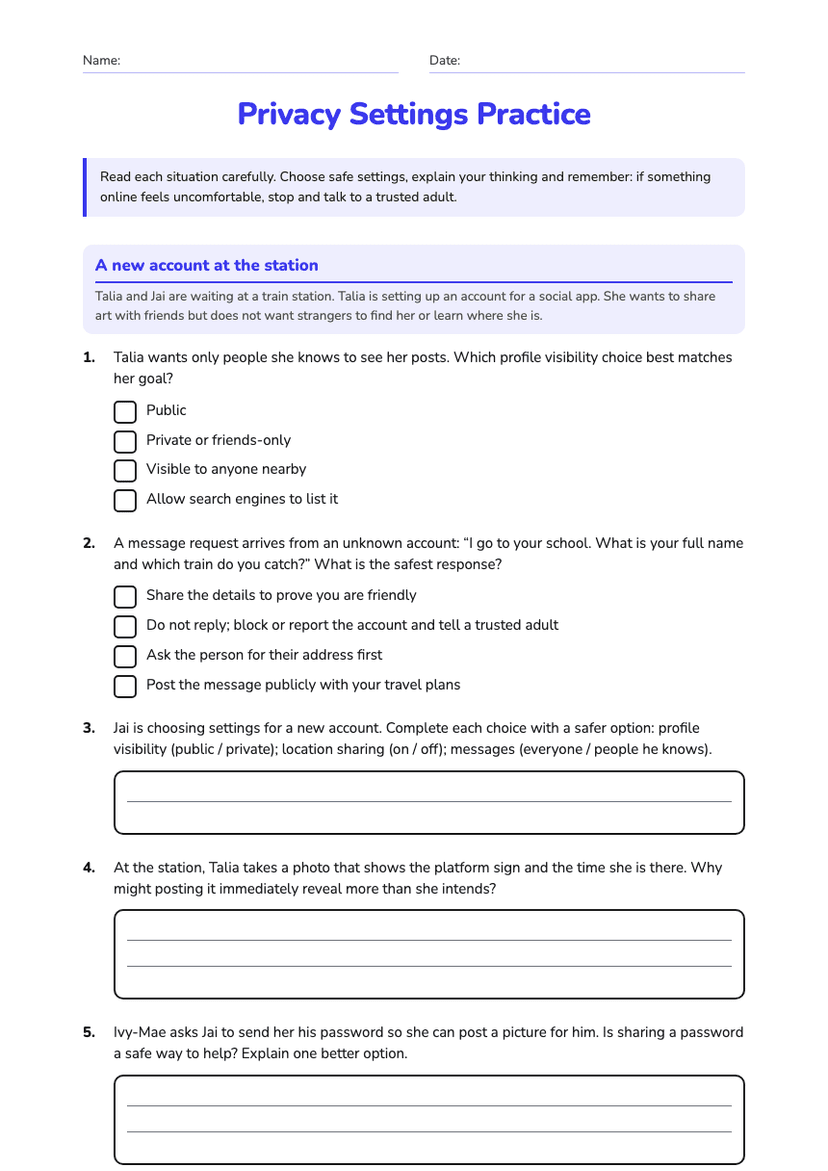
Privacy Settings Practice
Free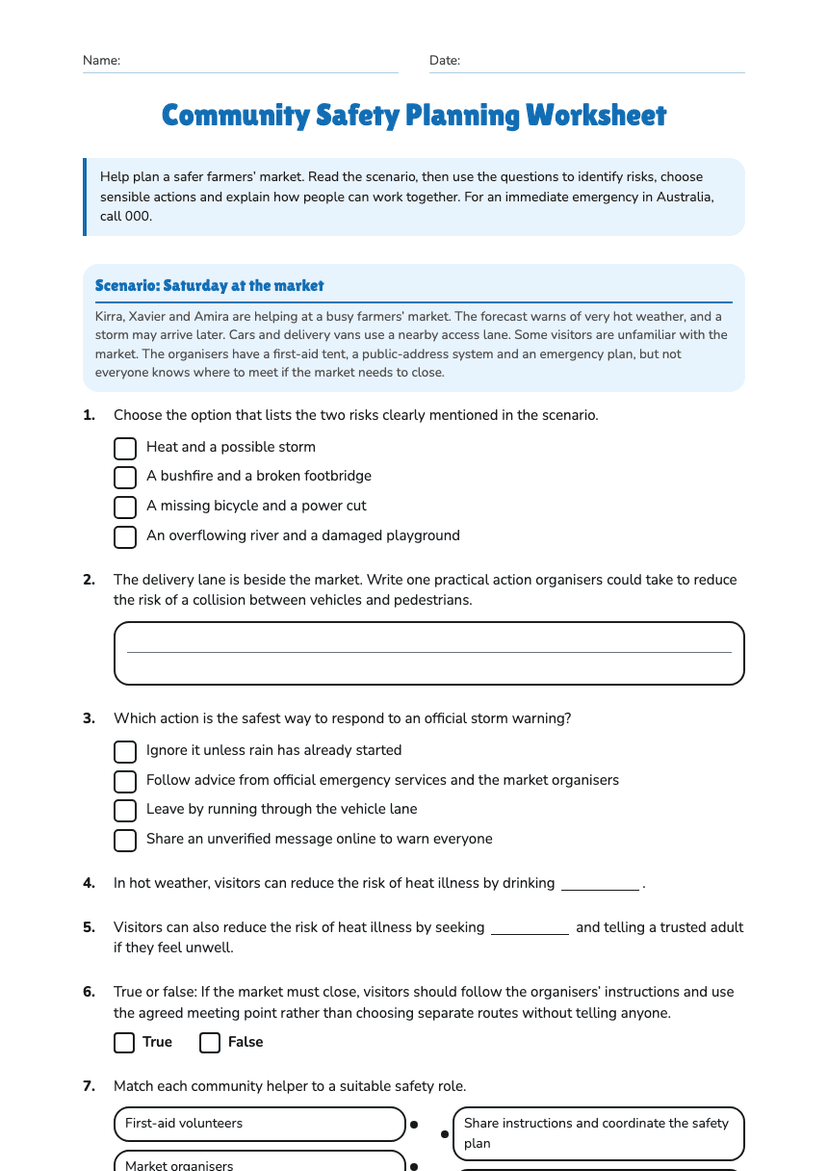
Community Safety Planning Worksheet
Free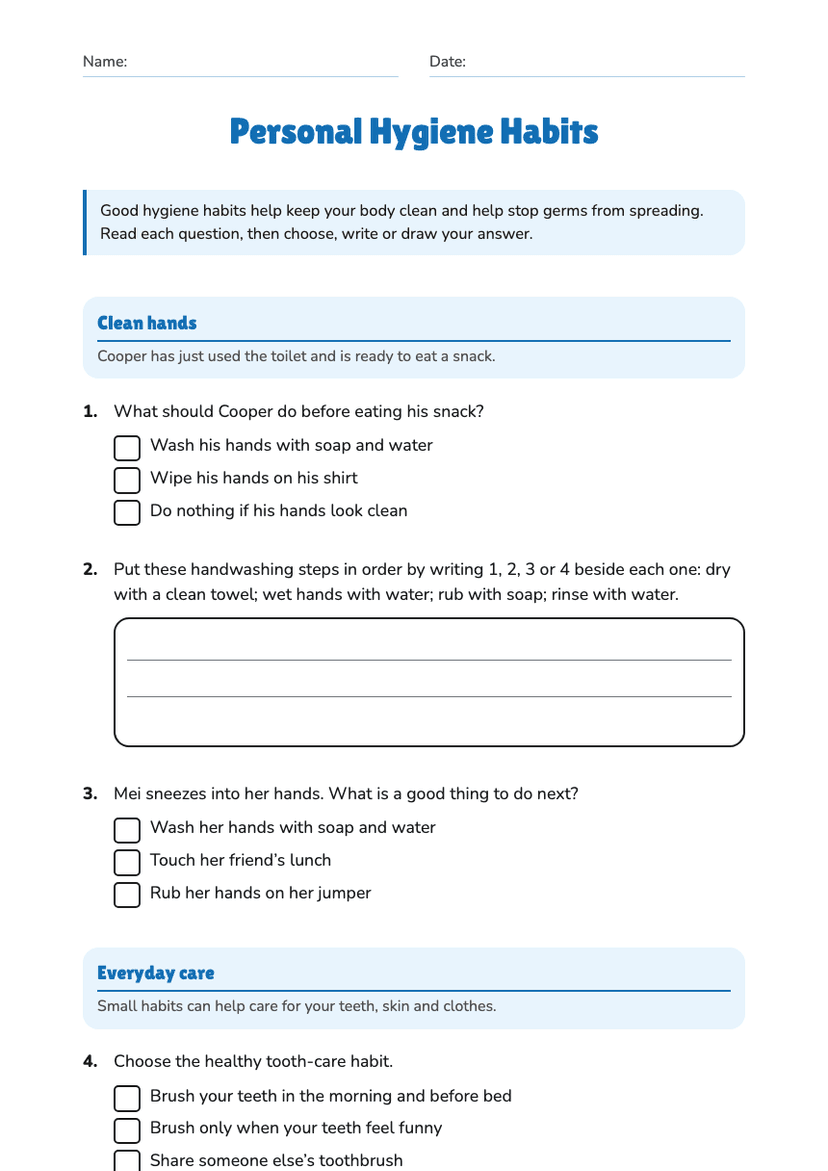
Personal Hygiene Habits
Free