Socratic Craft Inquiry Worksheet
A free english worksheet ready for your classroom. Open in Kuraplan to grab the print-ready PDF, customize it for your students, or generate a fresh version in seconds.
Socratic Craft Inquiry Worksheet
Year 11 English — Discovery & Empowerment Across Texts
📋 Seminar Instructions & Your Quotation Anchor
How this works: In today's Socratic seminar, you will discuss how craft choices — not just plot or themes — construct discovery and empowerment across our three mentor texts. Every contribution must be anchored in textual evidence. Listen actively, build on peers' ideas, and always ask: "Which craft choice does that?"
Seminar norms: Refer to evidence | Build on others | Stay focused and respectful | Challenge ideas, not people.
Text 1 — Quotation:
Craft technique & effect: _____________________________ → _____________________________
Text 2 — Quotation:
Craft technique & effect: _____________________________ → _____________________________
Text 3 — Quotation:
Craft technique & effect: _____________________________ → _____________________________
💬 Socratic Question Bank — Craft Focus
Use these questions to drive discussion. Tick any you contribute to or find most generative.
1. Perspective & Voice: How does the narrative perspective position the reader to understand discovery as a personal or universal experience? What would change if the voice shifted? 2. Imagery & Symbolism: Which image or symbol most powerfully encodes empowerment in your text? How does the author make that symbol earn its meaning through repetition or contrast? 3. Structure & Turning Points: Where is the structural turning point in your text, and how does the author use form or sequencing to signal a shift in power or awareness? 4. Tone & Mood: How does the author's tone evolve across the text? What does that tonal shift reveal about the character's journey toward — or away from — empowerment? 5. Language & Diction: Find a moment where word choice feels deliberately unexpected or charged. Why might the author have chosen that language, and what effect does it create for the reader? 6. Genre Conventions: How does the text use or subvert genre conventions to shape the reader's expectations of discovery? What is the effect of meeting or breaking those conventions? 7. Pacing & Rhythm: Where does the text slow down or accelerate, and how does that pacing manipulate the emotional weight of a discovery moment? 8. Audience Impact: Which craft choice do you think most directly challenges the reader to reconsider their own assumptions about power or agency? Why is that choice effective? 9. Cross-Text Synthesis: How do craft choices help characters gain agency differently across the three texts? Which single craft move carries the most argumentative weight across all three? 10. Alternative Readings: Is there a craft choice in your text that could support a reading where discovery leads to disempowerment rather than growth? What evidence supports that alternative interpretation?🗒️ Note-Taking: Claims, Evidence & Craft
Record significant claims made during the seminar. Use the table below to track: who made the claim, the supporting quotation or evidence, the craft technique named, and its effect on meaning.
Claim 1 — Speaker: _________________
Claim:
Quotation / Evidence:
Craft technique: _________________________ Effect on meaning: _________________________
Claim 2 — Speaker: _________________
Claim:
Quotation / Evidence:
Craft technique: _________________________ Effect on meaning: _________________________
Claim 3 — Speaker: _________________
Claim:
Quotation / Evidence:
Craft technique: _________________________ Effect on meaning: _________________________
One claim I want to clarify or challenge (Reflection Pause):
Clarify:
Challenge (with evidence):
🎭 Discussion Protocol: Roles & Sentence Starters
Circle your assigned role today. Use the sentence starters to guide your contributions.
General sentence starters for all roles:
🔹 "In the quotation '______', the author uses ______ which suggests ______."
🔹 "Building on [name]'s point, I think the craft choice of ______ also shows ______."
🔹 "I'd like to clarify — when we say ______, I think the text is actually doing ______."
🔹 "The effect of this craft choice on the audience is ______ because ______."
🎟️ Exit Ticket
Complete independently at the end of the lesson. Write in full sentences.
Self-assessment — tick what you achieved today:
I named at least two craft moves and linked them to discovery or empowerment. I used a quotation accurately and explained how it functions in context. I responded to a peer with evidence-based reasoning. My exit ticket question is craft-focused and genuinely open-ended.About This Worksheet
Free in Kuraplan
Sign up free, grab the PDF, and customize it for your class.
Print-Ready
Formatted for standard paper. Clean layout, easy to read.
AI-Generated
Created with Kuraplan's AI, designed for real classroom use.
For Teachers & Parents
Use in classrooms, for homework, tutoring, or homeschool.
Need a custom version of this worksheet?
Kuraplan's AI generates custom worksheets in seconds — differentiated for every learner, aligned to your curriculum.
Generate Custom Worksheets — FreeMore English Worksheets
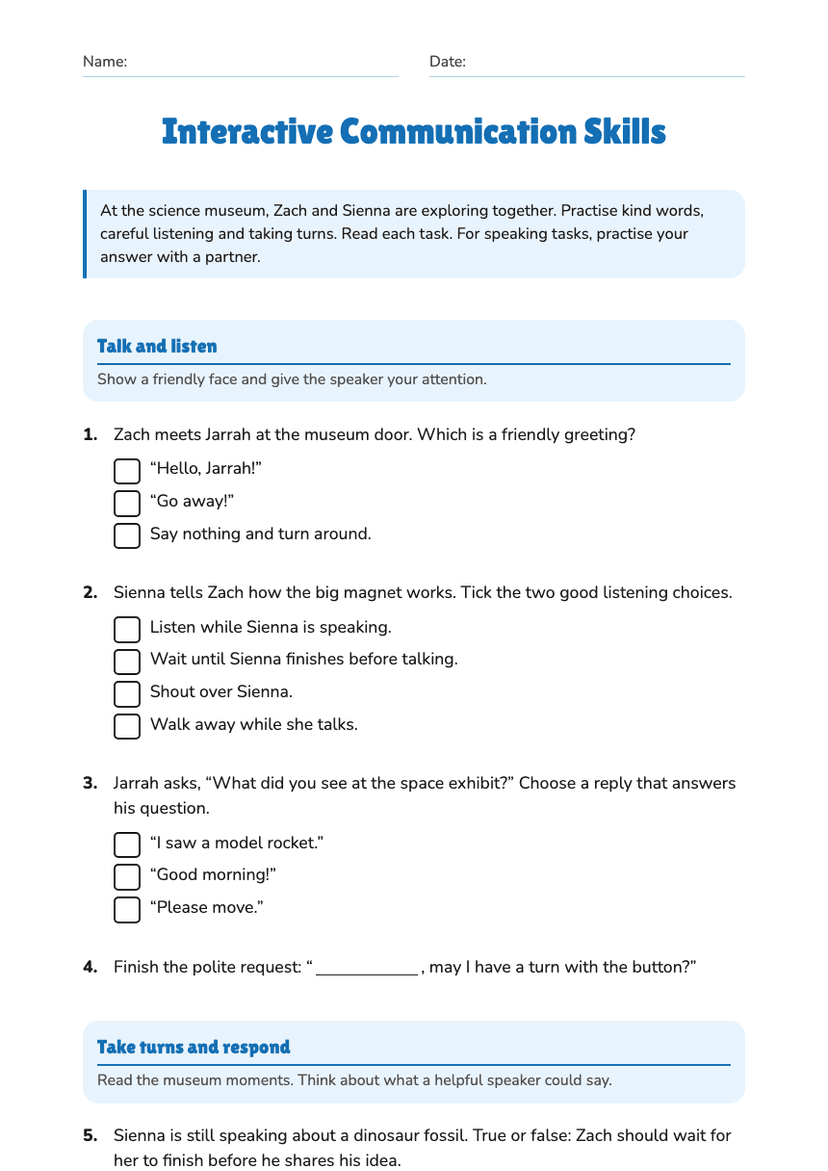
Interactive Communication Skills
Free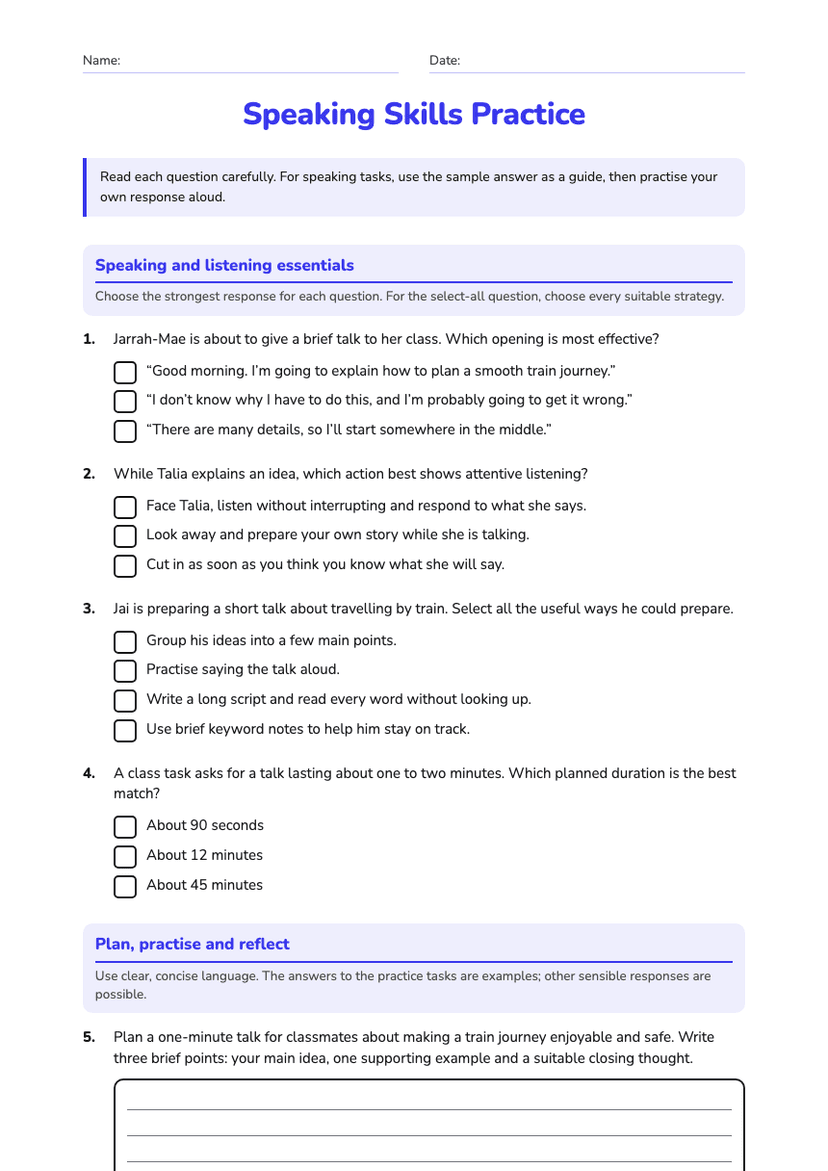
Speaking Skills Practice
Free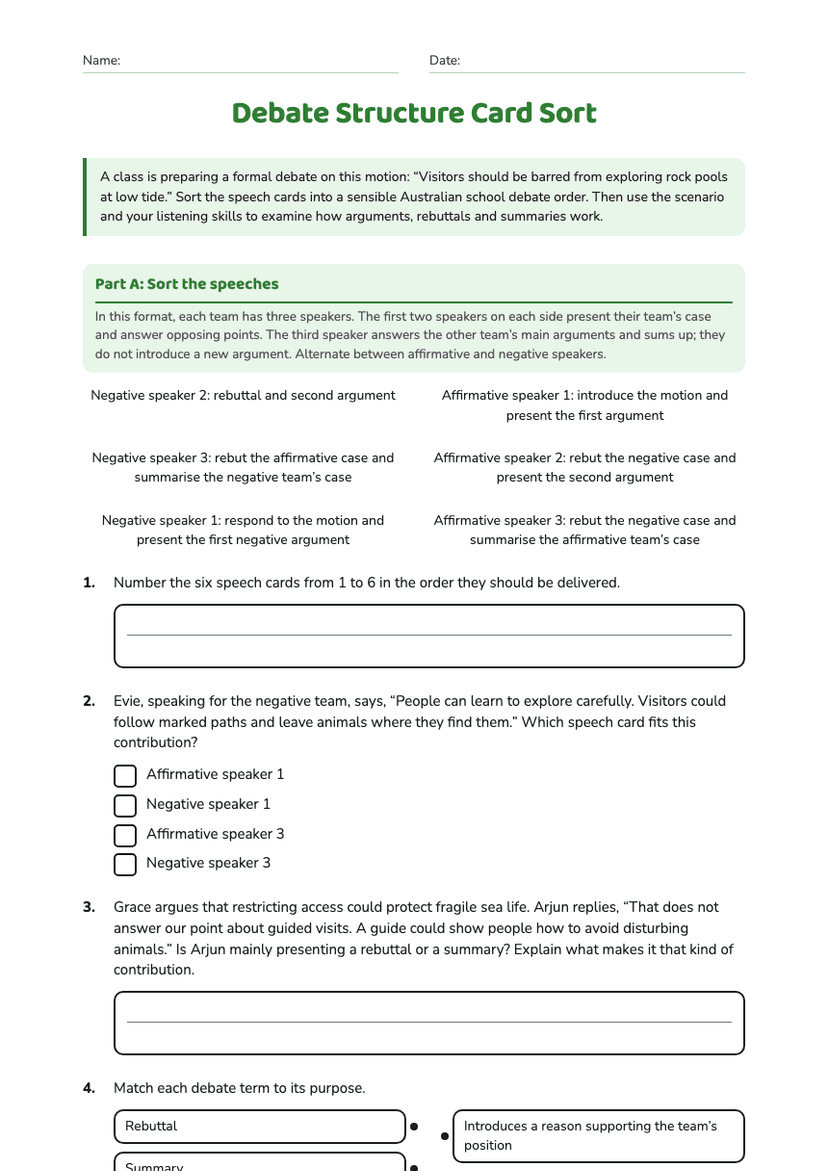
Debate Structure Card Sort
Free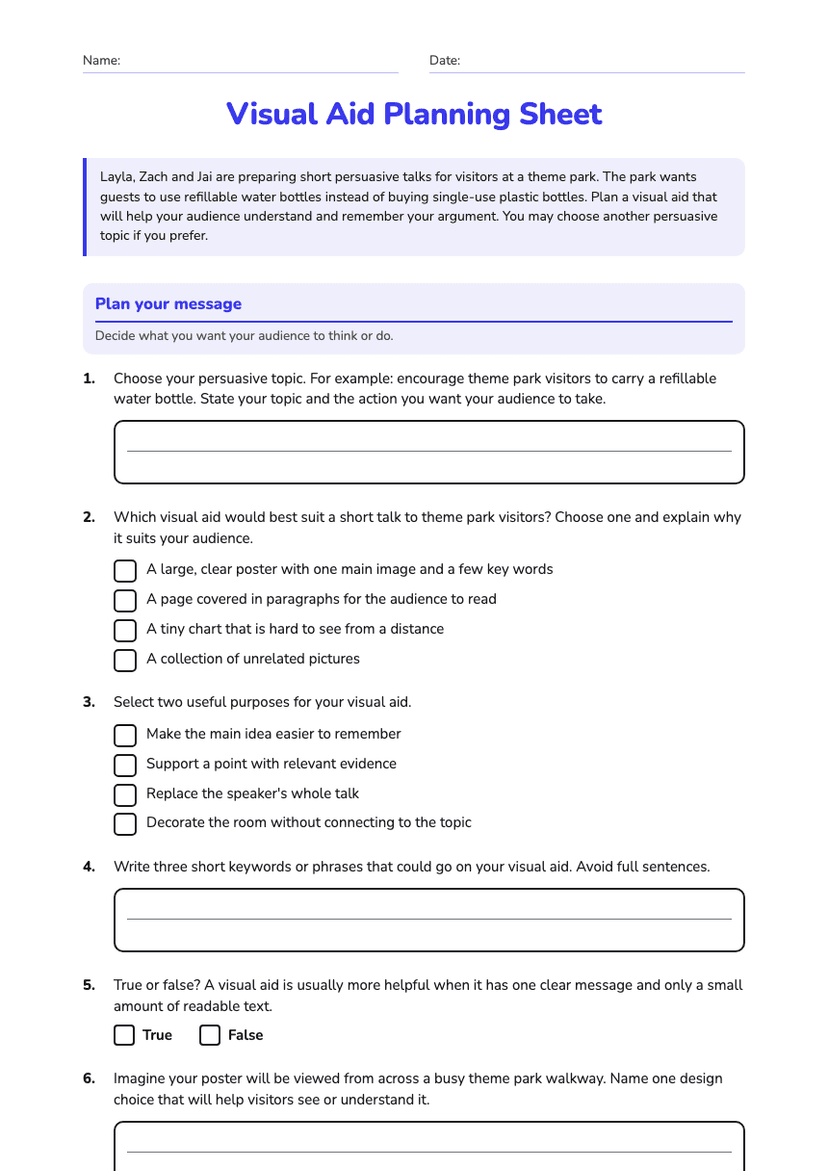
Visual Aid Planning Sheet
Free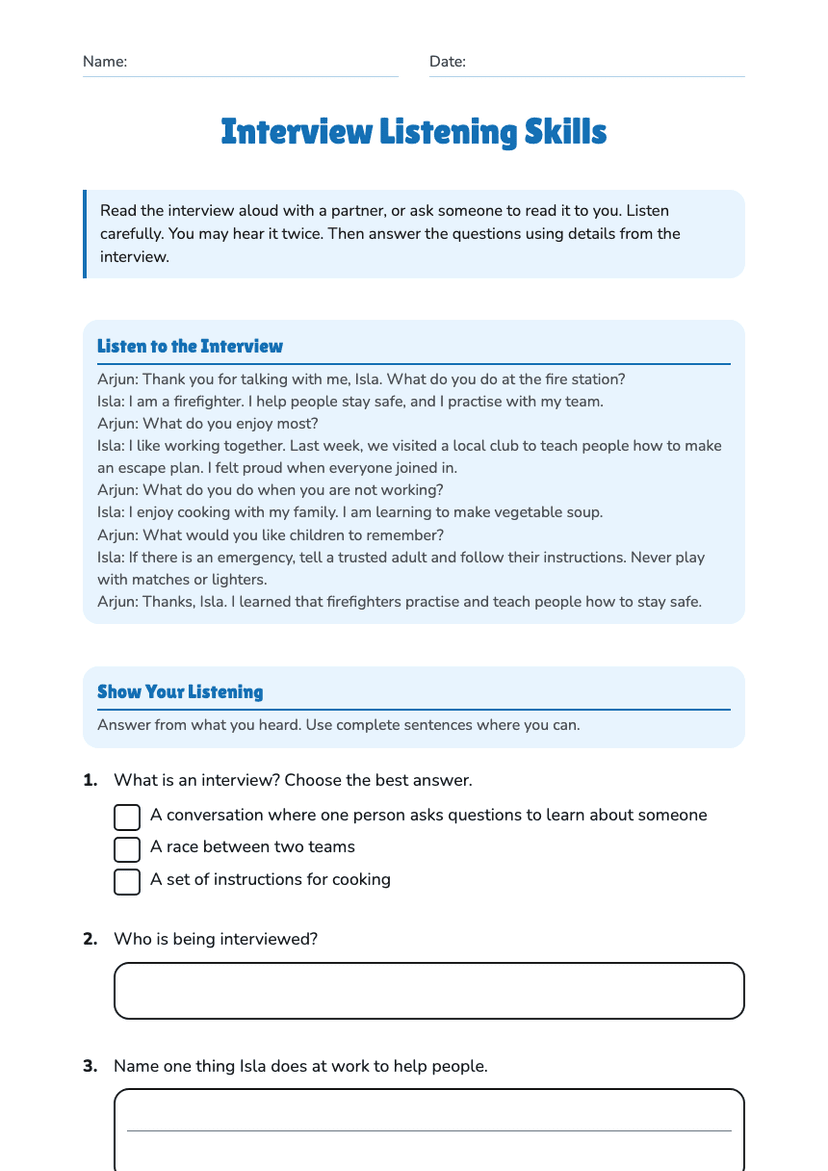
Interview Listening Skills
Free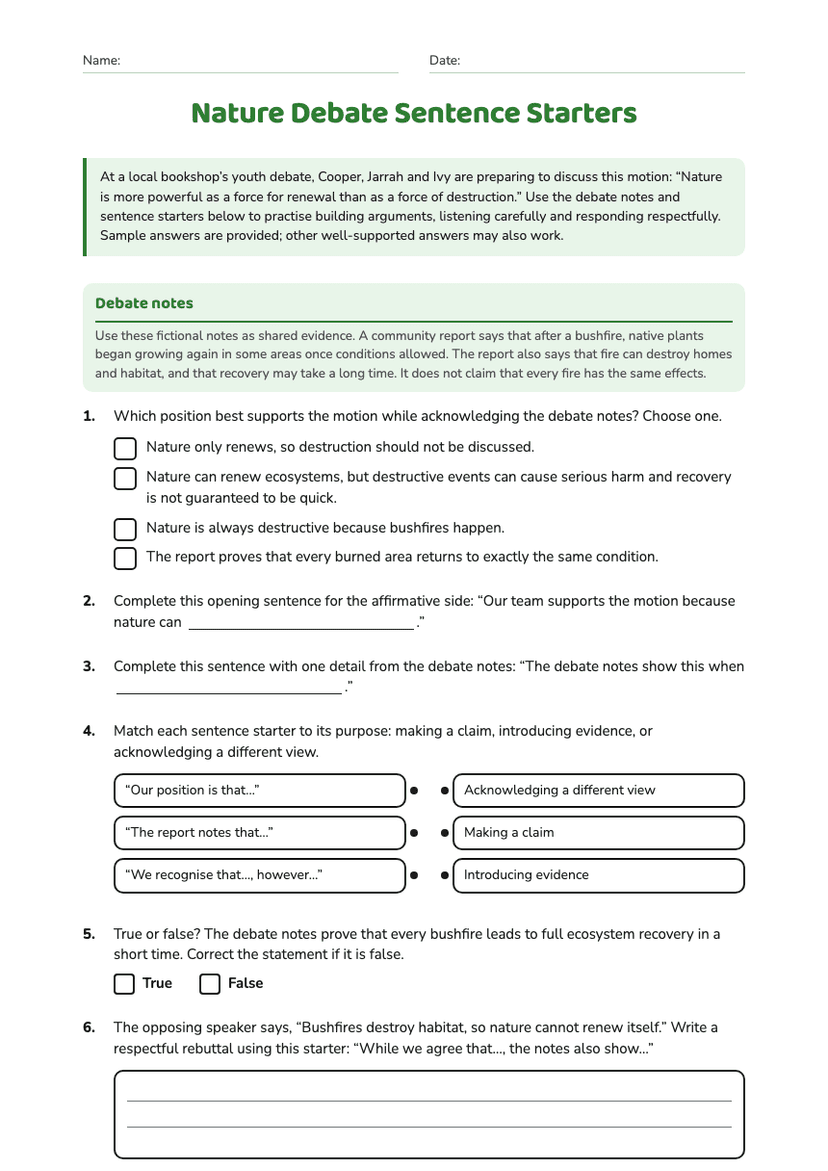
Nature Debate Sentence Starters
Free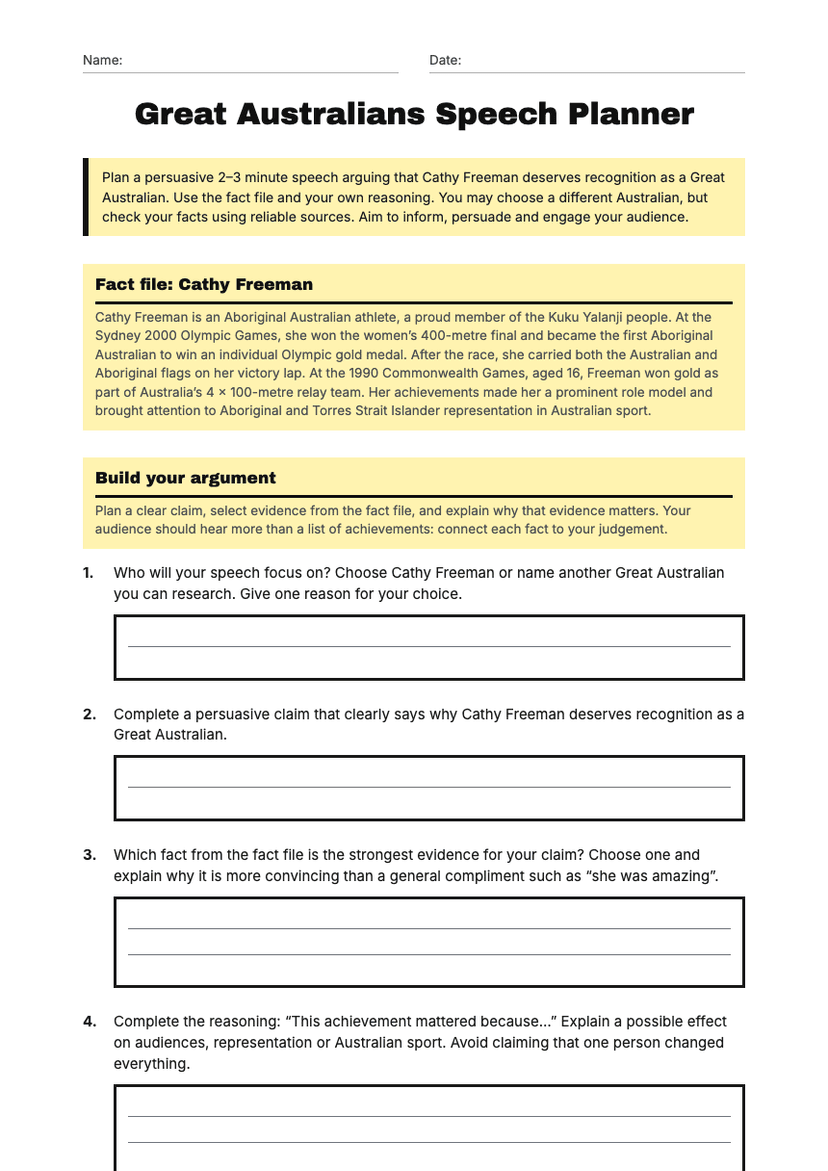
Great Australians Speech Planner
Free