Squat Analysis Activity Worksheet
A free pe worksheet ready for your classroom. Open in Kuraplan to grab the print-ready PDF, customize it for your students, or generate a fresh version in seconds.
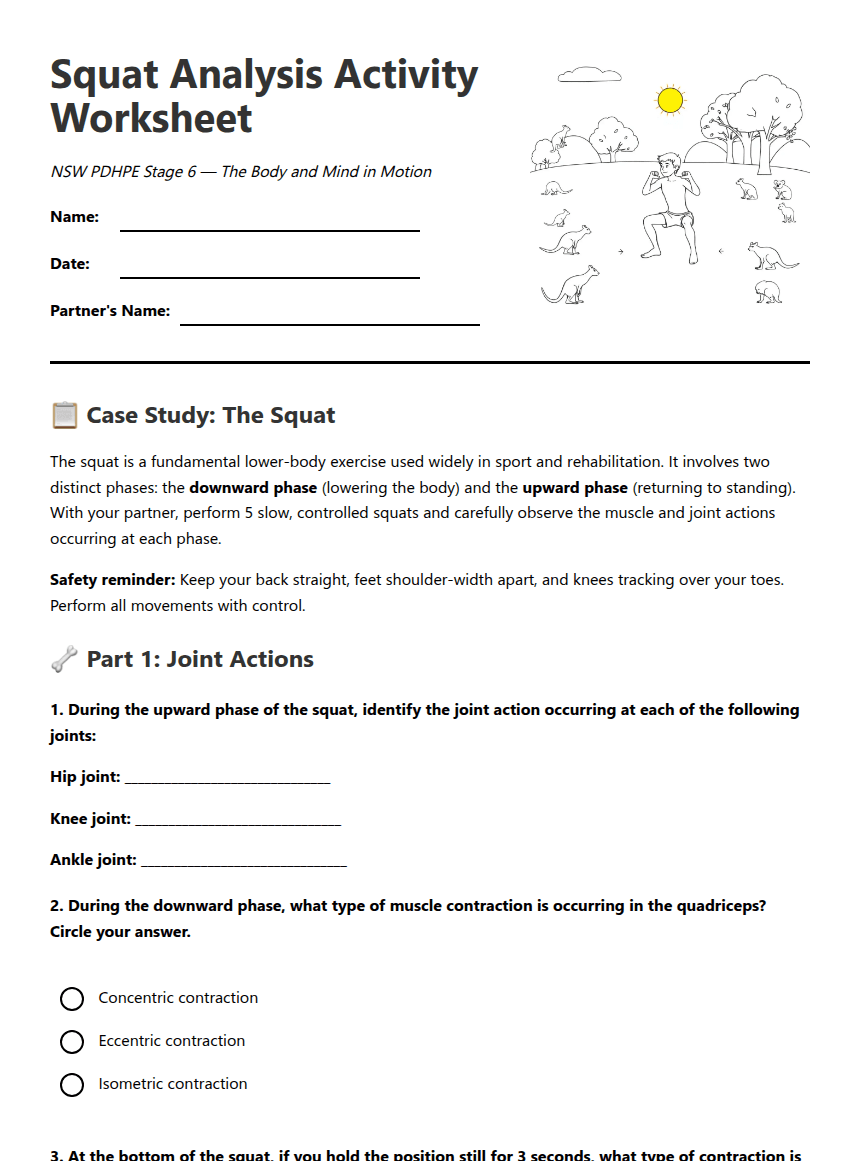
Squat Analysis Activity Worksheet
NSW PDHPE Stage 6 — The Body and Mind in Motion
📋 Case Study: The Squat
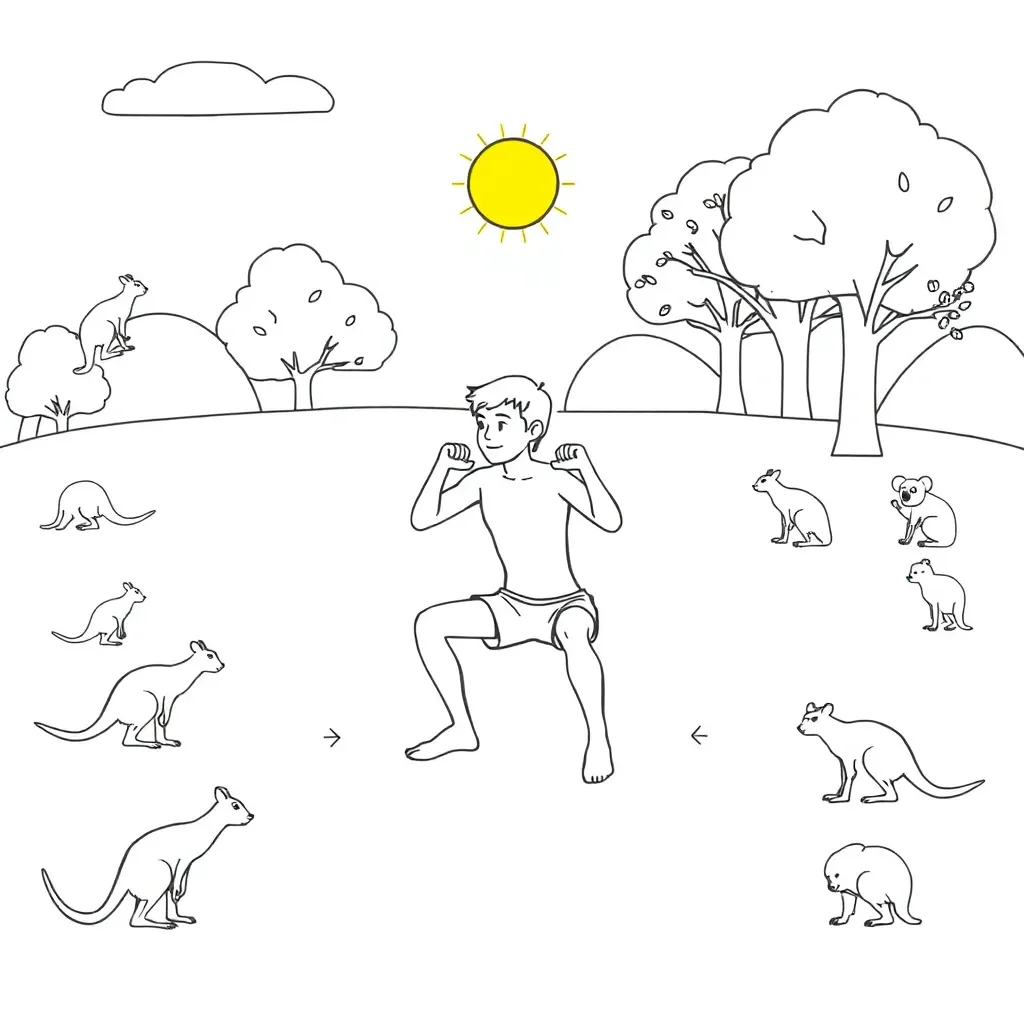
The squat is a fundamental lower-body exercise used widely in sport and rehabilitation. It involves two distinct phases: the downward phase (lowering the body) and the upward phase (returning to standing). With your partner, perform 5 slow, controlled squats and carefully observe the muscle and joint actions occurring at each phase.
Safety reminder: Keep your back straight, feet shoulder-width apart, and knees tracking over your toes. Perform all movements with control.
🦴 Part 1: Joint Actions
Hip joint: _______________________________
Knee joint: _______________________________
Ankle joint: _______________________________
💪 Part 2: Muscle Relationships
Agonist (prime mover): _______________________________
Antagonist (opposing muscle): _______________________________
Agonist (prime mover): _______________________________
Antagonist (opposing muscle): _______________________________
About This Worksheet
Free in Kuraplan
Sign up free, grab the PDF, and customize it for your class.
Print-Ready
Formatted for standard paper. Clean layout, easy to read.
AI-Generated
Created with Kuraplan's AI, designed for real classroom use.
For Teachers & Parents
Use in classrooms, for homework, tutoring, or homeschool.
Need a custom version of this worksheet?
Kuraplan's AI generates custom worksheets in seconds — differentiated for every learner, aligned to your curriculum.
Generate Custom Worksheets — FreeMore PE Worksheets
Persuasive Text Analysis
Free
Folk Story Analysis Support
Free
Folk Story Analysis Worksheet
Free
Villain Analysis Essay Guide
Free
Enola Holmes Analysis Worksheet
Free
Standing Waves Analysis Report
Free
Textual Analysis Template
Free