📚 Part 1: Cohesive Devices Analysis
Success Criteria: I can identify pronoun referencing and lexical cohesion in dramatic dialogue to understand how language creates unity and tension.
1. Read this excerpt from the Inspector's speech in Act 2. Identify all the pronouns and draw arrows to show what each pronoun refers to:
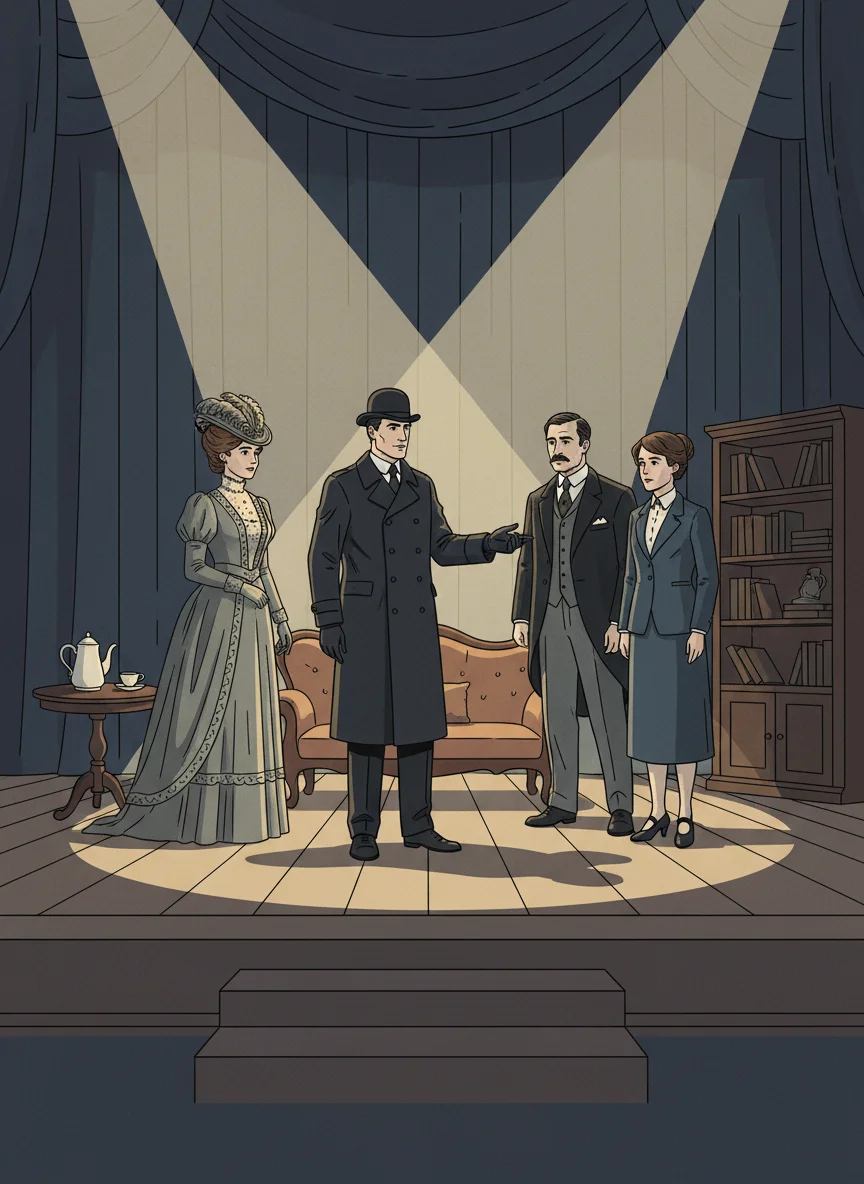
"She came to him for help. He could have helped her. Instead, he turned her away. They all played their part in what happened to her."
2. In the same excerpt, find examples of lexical cohesion (repeated words or related word families):
3. How does the Inspector's use of pronouns create dramatic tension? Choose the best answer:
It makes the speech confusing and hard to follow
It creates mystery by not naming people directly
It makes the characters sound more educated
It reduces the emotional impact of his words
4. Find two examples of cohesive devices in your copy of Act 2 and explain their effect:
Example 1: _________________________________________________
Effect: ___________________________________________________
Example 2: _________________________________________________
Effect: ___________________________________________________
✏️ Part 2: Sentence Structure and Tension
Success Criteria: I can rewrite dialogue using varied sentence structures and stronger cohesive devices to enhance dramatic tension.
5. Rewrite this weak excerpt to create stronger cohesion and tension. Use pronouns, repetition, and varied sentence lengths:
Original: "Mr Birling was wrong. Mr Birling fired Eva. Eva needed money. Eva went to Gerald's shop."
Your improved version:
_________________________________________________________
_________________________________________________________
_________________________________________________________
6. Which sentence structures are most effective for creating tension in drama? Select all that apply:
Short, sharp sentences
Long, complex sentences with multiple clauses
Questions directed at other characters
Incomplete sentences or fragments
Repetitive sentence patterns
🎭 Part 3: Vocabulary and Connotation
Success Criteria: I can analyse how word choices and connotations contribute to mood and dramatic themes.
7. The Inspector uses the word "responsible" repeatedly. What are the connotations (implied meanings) of this word choice?
8. Replace these neutral words with more emotionally charged alternatives that would increase tension:
said → ____________________
looked → ____________________
left → ____________________
mistake → ____________________
9. How do the Inspector's vocabulary choices reveal the play's themes about social responsibility? Use specific examples from Act 2:
_________________________________________________________
_________________________________________________________
_________________________________________________________
_________________________________________________________
10. Extension Challenge: Write a short Inspector-style speech (3-4 sentences) using strong cohesive devices, varied sentence structures, and emotionally charged vocabulary:
_________________________________________________________
_________________________________________________________
_________________________________________________________
_________________________________________________________