UN and Australian Human Rights
A free social sciences worksheet ready for your classroom. Open in Kuraplan to grab the print-ready PDF, customize it for your students, or generate a fresh version in seconds.
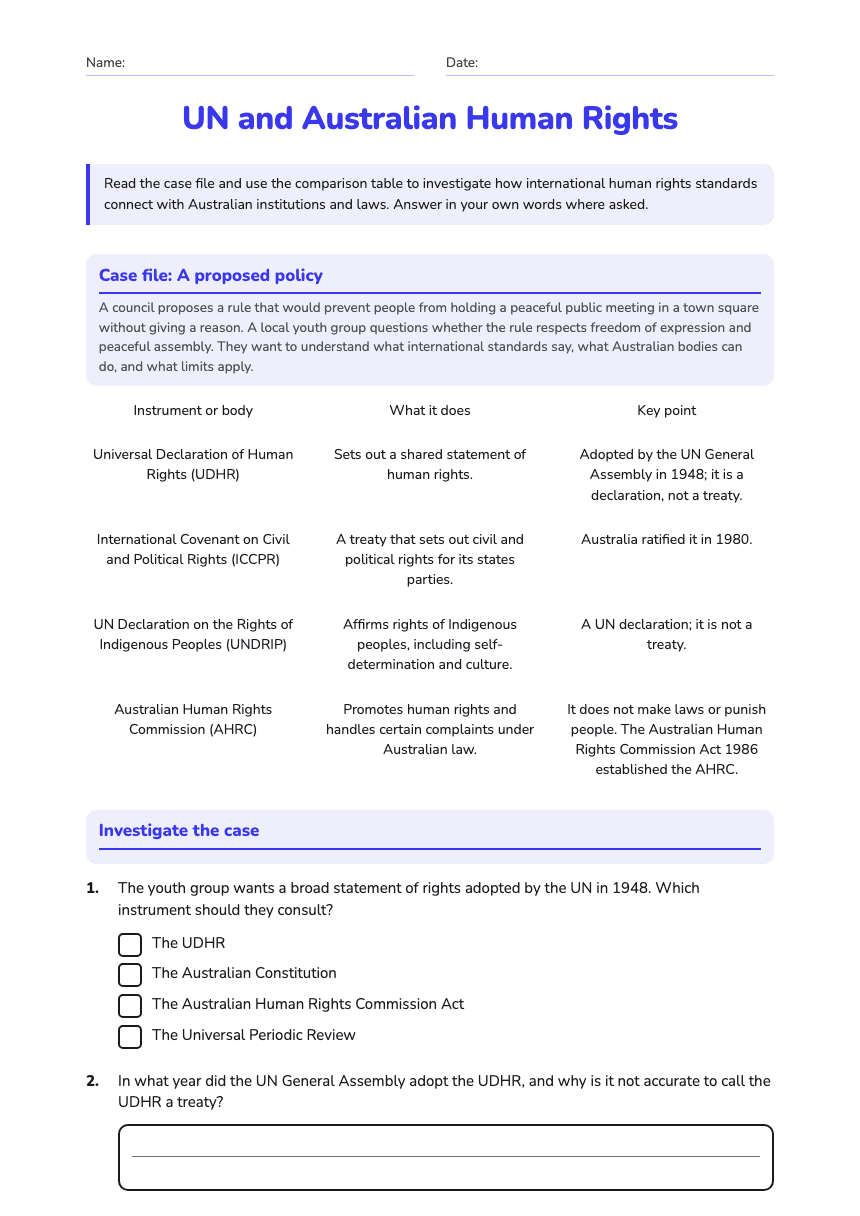
UN and Australian Human Rights
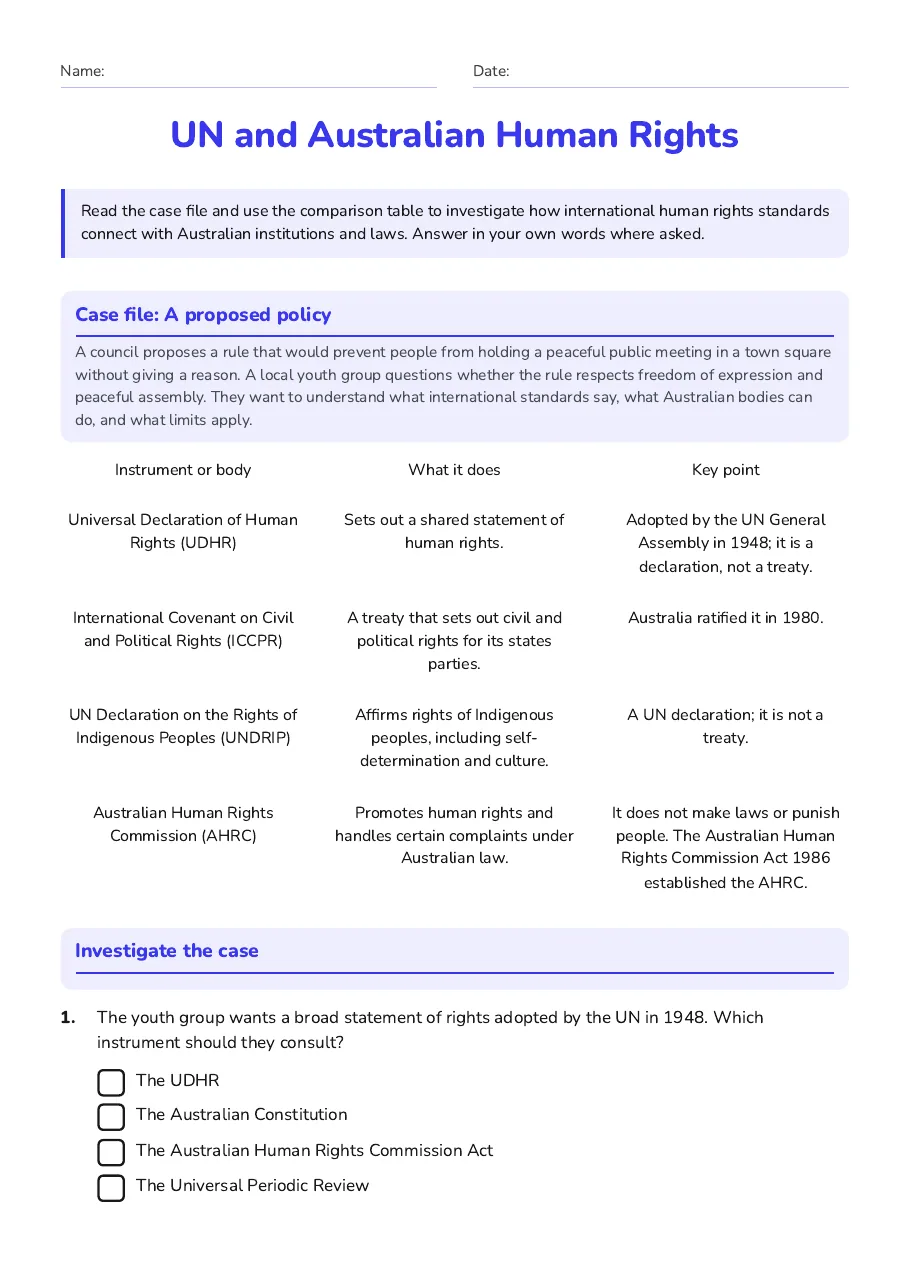
Case file: A proposed policy
A council proposes a rule that would prevent people from holding a peaceful public meeting in a town square without giving a reason. A local youth group questions whether the rule respects freedom of expression and peaceful assembly. They want to understand what international standards say, what Australian bodies can do, and what limits apply.
Instrument or body
What it does
Key point
Universal Declaration of Human Rights (UDHR)
Sets out a shared statement of human rights.
Adopted by the UN General Assembly in 1948; it is a declaration, not a treaty.
International Covenant on Civil and Political Rights (ICCPR)
A treaty that sets out civil and political rights for its states parties.
Australia ratified it in 1980.
UN Declaration on the Rights of Indigenous Peoples (UNDRIP)
Affirms rights of Indigenous peoples, including self-determination and culture.
A UN declaration; it is not a treaty.
Australian Human Rights Commission (AHRC)
Promotes human rights and handles certain complaints under Australian law.
It does not make laws or punish people. The Australian Human Rights Commission Act 1986 established the AHRC.
Investigate the case
- The UDHR
- The Australian Constitution
- The Australian Human Rights Commission Act
- The Universal Periodic Review
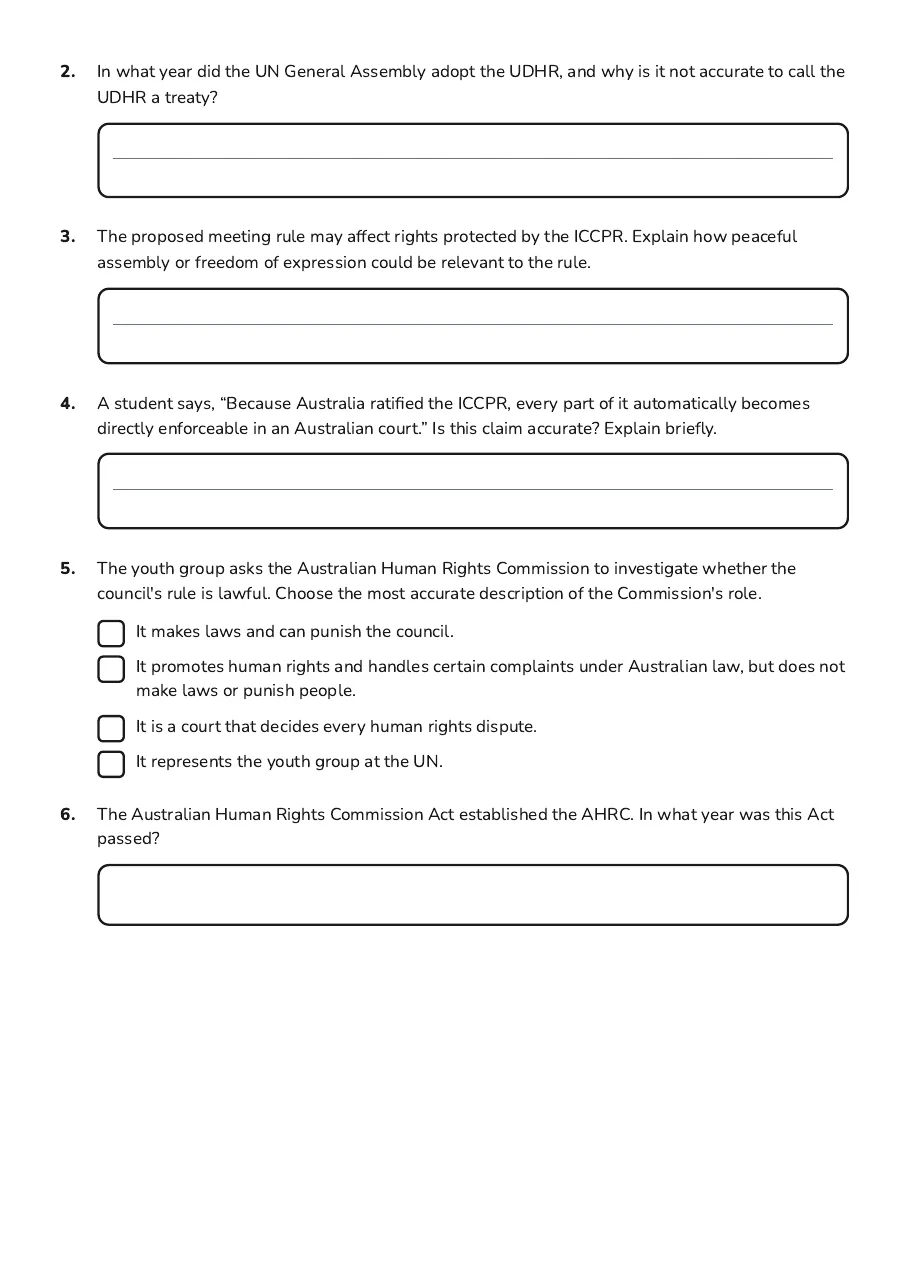
- It makes laws and can punish the council.
- It promotes human rights and handles certain complaints under Australian law, but does not make laws or punish people.
- It is a court that decides every human rights dispute.
- It represents the youth group at the UN.
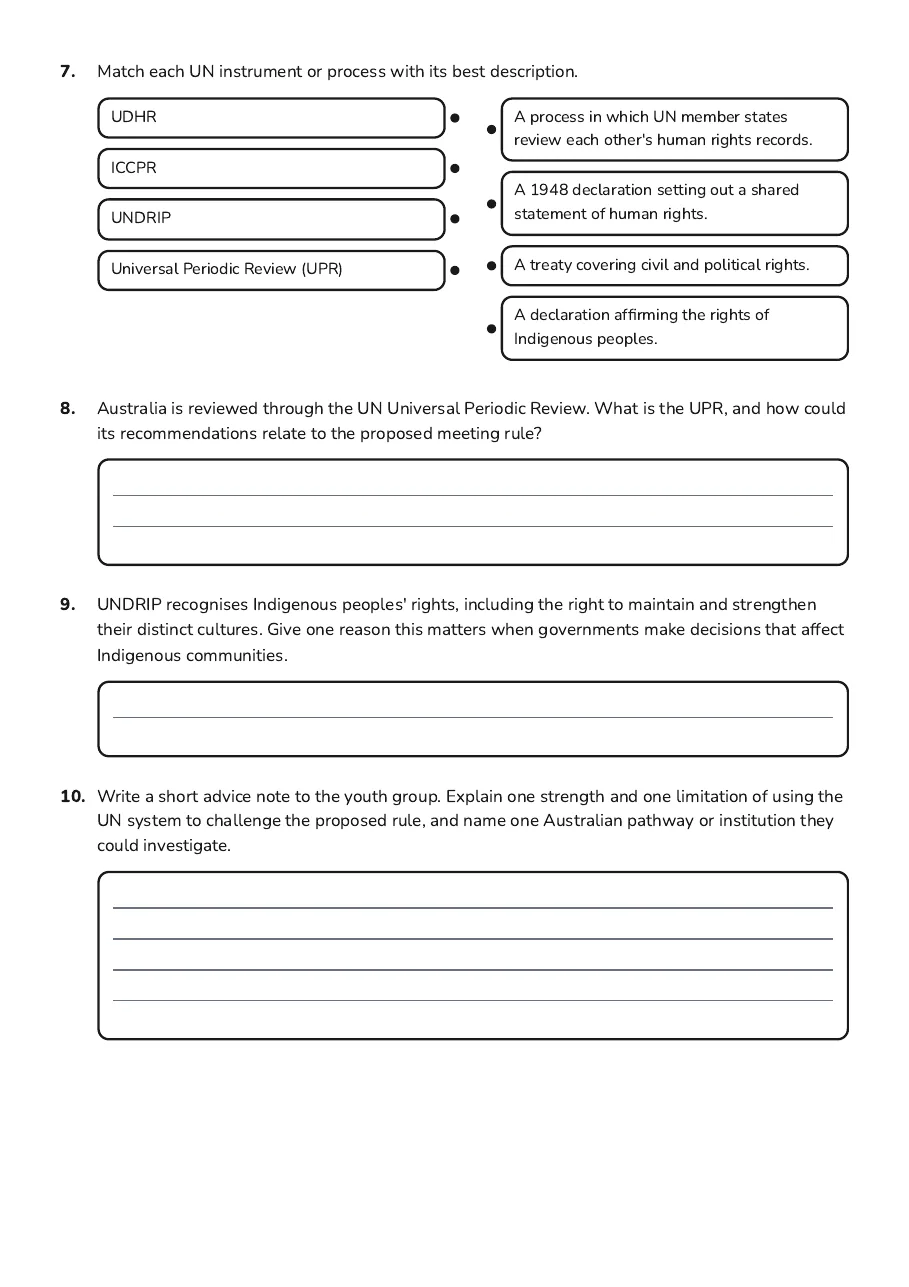
- UDHR
- ICCPR
- UNDRIP
- Universal Periodic Review (UPR)
- A process in which UN member states review each other's human rights records.
- A 1948 declaration setting out a shared statement of human rights.
- A treaty covering civil and political rights.
- A declaration affirming the rights of Indigenous peoples.
3 printable pages
Page 1
Page 2
Page 3
About This Worksheet
Free in Kuraplan
Sign up free, grab the PDF, and customize it for your class.
Print-Ready
Formatted for standard paper. Clean layout, easy to read.
AI-Generated
Created with Kuraplan's AI, designed for real classroom use.
For Teachers & Parents
Use in classrooms, for homework, tutoring, or homeschool.
Need a custom version of this worksheet?
Kuraplan's AI generates custom worksheets in seconds — differentiated for every learner, aligned to your curriculum.
Generate Custom Worksheets — FreeMore Social Sciences Worksheets
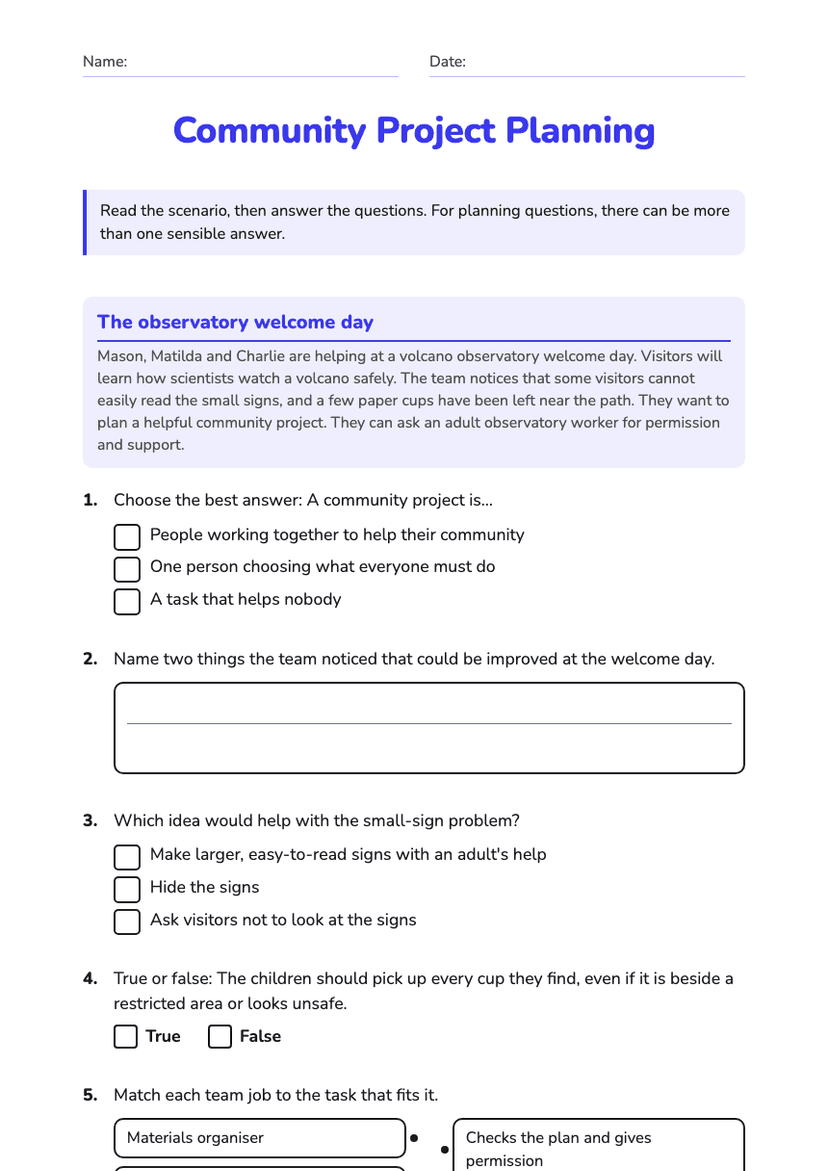
Community Project Planning
Free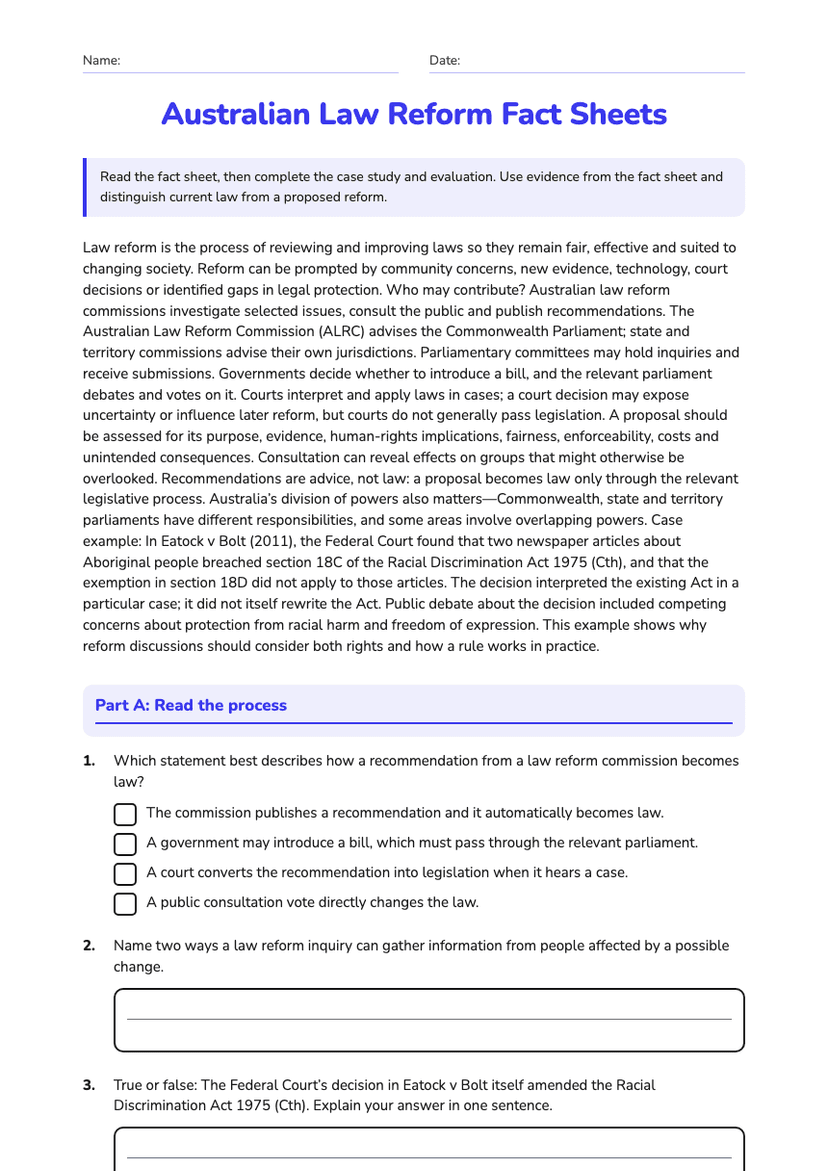
Australian Law Reform Fact Sheets
Free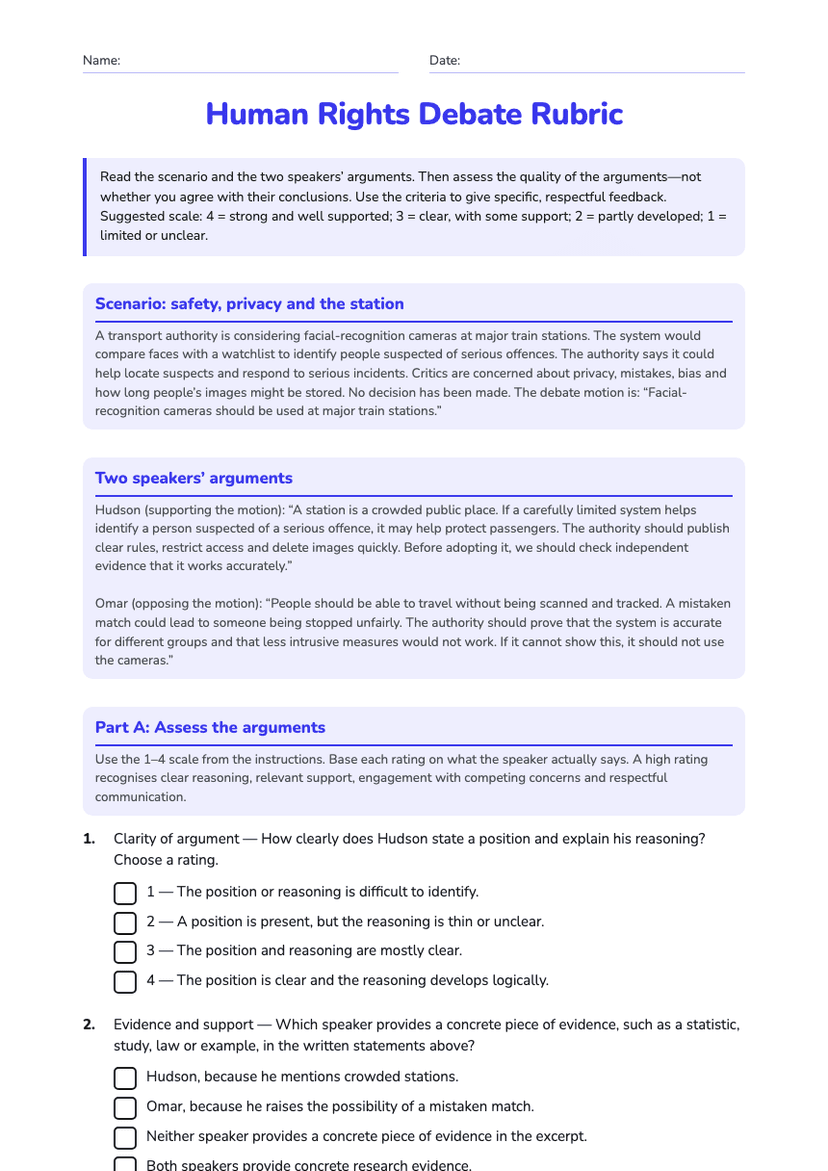
Human Rights Debate Rubric
Free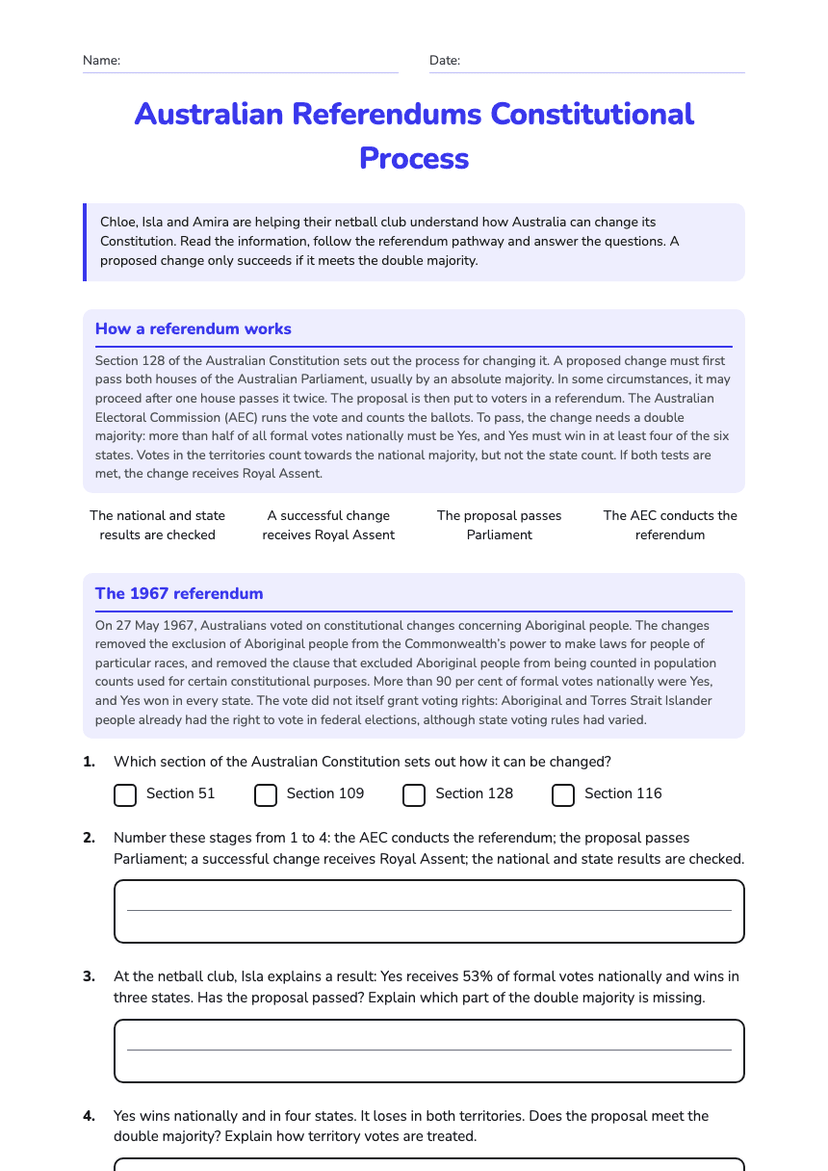
Australian Referendums Constitutional Process
Free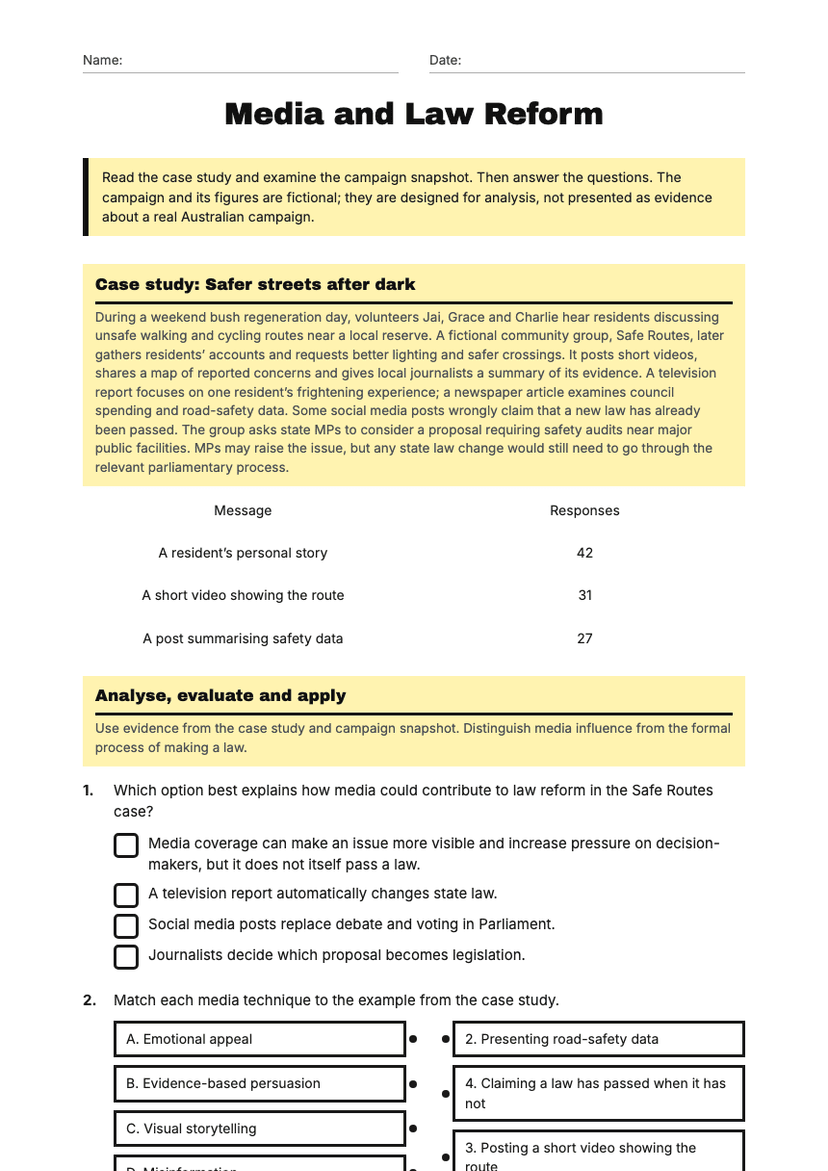
Media and Law Reform
Free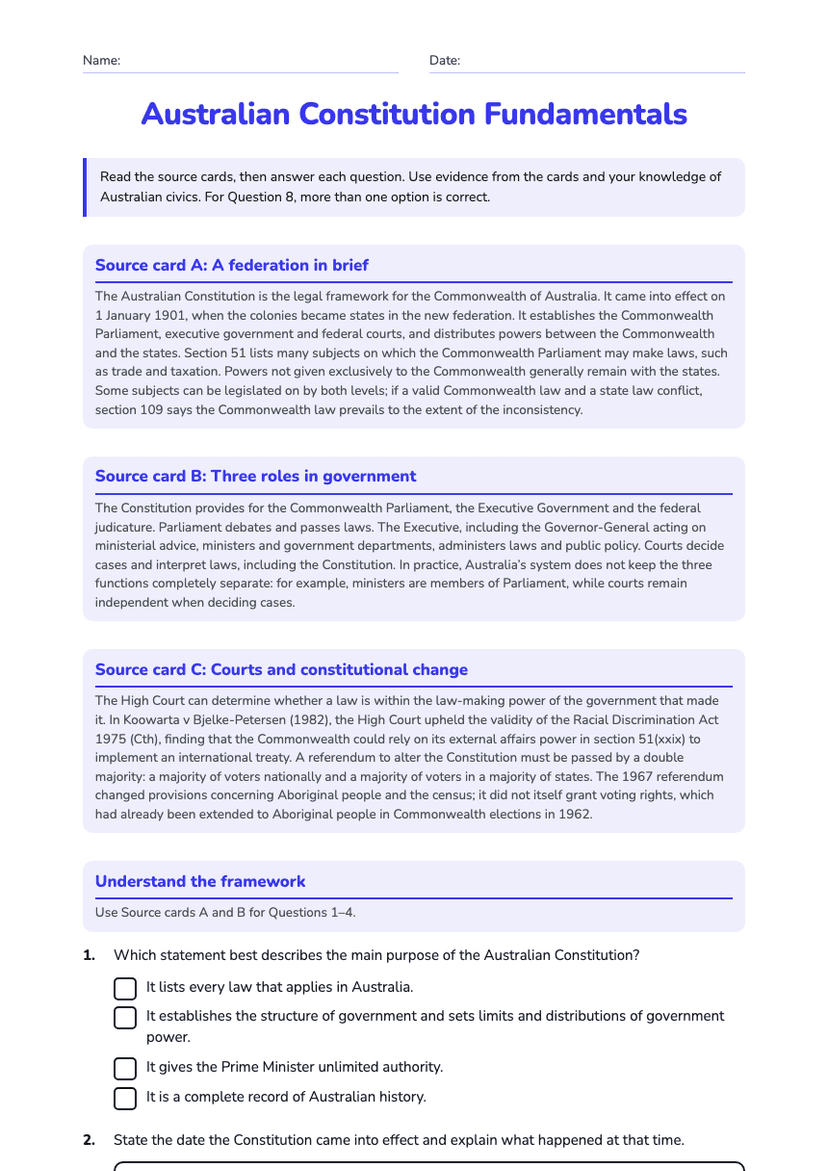
Australian Constitution Fundamentals
Free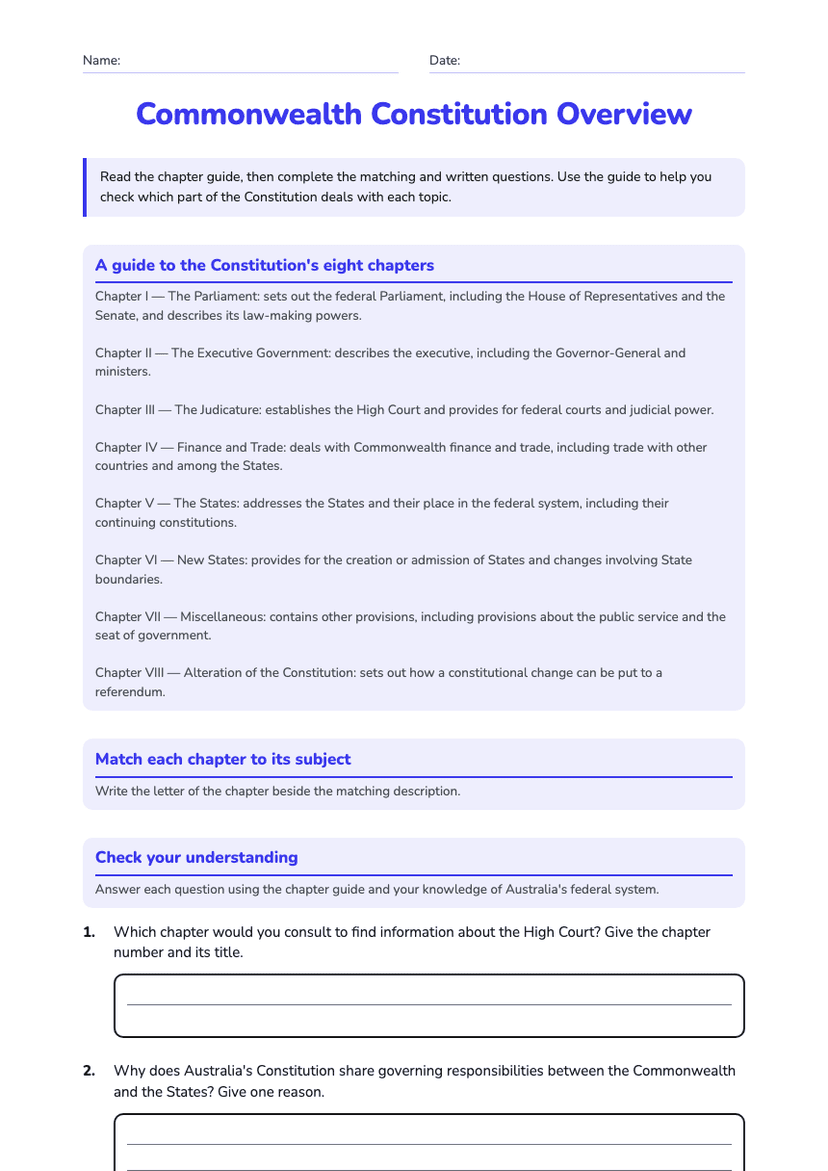
Commonwealth Constitution Overview
Free