Volume and Capacity Measurement
A free maths worksheet ready for your classroom. Open in Kuraplan to grab the print-ready PDF, customize it for your students, or generate a fresh version in seconds.

Volume and Capacity Measurement
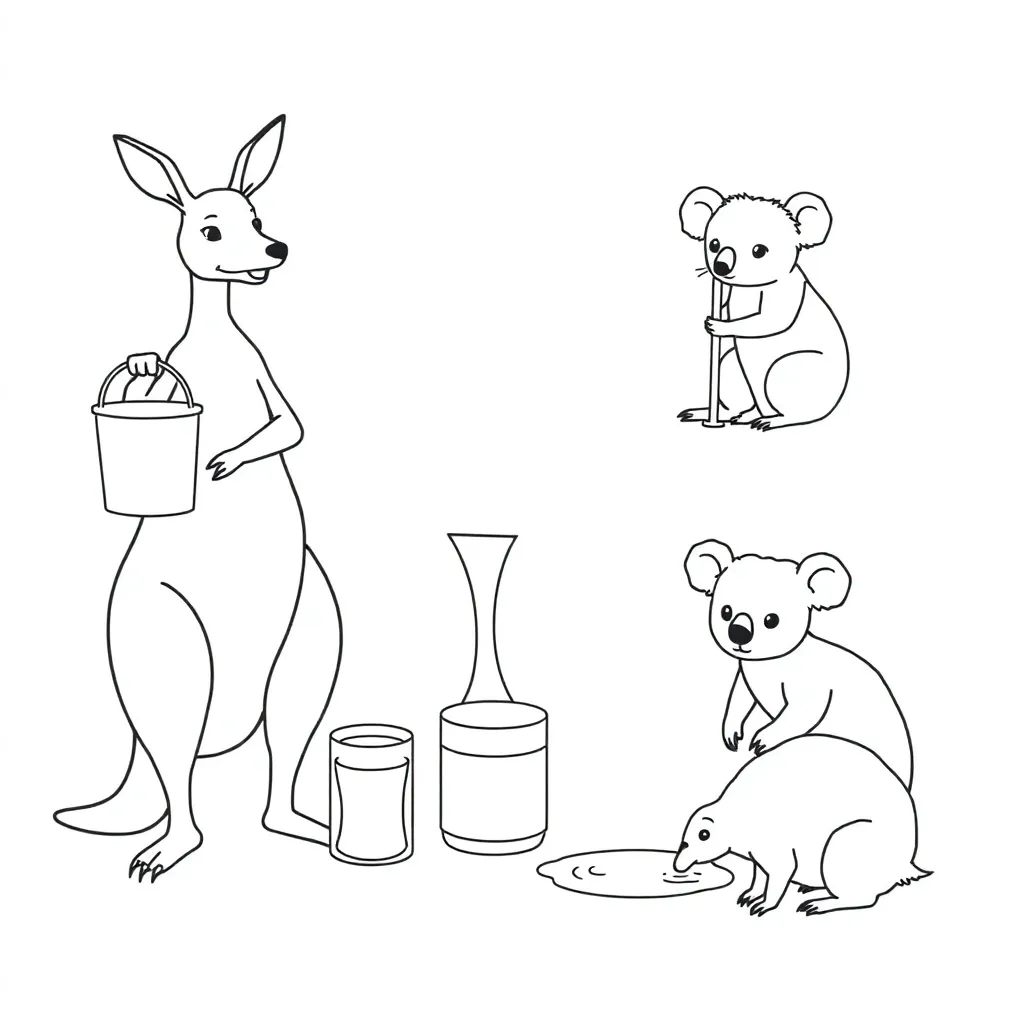
📏 Part 1: Understanding Volume and Capacity
The __________ of a bottle tells us how much liquid it can hold, while the __________ of a box tells us how much space it takes up. We can measure capacity in __________ and __________, and we know that 1 mL equals _____ cm³.
🧮 Part 2: Converting Units
a) 2500 mL = _______ L
b) 3.5 L = _______ mL
c) 750 cm³ = _______ mL
d) 1.2 L = _______ cm³
Container A: 1.5 L Container B: 800 mL Container C: 2200 mL Container D: 0.9 L
Smallest: _______ → _______ → _______ → _______ :Largest
📊 Part 3: Estimation and Measurement
Container 1 (Water bottle):
My estimate: _______ mL Actual measurement: _______ mL
Container 2 (Measuring jug):
My estimate: _______ mL Actual measurement: _______ mL
Container 3 (Small cup):
My estimate: _______ mL Actual measurement: _______ mL
My container's estimated capacity: _______ mL or _______ L
🧩 Part 4: Problem Solving
Answer: _______ mL or _______ L
Volume: _______ cm³ Capacity: _______ mL
🌏 Part 5: Real-World Applications
Answer: _______ m³
About This Worksheet
Free in Kuraplan
Sign up free, grab the PDF, and customize it for your class.
Print-Ready
Formatted for standard paper. Clean layout, easy to read.
AI-Generated
Created with Kuraplan's AI, designed for real classroom use.
For Teachers & Parents
Use in classrooms, for homework, tutoring, or homeschool.
Need a custom version of this worksheet?
Kuraplan's AI generates custom worksheets in seconds — differentiated for every learner, aligned to your curriculum.
Generate Custom Worksheets — FreeMore Maths Worksheets
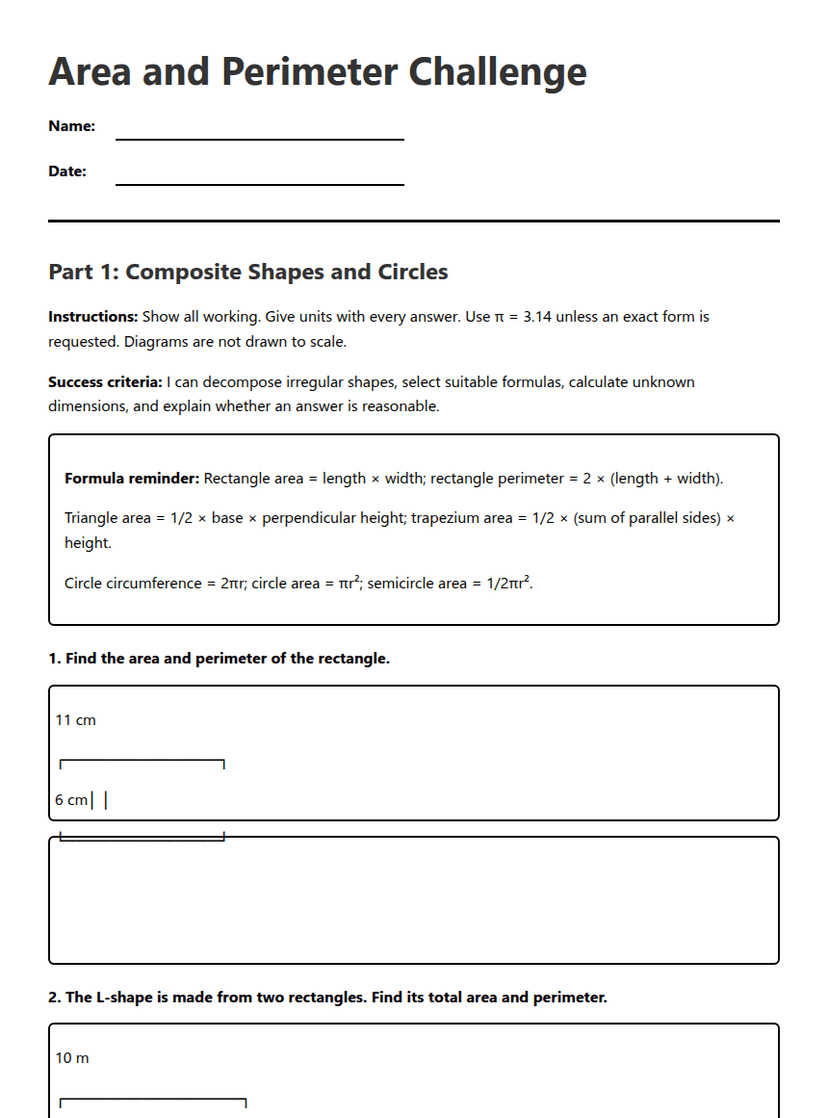
Area and Perimeter Challenge
Free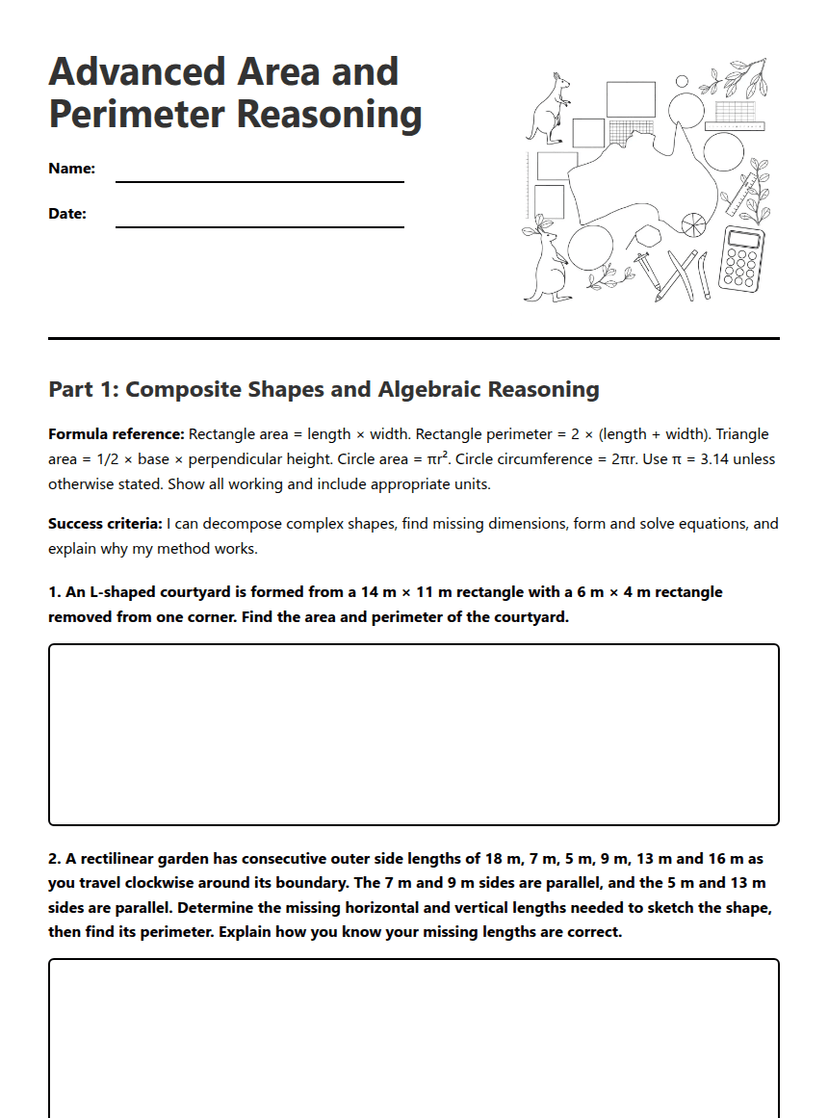
Advanced Area and Perimeter Reasoning
Free
3D Objects and Capacity Pre-Test
Free
Volume, Capacity and Distance Conversions
Free
Volume Exploration Worksheet
Free
Metric Measurement Revision Worksheet
Free
Circumference and Perimeter Practice
Free