EnglishFreePrintable

Adventure Writing Guide

A free english worksheet ready for your classroom. Open in Kuraplan to grab the print-ready PDF, customize it for your students, or generate a fresh version in seconds.
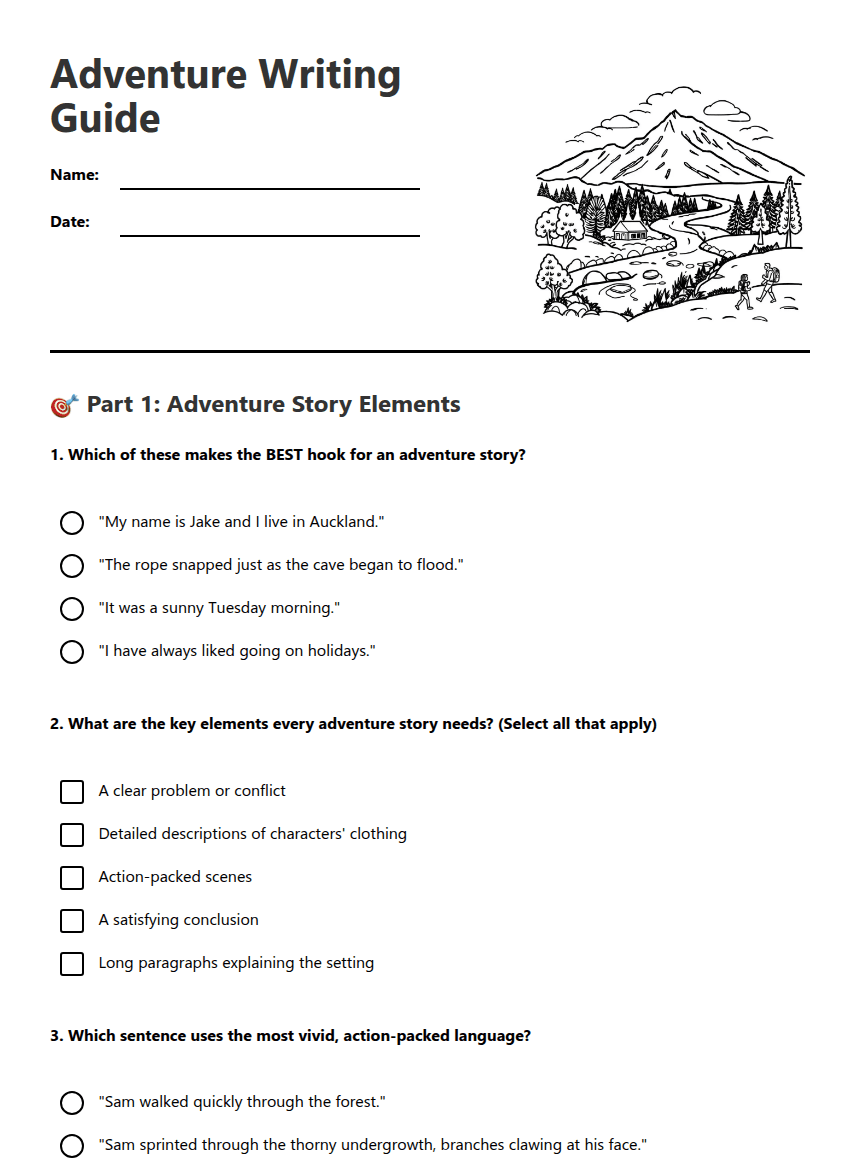
Adventure Writing Guide worksheet preview
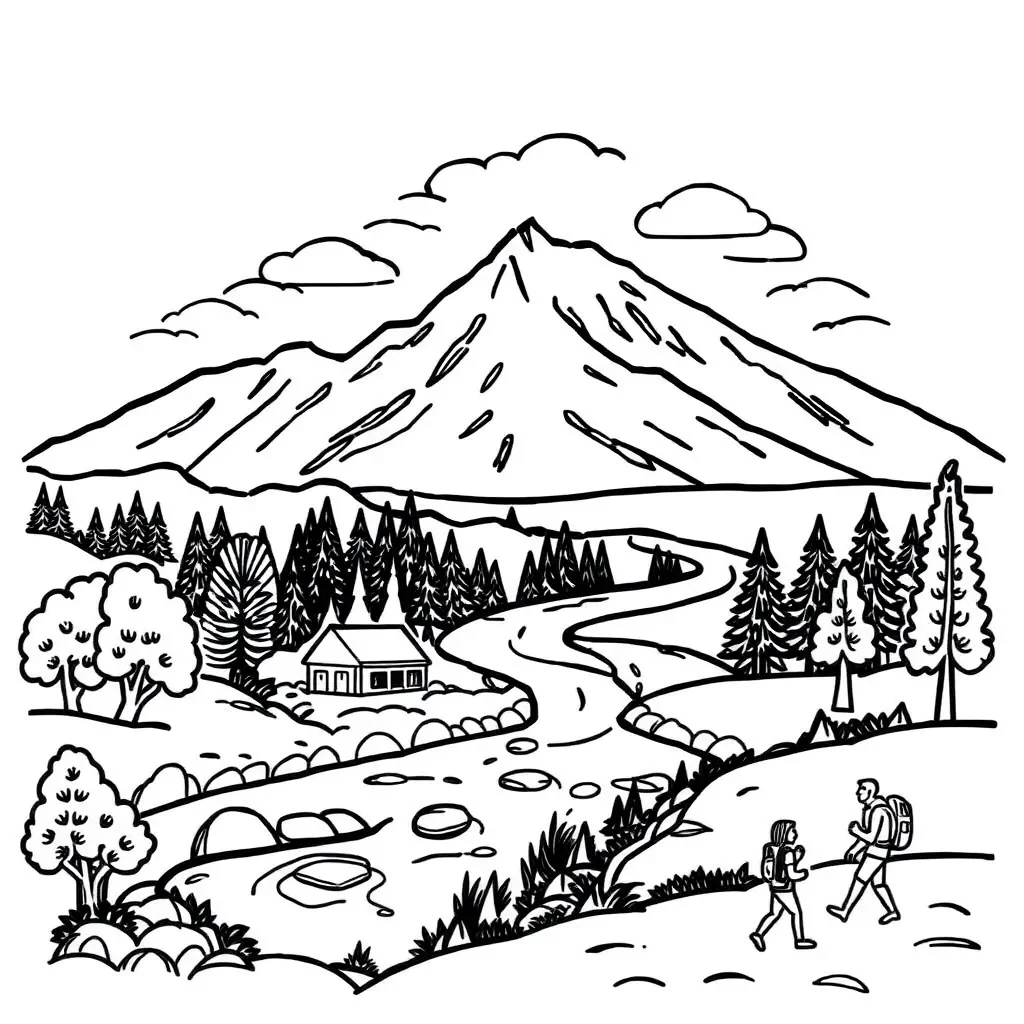
Adventure Writing Guide

Adventure writing illustration

🎯 Part 1: Adventure Story Elements

1. Which of these makes the BEST hook for an adventure story?

"My name is Jake and I live in Auckland."

"The rope snapped just as the cave began to flood."

"It was a sunny Tuesday morning."

"I have always liked going on holidays."

2. What are the key elements every adventure story needs? (Select all that apply)

A clear problem or conflict

Detailed descriptions of characters' clothing

Action-packed scenes

A satisfying conclusion

Long paragraphs explaining the setting

3. Which sentence uses the most vivid, action-packed language?

"Sam walked quickly through the forest."

"Sam sprinted through the thorny undergrowth, branches clawing at his face."

"Sam went into the forest and moved fast."

"Sam was in the forest and he was going somewhere."

4. Complete this adventure story opening with a strong hook:

The torch flickered once, then died completely. Maya stood frozen in the darkness, listening to the sound of _________________________ getting closer.

5. Name two figurative language devices that make adventure writing more exciting:

1. ___________________ 2. ___________________

📝 Part 2: Adventure Writing Checklist

6. Use this checklist to plan and review your adventure story. Tick each box when complete:

Story Structure

Hook: My opening grabs the reader's attention immediately

Problem: My main character faces a clear conflict or challenge

Action: My story includes fast-paced, exciting scenes

Conclusion: My ending resolves the problem in a satisfying way

Language and Style

I use strong action verbs (sprinted, plunged, crashed)

I include vivid adjectives that create atmosphere

I use at least two figurative language devices (similes, metaphors, etc.)

My sentences vary in length to create rhythm and pace

I show action rather than just telling what happened

7. Write one example of each figurative device you could use in your adventure story:

Simile: ________________________________________________

Metaphor: ________________________________________________

Personification: ________________________________________________

8. Peer Review: After reading a classmate's story, give feedback on these areas:

Consider: Was the hook engaging? Did the action keep you interested? What vivid language stood out? How could the ending be stronger?

About This Worksheet

Free in Kuraplan

Sign up free, grab the PDF, and customize it for your class.

Print-Ready

Formatted for standard paper. Clean layout, easy to read.

AI-Generated

Created with Kuraplan's AI, designed for real classroom use.

For Teachers & Parents

Use in classrooms, for homework, tutoring, or homeschool.

Need a custom version of this worksheet?

Kuraplan's AI generates custom worksheets in seconds — differentiated for every learner, aligned to your curriculum.

Generate Custom Worksheets — Free
No credit card Curriculum-aligned Under 60 seconds